J.R. Miller's "Silent Times, A Book to Help in Reading the Bible into Life" has been professionally read, and graciously supplied by Christopher Glyn. Please visit his YouTube channel at: https://www.youtube.com/c/ChristopherGlyn where you can view a wide variety of Christopher's devotional readings with read-a-long texts
Sermon Transcript
Auto-generated transcript • May contain errors
100%
Chapter 6 God's Reserve of Goodness
God never gives all he has to give. The time never comes when
he has nothing more to bestow. We never reach the best in divine
blessings. There is always something better
yet to come. Every door that opens into a
treasury of love shows another door into another treasury beyond. The yet unrevealed is ever better
than the already revealed. We need not fear that we shall
ever come to the end of God's goodness or to any experience
for which he will have no blessing ready. Yet God's goodness is
not emptied out in heaps at our feet when we first start in faith's
pathway. Rather, it is kept in reserve
for us until we need it, and is then dispersed. The Scriptures
speak of God's great goodness as laid up for those who fear
Him. This is a divine method both
in providence and in grace. We think of one gathering food
in bright summer days, when the harvests are golden, when the
fruits hang on bending boughs, when the hillsides are purple
with their vintage, and laying up for winter's use, when the
fields shall be bleak and the trees and vines bare. We think
of a father gathering riches and securing them in safe deposits
or investments for his children when they shall grow up. So God
has laid up goodness for his people. God laid up goodness
in the creation and preparation of the earth. Ages before man
was made, God was fitting up this globe to be his home, storing
in mountain, hill, and plain, in water, air, and soil, and
in all nature's treasuries, supplies for every human need. We think,
for example, of the vast beds of coal laid up among earth's
strata, ages and ages since, in order that our homes might
be warmed and brightened in these later centuries of the iron,
silver, gold, and other metals secreted in the veins of the
rocks. We think of the medicinal and healing virtues stored in
leaf, root, fruit, bark, and mineral, and of all the latent
forces and properties lodged in nature to be called out from
time to time to minister to human needs. No sane and sensible man
will say that all this was accidental. It was divine forethought that
laid up all this goodness for the welfare of God's children. The same is true of spiritual
provision. In the covenant of His love,
in the infinite ages of the past, God laid up goodness for His
people. Redemption was no afterthought. It was planned before the foundation
of the world. Then Christ, in his incarnation,
obedience, sufferings, and death, laid up goodness for his people. We sometimes forget, while we
pillow our heads on the promises of God and rest secure in the
atonement and enjoy all the blessings of redemption and the hopes of
glory, what these things cost our Redeemer. In those long years
of poverty, in those sharp days of temptation, in those keen
hours of agony, He was laying up treasures of blessing and
glory for us. There is not a hope or a joy
of our Christian faith that does not come to us out of the treasures
stored away by our Redeemer during the years of His humiliation
and the hours of His agony. But all this goodness was laid
up. The treasures were not all opened
at the beginning. This is true both in nature and
in grace. So far as we know, there's been
nothing new created since the beginning. But there's been a
continual succession of developments and of hidden treasures and powers
to meet the new needs of the multiplying and advancing race. Thus, when fuel began to grow
scarce, then the vast coal beds were discovered. They were not
created then for the emergency. Ages before, they had been laid
up, but the storehouse was only then opened to meet the world's
needs. So, when material for light was
in danger of exhaustion, the reservoirs of oil, long hidden
in reserve, were opened. And in these recent days men
are discovering the powers of electricity, not a new creation,
but an energy which has flowed, silent and unperceived through
all space, from the beginning, only to become available in these
later days. Human need is the key that unlocks
the storehouses of God's provision for the children of men. In spiritual
things, the method is the same. Take the Bible for illustration. It is a great treasury of reserved
blessing. There has not been a chapter,
a line, or word added to it since the pen of inspiration wrote
the final Amen. Yet every new generation finds
new things in the Holy Book. This is true in all individual
experience. As children, we study the Bible
and on its words, but many of the precious sentences have no
meaning for us. The light, the comfort or the
help is there, but we do not see it. Indeed, we cannot see
it until we have larger experience and a fuller sense of need. For a time, the rich truths of
the Bible seemed to hide away, refusing to disclose to us their
meaning. We read them in sunny youth,
but do not discover the blessing or help that is in them. Then
we move on into the midst of the struggles, trials, and conflicts
of real life, and new senses begin to reveal themselves in
the familiar sentences. Promises that seemed pale before,
as if written with invisible ink, now begin to glow with rich
meaning. Experience reveals their preciousness. Every Christian who has lived
many years and passed through trials and struggles knows how
texts with which he has been familiar from childhood but in
which he has never before found any special help, all at once,
in some new experience of need or trial, flash out like newly
lighted lamps and pour bright beams upon his path. The light
was not new, it had shone there all the while, but he could not
see it until now, because other lights were shining about him,
obscuring this one. Most personal knowledge of the
Bible has to be learned in this way. The words lie in our memory,
and the years come and go with their experiences. The light
of human joy wanes. Health gives way. Disappointment
comes. Sorrow breaks in upon us. Some
human trust fails. The sunlight that flowed about
us yesterday has gone out, and our path lies in darkness. Then
the words of God that have lain so long in memory, without apparent
brightness, flash out like heavenly lamps and pour their welcome
radiance all about us. Did those words have no light
in them before? Yes, the lamps were shining all
the while. But our eyes did not discern
the brightness until this world's lamps went out and it grew dark
about us. The goodness was laid up, reserved
until we needed it. God's storehouses of spiritual
truth never are open to us until we really need their blessing. They are placed, so to speak,
along our life path, the right supply at the right point. By
the plan of God in every desert there are oases. At the foot
of each sharp, steep hill there are stairs for climbing. In every
dark gorge there are lighted lamps. At every stream there
is a bridge. But we find none of these until
we come to the place where we need them. And why should we?
Will it not be soon enough to see the bridge when we stand
by the stream? Will it not be soon enough when
it grows dark for the lamps to shine out? Will it not be soon
enough when the cupboard is empty for God to send bread? The storehouse
in which God's goodness is laid up is found always at the point
of need. Take a promise or two for illustration. In the time of trouble, he shall
hide me in his pavilion. It is very clear that we cannot
get this promise when we are in joy and safety, but only when
we are in peril. Do not be afraid, for I have
ransomed you. I have called you by name. You
are mine. When you go through deep waters
and great trouble, I will be with you. When you go through
rivers of difficulty, you will not drown. When you walk through
the fire of oppression, you will not be burned up. The flames
will not consume you. For I am the Lord your God, the
Holy One of Israel, your Savior. Isaiah 43, 1-3. This goodness
is laid up in the midst of the wild waves and cannot be found
in any sunny field. I will preserve the orphans.
Your widows, too, will be able to depend on me for help. Jeremiah
49 11. This promise can never come to
the tender wife when she leans on the strong arm of her husband,
nor to the happy children when they cluster about the living,
loving father's knee. It can only be found by the dark
coffin or by the grave of love. It lies hidden amid the desolation
of sorrow. Thus the divine treasuries are
placed in the midst of the very needs themselves, and we cannot
get the help or the comfort until we stand within the circle of
the need. Many a mother, when she reads
how some other Christian mother bore herself with sweet resignation
when her child died, says, I could not give up my child in that
way. I have not grace enough to do it. Why should she have
such grace now? It will be time enough when she
needs it. That supply can be gotten at
only when she is in the midst of the experience itself. While
the child lives, the mother's duty is not sorrow, not submission,
but rather with loving fidelity to train her child for this life
and for the life beyond. And for this duty, the mother
will receive all needful grace if she seeks it in faith. Then,
if death comes to her child, grace will be given, enabling
her to meet the bereavement and sweetly to submit to God's disclosed
will. Many people dread death and fear
that they can never meet it with triumph. But God does not give
grace for victorious dying when one's duty is to live. He gives,
then, grace for living, grace for honesty, grace for fidelity,
grace for heroism in life's battle. Then, when death comes, when
life's work is finished, and the hour comes for the departure,
He will give dying grace. The storehouse in which that
supply is laid up is found only in the valley of shadows, and
we cannot get the prepared and reserved goodness until we come
to the experience to which it is preeminently suited. The best
of God's goodness is laid up in heaven. Hence, to a Christian,
death is always a glorious gain. A poet represents our first parent
as trembling when he thought of the sun setting the first
day of his life, and of nights coming. It seemed to him that
only calamity could result to this fair world. But to his amazement,
when the sun went down softly and silently, thousands of brilliant
stars flashed out, and lo, creation infinitely widened in his view. The night revealed far more than
it hid. Instead of fly, flower, and leaf,
which the sun's beams showed, the darkness unveiled all the
glorious orbs of the sky. So similarly, we shun and dread
death. It seems to be only darkness,
and seems to hide the lovely things on which our eyes have
looked. but in reality it will reveal far more than it hides. If it shuts our eyes to the little
perishing things of earth, it will unveil to us the splendors
of eternity. The best things are laid up in
heaven, and can only be gotten when we pass through death's
gate into the Father's house. Thus this principle of reserved
goodness runs through all God's economy. Blessings are laid up
and are given to us as we need them. Every experience brings
to us its own store of needed grace. Sorrow comes, but veiled
in the sorrow, the angel of comfort comes too. It grows dark, but
then the lamps of promise shine out. Losses are met, but there
is a divine secret that changes loss into gain. A bitter cup
is given, but it proves to be medicine for our soul. Death
comes and seems the end of all, but lo, it is only the beginning
of life. for it leads us away from empty
shadows to eternal realities.
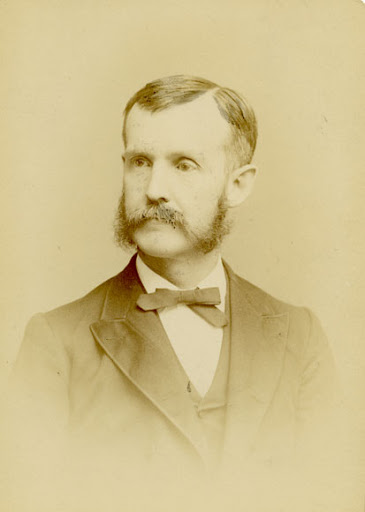
About J.R. Miller
James Russell Miller (20 March 1840 — 2 July 1912) was a popular Christian author, Editorial Superintendent of the Presbyterian Board of Publication, and pastor of several churches in Pennsylvania and Illinois.
Comments
Your comment has been submitted and is awaiting moderation. Once approved, it will appear on this page.
Be the first to comment!