Bootstrap
J.R. Miller

07. The Blessing of Not Getting

2 Timothy 3:16; Psalm 19:7-11
J.R. Miller January, 18 2022 Audio
0 Comments
"Silent Times, A Book to Help in Reading the Bible into Life!" by J.R. Miller, 1886

You will find it helpful to READ the texts--as you LISTEN to the audios.

The TEXTS for the entire 24 chapter book, can be bound here:
https://gracegems.org/C/Miller_silent_times.htm

The AUDIOS for the entire 24 chapter book can be bound here:
https://www.gracegems.org/SermonAudio.htm?sa_ac...


J.R. Miller's "Silent Times, A Book to Help in Reading the Bible into Life" has been professionally read, and graciously supplied by Christopher Glyn. Please visit his YouTube channel at: https://www.youtube.com/c/ChristopherGlyn where you can view a wide variety of Christopher's devotional readings with read-a-long texts online.


Psalm 19:7-11
Sermon Transcript

Auto-generated transcript • May contain errors

100%
Chapter 7 The Blessing of Not
Getting There is one class of mercies and blessings of which
we are not sufficiently ready to take note. These are the things
that God keeps from us. We recount with more or less
gratitude the good gifts that we receive from Him, but there
are many blessings that consist in our not receiving. In one of Miss Haverhill's bright
flashes of spiritual truth, she quotes these words of Moses to
the Israelites. As for you, the Lord your God
has not allowed you so to do. Then she adds, what a stepping
stone. We give thanks often with a tearful,
doubtful voice for our positive spiritual mercies, but what an
almost infinite field there is for negative mercies. We cannot
even imagine all that God has allowed us not to do, not to
be. There is no doubt that very many
of the Lord's greatest kindnesses are shown in saving us from unseen
and unsuspected perils, and keeping us from things that we desire
but which would surely work us harm instead of blessing were
we to receive them. There was a trifling accident
to a railway train one day which caused an hour's delay One lady
on the train was greatly agitated. The detention would cause her
to miss the steamer, and her friends would be disappointed
in the morning when she would fail to arrive. That night the
steamer on which she so eagerly wished to embark was burned to
the water's edge, and nearly all on board perished. Her feeling
of grieved disappointment was changed to one of grateful praise
to God for the strange deliverance he had wrought. A carriage drove
rapidly to a station one afternoon, just as the train rolled away. It contained a gentleman and
his family. They manifested much annoyance
and impatience at the failure to be in time. Important engagements
for tomorrow could not now be met. Sharp words were spoken
to the coachman, for the fault was his, as he had been ten minutes
late in appearing. An angry scowl was on the gentleman's
face as he drove homeward again. All the evening he was sullen
and unhappy. In the next morning's papers
he read an account of a terrible bridge accident on the railway. The train he had been so anxious
to take and so annoyed at missing had carried many of its sleeping
passengers to a horrible death. The feeling of bitter vexation
and sullen anger was instantly changed to one of thanksgiving.
In both these cases, the goodness of God was shown in not allowing
his children to do what they considered essential to their
happiness or success. These are typical illustrations.
In almost every life there are similar deliverances at some
time or other, though not always so remarkable or so apparent.
There is no one who has carefully and thoughtfully observed the
course of his own life who cannot recall many instances in which
providential interferences and disappointments have proved blessings
in the end. saving him from calamity or loss,
or bringing to him better things than those which they took out
of his grasp. We make our plans with eager
hope and expectation, setting our hearts on things which seem
to us most radiant and worthy. Then God steps in and sets these
plans of ours aside, substituting others of his own which seem
destructive. We submit, perhaps sullenly,
with rebellious heart. It seems to us a sore adversity. But in a little while we learn
that the strange interference over which we struggled so painfully
and were so sorely perplexed was one of God's loving thoughts,
His way of saving us from peril or loss. If He had let us have
our own way, pain or sorrow would have been the inevitable result.
He blessed us by not permitting us to do as we wished. Who can
tell from how many unseen and unsuspected dangers He is every
day delivered? When a passenger arrives at the
end of a stormy voyage, he is thankful for rescue from peril. But when the voyage is quiet,
without tempest or angry billow, he does not feel the same gratitude. Yet why is not his preservation
even more remarkable in this case than in that? He has been
kept not only from imminent and apparent danger, but also from
terror or anxiety. In a gathering of ministers,
one of them asked the others to unite with him in thanksgiving
to God for a signal deliverance on his way to the meeting. On
the edge of a perilous precipice, his horse had stumbled, and only
the good hand of God had saved him from being hurled to death.
Another minister asked that thanks might be given also for his still
greater deliverance. He had come over the same dangerous
road, and his horse had not even stumbled. Surely he was right. He had still greater cause for
thankfulness than the other. Each of our lives is one unbroken
succession of such deliverances. There's not a moment when possible
danger is not imminent, yet we too often forget God's mercy
in saving us from exposure to perils. We thank Him for sparing
us in the midst of life's accidents, but do not thank Him for keeping
us even from the alarm and shock of accident. Passing into the
realm of spiritual experiences, the field is equally large. God
is continually blessing us by allowing us not to do certain
things which we greatly desire to do. He thwarts our worldly
ambitions, because to permit us to achieve them would be to
allow our souls to be lost or seriously harmed. One man desires
worldly prosperity. But in his every effort in that
direction he is defeated. He speaks of his failures as
misfortunes, and wonders why it is that other men, less industrious
and less conscientious, succeed so much better than he. He even
intimates that God's ways are not equal. But no doubt, the
very disappointments over which he grieves are in reality the
richest of blessings. God knows that the success of
his plans would be fatal to the higher interests of his spiritual
life. The best blessing God can bestow
upon him is not to allow him to prosper in his plan, to gather
riches and to attain ease. The same is true of all other
human ambitions. To let men have what they want
would be to open the gates of ruin and death for them. What
they hunger for, thinking it bread, is but a cold stone. The path that to their eyes seems
to be strewn with flowers and to lead to a paradise, is full
of thorns and leads to darkness and death. The things they crave
and cry for, thinking to find sweet satisfaction in them, when
gotten at last, prove to be but bitter ashes. Sometimes the ways
of God do seem hard. Our fondest hopes are crushed
and our fairest joys fade like summer flowers. The desires of
our hearts are withheld from us. Yet, if we are God's children,
we cannot doubt that in every one of these losses or denials
a blessing is hidden. Right here we get a glimpse into
the mystery of many unanswered prayers. The things we seek would
not work good for us in the end, but evil. The things we plead
to have removed are essential to our highest interests. Health
is supposed to be better than sickness, but there comes a time
when God's kindness will be most wisely shown by denying us health. He never takes pleasure in causing
us to suffer. He is touched by our sorrows,
every grief and pain of ours he feels. Yet he loves us too
well to give us things that would harm us, or to spare us the trial
that is needful for our spiritual good. It will be seen in the
end that many of the very richest blessings of all our lives have
come to us through God's denials, His withholdings, or His shattering
of our hopes and joys. I know, Lord, that Your judgments
are just and that in faithfulness You have afflicted me. Psalm
119, 75 When we are called to be Christians,
we are not promised earthly ease and possession. True, we are
told that we shall be heirs to a great legacy, heirs of God
and joint heirs with Christ. But our legacy is not such as
men in this world bequeath in their wills to their children.
To be joint heirs with Christ implies that we must first share
with him his life of self-denial and sacrifice before we can become
partakers with him in the joys and glories of his exaltation. We should never forget that the
object of all God's dealing with His children is to sanctify us
and make us vessels fit for the Master's use. To this high and
glorious end, present pleasure and gratification must oft times
be sacrificed. This is the true key to all the
mysteries of providence. Anything that hinders entire
consecration to Christ is working as harm. And though it be our
tenderest joy, it is best that it be taken away. This discipline
is going on all the while in the lives of Christ's disciples. Prayer is not always granted,
even when the heart clings with holiest affection to its most
precious joy. Nothing must hinder our consecration. We should never think first of
what will give us earthly joy or comfort, but of what will
fit us for doing the service for Him which He wants us to
render. Pain is oft-times better for
us than pleasure. Loss is oft-times better for
us than gain. Sorrow is oft-times better for
us than joy. Disaster is oft-times better
for us than deliverance. Faith should know that God's
withholdings from us, when He does not give us what we ask,
are richer blessings than were He to open to us all the treasure
houses at whose doors we stand and knock with so great vehemence. Our unanswered prayers have just
as real and as blessed answer as those which bring what we
seek.
J.R. Miller
About J.R. Miller
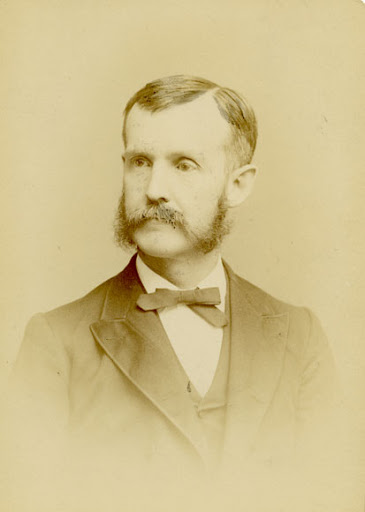
James Russell Miller (20 March 1840 — 2 July 1912) was a popular Christian author, Editorial Superintendent of the Presbyterian Board of Publication, and pastor of several churches in Pennsylvania and Illinois.
Broadcaster:

Comments

0 / 2000 characters
Comments are moderated before appearing.

Be the first to comment!