Bootstrap
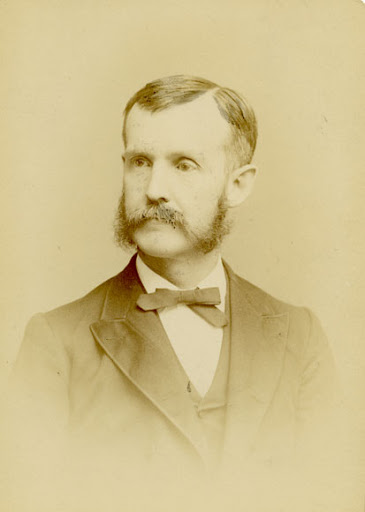
J.R. Miller

Go Forward!

Deuteronomy 2:3; Philippians 3:12-14
J.R. Miller August, 15 2020 Audio
0 Comments
This is a very uplifting and encouraging sermon!

This is a very uplifting and encouraging sermon!

You will find it helpful to READ the text below, as you listen to the audio!
Simply click on this link:
https://gracegems.org/Miller/go_forward.htm

Sermon Transcript

Auto-generated transcript • May contain errors

100%
The following is a selection
from the book Go Forward by James Russell Miller. There is an incident
in the history of the wandering of the Israelites, which is suggestive. It was near the close of the
forty years in the wilderness. The people had been for some
time in the region of Mount Seir and seemed to have been going
round and round the mountain. The meaning is not very clear,
but the record says they had compassed Mount Seir many days. They were constantly in motion.
And yet, we're making no progress. We're not getting any nearer
the promised land. They would journey laboriously
for many days through the wilderness, enduring hardship, suffering
pain and weariness, and at last would come to the very place
from which they'd started. It was a fruitless kind of journeying.
And then they were called to cease their going round the mountain
and to enter on a course that would lead them somewhere. Jehovah
spake unto me, saying, Ye have compassed this mountain long
enough. Turn you northward. There's a tendency among people
to do something like this in their everyday life. We're inclined
to settle down in our present condition and stay there. when
we ought to be moving on to something beyond, something better, larger
and nobler. We let ourselves form the habit
of moving round and round in a circle when we ought to break
away from the circular course and start forward. Saint Paul
teaches us the same lesson in a remarkable passage in one of
his epistles. He gives us a glimpse of the
ideal life, the perfect life, in Christ. He says frankly that
he himself has not yet attained this sublime height, hasn't reached
the best, not that I've already obtained or am already made perfect,
but this unattained life he doesn't regard as unattainable. He will
come up to it some time. Thus, St. Paul, this man of quenchless
ardor, pressed his way toward the highest and best. He was
in prison now. But prison walls were no barrier
to his progress. He tells us, too, the method
of his life. The two words which contain the
secret of his noble career were forgetting and reaching. There were certain things that
he forgot. Look at this a moment, for the word contains for us
a secret which we must learn if we would make progress northward.
Forgetting the things which are behind. We never can get on to
higher things if we insist on clinging to our past and carrying
it with us. We can make progress only by
forgetting. We can go forward only by leaving
behind what is past. For instance, we must forget
our mistakes. And there are many of them, too.
We think of them in our serious moods at the close of a year,
when we're forced to review our past, or when some deep personal
experience sets our life before us in retrospection. We sigh,
oh, if I hadn't made that foolish decision, how much better my
life would have been. Some people keep compassing regretfully
the mountains of their one year's mistakes through all the following
year. A year of fretting sets you no
farther forward. The best use you can possibly
make of last year's blunders is to forget them and then to
get wisdom from the experience for this year. One day Ruskin
was with a friend, who, in great distress, showed him a fine handkerchief
on which someone had carelessly let fall a drop of ink. The woman
was vexed beyond measure at the hopeless ruining of her handkerchief.
Ruskin said nothing, and took the handkerchief away with him.
In a few days he brought it back, but ruined no longer. Using the
blot as the base of a drawing, he had made an exquisite bit
of India ink work on the handkerchief, thus giving it a beauty and a
value far beyond what it possessed before it had been blotted. There's
a strange power in the divine goodness which can take our mistakes
and follies and out of them bring beauty, blessing, and good. Forget your blunders. Put them
into the hands of Christ. Leave them with Him to deal with
as He sees fit, and He will show them to you afterwards as marks
of loveliness, no longer as blunders, but as the very elements of perfection. Forget your mistakes and turn
northward. We should also forget our hurts.
There are hurts in every life. Somebody did you harm last year.
Somebody was unkind to you and left a sting in your memory.
Somebody said something untrue about you, misrepresented you. You say you can't forget these
hurts, these injuries, these wrongs, but you would do better. Don't cherish them. Only worse
harm to you will come from keeping them in your memory and thinking
about them. Don't let them rankle in your heart. The master forgot
the wrongs and injuries done to him. and you haven't suffered
the one thousandth part of the things he suffered in this way.
He loved on as if no wrong had been done to him. Thus, we should
forget the hurts done to us. A tiny grain of sand and a pearl
oyster makes a wound, but instead of running to a festering sore,
the wound becomes a pearl. So, a wrong patiently endured,
mastered by love, adds new beauty to the life. We should also forget
our attainments, the things we've achieved, our successes. Nothing hampers and hinders a
man more than thinking over the good or great things he's done
in the past. There are men who once did a
good thing and have done little since but tell people about it.
They've been encompassing their Mount Seir many days, If you
did anything good, worthy, or great in the past, forget it. It belongs to the last year and
adorned it, but it won't be an honor for this year. Each year
must have its own adornments. We're to go on to perfection,
making every year better than the one before. We should also
forget the sins of the past. Somehow, many people think that
their sins are the very things they should never forget. They
feel that they must remember them so that they will be kept
humble. But remembering our sins, weaving
their memories into a garment of sackcloth and wearing it continually,
is the very thing we ought not to do. Do we not believe in the
forgiveness of our sins when we've repented of them? God tells
us that our sins and our iniquities He will remember no more forever.
We should forget them too, accepting the divine mercy. And since they
are so fully forgiven by our Father, our joy should be full. One of the Psalms tells us of
being brought up out of a horrible pit and our feet set upon a rock,
and then comes the song beginning, He hath put a new song in my
mouth, rejoicing instead of hopeless grief over sin. Brood not a moment
over your old sins. Compass the mountain no longer,
but turn northward. If it's been unworthy, it should
be abandoned for something worthy. If it's been good, it should
inspire us to things better. Ye have compassed this mountain
long enough. Turn you northward. St. Paul also teaches this in
the other word which he uses in his plan of progressive life.
First, forget everything that's past, and then stretch forward
to the things that are before. What are these things that are
before to which we ought to stretch? The answer may be given in a
word. Life. Jesus told his disciples he had
come that they might have life. We have no life until we receive
it from Christ. Christ is the fountain from which
all life flows. His own heart broke on the cross
that we might receive life, His life. Nothing will meet our need
but life. There's a story of a sculptor
who had chiseled in marble a statue of St. George and set it before
a church in Florence. Michelangelo was asked to see
it. He stood before the marble and was amazed at the success
of the young artist. Every feature was perfect. The
brow was massive. Intelligence beamed from his
eyes. One foot was in the act of moving as if to step forward.
Gazing at the splendid marble figure, Angelo said, Now, march! No higher compliment could the
great artist have paid to St. George and marble. Yet there
was no response. The statue was perfect in all
the form of life, but there was no life in it. It couldn't march. It's possible for us to have
all the semblance of life in our religious profession, in
our devotion to the principles of right and truth, and yet not
have life in us. Life is the great final blessing
we should seek. not life merely, not just a little
of it, but fullness of life. Jesus said he had come that we
might have life and might have it abundantly. The turning northward
was that the people might exchange the wilderness for Canaan. The wilderness meant emptiness,
barrenness, sin's bitter harvest. Canaan was a parable of heaven.
What does turning northward mean for us today? It means a larger
Christian life. We rejoice in all that God has
done for us in the past, and we're grateful for the blessings
we've received, but we're only on the edge of the spiritual
possibilities that are within our reach. We're in danger of
sitting down in a sort of quiet content, as if there are no farther
heights to be reached. Ye have been going round this
mountain long enough. Turn you northward. Northward is toward new and greater
things, larger spiritual good, more abundant life. It means
something intensely practical and real. It's a call to better
life. We must be better men, better
women, better Christians. We must be holier. The abundant
life must be pure. It must begin within. Blessed are the pure in heart.
A little story tells of a man who was washing a large plate
glass window in a show window. There was one soiled spot on
the glass which defied all his efforts to cleanse it. After
a long and hard rubbing at it with soap and water, the spot
still remained, and then the man discovered that the spot
was on the inside of the glass. There are many people who are
trying to cleanse their lives from stains by washing the outside. They cut off evil habits so that
their conduct and character shall appear white. Still, they find
spots and flaws which they can't remove. The trouble is within. Their hearts are not clean, and
God desires truth in the inward parts. The only way to be made
perfect is to have the very springs of the life cleansed. I long
to be clean all through. That's the kind of men and women
we should pray to become. St. Paul tells us that though
our outward man is decaying, yet our inward man should be
renewed day by day. The true life within us should
become diviner continually in its beauty, purer, stronger,
sweeter, even when the physical life is wasting. The hard things
are not meant to mar our life. They're meant to make it all
the braver, the worthier, the nobler. Adversities and misfortunes
are meant to sweeten our spirits, not to make them sour and bitter.
Every year should find us living on a higher plane than the year
before. Old age should always be the best of life, not marked
by emptiness and decay, but by richer fruitfulness and more
gracious beauty. St. Paul was growing old when
he spoke of forgetting things behind and reaching forth to
things before. His best was yet to be attained.
So it should always be with Christian old age. We must ever be turning
northward, toward fuller life and holier beauty. This can be
the story of our experience only if our life is hid with Christ
in God. Torn away from Christ? No life
can keep its zest or its radiance. Lincoln said, I am not bound
to win, but I am bound to be true. I am not bound to succeed,
but I am bound to live up to the light I have. So we are to
get light from heaven for all our life on earth, not only for
our Christian service, but for our business affairs, our amusements,
all our tasks and duties, our plans and pleasures. The smallest
things in our lives should get their inspiration from heaven.
You have compassed this mountain long enough. Turn you northward. Break away from the routine.
Don't keep on doing just what you've been doing heretofore.
Don't be content to go over the same old rounds. Turn northward. Start in new lines and with your
face toward God. Do larger things than you've
done heretofore. Pray more fervently. Love better,
more sweetly, more helpfully. Live where heaven will break
into your soul. Let Christ have all your life.
God's not a hard master. He knows how frail we are. He
remembers that we're dust. Therefore, He's patient with
us. He judges us graciously. If we try to do our best, though
we seem to fail, marring our work, He understands and praises
what we've done. With such a Master we should
never lose heart, never grow discouraged, never let gloom
or bitterness into our heart, but should always keep brave,
hopeful, sweet, forgetting the past and stretching forward,
knowing that no life that is true to its best can ever fail. Ye have compassed this mountain
long enough. Turn you northward.
J.R. Miller
About J.R. Miller
James Russell Miller (20 March 1840 — 2 July 1912) was a popular Christian author, Editorial Superintendent of the Presbyterian Board of Publication, and pastor of several churches in Pennsylvania and Illinois.
Broadcaster:

Comments

0 / 2000 characters
Comments are moderated before appearing.

Be the first to comment!

Joshua

Joshua

Shall we play a game? Ask me about articles, sermons, or theology from our library. I can also help you navigate the site.