Bootstrap
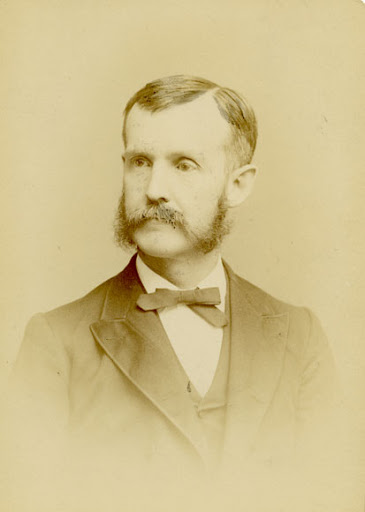
J.R. Miller

Think on These Things!

Philippians 4:8
J.R. Miller August, 15 2020 Audio
0 Comments
This is a very uplifting and encouraging sermon!

You will find it helpful to READ the text below, as you listen to the audio!
Simply click on this link:
https://www.gracegems.org/Miller/think_on_these...

Sermon Transcript

Auto-generated transcript • May contain errors

100%
The following is an excerpt from
the book The Best Things by James Russell Miller. Chapter 2 Think
on These Things There are certain single phases of life that are
far-reaching in their influence. The habit of cheerfulness, for
instance, is said to be worth to a man many thousands a year.
The habit of being always an encourager, never a discourager,
gives incalculable value to one's personality and influence. A
discourager is a misanthrope. He makes life harder for every
other life he touches. And an encourager is a constant
inspiration to others and makes life easier for everyone. There's
another habit of life which, if it were to become universal,
would change many things. namely, the habit of always seeing
the good in people, in conditions, in circumstances, and in experiences. St. Paul suggests it when he
says in a remarkable passage, If there be any virtue, if there
be any praise, think on these things. The emphasis seems to
be on any. If there be any virtue, even
the least, in another. If there be in a life which seems
almost wholly bad, even the smallest thing that is good, where to
find that, and to think upon that mere speck of beauty? rather
than on the much that is evil and unbeautiful. If there be
in a person any praise, any smallest quality or act that is worthy
of praise, of which we can speak with even the faintest approval
and commendation, we should give thought to that and voice our
appreciation rather than think and speak of the many things
in the person that are not good or praiseworthy. It's easy to
think of reasons why this is the Christian way. It's Christ's
way with us. If there be any good, even the
faintest spark of virtue or hope in a life, Christ sees it. He's looking for good and hopeful
things. Some people see only the faults
and flaws in the lives of others. They're looking for these things—blemishes,
defects, imperfections. They're never trying to find
anything beautiful, and they find what they seek. Our Master,
however, is looking for things that are right, good beginnings
of better things. Someone asked the curator of
an Academy of Fine Arts regarding the pictures of a certain artist,
what do you consider the defects in his work? The answer was,
we don't look for defects here, but for excellences. It's thus
that our Master does in our lives. He doesn't look for the imperfections,
of which there are always many, but for things that are worthy
of commendation. If there be any virtue, He finds
it, takes note of it, nourishes it, woos it out. If Christ looked
upon us as we too often look upon others—seeing the flaws,
the shortcomings, the inconsistencies, the failures—and judged us by
these, not many of us ever would grow into beauty. But where there
is even a spark of good, He finds it and cultivates it into its
best possibilities We shall never become of much use in the world
until we learn this lesson of always finding and encouraging
the best. We shall never let up anyone
to a higher, better life until we've found in him something
to approve and commend. There are some men and women
who wish to help others, to be of use to them, but work after
a wrong method. They think they must eliminate
the faults and defects which they find, and so they watch
for things that they can't approve. They have keen eyes for specks.
None are too small for them to see, but they never see the beautiful
things in another. The Master refers to such persons
in his teaching about motes and beams. He would have us look
for the good, not the evil in others. There's no life so devoid
of beauty and good that it has in it nothing worth of commendation.
Ruskin found even in the mud of London streets the elements
out of which gems are formed, the opal, the sapphire, the diamond. The love of Christ finds even
in the moral refuse of this world possibilities of loveliness in
character and heavenliness in life. We can't do anything to
help men by indulging in criticism and denunciation. We can call
out the good in others only as the sun woos out the plants and
flowers from the cold earth in the springtime, by its warmth. If the friends of Christ would
cease their fault-finding and become true friends of men, finding
the smallest beginnings of virtue and encouraging them, the earth
would soon be changed into a garden. We are continually meeting those
who are discouraged, who have fallen under the shadow of misfortune,
who have done wrong, perhaps, and are suffering in reputation,
or who have been unjustly treated and are enduring the sting. These are the persons to whom
our love should go out in words of hope and cheer instead of
blame. James Whitcomb Riley teaches
the lesson in his well-known lines, When over the fair fame
of friend or foe The shadow of disgrace shall fall, Instead
of words of blame or proof of thus and so, Let something good
be said. Forget not that no fellow being
yet may fall so low, but love may lift his head. Even the cheek
of shame with tears is wet, if something good be said. No generous
heart may vainly turn aside in ways of sympathy. No soul so
dead but may awaken strong and glorified, if something good
be said. And so I charge ye, by the thorny
crown, and by the cross on which the Saviour bled, and by your
own soul's hope of fair renown, let something good be said. One of the most significant words
of personal experience in the Old Testament is that in which
David tells us at the close of his wonderful life that all he
had attained and achieved he owed to God's gentleness. Thy
gentleness hath made me great. If God had been harsh with him—stern,
critical, severely exacting—David would never have reached the
noble life with its wonderful achievements, which he finally
attained. If God had been severe with him
after his falls and failures, David never would have risen
to power and distinction. God's gentleness made him great. We can help others to become
great only by being patient with them. Men and women everywhere
need nothing so much as gentleness. So many gods, so many creeds,
so many paths that wind and wind when just the art of being kind
is all this sad world needs. Are not many of us too brusque
with each other? Do we not lack in kindliness
and patience and tenderness? Some men would have us believe
that gentleness is an unmanly quality, but it's not. Rudeness
and harshness are always unmanly. Gentleness is divine. For many people, life is not
easy, and we make it much harder for them to live worthily when
we deal harshly with them, when we're exacting, when we chide
or blame, or when we exercise our wits in saying smart, cutting,
and irritating things to annoy and vex them. was said of William
Cullen Bryant that he treated every neighbor as if he were
an angel in disguise. That is, he had a feeling akin
to reverence for everyone who entered his presence. We don't
know to whom we're speaking when we meet a stranger any of these
common days. Let's treat him as the poet did
his neighbor—as if he were an angel. Cardinal Newman defines
a gentleman as one who never needlessly causes pain to another. If we are followers of Christ,
we have no right to be ungentle, to be ill-mannered, to act disagreeably,
to treat any other one rudely, brusquely. If there be any virtue,
if there be any praise, think on these things. We should never
forget the teaching of our Master that the hungry person we feed
in His name, the sick person we visit, the stranger to whom
we show kindness, the discouraged person we encourage, the fainting
one we lift up and start on his way again, is the Master Himself. And so much as you did it unto
one of these, my brethren, even these least, He did it unto me. How would we treat Jesus if we
found Him in any condition of need? That is to be the test
in our dealings with men. We dare not be ungentle to anyone.
It may be an angel unaware. It may be Christ Himself. The teaching applies to our own
personal experience of sorrow. We should seek the line of brightness
in any dark picture and think of that. And there are always
breaks in the clouds through which we can see the blue and
the stars. No lot in life is ever so utterly
hopeless as to have in it nothing to alleviate its unhappiness.
There's always something of brightness, one line at least, in the darkest
experience. You scarce can wander in a wood
so dense at night, but if the heavens be clear, some trembling
star rejoicing in its grateful light gleams through the atmosphere. You scarce can tread a track
so sadly dark in life, but if your heart be right, some kindly
hope benignly beaming o'er your strife illuminates the night. There always are comforts, no
matter how great the sorrow. Every cloud has on it some bit
of silver lining. There are hopes, consolations,
encouragements in every experience of grief or loss, and we are
to think of these and not alone of the sad elements in the experience. One chill day, a beam of sunshine
coming into the parlor through the shutters made a bright spot
on the carpet. The little dog that had been
lying in the dark corner of the room got up at once and went
and lay down in the patch of sunshine. And that's what we
should do in our larger life. When into any darkness or gloom
of ours, even the faintest ray of light streams, we should accept
it and sit down in its brightness. There's a reason for gratitude
and the most bitter experience. We should find that and enjoy
its brightness. We should turn our eyes from
the clouds and look at the stars. Live in the sunshine. God meant
it for you. Live as the robins and sing the
day through. Think on the good, not the evil.
Think on the loveliness, not on the disfigurements. Think
on the pure, not on the soiled. Think on the hopeful things in
men, their possibilities of nobleness, not on their faults. In sorrow,
find the face of Christ and gaze on that till you forget your
grief. In all life, if there be any virtue, any praise, any
beauty, any joy, think on these things, and it will lift up your
life into strength, nobleness, divineness.
J.R. Miller
About J.R. Miller
James Russell Miller (20 March 1840 — 2 July 1912) was a popular Christian author, Editorial Superintendent of the Presbyterian Board of Publication, and pastor of several churches in Pennsylvania and Illinois.
Broadcaster:

Comments

0 / 2000 characters
Comments are moderated before appearing.

Be the first to comment!

Joshua

Joshua

Shall we play a game? Ask me about articles, sermons, or theology from our library. I can also help you navigate the site.