Bootstrap
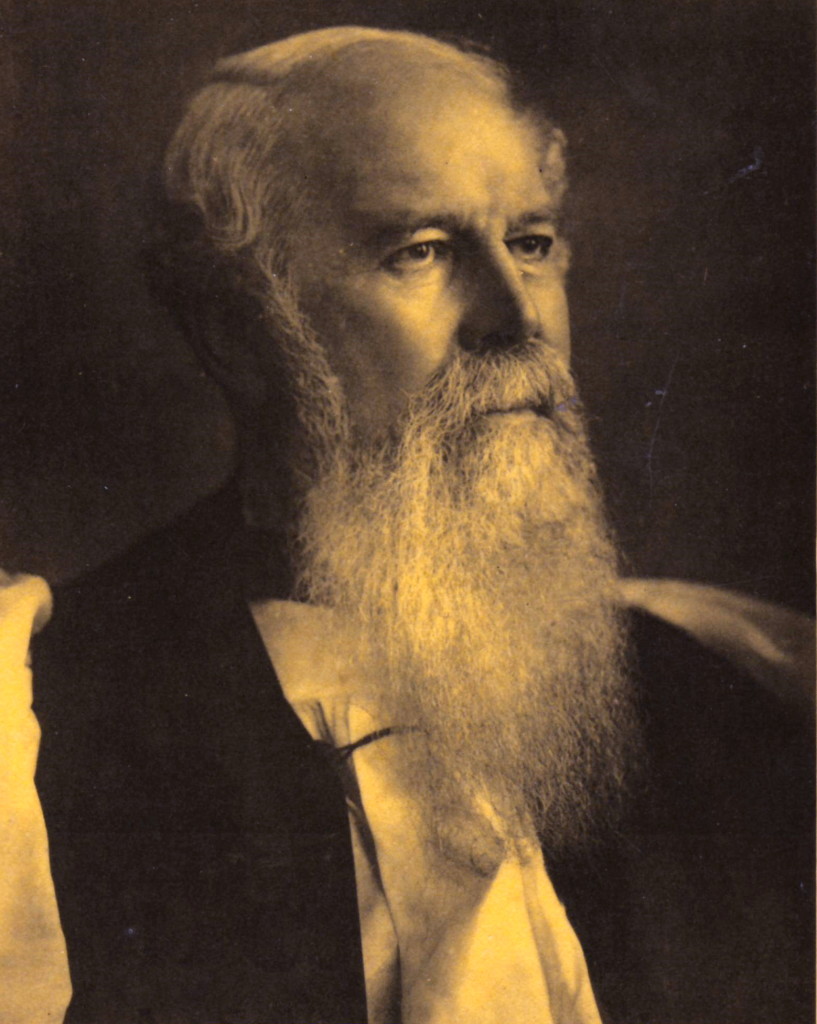
J.C. Ryle

Matthew 9

Matthew 9
J.C. Ryle October, 10 2019 Audio
0 Comments
You will find it helpful to READ the texts--as you LISTEN to the audios!
The TEXTS for the entire commentary can be bound here:
https://gracegems.org/Ryle/Matthew.htm

Sermon Transcript

Auto-generated transcript • May contain errors

100%
Section 23 of Expository Thoughts on the Gospel of St. Matthew by J. C. Ryle. Chapter 9, Verses 1 to 13 A Palsied Man Healed of the Calling of Matthew the Publican. Matthew Chapter 9, Verses 1 to 13 And he entered into a ship, and passed over, and came into his own city. And, behold, they brought to him a man sick of the palsy, lying on a bed. And Jesus, seeing their faith, said unto the sick of the palsy, Son, be of good cheer, thy sins be forgiven thee. And, behold, certain of the scribes said within themselves, This man blasphemeth. And Jesus, knowing their thoughts, said, Wherefore think ye evil in your hearts? For whether it is easier to say, Thy sins be forgiven thee, or to say, Arise and walk, But that ye may know that the Son of man hath power on earth to forgive sins, then saith he to the sick of the palsy, Arise, take up thy bed, and go unto thine house. And he arose, and departed to his house. But when the multitudes saw it, they marvelled, and glorified God, which had given such power unto men.

And as Jesus passed forth from thence, he saw a man, named Matthew, sitting at the receipt of custom. And he saith unto him, Follow me. And he arose, and followed him. And it came to pass, as Jesus sat at meat in the house, behold, many publicans and sinners came, and sat down with him and his disciples. And when the Pharisees saw it, they said unto his disciples, Why eateth your Master with publicans and sinners? But when Jesus heard that, he said unto them, They that be whole need not a physician, but they that are sick. But go ye, and learn what that meaneth. I will have mercy, and not sacrifice. For I am not come to call the righteous, but sinners to repentance.

Let us notice, in the first part of this passage, our Lord's knowledge of men's thoughts. There were certain of the scribes who found fault with the words which Jesus spoke to a man sick of the palsy. They said secretly among themselves, This man blasphemeth. They probably supposed that no one knew what was going on in their minds. They had yet to learn that the Son of God could read hearts and discern spirits. Their malicious thought was publicly exposed. They were put to an open shame.

There is an important lesson for us in this. All things are naked and opened under the eyes of Him with whom we have to do. Hebrews chapter 4 verse 13 Nothing can be concealed from Christ. What do we think of, in private, when no man sees us? What do we think of in church when we seem so grave and serious? What are we thinking of at this moment while these words pass under our eyes? Jesus knows. Jesus sees. Jesus records. Jesus will one day call us to give account. It is written that, God shall judge the secrets of men by Jesus Christ according to my gospel. Romans chapter 2 verse 16 Surely we ought to be very humble when we consider these things. We ought to thank God daily that the blood of Christ can cleanse from all sin. We ought often to cry, Let the words of my mouth and the meditation of my heart be acceptable in thy sight. Psalm 19 verse 14

Let us notice in the second place the wonderful call of the Apostle Matthew to be Christ's disciple. We find the man, who afterwards was the first to write a gospel, sitting at the receipt of custom. We see him absorbed in his worldly calling, and possibly thinking of nothing but money and gain. But suddenly the Lord Jesus calls on him to follow him and become his disciple. At once Matthew obeys. He makes haste and delays not to keep Christ's commandment. Psalm 119 verse 60. He arises and follows him. Let it be a fixed principle in our religion that with Christ nothing is impossible. He can take a tax-gatherer and make him an apostle. He can change any heart and make all things new. Let us never despair of anyone's salvation. Let us pray on and speak on and work on to do good to souls, even to the souls of the worst.

The voice of the Lord is mighty in operation. Psalm 29 verse 4 When he says by the power of the Spirit, Follow me, he can make the hardest and most sinful obey. Let us observe Matthew's decision. He waited for nothing. He did not tarry for a convenient season. He reaped in consequence a great reward. He wrote a book, which is known all over the earth. He became a blessing to others, as well as blessed in his own soul. He left a name behind him, which is better known than the names of princes and kings. The richest man of the world is soon forgotten when he dies. But as long as the world stands, millions will know the name of Matthew, the publican.

Let us notice, in the last place, our Lord's precious declaration about His own mission. The Pharisees found fault with him, because he allowed publicans and sinners to be in his company. In their proud blindness they fancied that a teacher sent from heaven ought to have no dealings with such people. They were wholly ignorant for the grand design for which the Messiah was to come into the world, to be a savior, a physician, a healer of sin-sick souls. And they drew from our Lord's lips a rebuke, accompanied by the blessed words, I came not to call the righteous, but sinners, to repentance.

Let us make sure that we thoroughly understand the doctrine that these words contain. The first thing needful, in order to have an interest in Christ, is to feel deeply our own corruption, and to be willing to come to Him for deliverance. We are not to keep away from Christ, as many ignorantly do, because we feel bad, and wicked, and unworthy. We are to remember that sinners are those He came into the world to save, and that if we feel ourselves such, it is well. Happy is he who really comprehends that one principal qualification for coming to Christ is a deep sense of sin.

If by the grace of God we really understand the glorious truth that sinners are those whom Christ came to call, let us take heed that we never forget it. Let us not dream that true Christians can ever attain such a state of perfection in this world as not to need the mediation and intercession of Jesus. Sinners we are in the day we first come to Christ. Poor needy sinners we continue to be so long as we live, drawing all the grace we have every hour out of Christ's fullness. Sinners we shall find ourselves in the hour of our death, and shall die as much indebted to Christ's blood as in the day we first believed.

Section 24 of Expository Thoughts on the Gospel of St. Matthew by J. C. Ryle. Chapter 9, verses 14 to 26

NEW WINE AND NEW BOTTLES
THE RULER'S DAUGHTER RAISED TO LIFE.

Matthew chapter 9, verses 14 to 26

Then came to him the disciples of John, saying, Why do we and the Pharisees fast oft, but thy disciples fast not? And Jesus said unto them, Can the children of the bride-chamber mourn, as long as the bridegroom is with them? But the days will come, when the bridegroom shall be taken from them, and then they shall fast. No man putteth a piece of new cloth unto an old garment, for that which is put in to fill it up taketh from the garment, and the rent is made worse. Neither do men put new wine into old bottles, else the bottles break, and the wine runneth out, and the bottles perish. But they put new wine into new bottles, and both are preserved.

While he spake these things, unto them, behold, there came a certain ruler, and worshipped him, saying, My daughter is even now dead, but come, and lay thy hand upon her, and she shall live. And Jesus arose, and followed him, and so did his disciples.

And, behold, a woman, which was diseased with an issue of blood twelve years, came behind him, and touched the hem of his garment. For she said within herself, If I may but touch his garment, I shall be whole. But Jesus turned him about, and when he saw her, he said, Daughter, be of good comfort. Thy faith hath made thee whole. And the woman was made whole from that hour.

And when Jesus came unto the ruler's house, and saw the minstrels and the people making a noise, he said unto them, Give place, for the maid is not dead, but sleepeth. And they laughed him to scorn. But when the people were put forth, he went in, and took her by the hand, and the maid arose. And the fame hereof went abroad into all that land.

Let us mark, in this passage, the gracious name by which the Lord Jesus speaks of Himself. He calls Himself the Bridegroom. What the Bridegroom is to the Bride, the Lord Jesus is to the souls of all who believe in Him. He loves them with a deep and everlasting love. He takes them into union with Himself. They are one with Christ and Christ in Him. He pays all their debts to God. He supplies all their daily need. He sympathizes with them in all their troubles. He bears with all their infirmities and does not reject them for a few weaknesses. He regards them as part of Himself. Those that persecute and injure them are persecuting Him. The glory that He has received from His Father they will one day share with Him, and where He is, there shall they be.

Such are the privileges of all true Christians. They are the Lamb's wife. Revelation chapter 19 verse 7. Such is the portion to which faith admits us. By it God joins our poor sinful souls to one precious husband, and those whom God thus joins together shall never be put asunder. Blessed indeed are they that believe.

Let us mark, in the next place, what a wise principle the Lord Jesus lays down for the treatment of young disciples. There were some who found fault with our Lord's followers, because they did not fast as John the Baptist's disciples did. Our Lord defends His disciples with an argument full of deep wisdom. He shows that there would be a want of fitness in their fasting, so long as He, their bridegroom, was with them. But He does not stop there. He goes on to show, by two parables, that young beginners in the school of Christianity must be dealt with gently. They must be taught as they are able to bear. They must not be expected to receive everything at once. To neglect this rule would be as unwise as to put new wine into old bottles, or to put a piece of new cloth to an old garment.

There is a mine of deep wisdom in this, which all would do well to remember, in the spiritual teaching of those who are young in experience. We must be careful not to attach an excessive importance to the lesser things of religion. We must not be in a hurry to require a minute conformity to one rigid rule in things indifferent, until the first principles of repentance and faith have been thoroughly learned. To guide us in this matter, we have great need to pray for grace, and Christian common sense. Most tact in dealing with young disciples is a rare gift, but a very useful one. To know what to insist upon is absolutely necessary from the first, and what to reserve, as a lesson to be learned when the learner has come to more perfect knowledge, is one of the highest attainments of a teacher of souls.

Let us mark, in the next place, what encouragement our Lord gives to the humblest faith. We read, in this passage, that a woman sorely afflicted with disease, came behind our Lord in the crowd, and touched the hem of his garment, in the hope that by doing so she should be healed. She said not a word to obtain help. She made no public confession of faith. But she had confidence that if she could only touch his garment, she would be made well. And so it was. There lay hid in that act of hers a seed of precious faith, which obtained our Lord's commendation. She was made whole at once, and returned home in peace. To use the words of a good old writer, she came trembling and went back triumphing.

Let us store up in our minds this history. It may perhaps help us mightily in some hour of need. Our faith may be feeble, our courage may be small, our grasp of the gospel and its promises may be weak and trembling, but, after all, the grand question is, do we really trust only in Christ? Do we look to Jesus, and only to Jesus, for pardon and peace? If this be so, it is well. If we may not touch his garment, we can touch his heart. Such faith saves the soul. Weak faith is less comfortable than strong faith. Weak faith will carry us to heaven with far less joy than full assurance. But weak faith gives an interest in Christ as surely as strong faith. He that only touches the hem of Christ's garment shall never perish.

In the last place, let us mark in this passage our Lord's almighty power. He restores to life one that was dead. How wonderful that sight must have been! Who that has ever seen the dead can forget the stillness, the silence, the coldness, when the breath has left the body? Who can forget the awful feeling that a mighty change has taken place, and a mighty gulf been placed between ourselves and the departed? But behold, our Lord goes to the chamber where the dead lies, and calls the spirit back to its earthly tabernacle. The pulse once more beats, the eyes once more see, the breath once more comes and goes. The ruler's daughter is once more alive and restored to her father and mother. This was omnipotence indeed. None could have done this but He who first created man, and has all power in heaven and This is the kind of truth we can never know too well. The more clearly we see Christ's power, the more likely we are to realize gospel peace. Our position may be trying. Our hearts may be weak. The world may be difficult to journey through. Our faith may seem too small to carry us home. But let us take courage when we think on Jesus and not be cast down. Greater is He that is for us than all they that are against us. Our Saviour can raise the dead. Our Saviour is Almighty.

Section 25 of Expository Thoughts on the Gospel of St. Matthew, by J. C. Ryle. Chapter 9, Verses 27 to 37. TWO BLIND MEN HEALED. CHRIST'S COMPASSION ON THE MULTITUDE. THE DUTY OF DISCIPLES.
Matthew Chapter 9, Verses 27 to 37.

And when Jesus departed thence, two blind men followed Him, crying and saying, Thou Son of David, have mercy on us. And when He was come into the house, the blind men came to Him, and Jesus saith unto them, Believe ye that I am able to do this. They said unto Him, Yes, Lord. Then touched he their eyes, saying, According to your faith, be it unto you. And their eyes were opened, and Jesus straightly charged them, saying, See that no man know it. But they, when they were departed, spread abroad his fame in all that country.

As they went out, behold, they brought to him a dumb man possessed with the devil. And when the devil was cast out, the dumb spake, and the multitudes marveled, saying, It was never so seen in Israel. But the Pharisees said, He casteth out devils through the prince of the devils.

And Jesus went about all the cities and villages, teaching in their synagogues and preaching the gospel of the kingdom, and healing every sickness and every disease among the people. But when he saw the multitudes, he was moved with compassion on them, because they fainted and were scattered abroad, as sheep having no shepherd. Then he saith unto his disciples, The harvest truly is plenteous, but the labourers are few. Pray ye, therefore, to the Lord of the harvest, that he will send forth labourers unto his harvest.

There are four lessons in this passage, which deserve close attention. Let us mark them each in succession.

Let us mark, in the first place, that strong faith in Christ may sometimes be found where it might least have been expected. Who would have thought that two blind men would have called our Lord the Son of David? They could not, of course, have seen the miracles that He did. They could only know Him by common report. But the eyes of their understanding were enlightened if their bodily eyes were dark. They saw the truth which scribes and Pharisees could not see. They saw that Jesus of Nazareth was the Messiah. They believed that He was able to heal them.

An example like this shows us that we must never despair of anyone's salvation merely because he lives in a position unfavorable to his soul. Grace is stronger than circumstances. The life of religion does not depend merely upon outward advantages. The Holy Ghost can give faith and keep faith in active exercise without book learning, without money, and with scanty means of grace. Without the Holy Ghost, a man may know all mysteries and live in the full blaze of the Gospel, and yet be lost. We shall see many strange sights at the last day. Poor cottagers will be found to have believed in the Son of David, while rich men, full of university learning, will prove to have lived and died like the Pharisees, in hardened unbelief. Many that are last will be first, and the first last.

Let us mark, in the next place, that our Lord Jesus Christ has had great experience of disease and sickness. He went about all the cities and villages doing good. He was an eyewitness of all the ills that flesh is heir to. He saw ailments of every kind, sort, and description. He was brought in contact with every form of bodily suffering. None were too loathsome for Him to attend to. None were too frightful for Him to cure. He was a healer of every sickness and every disease.

There is much comfort to be drawn from this fact. We are each dwelling in a poor, frail body. We never know what quantity of suffering we may have to watch, as we sit by the bedside of dear relations and friends. We never know what wracking complaint we ourselves may have to submit to, before we lie down and die.

But let us arm ourselves betimes with the precious thought that Jesus is specially fitted to be the sick man's friend. That great high priest, to whom we must apply for pardon and peace with God, is eminently qualified to sympathize with an aching body, as well as to heal an ailing conscience. The eyes of him who is the King of kings, used often to look with pity on the diseased. The world cares little for the sick and often keeps aloof from them. But the Lord Jesus cares specially for the sick. He is the first to visit them and say, I stand at the door and knock. Happy are they who hear his voice and let him in.

Let us mark, in the next place, our Lord's tender concern for neglected souls. He saw multitudes of people when He was on earth, scattered about like sheep having no shepherd, and He was moved with compassion. He saw them neglected by those who, for the time, ought to have been teachers. He saw them ignorant, hopeless, helpless, dying, and unfit to die. The sight moved him to deep pity. That loving heart could not see such things and not feel.

Now what are our feelings when we see such a sight? This is the question that should arise in our minds. There are many such to be seen on every side. There are millions of idolaters and heathen on earth, millions of deluded Mohammedans, millions of superstitious Roman Catholics. There are thousands of ignorant Protestants near our own doors. Do we feel tenderly concerned about their souls? Do we deeply pity their spiritual destitution? Do we long to see that destitution relieved? These are serious inquiries, and ought to be answered. It is easy to sneer at missions to the heathen, and those who work for them. But the man who does not feel for the souls of all unconverted persons can surely not have the mind of Christ.

1 Corinthians chapter 2 verse 16

Let us mark, in the last place, that there is a solemn duty incumbent on all Christians, who would do good to the unconverted part of the world. They are to pray for more men to be raised up to work for the conversion of souls. It seems as if it was to be a daily part of our prayers. Pray ye the Lord of the harvest that he would send forth labourers into his harvest. If we know anything of prayer, let us make it a point of conscience never to forget the solemn charge of our Lord's.

Let us settle it in our minds, that it is one of the surest ways of doing good and stemming evil. Personal working for souls is good. Giving money is good. But praying is best of all. By prayer we reach Him without whom work and money are alike in vain. We obtain the aid of the Holy Ghost. Money can pay agents. Universities can give learning. Congregations may elect. Bishops may ordain. But the Holy Ghost alone can make ministers of the Gospel and raise up lay workmen in the spiritual harvest who need not be ashamed. Never, never may we forget that if we would do good to the world, our first duty is to pray.

End of section 25.
J.C. Ryle
About J.C. Ryle
John Charles Ryle (10 May 1816 — 10 June 1900) was an English evangelical Anglican bishop. He was the first Anglican bishop of Liverpool.
Broadcaster:

Comments

0 / 2000 characters
Comments are moderated before appearing.

Be the first to comment!

Pristine Grace Research Assistant

Pristine Grace Research Assistant

Ask me about articles, sermons, or theology from our library. I can also help you navigate the site.