Bootstrap
J.C. Ryle

Matthew 10

Matthew 10
J.C. Ryle October, 10 2019 Audio
0 Comments
You will find it helpful to READ the texts--as you LISTEN to the audios!
The TEXTS for the entire commentary can be bound here:
https://gracegems.org/Ryle/Matthew.htm

Sermon Transcript

Auto-generated transcript • May contain errors

100%
Chapter 10. Verses 1 to 15. And when he had called unto him his twelve disciples, he gave them power against unclean spirits, to cast them out, and to heal all manner of sickness and all manner of disease.

Now the names of the twelve apostles are these, the first, Simon, who is called Peter, and Andrew, his brother, James, the son of Zebedee, and John, his brother. Philip, and Bartholomew, Thomas, and Matthew the Publican, James the son of Alphaeus, and Lebeus, whose surname was Thaddeus, Simon the Canaanite, and Judas Iscariot, who also betrayed him.

These twelve Jesus sent forth, and commanded them, saying, Go not into the way of the Gentiles, and into any city of the Samaritans enter ye not, but go rather to the lost sheep of the house of Israel. And as ye go, preach, saying, The kingdom of heaven is at hand. Heal the sick, cleanse the lepers, raise the dead, cast out devils. Freely ye have received, freely give. Provide neither gold, nor silver, nor brass in your purses. nor script for your journey, neither two coats, neither shoes, nor yet staves, for the workman is worthy of his meat. And into whatsoever city or town ye shall enter, inquire who in it is worthy, and there abide till ye go thence. And when ye come into a house, salute it. And if the house be worthy, let your peace come upon it, but if it be not worthy, let your peace return to you. and whosoever shall not receive you, nor hear your words, when ye depart out of that house or city, shake off the dust of your feet. Verily I say unto you, it shall be more tolerable for the land of Sodom and Gomorrah in the day of judgment than for that city.

" This chapter is one of peculiar solemnity. Here is the record of the first ordination which ever took place in the Church of Christ. The Lord Jesus chooses and sends forth the twelve apostles. Here is an account of the first charge ever delivered to the newly ordained Christian ministers. The Lord Jesus himself delivers it. Never was there so important an ordination. Never was there so solemn a charge.

There are three lessons which stand out prominently on the face of the first fifteen verses of this chapter. Let us take them in order. We are taught, in the first place, that all ministers are not necessarily good men. We see our Lord choosing a Judas Iscariot to be one of His apostles. We cannot doubt He who knew all hearts knew well the characters of the men whom He chose, and He includes in the list of apostles one who was a traitor.

We shall do well to bear in mind this fact. Orders do not confer the saving grace of the Holy Ghost. Ordained men are not necessarily converted. We are not to regard them as infallible, either in doctrine or in practice. We are not to make popes or idols of them, and insensibly put them in Christ's place. We are to regard them as men of like passions with ourselves, liable to the same infirmities, and daily requiring the same grace. We are not to think it impossible for them to do very bad things, or to expect them to be above the reach of harm from flattery, covetousness, and the world. We are to prove their teachings by the word of God, and follow them so far as they follow Christ, but no further. Above all, we ought to pray for them, that they may be successors not of Judas Iscariot, but of James and John. It is an awful thing to be a minister of the gospel. Ministers need many prayers.

We are taught, in the next place, that the great work of a minister of Christ is to do good. He is sent to seek lost sheep, to proclaim glad tidings, to relieve those who are suffering, to diminish sorrow, and to increase joy. His life is meant to be one of giving rather than receiving. This is a high standard, and a very peculiar one. Let it be well weighed and carefully examined.

It is plain, for one thing, that the life of a faithful minister of Christ cannot be one of ease. He must be ready to spend body and mind, time and strength, in the work of his calling. Laziness and frivolity are bad enough in any profession, but worst of all in that of a watchman for souls.

It is plain, for another thing, that the position of the ministers of Christ is not that which ignorant people sometimes ascribe to them, and which they unhappily sometimes claim for themselves. They are not so much ordained to rule, as to serve. They are not intended so much to have dominion over the Church, as to supply its wants, and wait upon its members.

2 Corinthians, chapter 1, verse 24. Happy would it be for the cause of true religion, if these things were better understood. Half the diseases of Christianity have arisen from mistaken notions about the minister's

We are taught, in the last place, that it is a most dangerous thing to neglect the offers of the gospel. It shall prove more tolerable for the land of Sodom and Gomorrah in the judgment day, than for those who have heard Christ's truth and not received it. This is a doctrine fearfully overlooked, and one that deserves serious consideration. Men are sadly apt to forget, that it does not require great open sins to be sinned, in order to ruin a soul for ever. They have only to go on hearing without believing, listening without repenting, going to church without going to Christ, and by and by they will find themselves in hell.

We shall all be judged according to our light. We shall have to give an account for our use of religious privileges. To hear of the great salvation, and yet neglect it, is one of the worst sins man can commit.

John, chapter 16, verse 9 What are we doing ourselves with the gospel? This is the question which every one who reads this passage should put to his conscience. Let us assume that we are decent and respectable in our lives, correct and moral in all the relations of life, regular in our formal attendance in the means of grace. It is all well, so far as it goes. But is this all that can be said of us? Are we really receiving the love of the truth? Is Christ dwelling in our hearts by faith? If not, we are in fearful danger. We are far more guilty than the men of Sodom, who never heard the gospel at all.

We may awake to find that in spite of our regularity, and morality, and correctness, we have lost our souls for all eternity. It will not save us to have lived in the full sunshine of Christian privileges, and to have heard the gospel faithfully preached every week. There must be experimental acquaintance with Christ. There must be personal reception of His truth. There must be vital union with Him. We must become his servants and disciples. Without this, the preaching of the gospel only adds to our responsibility, increases our guilt, and will at length sink us more deeply into hell.

These are hard sayings. But the words of Scripture, which we have read, are plain and unmistakable. They are all true.

CHAPTER X. VERSES SIXTEEN TO TWENTY-THREE. INSTRUCTIONS TO THE FIRST CHRISTIAN PREACHERS. MATTHEW CHAPTER X. VERSES SIXTEEN TO TWENTY-THREE.

Behold, I send you forth as sheep in the midst of wolves. Be ye therefore wise as serpents, and harmless as doves. But beware of men, for they will deliver you up to the councils, and they will scourge you in their synagogues. And ye shall be brought before governors and kings for my sake, for testimony against them and the Gentiles. But when they deliver you up, take no thought how or what ye shall speak, for it shall be given to you in that same hour what ye shall speak. For it is not ye that speak, but the spirit of your father which speaketh in you. And the brother shall deliver up the brother to death, and the father the child, and the children shall rise up against their parents, and cause them to be put to death. And ye shall be hated of all men for my namesake, but he that endureth to the end shall be saved. But when they persecute you in this city, flee ye into another. For verily I say unto you, Ye shall not have gone over the cities of Israel till the Son of Man be come.

The truths contained in these verses should be pondered by all who try to do good in the world. To the selfish man who cares for nothing but his own ease or comfort, there may seem to be little in them. To the minister of the gospel, and to every one who seeks to save souls, these verses ought to be full of interest.

No doubt there is much in them, which applies specially to the days of the apostles. But there is much also which applies to all times. We see, for one thing, that those who would do good to souls must be moderate in their expectations. They must not think that universal success will attend their labors. They must reckon on meeting with much opposition. They must make up their minds to be hated, persecuted, and ill-used, and that, too, by their nearest relations. They will often find themselves like sheep in the midst of wolves.

Let us bear this in mind continually. Whether we preach or teach, or visit from house to house, whether we write or give counsel, or whatever we do, let it be a settled principle with us not to expect more than Scripture and experience warrant. Human nature is far more wicked and corrupt than we think. The power of evil is far greater than we suppose. It is vain to imagine that everybody will see what is good for them, and believe what we tell them. It is expecting what we shall not find, and will only end in disappointment.

Happy is that laborer for Christ who knows these things at his first starting, and has not to learn them by bitter experience. Here lies the secret cause why many have turned back, which once seemed full of zeal to do good. They began with extravagant expectations. They did not count the cost. They fell into the mistake of the great German reformer, who confessed he forgot at one time that old Adam was too strong for young Malachthon.

We see, for another thing, that those who would do good have need to pray for wisdom, good sense, and a sound mind. Our Lord tells His disciples to be wise as serpents and harmless as doves. He tells them that when they are persecuted in one place they may lawfully flee to another. There are few of our Lord's instructions which it is so difficult to use rightly as this. There is a line marked out for us between two extremes, but one that it requires great judgment to define. To avoid persecution by holding our tongues, and keeping our religion entirely to ourselves, is one extreme. We are not to err in that direction. To court persecution, and thrust our religion upon every one we meet, without regard to place, time, or circumstances, is another extreme. In this direction also we are warned not to err, any more than in the other. Truly we may say, who is sufficient for these things? We have need to cry to the only wise God for wisdom.

The extreme into which most men are liable to fall in the present day is that of silence, cowardice, and letting others alone. Our so-called prudence is apt to degenerate into a compromising line of conduct or downright unfaithfulness. We are only too ready to suppose that it is of no use to try to do good to certain people. We excuse ourselves from efforts to benefit their souls by saying it would be indiscreet, or inexpedient, or would give needless offense, or would even do positive harm. Let us all watch and be on our guard against this spirit. Laziness and the devil are often the true explanation of it. To give way to it is pleasant to flesh and blood, no doubt, and saves us much trouble. But those who give way to it often throw away great opportunities of usefulness.

On the other hand, it is impossible to deny that there is such a thing as a righteous and holy zeal which is not according to knowledge. It is quite possible to create much needless offence, commit great blunders, and strip much opposition, which might have been avoided by little prudence, wise management, and exercise of judgment. Let us all take heed that we are not guilty in this respect. We may be sure there is such a thing as Christian wisdom, which is quite distinct from Jesuitical subtlety or carnal policy. This wisdom let us seek. Our Lord Jesus does not require us to throw aside our common sense when we undertake to work for Him. There will be offense enough connected with our religion, do what we will. But let us not increase it without cause. Let us strive to walk circumspectly, not as fools, but as wise. Ephesians 5.

It is to be feared that believers in the Lord Jesus do not sufficiently pray for the spirit of knowledge, judgment, and a sound mind. They are apt to fancy that if they have grace, they have all they need. They forget that a gracious heart should pray that it may be full of wisdom as well as of the Holy Ghost. Acts chapter 6 verse 3 Let us all remember this. Great grace and common sense are perhaps one of the rarest combinations. That they may go together, the life of David and the ministry of the Apostle Paul are striking proofs. In this, however, as in every other respect, our Lord Jesus Christ Himself is our most perfect example. None were ever so faithful as He, but none were ever so truly wise. Let us make Him our pattern, and walk in His steps.

The disciple is not above his master, nor the servant above his lord. It is enough for the disciple that he be as his master, and the servant as his lord. If they have called the master of the house Beelzebub, how much more shall they call them of his household? Fear them not, therefore, for there is nothing covered that shall not be revealed, and hid that shall not be known. What I tell you in darkness, that speak ye in light. And what ye hear in the ear, that preach ye upon the housetops. And fear not them which kill the body, but are not able to kill the soul. But rather fear him which is able to destroy both soul and body in hell. Are not two sparrows sold for a farthing? And one of them shall not fall on the ground without your father. But the very hairs of your head are all numbered. Fear ye not, therefore, he are of more value than many sparrows. Whosoever, therefore, shall confess me before men, him will I confess also before my Father which is in heaven. But whosoever shall deny me before men, him will I also deny before my Father which is in heaven.

To do good to souls in this world is very hard. All who try it find out this by experience. It needs a large stock of courage, faith, patience, and perseverance. Satan will fight vigorously to maintain his kingdom. Human nature is desperately wicked. To do harm is easy. To do good is hard.

The Lord Jesus knew this well, when he sent forth his disciples to preach the gospel for the first time. He knew what was before them, if they did not. He took care to supply them with a list of encouragements, in order to cheer them when they felt cast down. Weary missionaries abroad, or fainting ministers at home, disheartened teachers of schools, and desponding visitors of districts, would do well to study often the nine verses we have just read.

Let us mark what they contain. Those who try to do good to souls must not expect to fare better than their great Master. The disciple is not above his Master, nor the servant above his Lord. The Lord Jesus was slandered and rejected by those whom He came to benefit. There was no error in His teaching, there was no defect in His method of imparting instruction. Yet many hated Him, and called Him Beelzebub. Few believed in Him, and cared for what He said.

Surely, we have no right to be surprised if we, whose best efforts are mingled with much imperfection, are treated in the same way as Christ. If we let the world alone, it will probably let us alone, but if we try to do its spiritual good, it will hate us as it did our Master.

Those who try to do good must look forward with patience to the Day of Judgment. There is nothing covered that shall not be revealed, and hid that shall not be known, They must be content in this present world to be misunderstood, misrepresented, vilified, slandered, and abused. They must not cease to work because their motives are mistaken, and their characters fiercely assailed. They must remember continually that all will be set right at the last day.

The secrets of all hearts shall then be revealed. He shall bring forth thy righteousness as the light, and thy judgment as the noon day." Psalm 37, verse 6.

The purity of their intentions, the wisdom of their labors, and the rightfulness of their cause shall at length be made manifest to all the world. Let us work on steadily and quietly. Men may not understand us, and may vehemently oppose us. but the day of judgment draws nigh. We shall be righted at last. The Lord, when He comes again, will bring to light the hidden things of darkness, and will make manifest the counsels of the hearts, and then shall every man have praise of God." 1 Corinthians chapter 4 verse 5

Those who try to do good must fear God more than man. Man can hurt the body, but there his enmity must stop. He can go no further. God is able to destroy both soul and body in hell. We may be threatened with the loss of character, property, and all that makes life enjoyable, if we go on in the path of religious duty. We must not heed such threats, when our course is plain. Like Daniel and the three children, we must submit to anything rather than displease God, and wound our consciences. The anger of man may be hard to bear, but the anger of God is much harder. The fear of man does indeed bring a snare. But we must make it give way to the expulsive power of a stronger principle, even the fear of God. It was a fine saying of good Colonel Gardiners, I fear God, and therefore there is none else that I need fear.

Those who try to do good must keep before their minds the providential care of God over them. Nothing can happen in this world without His permission. There is no such thing in reality as chance, accident, or luck. The very hairs of their heads are numbered. The path of duty may sometimes lead them into great danger. Health and life may seem to be periled, if they go forward. Let them take comfort in the thought that all around them is in God's hand. Their bodies, their souls, their characters are all in His safe-keeping. No disease can seize them, no hand can hurt them, unless He allows. They may say boldly to every fearful thing they meet with, Thou couldst have no power at all against me, except it were given thee from above.

In the last place, those who try to do good should continually remember the day when they will meet their Lord to receive their final portion. If they would have Him own them and confess them before His Father's throne, they must not be ashamed to own and confess Him before the men of this world. To do it may cost us much. It may bring on us laughter, mockery, persecution, and scorn. But let us not be laughed out of heaven. Let us recollect the great and dreadful day of account, and not be afraid to show men that we love Christ, and want them to know and love Him also

Let these encouragements be treasured up in the hearts of all who labor in Christ's cause, whatever their position may be. The Lord knows their trials, and has spoken these things for their comfort. He cares for all His believing people, but for none so much as those who work for His cause and try to do good. May we seek to be of that number. Every believer may do something if he tries. There is always something for everyone to do. May we each have an eye to see it, and a will to do it.

Section 29 of Expository Thoughts on the Gospel of St. Matthew by J. C. Ryle. Chapter 10, Verses 34 to 42. Cheering Words to the First Christian Preachers. Matthew Chapter 10, Verses 34 to 42.

Think not that I am coming to send peace on earth. I came not to send peace, but a sword. For I am come to set a man at variance against his father, and the daughter against her mother, and the daughter-in-law against her mother-in-law. And a man's foes shall be they of his own household. He that loveth father, or mother, more than me, is not worthy of me. And he that loveth son or daughter more than me is not worthy of me. And he that taketh not his cross, and followeth after me, is not worthy of me. He that findeth his life shall lose it, and he that loseth his life for my sake shall find it. He that receiveth you receiveth me, and he that receiveth me receiveth him that sent me. He that receiveth a prophet in the name of a prophet shall receive a prophet's reward, and he that receiveth a righteous man in the name of a righteous man shall receive a righteous man's reward. And whosoever shall give to drink unto one of these little ones a cup of cold water only in the name of a disciple, verily I say unto you, he shall in no wise lose his reward. In these verses, the great head of the Church winds up his first charge to those whom he sends forth to make known his gospel. He declares three great truths, which form a fitting conclusion to the whole discourse.

In the first place, he bids us remember that his gospel will not cause peace and agreement wherever it comes. I came not to send peace but a sword. The object of his first coming on earth was not to set up a millennial kingdom in which all would be of one mind, but to bring in the gospel which would lead to strifes and divisions. We have no right to be surprised if we see this continually fulfilled. We are not to think it strange if the gospel rends asunder families and causes estrangement between the nearest relations. It is sure to do so in many cases because of the deep corruption of man's heart. So long as one man believes, and another remains unbelieving, so long as one is resolved to keep his sins, and another desirous to give them up, the result of this preaching of the gospel must needs be division. For this the gospel is not to blame, but the heart of man.

There is a deep truth in all this, which is constantly forgotten and overlooked. Many talk vaguely about unity and harmony and peace in the Church of Christ, as if they were things that we ought always to expect, and for the sake of which everything ought to be sacrificed. Such persons would do well to remember the words of our Lord. No doubt unity and peace are mighty blessings. We ought to seek them, pray for them, and give up everything in order to obtain them, accepting truth and a good conscience. But it is an idle dream to suppose that the churches of Christ will enjoy much of unity and peace before the millennium comes.

In the second place, Our Lord tells us that true Christians must make up their minds to trouble in this world. Whether we are ministers or hearers, whether we teach or are taught, it makes little difference. We must carry a cross. We must be content to lose even life itself for Christ's sake. We must submit to the loss of man's favor. We must endure hardships, we must deny ourselves in many things, or we shall never reach heaven at last. So long as the world, the devil, and our own hearts are what they are, these things must be so. We shall find it most useful to remember this lesson ourselves, and to impress it upon others. Few things do so much harm in religion as exaggerated expectations. People look for a degree of worldly comfort in Christ's service, which they have no right to expect, and not finding what they look for, are tempted to give up religion in disgust. Happy is he who thoroughly understands that though Christianity holds out a crown in the end, it brings also a cross in the way.

In the last place, our Lord cheers us by saying that the least service done to those who work in His cause is observed and rewarded of God. He that gives a believer so little as a cup of cold water only in the name of a disciple shall in no wise lose his reward. There is something very beautiful in this promise. It teaches us that the eyes of the great Master are ever upon those who labor for Him and try to do good. They seem, perhaps, to work on unnoticed and unregarded. The proceedings of preachers, and missionaries, and teachers, and visitors of the poor, may appear very trifling and insignificant, compared to the movements of kings, and parliaments, of armies, and of statesmen. But they are not insignificant in the eyes of God. He takes notice who opposes His servants, and who helps them. He observes who is kind to them, as Lydia was to Paul, and who throws difficulties in their way, as Diotrephes did to John. All their daily experience is recorded, as they labor on in his harvest. All is written down in the great book of his remembrance, and will be brought to light at the last day.

The chief butler forgot Joseph when he was restored to his place, but the Lord Jesus never forgets any of His people. He will say to many who little expect it, in the resurrection morning, I was and hungered, and ye gave me meat. I was thirsty, and ye gave me drink.

Let us ask ourselves, as we close the chapter, in what light we regard Christ's work and Christ's cause in the world. Are we helpers of it, or hinderers? Do we in any wise aid the Lord's prophets and righteous men? Do we assist his little ones? Do we impede his laborers? Or do we cheer them on?

These are serious questions. They do well and wisely who give the cup of cold water, whenever they have opportunity. They do better still who work actively in the Lord's vineyard. May we all strive to leave the world a better world than it was when we were born. This is to have the mind of Christ. This is to find out the value of the lessons this wonderful chapter contains.
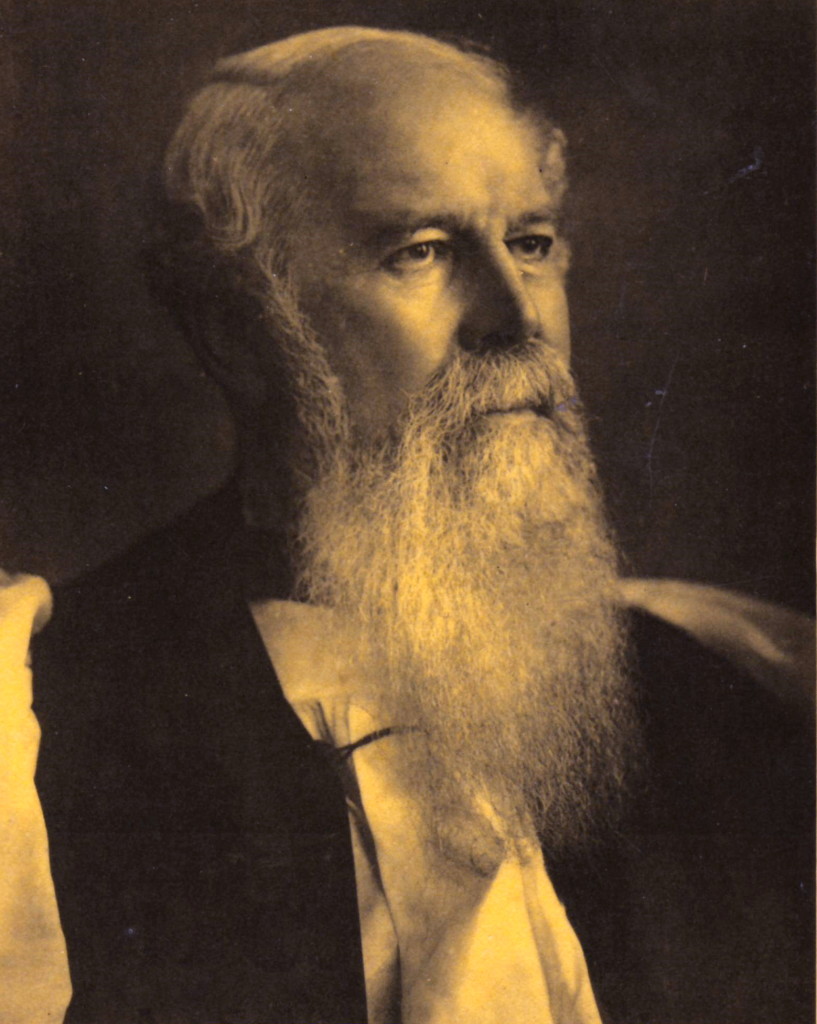
J.C. Ryle
About J.C. Ryle
John Charles Ryle (10 May 1816 — 10 June 1900) was an English evangelical Anglican bishop. He was the first Anglican bishop of Liverpool.
Broadcaster:

Comments

0 / 2000 characters
Comments are moderated before appearing.

Be the first to comment!

Pristine Grace Research Assistant

Pristine Grace Research Assistant

Ask me about articles, sermons, or theology from our library. I can also help you navigate the site.