Bootstrap
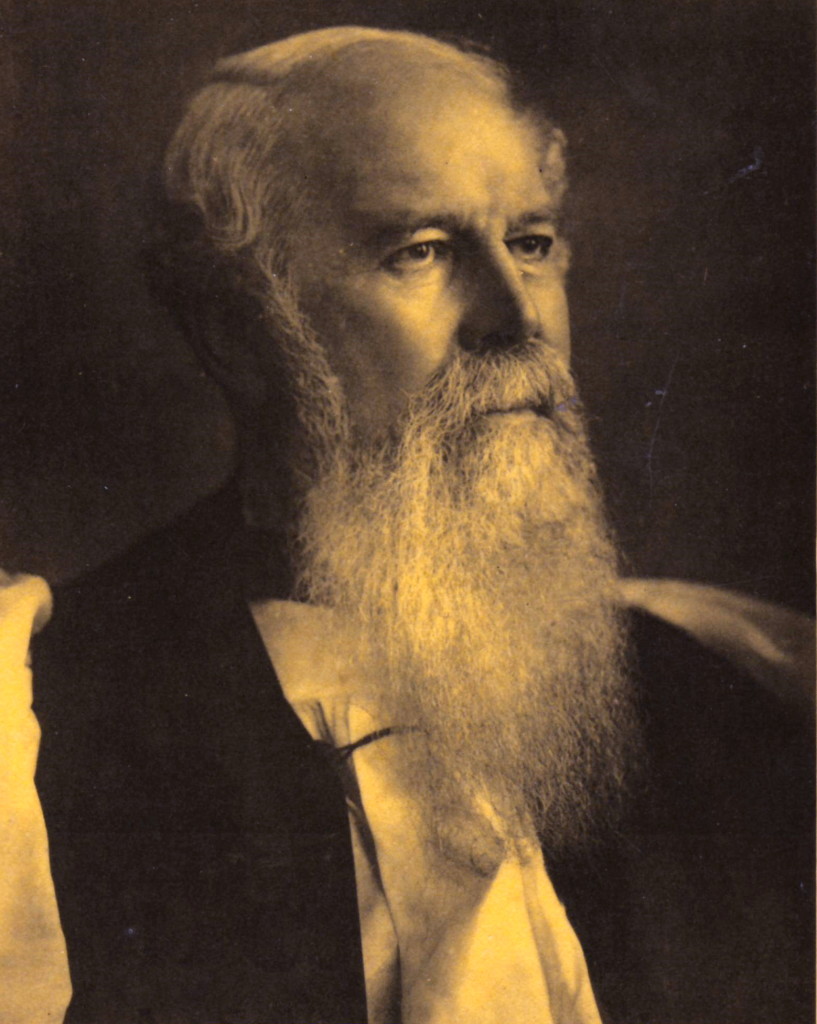
J.C. Ryle

Matthew 11

Matthew 11
J.C. Ryle October, 10 2019 Audio
0 Comments
You will find it helpful to READ the texts--as you LISTEN to the audios!
The TEXTS for the entire commentary can be bound here:
https://gracegems.org/Ryle/Matthew.htm

Sermon Transcript

Auto-generated transcript • May contain errors

100%
CHAPTER XI.

And it came to pass, when Jesus had made an end of commanding his twelve disciples, he departed thence to teach and to preach in their cities. Now when John had heard in the prison the works of Christ, he sent two of his disciples, and said unto him, Art thou he that should come, or do we look for another?

Jesus answered and said unto them, Go and shew John again those things which ye did hear and see. The blind receive their sight, and the lame walk, the lepers are cleansed, and the deaf hear. The dead are raised up, and the poor have the gospel preached to them. And blessed is he whosoever shall not be offended in me.

And as they departed, Jesus began to say unto the multitudes concerning John, What went ye out into the wilderness to see? A reed shaken with the wind. But what went you out for to see? A man clothed in soft raiment. Behold, they that wear soft clothing are in kings' houses. But what went ye out for to see? A prophet? Yea, and I say unto you, and more than a prophet. For this is he of whom it is written, Behold, I send my messenger before thy face, which shall prepare thy way before thee.

Verily I say unto you, Among them that are born of women there hath not risen a greater than John the Baptist. Notwithstanding, he that is least in the kingdom of heaven is greater than he. And from the days of John the Baptist until now, the kingdom of heaven suffereth violence, and the violents take it by force. For all the prophets and the law prophesied until John. And if ye will receive it, this is Elias, which was for to come. He that hath ears to hear, let him hear.

The first thing that demands our attention in this passage is the message which John the Baptist sends to our Lord Jesus Christ. He sent two of his disciples and said unto him, Art thou he that should come, or do we look for another? This question did not arise from doubt or unbelief on the part of John. We do that holy man injustice if we interpret it in such a way. It was put for the benefit of his disciples. It was meant to give them an opportunity of hearing from Christ's own lips the evidence of his divine mission.

No doubt John the Baptist felt that his own ministry was ended. Something within him told him that he would never come forth from Herod's prison household, but would surely die. He remembered the ignorant jealousies that had already been shown by his disciples toward the disciples of Christ. He took the most likely course to dispel these jealousies for ever. He sent his followers to hear and see for themselves.

The conduct of John the Baptist in this matter affords a striking example to ministers, teachers, and parents when they draw near the end of their course. Their chief concern should be about the souls of those they are going to leave behind them. Their great desire should be to persuade them to cleave to Christ. The death of those who have guided and instructed us on earth ought always to have this effect. It should make us lay hold more firmly on him who dieth no more, continueth for ever, and hath an unchangeable priesthood. Hebrews chapter 7 verse 24.

The second thing that demands our notice in this passage is the high testimony which our Lord bears to the character of John the Baptist. No mortal man ever receives such commendation as Jesus here bestows on his imprisoned friend. Among them that are born of women there hath not risen a greater than John the Baptist. In time past John hath boldly confessed Jesus before men, as the Lamb of God. Now Jesus openly declares John to be more than a prophet.

There were some, no doubt, who were disposed to think lightly of John Baptist, partly from ignorance of the nature of his ministry, partly from misunderstanding the question he had sent to ask. Our Lord Jesus silences such cavaliers by the declaration He here makes. He tells them not to suppose that John was a timid, a vacillating, unstable man, a reed shaken by the wind. If they thought so, they were utterly mistaken. He was a bold, unflinching witness to the truth. He tells them not to suppose that John was at heart a worldly man, fond of king's courts and delicate living. If they thought so, they greatly erred. He was a self-denying preacher of repentance, who would risk the anger of a king rather than not reprove his sins. In short, he would have them know that John was more than a prophet. He was one to whom God had given more honor than to all the Old Testament prophets. They indeed prophesied of Christ, but died without seeing Him. John not only prophesied of Him, but saw Him face to face. They foretold that the days of the Son of Man would certainly come, and the Messiah appear. John was an actual eyewitness of those days, and an honoured instrument in preparing men for them. To them it was given to predict that Messiah would be led as a lamb to the slaughter, and cut off. To John it was given to point to Him, and say, Behold, the Lamb of God which taketh away the sin of the world,

There is something very beautiful and comforting to true Christians in this testimony which our Lord bears to John. It shows us the tender interest which our great Head feels in the lives and characters of all His members. It shows us what honour He is ready to put on all the work and labour that they go through in His cause. It is a sweet foretaste of the confession which He will make of them before the assembled world, when He presents them faultless at the last day before His Father's throne.

Do we know what it is to work for Christ? Have we ever felt cast down and dispirited, as if we were doing no good, and no one cared for us? Are we ever tempted to feel, when laid aside by sickness, or withdrawn by providence, I have labored in vain, and spent my strength for naught? Let us meet such thoughts by the recollection of this passage. Let us remember, there is one who daily records all we do for him, and sees more beauty in his servants' work than his servants do themselves. The same tongue which bore testimony to John in prison, will bear testimony to all his people at the last day. He will say, Come, ye blessed of my father, receive the kingdom prepared for you from the foundation of the world. And then shall his faithful witnesses discover, to their wonder and surprise, that there never was a word spoken on their master's behalf, which does not receive a reward.

CHAPTER XI. UNREASONABLENESS OF UNBELIEVERS EXPOSED. Danger of Not Using the Light.

MATTHEW CHAPTER XI. VERSES SIXTEEN TO TWENTY-FOUR.

But whereunto shall I liken this generation? It is like unto children sitting in the markets, and calling out to their fellows, and saying, We have piped unto you, and ye have not danced. We have mourned unto you, and ye have not lamented. For John came neither eating nor drinking, and they say, He hath the devil. The son of man came eating and drinking, and they say, Behold, a man gluttonous, and a wine-biber, a friend of publicans and sinners. But wisdom is justified of her children.

Then he began to upbraid the cities wherein most of his mighty works were done, because they repented not. Woe unto thee, Chorison! Woe unto thee, best Syda! For if the mighty works which were done in you had been done in Tyre and Sidon, they would have repented long ago, in sackcloth and ashes. But I say unto you, it shall be more tolerable for Tyre and Sidon at the day of judgment than for you. And thou, Capernaum, which art exalted unto heaven, shall be brought down to hell. For if the mighty works which have been done in thee had been done in Sodom, it would have remained until this day. But I say unto you, that it shall be more tolerable for the land of Sodom in the day of judgment than for thee.

These sayings of the Lord Jesus were called forth by the state of the Jewish nation when he was upon earth. But they speak loudly to us also, as well as to the Jews. They throw great light on some parts of the natural man's character. They teach us the perilous state of many immortal souls in the present day.

The first part of these verses shows us the unreasonableness of many unconverted men in the things of religion. The Jews, in our Lord's time, found fault with every teacher whom God sent among them. First came John the Baptist, preaching repentance, an austere man, a man who withdrew himself from society and lived an aesthetic life. Did this satisfy the Jews? No. They found fault and said, He hath a devil. Then came Jesus, the Son of God, preaching the gospel, living as other men lived, and practicing none of John the Baptist's peculiar austerities. And did this satisfy the Jews? No. They found fault again, and said, Behold a man gluttonous, and a wine-biber, a friend of publicans and sinners. In short, they were as perverse and hard to please as wayward children.

It is a mournful fact that there are always thousands of professing Christians just as unreasonable as these Jews. They are equally perverse and equally hard to please. Whatever we teach and preach, they find fault. Whatever be our manner of life, they are dissatisfied. Do we tell them of salvation by grace, and justification by faith? At once they cry out against our doctrine as licentious and antinomium. Do we tell them of the holiness which the gospel requires? At once they exclaim, that we are too strict, and precise, and righteous over much. Are we cheerful? They accuse us of levity. Are we grave? They call us gloomy and sour. Do we keep aloof from balls, and races, and plays? They denounce us as puritanical, exclusive, and narrow-minded. Do we eat, and drink, and dress like other people, and attend to our worldly callings, and go into society? They sneeringly insult that they see no difference between us and those who make no religious profession at all, and that we are not better than other men.

What is all this but the conduct of the Jews over again? We have piped unto you, and ye have not danced. We have mourned unto you, and ye have not lamented. He who spake these words knew the hearts of men. The plain truth is that true believers must not expect unconverted men to be satisfied either with their faith or their practice. If they do, they expect what they will not find. They must make up their mind to hear objections, cavils, and excuses. However holy their own lives may be. Well says Quesnel, whatever measures good men take, they will never escape the censures of the world. The best way is not to be concerned at them. After all, what saith the Scripture? The carnal mind is enmity against God. The natural man receiveth not the things of the Spirit of God. Romans chapter 8 verse 7, 1 Corinthians chapter 2 verse 14.

This is the explanation of the whole matter. The second part of these verses shows us the exceeding wickedness of willful impenitence. Our Lord declares that it shall be more tolerable for Tyre, Sidon, and Sodom in the day of judgment than for those towns where people had heard his sermons and seen his miracles, but not repented.

There is something very solemn in this saying. Let us look at it well. Let us think for a moment what dark, idolatrous, immoral, profligate places Tyre and Sidon must have been. Let us call to mind the unspeakable wickedness of Sodom. Let us remember that the cities named by our Lord, Chorazin, Bethsaida, and Capernaum, were probably no worse than other Jewish towns, and at all events were far better than Tyre, Sidon, and Sodom.

And then let us observe that the people of Chorazin, Bethsaida, and Capernaum, are to be in the lowest hell, because they heard the gospel, and yet did not repent, because they had great religious advantages, and did not use them. How awful this sounds! Surely these words ought to make the ears of every one tingle, who hears the gospel regularly, and yet remains unconverted.

How great is the guilt of such a man before God! How great the danger in which he daily stands! Moral, and decent, and respectable as his life may be, He is actually more guilty than an idolatrous Tyrian, or Sidonian, or a miserable inhabitant of Sodom. They had no spiritual light. He has, and neglects it. They heard no gospel. He hears, but does not obey it. Their hearts might have been softened if they had enjoyed his privileges. Tyre and Sidon would have repented. Sodom would have remained until this day.

His heart, under the full blaze of the gospel, remains hard and unmoved. There is but one painful conclusion to be drawn. His guilt will be found greater than theirs at the last day. Most true is the remark of an English bishop. Among all the aggravations of our sins, there is none more heinous than the frequent hearing of our duty.

May we all think often about Chorazin, Bethsaida, and Capernaum. Let us settle it in our minds that it will never do to be content with merely hearing and liking the gospel. We must go further than this. We must actually repent and be converted. We must actually lay hold on Christ, and become one with Him. Till then we are in awful danger. It will prove more tolerable to have lived in Tyre, Sidon, and Sodom, than to have heard the Gospel in England, and at last died unconverted.

CHAPTER XI. VERSES TWENTY-FIVE TO THIRTY. GREATNESS OF CHRIST. FULLNESS OF GOSPEL INVITATIONS. MATTHEW CHAPTER XI. VERSES TWENTY-FIVE TO THIRTY.

At that time Jesus answered and said, I thank thee, O Father, Lord of heaven and earth, because thou hast hid these things from the wise and prudent, and hast revealed them unto babes. Even so, Father, for it so seemed good in thy sight. All things are delivered unto me of my Father, and no man knoweth the Son, but the Father. Neither knoweth any man the Father, save the Son, and he to whomsoever the Son will reveal him.

Come unto me, all ye that labour and are heavy laden, and I will give you rest. Take my yoke upon you, and learn of me, for I am meek and lowly in heart, and ye shall find rest unto your souls. For my yoke is easy, and my burden is light.

There are few passages in the four Gospels more important than this. There are few which contain, in so short a compass, so many precious truths. May God give us an eye to see, and a heart to feel their value.

Let us learn, in the first place, the excellence of a childlike and teachable frame of mind. Our Lord says to His Father, Thou hast hid these things from the wise and prudent, and revealed them unto babes. It is not for us to attempt to explain why some receive and believe the Gospel, while others do not. The sovereignty of God in this matter is a deep mystery. We cannot fathom it. But one thing, at all events, stands out in Scripture, as a great practical truth to be had in everlasting remembrance. Those from whom the gospel is hidden are generally the wise in their own eyes and prudent in their own sight. Those to whom the gospel is revealed are generally humble, simple-minded, and willing to learn.

The words of the Virgin Mary are continually being fulfilled. He hath filled the hungry with good things, and the rich he hath sent empty away. Luke chapter 1 verse 53

Let us watch against pride in every shapeâ€"pride of intellect, pride of wealth, pride in our own goodness, pride in our own desserts. Nothing is so likely to keep a man out of heaven and prevent him seeing Christ as pride. So long as we think we are something, we shall never be saved. Let us pray for and cultivate humility. Let us seek to know ourselves aright, and to find out our place in the sight of Holy God. The beginning of the way to heaven is to feel that we are in the way to hell, and to be willing to be taught of the Spirit. One of the first steps in saving Christianity is to be able to say with Saul, Lord, what wilt thou have me to do? There is hardly a sentence of our Lord's so frequently repeated as this, He that humbleth himself shall be exalted. Luke chapter 18 and verse 14.

Let us learn, in the second place from these verses, the greatness and majesty of our Lord Jesus Christ. The language of our Lord on this subject is deep and wonderful. He says, All things are delivered unto me of my Father, and no man knoweth the Son save the Father, neither knoweth any man the Father save the Son, and he to whom the Son shall reveal him. We may truly say, as we read these words, Such knowledge is too wonderful for me. It is high. I cannot attain to it. We see something of the perfect union which exists between the first and second persons of the Trinity. We see something of the immeasurable superiority of the Lord Jesus to all who are nothing more than men. But still, when we have said all this, we must confess that there are heights and depths in this verse which are beyond our feeble comprehension. We can only admire them in the spirit of little children. But the half of them, we feel, remains untold.

Let us, however, draw from these words the great practical truth, that all power and authority, in everything that concerns our soul's interests, is placed in our Lord Jesus Christ's hands. All things are delivered unto Him. He bears the keys. To Him we must go for admission into heaven. He is the door. Through Him we must enter. He is the shepherd. We must hear His voice and follow Him if we would not perish in the wilderness. He is the Physician. We must apply to Him if we would be healed of the plague of sin. He is the Bread of Life. We must feed on Him if we would have our soul satisfied. He is the Light. We must walk after Him if we would not wander in darkness. He is the fountain. We must wash in His blood if we would be cleansed and made ready for the great day of account.

Blessed and glorious are these truths. If we have Christ, we have all things.

1 Corinthians 3.22.

Let us learn, in the last place, from this passage, the breadth and fullness of the imitations of Christ's gospel. The last three verses of the chapter, which contain this lesson, are indeed precious. They meet the trembling sinner who asks, Will Christ reveal His Father's love to such a one as me? with the most gracious encouragement. They are verses which deserve to be read with special attention. For eighteen hundred years they have been a blessing to the world, and have done good to myriads of souls. There is not a sentence in them which does not contain a mine of thought.

Mark who they are that Jesus invites. He does not address those who feel themselves righteous and worthy. He addresses all that labor and are heavy laden. It is a wide description. It comprises multitudes in this weary world. All who feel a load on their heart, of which they would fain get free, a load of sin or a load of sorrow, a load of anxiety or a load of remorse. All, whosoever they may be, and whatsoever their past lives, all are invited to come to Christ.

Mark what a gracious offer Jesus makes. I will give you rest. Ye shall find rest to your souls. How cheering and comfortable are these words! Unrest is one great characteristic of the world. Hurry, vexation, failure, disappointment, stare us in the face on every side. But here is hope. There is an arc of refuge for the weary, as truly as there was for Noah's dove. There is rest in Christ. Rest of conscience and rest of heart. Rest built on pardon of all sin. Rest flowing from peace with God.

Mark what a simple request Jesus makes to the laboring and heavy-laden ones. Come unto me. Take my yoke upon you. Learn of me. He interposes no hard conditions. He speaks nothing of works to be done first, and deservingness of his gifts to be established. He only asks us to come to him just as we are, with all our sins, and to submit ourselves like little children to his teaching. Go not, he seems to say, to man for relief. Wait not for help to arise from any other quarter. Just as you are, this very day, come to me.

" Mark what an encouraging account Jesus gives of himself. He says, I am meek and lowly of heart. How true that is, the experience of all the saints of God has often proved. Mary and Martha at Bethany, Peter after his fall, the disciples after the resurrection, Thomas after his cold unbelief, all tasted the meekness and gentleness of Christ. It is the only place in Scripture where the heart of Christ is actually named. It is a saying never to be forgotten.

Mark, lastly, the encouraging account that Jesus gives of his service, he says, My yoke is easy and my burden is light. No doubt there is a cross to be carried, if we follow Christ. No doubt there are trials to be endured, and battles to be fought. But the comforts of the gospel far outweigh the cross. Compared to the service of the world in sin, compared to the yoke of Jewish ceremonies, and the bondage of human superstition, Christ's service is in the highest sense easy and light. His yoke is no more a burden than the feathers are to a bird. His commandments are not grievous. His ways are ways of pleasantness, and all His paths are of peace. 1 John 5, 3. Proverbs 3, 17.

And now comes the solemn inquiry. Have we accepted this invitation for ourselves? Have we no sins to be forgiven, no griefs to be removed, no wounds of conscience to be healed?

If we have, let us hear Christ's voice. He speaks to us as well as to the Jews. He says, Come unto Me. Here is the key to true happiness. Here is the secret of having a light heart. All turns and hinges on an acceptance of this offer of Christ.

May we never be satisfied till we know and feel that we have come to Christ by faith for rest, and do still come to Him for fresh supplies of grace every day. If we have come to Him already, let us learn to cleave to Him more closely. If we have never come to Him yet, let us begin to come to-day.

His word shall never be broken. He that cometh unto me I will in no wise cast out. John chapter 6, verse 37. End of section 32
J.C. Ryle
About J.C. Ryle
John Charles Ryle (10 May 1816 — 10 June 1900) was an English evangelical Anglican bishop. He was the first Anglican bishop of Liverpool.
Broadcaster:

Comments

0 / 2000 characters
Comments are moderated before appearing.

Be the first to comment!

Pristine Grace Research Assistant

Pristine Grace Research Assistant

Ask me about articles, sermons, or theology from our library. I can also help you navigate the site.