You will find it helpful to READ the texts--as you LISTEN to the audios!
The TEXTS for the entire commentary can be bound here: https://gracegems.org/Ryle/Mark.htm
Sermon Transcript
Auto-generated transcript • May contain errors
100%
CHAPTER VIII. In those days, the multitude being very great, and having nothing to eat, Jesus called his disciples unto him, and saith unto them, I have compassion on the multitude because they have now been with me three days, and have nothing to eat. And if I send them away fasting to their own houses, they will faint by the way, for divers of them come from far."
And his disciples answered him, "'From whence can a man satisfy these men with bread here in the wilderness?' Then he asked them, "'How many loaves have ye?' and they said, Seven. And he commanded the people to sit down on the ground, and he took the seven loaves, and gave thanks, and brake, and gave to his disciples, to set before them, and they did set them before the people. and they had a few small fishes, and he blessed, and commanded to set them also before them. So they did eat, and were filled. And they took up of the broken meat that was left seven baskets, and they that had eaten were about four thousand, and he sent them away.
And straightway he entered into a ship with his disciples, and came into the parts of Dalmanutha. And the Pharisees came forth, and began to question with him, seeking of him a sign from tempting him. And he sighed deeply in his spirit, and saith, Why doth this generation seek after a sign? Verily I say unto you, There shall no sign be given unto this generation. And he left them, and entering into the ship again, departed to the other side.
Once more we see our Lord feeding a great multitude, with a few loaves and fishes. He knew the heart of man. He saw the rise of cavaliers and skeptics who would question the reality of the wonderful works he performed. By repeating the mighty miracle he recorded, he stops the mouth of all who are not willfully blind to evidence. Publicly, and before four thousand witnesses, he shows his almighty power a second time.
Let us observe in this passage how great is the kindness and compassion of our Lord Jesus Christ. He saw around Him a very great multitude, who had nothing to eat. He knew that the great majority were following Him from no other motive than idle curiosity, and had no claim whatever to be regarded as His disciples. Yet when He saw them hungry and destitute, He pitied them.
I have compassion on the multitude, because they have now been with Me three days, and have nothing to eat. The feeling heart of our Lord Jesus Christ appears in these words. He has compassion even on those who are not His people, the faithless, the graceless, the followers of this world. He feels tenderly for them, though they know it not. He died for them, though they care little for what He did on the cross. He would receive them graciously, and pardon them freely, if they would only repent and believe on Him.
Let us ever beware of measuring the love of Christ by any human measure. He has a special love, beyond doubt, for His own believing people. But He has also a general love of compassion, even for the unthankful and the evil. His love passeth knowledge. Let us strive to make Jesus our pattern in this, as well as in everything else.
Let us be kind, and compassionate, and pitiful, and courteous to all men. Let us be ready to do good to all men, and not only to friends and the household of faith. Let us carry into practice our Lord's injunction, Love your enemies, bless them that curse you, do good to them that hate you, This is to show the mind of Christ. This is the right way to heap coals of fire on an enemy's head, and to melt foes into friends.
Let us observe, in the second place, from this passage, that with Christ nothing is impossible. The disciples said, From whence can a man satisfy these men with bread here in the wilderness? They might well say so. Without the hand of Him who first made the world out of nothing, the thing could not be. But in the almighty hands of Jesus, seven loaves and a few fishes were made sufficient to satisfy four thousand men. Nothing is too hard for the Lord.
We must never allow ourselves to doubt Christ's power to supply the spiritual wants of all His people. He has bread enough and to spare for every soul that trusts in Him. Weak, infirm, corrupt, empty as believers feel themselves, let them never despair while Jesus lives. In Him there is a boundless store of mercy and grace laid up for the use of all His believing members and ready to be bestowed on all who ask in prayer. It pleases the Father that in Him should all fullness dwell. Colossians 1.19
Let us never doubt Christ's providential care for the temporal wants of all His people. He knows their circumstances. He is acquainted with all their necessities. He will never allow them to lack anything that is really for their good. His heart has not changed since he ascended up on high and sat down on the right hand of God. He still lives who had compassion on the hungry crowd in the wilderness and supplied their need. How much more, may we suppose, will he supply the need of those who trust him? He will supply them without fail. Their faith may occasionally be tried, they may sometimes be kept waiting and brought very low. But the believer shall never be left entirely destitute. bread shall be given him, his water shall be sure." Isaiah 33.16.
Let us observe, in the last place, how much sorrow unbelief occasions toward Lord Jesus Christ. We are told that when the Pharisees began to question with Him, seeking of Him a sign from heaven, tempting Him, He sighed deeply in His Spirit. There was deep meaning in that sigh. It came from a heart which mourned over the ruin that these wicked men were bringing on their own souls. Enemies as they were, Jesus could not behold them hardening themselves in unbelief without sorrow. The feeling which our Lord Jesus Christ here expressed will always be the feeling of all true Christians.
Grief over the sins of others is one leading evidence of true grace. The man who is really converted will always regard the unconverted with pity and concern. This was the mind of David. I beheld the transgression and was grieved. Psalm 119, verse 158. This was the mind of the godly in the days of Ezekiel. They sighed and cried for the abominations done in the land." Ezekiel 9.4. This was the mind of Lot. He vexed his righteous soul with the unlawful deeds of those around him. 2 Peter 2.8. This was the mind of Paul. I have great heaviness and continual sorrow for my brethren. Romans 9.2. In all these cases we see something of the mind of Christ. As the great head feels, so feel the members. They all grieve when they see sin.
Let us leave the passage with solemn self-inquiry. Do we know anything of likeness to Christ, and fellow-feeling with Him? Do we feel hurt and pain and sorrowful when we see men continuing in sin and unbelief? Do we feel grieved and concerned about the state of the unconverted? These are heart-searching questions, and demand serious consideration. There are few surer marks of an unconverted heart than carelessness and indifference about the souls of others.
Finally, let us never forget that unbelief and sin are just as great a cause of grief to our Lord now as they were 1,800 years ago. Let us strive and pray that we may not add to that grief by any act or deed of ours. The sin of grieving Christ is one which many commit continually without thought or reflection. He that sighed over the unbelief of the Pharisees is still unchanged. Can we doubt that when he sees some persisting in unbelief at the present day, he is grieved? From such sin may we be delivered.
CHAPTER VIII. VERSES FOURTEEN TO TWENTY-ONE. WARNING AGAINST FALSE DOCTRINE. SLOWNESS TO UNDERSTAND IN DISCIPLES. MARK CHAPTER VIII. VERSES FOURTEEN TO TWENTY-ONE.
Now the disciples had forgotten to take bread, neither had they, in the ship with them, more than one loaf. And he charged them, saying, Take heed, beware of the leaven of the Pharisees, and of the leaven of Herod. And they reasoned among themselves, saying, It is because we have no bread. And when Jesus knew it, he saith unto them, Why reason ye, because ye have no bread? perceive ye not yet, neither understand? have ye your heart yet hardened? Having eyes, see ye not? And having ears, hear ye not? And do you not remember? When I break the five loaves among five thousand, how many baskets full of fragments took ye up? They say unto him, Twelve. And when the seven among four thousand, how many baskets full of fragments took ye up? And they said, Seven. And he said unto them, How is it that ye do not understand?
Let us notice the solemn warning which our Lord gives to His disciples at the beginning of this passage. He says, Take heed, beware of the leaven of the Pharisees, and of the leaven of Herod. We are not left to conjecture the meaning of this warning. This is made clear by the parallel passage in St. Matthew's Gospel. We there read that Jesus did not mean the leaven of bread, but the leaven of doctrine. The self-righteousness and formalism of the Pharisees, the worldliness and skepticism of the courtiers of Herod, were the objects of our Lord's caution. Against both he bids his disciples to be on their guard.
Such warnings are of deep importance. It would be well for the Church of Christ if they had been more remembered. The assaults of persecution from without have never done half so much harm to the Church as the rise of false doctrines within. False prophets and false teachers within the camp have done far more mischief in Christendom than all the bloody persecutions of the emperors of Rome. The sword of the foe has never done such damage to the cause of truth as the tongue and the pen. The doctrines which our Lord specifies are precisely those which have always been found to inflict most injury on the cause of Christianity. Formalism, on the one hand, and skepticism, on the other, have been chronic diseases in the professing Church of Christ. In every age multitudes of Christians have been infected by them. In every age men need to watch against them and be on their guard.
The expression used by our Lord in speaking of false doctrine is singularly forcible and appropriate. he calls it eleven. No word more suitable could have been employed. It exactly describes the small beginnings of false doctrine, the subtle, quiet way in which it insensibly pervades a man's religion, the deadly power with which it changes the whole character of Christianity. Here, in fact, lies the great danger of false doctrine. If it approached us under its true colors, it would do little harm. The great secret of its success is its subtlety and likeness to truth. Every error in religion has been said to be a truth abused. Let us often examine ourselves whether we be in the faith, and beware of leaven. Let us no more trifle with a little false doctrine than we would trifle with a little immorality or a little lie.
once admitted into our hearts, and we never know how far it may lead us astray. The beginning of departure from the pure truth is like that of letting out of waters, first a drop, and at last a torrent. A little leaven leaveneth the whole lump. Galatians 5.9.
Let us notice the dull understanding of the disciples when our Lord gave the warning of this passage. They thought that the leaven of which He spoke must be the leaven of bread. It never struck them that He was speaking of doctrine. They drew from Him the sharper proof. Perceive ye not yet, neither understand? Have ye your heart yet hardened? How is it that ye do not understand?
Believers, converted, renewed, as the disciples were, they were still dull of apprehension in spiritual things. Their eyes were still dim, and their perceptions slow in the matters of the kingdom of God. We shall find it useful to ourselves to remember what is here recorded of the disciples. It may help to correct the high thoughts which we are apt to entertain of our own wisdom, and to keep us humble and lowly-minded.
We must not fancy that we know everything as soon as we are converted. Our knowledge, like all our graces, is always imperfect, and never so far from perfection as at our first beginning in the service of Christ. There is more ignorance in our hearts than we are at all aware of. If any man think that he knoweth anything, he knoweth nothing yet as he ought to know.
Above all, we shall find it useful to remember what is here recorded in dealing with young Christians. We must not expect perfection in a new convert. We must not set him down as graceless and godless and a false professor, because at first he sees but half the truth and commits many mistakes. His heart may be right in the sight of God, and yet, like the disciples, he may be very slow of understanding in the things of the Spirit.
We must bear with him patiently, and not cast him aside. We must give him time to grow in grace and knowledge, and his latter end may find him ripe in wisdom, like Peter and John. It is a blessed thought that Jesus, our Master in Heaven, despises none of His people. Marvelous and blameworthy as their slowness to learn undoubtedly is, His patience never gives way. He goes on teaching them, line upon line, precept upon precept.
Let us do likewise. Let it be a rule with us never to despise the weakness and dullness of young Christians. Wherever we see a spark of true grace, however dim and mixed with infirmity, let us be helpful and kind. Let us do as we would be done by.
And he cometh to Bethsaida, and they bring a blind man unto him, and besought him to touch him. And he took the blind man by the hand, and led him out of the town. And when he had spit on his eyes, and put his hands upon him, he asked him if he saw aught. And he looked up, and said, I see men, as trees, walking. After that he put his hands again upon his eyes, and bade him look up, and he was restored, and saw every man clearly. and he sent him away to his house, saying, Neither go into the town, nor tell it to any in the town.
We do not know the reason of the peculiar means employed by our Lord Jesus Christ in working the miracle recorded in these verses. We see a blind man miraculously healed. We know that a word from our Lord's mouth, or a touch of his hand, would have been sufficient to effect a cure. But we see Jesus taking this blind man by the hand, leading him out of the town, spitting in his eyes, putting his hands on him, and then, and not till then, restoring his sight. And the meaning of all these actions, the passage before us leaves entirely unexplained.
But it is well to remember, in reading passages of this kind, that the Lord is not tied to the use of any one means. In the conversion of men's souls there are diversities of operation, but it is the same spirit which converts. So also in the healing of men's bodies there were varieties of agency employed by our Lord, but it was the same divine power that effected the cure. In all His works God is sovereign. He giveth not account to any of His matters.
One thing in the passage demands our special observation. That thing is the gradual nature of the cure which our Lord performed on this blind man. He did not deliver him from his blindness at once, but by degrees. He might have done it in a moment, but he chose to do it step by step. First, the blind man said that he only saw men as trees walking. Afterwards his eyesight was restored completely, and he saw every man clearly. In this respect the miracle stands entirely alone.
We need hardly doubt that this gradual cure was meant to be an emblem of spiritual things. We may be sure that there was a deep meaning in every word and work of our Lord's earthly ministry, and here, as in other places, we shall find a useful lesson. Let us see, then, in this gradual restoration to sight, a vivid illustration of the manner in which the Spirit frequently works in the conversion of souls.
We are all naturally blind and ignorant in the matters which concern our souls. Conversion is an illumination. a change from darkness to light, from blindness to seeing the kingdom of God. Yet few converted people see things distinctly at first. The nature and proportion of doctrines, practices, and ordinances of the gospel are dimly seen by them, and imperfectly understood. They are like the man before us, who at first saw men as trees walking. Their vision is dazzled and unaccustomed to the new world into which they have been introduced. It is not till the work of the Spirit has become deeper, and their experience has been somewhat matured, that they see all things clearly, and give to each part of religion its proper place.
This is the history of thousands of God's children. They begin with seeing men as trees walking. They end with seeing all clearly. Happy is he who has learned this lesson well, and is humble and distrustful of his own judgment.
Finally, let us see in the gradual cure of this blind man a striking picture of the present position of Christ's believing people in the world, compared with that which is to come. We see in part and know in part in the present dispensation. We are like those that travel by night. We know not the meaning of much that is passing around us. In the providential dealings of God with His children, and in the conduct of many of God's saints, we see much that we cannot understand and cannot alter. In short, we are like Him that saw men as trees walking.
But let us look forward and take comfort. The time comes when we shall see all clearly. The night is far spent, the day is at hand. Let us be content to wait, and watch, and work, and pray. When the day of the Lord comes, our spiritual eyesight will be perfected. We shall see as we have been seen, and know as we have been known.
Section 35 of Expository Thoughts on the Gospel of St. Mark by J. C. Ryle. Chapter 8, verses 27 to 33. Peter's Noble Confession of Faith. Peter's Ignorance of the Necessity of Christ's Death.
Mark, Chapter 8, verses 27 to 33. And Jesus went out, and his disciples, into the towns of Caesarea Philippi. And by the way he asked his disciples, saying unto them, Whom do men say that I am? And they answered, John the Baptist. But some say, Elias, and others, one of the prophets. And he saith unto them, But whom say ye that I am? Then Peter answered, And saith unto him, Thou art the Christ. and he charged them that they should tell no man of him. And he began to teach them that the Son of Man must suffer many things, and be rejected of the elders, and of the chief priests and scribes, and be killed, and after three days rise again. And he spake that saying openly, and Peter took him and began to rebuke him. But when he had turned about and looked on his disciples, he rebuked Peter, saying, Get thee behind me, Satan, for thou savest not the things that be of God, but the things that be of men.
The circumstances here recorded are of great importance. They took place during a journey, and arose out of a conversation, by the way. Happy are those journeys, in which time is not wasted on trifles, but redeemed as far as possible for the consideration of serious things.
Let us observe the variety of opinions about Christ, which prevailed among the Jews. Some said that he was John the Baptist, some Elias, and others one of the prophets. In short, every kind of opinion appears to have been current, excepting the one which was true. We may see the same thing on every side at the present day. Christ and his gospel are just as little understood in reality, and are the subject of just as many different opinions as they were eighteen hundred years ago.
Many know the name of Christ. acknowledge him as one who came into the world to save sinners, and regularly worship in buildings set apart for his service. Few thoroughly realize that he is very God, the one Mediator, the one High Priest, the only source of life and peace, their own Shepherd and their own Friend. Vague ideas about Christ are still very common. Intelligent experimental acquaintance with Christ is still very rare. May we never rest, till we can say of Christ, My Beloved is mine, and I am his.
2. This is saving knowledge. This is life eternal.
Let us observe the good confession of faith which the Apostle Peter witnessed. He replied to our Lord's question, Whom say ye that I am? Thou art the Christ. This was a noble answer when the circumstances under which it was made are duly considered. It was made when Jesus was poor in condition, without honor, majesty, wealth, or power. It was made when the heads of the Jewish nation, both in church and state, refused to receive Jesus as the Messiah. Yet even then, Simon Peter says, thou art the Christ. His strong faith was not stumbled by our Lord's poverty and low estate. His confidence was not shaken by the opposition of scribes and Pharisees, and the contempt of rulers and priests. None of these things moved Simon Peter. he believed that he whom he followed, Jesus of Nazareth, was the promised Savior, the true prophet greater than Moses, the long-predicted Messiah. He declared it boldly and unhesitatingly, as the creed of himself and his fellow-companions, Thou art the Christ.
There is much that we may profitably learn from Peter's conduct on this occasion. erring and unstable as he sometimes was, the faith he exhibited, in the passage now before us, is well worthy of imitation. Such bold confessions as his are the truest evidence of living faith, and are required in every age if men will prove themselves to be Christ's disciples. We, too, must be ready to confess Christ, even as Peter did. We shall never find our Master and His doctrine popular. We must be prepared to confess Him with few on our side and many against us. But let us take courage and walk in Peter's steps, and we shall not fail of receiving Peter's reward. Jesus takes notice of those who confess Him before men, and will one day confess them as His servants before an assembled world.
Let us observe the full declaration which our Lord makes of His own coming death and resurrection. We read that He began to teach them that the Son of Man must suffer many things, and be rejected of the elders and of the chief priests and scribes, and be killed, and after three days rise again. The events here announced must have sounded strange to the disciples. To be told that their beloved Master, after all his mighty works, would soon be put to death, must have been heavy tidings and past their understanding.
But the words which convey the announcement are scarcely less remarkable than the event. He must suffer. He must be killed. He must rise again. Why did our Lord say must? Did He mean that He was unable to escape suffering, that He must die by compulsion of a stronger power than His own? impossible. This could not have been his meaning. Did he mean that he must needs die to give a great example to the world of self-sacrifice and self-denial, and that this, and this alone, made his death necessary? Once more it must be replied, impossible,
There is a far deeper meaning in the word must suffer and be killed. He meant that his death and passion were necessary in order to make atonement for man's sin. Without shedding his blood there could be no remission. Without the sacrifice of his body on the cross there could be no satisfaction to God's holy law. He must suffer to make reconciliation for iniquity. He must die, because without His death as a propitiatory offering, sinners could never have life. He must suffer, because without His vicarious sufferings, our sins could never be taken away. In a word, He must be delivered for our offenses, and raised again for our justification.
Here is the center truth of the Bible. Let us never forget that. All other truths compared to this are of secondary importance. Whatever views we hold of religious truth, let us see that we have a firm grasp upon the atoning efficacy of Christ's death. Let the truth so often proclaimed by our Lord to His disciples, and so diligently taught by His disciples to the world, be the foundation truth in our Christianity.
In life and in death, in health and in sickness, let us lean all our weight on this mighty fact, that though we have sinned, Christ hath died for sinners, and that though we deserve nothing, Christ hath suffered on the cross for us, and by that suffering purchased heaven for all that believe in Him.
Finally, let us observe in this passage the strange mixture of grace and infirmity which may be found in the heart of a true Christian. We see that very Peter, who had just witnessed so noble a confession, presuming to rebuke his master because he spoke of suffering and dying. We see him drawing down on himself the sharpest rebuke which ever fell from our Lord's lips during His earthly ministry.
Get thee behind me, Satan! Thou savourest not the things that be of God, but the things that be of man.
We have here a humbling proof that the best of saints is a poor, fallible creature. Here was ignorance in Simon Peter. He did not understand the necessity of our Lord's death, and would have actually prevented his sacrifice on the cross. Here was self-conceit in Simon Peter. He thought he knew what was right and fitting for his Master better than his Master himself, and actually undertook to show the Messiah a more excellent way. and last, but not least, Simon Peter did it all with the best intentions. He meant well. His motives were pure. But zeal and earnestness are no excuse for error. A man may mean well, and yet fall into tremendous mistakes.
Let us learn humility from the facts here recorded. Let us beware of being puffed up with our own spiritual attainments or exalted by the praise of others. Let us never think that we know everything and are not likely to err. We see that it is but a little step from making a good confession to being a Satan in Christ's way. Let us pray daily, Hold thou me up, keep me, teach me, let me not err.
Lastly, let us learn charity towards others from the facts here recorded. Let us not be in a hurry to cast off our brother as graceless because of errors and mistakes. Let us remember that his heart may be right in the sight of God, like Peter's, though like Peter he may for a time turn aside. Rather, let us call to mind St. Paul's advice and act upon it. If a man be overtaken in a fault, ye who are spiritual, restore such an one in the spirit of meekness, considering thyself, lest thou also be tempted.
NECESSITY OF SELF-DENIAL VALUE OF THE SOUL DANGER OF BEING ASHAMED OF CHRIST
Mark chapter 8 verses 34 to 38
And when he had called the people unto him, with his disciples also, he said unto them, Whosoever will come after me, let him deny himself, and take up his cross, and follow me. For whosoever will save his life shall lose it, but whosoever shall lose his life for my sake and for the gospel's, the same shall save it. For what shall it profit a man, if he shall gain the whole world, and lose his own soul? Or what shall a man give in exchange for his soul? Whosoever, therefore, shall be ashamed of me and of my words in this adulterous and sinful generation, of him also shall the Son of Man be ashamed, when he cometh into the glory of his Father with the holy angels.
The words of our Lord Jesus Christ in this passage are peculiarly weighty and solemn. They were spoken to correct the mistaken view of His disciples as to the nature of His kingdom. But they contain truths of the deepest importance to Christians in every age of the Church. The whole passage is one which should often form the subject of private meditation.
We learn, for one thing, from these verses, the absolute necessity of self-denial, if we would be Christ's disciples and be saved. What saith our Lord? Whosoever will come after me, let him deny himself, and take up his cross, and follow me.
Salvation is undoubtedly all of grace. It is offered freely in the gospel to the chief of sinners, without money and without price. By grace are ye saved, through faith, and that not of yourselves. It is the gift of God, not of works, lest any man should boast. But all who accept this great salvation must prove the reality of their faith by carrying the cross after Christ. They must not think to enter heaven without trouble, pain, suffering, and conflict on earth. They must be content to take up the cross of doctrine and the cross of practice, the cross of holding a faith which the world despises, and the cross of living a life which the world ridicules as too strict and righteous over much. They must be willing to crucify the flesh, to mortify the deeds of the body, to fight daily with the devil, to come out from the world, and to lose their lives, if needful, for Christ's sake and the Gospels.
These are hard sayings, but they admit of no evasion. The words of our Lord are plain and unmistakable. If we will not carry the cross, we shall never wear the crown. Let us not be deterred from Christ's service by fear of the cross. Heavy as that cross may seem, Jesus will give us grace to bear it. I can do all things through Christ, which strengtheneth me. Philippians chapter 4, verse 13. Thousands, and tens of thousands, have borne it before us, and have found Christ's yoke easy, and Christ's burden light. No good thing on earth was ever attained without trouble. We cannot surely expect that without trouble we can enter the kingdom of God. Let us go forward boldly and allow no difficulty to keep us back.
The cross, by the way, is but for a few years. The glory, at the end, is for evermore. Let us often ask ourselves whether our Christianity costs us anything. Does it entail any sacrifice? Has it the true stamp of heaven? Does it carry with it any cross? If not, we may well tremble and be afraid. We have everything to learn. A religion which costs nothing is worth nothing. It will do us no good in the life that now is. It will lead to no salvation in the life to come.
We learn, for another thing, from these verses, the unmistakable value of the soul. What saith our Lord? What shall it profit a man if he shall gain the whole world, and lose his own soul? These words were meant to stir us up to exertion and self-denial. They ought to ring in our ears like a trumpet, every morning when we rise from our beds, and every night when we lie down. May they be deeply graven in our memories, and never effaced by the devil and the world.
We have all souls that will live for evermore. Whether we know it or not, we all carry about with us something which will live on when our bodies are moldering in the grave. We have all souls, for which we shall have to give account to God. It is an awful thought, when we consider how little attention most men give to anything except this world, but it is true. Any man may lose his own soul. He cannot save itâ€"Christ alone can do thatâ€"but he can lose it, and that in many different ways. He may murder it by loving sin and cleaving to the world. He may poison it by choosing a religion of lies and believing man-made superstitions. He may starve it by neglecting all means of grace and refusing to receive into his heart the gospel. Many are the ways that lead to the pit. Whatever way a man takes, he, and he alone, is accountable for it.
Weak, corrupt, fallen, impotent as human nature is, man has a mighty power of destroying, ruining, and losing his own soul. The whole world cannot make up to a man the loss of his soul. The possession of all the treasures that the world contains would not compensate for eternal ruin. They would not satisfy us and make us happy while we had them. They could only be enjoyed for a few years at best, and must then be left for evermore.
Of all unprofitable and foolish bargains that man can make, the worst is that of giving up his soul's salvation for the sake of this present world. It is a bargain of which thousands, like Esau, who sold his birthright for a mess of pottage, have repented, but many, unhappily, like Esau, have repented too late.
Let these sayings of our Lord sink deep into our hearts. Words are inadequate to express their importance. May we remember them in the hour of temptation, when the soul seems a small and unimportant thing, and the world seems very bright and great. May we remember them in the hour of persecution, when we are tried by the fear of man, and half inclined to forsake Christ. In hours like these let us call to mind this mighty question of our Lord, and repeat it to ourselves. What shall it profit a man, if he gain the whole world, and lose his own soul?
We learn, in the last place, from these verses, the great danger of being ashamed of Christ. What saith our Lord, Whosoever shall be ashamed of me and of my words in this adulterous and sinful generation, of him also shall the Son of man be ashamed when he cometh in the glory of his Father with the holy angels.
When can it be said of anyone that he is ashamed of Christ? We are guilty of it when we are ashamed of letting people see that we believe and love the doctrines of Christ, that we desire to live according to the commandment of Christ, and that we wish to be reckoned among the people of Christ. Christ's doctrine, laws, and people were never popular and never will be. The man who boldly confesses that he loves them is sure to bring on himself ridicule and persecution. Whosoever shrinks from this confession from fear of this ridicule and persecution is ashamed of Christ, and comes under the sentence of the passage before us.
Perhaps there are few of our Lord's sayings which are more condemning than this. The fear of man does, indeed, bring a snare. Proverbs 29.25. There are thousands of men who would face a lion, or storm a breach, if duty called them, and fear nothing, and yet would be ashamed of being thought religious, and would not dare to avow that they desire to please Christ rather than man. Wonderful, indeed, is the power of ridicule. Marvelous is the bondage in which men live to the opinion of the world.
Let us all pray daily for faith and courage to confess Christ before men. Of sin, or worldliness, or unbelief, we may well be ashamed. We ought never to be ashamed of Him who died for us on the cross. In spite of laughter, mockery, and hard words, let us boldly avow that we serve Christ. Let us often look forward to the day of His second coming, and remember what He says in this place. Better a thousand times confess Christ now, and be despised by man, than be disowned by Christ before His Father in the day of judgment.
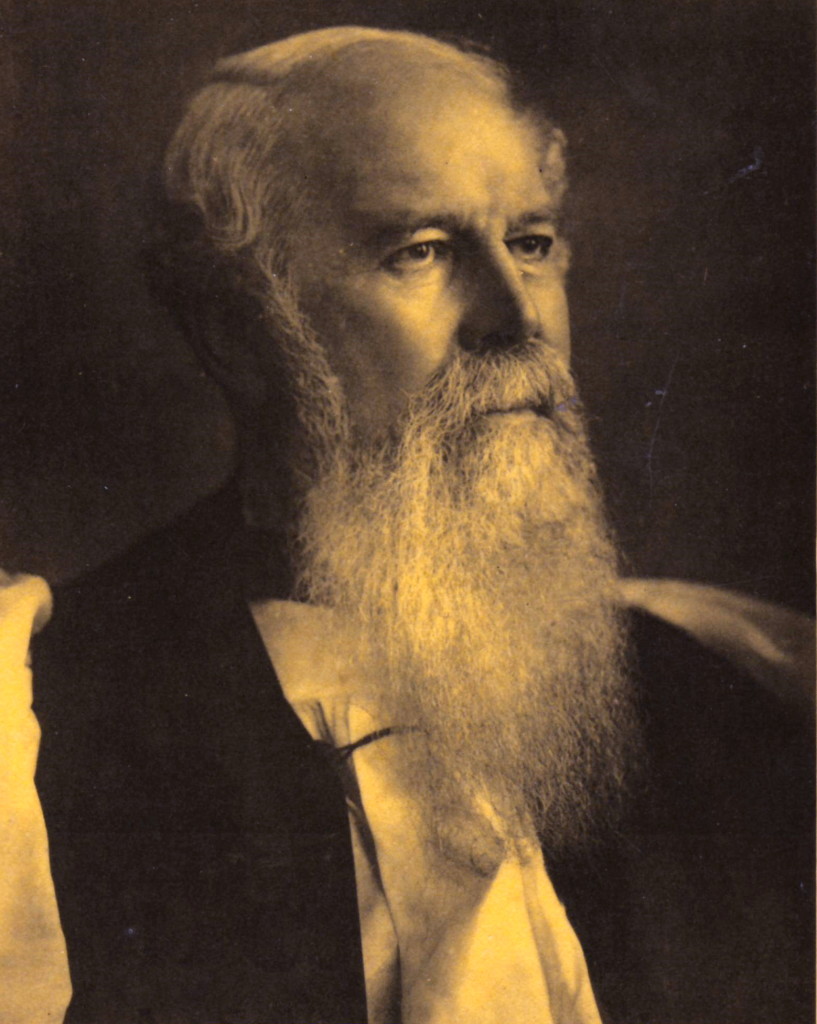
About J.C. Ryle
John Charles Ryle (10 May 1816 — 10 June 1900) was an English evangelical Anglican bishop. He was the first Anglican bishop of Liverpool.
Pristine Grace functions as a digital library of preaching and teaching from many different men and ministries. I maintain a broad collection for research, study, and listening, and the presence of any preacher or message here should not be taken as a blanket endorsement of every doctrinal position expressed.
I publish my own convictions openly and without hesitation throughout this site and in my own preaching and writing. This archive is not a denominational clearinghouse. My aim in maintaining it is to preserve historic and contemporary preaching, encourage careful study, and above all direct readers and listeners to the person and work of Christ.
Brandan Kraft
Bible Verse Lookup
Loading today's devotional...
Unable to load devotional.
Select a devotional to begin reading.
Examples: Isaiah 53:10, Rom 8:28-30, Psalm 23, grace, love one another
to
This chapter has verses 1---
Sign in to save your Bible lookup and search history.
Comments
Your comment has been submitted and is awaiting moderation. Once approved, it will appear on this page.
Be the first to comment!