You will find it helpful to READ the texts--as you LISTEN to the audios!
The TEXTS for the entire commentary can be bound here: https://gracegems.org/Ryle/Mark.htm
Sermon Transcript
Auto-generated transcript • May contain errors
100%
And he said unto them, Verily I say unto you, that there be some of them that stand here which shall not taste of death till they have seen the kingdom of God come with power.
And after six days Jesus taketh with him Peter, and James, and John, and leadeth them up into an high mountain, apart by themselves, and he was transfigured before them. And his raiment became shining, exceeding white as snow, so as no fuller on earth can white them. And there appeared unto them Elias with Moses, and they were talking with Jesus.
and Peter answered, and said to Jesus, Master, it is good for us to be here, and let us make three tabernacles, one for thee, and one for Moses, and one for Elias. For he wist not what to say, for they were sore afraid.
And there was a cloud that overshadowed them, and a voice came out of the cloud, saying, This is my beloved son. Hear him. And suddenly, when they had looked round about, they saw no man any more, save Jesus only with themselves.
And as they came down from the mountain, he charged them that they should tell no man what things they had seen, till the Son of Man was risen from the dead. And they kept that saying with themselves, questioning one with another, what the rising from the dead should mean.
And they asked him, saying, Why say the scribes, that Elias must first come? And he answered and told them, Elias verily cometh first, and restoreth all things, and how it is written of the Son of Man that he must suffer many things, and be set at nought. But I say unto you, that Elias is indeed come, and they have done unto him whatsoever they listed, as it is written of him.
The connection of this passage with the end of the last chapter ought never to be overlooked. Our Lord had been speaking of His own coming death and passion, of the necessity of self-denial, if men would be His disciples, of the need of losing our lives, if we would have them saved. But in the same breath He goes on to speak of His future kingdom and glory. He takes off the edge of His hard sayings by promising a sight of that glory to some of those who heard Him.
And in the history of the Transfiguration, which is here recorded, we see that promise fulfilled. The first thing which demands our notice in these verses is the marvelous vision they contain of the glory which Christ and His people shall have at His second coming. There can be no doubt that this was one of the principal purposes of the Transfiguration.
It was meant to teach the disciples that though their Lord was lowly and poor in appearance now, He would one day appear in such royal majesty as became the Son of God. It was meant to teach them that when their Master came the second time, His saints, like Moses and Elias, would appear with Him. It was meant to remind them that though reviled and persecuted now, because they belonged to Christ, they would one day be clothed with honor and be partakers of their Master's glory.
The analogy between the glory assumed by our Lord at His transfiguration and the glory which the saints shall receive at His resurrection is well pointed out by Victor Antiochinus in a passage quoted by Duval. He says, ìWe must not suppose that there is to be any change of the natural form of man in the kingdom of heaven. For as the appearance of Christ was not in itself changed but only illumined or glorified, So, also, the just, who will be conformed to his glorious body, will not be changed as to their outward form. Their bodies will only receive a certain ascension of splendor and light, which St. Paul calls a change We have reason to thank God for this vision. We are often tempted to give up Christ's service because of the cross and affliction which it entails. We see few with us and many against us. We find our names cast out as evil and all manner of evil said of us because we believe and love the gospel. Year after year we see our companions in Christ's service removed by death, and we feel as if we knew little about them except that they are gone into an unknown world and that we are left alone. All these things are trying to flesh and blood. No wonder that the faith of believers sometimes languishes, and their eyes fail while they look for their hope.
Let us see in the story of the Transfiguration a remedy for such doubting thoughts as these. The vision of the Holy Mount is a gracious pledge that glorious things are in store for the people of God. Their crucified Savior shall come again in power and great glory. His saints shall all come with Him, and are in safe keeping until that happy day. We may wait patiently. When Christ, who is our life, shall appear, then shall ye also appear with Him in glory." Colossians 3.4.
The second thing which demands our notice in this passage is the strong expression of the Apostle Peter when he saw his Lord transfigured. "'Master,' he said, "'it is good for us to be here.' No doubt there was much in this saying which cannot be commended. It showed an ignorance of the purpose for which Jesus came into the world—to suffer and to die. It showed a forgetfulness of His brethren who were not with Him, and of the dark world which so much needed His Master's presence. Above all, the proposal which he made at the same time to build three tabernacles for Moses, Elias, and Christ, showed a low view of his Master's dignity, and implied that he did not know that a greater than Moses and Elias was there. In all these respects the Apostle's exclamation is not to be praised, but to be blamed.
But having said this, let us not fail to remark what joy and happiness this glorious vision conferred on this warm-hearted disciple. The remark of Brentius on the glorious nature of the whole vision of the Transfiguration is well worth quoting. Like most of that admirable commentator's expositions, it contains much in few words.
QUOTE.
No synod on earth was ever more gloriously attended than this. No assembly was ever more illustrious. Here is God the Father, God the Son, and God the Holy Ghost. Here are Moses and Elias, the chief of the prophets. Here are Peter, James, and John, the chief of the apostles."
Let us see in his fervent cry, It is good to be here, what comfort and consolation the sight of glory can give to a true believer. Let us look forward, and try to form some idea of the pleasure which the saint shall experience when they shall at last meet the Lord Jesus at His second coming, and meet to part no more. A vision of a few minutes was sufficient to warm and stir Peter's heart. The sight of two saints in glory was so cheering and quickening that he would fain have enjoyed more of it. What then shall we say, when we see our Lord appear at the last day, with all His saints? What shall we say? When we ourselves are allowed to share in His glory, and join the happy company, and feel that we shall go out no more from the joy of our Lord? These are questions that no man can answer. The happiness of that great day of gathering together is one that we cannot now conceive. The feelings of which Peter had a little foretaste will then be ours in full experience. We shall all say with one heart and one voice, when we see Christ and all His saints, It is good to be here.
The last thing which demands our notice in this passage is the distinct testimony which it bears to Christ's office and dignity as the promised Messiah. We see this testimony first in the appearance of Moses and Elias, the representatives of the Law and the Prophets. They appear as witnesses that Jesus is He of whom they spoke in old times, and of whom they wrote that He would come. They disappear after a few minutes, and leave Jesus alone, as though they would show that they were only witnesses, and that our Master having come, the servants resign to Him the chief place.
We see this testimony, secondly, in the miraculous voice from heaven, saying, This is my beloved Son. Hear Him. The same voice of God the Father, which was heard at our Lord's baptism, was heard once more at His transfiguration. On both occasions there was the same solemn declaration, This is my beloved Son. On this last occasion there was an addition of two most important words, Hear Him.
The whole conclusion of the vision was calculated to leave a lasting impression in the minds of the three disciples. It taught them in the most striking manner, that their Lord was far above them and the prophets, as the master of the house is above the servants, and that they must in all things believe, follow, obey, trust, and hear Him.
Finally, the last words of the voice from heaven are words that should ever be before the minds of all true Christians. They should hear Christ. He is the Great Teacher. They that would be wise must learn of Him. He is the Light of the World. They that would not err must follow Him. He is the Head of the Church. They that would be living members of His mystical body must ever look to Him.
The grand question that concerns us all is not so much what man says, or ministers say, or the church says, or what councils say, but what says Christ. Him let us hear, in Him let us abide, on Him let us lean, to Him let us look. He and He only will never fail us, never disappoint us, and never lead us astray.
Happy are they who know experimentally the meaning of the text. My sheep hear his voice, and I know them, and they follow me, and I give unto them eternal life, and they shall never perish, neither shall any man pluck them out of my hand.
The coming of Elias, or Elijah, which forms the topic of conversation between our Lord and His disciples in the latter part of the passage, now expounded, is a deep and mysterious subject.
1. According to one class of interpreters, the ministry of John the Baptist was the coming of Elias. They considered that the prophecy of Malachi, Malachi chapter 4 verses 5 and 6, that Elijah the prophet should be sent before the great and dreadful day of the Lord, was completely accomplished in John the Baptist, and that no other coming of Elias is to be expected. This is the view maintained by the great majority of Protestant commentators, both English and foreign, from the time of the Reformation to the present day.
2. According to another class of interpreters, the literal coming of Elias is yet to take place. They consider that John the Baptist only went before our Lord in the spirit and power of Elias, Luke, chapter 1, verse 17, and that the words of Malachi are yet to be fulfilled. This is the view maintained by nearly all the Fathers, by the great majority of the Roman Catholic commentators, and by not a few modern Protestant divines, both English and Continental, at the present time.
If I must express an opinion, when great and lurid divines differ so widely, I must honestly confess that I decidedly inclined to the second of the two interpretations above given. I believe that a literal appearing of Elijah the prophet before the second coming of Christ may be expected. Dark and incomprehensible as the subject is, the scriptural arguments in favor of this view appear to me unanswerable. Any other view seems to do violence to the plain meaning of the words of Malachi 4, 5, 6, Matthew 17, 11, John 1, 21.
There seems no reason why there should not be a double coming of Elias, the first, in spirit and power, when John the Baptist preached, the second, literal and in person, when he shall come at the end of the world, immediately before the great and dreadful day of the Lord. The whole question is undoubtedly surrounded with difficulties, whatever view we adopt. I can only say that after patient and calm investigation I see much fewer difficulties in the way of the interpretation to which I lean than in the way of the other.
I hold with Augustine, Jerome, Chrysostom, Hilary, Decinius, Brennius, Greswell, Alford, and Stier, that Malachi chapter 4, verses 5 and 6, is not yet completely fulfilled, and that Elijah the prophet will yet come. Those who can read Greek will find an interesting note on this subject in Cramer's Catena on St. Mark.
CHAPTER IX. VERSES FOURTEEN TO TWENTY-NINE. THE BOY WITH AN UNCLEAN SPIRIT HEALED. MARK. CHAPTER IX. VERSES FOURTEEN TO TWENTY-NINE.
And when he came to his disciples, he saw a great multitude about them, and the scribes questioning with them. and straightway all the people, when they beheld him, were greatly amazed, and running to him, saluted him. and he asked the scribes, What question ye with them? And one of the multitude answered, and said, Master, I have brought unto thee my son, which hath a dumb spirit, and wheresoever he taketh him, he tareth him, and he foameth, and gnasheth with his teeth, and pineth away. And I spake to the disciples that they should cast him out, and they could not.
He answered them, and saith, No faithless generation. How long shall I be with you? How long shall I suffer you and bring him unto me? and they brought him unto him. And when he saw him, straightway the Spirit tear him, and he fell on the ground, and wallowed foaming. And he asked his father, How long is it ago since this came unto him? And he said, Of a child. And oftentimes it hath cast him into the fire, and into the waters, to destroy him. But if thou canst do anything, have compassion on us, and help us.
Jesus said unto him, if thou canst believe, all things are possible to him that believeth." And straightway the father of the child cried out, and said with tears, Lord, I believe, help thou mine unbelief. When Jesus saw that the people came running together, he rebuked the foul spirit, saying unto him, Thou dumb and deaf spirit, I charge thee, come out of him and enter no more into him. And the spirit cried, and rent him sore, and came out of him, and he was as one dead, insomuch that many said, He is dead. But Jesus took him by the hand and lifted him up, and he arose. And when he was come into the house, his disciples asked him privately, Why could not we cast him out? And he said unto them, This kind can come forth by nothing, but by prayer and fasting.
The contrast between these verses and those which precede them in the chapter is very striking. We pass from the mount of transfiguration to a melancholy history of the work of the devil. We come down from the vision of glory to a conflict with satanic possession. We change the blessed company of Moses and Elias for the rude intercourse of unbelieving scribes. We leave the foretaste of millennial glory and the solemn voice of God the Father testifying to God the Son and return once more to a scene of pain, weakness, and misery.
A boy in agony of body, a father in deep distress, and a little band of feeble disciples baffled by Satan's power and unable to give relief. The contrast, we must all feel, is very great. Yet it is but a faint emblem of the change of scene that Jesus voluntarily undertook to witness when he first laid aside his glory and came into the world. And it is, after all, a vivid picture of the life of all true Christians. With them, as with their Master, work, conflict, and scenes of weakness and sorrow will always be the rule. With them, too, visions of glory, foretastes of heaven, seasons on the mount, will always be the exception.
Let us learn from these verses how dependent Christ's disciples are on the company and help of their Master. We see this truth brought out in a striking manner in the scene which meets our Lord's eyes, when He came down from the Mount. Like Moses, when He came down from Mount Sinai, He finds His little flock in confusion. He sees His nine apostles beset by a party of malicious scribes, and baffled in an attempt to heal one who had been brought to them possessed with a devil.
The very same disciples who a short time before had done many miracles and cast out many devils, had now met with a case too hard for them. They were learning, by humbling experience, the great lesson, Without me ye can do nothing. John, chapter 15, verse 5. It was a useful lesson, no doubt, and overruled to their spiritual good. It would probably be remembered all the days of their lives. The things that we learn by smarting experience abide in our memories, while truths heard with the ear are often forgotten. but we may be sure it was a bitter lesson at the time. We do not love to learn that we can do nothing without Christ.
We need not look far to see many illustrations of this truth in the history of Christ's people in every age. The very men who at one time have done great exploits in the cause of the gospel, at another time have failed entirely and proved weak and unstable as water. The temporary recantations of Cranmer and Jewel are striking examples. The holiest and best of Christians has nothing to glory of. His strength is not his own. He has nothing but what he has received. He has only to provoke the Lord to leave him for a season, and he will soon discover that his power is gone. Like Samson, when his hair was shorn, he is weak as any other man.
Let us learn a lesson of humility from the failure of the disciples. Let us strive to realize every day our need of the grace and presence of Christ. With Him we may do all things. Without Him we can do nothing at all. With Him we may overcome the great temptations. Without Him the least may overcome us. Let our cry be every morning. Leave us not to ourselves. We know not what a day may bring forth. If thy presence go not with us, we cannot go up.
Let us learn, in the second place, from these verses, how early in life we are liable to be injured by Satan. We read a fearful description of the miseries inflicted by Satan on the young man whose case is here recorded, and we are told that he had been under this awful visitation from his very infancy. He came to him of a child.
There is a lesson of deep importance here which we must not overlook. We must labor to do good to our children even from their earliest years. If Satan begins so early to do them harm, we must not be behind him in diligence to lead them to God. How soon in life a child becomes responsible and accountable is a difficult question to solve, perhaps far sooner than many of us suppose. One thing, at all events, is very clear. It is never too soon to strive and pray for the salvation of the souls of children, never too soon to speak to them as moral beings, and tell them of God, and Christ, and right, and wrong. The devil, we may be quite sure, loses no time in endeavoring to influence the minds of young people. He begins with them even of a child, let us work hard to counteract him. If young hearts can be filled by Satan, they can also be filled with the Spirit of God.
Let us learn, in the third place from these verses, how faith and unbelief can be mixed together in the same heart. The words of the child's father said this truth before us in a touching way. Lord, he cried, I believe, help thou mine unbelief,
We see in these words a vivid picture of the heart of many a true Christian. Few indeed are to be found among believers in whom trust and doubt, hope and fear do not exist side by side. Nothing is perfect in a child of God so long as he is in the body. His knowledge and love and humility are all more or less defective and mingled with corruption. As it is with his other graces, so it is with his faith. He believes, and yet has about him a remainder of unbelief.
What shall we do with our faith? We must use it. Weak, trembling, doubting, feeble as it may be, we must use it. We must not wait till it is great, perfect, and mighty, but like the man before us, turn it to account, and hope that one day it will be more strong.
Lord, he said, I believe, what shall we do with our unbelief? We must resist it, and pray against it. We must not allow it to keep us back from Christ. We must take it to Christ, as we take all other sins and infirmities, and cry to Him for deliverance. Like the man before us, we must cry, Lord, help mine unbelief,
These are experimental truths. Happy are they who know something of them. The world is ignorant of them. Faith and unbelief, doubts and fears, are all foolishness to the natural man. But let the true Christian study these things well, and thoroughly understand them. It is of the most importance to our comfort to know, that a true believer may be known by his inward warfare, as well as by his inward peace.
Let us mark, in the last place, the complete dominion which our Lord exercises over Satan and all his agents. The spirit who was too strong for the disciples is at once cast out by the Master. He speaks with mighty authority, and Satan at once is obliged to obey. I charge thee, come out of him, and enter no more into him.
we may leave the passage with comfortable feelings. Greater is He that is for us than all they that are against us. Satan is strong, busy, active, malicious, but Jesus is able to save to the uttermost all that come unto God by him, from the devil as well as from sin, from the devil as well as from the world. Let us possess our soul's impatience. Jesus still lives and will not let Satan pluck us out of his hand. Jesus still lives and will soon come again to deliver us entirely from the fiery darts of the wicked one.
The great chain is prepared. Revelation chapter 20 verse 1. Satan shall one day be bound. The God of peace shall bruise Satan under our feet shortly. Romans chapter 16 verse 20.
The expression, greatly amazed, in the fifteenth verse of the passage now expounded, deserves some notice. The Greek word is exceedingly strong, and implies a feeling much beyond that which the English word amazed conveys to our minds. It certainly seems as if some traces of visible glory, or, at any rate, some expression of extraordinary majesty, appeared in our Lord's countenance after the transfiguration. It reminds us of the face of Moses, shining when he came down from the mount.
CHAPTER IX. VERSES THIRTY TO THIRTY-SEVEN.
And they departed thence, and passed through Galilee, and he would not that any man should know it. For he taught his disciples, and said unto them, The Son of Man is delivered into the hands of men, and they shall kill him, and after that he is killed, he shall rise the third day. But they understood not that saying, and were afraid to ask him.
And he came to Capernaum, and being in the house he asked them, What was it that ye disputed among yourselves by the way? But they held their peace, for by the way they had disputed among themselves who should be the greatest. And he sat down, and called the twelve, and saith unto them, If any man desires to be first, the same shall be last of all, and servant of all. And he took a child, and set him in the midst of them. And when he had taken him in his arms, he said to them, Whosoever shall receive one of such children in my name, receiveth me, and whosoever shall receive me, receiveth not me, but him that sent me.
Let us mark, in these verses, our Lord's renewed announcement of His own coming, death, and resurrection. He taught His disciples and said unto them, The Son of Man is delivered into the hands of men, and they shall kill Him, and after that He is killed He shall rise the third day.
The dullness of the disciples in spiritual things appears once more as soon as this announcement was made. There was good in the tidings as well as seeming evil, sweet as well as bitter, life as well as death, the resurrection as well as the cross. But it was all darkness to the bewildered twelve. They understood not that saying and were afraid to ask.
Their minds were still full of their mistaken ideas of their master's reign upon earth. They thought that his earthly kingdom was immediately to appear. Never are we so slow to understand as when prejudice and preconceived opinions darken our eyes.
The immense importance of our Lord's death and resurrection comes out strongly in this fresh announcement which he makes, It is not for nothing that he reminds us again that he must die. He would have us know that his death was the great end for which he came into the world. He would remind us that by that death the great problem was to be solved, how God could be just and yet justify sinners.
He did not come upon earth merely to teach, and preach, and work miracles. He came to make satisfaction for sin, by His own blood and suffering on the cross. Let us never forget this. The incarnation, and example, and words of Christ are all of deep importance. But the grand object which demands our notice in the history of His earthly ministry is His death on Calvary.
Let us mark, in the second place in these verses, the ambition and love of preeminence which the apostles exhibited. By the way they disputed among themselves who should be greatest. How strange this sounds! Who would have thought that a few fishermen and publicans could have been overcome by emulation and the desire of supremacy? Who would have expected that poor men, who had given up all for Christ's sake, would have been troubled by strife and dissension, as to the place and precedence which each one deserved? Yet so it is. The fact is recorded for our learning. The Holy Ghost has caused it to be written down for the perpetual use of Christ's Church. Let us take care that it is not written in vain.
It is an awful fact, whether we like to allow it or not, that pride is one of the commonest sins which beset human nature. We are all born Pharisees. We all naturally think far better of ourselves than we ought. We all naturally fancy that we deserve something better than we have. It is an old sin. It began in the Garden of Eden, when Adam and Eve thought they had not got everything that their merits deserved. It is a subtle sin. It rules and reigns in many a heart without being detected, and can even wear the garb of humility. It is a most soul-ruining sin. It prevents repentance, keeps men back from Christ, checks brotherly love, and nips in the bud spiritual anxiety. Let us watch against it, and be on our guard. Of all garments, none is so graceful, none wears so well, and none is so rare as true humility.
Let us mark, in the third place, the peculiar standard of true greatness which our Lord sets before His disciples. He says to them, These words are deeply instructive. They show us that the maxims of the world are directly contrary to the mind of Christ. The world's idea of greatness is to rule, but Christian greatness consists in serving. The world's ambition is to receive honor and attention, but the desire of the Christian should be to give rather than receive, and to attend on others rather than be attended on himself. In short, the man who lays himself out most to serve his fellow men, and to be useful in his day and generation, is the greatest man in the eyes of Christ.
Footnote. The words of Augustine on this point are worth reading. He says, quote, A bishop's office is a name of labor rather than of honor, so that he who coveteth preeminence rather than usefulness may understand that he is not a bishop. End quote. Decivit Dei. End footnote.
Let us strive to make a practical use of this heart-searching maxim. Let us seek to do good to our fellow men and to mortify that self-pleasing and self-indulgence to which we are all so prone. Is there any service that we can render to our fellow Christians? Is there any kindness that we can do to them to help them and promote their happiness? If there is, let us do it without delay. Well would it be for Christendom if empty boasts of churchmanship and orthodoxy were less frequent, and practical attention to our Lord's words in this passage more common. The men who are willing to be last of all, and servants of all, for Christ's sake, are always few. Yet these are the men who do good, break down prejudices, convince infidels that Christianity is a reality, and shake the world.
Let us mark, in the last place, what encouragement our Lord gives us to show kindness to the least and lowest who believe in His name. He teaches this lesson in a very touching manner. He took a child in His arms and said to His disciples, Whosoever shall receive one of such children in My name receiveth Me, and whosoever shall receive Me receiveth him that sent Me.
The principle here laid down is a continuation of that which we have just considered. It is one which is foolishness to the natural man. Flesh and blood can see no other way to greatness than crowns, and rank, and wealth, and high position in the world. The Son of God declares that the way lies in devoting ourselves to the care of the weakest and lowest of His flock. He enforces His declaration by marvelous words, which are often read and heard without thought. He tells us that to receive one child in His name is to receive Christ, and to receive Christ is to receive God.
There is rich encouragement here for all who devote themselves to the charitable work of doing good to neglected souls. There is encouragement for everyone who labors to restore the outcast to a place in society, to raise the fallen, to gather together the ragged children, whom no man cares for, to pluck the worst of characters from a life of sin, like brands from the burning, and to bring the wanderers home. Let all such take comfort when they read these words. Their work may often be hard and discouraging. They may be mocked, ridiculed, and held up to scorn by the world, but let them know that the Son of God marks all they do, and is well pleased. Whatever the world may think, These are they whom Jesus will delight to honor at the last day.
CHAPTER IX. VERSES THIRTY-EIGHT TO FIFTY. A TOLERANT SPIRIT ENJOYED the necessity of self-sacrifice, the reality of hell. Mark chapter 9 verses 38 to 50.
And John answered him, saying, Master, we saw one casting out devils in thy name, and he followeth not us, and we forbade him because he followeth not us. But Jesus said, Forbid him not, for there is no man who shall do a miracle in my name that can lightly speak evil of me. For he that is not against us is on our part. For whosoever shall give you a cup of water to drink in my name, because ye belong to Christ. Verily I say unto you, he shall not lose his reward.
And whosoever shall offend one of these little ones that believe in me, it is better for him that a millstone were hanged about his neck, and he were cast into the sea. And if thy hand offend thee, cut it off. It is better for thee to enter into life maimed, Than having two hands to go into hell, Into the fire that never shall be quenched, Where their worm dieth not, and the fire is not quenched.
And if thy foot offend thee, cut it off. It is better for thee to enter halt into life, than having two feet to be cast into hell, into the fire that never shall be quenched. Where there worm dieth not, and the fire is not quenched.
And if thine eye offend thee, pluck it out. It is better for thee to enter into the kingdom of God with one eye, than having two eyes to be cast into hell-fire, where there worm dieth not, and the fire is not quenched.
For every one shall be salted with fire, and every sacrifice shall be salted with salt. Salt is good, but if the salt have lost its saltness, wherewith will ye season it? Have salt in yourselves, and have peace one with another."
We see, in these verses, the mind of Christ on the great subject of toleration in religion. The Apostle John said to him, Master, we saw one casting out devils in thy name, and he followeth not us, and we forbade him, because he followeth not us.
The man was doing a good work, without doubt. He was warring on the same side as the Apostles, beyond question. But this did not satisfy John. He did not work in the company of the Apostles. He did not fight in line with them. And therefore John had forbidden him
But let us hear now what the great head of the church decides. Jesus said, Forbid him not, for there is no man which shall do a miracle in my name that can lightly speak evil of me. For he that is not against us is on our part.
Here is a golden rule, indeed, and one that human nature sorely needs, and has too often forgotten. Men of all branches of Christ's Church are apt to think that no good can be done in the world unless it is done by their own party and denomination. They are so narrow-minded that they cannot conceive the possibility of working on any other pattern but that which they follow. They make an idol of their own peculiar ecclesiastical machinery, and can see no merit in any other. They are like him who cried, when Eldad and Medad prophesied in the camp, My Lord Moses, forbid them!
To this intolerant spirit we owe some of the blackest pages of Church history. Christians have repeatedly persecuted Christians for no better reason than that which is here given by John. They have practically proclaimed to their brethren, You shall either follow us, or not work for Christ at all.
Let us be on our guard against this feeling. It is only too near the surface of all our hearts. Let us study to realize that liberal, tolerant spirit, which Jesus here recommends, and be thankful for good works, wheresoever, and by whosoever, done. Let us beware of the slightest inclination to stop and check others, merely because they do not choose to adopt our plans, or work by our side,
We may think our fellow Christians mistaken in some points. We may fancy that more would be done for Christ if they would join us, and if all worked in the same way. We may see many evils arising from religious dissensions and divisions. But all this must not prevent us rejoicing if the works of the devil are destroyed and souls are saved.
Is our neighbor warring against Satan? Is he really trying to labor for Christ? This is the grand question. Better a thousand times that the work should be done by other hands than not done at all. Happy is he who knows something of the spirit of Moses, when he said, Would God that all the Lord's people were prophets! And of Paul, when he says, If Christ is preached, I rejoice, yea, and will rejoice.
Numbers 11.29, Philippians 1.18.
That which John here does is an example of an indiscreet zeal for the interests of Christ. The most holy persons have sometimes occasion to secure themselves from secret emulations. We very easily mingle our own interests with those of God, and our vanity uses the glory of His name only as a veil. A preacher sometimes imagines that his only desire is that men should follow Christ and adhere to His word, and it is himself whom he desires they should follow, and to whom he is very glad to find them adhere. Christ suffers many things in His Church, which are done without His mission. But He makes them contribute to the establishment of His Kingdom. Whatever reason we may have to fear that some persons will not persevere in goodness, we must, notwithstanding, suffer them to continue their endeavors when they appear to be any ways useful. God Himself authorizes such persons, since it is He who performs the good in them.
" We see, for another thing, in these verses, the need of giving up anything that stands between us and the salvation of our souls. The hand and the foot are to be cut off, and the eye to be plucked out, if they offend, or are occasions of falling. The things that are dear to us, as eye, foot, or hand, are to be cast off and given up, if they injure our souls, whatever pain the sacrifice may cost us.
This is a rule that sounds stern and harsh at first sight. But our loving Master did not give the rule without cause. Compliance with it is absolutely necessary, since neglect of it is the sure way to hell. Our bodily senses are the channels through which many of our most formidable temptations approach us. Our bodily members are ready instruments of evil, but slow to that which is good. The eye, the hand, and the foot are good servants, when under right direction. But they need daily watching, lest they lead us into sin.
Let us resolve by God's grace to make practical use of our Lord's solemn injunction in this place. Let us regard it as the advice of a wise physician, the counsel of a tender father, the warning of a faithful friend. However men may ridicule us for our strictness and preciseness, let us habitually crucify our flesh with its afflictions and lusts. Let us deny ourselves any enjoyment rather than incur peril of sinning against God. Let us walk in Job's steps. He says, I made a covenant with mine eyes. Job chapter 31 verse 1. Let us remember Paul. He says, I keep under my body and bring it into subjection, lest that by any means, when I have preached to others, I myself should be cast away. First Corinthians chapter 9 verse 27.
We see, in the last place, in these verses, the reality, awfulness, and eternity of future punishment. Three times the Lord Jesus speaks of hell. Three times he mentions the worm that never dies. Three times he says that the fire is not quenched. These are awful expressions. They call for reflection rather than exposition. They should be pondered, considered, and remembered by all professing Christians. It matters little whether we regard them as figurative or emblematic. If they are so, one thing at least is very clear. The worm and the fire are emblems of real things. There's a real hell, and that hell is eternal.
There is no mercy in keeping back from men the subject of hell. Fearful and tremendous as it is, it ought to be pressed on all as one of the great truths of Christianity. Our loving Savior speaks frequently of it. The Apostle John, in the book of Revelation, often describes it. The servants of God in these days must not be ashamed of confessing their belief in it. Were there no boundless mercy in Christ for all that believe in Him, we might well shrink from the awful topic. Were there no precious blood of Christ able to cleanse away all sin, we might well keep silence about the wrath to come. But there is mercy for all who ask in Christ's name. There is a fountain open for all sin. Let us then boldly and unhesitatingly maintain that there is a hell and beseech men to flee from it before it be too late. Knowing the terrors of the Lord, the worm and the fire, let us persuade men.
First Corinthians chapter 5 verse 11. It is not possible to say too much about Christ, but it is quite possible to say too little about hell. Let the concluding words of our Lord ring in our ears as we leave the passage.
Have salt in yourselves and have peace one with another. Let us make sure that we have in our hearts the saving grace of the Holy Ghost, sanctifying, purifying, preserving from corruption, our whole inward man. Let us watch the grace given to us with daily watchfulness, and pray to be kept from carelessness and sin, lest we be overtaken in faults, bring misery on our consciences, and discredit on our profession. Above all, let us live in peace one with another, not seeking great things or striving for the preeminence, but clothed with humility and loving all who love Christ in sincerity. These seem simple things, but in attending to them is great reward.
The last verse but one in the passage now expounded appears to baffle all the commentators. I allude, of course, to the words, Everyone shall be salted with fire, and every sacrifice shall be salted with salt. The true meaning of these words, and their connection with the context, are problems which seem not yet solved. At all events, not one of the many interpretations which have been hitherto proposed is entirely satisfactory. We must confess that it is one of those knots which are not yet untied in the exposition of Scripture.
1. Some think that our Lord is speaking only of the wicked and their future punishment, and that He means, every lost soul shall be salted with the fire of hell, even as every sacrifice under the law of Moses is salted with salt. This appears to be the view held by Whitby.
II. Some think that our Lord is speaking only of the righteous and their fiery trials in this life, by which they are purified and preserved from corruption, and that He means, Every true disciple of mine shall be as it were salted and passed through the fire of tribulation, even as every sacrifice is salted with salt. Of those who think that our Lord speaks only of the righteous, Some think that the fire means not tribulation, and some the work of the Holy Spirit. Cartwright holds to the last of these opinions, Junius the first.
3. Some think that in the first clause of this verse, our Lord is speaking of all members of His Church, both good and bad, and that His meaning is the same as that of St. Paul, where he says, The fire shall try every man's work of what sort it is. The second clause, they think, describes the preserving effect of grace on the hearts of true believers. According to this view, the meaning of the verse would be, Every one shall be finally salted, tried and tested by the fire of the last day. And every one who has offered himself as a living sacrifice to God shall be salted with grace, and so finally preserved from death and corruption.
IV. Some think that in the first clause of the verse our Lord is speaking of the wicked, and in the second clause of the righteous. According to this view, the sense would be, Every wicked man shall be salted with fire and punished for evermore, and every living sacrifice to God, or godly man, shall be salted with grace, kept from the power of death, and saved for evermore. This is the view of Hammond and Manton.
I offer no opinion, and make no comment, on any of the above views. The objections which might be made against every one of them are neither few nor small. Whether these objections are insuperable or not, is a point on which learned theologians differ widely, and a conclusion will perhaps never be attained until the Lord appears. My own conviction is, that we must wait for more light, and regard the text at present as one of the deep things of God. and a footnote.
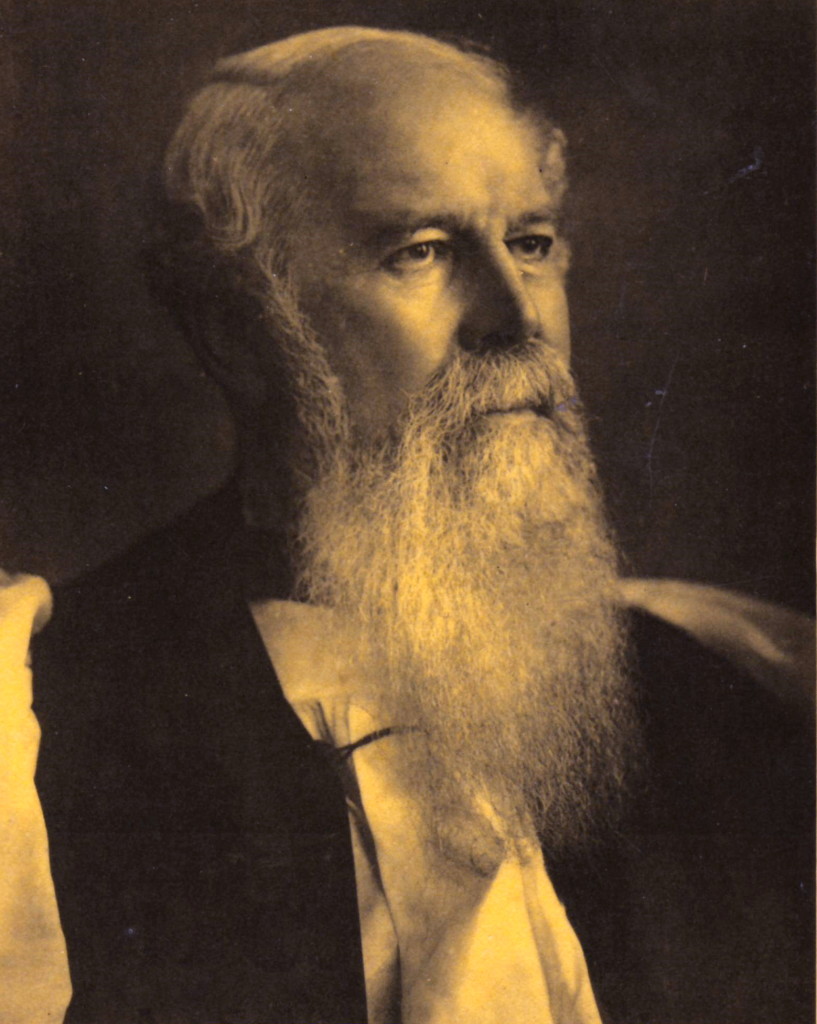
About J.C. Ryle
John Charles Ryle (10 May 1816 — 10 June 1900) was an English evangelical Anglican bishop. He was the first Anglican bishop of Liverpool.
Pristine Grace functions as a digital library of preaching and teaching from many different men and ministries. I maintain a broad collection for research, study, and listening, and the presence of any preacher or message here should not be taken as a blanket endorsement of every doctrinal position expressed.
I publish my own convictions openly and without hesitation throughout this site and in my own preaching and writing. This archive is not a denominational clearinghouse. My aim in maintaining it is to preserve historic and contemporary preaching, encourage careful study, and above all direct readers and listeners to the person and work of Christ.
Brandan Kraft
Bible Verse Lookup
Loading today's devotional...
Unable to load devotional.
Select a devotional to begin reading.
Examples: Isaiah 53:10, Rom 8:28-30, Psalm 23, grace, love one another
to
This chapter has verses 1---
Sign in to save your Bible lookup and search history.
Comments
Your comment has been submitted and is awaiting moderation. Once approved, it will appear on this page.
Be the first to comment!