Bootstrap
J.C. Ryle

097. The Parable of the Shrewd Manager, Luke 16:1-12

Luke 16:1-12
J.C. Ryle October, 19 2018 Audio
0 Comments
This superb narration of Ryle's devotional commentary on the Gospel of Luke has been professionally read, and graciously supplied by Christopher Glyn. Please visit his website, treasures365.com/shop.php, where you can purchase additional superb audios at very reasonable prices.

You will find it helpful to READ the texts--as you LISTEN to the audios!

The TEXTS for the entire commentary can be bound here:
http://gracegems.org/Ryle/Luke.htm

The AUDIOS for the entire commentary can be bound here:
https://www.sermonaudio.com/search.asp?subsetit...

Sermon Transcript

Auto-generated transcript • May contain errors

100%
J.C. Ryle's Devotional Thoughts on the Gospel of Luke, section 97, The Parable of the Shrewd Manager, Luke 16, verses 1-12. And he said also unto his disciples, There was a certain rich man which had a steward, and the same was accused unto him that he had wasted his goods. And he called him, and said unto him, How is it that I hear this of you? give an account of your stewardship, for you may be no longer a steward. Then the steward said within himself, What shall I do? for my Lord takes away from me the stewardship. I cannot dig. To beg I am ashamed. I am resolved what to do, that, when I am put out of the stewardship, they may receive me into their houses.

' So he called every one of his lord's debtors unto him, and said unto the first, How much owe you, unto my Lord? And he said, An hundred measures of oil. And he said unto him, Take your bill, and sit down quickly, and write fifty. Then said he to another, And how much owe you? And he said, An hundred measures of wheat. And he said unto him, Take your bill, and write fourscore.

And the Lord commended the unjust steward, because he done wisely. For the children of this world are in their generation wiser than the children of light. And I say unto you, make to yourselves friends of the mammon of unrighteousness, that when you fail, they may receive you into everlasting habitations.

He who is faithful in that which is least is faithful also in much. And he who is unjust in the least is unjust. also in much. If therefore you've not been faithful in the unrighteous mammon, who will commit to your trust the true riches? And if you've not been faithful in that which is another man's, who shall give you that which is your own?

The passage we have now read is a difficult one. There are knots in it which perhaps will never be untied until the Lord comes again. We might reasonably expect that a book written by inspiration as the Bible is would contain things hard to be understood. The fault lies not in the book but in our own feeble understandings. If we learn nothing else from the passage before us, let us learn humility.

Let us beware in the first place that we do not draw lessons from these verses which they were never meant to teach. The steward whom our Lord describes is not set before us as a pattern of morality. He is distinctly called the unjust steward. The Lord Jesus never meant to sanction dishonesty and unfair dealing between man and man. This steward cheated his master and broke the eighth commandment. His master was struck with his ingenuity and forethought when he heard of it, and commended him as a shrewd and far-seeing man. But there is no proof that his master was pleased with his conduct. Above all, there is not a word to show that the man was praised by Christ. In short, in his treatment of his master, the steward is a beacon to be avoided, and not a pattern to be followed.

The caution now laid down is very necessary. Commercial dishonesty is unhappily very common in these latter days. Honest dealing between man and man is increasingly rare. Men do things in the way of business which will not stand the test of the Bible. In making haste to be rich, thousands are continually committing actions which are dishonest. Proverbs 28.20. Sharpness and smartness in bargaining and buying and selling and pushing trade are often covering over dishonest hearts. The generation of the unjust steward is still a very large one. Let us not forget this. Whenever we do to others what we would not like others to do to us, we may be sure, whatever the world may say, that we are wrong in the sight of Christ.

Let us observe, in the second place, that one principal lesson of the parable before us is the wisdom of providing against coming evil. The conduct of the unjust steward when he received notice to give up his place was undeniably shrewd and skillful. Dishonest as he was in striking off from the bills of debtors anything that was due to his master, he certainly, by so doing, made friends for himself. As wicked as he was, he had an eye to the future. As disgraceful as his measures were, he provided well for himself. He did not sit still in idleness and see himself reduced to poverty without a struggle. He schemed and planned and contrived and boldly carried his plans into execution, and the result was that when he lost one home, he secured another.

What a striking contrast between the steward's conduct about his earthly prospects and the conduct of most men about their souls. In this general point of view, and in this alone, the steward sets us all an example which we should do well to follow. Like him, we should look far forward to things to come. Like him, we should provide against the day when we shall have to leave our present habitation. We should secure a house in heaven which may be our home when we put off our earthly tabernacle of the body. 2 Corinthians 5, verse 1. Like him, we should use all means to provide everlasting habitations for ourselves. The parable, in this point of view, is deeply instructive. It may well raise within us great searchings of heart. The diligence of worldly men about the things of time should put to shame the coldness of professing Christians about the things of eternity. The zeal and pertinacity of men of business, encompassing sea and land to get earthly treasures, may well reprove the slackness and indolence of believers about treasures in heaven. The words of our Lord are indeed weighty and solemn. The Master commended the dishonest manager because he had acted shrewdly, for the people of this world are more shrewd in dealing with their own kind than are the people of the light. May these words sink into our hearts and bear fruit in our lives.

let us notice lastly in this passage the remarkable expressions which our Lord uses about little things in connection with the parable of the unjust steward we read that he said he who is faithful in that which is least is faithful also in much and he who is unjust in the least is unjust also in much Our Lord here teaches us the great importance of strict faithfulness about little things. He guards us against supposing that such conduct about money as that of the unjust steward ought ever to be considered a light and trifling thing among Christians. He would have us know that little things are the best test of character. and that unfaithfulness about little things is the sign of a bad state of heart. He did not mean, of course, that honesty about money can justify our souls or put away sin, but he did mean that dishonesty about money is a sure sign of a heart not being right in the sight of God. The man who's not dealing honestly with the gold and silver of this world can never be one who has true riches in heaven. If you've not been trustworthy with someone else's property, then who will give you property of your own?

The doctrine laid down by our Lord in this place deserves most serious consideration in the present day. An idea appears to prevail in some men's minds that true religion may be separated from common honesty. and that soundness about matters of doctrine may cover over swindling and cheating in matters of practice. Against this wretched idea, our Lord's words were a plain protest. Against this idea, let us watch and be on our guard. Let us contend earnestly for the glorious doctrines of salvation by grace and justification by faith. But let us never allow ourselves to suppose that true religion sanctifies any trifling with the second table of the law. Let us never forget for a moment that true faith will always be known by its fruits. We may be very sure that where there is no honesty, There is no saving grace.
J.C. Ryle
About J.C. Ryle
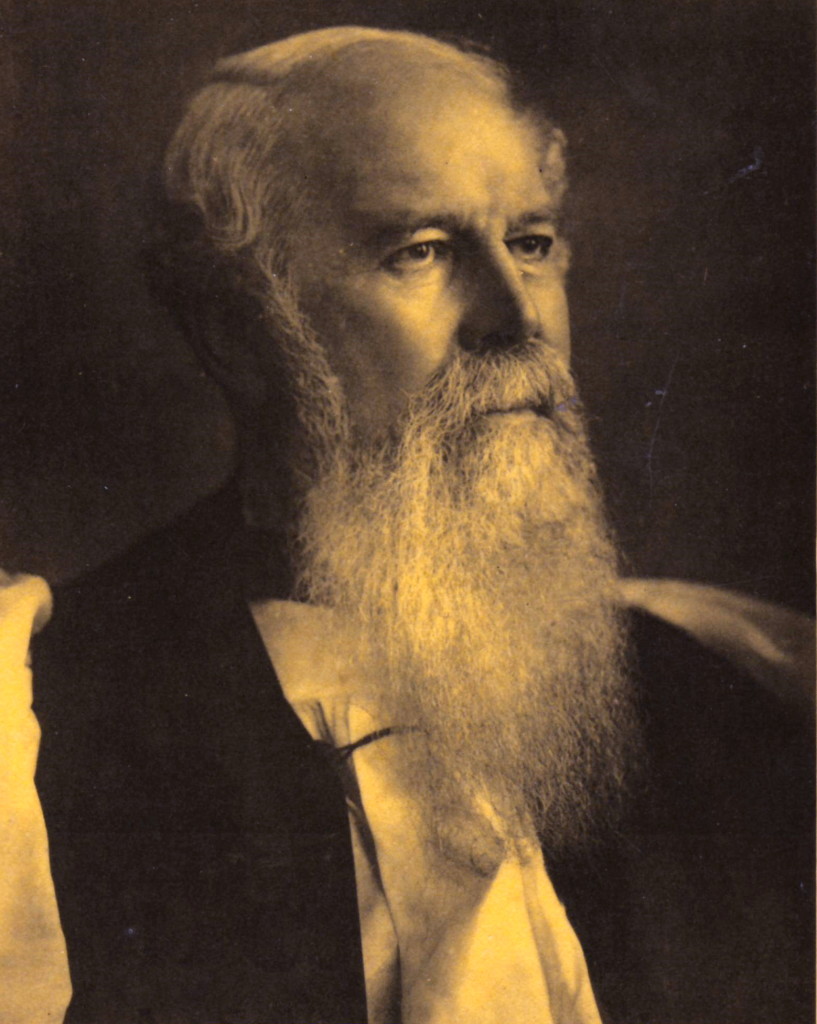
John Charles Ryle (10 May 1816 — 10 June 1900) was an English evangelical Anglican bishop. He was the first Anglican bishop of Liverpool.
Broadcaster:

Comments

0 / 2000 characters
Comments are moderated before appearing.

Be the first to comment!

Joshua

Joshua

Shall we play a game? Ask me about articles, sermons, or theology from our library. I can also help you navigate the site.