Bootstrap
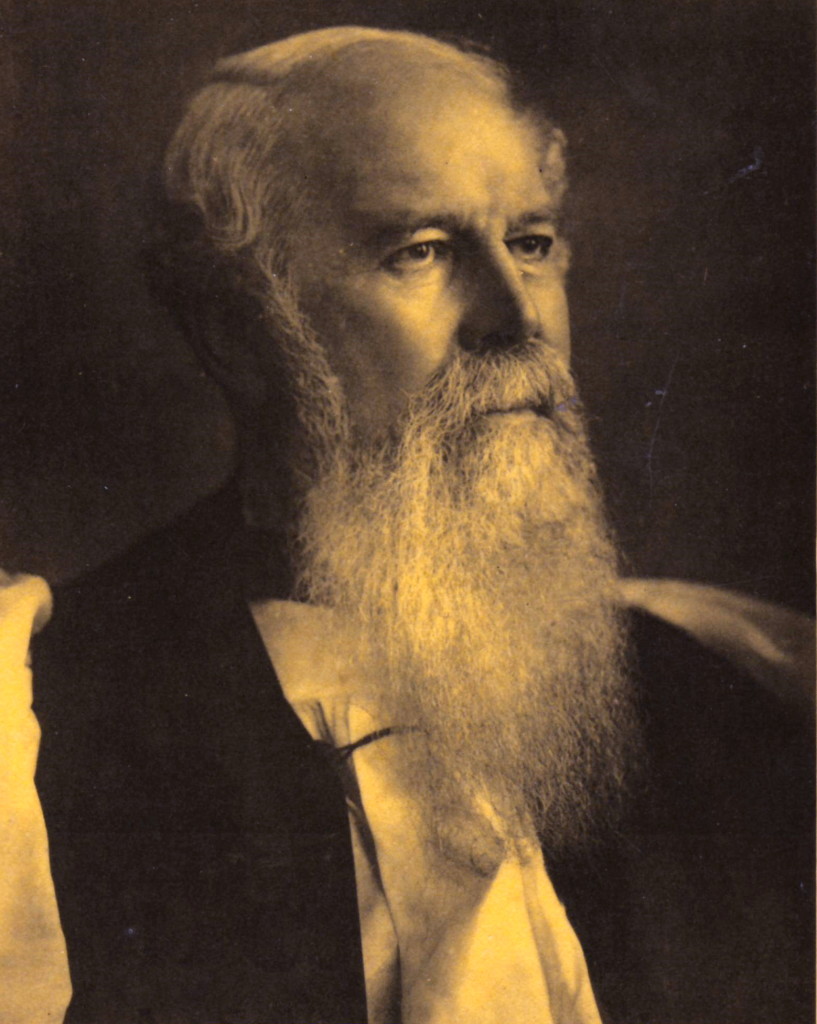
J.C. Ryle

133. The Soldiers Mock Jesus, Luke 22:63-71

Luke 22:63-71
J.C. Ryle October, 19 2018 Audio
0 Comments
This superb narration of Ryle's devotional commentary on the Gospel of Luke has been professionally read, and graciously supplied by Christopher Glyn. Please visit his website, treasures365.com/shop.php, where you can purchase additional superb audios at very reasonable prices.

You will find it helpful to READ the texts--as you LISTEN to the audios!

The TEXTS for the entire commentary can be bound here:
http://gracegems.org/Ryle/Luke.htm

The AUDIOS for the entire commentary can be bound here:
https://www.sermonaudio.com/search.asp?subsetit...

Sermon Transcript

Auto-generated transcript • May contain errors

100%
J. C. Ryle's Devotional Thoughts on the Gospel of Luke, Section 133. The Soldiers Mock Jesus. Luke Chapter 22, Verses 63-71. And the men that held Jesus mocked him and smote him. And when they had blindfolded him, they struck him on the face and asked him, saying, Prophesy, who is it that smote you? And many other things blasphemously spoke they against him. And as soon as it was day, the elders of the people and the chief priests and scribes came together and led him into their council, saying, Are you the Christ? Tell us. And he said unto them, If I tell you, you will not believe. And if I also ask you, you will not answer me, nor let me go. Hereafter shall the Son of Man sit on the right hand of the power of God. Then said they all, Are you then the Son of God? And he said unto them, You say that I am. And they said, What need we any further witness? for we ourselves have heard of his own mouth. We should notice firstly in these verses the shameful treatment that our Lord Jesus Christ underwent at the hands of his enemies. We read that the men who held him mocked him, smote him, blindfolded him, and struck him on the face. It was not enough to have taken a prisoner, a person of most blameless and charitable life. They must needs add insult to injury. Conduct like this shows the desperate corruption of human nature. The excesses of savage malice to which unconverted men will sometimes go, and the fierce delight with which they will sometimes trample on the most holy and the most pure, almost justify the strong saying of an old divine that man, left to himself, is half beast and half devil. He hates God and all who bear anything of God's image about them. The carnal mind is enmity against God. Romans 8.7 We have probably a very faint idea of what the world would become if it were not for the constant restraint that God mercifully puts upon evil. It is not too much to say that if unconverted men had their own way entirely, the earth would soon be little better than a hell. Our Lord's calm submission to insults like those here described shows the depth of his love towards sinners. Had he so willed, he could have stopped the insolence of his enemies in a moment. He, who would cast out devils with a word, could have summoned legions of angels to his side and scattered those wretched tools of Satan to the winds. But our Lord's heart was set on the great work He'd come on earth to do. He had undertaken to purchase our redemption by His own humiliation, and He did not flinch from paying the uttermost farthing of the price. He had undertaken to drink the bitter cup of vicarious suffering to save sinners, and for the joy set before him he despised the shame, and drank the cup to the very dregs. Hebrews 12. Patience, like that which our blessed Lord exhibited on this occasion, should teach His professing people a mighty lesson. We should forbear all murmuring and complaining and irritation of spirit when we are ill-treated by the world. What are the occasional insults to which we have to submit compared to the insults which were heaped on our master? Yet, when he was reviled, he reviled not again. When he suffered, he threatened not. He left us an example that we should walk in his steps. Let us go and do likewise. 1 Peter 2 verses 21 to 23. We should notice, secondly, in these verses, the striking prophecy which our Lord delivers about his own coming glory. He says to his insulting enemies, Hereafter shall the Son of Man sit on the right hand of the power of God. Did they find fault with his lowly appearance and want a glorious Messiah? They would see him in glory one day. did they think he was weak powerless and contemptible because at present there was no outward majesty about him they would behold him one day in the most honorable position in heaven fulfilling the well-known prophecy of Daniel with all judgment committed to his hands Daniel 7 verses 9 and 10 Let us take heed that the future glory of Christ forms a part of our creed as much as Christ's cross and passion. Let it be a first principle in our religion that the same Jesus who was mocked, despised, and crucified is he who has now all power in heaven and earth and will one day come again in his father's glory with all his angels. We see but half the truth if we see nothing but the cross and the first advent. It is essential to our own comfort to see also the second advent and the crown. That same Jesus who stood before the bar of the high priest and of Pilate will one day sit upon a throne of glory and summon all his enemies to appear before him. Happy is that Christian who keeps steadily before his mind that word hereafter. Now in this present time believers must be content to take part in their master's sufferings and with him to be weak. Hereafter they shall share in his glory and with him be strong. Now, like their Lord, they must not be surprised if they are mocked, despised, and disbelieved. Hereafter, they shall sit with Him on the right hand of God. We should notice lastly in these verses what a full and bold confession our Lord makes of his own messiahship and divinity. We read that in answer to this question of his enemies, then you claim you are the Son of God. Jesus replied, you are right in saying that I am. The meaning of this short sentence may not be clear at first sight to an English reader. It signifies, in other words, you speak the truth, I am, as you say, the Son of God. Our Lord's confession deprived his enemies of all excuse for unbelief. The Jews can never plead that our Lord left their forefathers in ignorance of his mission and kept them in doubt and suspense. Here we see our Lord telling them plainly who he was and telling them in words which would convey even more to a Jewish mind than they do to ours. And yet the confession had not the least good effect upon the Jews. Their hearts were hardened by prejudice. Their minds were darkened by judicial blindness. The veil was over the eyes of their inward man. They heard our Lord's confession unmoved and only plunged deeper into the most dreadful sin. The bold confession of our Master upon this occasion is intended to be an example to all his believing people. Like him, we must not shrink from speaking out when occasion requires our testimony. The fear of man and the presence of a multitude does not make us hold our peace. Job 31.34 We need not blow a trumpet before us and go out of our way to proclaim our own religion. Opportunities are sure to occur in the daily path of duty. When, like Paul on board ship, we may show whose we are and whom we serve. Acts 27.23 At such opportunities, if we have the mind of Christ, let us not be afraid to show our colors. A confessing master loves bold, uncompromising, and confessing disciples. Those who honor him by an outspoken, courageous testimony, he will honor. because they are walking in his steps. Whoever, he says, shall confess me before men, him will I confess before my Father who is in heaven. Matthew 10, 32. you
J.C. Ryle
About J.C. Ryle
John Charles Ryle (10 May 1816 — 10 June 1900) was an English evangelical Anglican bishop. He was the first Anglican bishop of Liverpool.
Broadcaster:

Comments

0 / 2000 characters
Comments are moderated before appearing.

Be the first to comment!

Joshua

Joshua

Shall we play a game? Ask me about articles, sermons, or theology from our library. I can also help you navigate the site.