Bootstrap
J.C. Ryle

075. Jesus Pronounces Three Woes on the Scribes, Luke 11:45-54

Luke 11:45-54
J.C. Ryle July, 16 2018 Audio
0 Comments
This superb narration of Ryle's devotional commentary on the Gospel of Luke has been professionally read, and graciously supplied by Christopher Glyn. Please visit his website, treasures365.com/shop.php, where you can purchase additional superb audios at very reasonable prices.

You will find it helpful to READ the texts--as you LISTEN to the audios!

The TEXTS for the entire commentary can be bound here:
http://gracegems.org/Ryle/Luke.htm

The AUDIOS for the entire commentary can be bound here:
https://www.sermonaudio.com/search.asp?subsetit...

Sermon Transcript

Auto-generated transcript • May contain errors

100%
J.C. Ryle's devotional thoughts on the Gospel of Luke. Section 75. Jesus pronounces three woes on the scribes. Luke chapter 11, verses 45 through 54.

Then answered one of the lawyers, and said unto him, Master, thus saying, thou reproachest us also. And he said, Woe unto you also, ye lawyers! for ye laid men with burdens grievous to be borne, and ye yourselves touch not the burdens with one of your fingers.

Woe unto you, for ye build the sepulchres of the prophets, and your fathers killed them. Truly ye bear witness that ye allow the deeds of your fathers, for they indeed killed them, and ye build their sepulchres. Therefore also said the wisdom of God, I will send them prophets and apostles, and some of them they shall slay and persecute, that the blood of all the prophets, which was shed from the foundation of the world, may be required of this generation. from the blood of Abel unto the blood of Zacharias which perished between the altar and the temple. Verily I say unto you, it shall be required of this generation.

Woe unto you, lawyers, for ye have taken away the key of knowledge. Ye entered not in yourselves, and them that were entering in ye hindered. And as he said these things unto them, the scribes and the Pharisees began to urge him vehemently, and to provoke him to speak of many things, laying in wait for him, and seeking to catch something out of his mouth, that they might accuse him.

The passage before us is an example of our Lord Jesus Christ's faithful dealing with the souls of men. We see him without fear or favor rebuking the sins of the Jewish expounders of God's law. The false charity which calls it unkind to say that anyone is in error finds no encouragement in the language used by our Lord He calls things by their right names. He knew that acute diseases need severe remedies. He would have us know that the truest friend to our souls is not the man who always is speaking smooth things and agreeing with everything we say, but the man who tells us the most truth.

We learn, firstly, from our Lord's words, how great is the sin of professing to teach others what we do not practice ourselves. He says to the lawyers, Woe to you, because you load people down with burdens they can hardly carry, and you yourselves will not lift one finger to help them. They required others to observe wearisome ceremonies in religion, which they themselves neglected. They had the impudence to lay yokes upon the consciences of other men, and yet to grant exemptions from these yokes for themselves. In a word, they had one set of measures and weights for their hearers, and another set for their own souls.

The stern reproof which our Lord here administers should come home with a special power to certain classes in the church. It is a word in season to all Bible teachers. It is a word to all fathers and mothers. Above all, it is a word to all clergymen and ministers of religion. That all such mark well our Lord's language in this passage. Let them beware of telling others to aim at a standard which they do not aim at themselves. Such conduct, to say the least, is gross inconsistency. Perfection, no doubt, is unattainable in this world. If nobody is to lay down rules or teach or preach until he is faultless himself, then the whole fabric of society would be thrown into confusion. But we do have a right to expect some agreement between a man's words and a man's life, between his teaching and his doing, between his preaching and his practice. one thing at all events is very certain no lessons produce such effects on men as those which the teacher illustrates by his own daily life happy is he who can say with Paul whatever you have learned or received or heard from me or seen in me put it into practice Philippians chapter 4 verse 9

We learn secondly from our Lord's words how much more easy it is to admire dead saints than living ones. He says to the lawyers, woe to you because you build tombs for the prophets and it was your forefathers who killed them. They professed to honour the memory of the Prophets while they lived in the very same ways which the Prophets had condemned. They openly neglected their advice and teaching, and yet they pretended to respect their graves.

The practice which is here exposed has never been without followers in spirit, if not in the letter. Thousands of wicked men in every age of the church have tried to deceive themselves and others by loud professions of admiration for the saints of God after their decease. By so doing, they have endeavoured to ease their own consciences and blind the eyes of the world. They have sought to raise in the minds of others the thought, if these men love the memories of the good so dearly, then they must surely be of one heart with them. They have forgotten that even a child can see that dead men tell no tales, and that to admire men when they can neither reprove us by their lips, nor put us to shame by their lives, is a very cheap admiration indeed.

Would we know what a man's religious character really is? Let us inquire what he thinks of true Christians while they are yet alive. Does he love them and cleave to them and delight in them as the excellent of the earth? Or does he avoid them and dislike them and regard them as fanatics and enthusiasts and extreme and righteous overmuch? The answers to these questions are a pretty safe test of a man's true character. When a man can see no beauty in living saints, but much in dead ones, then his soul is in a very rotten state. The Lord Jesus has pronounced his condemnation. That man is a hypocrite in the sight of God.

We learn thirdly from our Lord's words how surely a reckoning day for persecution will come upon the persecutors. He says that the blood of all prophets shall be required. There's something peculiarly solemn in this statement. The number of those who've been put to death for the faith of Christ in every age of the world is exceedingly great. Thousands of men and women have laid down their lives rather than deny their Savior and have shed their blood for the truth. At the time they died, they seemed to have no helper. Like Zechariah, and James, and Stephen, and John the Baptist, and Ignatius, and Hus, and Hooper, and Latimer, they died without resistance. They were soon buried and forgotten on earth, and their enemies seemed to triumph utterly. But their deaths were not forgotten in heaven. Their blood was had in remembrance before God. The persecutions by Herod and Nero and Diocletian and Bloody Mary and Charles IX are not forgotten. There shall be a great judgment one day, and then all the world shall see that precious in the sight of the Lord is the death of his saints. Psalm 116 verse 15

Let us often look forward to the judgment day. There are many things going on in the world which are trying to our faith. The frequent triumphing of the wicked is perplexing. The frequent depression of the godly is a problem which appears hard to solve. But it shall all be made clear one day. The great white throne judgment and the books of God shall put all things in their right places. The tangled maze of God's providence shall be unraveled. All shall be proved to a wandering world to have been well done. Every tear that the wicked have caused the godly to shed shall be reckoned for. Every drop of righteous blood that has been spilled shall at length be required

we learn lastly from our Lord's words how great is the wickedness of keeping back others from religious knowledge he says woe to you lawyers because you've taken away the key to knowledge you yourselves have not entered and you've hindered those who were entering

the sin here denounced is awfully common The guilt of it lies at far more doors than at first sight many are aware. It is the sin of the unconverted Protestant minister who warns his people against extreme views and sneers at the idea of conversion. It is the sin of the ungodly husband who dislikes his wife becoming serious about religion. It is the sin of the worldly-minded mother who cannot bear the idea of her daughter thinking of spiritual things.

All these, wittingly or unwittingly, are bringing down on themselves our Lord's emphatic woe. They are hindering others from entering heaven. Let us pray that this dreadful sin may never be ours. Whatever we are ourselves in religion, let us dread discouraging others if they have the least serious concern about their souls. Let us never check any of those around us in their religion, and especially in the matter of reading the Bible, hearing the gospel, and private prayer.

Let us rather encourage them, help them and thank God if they are better than ourselves. Deliver me from blood guiltiness was a prayer of David's. Psalm 51 verse 14. It may be feared that the blood of relatives will be heavy on the heads of some at the last day. They saw them about to enter the kingdom of God and they hindered them. you
J.C. Ryle
About J.C. Ryle
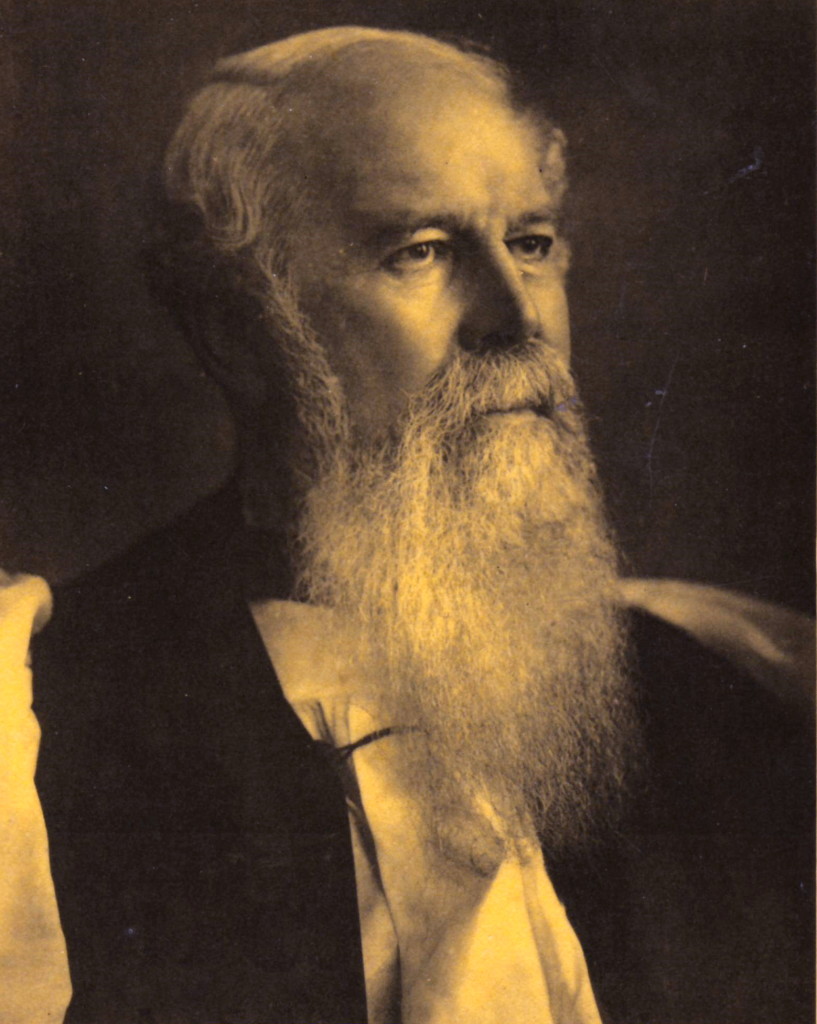
John Charles Ryle (10 May 1816 — 10 June 1900) was an English evangelical Anglican bishop. He was the first Anglican bishop of Liverpool.
Broadcaster:

Comments

0 / 2000 characters
Comments are moderated before appearing.

Be the first to comment!

Joshua

Joshua

Shall we play a game? Ask me about articles, sermons, or theology from our library. I can also help you navigate the site.