Bootstrap
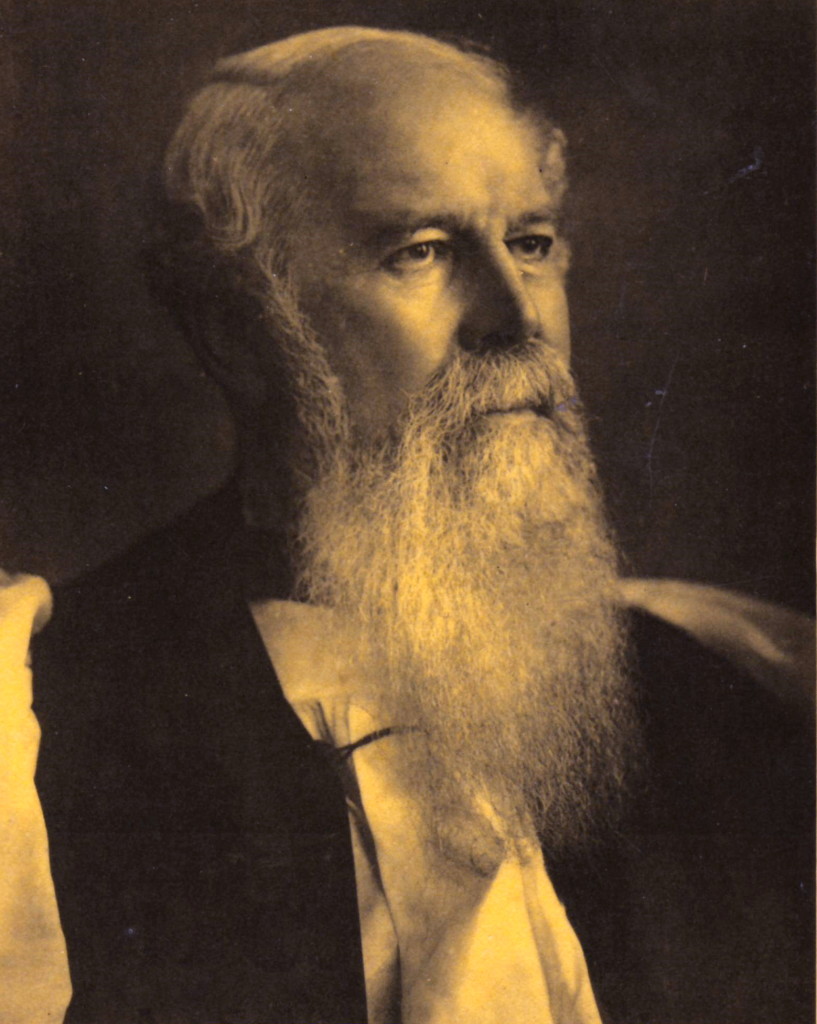
J.C. Ryle

019. The Effect of John the Baptist's Ministry, Luke 3:15-20

Luke 3:15-20
J.C. Ryle March, 11 2018 Audio
0 Comments
This superb narration of Ryle's devotional commentary on the Gospel of Luke has been professionally read, and graciously supplied by Christopher Glyn. Please visit his website, treasures365.com/shop.php, where you can purchase additional superb audios at very reasonable prices.

You will find it helpful to READ the texts--as you LISTEN to the audios!

The TEXTS for the entire commentary can be bound here:
http://gracegems.org/Ryle/Luke.htm

The AUDIOS for the entire commentary can be bound here:
https://www.sermonaudio.com/search.asp?subsetit...

Sermon Transcript

Auto-generated transcript • May contain errors

100%
J. C. Ryle's Devotional Thoughts on the Gospel of Luke
Section 19
The Effect of John the Baptist's Ministry
Luke Chapter 3 Verses 15-20

And as the people were in expectation, and all men mused in their hearts of John whether he were the Christ or not. John answered, saying unto them all, I indeed baptize you with water. But one mightier than I cometh, the lachet of whose shoes I am not worthy to unloose. He shall baptize you with the Holy Ghost and with fire. whose fan is in his hand, and he will thoroughly purge his floor, and will gather the wheat into his garner, but the chaff he will burn with fire unquenchable."

And many other things in his exhortation preached he unto the people. But Herod the Tetrarch, being reproved by him for Herodias, his brother Philip's wife, and for all the evils which Herod had done, added yet this above all, that he shut up John in prison.

We learn firstly from these verses that one effect of a faithful ministry is to set men thinking. We read concerning John the Baptist's hearers that the people were in expectation and all men mused in their hearts of John whether he were the Christ or not. The cause of true religion has gained a giant step in a parish or congregation or family when people begin to think. Thoughtlessness about spiritual things is one great feature of unconverted men. It cannot be said in many cases that they either like the gospel or dislike it. But they do not give it a place in their thoughts. They never consider. Isaiah chapter 1 verse 3. Let us always thank God when we see a spirit of reflection on religious subjects coming into the mind of an unconverted man. Thinking and deliberation are the high road to conversion. The truth of Christ is nothing to fear from sober examination. We invite inquiry. We desire to have its claims fully investigated. We know that its fitness to supply every need of man's heart and conscience is not appreciated in many cases, simply because it is not known. Thinking, no doubt, is not faith and repentance, but is always a hopeful symptom. When hearers of the gospel begin to muse in their hearts, we ought to bless God and take courage.

We learn, secondly, from these verses, that a faithful minister will always exalt Christ. We read that when John saw the state of mind in which his hearers were, he told them of a coming one far mightier than himself. He refused the honor which he saw the people ready to give him, and referred them to him who had the winnowing fork in his hand, the Lamb of God, the Messiah. Conduct like this will always be the characteristic of a true man of God. He will never allow anything to be credited to him or his office which belongs to his divine master. he will say like Paul we preach not ourselves but Christ Jesus the Lord and ourselves your servants for Jesus' sake 2 Corinthians 4 verse 5 to commend Christ dying and rising again for the ungodly to make known Christ's love and power to save sinners this will be the main object of his ministry He must increase, but I must decrease will be a ruling principle in all his preaching. He will be content that his own name be forgotten as long as Christ crucified is exalted. Would we know whether a minister is sound in the faith and deserving of our confidence as a teacher? We have only to ask a simple question. Where is Christ in his teaching? Would we know whether we ourselves are receiving benefit from the preaching we attend? Let us ask whether its effect is to magnify Christ in our esteem. A minister who is really doing us good will make us think more of Jesus every year we live. We learn thirdly from these verses the essential difference between the Lord Jesus and even the best and holiest of his ministers. We have it in the solemn words of John the Baptist, I indeed baptize you with water, he shall baptize you with the Holy Spirit. Man, when ordained, can administer the outward ordinances of Christianity with a prayerful hope that God will graciously bless the means which he has himself appointed. But man cannot read the hearts of those to whom he ministers. He can preach the gospel faithfully to their ears, but he cannot make them receive it into their consciences. He can apply baptismal water to their foreheads, but He cannot cleanse their inward nature. He can give the bread and wine of the Lord's Supper into their hands, but He cannot enable them to eat Christ's body and blood by faith. Up to a certain point He can go, but He can go no further. No ordination, however solemnly conferred, can give man power to change the heart. Christ, the great Head of the Church, can alone do this by the power of the Holy Spirit. It is His peculiar office to do it, and it is an office which He has delegated to no child of man. May we never rest until we have tasted by experience the power of Christ's grace upon our souls. We have been baptized with water, but have we also been baptized with the Holy Spirit? Our names are in the baptismal register, but are they also in the Lamb's book of life? We are members of the visible church, but are we also members of that mystical body of which Christ alone is the head? All these are privileges which Christ alone bestows, and for which all who would be saved must make personal application to him. Man cannot give them. They are treasures laid up in Christ's hand. From Him we must seek them by faith and prayer. And believing, we shall not seek in vain. We learn fourthly in these verses the change that Christ will work in his visible church at his second appearing. We read in the frigative words of his forerunner that he will throughly purge his floor and gather the wheat into his garner, but the chaff he will burn with fire unquenchable. The visible church is now a mixed body. Believers and unbelievers, holy and unholy, converted and unconverted, are now mingled in every congregation, and often sit side by side. It passes the power of man to separate them. False profession is often so like true, and grace is often so weak and feeble that in many cases the right discernment of character is an impossibility. The wheat and the chaff will continue together until the Lord returns. But there will be a dreadful separation at the last day. The unerring judgment of the King of Kings shall at length divide the wheat from the chaff and divide them for evermore. The righteous shall be gathered into a place of happiness and safety. The wicked shall be cast down to shame and everlasting contempt. In the great sifting day, Everyone shall go to his own place. May we often look forward to that day and judge ourselves that we be not judged of the Lord. May we give all diligence to make our calling and election sure and to know that we are God's wheat. A mistake in the day that the floor is purged will be a mistake that is irretrievable. We learn lastly from these verses that the reward of God's servants is often not in this world. Luke closes his account of John the Baptist's ministry by telling us of his imprisonment by Herod. The end of that imprisonment we know from other parts of the New Testament. It led at last to John being beheaded. All true servants of Christ must be content to wait for their wages. The best things are yet to come. They must count it no strange thing if they meet with hard treatment from man. The world that persecuted Christ will never hesitate. to persecute Christians. Marvel not that the world hate you. 1 John 3.13 But let us take comfort in the thought that the great Master has laid up in heaven for his people such things as pass man's understanding. The blood that his saints have shed in his name will all be reckoned for one day. The tears that often flow so freely in consequence of the unkindness of the wicked will one day be wiped from all faces. And when John the Baptist and all who have suffered for the truth are at last gathered together, they will find it true that heaven makes amends for all. you
J.C. Ryle
About J.C. Ryle
John Charles Ryle (10 May 1816 — 10 June 1900) was an English evangelical Anglican bishop. He was the first Anglican bishop of Liverpool.
Broadcaster:

Comments

0 / 2000 characters
Comments are moderated before appearing.

Be the first to comment!

Joshua

Joshua

Shall we play a game? Ask me about articles, sermons, or theology from our library. I can also help you navigate the site.