Bootstrap
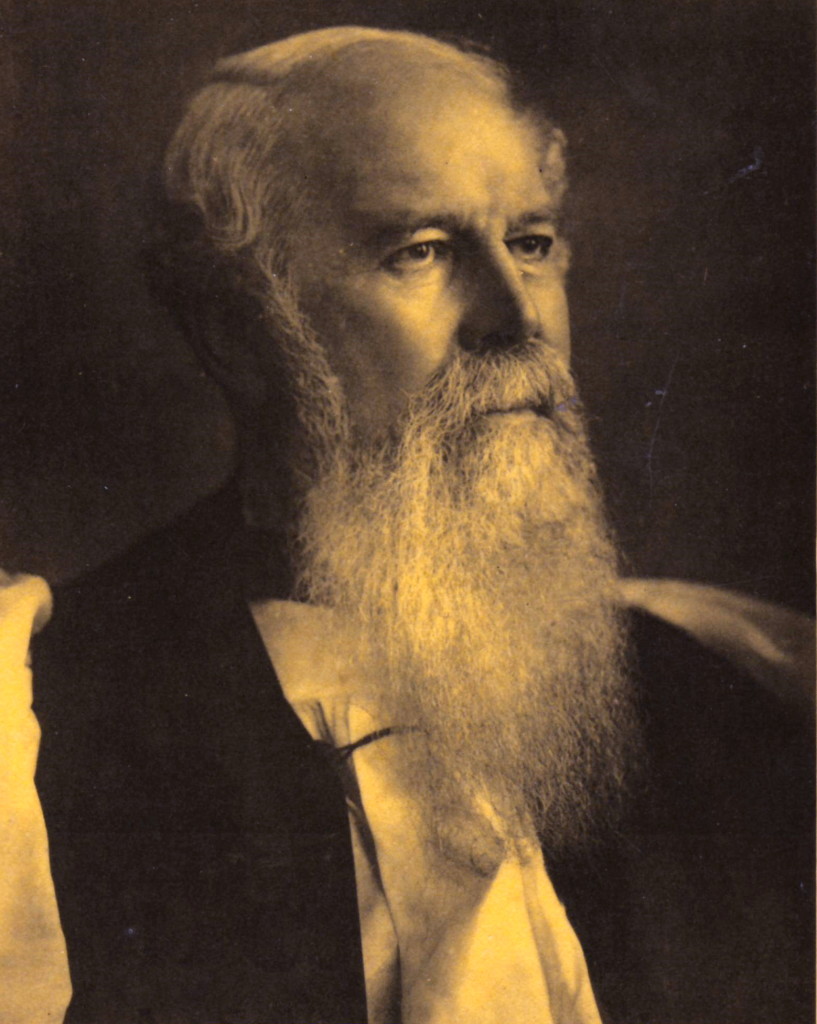
J.C. Ryle

020. The Baptism and Genealogy of Jesus, Luke 3:21-38

Luke 3:21-38
J.C. Ryle March, 11 2018 Audio
0 Comments
This superb narration of Ryle's devotional commentary on the Gospel of Luke has been professionally read, and graciously supplied by Christopher Glyn. Please visit his website, treasures365.com/shop.php, where you can purchase additional superb audios at very reasonable prices.

You will find it helpful to READ the texts--as you LISTEN to the audios!

The TEXTS for the entire commentary can be bound here:
http://gracegems.org/Ryle/Luke.htm

The AUDIOS for the entire commentary can be bound here:
https://www.sermonaudio.com/search.asp?subsetit...

Sermon Transcript

Auto-generated transcript • May contain errors

100%
J. C. Ryle's Devotional Thoughts on the Gospel of Luke
Section 20
The Baptism and Genealogy of Jesus
Luke Chapter 3 verses 21-38

Now when all the people were baptized it came to pass that Jesus also being baptized and praying the heaven was opened and the Holy Ghost descended in a bodily shape like a dove upon him and a voice came from heaven which said Thou art my beloved son in thee I am well pleased

And Jesus himself began to be about thirty years of age, being, as was supposed, the son of Joseph, which was the son of Heli, which was the son of Matthath, which was the son of Levi, which was the son of Melchi, which was the son of Jannah, which was the son of Joseph, which was the son of Mattathias, which was the son of Amos, which was the son of Nahum, which was the son of Ezli, which was the son of Nagi, which was the son of Maath, which was the son of Mattathias, which was the son of Semii, which was the son of Joseph, which was the son of Judah, which was the son of Joanna, which was the son of Resa, which was the son of Zerubbabel, which was the son of Salathiel, which was the son of Neri, which was the son of Melchi, which was the son of Adai, which was the son of Cossam, which was the son of Elmodam, which was the son of Ur, which was the son of Josi, which was the son of Eliezer, which was the son of Jorim, which was the son of Mattat, which was the son of Levi, which was the son of Simeon, which was the son of Judah, which was the son of Joseph, which was the son of Jonan, which was the son of Eliakim, which was the son of Meliah, which was the son of Menan, which was the son of Mattathah, which was the son of Nathan, which was the son of David, which was the son of Jesse, which was the son of Obed, which was the son of Boaz, which was the son of Salmon, which was the son of Naasan, which was the son of Amminadab, which was the son of Aram, which was the son of Ezrom, which was the son of Phares, which was the son of Judah, which was the son of Jacob, which was the son of Isaac, which was the son of Abraham, which was the son of Thera, which was the son of Nacor, which was the son of Sarek, which was the son of Ragor, which was the son of Phalek, which was the son of Heber, which was the son of Selah, which was the son of Cainan, which was the son of Arphaxad, which was the son of Sem, which was the son of Noe, which was the son of Lamech.

which was the son of Methuselah, which was the son of Enoch, which was the son of Jared, which was the son of Malaliel, which was the son of Cainan, which was the son of Enos, which was the son of Seth, which was the son of Adam, which was the son of God.

We see in the passage before us the high honor the Lord Jesus has put on baptism. We find that among others who came to John the Baptist the Savior of the world came and was baptized. An ordinance which the Son of God was pleased to use and afterwards to appoint for the use of his whole church ought always to be held in peculiar reverence by his people.

Baptism cannot be a thing of slight importance if Christ Himself was baptized. The use of baptism would never have been enjoined on the Church of Christ if it had been a mere outward form incapable of conveying any blessing. It is hardly necessary to say that errors of every sort and description abound on the subject of baptism. Some make an idol of it, and exalt it far above the place assigned to it in the Bible. Some degrade it and dishonor it, and seem almost to forget that it was ordained by Christ himself. Some limit the use of it so narrowly that they will baptize none unless they are grown up and can give full proof of their conversion. Some invest the baptismal water with such magic power that they would like missionaries to go into heathen lands and baptize all people, old and young, indiscriminately, and believe that however ignorant the heathen may be, baptism must do them good. On no subject, perhaps, in religion, have Christians more need to pray for a right judgment and a sound mind.

Let it suffice us to hold firmly the general principle that baptism was graciously intended by our Lord to be a help to His Church, and a means of grace, and that when rightly and worthily used, we may confidently look upon it for a blessing. But let us never forget that the grace of God is not tied to any sacrament and that we may be baptized with water without being baptized with the Holy Spirit.

We see, secondly, in this passage, the close connection that ought to exist between the administration of baptism and prayer. We are specially told by Luke that when our Lord was baptized, he was also praying. We need not doubt that there is a great lesson in this fact, and one that the Church of Christ has too much overlooked. We are meant to learn that the baptism which God blesses must be a baptism accompanied by prayer. The sprinkling of water is not sufficient. The use of the name of the Blessed Trinity is not enough. The form of the sacrament alone conveys no grace. There must be something else beside all this. There must be the prayer of faith. A baptism without prayer, it may be confidently asserted, is a baptism on which we have no right to expect God's blessing.

Why is it that the sacrament of baptism appears to bear so little fruit? How is it that thousands are every year baptized and never give the slightest proof of having received benefits from it? The answer to these questions is short and simple. In the vast majority of baptisms there is no prayer except the prayer of the officiating minister. Parents bring their children to the front without the slightest sense of what they are doing. sponsors stand up and answer for the child in evident ignorance of the nature of the ordinance they are attending, and as a mere matter of form. What possible reason have we for expecting such baptisms to be blessed by God? None, none at all. Such baptisms may well be barren of results. They're not baptisms according to the mind of Christ. Let us pray that the eyes of Christians on this important subject may be opened. It is one on which there is great need of change.

We see, thirdly in these verses, a remarkable proof of the doctrine of the Trinity. We have all the three persons of the Godhead spoken of as cooperating and acting at one time. God the Son begins the mighty work of his earthly ministry by being baptized. God the Father solemnly accredits him as the appointed mediator by a voice from heaven. God the Holy Spirit descends in a bodily shape like a dove upon our Lord and by so doing declares that this is he to whom the Father gives the Spirit without measure.

John chapter 3 verse 34

There's something deeply instructive and deeply comforting in this revelation of the Blessed Trinity at this particular season of our Lord's earthly ministry. It shows us how mighty and powerful is the agency that is employed in the great business of our redemption. It is the common work of God the Father, God the Son, and God the Holy Spirit. All three persons in the Godhead are equally concerned in the deliverance of our souls from hell. The thought should cheer us when disturbed and cast down. The thought should hearten and encourage us when weary of the conflict with the world, the flesh, and the devil. The enemies of our souls are mighty, but the friends of our souls are mightier still. The whole power of the triune Jehovah is engaged upon our side. A threefold cord is not easily broken.

Ecclesiastes chapter four, verse 12.

we see fourthly in these verses a marvelous proclamation of our Lord's office as mediator between God and man a voice was heard from heaven at his baptism which said you are my beloved son in you I am well pleased there is but one who could say this it was the voice of God the Father These solemn words no doubt contain much that is deeply mysterious. One thing, however, about them is abundantly clear. They are a divine declaration that our Lord Jesus Christ is the promised Redeemer whom God from the beginning undertook to send into the world. and that with His incarnation, sacrifice, and substitution for man, God the Father is satisfied and well pleased. In Him, He regards the claim of His holy law as fully discharged. Through Him, He is willing to receive poor sinful man to mercy and to remember his sins no more. Let all true Christians rest their souls on these words, and draw from them daily consolation. Our sins and shortcomings are many and great. In ourselves we can see no good thing. But if we believe in Jesus, the Father sees nothing in us that He cannot abundantly pardon. He regards us as the members of His own dear Son, and, for His Son's sake, He is well pleased.

We see, lastly, in these verses, what a frail and dying creature is man. We read, at the end of the chapter, a long list of names containing the genealogy of the family in which our Lord was born, traced up through David and Abraham to Adam. How little we know of many of the seventy-five people whose names are here recorded. They all had their joys and sorrows, their hopes and fears, their cares and troubles, their schemes and plans, like any of ourselves. But they have all passed away from the earth, and gone to their own place. And so will it be with us. We too are passing away, and shall soon be gone. Forever, let us bless God that in a dying world we are able to turn to a living Savior.

I am he, says Jesus, who lives and was dead. And behold, I am alive forevermore. I am the resurrection and the life.

Revelation chapter 1 verse 18 and John chapter 11 verse 25.

Let our main care be to be one with Christ and Christ with us. Joined to the Lord Jesus by faith, we shall rise again to live forevermore. The second death shall have no power over us. Because I live, says Christ, you shall live also.

John chapter 14, verse 19. you
J.C. Ryle
About J.C. Ryle
John Charles Ryle (10 May 1816 — 10 June 1900) was an English evangelical Anglican bishop. He was the first Anglican bishop of Liverpool.
Broadcaster:

Comments

0 / 2000 characters
Comments are moderated before appearing.

Be the first to comment!

Joshua

Joshua

Shall we play a game? Ask me about articles, sermons, or theology from our library. I can also help you navigate the site.