Bootstrap
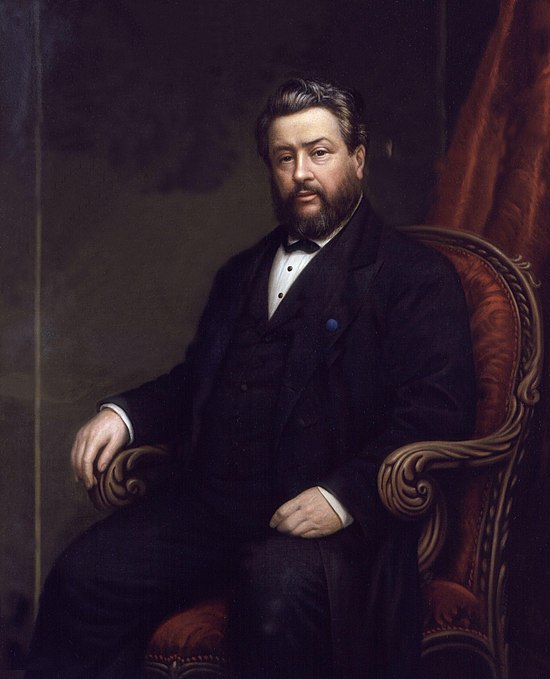
Charles Spurgeon

Suffering -- God's People in the Furnace!

Hebrews 12; Isaiah 48:10
Charles Spurgeon March, 10 2017 Audio
0 Comments
Choice Puritan Devotional

Sermon Transcript

Auto-generated transcript • May contain errors

100%
suffering, God's people in the furnace. This sermon was first preached on August 12th, 1855 by Charles Haddon Spurgeon. The text today comes from the book of Isaiah chapter 48, verse 10. I have chosen you in the furnace of affliction. When traveling through the country, you have often noticed that in different spots, the old rocks peep out from under the soil, as if they would let us know what the earth's bones are made of and what a solid foundation this globe has. Likewise, in searching through the scriptures, you will find instructions, warnings, rebukes, and comforts, but very often you will discover the old doctrines like old rocks rising in the midst of other matters. And when you least expect it, you will find election, redemption, justification, effectual calling, and eternal security. You will find all of these things introduced just to let us see what the solid foundations of the gospel are and what are those deep and mysterious truths on which the entire gospel system must rest. So in this text, for instance, when there seemed in the chapter little need of the mention of the doctrines of God choosing his people, all of a sudden the Holy Spirit moves the prophet's lips and commands him to utter this response, I have chosen you. I have chosen you by my eternal, sovereign, distinguishing grace. I have chosen you according to my electing love. I have chosen you in the furnace of affliction. Well, it is a good thing that they are mentioned sometimes when we little expect it. For these are the things which we are apt to forget. The tendency of many in the present age is to scorn all doctrinal knowledge and to say, we do not care whether a thing is true or not. This age is a superficial one. Few ministers plow deeper than the topsoil. There are very few who come into the inward matter of the gospel. and deal with the eternal things on which our faith must rest. And therefore we bless and adore the Holy Spirit that He so frequently pens these glorious doctrines to make us remember that there is such a thing as election after all. I have chosen you in the furnace of affliction. However, I am not going to dwell on that doctrine. But after making one or two initial observations, I will proceed to discuss the subject of the furnace of affliction, being the place where God's chosen ones are continually found. The first observation I make is this. All persons in the furnace of affliction are not chosen. All persons in the furnace of affliction are not chosen. The text says, I have chosen you in the furnace of affliction. And it implies that there may be, and there doubtless are, some in the furnace who are not chosen. There are many persons who presume that because they are tried, because they are afflicted, and because they are tempted, therefore they must be the children of God. Whereas they are no such thing. It is a great truth that every child of God is afflicted. But it is a lie that every afflicted man is a child of God. Every child of God will have some trial or other. But every man who has a trial is not necessarily an heir of heaven. The child of God may be in poverty. He frequently is. But we must not infer that, therefore, necessarily every man who is poor is a child of God. For many of the poor are depraved and ruined, blaspheming against God and going deep into iniquity. Many a child of God loses his property, but we are not therefore to conclude that every bankrupt person or every insolvent person is a vessel of mercy. Indeed, there is often some suspicion that he is not. A child of God may have his crops destroyed, and mildew may seize his fields. But that does not prove his election, for multitudes who were never chosen of God have had the mildew and the destruction as well as he. He may be misrepresented and his character may be slandered, but that may be the case with the wickedest worldly person too. For there have been men far from being Christians who yet have been slandered, slandered in politics or slandered in literature. No tribulation ever proves us to be the children of God, except if it is sanctified by grace. For affliction is the common lot of all men. Man is born to it, even as the sparks fly upward from the bonfire. And you must not infer, because you happen to be troubled, because you are poor, because you are sick, or because you are tried in your minds, that therefore you are a child of God. If you do assume this, you are building on a false foundation. You have taken up a wrong thought, and you are not right in the matter at all. I would this morning, if possible, disturb some of you who may have been applying healing ointment to your souls when you have no right to do so. I will show you, if I can, very plainly, that after all your suffering, you may yet, through much tribulation, enter the kingdom of hell. There is such a thing as going through trials into the pit of hell. For the road of the wicked is not always easy. nor are the paths of sin ever pleasant. There are trials in the pathway of the ungodly. There are troubles they have to suffer, which are quite as acute as those of the children of God. Oh, my friends, do not trust in your troubles. Fix your thoughts on Jesus. Make him the only object of your trust, and let the only test be this, am I one with Christ? Am I leaning on Him? If so, whether I am tried or not, I am a child of God. But let me remember that if I am tried to an extreme, that if I surrender my body to the flames but have not love, I gain nothing. Many an afflicted man has not been a child of God. Many of you no doubt can remember persons in your own lifetime whose afflictions made them worse instead of better. And of a great many men, it may be said, as Aaron said, they gave me the gold and I threw it into the fire and out came this calf. Many a calf comes out of the furnace. Many a man is put into the furnace and comes out worse than he was before. He comes out a calf. Men passed through the fires in the days of the king of Israel when they passed through the fire of Malak. But Malak's fire did not purify or benefit them. On the contrary, it made them worse. It made them dedicated to a false god. We are also told in the word of God how a certain class of people are put into the furnace and gain nothing good by it and are not the children of God. But lest any should doubt what I have said, let them turn to the passage in the 22nd chapter of the book of Ezekiel, the 17th to the 20th verse. Then the word of the Lord came to me, son of man, the house of Israel has become dross to me. All of them are the copper, tin, iron, and lead left inside the furnace. They are but the dross of silver. Therefore, this is what the sovereign Lord says, because you have all become dross, I will gather you into Jerusalem. As men gather silver, copper, iron, lead, and tin into a furnace to melt it with a fiery blast, so will I gather you in my anger and my wrath and put you inside the city and melt you. So you see, there are some who feel the furnace, but who do not belong to the Lord, some to whom there is no promise of deliverance, some who have no hope that they are becoming more and more pure and more fit for heaven, but on the contrary, God leaves them there as dross is left, as the impurities are left to be utterly consumed. They have on earth the foretaste of hell, and the brand of the demon is placed on them in their afflictions while they are here. Let that thought be taken to heart by any who are building their salvation on false grounds. Afflictions are no proof of sonship, though sonship always ensures affliction. The second introductory remark that I would make is on the immutability of God's love to his people. I have chosen you in the furnace of affliction. I chose you before you were here. Yes, I chose you before you existed. And when all creatures laid before me in the pure mass of creatureship, and I could create or not create them as I pleased, I chose and created you a vessel of mercy appointed to eternal life. And when you in common with the whole race had fallen, though I might have crushed you with them and sent you down to hell, I chose you, I chose you in your fallen condition, and I provided for your redemption. In the fullness of time, I sent my son, who fulfilled my law and made it honorable. I chose you at your birth, when as a helpless infant, you slept on your mother's breast. I chose you when you grew up in childhood with all your follies and all your sins. Determined to save you, I watched over your path when, as Satan's blind slave, you sported with death. I chose you when, in manhood, you sinned against me in a mighty way, when your unbridled lust pushed you on madly towards hell. I chose you when you were a blasphemer and a swearer, and very far from me, I chose you then even when you were dead in trespasses and sins. I loved you and still your name was kept in my book. The appointed hour came. I redeemed you from your sin. I made you love. I spoke to you and made you leave your sins and become my child. Yes, I chose you even then. Since that hour, How often have you forgotten me, but I have never forgotten you. You have wandered from me. You have rebelled against me. Yes, your words have been very hot against me, and you have robbed me of my honor, but I chose you even then. And now that I put you into the furnace, do you think that my love has changed? Am I a summer friend fleeing from you in the winter? Am I one who loves you in prosperity but casts you off in adversity? No, my friend, listen to my words. You that have been tested in the furnace, I have chosen you in the furnace of affliction. Do not think then when you are in trouble that God has cast you away, but do think. Think that he has cast you off if you never have any trials or troubles. But when in the furnace, say, Did he not tell me this beforehand? Temptation or pain he told me no less. The airs of salvation I know from his word. Through much tribulation must follow their Lord. O blessed reflection, let it comfort us. His love does not change, it cannot be made to alter. The furnace cannot scorch us. Not a single hair of our head can perish. We are as safe in the fire as we are out of it. He loves us as much in the depths of tribulation as he does in the heights of our joy and exaltation. Oh, you are beloved of friends. When your father and mother forsake you, the Lord will love you. You who can say, even my close friend, whom I trusted in, he who shared my bread has lifted up his heel against me. Though all men forsake you, says Jehovah, yet I will not. O Zion, do not say that God has forgotten you. Listen to him when he speaks. Can a mother forget the baby at her breast and have no compassion on the child that she has bore? Though she may forget, I will never forget you. See, I have engraved you on the palms of my hands. Rejoice then, O Christian, rejoice in the second thought, that God's love does not fail in the furnace, but is as hot in the furnace and hotter still. And now to the subject, which is this, God's people in the furnace. And in discussing it, we shall first of all endeavor to prove the fact that if you want God's people, you will find them in the furnace. Secondly, we will try to show the reasons why there is a furnace. Thirdly, the benefits of the furnace. And fourthly, comforts in the furnace. And may God help us in doing this. First then, I state the fact that if you want God's people, you must generally look for them in the furnace. You must generally look for them in the furnace. Look at the world in its beginning, when Adam and Eve are expelled from the garden. Observe that they have given birth to two sons, Cain and Abel. Which of them is the child of God? Over there is one who lies there struck by the club. a lifeless corpse. He who has just now been in the furnace of his brother's hostility and persecution, that is the heir of heaven. A few hundred years roll on, and where is the child of God? There is one man whose ears are continually annoyed with the conversation of the wicked and who walks with God, the man Enoch, and he is the child of God. Descend further still, till you come to the days of Noah. You will find the man who is laughed at, hissed at, mocked as a fool, a simpleton, an idiot, building a ship on dry land. Standing in the furnace of slander and laughter, that is Noah, the elect of God. Go on still through history, that the names of Abraham, Isaac, and Jacob pass before you. and you may write upon all of them, these were God's tested people. Then go down to the time when Israel went into Egypt. Do you ask me to find out God's people? I do not take you to the palaces of Pharaoh. I do not ask you to walk through the stately halls of Memphis or go to Thebes. I take you to none of the places decked with the splendor, the glories, and the dignity of monarchs. But I take you to the brick ovens of Egypt. See the slaves smarting beneath the lash, whose cry of oppression goes up to heaven. Their quota for bricks is doubled, and they have no straw with which to make them. These are the people of God. They are in the furnace." As we follow on in the paths of history, where is God's family next to be found? They were in the furnace of the wilderness, suffering deprivation and pain. The fiery serpent hissed at them. The sun scorched them. Their feet were tired. They lacked water, and their bread failed them and was only supplied by miracle. They were in no desirable position, but among them, for all are not Israel that are of Israel, were the chosen ones. those who were most in the furnace, Joshua and Caleb, among whom the people took up stones to stone them. They were the sons of God. These were distinguished above their fellows as being elect out of the chosen nation. Still turn over the blessed pages, pass through judges and come to the time of Saul. And where was God's servant then? Where is the man whom the king delights to honor? Where is the man after God's own heart? He is in the caves. He is in the caves of Engedi, climbing the goat trails, hunted like the partridge by a ruthless foe.

And after his days, where were the saints? Not in the halls of Jezebel, nor sitting at the table of Ahab. Observe, they are hidden in groups of fifties in the caves and fed by bread and water. Observe the man on the mountaintop, wrapping his shaggy garment around him. At one time, his dwelling is by the rippling brook, and ravens bring him his bread and meat. At another time, a widow is his host, whose only possessions are a little oil and a handful of meal.

In the furnace Elijah stands, the remnant of God's chosen people. Follow history through. There is no need for me to follow it up. Otherwise, I might tell you of the days of the Maccabees, when God's children were put to death without number by all manners of tortures till then unheard of. I might tell you of the days of Christ and point to the despised fishermen, those that were laughed at, the persecuted apostles. I might go on through the days of the Roman Catholic Church and point to those who died on the mountains or suffered in the plains.

The march of the army of God may be tracked by their ashes that were left behind. The course of the ship of glory may be traced by the white luster of sufferings left on the sea of time. Like a comet when it flashes in its glory, leaves a blaze behind it for a moment, so has the church left behind it blazing fires of persecution and trouble. The path of the just is scarred on earth's breast. The monuments of the church are the tombs of her martyrs. Earth has been plowed with deep furrows wherever they have lived.

You will not find the saints of God where you do not find the furnace burning all around them. I suppose it will be like this until the end of the age. Until that time shall come when we shall sit down under our own vine and our own fig tree with no one making us afraid or daring to attempt it. Till then, we must still expect to suffer.

Were we not slandered, were we not the object of ridicule, then we would not think ourselves as being the children of God. We glory that we stand prominent in the day of battle. We thank our enemies for all their wounds, for each one bears upon it proofs of our Father's love. We thank our antagonist for every stab, for it only cuts our armor and never reaches the heart. We thank them for every slander that they have produced, for every lie they have manufactured, for we know in whom we have believed and know that these things cannot separate us from his love.

Yes, we take this as a mark of our being called, that we, as the sons of God can suffer persecution for righteousness sake. It is a true fact. It is true that you will find Christianity in the furnace. If I were asked to find Christianity in London, I declare the last place I would think of going to look for it would be in those huge structures that exceeds a palace in glory, where you see men decked out in all the robes and vestments which the old harlot of Babylon once loved.

But I should go to a humbler place than that. I would not go to a place where they had the government to assist them and the great and noble of the land to back them up, but I would generally go among the poor, among the despised, where the furnace blazes the hottest. There I would expect to find saints, but not among the respectable and fashionable churches of our land. This is a fact then that God's people are often in the furnace. And now secondly, the reason for this. Why is it that God's children get there? Why does God see fit to put them in the furnace? The first reason I have is this, that it is the stamp of the covenant, the stamp of the covenant. You know there are certain documents which in order to be legal must have a government stamp put on them. If they do not have this stamp they may be written but they will not at all be legal and cannot be pleaded in a court of law. Now we are told what the stamp of the covenant is. There are two stamps and for your information allow me to refer you to the book of Genesis chapter 15 verse 17 and there you will see what they are. When Abraham was lying down at night, a horror of darkness came upon him, and God made a covenant with him. And it is said, when the sun had set and darkness had fallen, a smoking fire pot with a blazing torch appeared and passed between the pieces. These two things were the stamps that made the covenant secure. A blazing torch, the light for God's people, light for their darkness, light to guide them all the way to heaven, and beside the lamp a smoking fire pot. Shall I then wish for you to remove the smoking fire pot? Do I wish to get rid of it? No, for that would invalidate the whole thing. Therefore, I will cheerfully bear it, since it is absolutely necessary to render that covenant valid. Another reason is this. that all precious things have to be tested and tried. All precious things have to be tested and tried. You never saw a precious thing yet which did not have a trial. The diamond must be cut, and that poor jewel has to endure a very hard cutting. Were the jewel capable of feeling pain, nothing would be more fretted and worried about than that diamond. Gold, too, must be tried. It cannot be used as it is dug out of the mine, or in grains as it is found in the rivers. It must pass through the crucible and have the dross taken away. Silver must be tried. In fact, all things that are of any value must endure the fire. It is the law of nature. Solomon tells us so in the 17th chapter of Proverbs, the third verse, he says, the crucible for silver and the furnace for gold. If you are nothing but tin, there would be no need of the crucible for you, but it is simply because you are valuable that you must be tried. It was one of the laws of God written in the book of Numbers chapter 31, the 23rd verse. Anything that can withstand fire must be put through the fire and then it will be clean. It is the law of nature, it is the law of grace, that everything that can withstand the fire, everything that is precious, must be tried. Be sure of this, that which will not stand trial is not worth having. Would I choose to preach a sermon in this church if I thought it would not stand the trial of a large congregation, but would one day falter and break down? Would anyone building a railroad construct a bridge that would not stand the trial of the weight that must run across it? No. We have things that would stand the trial, otherwise we would think of them of having no value. That which I can trust one hour, but find it broken the next, when I want it the most, is of little use to me. But because you as saints are of value, because you are gold, therefore you must be tried. From the very fact that you are valuable, you must be made to pass through the furnace. And another thought is this. The Christian is said to be a sacrifice to God, a sacrifice to God. Now, every sacrifice must be burned with fire. Even when they offer the green ears of the plant before the harvest, it is said the green ears must be dried with fire. They killed the young bull and laid it on the altar, but it was no sacrifice until they burned it. They killed the lamb, they laid the wood, but there was no sacrifice in the killing of the lamb until it was burned. Do you not know, my brethren, we are offerings to God and that we are a living sacrifice to Jesus Christ? But how could we be a sacrifice if we were not burned? If we never have experienced the fire of trouble, if we are never kindled, we would lie there without smoke, without flame, unacceptable to God. But because you are his sacrifice, therefore you must be burned. Fire must penetrate you and you must be offered as a complete burnt offering, holy and acceptable to God. Another reason why we must be put in the furnace is because without it, we would not be at all like Jesus Christ. We would not at all be like Jesus Christ. If you read that beautiful description of Jesus Christ in the book of Revelation, you will find it says this, that his feet were like bronze glowing in a furnace. The feet of Jesus Christ represents his humanity, the head his divinity. The head of his deity did not suffer, as God he could not suffer, but his feet were like bronze glowing in a furnace. How can we be like Christ unless our feet too are burned in the furnace? If He walked through the flames, must we not also do the same? Because He had to be made like His brothers in every way. We are, as we know, to be like Christ in that majestic appearance when He comes to be glorified by all of His saints. We are to be like Him when we shall see Him as He is. And so, my friends, shall we fear to be like Him here? Will we not walk where our Savior walked? There are his footsteps. Will we not place our feet in the same footprints? There is his track. Will we not be willing to say, his track I see and I pursue this narrow way till him I view? Yes, onward, Christian. The captain of your salvation has gone through the dark valley before you. Therefore, onward. Onward with boldness, onward with courage, onward with hope that you may be like your Savior by participation in His sufferings. And now, what are the benefits of the furnace? What are the benefits of the furnace? We are quite sure that all these reasons are not sufficient for God's trying his people unless there is some benefit to be derived from it. Very simply and briefly then, one benefit to be derived from the furnace is that it purifies us, that it purifies us. I was very kindly shown by some of the magistrates of Glasgow, one of the largest shipbuilding works I'd ever seen. I saw them casting certain articles while I was present. I noticed them putting the metal in the crucible, and after subjecting it to an intense heat, I saw them pour it out like water into the molds. But first they removed the impurities from the top, but the scum would never have come to the top had it not been for the fire. They could not extract the dross if it had not been put in the furnace and melted. That is the benefit of the furnace to God's people. It melts, tries, and purifies them. They get rid of their dross, and if we can only get rid of that, we may be willing to suffer all the misery in the world. The man with a very serious disease may wait a long while before he is willing to let the surgeon's knife be used on him. But when death comes near to his bedside, he will finally say, anything doctor, anything surgeon, you can do anything, only get this disease out of me, cut as deep as you please. I confess I have the greatest aversion to pain, but nevertheless a greater pain will make one bear a lesser one to relieve it.

Likewise, as sin is pain to God's people, As it is a weary torment, they will be willing, if necessary, to have their right hand cut off or their right eye gouged out rather than having two eyes or two hands and be cast into the eternal fires of hell.

The furnace is a good place for you, Christian. It benefits you. It helps you to become more like Christ, and it is preparing you for heaven The more furnace work you have, the sooner you will get home, for God will not keep you out of heaven very long when you are fit for it. When all the dross is burned away and the tin is gone, he will say, bring here that wedge of gold. I do not keep my pure gold on earth. I will put it away with my crown jewels in the secret place of my tabernacle in heaven.

Another benefit of the furnace is that it makes us more ready to be molded. It makes us more ready to be molded. Let a blacksmith take a piece of cold iron, lay it on the anvil, and bring down his heavy hammer with tremendous force to fashion it. There he is at work. Ah, Mr. Blacksmith, you will have many a hard day's work before you will make anything out of that. bar of cold iron. But he says, I strike it hard, I strike it true, and morning, noon, and night this hammer shall always be ringing on the anvil and on the iron. Ah, so it may be, Mr. Blacksmith, but nothing will come of it. You may strike it forever while it is cold, and you will be a fool for your pains. The best thing you could do would be to place it in the furnace. Then you can weld it to another piece of iron or you can melt it entirely and pour it into a mold and it would take any shape you pleased.

What would our manufacturers do if they could not melt the metal they use? They could not make half of the various things we see around us if they were not able to turn the metal into liquid and afterwards to mold it. There would be no good men in the world if it were not for trouble. None of us would be made useful if we could not be tried in the fire. Take me as I am, a rough piece of metal, very rough, very stern and hard. You may tutor me in my childhood and use the rod. You may train me in my manhood and set the pain and the fear of the law always before my eyes. but you will make a very sorry fellow out of me with all your hitting and knocking. But if God takes me in the hand and puts me in the furnace of affliction and melts me down by trial, then he can fashion me like into his own glorious image that I may finally be gathered with him above.

The furnace makes us fusible. We can better be poured out and molded and shaped to obey his divine doctrines when we have been somewhat tried.

Next, the furnace is very useful to God's people because they get more light there than anywhere else. They get more light in the furnace than anywhere else. If you travel through the streets of Birmingham or in any other manufacturing districts, You will be fascinated at night by the glare of light which is cast by all those furnaces. It is labor's own honorable illumination. This may be an idea apart from the subject, but I believe there is no place where we learn so much and have so much light cast upon scripture as we do in the furnace. Read a truth in hope, read it in peace, read it in prosperity, and you will not make anything of it. But be placed inside the furnace, and you will then be able to spell out all the hard words and understand more than you ever could without it. One more use of the furnace, and I give this for the benefit of those who hate God's people. It is that it is useful for bringing plagues on our enemies. The furnace is useful for bringing plagues on our enemies. Do you not remember the passage in Exodus where the Lord said to Moses and Aaron, take handfuls of soot from the furnace and have Moses toss it in the air in the presence of Pharaoh. It will become fine dust over the whole land of Egypt and festering boils will break out on men and animals throughout the land. There is nothing that so plagues the enemies of Israel as handfuls of soot from the furnace that we are able to throw upon them. The devil is never more devoid of wisdom than when he meddles with God's people and tries to run down God's minister. Run him down, sir, you run him up. You will never hurt him by all you can say against him, for handfuls of soot from the furnace will be scattered everywhere to bring plagues upon the ungodly throughout the land. Did any Christian ever suffer by persecution? Really suffer by it? Does he ever really lose by it? No, it is quite the opposite. We gain by it. You remember the case of the burning fiery furnace of Shadrach, Meshach, and Abednego and Nebuchadnezzar's dealings? You remember he commanded that the furnace should be heated seven times hotter than usual? And he told his brave men, his strongest ones, to take these three men that were tied up and throw them into the furnace. There they go. They have thrown three men that were tied up into the fire. But before they have time to turn back, it is said, the heat of the flames killed those men that threw God's people into the furnace. Nebuchadnezzar himself said, Weren't there three men that we tied up and threw into the fire? Look, I see four men walking around in the fire, unbound and unharmed. And the fourth one looks like a son of the gods. Now just note these points. Nebuchadnezzar made a blunder, a great blunder, and heated the fire too hot. That is just what our enemies often do. If they would just speak the truth about us and only tell our imperfections, they would then have enough to do. But in their endeavors to destroy God's servant, they heat the fire up too hot. They make what they say reek, as Roland Hill said, too much like a lie. Therefore, nobody believes them. And instead of doing any harm, it just kills the men who would have thrown us into the fire. I have noticed sometimes when a desperate article comes out against any particular man, suppose the man is righteous, the person who writes the article is always damaged by it, but not the man who is thrown into the fire. It does the slandered man good. All that ever has been said of me as one of God's servants has done me good. It has just burned the shackles of my obscurity. and given me liberty to speak to thousands. Moreover, to throw a Christian into the furnace is to put him into Christ's parlor. For look, Jesus Christ is walking in the furnace with him. Spare yourselves the trouble, O you enemies, if you wish to hurt us. Spare yourselves the labor. You think that it is a furnace? It is not. It is the gate of heaven. Jesus Christ is there and you will be so foolish as to put us just where we like to be. O kind enemies, go ahead and make us blessed three times over.

But if you were wise, you would say, leave it alone. If it is of God, it will stand. But if it is not of God, it will completely fail. God's enemies receive more damage from the soot of the furnace than in any other way. They are shots that kill wherever they go. Persecution damages our enemies. It cannot hurt us. Let them still go on. Let them still fight. All their arrows fall back on themselves. And as for all of the evil that is done against us, it is but small and light compared. with the damage that is done to their own cause. This then is another blessing concerning the furnace. It hurts our enemies, though it does not hurt us.

And now to wind up, let us consider the comforts in the furnace. The comforts in the furnace. Christian men may say, it is all well and good to tell us what the furnace does, but we want some comfort in it. Well then, beloved, the first thing I will give you is the comfort of the text itself, election, election. Comfort yourself, you tried one, with this thought. God said, I have chosen you in the furnace of affliction. The fire is hot, but he has chosen me. The furnace burns, but he has chosen me. These coals are hot, a place I do not love, but he has chosen me. Ah, it comes like a soft gale soothing the fury of the flame. It is like some gentle wind fanning the cheeks. Yes, this one thought dresses us in fireproof armor against which the heat has no power. Let affliction come. God has chosen me. Poverty, you may come in at the door. God is in the house already, and He has chosen me. Sickness, you may come, but I will have this by my side for anointment. God has chosen me. Whatever it is, I know that He has chosen me.

The next comfort is that you have the Son of Man with you in the furnace. the Son of Man with you in the furnace. In that silent bedroom of yours, there sits by your side one whom you have not seen, but whom you love. And oftentimes, when you do not know it, He makes your bed in your affliction and smooths your pillow for you. You are in poverty, but in that lonely house of yours that has nothing to cover its bare walls, where you sleep on a miserable straw filled mattress. Do you know that the Lord of life and glory is a frequent visitor? He often walks those bare floors and putting his hand on those walls, he consecrates them. If you were in a palace, he might not come there. He loves to come into those desolate places so that he can visit you. The son of man is with you, Christian. You cannot see him. but you can feel the pressure of his hands. Do you not hear his voice? It is the valley of the shadow of death. You see nothing, but he says, do not fear for I am with you. Do not be dismayed for I am your God. It is like that noble speech of Caesar's where he said, fear not, you have Caesar and all his fortune with you. Fear not, Christian, you have Jesus in the same boat with you and all of his fortune. He is with you in the same fire, the same fire that scorches you scorches him. That which could destroy you could destroy him, for you are a portion of the fullness of him that fills everything. Then will you not take hold of Jesus and say, through floods and flames, if Jesus leads, I'll follow where he goes." Feeling that you are safe in his hands, will you not laugh at and even scorn death and triumph over the sting of the grave because Jesus Christ is with you? Now, my dear friends, there is another great furnace besides the one I have been talking of. There is a very great furnace. Its fire pit has been made deep and wide with an abundance of fire and wood. The breath of the Lord, like a stream of burning sulfur, sets it ablaze. There is a furnace so hot that when the ungodly are thrown into it, they will be like the crackling of thorns in the fire. There is a burning so extremely fierce that all those tormented in its flames spend their time in weeping and wailing and gnashing of teeth. There is a furnace where the worm, the maggot, does not die and where the fire never goes out. I do not know where it is located. I do not think it is in the heart of the earth. It would be a sad thought that the earth had hell within her own heart. but the eternal God has declared that it exists somewhere in the universe. Men and women, you do not love God. A few more years will set you on a journey through the vast unknown to find out exactly where this place is. If you died godless and Christless, a strong hand will seize you on your deathbed, and irresistibly you will be carried along through the vast universe not knowing where you are going, but with the dread thought that you are in the hands of an angry God, who with an iron hand is moving you swiftly onto your destruction. Down he plunges you. Oh, my friends, what a deep descent it is to find yourselves there in that desperate place of torments. May you never experience it. Words cannot tell you of it now. I can only call up a few dreadful, horrible emotions. I can only picture it in a few short, rough words. May you never, never experience it. If you want to escape that horrible wrath, there is only one door. If you want to be saved, there is only one way. If you want to enter heaven and escape from hell, there is only one road. The road is this. Believe in the Lord Jesus Christ and you will be saved. Whoever believes and is baptized will be saved, but whoever does not believe will be condemned. To believe in Jesus is to trust in Jesus. As an old preacher used to say, faith is lying down on Christ. As a child that lies in its mother's arms, so is faith. As the sailor trusts in his ship, so is faith. As the old man leans on his cane, so is faith. As I may trust, there is faith. Faith is to trust. Trust in Jesus. He will never deceive you. Venture on Him. Venture wholly. Let no other trust intrude. None but Jesus can do helpless sinners any good. Thus may you escape that furnace of fire into which the wicked must be thrown. God bless you all, for his name's sake. Amen.
Charles Spurgeon
About Charles Spurgeon
Charles Haddon Spurgeon (19 June 1834 — 31 January 1892) was an English Particular Baptist preacher. His nickname is the "Prince of Preachers."
Broadcaster:

Comments

0 / 2000 characters
Comments are moderated before appearing.

Be the first to comment!

Joshua

Joshua

Shall we play a game? Ask me about articles, sermons, or theology from our library. I can also help you navigate the site.