Bootstrap
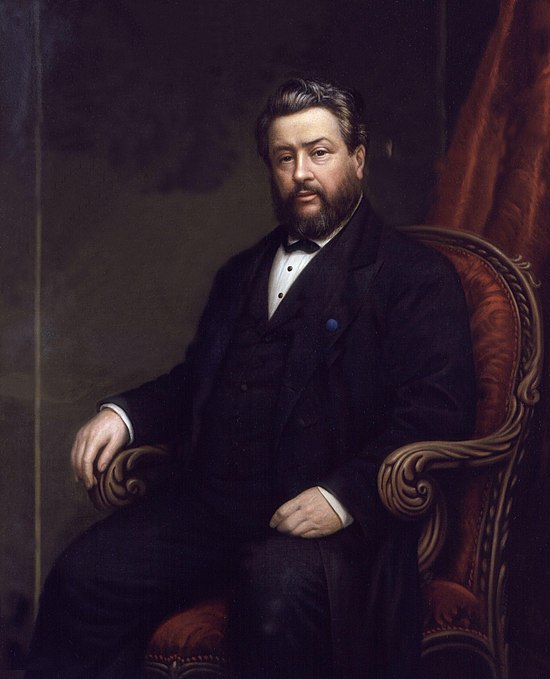
Charles Spurgeon

Encouragement for the Depressed!

Philippians 3:20; Zechariah 4:10
Charles Spurgeon March, 10 2017 Audio
0 Comments
Choice Puritan Devotional

Sermon Transcript

Auto-generated transcript • May contain errors

100%
Encouragement for the Depressed. This sermon was first preached on August 27, 1871, by Charles Haddon Spurgeon. The text today comes from the book of Zechariah, chapter 4, verse 10.

Who despises the day of small things? Zechariah was engaged in the building of the temple. When its foundations were laid, it struck everybody as being a very small structure compared with the former glorious building of Solomon. The friends of the enterprise grieved over the fact that it would be so small. The opponents of it rejoiced and uttered strong expressions of contempt. Both friends and foes doubted whether even on that small scale the structure would ever be completed. They might lay the foundations, and they might raise the walls a little bit, but they were too feeble a people, possessing too little riches and too little strength to carry out the enterprise. It was the day of small things.

Friends trembled, foes jeered, but the prophet rebuked them both, rebuked the unbelief of friends and the contempt of enemies by this question, Who despises the day of small things? Now we shall use this question at this time for the comfort of two sorts of people. First, for weak believers. And secondly, for feeble workers. Our object shall be to strengthen the hands that hang down and to bolster the feeble knees.

We will begin first of all with weak believers. Let us describe them. It is for them a day of small things. It may be that you have only lately been brought into the family of God. A few months ago you were a stranger to the divine life and to the things of God. You have been born again and you have the weakness of an infant. You are not strong yet. as you will be when you have grown in grace and in the knowledge of our Lord and Savior Jesus Christ, it is an early day for you, and it is also the day of small things.

First, we note that now, as a new believer, your knowledge is small. My dear brother, you have not been a student of the Bible for very long. Thank God that you know that you are a sinner and Christ is your Savior. That is precious knowledge. But you feel now what you once would not have confessed, your own ignorance of the things of God. Especially do the deep things of God trouble you. There are some doctrines that are very simple to other believers that appear to you mysterious, and even to be depressing to you. They are lofty. You cannot understand them. They are to you what hard food would be to children whose teeth have not yet appeared, Well, do not be at all alarmed about this. All the men in God's family have once been children, too. There are some that seem to be born with knowledge, Christians that come to a knowledge of Christ very rapidly. But these are only here and there. Israel did not produce a Samson every day. Most of us have to go through a long period of spiritual infancy and youth. And yes, There are only few in the church, even now, who might be called fathers. Do not marvel, therefore, if you only have a little knowledge.

Secondly, your discernment, too, is small. It is possible that anybody with a smooth tongue could lead you into error. You have, however, discernment if you are a child of God. You have enough discernment sufficient to keep you from deadly errors. For though there are some who would, if it were possible, deceive even the very elect, yet the elect cannot be deceived. For the life of God is in them, and they discern between the precious and the vile. They do not choose the things of the world, but they follow after the things of God. Your discernment, however, even though it seems small, need not trouble you. It is by reason of use, when the senses are exercised, that we fully discern between all that is good and all that is evil. Thank God for a little discernment. Though you see men as trees walking around, for your eyes are only half opened, a little light is better than none at all. It has not been long since you were in total darkness. Now if there is a glimmer of light, be thankful. For remember, where a glimmer of light can enter, so also the full noonday sun can come shining through. Yes, and it shall come in. It shall come in very brightly in due season. Therefore, do not despise the time of small discernment. Of course, my dear brother and sister, you only have a small experience in the Christian walk. I trust you will not mimic experience and try to talk as if you had the experience of the veteran saint when you are only still a raw recruit. You have not yet done business on the great waters. The more fierce temptations of Satan have not assailed you. The wind has been tempered for the newborn lamb. God has not hung heavy weights on slender threads, but has only put a small burden on the weak back. Be thankful that it is so. Thank him for the amount of experience that you do have. And do not despond because you do not have more. It will all come in due time. Do not despise the day of small things. It is always unwise to read someone else's biography and say, oh, I can't be right because I have not felt all this good man has felt. If a child of 10 years of age were to take down the diary of his grandfather and were to say, because I do not feel my grandfather's weakness, do not require the use of his glasses or lean upon his cane, therefore I am not one of the same family, it would be very foolish reasoning. Your experience will ripen. As yet, it is only natural that it should be green. wait a while, and bless God for what you have. Probably this, however, does not trouble you so much as one other thing. You only have small faith, and that faith being small causes your feelings to vary. I often hear this from young beginners in the divine life. I was so happy a month ago, but I have now lost that happiness. Now perhaps tomorrow, after they have attended church, they will be as cheerful as possible, but the next day their joy is gone. Beware, my dear Christian friends, of living by feeling. John Bunyan puts down Mr. Live by Feeling in the book of Pilgrim's Progress as one of the worst enemies of the town of Mansoul. I think he said he was hanged. I am afraid he, somehow or other, escaped from the executioner. For I very often meet him, and there is no villain that hates the souls of men and women and causes more sorrow to the people of God than this Mr. Live-by-Feeling. He that lives by feeling will be happy today and unhappy tomorrow. And if our salvation depended upon our feelings, we would be lost one day and saved another. for they are as fickled as the weather, and go up and down like a barometer. We live by faith, and if that faith is weak, bless God that weak faith is faith, and that weak faith is true faith. If you believe in Christ Jesus, though your faith is as small as a mustard seed, it will save you, and it will, in time, grow into something stronger. A diamond is a diamond, and the smallest fragment of it is of the same nature as that famous 100 carat diamond of India. And he that has only a little faith still has faith. And it is not great faith that is essential to salvation, but faith that links the soul to Christ, and that soul is therefore saved. Instead of mourning so much that your faith is not strong, Bless God that you have any faith at all. For if He sees that you despise the faith He has given you, it may be a long time before He gives you more. Prize the little bit of faith, and when He sees that you are so glad and thankful for that little, then He will multiply it and increase it, and your faith will increase even to the full assurance of faith. I think I hear you also add to all this, The complaint that your other graces seem to be so small, too. Oh, you say, I have so little patience that if I have a little pain, I begin to cry out. I had hoped that I would be able to bear it without murmuring. I have so little courage that I blush if anybody asks me about Christ. I think I could hardly confess him before a half a dozen, much less before the world. I am very weak indeed. Ah, my friend, I don't wonder. I have known some who have been strong because of the numbers of years as a Christian and have still been lacking in that one virtue. But where faith is weak, of course, the rest will be weak. A plant that has a weak root will naturally have a weak stem and then will only produce weak fruit. Your weakness of faith sends a weakness throughout the whole. But for all of this, though you are to seek for more faith and consequently for more grace, for stronger graces, yet do not despise what graces you have. Thank God for them and pray that the few clusters that are now upon you may be multiplied a thousandfold to the praise and glory of his grace. Thus I have tried to describe those who are passing through the days of small things. But the text says, who despises the day of small things? Well, some have, but there is a great comfort in this. God the Father has not. He has looked upon you, you with little grace and little love and little faith, and he has not despised you. No, God is always near the feeble saint. If I saw a young man walking in the park all alone, I would not at all be astonished, and I would not look around for his father. But I saw today, as I went home, a very tiny little tot playing in the park, a pretty little girl, and I thought, the father or mother are somewhere near. And sure enough, there was the father watching from behind a tree whom I had not seen. I knew that the little thing was not there all alone. And when I see a little weak child of God, I feel sure that God the Father is near, watching with wakeful eye and tending with gracious care the feebleness of His newborn child. He does not despise you if you are resting on His promise. The humble and contrite have a promise all to themselves in Scripture that He will not despise them. It is another sweet and consoling thought that God the Son does not despise the day of small things. Jesus Christ does not, for you remember this word, he gathers the lambs in his arms and carries them close to his heart. We put that which we prize the most closest to our heart. And this is what Jesus does. Some of us, perhaps, have outgrown the state in which we were lambs. But to ride in that heavenly carriage of the Savior's arms, close to his chest, we might be well content to go back and be lambs again. He does not despise the day of small things. And it is equally comforting to reflect that the Holy Spirit does not despise the day of small things. For it is he who, having planted the mustard seed of faith in the heart, watches over it until it becomes a full-grown tree. It is he who, having seen the newborn child of grace, does nurse and feed and tend it until it develops into a perfect man in Christ Jesus. The blessed Godhead does not despise the weak believer, Oh weak believer, be consoled by all of this. Who is it then that may despise the day of small things? Perhaps, perhaps Satan has told you and whispered in your ear that such little grace as yours is not worth having. That such an insignificant plant as you will surely be rooted up. Now let me tell you that Satan is a liar. For he himself does not despise the day of small things, and I am sure of that, because he always attacks those who are just coming to Christ. As soon as he sees that the soul is a little wounded by conviction, as soon as he discovers that a heart begins to pray, he will assault it with the fiercest temptations ever. I have known him to try to drive these of little faith to suicide or to lead them into a worse sin than they have ever committed before. He trembles when he sees the weakest saint upon his knees. He may tell you that the little grace in you is of no account, but he knows very well that it is like the grain that sways on top of the hill, which is only a fragment of the grain that abounds throughout the land. He knows it is the little grace in the heart that overthrows his kingdom. Ah, you say, but I have been greatly troubled lately because I have many friends that despise me. Because though I can hardly claim I am a believer, yet I have some desire towards God. What sort of friends are these? Are they worldly friends? Oh, do not fret about what they say. It would never trouble me if I were an artist, if a blind man were to utter the sharpest criticisms of my works. What does he know about it? And when an ungodly person begins to say about your faithfulness that it is deficient and faulty, poor soul, let him say what he will. It need not affect you. Ah, but you say. The persons that seem to despise me and reject my company and tell me that I am not a child of God are, I believe, Christians. Well then, do two things. First, take what they say to you and ponder it in your heart, because it may be, if God's children do not see in you the marks of a child of God, perhaps you are not his child. Let it lead you to an examination. Oh dear friends, it is very easy to be self-deceived, and God may employ, perhaps, one of his servants to enlighten you on this and deliver you from a strong delusion. But on the other hand, if you really do trust in your Savior, if you have begun to pray, if you have some love to God, and any Christian treats you harshly as if he thought you were a hypocrite, forgive him. He has made a mistake. He would not do so if he knew you better. Say within yourself, after all, if my brother does not know me, it is enough if my father does. If my father loves me, though my brother gives me the cold shoulder, I will be sorry for it, but it shall not break my heart. I will cling all the closer to my Lord because his servants seem shy of me. Why, is it not a wonder that some Christians should be afraid of some of you converts? For think what you used to be just a little while ago. Why, a mother hears her son say he is converted. A month or two ago, she knew where he spent his evenings and what his habits of sin were. And though she hopes it is true, she is afraid lest she should lead him into presumption. And she rejoices with trembling. and perhaps tells him more about her trembling than she does about her rejoicing.

Why, remember that the saints of old could not believe that Saul was converted at first. He was brought into the church meeting and received. I guess that before he came and saw the elders, one of the elders would say, well, the young man seems to know something of the grace of God. There is certainly a change in him. But it is a remarkable thing that he should wish to join the very people he was persecuting. Perhaps it is a mere impulse. It may be, after all, that he will go back to his old companions.

Do you wonder that they would think this way? I don't. I am not at all surprised. I am sorry when there are unjust suspicions. I am sorry when a genuine child of God is questioned. but I would not have you be too concerned. As I've said before, if your father knows you, you need not be so broken in heart because your brother does not. Be glad that God does not despise the day of small things.

And now let me say to you who are in this state of small things that I earnestly trust that you will not yourself despise the day of small things. How can we do that, you say? Why, you can do it by desponding. Why, I think that there was a time when you would have been ready to leap for joy if you had been told that you would have given to you a little faith. And now you have got a little faith. Instead of rejoicing, you are sighing and moaning and mourning. Do not do that. Be thankful for moonlight, and you will eventually get sunlight. Be thankful for sunlight, and you will get that light of heaven which is as bright as the light of seven days all put together. Do not despond, for it will seem that you despise the mercy which God has given you. Be glad for what you have got. Don't seem to despise what has been done for you. I say to every Christian here, while you long after strength Don't seem to despise the grace that God has bestowed, but rejoice and bless his name.

Another way that you can despise the day of small things is by not seeking after more. That is strange, you say. Well, a man who has got a little of something and does not want to get more of it, well, it looks as if he despised the little he has. He who has a little light and does not ask for more light does not care for the light at all. You that have a little faith and do not want more faith do not value faith at all. You are despising it.

On the one hand, do not become disheartened because you have the day of small things, but on the other hand, do not stand still and be satisfied with what you have. but prove your value of the little by earnestly seeking after more grace. Do not despise the grace that God has given you, but bless God for it and do this in the presence of His people. If you hold your tongue about your grace and never let anyone know, surely it must be because you do not think it is worth saying anything about. Tell your brothers, tell your sisters, and all those of the Lord's family, that the Lord has done gracious things for you. And then it will be seen that you do not despise his grace.

And now let us consider a thought or two about these small things and weak believers. Always remember that little faith is saving faith and that the day of small things is a day of safe things. Remember that it is natural that living things should begin small. The man is first a baby. The daylight begins first as twilight. It is little by little that we come to the stature of men in Christ Jesus.

The day of small things is not only natural, but promising. Small things are living things. Leave them alone and they grow. The day of small things has its beauty and its excellence. I have known some who in later years would have liked to have gone back to their first days. Oh, many of us remember when we would have surmounted any obstacle just to hear a sermon. We did not have much knowledge, but oh, how we longed to know more. We stood in the aisles then, and we never got tired. Now we need soft seats in very comfortable places, and the atmosphere must be neither too hot nor too cold.

Perhaps we are getting too refined now, but in those first young days of spiritual life, what appetites we had for divine truth and what zeal, what sacred fire was in our heart. True, some of it was wildfire, and perhaps the energy of the flesh mingled with the power of the spirit, But for all of that, God remembers the love of our wedding day, when we wedded Christ, and we remember it too.

The mother loves her grown-up son, but sometimes she thinks she does not love him as she did when she could cuddle him in her arms. Oh, the beauty of a little child. Oh, the beauty of a lamb in the faith. I dare say the farmer and the butcher like the sheep better than the lambs. but the lambs are best to look at. It is also like the rosebud. There is a charm about it that there is not in the full-blown rose. And so in the day of small things, there is a special excellence that we ought not to despise.

Besides, small as grace may be in the heart, it is divine. It is a spark from the ever blazing sun. Whoever has even a little living faith in Christ, that faith is of the divine nature, and being divine it is immortal. All the devils in hell could not quench the feeblest spark of grace that ever dropped into the heart of man. If God has given you faith as small as a mustard seed, it will survive though all earth and hell, all time and eternity try to destroy it.

So there are many reasons why we should not despise the day of small things. One more word and I will leave this point. You Christians don't despise anybody, but especially don't despise any in whom you see even a little love towards Christ. But do more. Look after them. Look after the little ones. I have heard of a shepherd who had a remarkably fine flock of sheep, and he knew a secret about them. He was often asked how it was that his flock seemed to excel so much more than all other flocks. At last he told the secret. I give my principal attention to the lambs.

Now you elders of the church and you, my older sisters, you that know the Lord, and have known him for years, visit the lambs, search them out, and take special care of them. And if they are well nurtured in their early days, they will get a strength of spiritual constitution that will make them the joy of the good shepherd during the rest of their days. Now I leave that point.

In the second place, I said that I would address a word or two to feeble workers. to feeble workers. Thank God there are many workers here tonight. And maybe they will put themselves down as feeble. May the words I utter be an encouragement to them and to feeble workers collectively.

When a church begins, it is usually small. And the day of small things is a time of considerable anxiety and fear. I may be addressing some who are members of a newly organized church. Dear brethren, do not despise the day of small things. Rest assured that God does not save by numbers and that results are not in the spiritual kingdom in proportion to numbers.

I have been reading lately with considerable care the life of John Wesley. by two or three different authors in order to get as well as I could a fair idea of the good man. But one thing I have noticed, that the beginnings of the work, which has become so wonderfully large, were very small indeed.

Mr. Wesley and his first brethren were not rich people. Nearly all that joined him were poor. Here and there there was a person of some standing, But the Methodists were the poor of the land, and his first preachers were not men of education. One or two were so, but the most were good outdoor preachers, practical preachers, magnificent preachers as God made them by His Spirit. But they were not men who had the benefit of college training or who were remarkable for their ability.

The Methodists had neither money nor eminent men at first, and their numbers were very few. During the whole life of that good man, which was protracted for so many years, the denomination did not attain any notable size. They were few and apparently feeble, but Methodism was never so glorious as it was at first, and there never were so many conversions, I believe, as in those early days.

Now I speak sorrowfully, It is a great denomination. It abounds in wealth, and I'm glad that it does. It has mighty orators. I rejoice it has. But it has no increase. It has no conversions. This year and other years, it remains stationary. And it is not alone in this dilemma, for almost all other denominations have the same tale. Year by year as the reports come in, it is always the same. No increase, hardly holding our ground.

I use that as an illustration here. This church, our church, will get in precisely the same condition if we do not watch out. Exactly the same state. When we do not have the means, we get the blessing. And when we seem to have the might and power, then the blessing does not come. Oh, may God send us poverty. May God send us lack of means and take away our power of speech if it must be. And help us only to stammer if this is the only way to get the blessing. Oh, I crave to be useful to souls and all the rest may go where it will. And each church must crave the same.

not by might nor by power, but by my spirit, says the Lord. Instead of despising the day of small things, we ought to be encouraged. It is by the small things that God seems to work, but the great things he does not often use. He won't have Gideon's great host. Let them go to their homes. Let the mass of them go. Bring them down to the water. Pick out only the men that lap the water, and then there is very few. You can count them almost on your fingertips, just two or 300 men. Then Gideon shall go out against the Midianites, and the sound of the sword of the Lord and of Gideon in the dead of the night shall make the enemy tremble, and the Lord God himself shall gain the victory.

Brethren, never mind your feebleness, your fewness of number, your poverty, your lack of ability. Throw your souls into God's cause. Pray mightily. Grab hold of the gates of heaven. Stir heaven and earth rather than be defeated in winning souls. And you will see results that will astonish you. Who despises the day of small things?

Now take the case of each Christian individually. Each one of us ought to be at work for Christ, but the great mass of us cannot do great things. Don't despise then the day of little things. You can only give a penny. Now then, he that sat near the treasury did not despise the widow's two small copper coins worth only a fraction of a penny. Your little thank offering, if given from your heart, is as acceptable as if it had been a hundred times as much. Therefore, do not neglect to do the little. Don't despise the day of small things.

You can only give away a tract in the street. Don't say, I won't do that. Souls have been saved by the distribution of tracts and sermons. Scatter them, scatter them. They will be good seed. You do not know where they may fall. Sometimes all you can do is to write a letter to a friend about Christ. Don't neglect to do it. Write one tomorrow. Remember a playmate of yours from years past. You may take liberties with him about his soul from your previous intimacy with him. Write to him about the state of his soul before God and urge him to seek the Savior. Who knows, a sermon may miss him. but a letter from the well-known school companion will reach his heart.

Mother, it is only two or three little children at home that you have an influence over. Do not despise the day of small things. Take them tomorrow. Put your arms around them as they kneel by you. Pray, God bless my boys and girls and save them. Tell them of Christ now. Oh, how well can mothers preach to children. I can never forget my mother's teaching. On Sunday nights when we were at home, she would have us sit around the table and explain the scriptures as we read, and then pray. And one night, she left an impression upon my mind that never will be erased when she said this, I have told you, my dear children, the way of salvation. And if you perish, you will perish justly. I will have to say amen to your condemnation when you are condemned." And I could not bear that thought. Anybody else may say amen, but not my mother. Oh, you don't know, you that have to deal with children, what you may do. Do not despise these little opportunities. Put a word in for Christ.

You that travel about, you that go into offices and factories. If Christians were men who were always true to their colors, I think we should soon see a vast change come over our great establishments. Speak up for Jesus. Do not be ashamed of him. And because you can only say a little, don't refuse. Don't refuse, therefore, to say that, but rather say it over 20 times. So make the little into much. Again and again and again repeat the feeble stroke and there shall come to be as much result from it as from one tremendous blow. God accepts your little works as if they were done in faith to his dear son. God will give success to your little works. God will educate you by your little works to do greater works. and your little works may call out others who shall do greater works by far than you shall ever be able to accomplish.

Evangelist, go on preaching at the street corner. You that visit the slums and the ghettos, keep on. Get into the homes and talk of Jesus Christ. You that go into the country towns on Sunday and speak on the village greens, you that speak of Christ, continue on with it. We don't want to keep the salt in one box. Let it be rubbed into the putrid mass to stop the putrification. We don't want the seed to stay forever in the corn bin. Let it be scattered and it will give us more.

Oh, brothers and sisters, wake up if any of you are asleep. Don't let an ounce of strength in this church be wasted, not a single grain of ability, either in the way of doing or praying or giving a holy living. Spend and be spent for who has despised the day of small things. The Lord encourage weak believers and the Lord accept the efforts of feeble workers and send to both his richest blessings for Christ's sake. Amen.

foretaste of the heavenly light. This sermon was preached in the early part of 1857 by Charles Haddon Spurgeon. The text comes from the book of Deuteronomy, chapter 1, verse 25. Taking with them some of the fruit of the land, they brought it down to us and reported, it is a good land that the Lord our God is giving us.

Do you remember the occasion which caused these words to be written? The children of Israel sent twelve men as spies into the land of Canaan, who brought back with them the fruit of the land. And among that fruit was a cluster of grapes from the valley of Eshcol, too heavy to be carried by one man, and which therefore had to be carried by two of them on a pole between them.

But I will not speak about the fruit. but only say that as they learned about Canaan by the fruit of the land brought to them by the spies, so you and I, even while we are here on this earth, if we are the Lord's beloved, may learn something of what heaven is by certain blessings which are brought to us even while we are still here on earth.

" The Israelites were sure that Canaan was a fertile land. when they saw and ate the fruits which it produced, brought back by their brethren. Perhaps there was only a little for so many, and yet those who did eat of the fruit were caused immediately to understand that it must have been a superior soil that produced such fruit.

Now then, beloved, we who love the Lord Jesus Christ have had clusters of the grapes from the valley of Eshcol, We have had some fruits of heaven ever since we have been on earth, and by them we are able to judge the richness of the soil of paradise which brings forth such rare and choice delights.

I will therefore present to you some views of heaven in order to give you some idea how it is that the Christian on earth enjoys a foretaste of the blessings that are yet to be revealed. Possibly there are scarcely two Christians who have the same views of heaven, even though they all expect to go to the same heaven. Yet the most prominent features in heaven are different to each different mind according to its disposition.

I will confess what is to me the most prominent feature of heaven judging at the present moment. At another time I may love heaven better for another thing, but lately I have learned to love heaven as a place of security, a place of security.

We have been greatly saddened as we have seen some prominent Christian professors turning from their profession of faith. Yes, and even worse, some of the Lord's own beloved children committing grievous sins, which have brought disgrace upon their character and injury to their souls. I have learned to look to heaven lately as a place where we will never, never sin, where our feet will be firmly fixed upon a rock, where there is neither tripping nor sliding, where faults will be unknown, where we will have no need to keep watch against an untiring enemy, because there is no foe that will annoy us. where we will not be on our guard day and night, watching against the incursion of foes, for there the wicked cease from turmoil, and there the weary are at rest.

I have looked upon it as a land of complete security, where our clothing will always be white, where the face will always be anointed with fresh oil, where there is no fear of slipping or turning away, but where we will stand firm forever. And I ask you if that is a true view of heaven. And I am sure it is one feature of it. Don't the saints now on earth enjoy some fruits of paradise, even in this sense? Don't we even in these huts and villages below sometimes taste the joys of this blissful security?

The doctrine of God's word is that all who are in union with the Lamb are safe, that all believers must stay on their path, that those who have committed their souls to the keeping of Christ will find Him a faithful and unchangeable keeper. On such a doctrine we may enjoy security even on earth. not that high and glorious security which renders us free from every slip and trip, but nevertheless as great a security because it secures us against ultimate ruin and causes us to be certain that we will attain to eternal bliss.

And beloved, have you never sat down and reflected on the doctrine of the perseverance of the saints? I'm sure you have. and God has brought home to you a sense of your security in the person of Christ. He has told you that your name is engraved on His hand. He has whispered in your ear the promise, do not fear, I am with you. You have been led to look upon Him, the great security of the covenant, as faithful and true, and therefore duty bound to present you, the weakest of the family, with all the chosen race. before the throne of God, and in such sweet contemplation, I am sure you have been drinking some of the juices of His spiced pomegranates. You have had some of the choice fruits of paradise. You have had some of the enjoyments which the perfect saints have above in a sense of your complete and eternal security in Christ Jesus.

Oh, how I love that doctrine of the perseverance of the saints. I will at once renounce the pulpit when I cannot preach it, for any other form of teaching seems to me to be an empty desert and a howling wilderness, as unworthy of God as it would be beneath even my acceptance, frail worm as I am. I could never ever believe or preach a gospel which saves me today and rejects me tomorrow. A gospel which puts me in Christ's family one hour and makes me a child of the devil the next. A gospel which justifies and then condemns me. A gospel which pardons me and afterwards casts me down into hell. Such a gospel is abhorrent to reason itself and is contrary to the mind of God whom we delight to serve.

Every true believer in Jesus can sing with Toplity.

My name from the palms of his hands,
eternity will not erase.
Impressed on his heart it remains,
in marks of indelible grace.
Yes, I to the end will endure,
as sure as the promise is given,
more happy, but not more secure,
the glorified spirits in heaven.

Yes, beloved, we do enjoy a sense of perfect security even as we dwell in this land of wars and conflicts. As the spies brought their brethren clusters of the grapes, so in the security we enjoy we have a foretaste and guarantee of the bliss of paradise.

In the next place, most probably the greater part of you love to think of heaven under another aspect, a place of perfect rest, a place of perfect rest. Son of toil, you love to come to church because it is there you sit to hear God's word and rest your wearied body. When you have wiped the hot sweat from your burning brow, you have often thought of heaven where your labors will be over and have sung with sweet emphasis, there will I bathe my weary soul in seas of heavenly rest, and not a wave of trouble roll across my peaceful breast. Rest, rest, rest, that is what you want. And to me, this idea of heaven is very beautiful. Rest I know I will never have beneath this sky. While Christ's church is as cruel as it is, For the most cruel of masters is the Church of Christ. I have served it and am nearly hounded to my grave by Christian ministers perpetually requiring me to do the impossibilities that they know no mortal strength can accomplish. I am willing to labor until I drop, but I cannot do more. Yet I am perpetually assailed on every side. Until go where I may, there seems no rest for me until I sleep in my grave. And I do look forward to heaven with some degree of happiness. There I will rest from labors constant and perpetual, though much loved.

And you too, you have been toiling long to gain an object that you have sought after. You will be glad when you get to heaven. You have said if you could get it, you would lie down and rest. You have toiled after a certain amount of riches. You have said if you could finally gain a certain experience that you have longed after, then you could rest. Or you have been laboring long to gain a certain point of character, and then you have said you would lay down your arms and rest. Yes, but you have not reached it yet. And you love heaven because heaven is the goal of the racer, the target of the arrow of existence. You love heaven because it will be an eternal rest for the poor, weary struggler on earth. You love it as a place of rest.

And do we never enjoy a foretaste of heaven on earth in that sense? Oh, yes, beloved. Blessed be God. We who have believed enter that rest. Our peace is like a river and our righteousness like the waves of the sea. God may give to his people rest, even the kind of rest that waits for the people of God. We have stormy trials and bitter troubles in the world, but we have learned to say, be at rest, oh my soul, for the Lord has been good to you.

Did you never in times of great distress go into your closet and there on your knees pour out your heart before God? Did you never feel, after you had done so, that you had bathed yourself in rest, so that you felt that cares like a wild deluge come and storms of sorrow fall? You do not care the least about them. Though wars and disturbances were raging all around you, you were kept in perfect peace, for you had found a great protecting shield in Christ. Yes, you had looked on the face of God's anointed one. Ah, Christian, that rest without a flutter of disturbance, that rest so calm and serene, which in your deepest troubles you have been enabled to enjoy by being close to Christ, is to you a cluster of the mighty fruit of heaven, one grape of the heavenly cluster which you will soon partake of in the land of the hereafter. Here again you see we can have a foretaste of heaven and realize what it is even while we are here on earth.

That idea of heaven as a place of rest will also suit some lazy professors of Christianity and therefore let me give you the very opposite of it. I do think that one of the worst sins a man can be guilty of in this world is to be idle. I can almost forgive a drunkard, but I think there is very little mercy for the lazy man. I think a man who is idle has as good a reason to be repentant before God as David did when he was an adulterer. For the most abominable thing in the world is for a man to let the grass grow up to his ankles and to do nothing about it. God never sent a man into the world to be idle, and there are some who make a profession of labor but who do nothing from year to year.

The next idea of heaven is this, that it is a place of uninterrupted service, a place of uninterrupted service. It is a place where they serve God day and night in His temple and never know exhaustion and are never required to sleep. Do you know the sweetness of work? For although we must complain when people expect impossibilities of us, it is the highest enjoyment of life to be busily engaged for Christ. Tell me the day I do not preach, and I will tell you the day in which I am not happy. But the day in which it is my privilege to preach the gospel and labor for Christ is generally the day of my peaceful and quiet enjoyment. Service is delight. Praising God is pleasure. Laboring for him is the highest delight a mortal can know.

Oh, how sweet it must be to sing his praises and never feel that the throat is dry. Oh, how blessed to flap the wing forever and never feel it to be weary. Oh, what sweet enjoyment to run his errands, evermore to circle around the throne of God in heaven while eternity will last. and never once lay the head on a pillow, never once feel the throbbings of fatigue, never once the pangs that admonish us that we need to cease, but to keep on forever like the days of eternity, a broad river rolling on with perpetual floods of labor. Oh, that must be enjoyment. That must indeed be a heaven to serve God day and night in His temple. But you have served God on earth, and have had foretaste of that. I wish some of you knew the sweetness of labor a little more. For although labor causes sweat, it brings about sweetness too, especially labor for Christ. There is a satisfaction before the work. There is a satisfaction in the work. There is a satisfaction after the work. And there is a satisfaction in looking for the fruits of the work, and a great satisfaction when we get those fruits. Labor for Christ is, indeed, the dressing room of heaven, if it is not heaven itself. It is one of the most blissful foretastes of it. Thank the living God, Christian, if you can do anything for your Master. Thank Him if it is your privilege to do the least thing for Him. For remember, in doing so, He has given you a taste of the grapes of Eshcol. But you lazy people, you do not get the grapes of Eshkol because you are too lazy to carry that big cluster. You would like to eat the grapes without the trouble of gathering them, but you do not care to go forth and serve God. You sit still and look after yourselves, but what do you do for other people? You go to your place of worship. You talk about your Sunday school and your church's visitation of the sick and so on. Yet you never teach in the Sunday school and you never visit a sick person and yet you take a great deal of the credit to yourself while you do nothing at all. You will never know much of the enjoyments of heavenly glory until you know a little of the work of the kingdom here on earth.

Another view of heaven is that it is a place of complete victory and glorious triumph. It is a place of complete victory and glorious triumph. This is the battlefield. Heaven is the triumphant procession. This is the land of the sword and the spear. Heaven is the land of the wreath and the crown. This is the land of the garment rolled in blood and of the dust of the fight. Heaven is the land of the trumpet's joyful sound. It is the place of the white robe and the shout of conquest.

Oh, what a thrill of joy will shoot through the hearts of all the blessed when their conquest will be complete in heaven, when death itself, the last of foes, will be slain, when Satan will be dragged captive to the feet of Jesus Christ, when Christ will have overthrown sin and trampled corruption as the filth of the streets. when the great shout of universal victory will rise from the hearts of all the redeemed. What a moment of pleasure that will be!

O dear brethren, you and I have foretaste of even that. We know what conquests, what souls' battles we have even heard. Did you never struggle against an evil heart and finally overcome it? Oh, with what joy did you lift up your eyes to heaven the tears flowing down your cheeks and say, Lord, I bless you that I have been able to overcome that sin. Did you ever have a strong temptation and did you wrestle hard with it and know what it was to sing with great joy? My feet slipped, but your mercy held me up.

Have you, like Bunyan's Christian in that wonderful book, Pilgrim's Progress, fought with old Apollyon And have you seen him flap his dragon wings and fly away? There you had a foretaste of heaven. You have had just a glimmer of what the ultimate victory will be. In the death of that one Philistine, you have had the destruction of the whole army. That Goliath that fell beneath your sling and stone was only one out of a multitude who must yield their bodies to the birds of heaven. God gives you partial triumphs that they may be the guarantee of ultimate and complete victory. Go on and conquer, and let each conquest, though difficult and strenuously contested, be to you as a grape of eschol, a foretaste of the joys of heaven.

Furthermore, without doubt, one of the best views we can ever give of heaven is this, that it is a state of complete acceptance with God, recognized and felt in the conscience. I suppose that a great part of the joy of the blessed saints consists in a knowledge that in heaven there will be nothing in them to which God will be hostile, that there will be nothing that can mar their peace with God, that they will be completely in union with the principles and thoughts of the Most High, that his love will be set on them, that their love will be set on him, that they will be one with God in every respect.

Well, beloved, have we not enjoyed a sense of acceptance here below? Blotted and blurred by many doubts and fears, yet there have been moments when we have known ourselves as well accepted as we will know ourselves to be even when we stand before the throne. There have been bright days with some of us when we could be certain that God was true and when afterward, feeling that the Lord knows them that are his, we could say, and I know that I am his too. Then have we known the meaning of Dr. Watts when he sang these words.

When I can say, my God is mine.
When I can feel thy glory shine.
I tread the world beneath my feet
and all that earth calls good or great.
While such a scene of sacred joys
our raptured eyes and souls employs,
here we could sit and gaze away
a long and everlasting day.

We had such a clear view of the perfection of Christ's righteousness that we felt that God had accepted us and we could be nothing but happy. We had such a sense of the worth of the blood of Christ, we felt sure that our sins were all pardoned and that they could never, never be mentioned again forever.

And beloved, though I have spoken of other joys, let me say, this is the cream of them all, to know ourselves accepted in God's sight. Oh, to feel that I, a guilty worm, am now received in my father's arms. That I, a lost prodigal, am now feasting at his table with delight. That I, who once heard the voice of his anger, now listen to the notes of his love. This is joy, this is joy unspeakable. What more can they know up there than that? And were it not that our sense of it were so imperfect, we might bring heaven down to earth. and might at least dwell in the suburbs of that celestial city, if we were not privileged to go inside the gates.

So you see again, we can have clusters of the grapes of the Valley of Eshkol in that sense. Seeing that heaven is a state of acceptance, we too can know and feel that acceptance and rejoice in it here on earth.

And again, my friends, Heaven is a state of great and glorious manifestations. A state of great and glorious manifestations. You look forward to your experience in heaven. You sing,

then will I see and hear and know
all I desired or wished below.
And every power find a sweet employ
in that eternal world of joy.

You are now looking at heaven darkly through a glass. There you will see face to face. Christ looks down on the Bible. And the Bible is his looking glass. You look into it and you see the face of Christ as in a dark mirror. But soon you will look on him and see him face to face. You expect heaven as a place of unique manifestations. You believe that He will unveil His face to you, that millions of years your wondering eyes will over your Savior's beauty's robe. You are expecting to see His face and never, never sin. You are longing to know the secrets of His heart. You believe that in that day you will see Him as He is and you will be like Him.

Well, beloved, though Christ does not manifest Himself to us here on earth, as he does to the angels and saints in heaven. Have you and I not had manifestations even while we have been in this valley of tears? Speak, beloved, let your heart speak. Have you not had visions of Calvary? Has it your master sometimes touched your eyes and let you see him on his cross? Have you not said,

sweep the moments rich in blessing
which before the cross I spend
life and health and peace possessing
from the sinner's dying friend.
Here I'd sit forever viewing,
mercy stream in streams of blood,
precious drops my soul be doing,
plead and claim my peace with God.

Haven't you wept for joy and grief when you saw him bleeding out his life from his heart for you? and gazed at him nailed to the cross for your sakes? Oh yes, I know you have had such manifestations of him, and haven't you seen him in his risen glories? Haven't you gazed at him there exalted on his throne? Haven't you by faith seen him as the judge of the living and the dead, and as the prince of the kings of the earth? Haven't you looked through the dim future and seen him with the crown of all the kingdoms on his head, with the diadems of all the monarchies beneath his feet and the scepters of all thrones in his hand? Haven't you anticipated the moment of his most glorious triumphs when he will reign over the whole earth with unlimited power? Yes, you have. And in that you have had foretaste of heaven.

When Christ revealed himself to you, you have looked under the veil, and therefore you have seen what is there. You have had some glimpses of Jesus while here. Those glimpses of Jesus are but the beginning of what will never end. Those joyous melodies of praise and thanksgiving are but the preludes of the notes of paradise.

And now, lastly, The utmost idea of heaven perhaps is that it is a place of most sacred and blissful communion. I have not given you nearly half of what I might have given you of the various characteristics of heaven as described in God's Word, but communion is the best. That word so little spoken of, so seldom understood. That word communion.

Dearly beloved, you hear us often say in the church and the communion of the Holy Spirit be with you all. But there are many of you that do not know the meaning of that sweet heaven in a word communion. It is the flower of the language. It is the honeycomb of words communion. You like the talk of corruption best, don't you? Well, if you like that filthy word, then you are very willing to meditate on it. I only do so when I am forced to do it. But communion seems to me to be a sweeter word than that. You like to talk a great deal about affliction, don't you? Well, if you love that gloomy word, ah, you have reason to love it. But if you love to be happy dwelling on it, you may do so. but give me for my constant text and for my constant joy, communion.

And I will not choose which kind of communion it will be. Sweet master, if you give me communion with you and your sufferings, if I have to bear reproach and shame for your name's sake, I will thank you. If I may have fellowship with you in it, and if you will allow me to suffer for your sake, I will consider it an honor. that I can be a partaker of your sufferings. And if you give me sweet enjoyments, if you raise me up and make me sit in heavenly places with Christ, I will bless you. I will bless you for ascension communion, communion with Christ in his glories. Don't you say the same, my friend? And for communion with Christ in his death? Have you died to the world as Christ died to himself? And then have you had communion with Him in resurrection? Have you felt that you are raised to newness of life, even as He was? And have you had communion with Him in ascension, so that you can know yourself to be an heir to the throne in paradise? If so, you have received the best promise you can have of the joys of paradise.

To be in heaven is to lean one's head on the chest of Jesus. Have you done it here on earth? then you know what heaven is. To be in heaven is to talk with Jesus, to sit at his feet, to let our heart beat against his heart. If you have had that on earth, you have had some of the grapes of heaven. Cherish then these four tastes of whatever kind they may have been in your individual case. Differently constituted, you will all look at heaven in a different light. Keep your foretaste just as God has given it to you. He has given each of you some. If you love it, it is most suitable to your own condition. Treasure it up. Think much of it. Think more of your Master. For remember, it is Christ in you, the hope of glory after all. That is your only foretaste of heaven. And the more fully prepared you will be for the bliss of the joyous ones in the land of the happy. Amen.
Charles Spurgeon
About Charles Spurgeon
Charles Haddon Spurgeon (19 June 1834 — 31 January 1892) was an English Particular Baptist preacher. His nickname is the "Prince of Preachers."
Broadcaster:

Comments

0 / 2000 characters
Comments are moderated before appearing.

Be the first to comment!

Joshua

Joshua

Shall we play a game? Ask me about articles, sermons, or theology from our library. I can also help you navigate the site.