Bootstrap
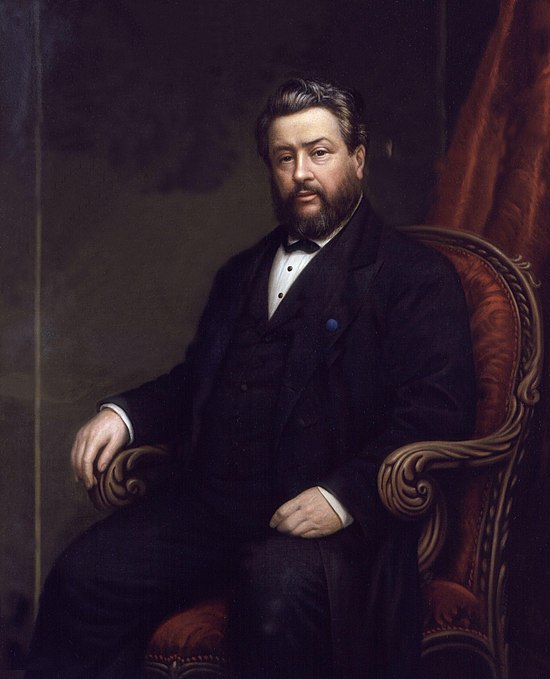
Charles Spurgeon

Contentment!

Philippians 4:11; Philippians 4
Charles Spurgeon March, 10 2017 Audio
0 Comments
Choice Puritan Devotional!

Sermon Transcript

Auto-generated transcript • May contain errors

100%
contentment. This sermon was first preached on March 25, 1860, by Charles Haddon Spurgeon. The text for today comes from the book of Philippians, Philippians chapter 4, verse 11. I have learned to be content whatever the circumstances. I have learned to be content whatever the circumstances.

The Apostle Paul was a very educated man. One of his greatest attainments in his studies was this, he had learned to be content. This kind of knowledge is far better than much that is acquired in schools. Their highly educated may diligently look upon the past, But too often those who gather their relics of antiquity with enthusiasm are thoughtless about the present and neglect the practical duties of daily life. Their knowledge may open up the dead languages to those who will never derive any living benefit from them. It is far better to have the education of the apostle. It was a thing that had present value. and also it was useful for all generations.

One of the rarest but one of the most desirable accomplishments. I rank the greatest philosopher and the most scholarly of our Cambridge men at the lowest level when compared with this educated apostle. For this surely is the highest degree in humanities to which a person can possibly attain. to have learned that whatever the circumstances, to be content.

You will immediately see from just a casual reading of the text that contentment in all circumstances of life is not the natural tendency of man. Unwanted weeds grow very quickly. Greed, discontent, and murmuring are as natural to man as weeds are to the soil. You have no need to sow weeds. They grow naturally because they are native to the earth, upon which rests the curse. In the same way, you have no need to teach men and women to complain. They complain easy enough without any education.

but the precious things of the earth must be cultivated. If we want wheat, we must plow and sow. If we want flowers, there must be a garden, and all the gardeners care. Now contentment is one of the flowers of heaven, and if we want to have it, it must be cultivated. It will not grow in us naturally. It is the new nature and the new nature alone that can produce it. And even then we must be especially careful and watchful that we maintain and cultivate the grace, the grace which God has sown in it.

Paul says, I have learned to be content, which is saying that he wasn't always content. but that it cost him some pains to attain to the mystery of that great truth of contentment. No doubt he sometimes thought he had learned contentment, but then was dissatisfied with the circumstances of his life. Most likely, like boys at school, he had to have his knuckles wrapped a few times. Frequently Paul found that it was not easy learning to be content. and finally when he had mastered it and could say, I have learned to be content whatever the circumstances, by that time he was an old gray-headed man at the very edge of the grave, a prisoner locked up in Nero's dungeon in Rome.

We too might be willing to endure Paul's weaknesses, his trials and persecutions, and share the cold dungeon with him if we might in some way achieve such a degree of contentment. Don't any of you indulge in the silly notion that you can become content without the process of learning to be content or learn without discipline? Contentment is not a quality that comes naturally, but a discipline to be acquired gradually. The very words of the text might suggest this, even if we did not know it from experience. We do not need to be taught to spread rumors, but we must be taught to submit in the will and good pleasure of the Lord our God. When the apostle had uttered these words, he immediately gave a commentary on them. Read the twelfth verse. I know what it is to be in need. I know what it is to have plenty. I have learned the secret of being content in any and every situation, whether well-fed or hungry, whether living in plenty or in want."

Notice first that the Apostle said he knew what it was to be in need, to be humble, The Apostle said he knew what it was to be in need, to be humbled. This is wonderful knowledge. When everyone honors us, then we may easily be content. But when the finger of scorn is pointed at us, when our character is slandered and men hiss at us behind our backs, then it will require a good understanding of the Word of God to be able to endure that with patience and with cheerfulness.

When we have all of our needs met and are increasing in status, honor, and in the esteem of others, then again it is easy to be content. But when we have to say with John the Baptist, I must decrease. Or when we see some other servant advanced in our place and another man holding the hand that we long to hold, then it is not easy to sit still. And without envy in our hearts to cry out with Moses, I wish that all the Lord's people were prophets. To hear another man praised at your own expense to find your own virtues ignored in order to describe the superior qualities of some new rival. To be able to bear this with joy and thankfulness and to praise God is beyond human nature.

There must be something noble in the heart of the man who is able to lay down all of his honors as willingly as he took them up. when he can just as cheerfully submit himself to be humbled by Christ as to be lifted up and sat on a throne by the Lord. And yet, my brothers and sisters, not one of us have learned what the Apostle knew, which was that we must be just as ready to glorify Christ by disgrace, by humiliation, and by reproach as by the honor and admiration of men. We must be ready to give up everything for Christ. We must be willing to go downwards in order that Christ's name may ascend upwards and that Christ would become better known and glorified among men.

I know what it is to be in need, said the Apostle. His second piece of knowledge is equally valuable. I know what it is to have plenty. Paul's second piece of knowledge is equally valuable. I know what it is to have plenty. There are a great many men who know how to act when they are in need, yet they have no clue how to respond when they have plenty. When they are put down into the pit with Joseph, They look up and see the starry promise and they hope for an escape. But when they are put on the top of a pinnacle, their heads grow dizzy and they are ready to fall. When they were poor, they used to battle it. But note the same men after success has crowned their struggles. Their troubles are over. They are rich and have amassed many things. And haven't you often seen a man who has sprung up from nothing to wealth, become very proud of his money and vain and intolerant? Nobody would have ever thought that that man ever worked behind a counter as a salesman, would you? He is so great in his own eyes that one would have thought the blood of all the Caesars must flow in his veins. He acts as if he no longer knows any of his old acquaintances. The familiar friend of days past he now passes by with scarcely a nod of recognition. The man does not know how to act when he has plenty, when he receives not only wealth but the praise and honor of men. He has grown proud. He is exalted above measure. There have been men, men who for a time have been lifted up to a very high level of popularity in the church. They have preached successfully and done some mighty work. For this the people have honored them and rightly so. But then they have become tyrants. They have lusted after authority. They have looked down contemptuously on everybody else. as if other men were nothing but small pygmies and they, they were huge giants. Their conduct has been intolerable and they soon were cast down from their high places because they did not know how to act when they had plenty. Once a square piece of paper was placed on George Whitefield's pulpit. It was a prayer request that read, a young man who has lately inherited a large fortune requests the prayers of the congregation. Now that was an excellent prayer request. For when we go up the hill of prosperity, we need prayer that we may walk sure and steady. Going down the hill of fortune, there is not half the fear of stumbling. The Christian more often disgraces his profession in prosperity than when he is being humbled in need. There is another danger, the danger of growing worldly. The danger of growing worldly. When a man finds that his wealth increases, it is amazing how the gold will stick to his The man who had just enough thought that if he had more than he needed, then he would be very generous with the extra. With a penny wallet he had a gold heart, but now with a gold wallet he has a penny heart. He finds that money adheres to him and he cannot part with it. You have heard of the spider that is called a money spinner? I don't know why it is called this, except that it is one of those spiders you cannot get off your fingers. It gets on one hand, then the other hand, then on your sleeve. It is here and there. You cannot get rid of it unless you completely crush it. So it is with many who believe that gold is a good thing when put to use. It is the strength, the muscle of commerce and charity, but it is a bad thing in the heart and produces nothing but corrosion. Gold is a good thing to stand on, but it is a bad thing to have wrapped around a man's body or worn on his head. It doesn't matter if it is the most precious gold on earth, if it buries a man alive, Oh, how many Christians have there been who were destroyed by their wealth, destroyed by their wealth. Oh, what harm to our soul and neglect of spiritual things have been brought about through the very mercies and bounties of God. Yet this does not have to be. For the Apostle Paul tells us that he knew how to live with plenty. When he had plenty, he knew how to use it. He had prayed and asked God to keep him humble. That when he had a full sail, he might have plenty of ballast. That when his cup ran over, he might not let it run to waste. That in his time of plenty, he might be ready to give to those that were in need. And that as a faithful steward, he might place all he had at the disposal of his Lord." This is divine learning. I know what it is to be in need and I know what it is to have plenty. The Apostle goes on to say, I have learned the secret of being content in any and every situation, whether well-fed or hungry, whether living in plenty or in want. It is a divine lesson, let me say, to know how to be well fed. For the Israelites were once well fed, and while the meat was still in their mouth, the wrath of God came upon them. And there have been many that have asked for mercies that they might satisfy their own heart's lust. As it is written, The people sat down to eat and drink and got up to indulge in pagan revelry. Being full of food has often brought on the depravity of spirit. When men have too much of God's mercies, it often happens that they have only a little of God's grace and gratitude for the bounties they have received. They are full, they are satisfied, and they forget God. Satisfied with the earth, they are content to do without heaven. Rest assured, my dear friends, it is harder to know how to be full than it is to know how to be hungry. To know how to be hungry is a strong lesson, but to know how to be full is truly the harder lesson in the end. The human nature of man is so wretched that it naturally leans towards pride and the forgetfulness of God. As soon as we have a double stock of manna and begin to hoard it, it breeds worms and becomes a stench in God's nostrils. Be careful that you ask in your prayers that God would teach you how to have plenty. The apostle also knew how to experience the two extremes of fullness and hunger. The apostle also knew how to experience the two extremes of fullness and hunger. What a trial that is. to one day have a path strewn with mercies and the next day to find the soil beneath you barren of every comfort. I can easily imagine the poor man being contented in his poverty because he has become accustomed to it. He is like a bird that has been born in a cage and does not know what liberty means. But for a man who has had a good portion of this world's material wealth and thus has had plenty to be brought to absolute poverty, well, he is like the bird that once soared high above the earth but is now living in a cage. Those poor skylarks you sometimes see in the pet shops always seem as if they are looking up and they are constantly pecking at the wires fluttering their wings and wanting to fly away. So will it be with you, unless grace prevents it. If you have been rich and are brought down to be poor, you will find it hard to know how to be hungry. Indeed, my brothers and sisters, it must be a hard lesson. We sometimes complain of the poor, We complain that they murmur too much. Oh, we would murmur a great deal more than they do if their lot fell to us. To sit down at the table where there is nothing to eat and five or six little children crying for bread would be enough to break the father's heart. Or for the young mother, when her husband has been suddenly carried to the grave, to gaze around on the gloom-stricken home, pressing her newborn infant to her breast, and look upon the others with her widowed heart remembering that they are without a father to provide for their livelihood. Oh, we need a lot of grace to know how to be hungry. And for the man who has lost his job and has been walking all over the city perhaps a thousand miles, trying to find another job, and he cannot find one. Then to come home and know that when he faces his wife, her first question will be, have you brought home any bread? And then, have you found any work to do? And then to have to tell her, no, there have been no doors open to me. It is hard to learn to be hungry and to bear it patiently. I have had to admire and look with a sort of reverence on some of the members of this church when I have happened to hear afterwards of their hardships. They would not tell anyone and they would not come to me, but they endured their pains in secret, struggled heroically through all their difficulties and dangers and came out more than conquerors.

Oh, brothers and sisters, it looks like an easy lesson when you see it in a book, but it is not quite so easy when you come to put it into practice. It is hard to know what it is to be full, but it is a severe thing to know what it is to be hungry. Our apostle had learned both. both what it is to have plenty and what it is to be in need.

Having thus explained to you the Apostle Paul's own commentary, and enlarging upon the words of my text, let me now return to the passage itself. You may now ask, by what course of study did he acquire this peaceful frame of mind? And one thing we may be quite certain of It was not by a self-generated indifferent attitude, but simply and exclusively by faith in the Son of God.

You may easily imagine a prince or nobleman whose home is the house of luxury, traveling through the whole world for purposes of scientific discovery, or going forth to command some military expedition for the glory of his country. In either case, he may be very contented with his mission and feel that there is nothing to complain about. And why? Because he had no right to expect anything better. Because there was no task in the world that could compare with his rank, his fortune, or his social position at home.

It is the same with our Apostle. He had said, our citizenship is in heaven. He was content, content traveling throughout the earth as a pilgrim and a stranger and to be treated as such. Or entering the battlefield, he had no ground of complaint that perils and distresses would sometimes encircle his path, while at other times a truce gave him some peaceful and pleasing intervals.

There is nothing in hunger, nothing in thirst or nakedness or peril to induce our contentment. If we are content under such circumstances, it must be from higher motives than our condition provides. Hunger is a sharp thorn when in the hands of stern necessity, but hunger may be voluntarily endured for many hours when conscience makes a man willing to fast. Reproach may have a bitter fang, but it can be bravely endured when I am motivated by a sense of the justice of my cause.

Now the Apostle Paul counted that all the troubles which happened to him were just part of his service to the Lord. Therefore, because of the love he had for Jesus, The hardships of being his servant and self-denial sat lightly on his shoulders and were accepted joyfully by his heart.

There is yet a third reason, a third reason why Paul was content. I will illustrate it. Many an old war veteran takes great pleasure in recounting the dangers and sufferings of his past life. Many an old war veteran takes great pleasure in recounting the dangers and sufferings of his past life. He looks back with more than contentment, oftentimes with self-congratulation upon the terrible dangers and distresses of his heroic career. Yet the smile that lights his eye and the pride that sits on his wrinkled brow as he recounts his stories were not there when he was in the midst of the scenes he is now describing. It is only since the dangers are past, the fears have subsided, and the issue is complete, that his enthusiasm has been kindled into a flame.

Paul was looking at a broad overview of his life with Christ and said, In all these things we are more than conquerors. Witness his voyage to Rome, when the ship in which he sailed was caught and driven before a stormy wind, when darkness covered the skies, when neither sun nor stars appeared for many days, when every heart lost hope, he alone persevered with courage. And why? The angel of God stood next to him and said, do not be afraid. His faith was based on the doctrine of predestination and the sovereignty of God. And as such, he had just as much peaceful contentment in his heart while the tribulation lasted as when it was over.

And now I want to convey the lesson of my text very briefly to the rich, a little more at length to the poor, and then with sympathy and counsel to the sick. those who are undergoing trials and distress in their bodies by suffering.

First, to the rich. To the rich, the Apostle Paul says, I have learned to be content whatever the circumstances. Now some of you have, as far as your circumstances are concerned, all that the heart can ever wish for. God has placed you in such a position that you do not have to work with your hands or even sweat to earn a living. You will perhaps think that any exhortation to you to be contented is needless. This is simply not true. For a man may be very discontented though he is very rich. It is quite possible for discontent to sit on the throne in a mansion as it is to sit on a chair a poor broken chair in a shack. Remember that a man's contentment is in his mind, not in the amount of his possessions. Alexander, when the entire world was at his feet, cries out for another world to conquer. He is sorry because there are not other countries in which he may carry his victorious arms and wade up to his hips in the blood of his fellow men. to quench the thirst of his greedy ambition.

To you who are rich, it is necessary that we give the same exhortation as to the poor. Learn to be content. Many a rich man who has a vast estate is not satisfied because there is a little corner piece, a little corner piece of ground that belongs to his neighbor. just like Naboth's vineyard that the king of Israel wanted that he might use it for a vegetable garden since it was close to his palace. What does it matter, he says, even though I have all these acres, unless I can have Naboth's vineyard. Surely a king should have been ashamed to crave that paltry half acre, that paltry half acre of a poor man's inheritance. Yet so it is. Men with vast estates which they scarcely are able to ride over may have that old leech in their hearts which always cries, give, give, more, more. They thought when they had only a little money that if they had $20,000 it would be enough. They have it now and now they want $50,000. When they have that, they will still want more. Yes, and if they get more, then they will ask for just a bit more. So it will continually be. As your possessions increase, so will the desire of acquiring more possessions. We must then emphasize to the rich this exhortation, learn to be content whatever the circumstances.

Besides, there is another danger that frequently awaits the rich man. When he has enough wealth and property, he does not always have enough honor. If the queen would only make him a justice of the peace for the county, how glorious would my lord become! That done, he will never be satisfied until he is a knight. And if he were a knight, he would never be content until he became a baron. And my Lord would never be satisfied until he was an earl. Nor would he even then be quite content, unless he could be a duke. Nor would he be quite satisfied then, unless there was a kingdom for him somewhere. Men are not easily satisfied with honor. The world may bow down at a man's feet. Then he will ask the world to get up and bow again. And so keep on bowing forever, for the lust of honor is unquenchable. Man must be honored, and though King Ahasuerus made Haman the most elevated man in the empire, yet all this was nothing, nothing so long as Mordecai did not bow down to my lord Haman. Oh, learn, my brothers and sisters, in whatever circumstances you are, to be content.

And here let me pause to speak to the elders and deacons of this church, to the elders and deacons of this church. Brothers, learn to be content with the office you hold, not envious of any superior honor to exalt yourselves. I turn to myself I turn to the ministry. I turn to all of us in our ranks and degrees in Christ's church. We must be content with the honor God is pleased to confer on us. No, let us think nothing of honor, but be content to give it all up, knowing that it is nothing but a puff of wind after all. Let us be willing to be the servants of the church and to serve them for nothing. If need be, even without the reward of their thanks, may we receive in the end only the praise from the lips of the Lord Jesus Christ. We must learn to be content whatever the circumstances.

I now desire to counsel the poor. I now desire to counsel the poor. I have learned, said the Apostle, to be content whatever the circumstances. A very large number of my present congregation belong to those who work hard and who, perhaps without any unkind intention on my part, may be put into the category of the poor. They have enough, barely enough, and sometimes they are even reduced to a poverty level. Now remember, my dear friends, you who are poor. There are two sorts of poor people in the world. Two sorts of poor people in the world. There are the Lord's poor and there are the devil's poor. As for the devil's poor, they become poor by their own idleness, their own vice, their own extravagance. I have nothing to say to them today. There is another class, the Lord's poor. They are poor through difficult providences, poor but industrious, laboring to do all things honestly in the sight of all men, but yet they still continue through an inscrutable providence to be numbered with the poor and the needy. Brothers and sisters, you will excuse me in exhorting you to be contented And yet why should I ask to be excused, since it is a part of my responsibility to stir you up to everything that is pure and lovely and admirable? I implore you, in your humble sphere, cultivate contentment. Do not be idle. Seek, if you can, by superior skill, steady perseverance, and moderate thriftiness, to raise your position Do not be so extravagant as to live entirely without care or carefulness. For he that does not provide for his relatives, and especially for his immediate family, he has denied the faith and is worse than an unbeliever. But at the same time, be contented. And where God has placed you, strive to adorn that position. Give thanks to him and bless his name.

And shall I give you some reasons for doing so? Listen. Remember that if you are poor in this world, so was your Lord. That if you are poor in this world, so was your Lord. A Christian is a believer who has fellowship with Christ. But a poor Christian has in his poverty a special strain of fellowship with Christ opened up to him. Your master wore peasant's clothing, spoke with a peasant's tone of voice. His companions were the hardworking fishermen. Jesus was not one who was clothed in purple and fine linen and dined sumptuously every day. He knew what it was to be hungry and thirsty. No, he was poorer than you, for he did not even have a place to lay his head. Let this console you.

Why should a disciple be above his master or a servant above his Lord? Moreover, in your poverty you are capable of communion with Christ. You can say, Was Christ poor? Now I can sympathize with him in his poverty. Was he weary? Did he sit to rest by the well? I am weary too, and I can have fellowship with Christ in that sweat which he wiped from his brow. Some of your brethren cannot experience what you can. It would be wrong of them to attempt to do it, for voluntary poverty is voluntary wickedness. But inasmuch as God has made you poor, you have a capacity for walking with Christ where others cannot. You can go with him through all the depths of care and woe and almost follow him into the wilderness of temptation when you are in your poverty and difficulties because of the lack of bread. Let this always cheer and comfort you and make you happy in your poverty because your Lord and Master is able to sympathize as well as to help.

Permit me to remind you again that you should be contented because otherwise you would contradict your own prayers. Let me remind you that you should be contented because otherwise you will contradict your own prayers. You kneel down in the morning and you say, Thy will be done. Suppose you then get up and want your own will. and rebel against the sovereign will of your Heavenly Father. Haven't you made yourself out to be a hypocrite? The language of your prayer is at variance with the feeling of your heart.

Let it always be sufficient for you to think that you are where God puts you. Haven't you heard the story of the heroic boy, that heroic young boy on board the burning ship? When his father told him to stand in a certain part of the vessel, he would not move until his father told him, but stood still when the ship was on fire. Though warned of his danger, he held his ground. Until his father told him to move, there he would stay. The ship was blown up and he perished in his faithfulness. And shall a child be more faithful to an earthly parent than we are to our Father who is in heaven? He has ordered everything for our good, and can He ever forget about us? Let us believe that whatever God appoints for us is best. Let us choose rather to do His will than our own.

If there were two places, one a place of poverty and another a place of riches and honor, If I could have my choice, it would be my privilege to say, yet not as I will, but as you will. Another reflection suggests itself. If you are poor, you should be contented with your position, because, depend on it, it is best for you. If you are poor, you should be contented with your position, because and depend on it, it is best for you.

Absolute perfect wisdom determined your destiny. If you were rich, you would not have as much grace as you now have. Perhaps God knew that if he didn't make you poor, he would never get you to heaven at all. And so he has kept you where you are, that he may bring you to his kingdom.

Suppose there is a ship fully loaded with a heavy cargo to be brought up a river, and in one part of the river there is a very shallow area. Should someone ask, why does the captain steer his vessel through the deepest part of the channel? His answer would be, because I would never get it into harbor if I did not take it by this course.

So it may be with you. that you would remain aground and suffer shipwreck if your divine captain did not always make you trace the deepest part of the water and make you go where the current ran with the greatest speed. Some plants die if they are exposed too much. It may be that you are planted in some sheltered part of the garden where you do not get as much sun as you would like. that you are put there as a plant of his own righteous planting, that you may bring forth fruit unto perfection.

Remember this, had any other condition been better for you than the one in which you are, God would have put you there." Let me say that again. Had any other condition been better for you than the one in which you are, God would have put you there. You are put by him in the most suitable place. And if you could have overridden your God-assigned position in life, then you would have come back a half an hour later and said, Lord, choose for me, for I have not chosen the best after all.

You have heard perhaps that old Aesop's fable, where some men complained to the God Jupiter of their afflictions in life. And the God in anger told every one of them to get rid of his affliction and take one that they would like better. They all came and planned to do so. There was a man who had a lame leg and he thought he could do better if he had a blind eye. The man who had a blind eye thought he could do better if he had to bear poverty and not blindness. While the man who was poor thought poverty the worst of afflictions. He would not mind taking the sickness of the rich man if he could only have his riches.

So they all made a change. But the fable says that within an hour they were all back again, asking that they might have their original afflictions back. They found the original affliction was so much lighter than the ones they chose. Likewise, this is what you would experience. then be content. You cannot better your situation. Take up your cross. You could not have a better trial than the one you have. It is best for you. It sifts you the most. It will do you the most good and prove the most effective means of making you perfect in every good word and work to the glory of God.

And surely, my dear friends, If I need to add another argument why you should be content, it would be this. Whatever your trouble, it is not for long. Whatever your trouble, it is not for long. You may have no estate on earth, but you will have a large one in heaven. And perhaps that estate in heaven will be all the more larger because of the poverty you have had to endure here below. You may scarcely have a house to cover your head, but you will have a mansion in heaven, a house not made with hands. Your head may often lie without a pillow, but it shall one day wear a crown. Your hands may be blistered with toil, but they shall sweep the strings of golden harps. You may often go home to a dinner of vegetables, But in heaven you shall eat bread in the kingdom of God and sit down at the marriage supper of the Lamb. The way may be rough, but it cannot be long. We will smooth it with hope and cheer it with song. Yet in a little while the painful conflict will be over. Courage, my friends, courage! Glittering robes are prepared for conquerors. Courage, my brothers and sisters, courage. You may soon become richer than you have ever dreamed of. Perhaps even now, even today, there is only one more step between you and your inheritance. You may go home, perhaps shivering in the cold March wind, but before morning dawns, you may be in your master's arms. Be content with your circumstances then, be content with them. Do not let the child of a king who has a glorious estate beyond the stars murmur like others. You are not so poor after all as they who have no hope. Though you seem poor, you are rich. Do not let your poor neighbors see you dejected, but let them see you in that holy calmness that sweet resignation, that gracious submission which makes the poor man more glorious than he that wears a crown, and lifts the son of the soil up from his rustic habitation and sets him among the princes of the royal family in heaven. Be happy, brothers and sisters, be satisfied and content God wants you to learn to be content whatever the circumstances. And now just one or two words to those who are suffering in sickness. One or two words to the sufferers. All men are born to sorrow, but some men are born to a double portion of it. Just as it is among trees, so it is among men. There are different classes. The cypress tree seems to have been created especially to stand in the graveyard and be a weeper. And there are some men and some women that seem to have been created specifically to weep. They are the Jeremiah's of our race, for they seldom know an hour free from pain. Their poor, weary bodies have dragged along through a miserable life, diseased perhaps even from their birth, suffering some serious medical condition that will not even let them know the fun or the play of youth. They grow up to grief, and each year's suffering drives its plow deeper into their brows, and they are apt, and who can blame them, they are apt to murmur and they say, why am I this way? I cannot enjoy the pleasures of life as others can. Why is it this way? Oh, says some poor sister, tuberculosis has overtaken me. That destructive disease has washed out the color of my cheeks. Why should I have come to church, scarcely able to breathe, And after sitting here, exhausted with the heat of this crowded sanctuary, only to return to my home and prepare to engage in daily labor much too heavy for me. My very bed does not give me any rest and my nights are filled with terrifying dreams. Why is this? I say, if these brothers and sisters mourn, we are not the men to blame them. Because when we are sick, we don't accept it well and we murmur more than they. I do admire patience because I feel myself so incapable of it. When I see a man suffering and suffering bravely, I often feel small in his presence. I wonder, yes, I admire and love the man who can bear pain and say so little about it. When we, who are naturally healthy and strong, do suffer, we can hardly endure it. Caesar whines like a sick girl, and so do some of the strongest when they are brought down, while those who are always enduring suffering bear it like heroes, martyrs to pain and yet not uttering a complaint.

There was the godly man John Calvin, all his life long a victim of sickness. He was a collection of diseases. His features when he was a young man, as may be clearly judged from the different portraits we have of him, exhibited the signs of decay. And though he lived a long life, he seemed as if he was always going to die tomorrow. In the deepest of his agony, suffering from severe spinal pains and acute disease, The only cry he was ever known to utter was this, How long, O Lord? How long, O Lord? He never used a more fretful expression than that.

Oh, but we kick against the thorn in our flesh, murmuring and complaining. Brothers and sisters, the exhortation to you is to be content. Your pains are sharp. Yet his strokes are fewer than your crimes and lighter than your guilt. Christ has delivered you from the pains of hell. Why should you complain? As long as you are out of hell, let gratitude be mingled with your groans.

Besides, remember that all these sufferings are less than his sufferings. Remember that all of your sufferings are less than his sufferings. Could you not keep watch with your Lord for one hour? He hangs on the cross with the world's miseries in his heart. Can't you bear these lesser miseries that fall on you?

Remember that all these chastenings work for your good. They are making you ready. Every stroke of your father's rod is bringing you nearer to perfection. The flame does not hurt you, it only refines you and takes away your imperfections.

Remember too that your pain and sickness have been so greatly blessed to you already that you ought never to rebel. Before I was afflicted I went astray, but now I obey your words. You have seen more of heaven through your sickness than you ever could have seen if you had been well.

When we are well, we are like men in a clay hut. We cannot see much light, but when disease comes and shakes the hut and shatters the mud and makes openings in the walls and there in the newly formed crevices, the sunlight of heaven shines through. Sick men can see a great deal more of glory than men do when they are in health.

This hard heart of ours, when it is undisturbed, becomes more evil. When the strings of our harp are all unstrung, they make better music than when they are tightly wound. There are some heaven notes that never come to us except when we are shut up in the darkened rooms of sickness and pain.

Grapes must be pressed before the wine can be distilled. It is necessary to be put into the furnace of affliction to make us useful in the world. We would not be very useful in the Father's hands if we did not sometimes get sick. Perhaps you that are frequently tried and frequently pained would have been scarcely worth anything in the vineyard of Christ if it had not been for this trial of your faith.

You have been rubbed hard with the master's sharpest file. And if you had not been well filed, you would not have been an instrument fit for the master's use. You would have grown rusty. If he had kept you always free from suffering, you would have been often lacking those sweet stimulants which the physician of souls administers to his fainting patients. Be content then, be content.

But I feel as if I am not really qualified to say it, because today I am not sick. When I came to you once, directly from my bedroom of suffering, pale and thin and sick, I remember addressing you from that text, quote, you may have had to suffer grief in all kinds of trials, end quote. On that day I think I might justifiably have said to you, be content whatever the circumstances. But now that I am not suffering myself, I do not feel as if I can say it so boldly as I could then.

But nevertheless, brothers and sisters, try if you can and imitate this beloved Apostle Paul who said, I have learned to be content whatever the circumstances.

Before I dismiss you, there is one other sentence. You that do not love Christ, remember that you are the most miserable people in the world. Though you may think you are happy, there is not one of us that would change places with the best of you. When we are very sick, very poor, and on the very edge of the grave, if you were to step in and say to us, come, I will change places with you, You shall have my gold and my silver, my riches and my health. Yet there is not one living Christian that would change places with you. We would not stop to deliberate. At once we would give you our answer. No, go on your way and delight in what you have. But all your treasures are transient. They will soon pass away. We will keep our sufferings and you shall keep your extravagant toys.

Oh, my brothers and sisters, saints have no hell except what they suffer here on earth. Sinners will have no heaven except what they have here in this poor troublesome world. We have our sufferings here and our glory afterwards. You without Christ may have your glory here, but you will have your sufferings forever and ever. May God grant you new hearts and right spirits, a living faith and a living Jesus. And then I would say to you as I have said to the rest, be content whatever the circumstances. Amen.
Charles Spurgeon
About Charles Spurgeon
Charles Haddon Spurgeon (19 June 1834 — 31 January 1892) was an English Particular Baptist preacher. His nickname is the "Prince of Preachers."
Broadcaster:

Comments

0 / 2000 characters
Comments are moderated before appearing.

Be the first to comment!

Joshua

Joshua

Shall we play a game? Ask me about articles, sermons, or theology from our library. I can also help you navigate the site.