Bootstrap
J.R. Miller

Amusements

1 Corinthians 10:31
J.R. Miller February, 16 2010 Audio
0 Comments
Puritan Devotional

Sermon Transcript

Auto-generated transcript • May contain errors

100%
And whatever you do, whether
in word or deed, do it all in the name of the Lord Jesus, giving
thanks to God the Father through Him. Colossians 3 verse 17. Redeeming the time, because the
days are evil. Ephesians 5 verse 16. Any man is a cynic who condemns
all amusements as evil and inconsistent with the truest Christian life.
Such teaching might have been accepted in the days of monkish
sternness and rigour, when piety meant contempt for all the joys
and pleasures of life, when devotees attempted to merit salvation
by macerating their flesh, by breaking the cords of natural
affection, and by spurning every happy experience as sinful. To
them, holiness was moroseness, and self-inflicted pain was a
sweet savor to God, and pleasure was sin. There are also phases
of undoubted piety in these days, in which similar abnormal developments
of Christian life have appeared either as the result of devotion
to some stern doctrine, or produced by the sore stress and strain
of existence, under which gladness died away, and life became hard
and colourless in its very intensity. In many lives, misconceptions
of the true ideal of Christian character have tended to harsh
views regarding pleasure. The loyal and earnest Christian
seeks ever to imitate Christ. Our conceptions of his character
and life reproduce themselves, therefore, in our ethics and
living. A somber Christ makes a somber
religion. A joyous and joy-approving Christ
produces a sunny religion. It has been said, from time immemorial,
that Jesus never smiled. The prevalent misconception of
him has been of a man clothed in deep sorrow, grief-laden,
tearful, on whose face no ripple of gladness ever played. Wherever
this misconception has prevailed, it has colored the lives of all
who sought closely to follow Christ. The result has often
been a gloomy religious spirit, which sought to repress its natural
joy. Mirth has seemed irreverent,
and all amusements have been regarded as incompatible with
sincere piety. But, as men have read more deeply
into the heart and spirit of the gospel, this view of Christ
has been found to be superficial. Amid all his sorrows, under all
the deep shadows that hung over his life, Christ ever carried
a heart of joy. Exteriorly, his life was hard
and full of grief, but the hardness did not crush his spirit. He
did not carry his griefs in his face. His heart was like one
of those fresh-water springs that burst up in the middle of
the sea, ever sweet under all the salt bitterness. Wherever
he moved, there was joy and gladness. Not one harsh or cynical word
ever fell from his lips. He did not frown upon playing
children, upon the marriage festivities, or upon the sweet pleasures of
home. A gracious joyfulness plays over
nearly every chapter of his blessed life. The true conception of
Christ's character is of a deeply serious man, earnest, thoughtful,
living an intense life, but never somber, gloomy, or cynical. The deep earnestness of his character
shined through to his life, with a quiet joy, and the calm steady
light of a holy peace. Wherever this conception prevails,
it gives its lovely color, its sunny brightness, to the lives
of those who love and worship Christ. It unbinds the iron fetters
of ascetic piety. It does not make men boisterous.
It tames wild nature. It represses excessive levity. It makes life earnest and serious,
charging it with a deep conscientiousness of responsibility. But it does
not restrain the innocent play of nature. It does not put out
the light of joy. There is no inconsistency between
holiness and sincere laughter. It is no sin to smile. Indeed, a somber religion is
unnatural. Gloom is morbidness. Our lives
should be sunny and songful. The Christian religion of the
New Testament is joyous, even amid sorrows. There is not a
tinge of ascetic severity or misanthropic hardness in any
of the saints whose pictures are preserved. We hear songs
in the night. there is a flower that is most
fragrant when the sun has set, and in the darkness pours its
richest aroma on the air. Just so does true religion grow
in sweetness, as shadows deepen. he misrepresents Christianity
and the likeness of the Master, whose piety is cold, rigid, colorless,
joyless, or who frowns upon innocent gladness and pure pleasure, True
Christlike piety does not, therefore, condemn all amusements. It does
not look with disapproval upon the sports of the children, or
call youth's glad-heartedness sinful. There are proper amusements,
in which the truest Christian may indulge, without grieving
Christ, even enjoying his gracious blessing, and conscious of his
presence. It is not my intention to designate
specifically what amusements are proper for a Christian. I
will only attempt to lay down certain general principles relating
to the subject. This is all that the Scriptures
do, leaving the responsibility of discrimination upon the individual
conscience. The necessity for amusement and
recreation is written in our nature. No man or woman can endure
the incessant strain of hard and intense life, day after day,
month after month, without some relaxation. God ordained sleep,
the Sabbath, and home, as quiet resting-places, in which we may
pause and build up what toil and care and struggle have torn
down. and we need not rest only, but
pleasure also, to unbind for a little the stiffed harness
of duty, to relax the strain of responsibility, and to lubricate
the joints of life. All work and no play makes older
people, as well as Jack, dull. One who reads Luther's Private
and Home Life, and sees how he could laugh and how he played
with his children, even when carrying the greatest burdens,
learns where he found much of the inspiration for his gigantic
toils and stern and Herculean tasks. It is necessary for all
earnest and busy people to have seasons of relaxation and diversion. But to what extent may we indulge? Life has its duties and responsibilities,
and these we must never neglect. If we must give account for every
idle word we speak, must we not also, for every idle moment,
and for every wasted moment, How far, then, are we at liberty
to spend time in amusement or relaxation? Clearly, only so
far as it is needed to give us required rest, and to fit us
for the most efficient work. It is right to sleep, but when
we give more time to sleep than is necessary to restore tired
nature, to knit up the raveled sleeve of care, and to fit us
for duty, we become squanderers of precious time. The same principle
must be applied to time spent in any kind of relaxing pleasure,
however innocent. Life is not play. Life is very
serious. It has its responsibilities and
duties, which press at every point, and fill every day and
hour. He who would succeed in the exciting
life of to-day cannot afford to lose a moment. Every hour
must be made to count, and he who would fill up the measure
of responsibility implied in the consecration to God must
redeem the time, every moment. Amusements are lawful, therefore,
only so far as they are necessary to reinvigorate life's wasted
energies, or to put fresh buoyancy and elasticity into powers which
are wearied or worn by the strain of physical or mental toil. Amusement is not an end, but
a means. It is not life's object, but
a help along the way. It is not the goal, but the cool
bower or the bubbling spring on the stiff, steep mountainside. This distinction is vital, and
must not be overlooked by those who would so live as to please
God. Then, as to the kind of amusements
in which we may lawfully engage, there are several equally clear
principles to be observed. At the very outset, whatever
is in itself sinful, carries its own condemnation on its face. A Christian is never to indulge
in sin. No necessity of relaxation can
ever give license to anything that conflicts with the pure
morals of the gospel. A Christian is never off duty. He is never to do anything inconsistent
with the purity of Christian living. No combination of circumstances
can make him blameless in violating the principles and precepts of
Christianity. These are just as binding on
Tuesday, or Thursday evening, as on Sunday. Amusements, as
well as books, speech, business, and all conduct, must be brought
to the bar of the highest Christian morality. True religion and common
life are not two different and distinct things. We may not cut
our existence in two parts and say, Over this Christ shall rule,
but over that He shall have no control. True religion knows
no difference between Sunday and Monday, so far as the ethics
of life are concerned. Each day brings its own specific
duties, but there are not moral precepts for the one which are
suspended when its sun sets, that for six days a mitigated
or less holy law may prevail. Holiness is to be the Christian's
dress all the week through, in every hour's conduct. All pleasures
and amusements must be tested by the unvarying rule of right. the standard of perfect purity,
cannot be lowered. It is the fashion to laugh at
criticisms upon certain forms of amusements made on moral grounds. But for a Christian there is
nothing which must not be tested by the severest rules of purity. all immodest exhibitions, all
improprieties of attitude, which would in ordinary associations
be condemned, all forms of pleasure, in which lurks even the suggestion
of impurity, must, by this principle, be excluded from the class of
amusements which are proper for one who would closely follow
Christ. A further test, which seems just
and reasonable, is a reference to the spirit of Christ's own
life. This is to be the Christian's
guidance in all things. The earthly life of Christ is
the copy set for us. It is a safe and true thing to
test every separate act, and to ascertain our duty in every
uncertain moment, by asking, What would Jesus do? if he were
in our place. All Christian living is but following
him. Where he will not lead us, we
must not go. As we have seen, he does not
frown upon pure and innocent pleasures. He went himself, when
he was on the earth, to places of enjoyment and festivity. He
attended a marriage feast, and contributed to the gladness of
the guests. He accepted invitations to family
feasts. There is not a trace of asceticism
in all the story of his life, and he would do the same if he
were here now. Pleasures that are pure, innocent,
and helpful, or that contribute to the joy and good of others,
he would enjoy, and what he would do if he were in our place, we,
as his followers, may do. but there are amusements in which
we may be sure that he would not indulge. A tender spiritual
instinct will readily discriminate between those in which he would
and those in which he would not engage. This seems a reasonable
and legitimate test for us, his followers. Then there is another
test. The one great business of Christian
living is godly character building. The aspiration of every earnest
Christian is to grow, every day, in holiness and spirituality. This motive is to rule all life. Our business, our associations,
our friendships, are all to be chosen with reference to this
one object. that tarnishes the luster of
our spirituality, or hinders the development of our Christian
graces, or breaks the inner peace of our hearts, or interferes
with our communion with God, is harmful, and must be excluded
from among the circumstances of our lives. the question as
to which amusements are proper and which are improper for us,
each one must answer for himself. Questions continually asked of
pastors and recognized Christian guides are such as these, Is
it right for a Christian to dance? or, May he attend the theatre,
or opera, or circus? or play cards. The true way to
answer such questions is by an honest appeal to experience. What is the influence of such
amusements on our spiritual life and character? Is prayer as sweet,
as welcome, as helpful, after we have partaken in this specific
amusement? Do we return to prayer, from
the hours passed in such pleasures, with the same eagerness, the
same desire, as before? Do we find our communion with
God as sweet, as restful, as uplifting? Do we retain the warmth
and glow of heart that we felt before the amusement? Or do our
amusements mar our peace, and interrupt our enjoyment of the
Divine Presence? Do they unfit us for devotion? Do we find our hearts made cold
and distracted by them? Do they chill our ardor in Christian
work? At what times in our life do
we care most for such pleasures? Is it when our piety is at its
best, when love is most fervent, and zeal most earnest? Does the
young Christian, in the warmth and glow of his first love, care
for these things? Do they, in our experience, promote
our spirituality, and fit us for higher spiritual usefulness? This is the experimental test. All the circumstances about us
are educating influences, and whatever is injurious to piety,
whatever lowers godly character, is not proper or right, as a
means of enjoyment or amusement. True and rational amusements
are a great force in educating and building character. All pure
joy is helpful. All pure art leaves its touch
of beauty. Pure music sings itself into
our hearts and becomes thenceforward and for ever a new element of
power in our life. Pure laughter makes life sunnier. It sweeps the clouds from the
sky, shakes off many a care, smooths out many a wrinkle, and
dries many a tear. Pure pleasure sweetens many a
bitter heart-fountain, drives away many a gloomy thought, and
many a hobglobin shape of imagined terror. and saves many a darkened
spirit from despair. A cheerful heart is good medicine,
but a crushed spirit dries up the bones. Proverbs 17, verse
22. Not the least highly gifted men
are those to whom God has imparted the talent of pure humor, that
they may make others laugh. Sanctified wit has a blessed
mission. Life is so hard, so stern, with
so many burdens and struggles, that there is a need for all
the bright words we can speak. The most wretched people in the
world are those who go about in sackcloth, carrying all their
griefs in their faces, and casting shadows everywhere. Every Christian
should be a happiness-maker. We need a thousand times more
joy in our lives than most of us get. We would be better men
and women if we were happier. We need, most of us, to plan
more pleasures, especially more home pleasures. Busy men need
them. Weary, worried women need them. Glad-hearted children need them. There are amusements and relaxations
which do not tarnish the soul's purity, or chill the ardor of
devotion, or break our fellowship with Heaven. but which refine,
exalt, purify, enlarge, and enrich life. Much harm has been done
in the past by the indiscriminate condemnation of all amusements,
while nothing has been provided to take the place of those amusements
which are harmful. The absolute necessity of relaxation
of some kind must be kept in mind. God has made us, needing
mirth. Men will have amusements of some
kind, and in this, as in all other reforms, the truest and
wisest method is not to condemn and cut off all amusements, leaving
nothing, but to provide true and holy pleasures, and let these
win hearts away from the impure and the hurtful amusements. It
was a maxim of Napoleon's, to replace is to conquer. Let Christian parents and Christian
people in a community provide pure, healthful, and profitable
entertainments for the young, and these will gradually and
insensibly uproot and replace those which are pernicious and
injurious. there is no other true and effective
way. This is as much the duty of Christian
leaders as to preach sermons and conduct Sunday schools. Otherwise,
while one day's religious services bring help and purity to the
lives of the people and the children, six days of worldly pleasures
will more than undo all the good. Let Christian men and women quietly
institute in every community such means of enjoyment as shall
combine pleasure and edification, and thus the harmful shall be
replaced.
J.R. Miller
About J.R. Miller
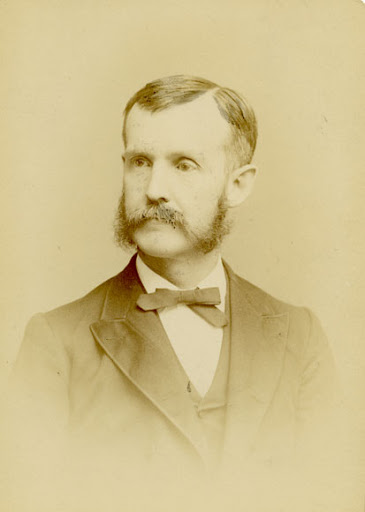
James Russell Miller (20 March 1840 — 2 July 1912) was a popular Christian author, Editorial Superintendent of the Presbyterian Board of Publication, and pastor of several churches in Pennsylvania and Illinois.
Broadcaster:

Comments

0 / 2000 characters
Comments are moderated before appearing.

Be the first to comment!

Joshua

Joshua

Shall we play a game? Ask me about articles, sermons, or theology from our library. I can also help you navigate the site.