Bootstrap
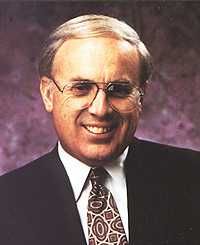
John MacArthur

Questions & Answers #36

Proverbs 1; Proverbs 2
John MacArthur March, 8 2003 Audio
0 Comments
Shepherd's Conference
Question and Answer session with John MacArthur and others.

Sermon Transcript

Auto-generated transcript • May contain errors

100%
We're going to take a little
bit of time now for any remaining questions, if there are any still. The microphones are where they
have been the last couple of days and it is your opportunity
to jump up to the mic and I'll do the best I can to respond
to your question. We'll start over here on the
right with Dave. I think we ended with you last
time. Give me your name first and then. Yeah, my name is Dave
Miller from Mount Vernon, Washington. Dr. MacArthur, I was just curious
your take, but a little bit of a background. My heart has been
grieved the last few years. It seems like there's an increase
within Christian leaders, their lives, kind of a compartmentalizing
of their life or privatization of their life in having to do
with maybe issues that would involve the weaker brother. For
instance, some of the controversial issues, whether pastors are to
be using alcohol, tobacco, things like that. And there seems to
be a tremendous, almost a dying of the weaker brother. as a principle. And when I talk to people about
that, um, and question, maybe somebody, um, doing something
that might not be the best example for a congregation member. Um,
I'm quickly a lot of times, uh, labeled a legalist because I
might show some caution there. And the number one answer I see,
I seem to be getting over and over again is when I say, Hey,
what are you, how are you going to answer to the people who follow
you in that example? And they say, well, I just have
to tell them that they've got to figure out what's right for them. And
it just...it's something that's...I was wondering if you could touch
on it. You know, legalism is one thing, but not at all related
to that. Not necessarily at all related
to that. Legalism is...I mean, if you're going to technically
define legalism, legalism is the belief that God is concerned
about what we do more than what we are. and that somehow by external
conduct we can gain favor with God. That's one thing and we
of course reject that. But living according to the Law
of God, living according to the Word of God from the heart because
we love God, because we want to honor God and because we want
to establish a righteous example because it is right and because
it's going to be picked up and followed by others is another
issue. But I can only say this, issues like drinking, smoking,
etc., etc., etc., behavioral things, are in one sense peripheral to
the heart attitude. And it is the heart, after all,
that is the issue. But beyond that, there are several
other issues. A second issue you have to look
at with regard to that kind of behavior and it starts with the
heart. So we don't want to assume that somebody who does things
that we think are sort of outside the lines, we don't want to assume
what their heart is like. That's...maybe if you know them,
you would know their heart and you might view what they do a
little differently. But the second thing that I concern myself with,
with regard to that kind of behavior, is the issue of example and that's
what you're driving at. Our elders here at Grace Church
have affirmed always, universally, collectively through all the
years that I've been here, that we do not do those things, drinking
in particular. I don't know any of them that
smoke, for sure. That's just a...that's sort of
a brain issue. You know, if you're dumb enough
to do that, you're not smart enough to be an elder, you know. The issue of alcohol, the issue
of...I don't know where you want to go with that, you know, nightclubs,
dancing, movies and all that kind of thing. We have taken
the position that it behooves us to live a life that is so
exemplary that anyone following that life is going to find themselves
in a path of righteousness. That is the reason that I don't
drink. That's the reason I don't go to theaters. That's the reason
that I conduct my life in the way I do. It isn't that that
in itself is damning, it is potentially disastrous. It isn't that drinking
in itself is sinful, it is that it is potentially disastrous.
It is that it has the potential to destroy people. And if you've
been in the pastorate as long as I have and in the ministry,
you have dealt enough with the horrors and evils of alcohol
so that you don't want to set a pattern that others can follow
to their own destruction. I don't want to ever do things
behaviorally that give license to people to do them and then
expose themselves to something destructive, something harmful.
That is an important issue to me. So even where you could say,
well it's not in itself an evil thing, the issue of example is
critical, particularly for those people, of course, that are in
positions of spiritual leadership. But I think the trickle down
of that is important as well. I would never want to be the
cause of causing another brother to stumble. Jesus in Matthew
18, and this is kind of what drives me, is the Matthew 18 text because this is just explicit
and I want to...I'll refer you to it by reading the verse that's
in view here. In Matthew chapter 18. Jesus
says that we come into the Kingdom like little children. Once we're
in the Kingdom, of course we have to treat each other with
great care. And He says in verse 6, whoever receives one of these
little ones who believe in Me, or whoever causes one of these
little ones who believe in Me to stumble, it's better for him
that a heavy millstone be hung around his neck and he be drowned
in the depth of the sea. That is the most threatening
statement on the pages of the New Testament made to a believer.
about the implications of His conduct. And then verse 7 says, "...woe
to the world because of its stumbling blocks." We expect the world
to generate things that are going to cause people to stumble, and
the implication of stumble is to fall into harm. We expect it from the world.
We don't expect it from our brothers and sisters in Christ. You would
be better off, Jesus said, and this is right out of His own
mouth, you would be better off to suffer a horrible death, the
death by drowning, than to ever cause another believer, little
ones being defined as those who believe in Me, to stumble into
sin. So this sets the bar pretty high. I don't want to ever do
anything that being followed in the doing of that, someone
is going to be stumbling into sin. And then, you know, He follows
it up by saying, It's inevitable that stumbling blocks are going
to come, but woe to the man through whom the stumbling block comes.
So whether or not it's a weaker brother or a stronger brother,
I am convinced that my life under the most close scrutiny possible
would not yield an example that others could follow and stumble
into sin. That's where I go. And then he
gets very serious, if in fact anything is a problem, he says,
if your hand or your foot is a problem, cut it off. In other
words, take radical steps with regard to those matters of sin
in your life. Even worse than that, Dave, just
as a footnote, we haven't said a lot about it this week, really is devastating in ministry.
That of course is part of it, but what is really devastating
is moral failure in the ministry. This is just...this is just deadly
for so many reasons. It is not only a massive disappointment
to people, it is a massive undoing of pastoral integrity and all
of us suffer from it. Because suspicion has been elevated
so high that it's questionable whether any pastor...it will
fully escape the suspicions of his congregation just because
this is so common...so common. And I know personally that I'm
not concerned with the little things at the beginning, I'm
concerned about the big thing at the end. I'm concerned about
the big disaster at the end. And I know well that the way
you avoid the big disaster at the end is by taking care of
the little things in the beginning. And whenever I hear about somebody
who fell into sin or immorality, I have said that is not the beginning
of anything, that is the end of a long process. Why would
I ever want to expose myself to any kind of conduct, any kind
of behavior, any kind of entertainment, any kind of exposure that is
going to start me down a path that is going to cause lust to
conceive in my heart and someday bring forth sin? And for me,
I go back to 1 Corinthians 1.12 and that's going back to the
statement of the Apostle Paul, 2 Corinthians 1.12 in which he's
being accused of things and his answer is this amazing statement,
For our proud confidence is this, the testimony of our conscience.
Paul says, I'm hearing your accusations
about a hidden life of shame. I'm hearing all these things
you're saying. My answer is, my conscience is clear. The testimony
of our conscience that in holiness and godly sincerity, not in fleshly
wisdom but in the grace of God, we have conducted ourselves in
the world and especially toward you. Paul understood a great
spiritual principle. You win or lose the battle for
virtue in your own heart. If you're losing the battle on
the inside, pretty soon you'll lose it on the outside. And so
Paul knew that the battle had to be won inside. Your conscience
either excuses or accuses you. Paul says, I've done an inventory
on my heart, you might be accusing me, my conscience is not accusing
me. And the battle has to be won
at that point. I think, you know, in this particular day and age
when people are so used to default in ministry, so used to being
terribly disappointed and so used to trying to figure out
what the ministry meant in their lives all the years that they
heard this guy preach, when all of a sudden it turned out that
he was living in immorality through that and they start to figure
out, well was anything he said right and, you know, was all
this without the power of God and the chaos? So with all of
that out there, with all of the drift of the world, you know,
the frog in the frying pan kind of thing, it gets hotter and
hotter and hotter and you don't know it until you're dead. The
drift is so severe, it seems to me that it's easy to float
along and start allowing for this and this and this and this
and just keep going with the flow. You probably read in the
AP News just this week that Wheaton College has dropped its standards
of X number of years. It was in the LA Times and everywhere.
They're going to allow faculty and staff and students to smoke
and drink and dance on campus. And the statement was made that
this...we're living in a different culture. Well, what does that
have to do with anything? All the more reason to tighten
things down. than to allow for the drift. I just...I think instead
of flowing with the culture and accepting what the culture accepts,
we need to hold the line probably more stringently than we would
in the past. In fact, I would say twenty years ago you could
probably go to a lot of movies and do a lot of things that wouldn't
have negative moral effect. Nowadays it would be almost impossible
to find anything that didn't. So I just think as things go,
you know, we need to make sure we stay where we should stay.
And the end of this whole thing is the tragic failure of so many
pastors and church leaders. Okay. And the book you graciously gave
us dealing with infants and stuff used the term innocent, you know,
in Scripture talks about innocent children being sacrificed to
pagan idols. I was wondering if you could clarify how that
word innocent means free of sin versus what we would maybe say,
you know, several thousand innocent people died in the World Trade
Center. You know, the meanings of the word innocent there. The
Scripture talks about the slaughter of the innocents. That is not
a verdict rendered by the culture of the time, or the media of
the time. That is a term used by God to identify the babies
that were offered by the pagans on the altar of Timolek. In other
words, you have pagan parents offering up a baby as a sacrifice
to a false god and God identifies that in Scripture as the slaughter
of the innocents. So this is not...this is not just a colloquialism
in some culture as we would say it is. And in fact, in the sense
of...in one sense nobody is innocent, the very fact that those children
died indicates that they bore the wages of sin which is death.
But when God designates...my point in the book was when God
designates the children of pagans as innocent before Him. That's
a monumental statement. They were not the children of
believers. They were not baptized babies in the covenant family.
They were pagans being offered to a false god. And I only make
the point out of many points in the book that if God designates
them as innocent, that is significant. That's almost a parallel to the
New Testament where Jesus picks up the children that come to
Him that disciples want to send away and it says He took them
in His arms and blessed them. Well God doesn't throw around
willy-nilly blessing and God certainly doesn't embrace and
bless people that are outside...outside His particular relationship. And so, I just see that as one
of the little pieces of biblical data that we can put together
to come up with the idea that God views infants as innocent. because they cannot sin willfully
and as worthy of His blessing because they are under His protective
and special care. Okay? Questioner 2 The second
question is if you could clarify your limited atonement view,
if it excludes the payment of sin specifically for the non-elect
and if you can also relate that to 2 Peter chapter 2 verse 1. I believe what the Bible teaches
about that. Let me give you...here's my view
of the Atonement, okay? My view of the Atonement is that
the Atonement only applies to those who believe. The Atonement
only applies to those who believe. That is classically a limited
atonement view. I don't know how else to say
it. If you say, well I believe in an unlimited atonement, then
you've got to redefine either...if you're going to say you believe
in an unlimited atonement, then you have to redefine atonement,
right? Because if atonement is an actual
satisfaction, if it's an actual propitiation, if it's an actual
expiation, then you've got universalism. So you're going to have to redefine
for me what atonement means. If you believe in an unlimited
atonement, if Jesus actually atoned for the sins of every
person who ever lived, then you have an actual atonement, an
actual expiation, an actual propitiation and satisfaction on behalf of
the sin of every person that ever lived, then that settles
that. because then there can be no
one lost because the penalty was paid on their behalf. So the way I like to say it is
that on the cross, Jesus actually paid for the sins
of all who would ever believe. He actually paid for the sins
of all who would ever believe. So that those who actually died
in Christ, those whose sins were actually covered, were all those
who would ever believe. And I don't know that that's...I
don't know how that can be a problem because the only people who are
going to go to heaven are the people who believe. The Atonement then was actually
for the people who would believe. And we also know that no one
believes unless they have been called, no one is called unless
they have been chosen. So in the end from the very beginning
of the redemptive plan of God, the atonement would always be
limited. And you have to believe it's
limited or you're universalist. I choose to believe that atonement
means atonement and it's a full atonement, but it can only be
limited to the people who believe, rather than to say it's unlimited
but it doesn't mean atonement. Okay? in reality. Of course, yeah. But if you're talking about the
atonement, you can't have a real atonement applied to everybody
and their sin be held against them and they be punished for
it forever. So, you know, these are I mean, we always grapple
with these things. And what I said earlier, I mean,
there was a reason why I wanted Steve Saint to be here because
when you talk for several days about the sovereignty of God
and the glory of the doctrine of election and all of that,
you can walk out of here and basically forget that we have
been mandated by God to take the message of the gospel to
the ends of the world. And it's like Spurgeon said, I don't know
how those two things come together. I don't know how they come together.
They come together at the throne of God. They come together in
the mind of God perfectly and because I can't understand them
is evidence I'm not God and that ought to comfort everybody. I
don't need to understand that. I don't need to put that all
together. But I do need to be faithful and I do know this,
that Jesus said, Him that comes to Me I'll in no wise turn away.
And I know He said, Why will you die? whom you will serve,
whosoever will may come, whoever wants to take of the water of
life, take...I don't know how God harmonizes all that, but I do
know what our responsibility is and it is our passion around
here. Evangelism is the passion of this church. Evangelism is
the passion of this church. I mean, well what about worship?
Well we like worship but worship is to build up and strengthen
the saints so they can be effective in living godly lives for the
purpose of leading other people to the Savior. Evangelism is
our passion. We always say that, you know,
the only thing you can't do in heaven better than you can do
it here is evangelism. You can't do it at all. So there's only one reason to
keep us here and that's so we can do here what we can't do
there. And that is what is critical to the life of the church, evangelism.
So whether or not you believe And of course you can firmly
believe in these things and should because they're biblical in sovereign
election and the atonement being limited to those who believe.
Believing that is fine. Believing that to the point where
you abandon the responsibility to evangelize the world and I
love the fact that Steve and those alongside of him, he is
a living illustration of finding every way possible to get the
gospel. and let the results be to the
glory of God, but be faithful in the doing of that. So I am
concerned about those things. But yes, I mean if you're going
to talk about atonement, you've got the doctrine of election.
I mean Calvin's system is reasonable and it's also biblical. So I
just...I flow through it. In the classic sense, I affirm
those things. Second Peter 2.1, if you could mention that. Simon Peter, a bondservant and
an apostle of Jesus Christ to those who have received a faith
of the same kind as ours. You mean that one? Oh chapter
2 verse 1, oh false prophets also arose among the people just
as there will also be false teachers among you who will secretly introduce
destructive heresies, even denying the Master who bought them bringing
swift destruction upon themselves. Well, as I said, if you want
answers like that to specific questions, I can read you the
note in the MacArthur Study Bible. Let me just tell you what I wrote
here, since I can't remember. Yeah, chapter 2 verse 1, the
phrase who bought them, the terms which Peter used here are more
analogical than theological, speaking of a human master over
a household. The master bought the slaves.
The slave owed the master allegiance as their sovereign, for in Old
Testament parallel see Deuteronomy 32. Doctrinally this analogy
can be viewed as responsibility for submission to God which the
false teachers had refused. Beyond this, they are probably
claiming that they were Christians so that the Lord had bought them
actually and personally. With some sarcasm, Peter mocks
such a claim by writing of their coming damnation. Thus the passage
is describing the sinister character of the false teachers who claim
Christ but deny His Lordship over their lives." So you have
at least a couple of options on how to understand that. The
other one that comes up is the... God is not willing that any should
perish but that all should come to repentance. And if you track the all back
through 2 Peter, it's absolutely clear that the all goes all the
way back to the beginning, the elect that are introduced at
the start. Okay? Q. Dr. McArthur, my name is Perry
Garrett. I'm from...actually I live down
the road here now. I transferred from Texas and
I finished my undergrad at the Masters and we're willing to
go into seminary. This is from my pastor in Texas who was not
able to make it, and the reason I'm asking is so we can get it
on tape and I can hand it to him. He told me to ask you if I could. But
he just got through planting a church in Gatesville, Texas. He just got what? Got through
planting a church. And it's just been incredible. I mean, he's an awesome teacher
of the Word of God, and the people there are great. He's been praying
for elders, the Holy Spirit, to bring out overseas to the
church. getting a little bit discouraged. And he just wanted
me to ask you if you...I mean, really do you have any encouragement?
Do you have anything that you want to share with him about
patience and waiting for elders? What to do, what not to do type
deal, if you don't mind? Well, yeah, and I think patience
is the key thing. There's no way to hurry up the
process of an elder. It's going to take a long time.
I mean, I think it takes years. They don't have to be, you know,
seminary level qualified teachers, but I think it takes time to
mature men. I mean, it takes years to mature
men. So, you know, having planted
a church and you're in it a year or six months, or two years,
or even three years, I don't think you can have a lot of expectation
if you're dealing with new converts that you started with. So I just
think it takes a lot of time. and patience is a virtue. Until
you have that plurality of elders, you have to be the elder. You
have that responsibility. And I think little by little,
what I did when I came here to Grace Church was to give people
that I thought had the giftedness and the potential to be elders
and pastors, to give them ministry opportunity and to watch them
develop in that ministry opportunity. I kind of follow the model of
Jesus. You know, intense teaching, teaching, teaching, teaching,
teaching which Jesus did with the Apostles, intense, you know,
day after day after day was one of the 24-7 thing that we talked
about. It was constant, it was incessant. And then about a year
and a half into the ministry with the Apostles, He starts
to let them out a little bit, to go out on their own and do
ministry and see the fruition of that. And then they come back
and they talk with Him about how that thing is going and I'm
sure there were some times of correction. As we know, some
of them are even detailed in the gospels. So I just think it's
a time issue. I honestly used to say, and I
think it's still probably accurate to say, it was seven years, I
think, seven, eight years of my being here before I really
thought the elders understood what we were talking about. It's
a long process. But we had identified some as
elders. I don't think you have to wait until they're already
all the way there. I think there's a...you know,
take the best men you have that are ready to shepherd the flock
and you know, get them going on that. And we used to talk
about elder candidates, elders in training. And our elders always
flow up out of the deacons. Let me see a man who's a servant.
And if he's a servant, then he can be a shepherd. If all he
wants is prominence and preeminence and leadership and he doesn't
want to come through the path of service, that's not the kind
of elder you want because the true leader is your servant,
Jesus said. So I think it's just being patient.
It may be that God will bring somebody from another church
that has that maturity and can step in. But if it's a new church
and it's new people, it's a long process. Just be patient. Okay? Doctor MacArthur and Elliott
Pope from the Christian Fellowship in Middle Vista, California.
Up there we go trees instead of cars. My question is, you
have been studying the Bible for a long time. You've written
a lot of books, given a lot of sermons, pondered the word much. If you were in a position like
Paul was when he wrote 2 Timothy and you could give one message
to a younger generation of servants and lovers of God, what would
you tell us? Be this, do this, cling to this. What would be your message if
you were writing a 2 Timothy? I'm going to preach on that tomorrow. Tomorrow I just want to kind
of close the conference from 2 Timothy 4, 6 through 8. I have
fought the good fight, I've kept the faith, I've finished the
course. And I really...I think...I mean, that's what I would say.
I would just say, stay true to the battle. You're a soldier, Paul tells
Timothy that in 2 Timothy 2. Don't abandon the truth. stay the course. And I'll try
to sort of unpack that a little bit in the morning. And all of
that goes back to the relationship you have with the Lord. And I
think that the key to any ministry long-term is what goes on in
your personal life. It's never really about your
professional life...never. You will not rise beyond your
giftedness. You will not rise beyond God's
providential placement. You will...you will, however,
be able to achieve everything that God would have desired to
achieve through you if you function at maximum level, if you take
care of your personal life. And that's what Eric was saying.
If you do what Ezra did and study the Law of God and do it and
teach it faithfully, that's all that God has ever asked. If you
get caught up And here's a way to make a distinction. If you
get caught up in success rather than spiritual excellence, you're
going to have a problem. I never worry about success,
never. It's never been an issue with
me, it's not an issue with me now. How many people? How big? Never been an issue to me. It
doesn't matter to me because success can be manufactured.
You can manufacture...you can fill a stadium with a hundred
thousand people without the Holy Spirit. The science of it. You can fill a church building.
You can...there are ways to do that. Success has nothing to
do with ministry. And I...you know, so that...I
think when I was a football player in my days in college, I mean,
I kept learning. I was very intense and very committed
to whatever I did and that was true with football, so I preferred
winning to losing. But it didn't take me long to
learn that there were a whole lot of other people on the field
and that I could not control outcomes. I absolutely could
not control outcomes. All I could control was effort.
And so I had to be content to make that effort. I had to be
content to know that someday the Lord was going to look at
me and all that was going to come up would be whether it was
well done or not, right? So to me, all I can do is give
my life in an abandoned fashion, wholeheartedly to the the task
that the Lord has given me and since it is at its heart a spiritual
task as an under-shepherd of Christ and a representative of
God, and since it is by the energy of the Holy Spirit and by the
truth of God, it is to those things that I give myself. Anything
that comes in from anywhere to impede that, I push back. So, you know, my word to you
is that your ministry will simply be an outflow of your relationship
to Christ. It will be an outflow of your
love for Christ. It will be an outflow of your
love for the Word of God. I can't separate my love for
the Word from my love for the Lord. I love the Word written
and incarnate. And so cultivate that and you
do that by means of the spiritual disciplines. If you cultivate
that, that's where courage comes from. That's where conviction
comes from. People always say, you know,
well you have...you know, you say exactly what you think, well
what else am I going to do? I'm not in this for the MacArthur
promotion side of it, I'm just trying to be faithful to the
mandate. I'm not after the success or what the results might be.
People say to me, does it bother you when people are offended
at what you say? And I honestly would say it doesn't bother me.
Maybe it should bother me sometimes, but it doesn't. I can't deal
with how people react to what I say, I can only deal with what
I'm responsible to say. Sometimes people say to me, you
know, I brought a Catholic friend to church and they were very
offended. Well I don't always say it, but my response is good
because that means that they had to face the reality that
there's a difference between what we say here and what they're
believing. And that's the beginning of change,
isn't it? I've had through the years people, well even articles
written in journals and things about me being anti-Semitic because
of saying things like, you know, the Jews clamored for the blood
of Christ and were responsible for killing men, the Bible says.
I can't deal with I can't deal with the fact that some people
get upset about that, that that traumatizes people. I can only
deal with the fact that that's the reality of the Word of God.
So I would just say, and maybe it's enough to say this, as a
young person in ministry, just be faithful to the task. And it's two-fold, it's to yourself
and it's to the doctrine. Take care of your own life and
take care of the Word of God. And they go hand in hand. As
you are immersed in the Word of God, it becomes the purging
element in your life. And just follow down that path
and out of the overflow of that honest and true relationship
with Jesus Christ, ministry will flow. And pursue excellence and
not success. Pursue effort and not outcome.
holiness and not reputation. And you take care of the depth
and God takes care of the breadth. OK? This issue deals with the
use of church-fulfilled facilities in conjunction with the witness
of the church, such as a believer wanting to marry a non-believer.
We would not allow the use of the church or nor even participate
in that as witness to the church. A situation, a faithful couple
of the church whose daughter grew up and has moved off and
has conceived a child out of wedlock. Of course, I haven't
seen her for a long time and I'm receiving everything by second
hand. It's been shared with me that there's been some kind of
reconciliation that has taken place. She's allegedly confessed
her sins of God. The parents are going to hold
a baby shower for this child in the fellowship hall. And there
has been some concerns expressed about... So they want to hold
a baby shower in your church for an illegitimate child. Yeah. Basically, yeah. That's the bottom
line. That's the bottom line. And you're
wondering whether you should have that in your church. Yes. You don't
want to send the message that the child is a sin, you know,
but then again you don't... R. The child is a gift from God.
Yeah, you know that. And there's repentance on the
part of the mother. You know, I think that's a sort of Solomonic
issue there. I can't give you a chapter and
verse. But you have to take into consideration on one side that
your church facility is used every time the doors are open.
by people who wouldn't want you to know everything going on in
their life. You just happen to know everything about that situation.
You also have to consider, however, that the church does want to
make a statement about the inappropriateness of that and if you open the doors
of your church and invite that in, you send a message that maybe
takes approval to a level you don't want to take it to and
maybe sends a message down the line to the young people that
this deal of having a baby out of wedlock isn't that bad after
all. I think that's something the
elders really need to think through carefully and if there is in the church
some resistance to that, I would definitely honor that because
I think, you know, somewhere along the line here, we We have
to say there is a price, it's not an eternal price because
God is gracious, it's not a price of love. But there are some things
that carry with them a certain price and we cannot treat that
kind of thing the way we would treat those things that do honor
the Lord. So I would understand If in kindness
and love and wisdom you would suggest that that be held in
the home of the family and not in the church so that, first
of all, people not be offended and it compound the offense that
they already feel and so that you're not sending a signal that
the facilities can be used in any fashion by anyone. I think,
you know, I really do struggle in my own mind to try to put
into the culture a sense that there are consequences to what
people do. That's just not there anymore
in our society. And it may be the same thing
with you know, a girl being pregnant and wanting to get married. Is
it right? Yeah, they should get married. I mean, if two Christians
do that and they should get married, do they have a wedding in the
church? I mean, my practical wisdom on that would be no because
how am I going to stand up there with a girl in a white dress
signifying purity that I just think we have to guard the church. It's the Lord's church, it represents
Him, it should be used for those noblest of things that bring
honor to His name and everybody in the church understands that
this is for those things that are right and honoring to the
Lord. I don't know if this is a good illustration or not. When
somebody sings at Grace Church, we're very concerned about their
personal life. People don't sing at Grace Church
until they're very well known and they've been here a long
time because we don't want...I mean, as much as we can possibly
do, we want to put people in the position of ministry and
profile in the life of the church that are radiating what we believe
will honor the Lord. I mean, that's how I would view
that. So I think you're obviously caught on this issue and I think
it's a legitimate thing. I think it can be done with love
and grace, but I would be reluctant to give a full go on that knowing
the message that could be sent. Okay? Where are we? Over here. Jonathan Grandy. I'm from Northern
California. I'm a believer. We are here.
The gospel of our magnificent Lord Jesus Christ and. It is
for this gospel, the progress of the gospel that we are living,
and I'm wondering about. Areas that. I don't see a lot of missions going
into specifically Bob Provost was here at Cheshire or areas
like it's Muslim and is very dangerous. You might say physically
to go there. But my question would be, well what plans have
been made or how will we get the gospel proclaimed in these
areas? And like Scripture, what should
we do? And is it lack of awareness or
are we not willing to go? Or how will the gospel be proclaimed? Yeah, I mean it's a compelling
question to ask. What about evangelizing the Muslim world? I understand
your heart on that issue. We're passionate about that.
We...I was just talking to somebody yesterday about two of the graduates
of our seminary who are engaged in missions to the Muslims in
France, very, very challenging. I've been there, I've sat down
with them, I've talked to them, I've had a meal with them, talk
about a difficult situation. I think there are a million Muslims
in Paris alone from what they were telling me. We have a remarkable
ministry going on in Albania which has more Muslims than any
eastern European country. Bob Provost's son, Rob, one of
our graduates, along with others of our graduates are over there
with the Lincoln Center. They've planted a church there. They
have started the Lincoln Center. I don't know if you know about
it. It would be interesting for you to know about it. The Lincoln Center
in Tirana, Albania...Albania was probably the lowest economically,
socially, culturally of all the Eastern European countries and
therefore all of Europe because the Communism was so strong there
and the totalitarianism was so confining they didn't know anything
about anybody beyond their borders. It was officially atheistic which
was unique. But anyway, historically Muslim
and still highly Muslim. So the opportunity has been really
pretty amazing to go in there. Church has been founded there.
The Master's College faculty had the opportunity at the invitation
of the Albanian government, through the influence of Rob, to go in
and write their teacher training curriculum because once they
lost their totalitarian force, they had no way to control people.
because there were no moral standards. Their children had never been
taught any ethics or morals, it was all control. Once the
control was off, how do they deal with the issues of life?
And so, our faculty went in and wrote a curriculum. This has
gone on and on. There are hundreds, if not thousands
of people in the Institute. There's an evangelistic outreach
through teaching them English and computer sciences. That's
just one illustration. I was talking to someone just
this morning who has a ministry in the Middle East, one of those
I can't talk to you about, I can't even tell you about, I can't
even tell you where he goes. But it is strategic in the Muslim
world. You do what you have to do. You
do what you're able to do. I remember I had a friend in
Lebanon by the name of Victor Sadaka who had the very unique
sort of confusing situation of being a premillennial Arab and think about it, that doesn't
bode well in that environment, an Arab who knew that the future
belonged to Israel. He was a news media guy on the
national news in Lebanon and also the pastor of a somewhat
clandestine church. There are people that you don't
know about. There are places in the world where outreach is
going to Muslim people and there are people eager to do that.
I would just say this too, that there aren't enough, there need
to be more. We need to cultivate that. There's an effort, of course,
going on from our standpoint. Rob is catalytic in regard to
the Muslim world and we hope to see more in the future. It's
not easy because of persecution. And I think what needs to happen...I
don't think it needs to happen sort of like a massive force.
I think what needs to happen is here and there, individuals
coming to Christ in a Muslim world and then beginning to lead
others to Christ and then the church begins to grow that way.
So we just need to pray that that will happen. I understand
about the Albania. My sister taught at the Lincoln
Center. My question is, should we...should we go and die? Well, of course. Right, of course. I mean, if that's what's going
to happen. If you're asking the question, do we sneak in and
out all the time and never, you know, reveal ourselves, I think
it's reasonable to say that you use discretion. I mean, they
wanted to kill Jesus in Nazareth, but He walked through the crowd
and escaped. They tried to kill Paul and the
Lord raised Him from the dead. You don't have that luxury. So,
you know, it makes some sense to avoid that if you can. But I think you use your wisdom. I mean, if you were to say, go
into Baghdad and stand up in the middle of town and preach
the gospel of Jesus Christ, one would question whether or not
there was any reason to assume anything other than death would
occur. So you gain no ground. I mean,
I think you have to have the sense to know that some groundwork
has to be laid, some approach has to be taken by which you
can at least have the opportunity to make the gospel clear to a
people who have absolutely no basis to understand it. So you
find the ways to do that. Okay? Good morning, Pastor MacArthur.
I am Carlos Flores from Mexico. And I have a question, but David,
please. I'll translate the question.
OK. First of all, thank you very
much. I thank our God and you two for your interest in the
effort to work in Mexico. Second place, I thank God for
your lives that are committed to the Word of God, specifically
to the doctrine, to the healthy doctrine that guides this church.
My question is, considering the religious background in Mexico
and the growth of the people of God in this country, even
when there is a lack of theology that is Bible-bound, we have
many churches without a founding, solid founding, and with distorted
doctrines. Considering Galatians 6.1 and
Timothy 5, of sin and restitution in a brother, especially a pastor,
understanding the impact and the difficulty represented to
restore such a pastor to a church. What is your comment about how
to treat, how to restore a pastor in sin, how to act when he does
not respond with repentance, genuine repentance, especially
in the area of establishing a leadership, a biblical leadership and the
requirements that are listed in 1 Timothy chapter 3 in the
church. Yeah, and I think I understand
the context of the question. The context is we have very few
churches. that are solid. We have very few pastors. We
have a pastor who is in sin. You know, there's a premium on
these men. What do we do? And the answer
to the question is, you do what is right. It all turns in all
circumstances. If a pastor is in sin, he can't
be a pastor...can't be a pastor. If he doesn't repent of sin,
he has to step down. The difficulty might be that
there are people who believe that and know that but they can't
get Him to step down, then I think it behooves the people to disappear.
I mean, I think this is serious. If you are not a man of God above
reproach, you cannot shepherd God's flock. And if you will
not go away, then the people need to go away and find a shepherd
who will be faithful to the Lord. I realize the scarcity, I realize
the premium, but you can't change the rules or you lower the standard
and that gains you nothing. If a man is in sin and he's not
repentant for that sin, then he has no reason...he has no
right, I should say, to remain in ministry. And what we're trying
to do in Mexico, just quickly, we've started a school, a training
school in Mexico City, starting to train the pastors for this
very reason. Everywhere you go in the world, the doctrine is
confusing and we're sending our graduates from the seminaries
all over the place. You saw some in the little STR brochure, more
coming in the future to help in that way. Stay by the Word
of God because if you don't apply the Word of God to the pastor,
if you're selective in applying what the Word of God says ever
in your ministry, then you give people all kinds of reason to
question you when you try to apply it to them or to anybody
else. It's all or nothing. You make the commitment and you
do what Scripture says. Just quickly these couple of questions
and we'll be done. Okay, thank you. My name is Sago
Woods, I'm from Houston, Texas. I have two questions. basically among the African-American
community. You find a lot of false doctrine, a lot of unsound
teaching. There's an onslaught, if you will, against expository
exegetical preaching, especially in the black community. My question
is to you, what would you say to, I guess, to the African-American
community who is striving for expository preaches, who are
trying to find church homes that preach the Word of God without
compromise, not trying to waver in what the Word of God teaches.
That's something that I struggle with as a Pastor, and I'm trying
to... Yeah, I hear your struggle. I
know exactly what's coming out of your heart and what's coming
out of your heart is you're there trying to preach the Word of
God faithfully. You've got a small little group of people and a
few thousand are piling in somewhere else to hear this schtick that's
going on, you know, the sort of romp and stomp and organ background
mania. Right? Yeah, I mean, and you're saying,
I'm trying to be faithful. Look, just plow that furrow,
brother, just be faithful and God will call out His people
and He'll draw those people to you. And you know what? Forget the results,
just do the task. Leave the results to Him. My second question was, you commented
on Dr. Evans' book, Totally Saved. I
didn't really get too much of the context of it. I wanted to...if
you could elaborate on that and how did that affect you...how
has that affected your fellowship with them, if that's the case?
Well, I love Tony. He's my friend. He has been for
years. And he wrote the book Totally
Saved and when I came to that appendix, you know, about people
going to heaven by works, which is what it is, people going to
heaven by works without the gospel. just by believing there's a God
which every human being has written in his heart, according to Romans,
you know, the knowledge of God is in them. So all I could do
was talk with him. I mean, I went right to Tony
and I pled with him. And then I said, I'm going to
send you some things and I collected everything I could and some teaching
that I've done and some things that I wrote and I I put together
a whole presentation on the implications of that and I pled with him to
reconsider because he's just a vital guy. We need him, we
don't need him getting outside the box on that. And so to this
point, his response has been that he will not change. He's fixed in that view and that's
where he is. So, I just...I love him too much
to leave him alone. And I wouldn't talk about this
with you at all, but it's in a book and everybody's asking
me about it. And that's what I said. I mean, he's...I'm sure
he's down there wondering if this is coming up out here because
he knows we're having this conference. And I would never bring up a
personal conversation, a private conversation or tell you anything
that we said. But as I said to him, when you put it in a book,
I can't...I can't protect you. I can't...I can't deal with you
on the personal level anymore, it's public. You did it, you
said it, that's it. And I'm the same way. There are
conferences going on all over the place where they're shooting
at me because of something I said or I wrote and that's...that's
the way it is. If you put it out there and it's
fixed in print, that's it. But anyway, we need to just keep
praying. I hope the Lord will give him direction. Okay, quickly
one other. Thank you, my friend. GEORGE
LAWSON. My name is George Lawson from Hope Bible Church and my
pastor graduated from the Master's Seminary and it's phenomenal
and I commend your staff at the Master's Seminary for sending
him there. And right now I'm pursuing undergrad studies at
a college in Lanham, Maryland and every week, you know, that
I go to class, I'm warned against MacArthurism. I see I told you they're out
there doing that. So I've been labeled a MacArthurite
anyway, and you know, I've defended the position of lordship salvation
in my class. And my question is, what kind
of relationship should we have with those that attack repentance? and uh... attack uh... scriptures
like James and say, well, James kind of just gave his human opinion
and not really got a viewpoint on it. Uh, what, I mean, how,
how do we, how do we deal with that? Are these, would we say,
you know, Hey, these are brothers in Christ and you know, everything's
kind of fine. We can minister alongside of them. Or do we say,
you know, there's You know, some other step that we have to take,
I'm kind of wondering what kind of partnership. JOHN, My approach would be, these are
brothers in Christ but I certainly can't minister alongside of them.
I mean, I would defer to the fact that they may be misguided
Christians but I couldn't...I couldn't minister alongside of...I
mean, I would find that very difficult. I mean, if it was
a blatant rejection of what I understand to be truth, how am I going to
link up in a common ministry? I guess it depends on what you
mean. You know, could I go down the street and fellowship with
them and eat a meal with them and, you know, do a Bible study
with them or something, I suppose. But I couldn't have any formal
or official link. I just...you know, when you say
you believe something, people can find out how strongly you
believe it by how it impacts what you do. If I say I believe this, this
is a passion with me, and then I'm linked up with somebody who
doesn't believe it, then the question comes from people, well
what does it mean when he believes something? How strong does he
hold his convictions? So convictions have consequences. And one of
the consequences of strong convictions about important issues is that
they limit you. You know, when we go down a list
of people to have come speak at the conference here, it is
not a long list. There are a lot of people who wouldn't want to
come here because they don't want to be identified with me. And there are people
that we wouldn't want to have come here because we wouldn't
necessarily want to be identified with them. And it isn't...it
isn't because we agree on everything theologically. But there's a
core commitment to the things of God that we do agree on. So when you get around to the
gospel and they're loose on the gospel, that does trouble me. I have to draw the line somewhere
and I tend to want to draw it at the point of the gospel. Okay? Good, thank you. And I apologize,
I really do. I feel so badly that people get
beat up because of me. You know, I don't even know what
MacArthurism is. I just...I come here on Sunday,
you know, I get up here and I tell people what I think the Word
of God says and I do that and that's what I do. And once in
a while I write a book to try to make an issue clear and all
of a sudden it becomes an ism. And I don't know how it gets
from just being a Bible teacher to being an ism. I think MacArthurism
is a term to identify a guy who doesn't agree with you. That
concludes this recording. If you would like to order more
audio recordings, please visit our webpage at www.shepherdsconference.org
or call the Shepherds Conference office at 818-909-5530.
Broadcaster:

Comments

0 / 2000 characters
Comments are moderated before appearing.

Be the first to comment!

Joshua

Joshua

Shall we play a game? Ask me about articles, sermons, or theology from our library. I can also help you navigate the site.