Bootstrap
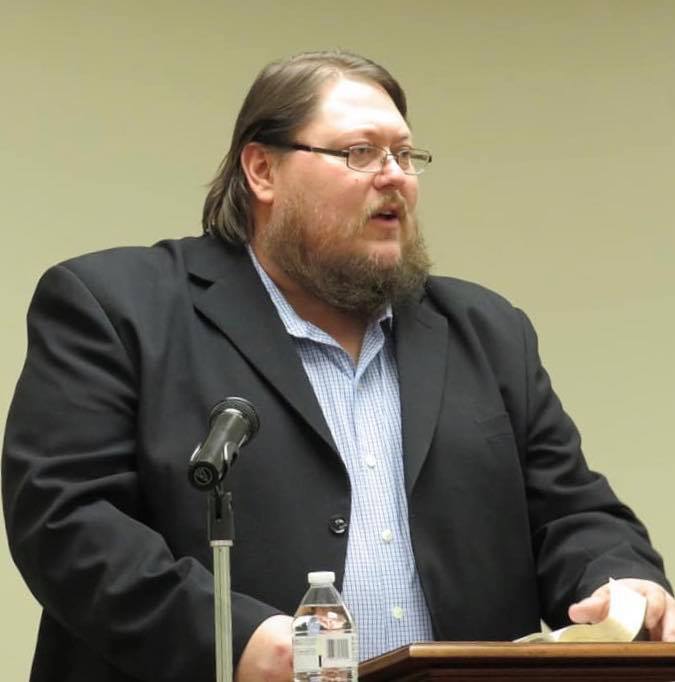
Mikal Smith

Officers of the Church Pt. 2

Mikal Smith October, 13 2019 Audio
0 Comments
The Study of the Church

Sermon Transcript

Auto-generated transcript • May contain errors

100%
That's our overall series that
we've been looking at is the church, study of the church,
what is the church, how it functions, how it was set up, when it was
set up, when it began, what it's entailed. So that's kind of what
we've been looking at. And then the subsection of the
study that we're in is the officers of the church. And we kind of
began a introduction to that last, last Lord's Day, quite
a lengthy introduction to it, last Lord's Day, but an introduction
nonetheless. But let's bow and have a word
of prayer before we get started here and ask the Lord to enable
us and to speak to us. Father, we come to you now and
we just thank you so much for this day that we have before
us now to worship, to be led by the Holy Spirit, to be taught
of God through the Word of God. And Father Lord, we come as needy
people. We come because, Father, in our
flesh, in our natural nature, the things of God, the Spirit
of God, the understanding of the spiritual
things cannot be learned. But we thank you, Father, that
we've been born from above and that we have the Spirit of God
that lives in us. who not only comes to convince us of sin,
but also comes to teach us and to lead us into the things of
truth, the spirit of truth that you've sent, Father, to guide
us. And we ask now that the spirit
come and help us in our worship. Help us, Lord, as we lift up
these psalms that we just lifted up, Lord, we pray that they've
been pleasing to you, that they've been honoring to Christ and that
they've been exalting of him. Father, that it has been truly
from the heart that we have sung these things, and not just from
tradition or from religion. Lord, that we truly lift these
up because our heart sings forth the praises of our Savior, Jesus
Christ. Father, Lord, I ask now that
the word of God be heard today. We also need the Spirit's help
in bringing forth the preaching and also in the receiving of
the hearing. Father, we need the Spirit in
both those things. And Lord, we just ask today that
in all that we do, that Christ will be exalted and glorified
in His name. Amen. Ephesians chapter four,
we read last week where the officers or the gifts that were given
to the church were spelled out here in the fourth chapter of
Ephesians. Look with me in your word of
God at verse one, and again, like I said, there's some stuff
here in these first four or five verses, six verses, that we're
gonna go back and we're gonna deal with this because it's been
grossly misunderstood by many a teacher and preacher, as well
as myself in times past, that this is talking about the universal,
invisible elect of God all over the world, wherever they're at,
but this is speaking specifically to the local gathered assembly. But I don't wanna take the time
to go into that right now. We will hit that whenever the
time comes. I'll maybe go back to the first
verse here for the context. Ephesians chapter four, verse
one, therefore the prisoner of the Lord beseech you that you
walk worthy of the vocation wherewith ye are called. And again, remember
I mentioned this last week that Paul is talking to the Ephesian
church. He's talking to a collective
of people, not to the pastor, not to one person individually,
but he's talking to the collective. He's talking to the church here.
That's why he used the word ye, the word you here is because
those are the plural. But also notice here that you
walk worthy of the vocation wherewith you are called. The church was
called into a vocation of being the place of ministry, the place
of worship, the grounds where the commission of Christ would
be carried out. And so we are to continue on
in that vocation or that work. That's what the word vocation
means. Whenever we speak today, we talk about, you know, well,
what is your vocation? Well, that means, well, what
is your job? What is your work that you do? we used to have in school, they
had a, some kids would go to a place called vo-tech. And that vo-tech meant vocational
technology. They would go learn about vocational
technology. That basically was learning a
trade of some kind, whether or not it was plumbing or whether
it was being a a welder, whether it was being an electrical engineer,
or whether it was being, you know, a mechanic or something
to that effect, they would go to voc tech, vocational technology. Well, that word vocational means
to work or a job. And that's what we're talking
about here. He says, walk worthy of the work or service or the
job wherewith ye are called. So we are called as the local
church to the service of Christ, and it is a vocation that we
are called to. But he goes on, he says, with
all lowliness and meekness with longsuffering for bearing one
another in love. Okay, so part of the vocation
of the church, to me, it seems like the reason he's saying this
is whenever you get involved, and I can attest to this, we
just recently built a deck, at our house, and my brother, and
my half-brother, and my stepdad,
and my niece and nephew, and all my kids, and me and my wife,
and my sister-in-law, we're all out there working on this deck.
And there was a few times in the midst of working on this
deck, we kind of get heated with each other. We kind of raise
our voices at each other, get irritated about this or that.
And in the midst of vocation, in the midst of work and service,
there can be tension. And the reason why is because
everybody has an idea of how to do things their own way, right? We all have an understanding
of how it should be done and what should be done and how soon
to get it done or what should be done in what order and all
this stuff. So we have our understanding
of what should be done and how it should be done, right? So
Paul here is, saying to these people, listen, you're called
to a vocation, walk worthy of that vocation, but in doing so,
you need to walk with all lowliness and meekness, with long-suffering,
forbearing one another in love, endeavoring to keep the unity
of the Spirit in the bond of peace. Why? Because it's gonna
easily become cumbersome, it's gonna easily become irritating,
Uh, you're going to find people that's not going to agree with
you. There's going to be times that there's going to be, you
know, uh, uh, uh, uh, heated conversations possibly. And so
that if everybody keeps the attitude of loneliness. Okay. I'm the least of all these here,
uh, meekness, meaning that it doesn't matter what I want. It's
what's best for all of us. Uh, long suffering going the
extra mile. Not getting mad right off the
bat, but being long-suffering, forbearing one another, meaning,
hey, if that guy gets cross with me, I'm just gonna forbear that.
I'm gonna take it, keep on going, and keep loving the brother because
we all have problems with sin, right? And then he says, endeavoring
to keep the unity of the spirit in the bond of peace. So we shouldn't
start fighting. We shouldn't start, we should
endeavor to keep the unity of the spirit in the bond of peace. Why? Why does he say that? Because there is one body. You're
to be one body here. Those people out there that's
looking at this gathered assembly, who has been called together
to be the servant of God, to be the place where the commission
of Christ is to be carried out, People looking on at you should
be seeing you function in unity as one body, not scattered. See,
if I go to somewhere and I see a place that is scattered, that
nobody's getting along, that nobody's helping each other,
following each other, that it's just a madhouse and everything,
do you think that I'm gonna do business with them again? No,
why because I'm afraid like if I take my car down to have it
worked on you got all these mechanics running around and nobody knows
what's doing Once in a while, I'll take my work van into these
quick loop places where you just kind of drive in and sit in your
Vehicle while they do the oil change and all that kind of stuff
Well if I drive in there and I see that there's four or five
guys over there and they're all doing their own thing not wanting
to You know follow any orders because normally when you go
into that place you got one guy that's up here on the top And
he's the one that's kind of telling all the other guys what to do,
you know, tell this guy what kind of oil to put in. He's telling
the guy underneath, Hey, this is the oil filter that we need.
And this is how many grease things to grease and, you know, do all
this. So that guy's down there doing
his job. This guy's up here doing his job and this guy's over here
doing his job. And then there's some guy checking
the air in your tires. Well, anyway, they're all working
together as one unit to get this job done. But if you go in there
and you see that one guy's over here slacking off, or one guy's
over here slacking off, or the guy underneath is doing all the
work, he's having to do that, then come up and do this stuff
up on the top, and the guy that's giving the orders telling them
what filters to use, and what oil to put in, and what kind
of air filter to put back in, and all that stuff, and nobody's
listening to him, and it's just chaos. You thinking I wanna go
back to that place again? I'm gonna say forget that, man,
them guys don't know what they're doing. If I drive off and my
hood blows up, and my air filter's not, put it back together right,
and my oil's leaking out because the guy didn't get the oil put
back on right? Think I'm gonna go back to that place? No. So
this is what Paul was basically kind of saying, is you guys are
supposed to be one body, the servant of Christ here, carrying
out his commission as one body. And so to achieve that, there
has to be lowliness and meekness and long-suffering and forbearing
one another in love. You have to endeavor. to keep
the unity of the spirit and the bond of peace. And if you do
that, if that is what you're doing, there will be one body
seen. But he says, there's one body
and one spirit, even as you're called in one hope of your calling. One Lord, one faith, one baptism,
one God and father of all who is above all and through all
and in you all. But unto every one of us is given
grace according to the measure of the gift of Christ. And so
we've all received grace. Okay, we're all on equal footing. We all have been given grace. And it's all been because of
the gift of Christ, his work of righteousness on our behalf.
We've been given this thing. And so in verse six and verse
eight, wherefore he saith, when he ascended up on high, he led
captivity captive and gave gifts unto men. Now, if you remember, nine and
10 is a parentheses where he talks about the work of Christ,
ascending and descending. But let's go into verse eight
where it picks up after the parentheses. Let me read eight and then 11,
okay? Wherefore he said, when he ascended
up on high, he led captivity captive and gave gifts unto men. And he gave some apostles and
some prophets and some evangelists and some pastors and teachers
for the perfecting of the saints, for the work of the ministry,
for the edifying of the body of Christ, till we all come in
the unity of the faith and of the knowledge of the Son of God
unto a perfect man, unto the measure of the stature of the
fullness of Christ, that we henceforth be no more children tossed to
and fro and carried about with every wind of doctrine by the
slight of men and the cunning craftiness whereby they lie and
wait to deceive. But speaking the truth in love
may grow up into him in all things, which is the head, even Christ,
from whom the whole body fitly joined together and compacted
by that which every joint supplieth according to the effectual working
in the measure of every part, make an increase of the body
unto the edifying of itself in love." Okay, so Christ has Upon
his work of redemption, ascended back to the Father, but in ascending
back to the Father, he has taken not only the spoils, but he has
given gifts unto men. He's given gifts to the people
that he took captive in that redemption, that's his people.
And he gave some apostles, some prophets, some evangelists, some
pastors, and teachers. So these were the gifts that
he gave to the church, that first church, and to every subsequent
church that follows the pattern of Christ. He is given these
gifts. Now, we spoke last week about
all that, and we talked a little bit about verse 12, for the perfecting
of the saints, for the work of the ministry, for the edifying
of the body of Christ. That's what these men were given
for, okay? They were given for those things.
We've seen that this was true and we looked in scripture where
it was talked about how the apostles and how these things were placed
within the church and everything. But this morning I would like
us to actually talk about these four things because we as not
only Baptists but as Bible believers believe that there are only two
offices in the local church. That's the office of pastor teacher
and the office of deacon. And I want to break these down.
I want to talk about these different offices that we see here because
some will say, well, what about apostles and prophets? You know,
there are many out there today in these false churches, especially
the charismatic Pentecostal type churches that keep calling men
apostles, keep calling men prophets. Okay. and are we looking at something
that is still intact today? I believe, and as I've studied
the scripture, found that, you know, in my understanding of
that, as I've been given by the Spirit, and I hope to be the
truth, and if not, I'm fine with correction on this, but as I've
studied the scripture, I see that throughout the scripture
that the office of apostle, didn't continue on. It was only for
a foundational period of time. It was a temporary gift given
to the church during its formation, during its inception, when Christ
first came and began to build the church. And then upon that,
he laid that foundation first within the church, the apostles,
to be the voice piece for him, to instruct the churches until
they were grounded in the faith. Okay, once they were grounded
in the faith, and then especially since the word of God came and
was given to them, pinned down by the apostles, and was given
to the church, then those men were needed for that very thing. So I believe that the apostles
is a foundational office, it was a temporary gift, These men
were led and all, turn if you would over to John chapter 16. John chapter 16. Now I'm about
to read a passage of scripture here that I believe in its immediate
context is talking about the apostles. But I believe that
there is a further reaching context outside of just the apostles
as it pertains to all the people of God. But at this period of time, remember,
the New Testament had not yet been penned. So a lot of these
New Testament teachings that Jesus had brought out of the
types and foreshadows of the Old Testament, these substances
that the Old Testament was pointing to had yet to be clearly understood
in this new dispensation, this gospel dispensation, where we
now are under the new covenant. We are now under the new service system being the church,
and not the Old Testament law system. But under the church,
we now are seeing how the gospel, how the word of God is being
kept, the oracles of God are being kept, the ordinances of
God are being kept, and that is by the church and not by the
priesthood, not by the law system, but by the church itself. And
so in that, Christ laid a foundation of the apostles and taught them
directly, indoctrinated them fully so that they could be that
foundational strength, that foundational teaching, the ones who were to
keep account of the church in Jerusalem and all the churches
that came from there as time began to go on, that man, or
excuse me, those men were the ones who Jesus entrusted with
this truth and give the gift to be able to understand and
to keep these things and actually sent the Holy Spirit to bring
them into all truth so that they might continue in what Jesus
said. And of course, we've already
read many times how Paul brought this fact up to the Corinthians
and to the Galatians, where he said, you know, that what I brought
to you was not from me, that was from Christ. You know, he's
the one that told me what to tell you, and that's what I've
said, that's what I've done. But look back in John chapter
16, if you would. Look, starting in verse seven, it says,
nevertheless, now this is Jesus talking to the, talking to the
disciples here, and I believe that this time period here is
in between, if you've noticed here, that this time period is
between the point of the Lord's Supper and the time that Jesus was arrested,
okay? In verse seven, Jesus speaking
to those apostles, those 12 men, Actually, 11 men here, Judas
has already gone to betray Jesus. It says, nevertheless, I tell
you the truth. It is expedient for you that
I go away. For if I go not away, the comforter
will not come unto you. But if I depart, I will send
him unto you. And when he has come, he will
reprove the world of sin and of righteousness and of judgment,
of sin because they believe not on me, of righteousness because
I go to my father and ye see me no more, of judgment because
the prince of this world is judged. I have yet many things to say
unto you, but ye cannot bear them now. Howbeit, when he, the
Spirit of truth, is come, he will guide you into all truth. For he shall not speak of himself,
but whatsoever he shall hear, that shall he speak, and he will
show you things to come. He shall glorify me for he shall
receive of mine and shall show it unto you. All things that
the Father hath are mine, therefore said I that he shall take of
mine and shall show it unto you a little while and he shall not
see me in again a little while and he shall see me because I
go to the Father. Now, Jesus here is speaking about
him sending the Holy Spirit to these men and empowering these
men and helping these men to remember all truth, and we know
that that came about because they were the ones who actually
penned, or at least some of them were the ones who penned the
word of God as it was inspired by God. But we see that the apostles
was the ones who were gonna be given the spirit of truth, why?
So that they could remember all things that Jesus had taught
them. Turn with me to Ephesians chapter
20, back to Ephesians, if you will. Ephesians, not chapter
20, Ephesians chapter two. And we've read this before. But
Ephesians chapter two. Ephesians chapter two, remember
Paul is writing to the church in Ephesus. And this church at
Ephesus is a Gentile church, okay? It's a Gentile church.
It's not a Jewish church, it's a Gentile church, okay? Made
up of Gentiles, who originally wasn't under the law, who originally
wasn't under all the teaching of Judaism, okay? Of the Old
Testament system. And so they are being taught
these things by Paul. And he says, verse 18, for though
we both have access by one Spirit unto the Father. And when he
says we both, he's talking about Jew and Gentile alike. For we
both have access by one Spirit unto the Father. That means that
by the Spirit of God, we have access to the Father. We can
go and pray to the Father. We don't need a priest, okay,
to go to. You don't have to come to me
and have me pray for you. You can go straight to the Father
and pray. If you're a child of grace, go
straight to the Father and pray to him. You can go and pray to
God and say whatever's on your mind to God. You can ask God. You can praise God. You can do
whatever. Whenever you go to him in prayer,
you don't have to go to a priest. All this stuff that we see in
these churches that have priests that you have to go to and confess
and have them pray for you or whatever, pray to Mary and have
Mary pray for you and all that kind of junk. That's all hogwash.
It's all a bunch of heathen religion. We have access by one spirit
under the Father. And that included the Gentiles
as well as the Jews. Verse 19, now therefore, ye are
no more strangers and foreigners. Okay, at one time, the Jews was
thought to be strangers or foreigners. They weren't allowed into the
Commonwealth of Israel. They weren't part of that. They
were outsiders, okay? Thought of as dogs. But now,
because of Christ, those people who are believing upon Christ,
listen, they are grafted into that one branch. Just like all
of us, you know, we remember whenever Jesus died, that veil
was torn in two, and we was able to have access unto God through
that. Well, whenever that was torn
in two, listen, everybody who is the elect of God has access
to the Father. At one time, it was kept just
for the Jews. just for the Israelites, but
now it is made open to all. And Paul here is saying, listen,
at one time you were looked at by the religious people of God,
you was looked at as strangers and as fellow or as foreigners,
but now you've been made fellow citizens with the saints and
of the household of God. You see that point there? Not
just the elect, you've been made fellow citizens with the elect,
but of the household of God. That's speaking of the church,
okay? So you've been made not only
partakers of the elect, but you're also been made partakers of the
church. You've been saved by Christ and you've been brought
or gathered, called out into a church. Verse 20, and are built
upon the foundation of the apostles and prophets, Jesus Christ himself
being the chief cornerstone in whom all the building fitly framed
together groweth unto a holy temple in the Lord, in whom ye
also are building together for a habitation of God through the
Spirit." Now, I want you to particularly look at verse 20. It said that
the household of God, or the church, the holy temple, whatever
you want to call it, but the household of God is built upon
the foundation of the apostles and prophets. So the apostles
and the prophets were foundational gifts that was given to the church. And then once you lay a foundation,
there is no more need for the foundation. Whenever we build
a house, what's the first thing we do? We dig the footing, we
pour the concrete, we lay the foundation. But once that foundation
is laid, we don't need the concrete anymore, right? Why? Because
the foundation's been laid. We now have that foundation that's
there. So what do we do? that foundation that's already
been laid. That foundation doesn't change.
It stays the same. And all we do is add the material
that's on top of that. And so here, the apostles and
prophets were, their teaching, which came from Jesus, who was
the chief cornerstone, okay? The teaching was Jesus's, but
Jesus give it to the apostles and the prophets and they were
the ones who were the foundation of the church, and it was laid
upon them. Excuse me, the churches were
built upon their work, upon them being the foundation, okay? So
we see that the office of apostle, and as we'll get to in a few
minutes, prophets, was a foundational office, was a foundational a
gift to the church. And again, once that foundation
is laid, once that is no longer needed, which when the word of
God came, it put down everything that Jesus had taught for us,
okay? So all the things that those
men were taught by Jesus was written down for us. And so once
the Bible came together for us, there was no longer any need
for a guy to say, this is what the Bible says. you know, or
this is what God says, we have the Word of God that teaches
us that, right? Now that doesn't negate teachers,
pastors and teachers, but what we're saying is we don't have
to have anybody authoritatively saying, this is what God says. Now, whenever we preach, the
Holy Spirit with the Word of God bears witness with our spirit,
those things that are true. And so, whenever I'm preaching
and teaching, it isn't that I'm teaching anybody anything, the
Holy Spirit is the one that teaches you, but it does it in accordance
with the Word of God. Whenever you read the Word of
God, and then I say something, you say, hey, that accords with
the Word of God, and you learn, hey, that's true, it isn't because
Mike Smith somehow miraculously or even, you know, educationally
taught you anything, it's because the Holy Spirit bore witness
in your spirit in your mind, in your understanding, that that
is what the word of God is saying, and that's the truth. And so
you learn something from the Holy Spirit and everything. But we still need the men, God
has put these men like me and other pastors and teachers, wherever
they might be, in the churches so that they might minister that
word or that they might convey that word. But it was a temporary,
gift it was a foundational gift okay before we take a break which
we're getting very close to let's look at I want us to see what
the attributes of the Apostles were okay because again remember
in some of these Pentecostal churches and charismatic churches
they may not call themselves Apostles but let's see what the
Bible says about Who was an apostle? What was the characteristics?
What was the attributes? What was the qualifications to
be an apostle? We'll turn back with me, if you
would, to Matthew chapter 10. Matthew chapter 10. The first thing we see here is
that the apostles were directly or personally commissioned by
the Lord Jesus, okay? The apostles were directly commissioned
by the Lord Jesus. Look at Matthew chapter 10, starting
in verse one. And when he had called unto him
his 12 disciples, he gave them power against unclean spirits
to cast them out and to heal all manner of sickness and all
manner of disease. Now, the names of the 12 apostles
are these. The first, Simon, who is called
Peter, and Andrew, his brother, James, the son of Zebedee, and
John, his brother. Okay, so we have Peter, Andrew,
James, and John. Then we have Philip and Bartholomew,
Thomas and Matthew the Publican, James the son of Alpheus, and
Labeus, whose surname was Thaddeus, Simon the Canaanite, and Judas
Iscariot, who also betrayed him. These 12, Jesus sent forth and
commanded them, saying, go not into the way of the Gentiles.
Now, did you hear that? Side note. Jesus commanded them,
there was a certain place that he didn't want them to go with
this gospel. Okay, don't go to the Gentiles. You're not allowed
to go to the Gentiles. Okay, why? Well, Christ had not
died yet. At this point, Christ had not
yet died yet. It wasn't time for the Jews to
be ministered to. The first people that were gonna
be ministered this New Testament or this new gospel is the Jews. That's why he's been teaching
all this time among the Jewish people. Okay? He's been teaching
among the people of the Jews. You remember the woman that came
to Jesus and was begging, and Jesus was ignoring her and said,
you know, it's not right to take from the Israelites and give
it to the Gentiles. He called them dogs. And she
said, look, it's even, you know, even us that are dogs, you know,
it's good that we even get crumbs from the table. you know, little
bits, things that just fall off, you know, they understood. Well,
Jesus was not being mean to the woman, but it was God's purpose
from the foundation that it go first to the Jew and then to
the Gentile. And so Jesus was sent to save
the lost sheep or to minister to the lost sheep of Israel first. That's also in the commission.
in Acts part of Acts where he said you'll be my witness both
in Jerusalem and Judea and Samaria and the other most parts of the
world. Okay, it was first in Jerusalem. It was first in amongst
the Israelites. So he commanded them not to go
into the way of the Gentiles. Okay, but to go or look what
else he says, go not into the way of the Gentiles and to any
city of the Samaritans enter ye not. Now the Samaritans was
a mixed breed. Right? They was a mixed breed
of Jews and Gentiles. And he said, don't go there either. By the way, that's, you got Jerusalem and Judea,
then you got Samaria, and then to the other most parts of the
world. So it wasn't on the list to go first, right? So don't
go to the Samaritans. but go rather to the lost sheep
of the house of Israel. Now notice he said the lost sheep,
not the lost goats. That's one thing that we sometimes
misunderstand whenever we call people lost, that the people
that are not saved and they're called lost. Well, we don't know
who the elect are and there are people out there that are lost,
but the only ones who are lost are the sheep that are lost.
The reprobate or the goat is not lost because it never was
Christ to begin with. We were Christ from the foundation
of the world. All the elect were Christ and
we were lost in sin and in death. And so we went apart from God.
We went away from God. We didn't want God. And so we are the lost sheep.
Those who are the elect are the lost sheep. And so whenever we
talk about the lost, we just can't include everybody anywhere.
We gotta talk about the lost sheep. But anyway, he says, but
go rather to the lost sheep of the house of Israel. And as you
go, preach saying the kingdom of heaven is at hand. Heal the
sick, cleanse the lepers, raise the dead, Cast out devils, freely
you receive, freely give. Provide neither gold nor silver
nor brass in your purses, nor script for your journey, neither
two coats, neither shoes, nor yet stays for the workman is
worthy of his meat. And into whatsoever city or town
you shall enter, inquire who in it is worthy and thereby till
you go thence." Now, I don't have time to break down all these
verses and what all this means and what he's talking about,
the things that he's telling them to carry and not to carry.
I'm just trying to get to some, I'm giving you context here of
where we're getting. But anyway, Jesus is commanding these, just
these 12 out of the others that have already been called, he's
commanding these 12 to go and to perform these things. It says,
And if the house be worthy, let your peace come upon it. But
if it be not worthy, let your peace return unto you. And whosoever
shall not receive you nor hear your words when ye depart out
of that house or city, shake off the dust of your feet. Verily
I say unto you, it shall be more tolerable for the land of Sodom
and Gomorrah in the day of judgment than for that city. Behold, I
send you forth as sheep in the midst of wolves, Be ye therefore
wise as serpents, and harmless as doves. But beware of men,
for they will deliver you up to the councils, and they will
scourge you in their synagogues. And ye shall be brought before
governors and kings for my sake, for a testimony against them
and the Gentiles. But when they deliver you up,
take no thought how or what ye shall speak, for it shall be
given you in the same hour what ye shall speak. For it is not
ye that speak, but the spirit of your father which speaketh
unto you. And the brother shall deliver up the brother to death,
and the father, the child, and the children shall rise up against
their parents and cause them to be put to death. And ye shall
be hated of all men for my name's sake, but he that endureth to
the end shall be saved." So here we see that Jesus commissioned
the 12 apostles to carry out this work. Look with me, if you
would, back to 1 Corinthians 9. 1 Corinthians chapter 9. Paul here is appealing to the
fact that he is an apostle because he met some qualifications. Chapter nine, verse one, he says,
am I not an apostle? Am I not free? Have I not seen
Jesus Christ our Lord? Are not ye my work in the Lord? If I be not an apostle unto others,
yet doubtlessly I am to you, for the seal of mine apostleship
are ye in the Lord. Mine answer to them that do examine
me is this, have we not power to eat and drink? Have we not
power to lead about a sister, a wife, as well as other apostles?
and as the brethren of the Lord and Cephas? Or I only and Barnabas
have not we power to forbear working? Who goeth to warfare
any time at his own charges? Who planteth a vineyard, and
eateth not of the fruit thereof? Or who feedeth the flock, and
eateth not of the milk of the flock? Say I these things as
a man, or sayeth not the law the same also? For it is written
in the law of Moses, thou shalt not muzzle the mouth of the ox
that treadeth out the corn, Doth God take care for oxen, or sayeth
he it altogether for our sakes? For our sakes, no doubt, this
is written, that he that ploweth should plow in hope, that he
that thresheth in hope should be partakers of this hope. If
we have sown unto you spiritual things, is it a great thing if
we shall reap your carnal things? Okay, so what is Paul appealing
to here? Well, he's saying that, listen, I was sent to you by
Christ directly. I've seen the risen Lord. directly
sent me as an apostle unto the Gentiles. And just like those
men, and like I said, I didn't get back in it, but back in Matthew,
those men were sent out. And what did Jesus say? He said,
go not worrying about what you take with you. Don't worry about
food. Don't worry about money. Don't
worry about what you're gonna wear. Don't worry about, you
know, staves to protect yourself. You go and do the work that I'm
sending you to do. And if you're worthy, if they're
worthy, if the people that you go and minister to are the people
who are worthy of this gospel, and you go and preach it in a
way that's worthy of your vocation, if you do those things, don't
worry about how you're gonna be taken care of. Those people,
God will put it in the heart of them to take care of you,
you'll be taken care of. So you don't need to take anything
with you. Well, Paul's appealing to basically the same thing.
He's saying, listen, I'm coming as an apostle to the Gentile,
to you Gentiles. He said, but listen, I'm coming
and I'm working among you. I'm not, you know, just being
a sloth or anything. He said, I'm coming and I'm working
among you. And do I not as an apostle have
the right to be provided for, to be taken care of as an apostle, just like Peter,
just like the other apostles were whenever they were commissioned
to go out as apostles. And so Paul is appealing to that
very thing. So Paul was commissioned just
like the other apostles by Christ personally. So one of the things
about an apostle is they are commissioned by Christ to go,
okay? Now, we're commissioned as preachers,
so does that make me an apostle? Well, let's find out some more
things about the apostle. Turn with me, if you would, to Galatians
chapter one. Galatians chapter one. Look at
verse one. Paul, an apostle, not of men,
neither by man, but by Jesus Christ and God the Father who
raised him from the dead. So the only one that can ordain
or make you an apostle is by Jesus Christ. Now, the offices
of pastor, teacher, the offices of elder bishop, which is also
the same as pastor teacher, and of deacon, comes not only by
an inward work of the Holy Spirit, but also of an outward ordaining
by the local church, okay? So that's making pastor, teacher,
and deacon, those things different than the apostle. The apostle was directly commanded
by Christ and receive their apostleship directly from Christ. Look on
down to verse 11. But I certify you, brethren,
that the gospel which was preached of me is not after man, for I
neither received it of man, neither was I taught it, but by the revelation
of Jesus Christ. So here, Paul received his directions,
his doctrine, not from any man. Listen, he didn't appeal to the
chief priest of the religious order. He didn't say, hey, all
my Jewish, Israeli, Judaic teaching in the past, I've taken that
now and I'm gonna start teaching you. No, what did he say? He said, all that that I learned,
I consider as dumb, right? All that is dumb for my righteousness. It's only Jesus is my righteousness.
And I didn't learn that from all that. I learned that directly
from Jesus Christ. And so everything that I'm teaching,
as far as it pertains to doctrine and practice, I'm giving because
Jesus is the one who taught it to me. So Paul was directly given,
and of course we know the other apostles was directly given that
by Jesus Christ because he chose them and they walked around with
him for three and a half years and was being taught by Jesus.
So we see that Christ personally commissions the apostle. Christ
directly gives them his doctrine and practice, okay? Nothing that
anybody alive today can say. The next thing, look with me
if you would into Acts, Acts chapter one. Acts chapter one. One of the other things that
had to be for a person to be an apostle is they had to have
seen the resurrected Lord. Acts chapter one, starting in
verse 15. And in those days, Peter stood
up in the midst of the disciples and said, the number of names
together were about 120. Men and brethren, this scripture
must needs have been fulfilled, which the Holy Ghost by the mouth
of David spake concerning Judas, which was a guide to them that
took Jesus. for he was numbered with us and
had obtained part of this ministry. Now this man purchased the field
with the reward of his iniquity, and falling headlong, he burst
asunder in the midst, and all his bowels gushed out. And it
was known unto all the dwellers at Jerusalem, insomuch that,
as the field is called in their proper tongue, aklodama, that
is to say, the field of blood. For it is written in the book
of Psalms, let his habitation be desolate, let no man dwell
therein, and his bishopric let another take. Wherefore of these
men which have accompanied with us all the time that the Lord
Jesus went in and out among us. So it had to be a man, first. Second of all, it had to be a
man who was in the church, two. Second of all, it had to be one
who had accompanied with them all that time. Beginning from
the baptism of John until the same day that he was taken up
from us, must one be ordained to be a witness with us of his
resurrection. So they had to be a witness of
his resurrection, okay? Now you say, well, what about
Paul? Paul wasn't there. Paul didn't
accompany them all the days. But if you remember on the road
to Damascus, Paul was called out directly by Christ. told
him that he was gonna be the apostle to the Gentiles. He was
given him the doctrine for three years. Paul didn't consult with
anybody, but was taught of the Lord for three years directly.
And Paul had seen the risen Lord. There on the road to Damascus,
remember, he saw Christ. Those men that were around him
didn't see anything. They may have heard the voice.
I don't know if they even heard the voice or not. I'd have to
go back and look at the account, but they didn't see Christ, but Paul saw
Christ. And so Paul fits all the examples
of these as well. Now, you're gonna get some kooky,
charismatic people who say that they see these visions of Jesus
and have seen God. You know, Oral Roberts has said
that he's seen God, that God's talked to him directly and all
this kind of stuff. That's a bunch of hogwash, is all that is. All those guys are charlatans.
But we see here in this portion of Acts that it had to be someone
who was counted among the brethren who was a witness to Jesus's resurrection. So they had to be personally
commissioned by Christ to be an apostle. They had to have
received the doctrine and practice from Christ directly, and they
had to be a witness of his resurrection, a witness of his resurrected
body. Now, lastly, they had to have
the power to perform apostolic signs. Look again back, if you
would, Matthew 10, where we was just a few minutes ago. I'm gonna
read that again to you. A lot of times people say that
we all have these abilities as the children of God, but if you
look through Scripture, all these abilities were basically used
by the apostles. You didn't see Aquila and Priscilla
running around healing people. Okay, you didn't see Phoebe running
around casting demons out. You didn't see, you know, Apollos
doing these miraculous deeds. But we see that the apostles
were. Look in Matthew chapter 10, verse
one. When he had called unto him his
12 disciples, he gave them power against unclean spirits to cast
them out. and to heal all manner of sickness
and all manner of diseases. So he gave the apostles power
to perform these apostolic signs. Look with me, if you would, in
Hebrews chapter two. Hebrews chapter two. Start with verse one. Hebrews
two, verse one. Therefore, we ought to give the
more earnest heed to the things which we have heard, lest at
any time we should let them slip. For if the word spoken by angels
was steadfast and every transgression and disobedience received a just
recompense of reward, how shall we escape if we neglect so great
salvation, which at the first began to be spoken by the Lord,
and was confirmed unto us by them that heard him. Okay, and
was confirmed unto us by them that heard him. And was confirmed
unto us by them that heard him. Okay, so the apostles were the
ones that confirmed what Jesus taught to those who were coming
after the fact, right? Okay, that's what I'm saying
now. What am I doing today? I am confirming
what Jesus taught, but it isn't because Jesus spoke to me directly
or commissioned me directly, openly, and give me all these
spiritual apostolic gifts. Now, I'm doing that because the
Holy Spirit has called me, the Word of God is there given to
me, and God gives an understanding of the Word of God. He's given
a gift to do these things, and so I'm giving it by a different
way, but these given it to us by those that heard Him, okay?
God also bearing them witness, both with signs and wonders and
with diverse miracles and gifts of the Holy Ghost according to
His own will. So if you'll notice here, the
ones who confirmed what the Lord had spoke was given Signs and
wonders with divers, miracles, and gifts of the Holy Ghost.
Why? To bear witness that they were
Christ, that they were sent of God, and that their message was
a valid message to listen to, right? Remember, at that foundational
period of time, they had thousands of years of the law being taught,
of Judaism, and then even at that period of time, of a twisting
of that Judaic law system by the Pharisees who had turned
it into even something more than it was. And so they had been
ingrained, indoctrinated by these things for thousands of years. And now this gospel is being
taught that isn't like anything that they had ever heard before.
Types and foreshadows, yes, they were there. They were clearly
there to those who had the mind opened by God to understand them,
like Abraham and a few men in the Old Testament people. But
you don't see it clearly as you do here. That's why it was called starting with John. If you remember,
this began to be preached by John. But anyway, Paul here in
Hebrews says, listen, these things were given as the signs, the
wonders, the miracles, was given to bear witness of their testimony,
of their doctrine, of their practice that they were teaching, okay?
Look with me at 2 Corinthians chapter 12. 2 Corinthians chapter 12. 2 Corinthians chapter 12, look
with me if you would down to verse 12. 2 Corinthians 12, 12. It says, truly the signs of an
apostle were wrought among you. in all patience in signs and
wonders and mighty deeds. So Paul was telling the Corinthian
church that truly the signs of an apostle were wrought among
you. What were the signs of an apostle?
Signs and wonders and mighty deeds is how he put it. Signs and wonders and mighty
deeds. Those were signs of the apostles.
They weren't signs that you were a Christian. They were signs
of an apostle and the message that he was proclaiming, the
foundation that was being laid within the churches, and that
this foundation came directly from Christ. So to be an apostle,
you had to be commissioned directly from Christ, personally by Christ.
You had to receive your message, your doctrine and practice directly
from Christ, and that they had to be a witness of that resurrected
Christ, and they were given power to perform apostolic signs to
verify that they were sent by Christ and that that message
of Christ was a valid message. So these apostles, as I said,
I believe the scripture bears out, was a specific office that
was for a specific point in time, but is no longer a valid office
because we now have the word of God, the churches have been
established, and how it is to be conducted, the doctrine that
is to be preached, the practice that is to be followed, that
these things have already been documented now for us and encapsulated
in the word of God. And so the need for an apostle
is no longer there, not to mention there is no way that these apostles,
now I'm not saying that they can't be, the Lord can't appear
to somebody like he did to Paul out of due season, and give him
all these things and give him the ability to do those things.
I don't have any doubt that God cannot perform the miracles that
he has done back here. We just do not see that anywhere
else in scripture being carried out. We don't see Timothy with
those powers to do those things. We don't see some of the other
men having this ability that the Bible speaks of and we don't
see it talked about anymore outside of the foundational time of the
church. And we don't see that anywhere
in church history being carried out by the churches as well. So I believe that the apostolic
office was a foundational office. It was a temporary gift that
was given to the churches until the word of God could be given
to the church. And so those that would wanna
prove the presence of an apostle in this present time, they're
gonna look to the word, probably the Greek word, translated apostle,
and see that it is used of men other than the 12. But what they
don't understand is that term can be used of an office as well
as in a general sense of any messenger, okay? The office of
apostle was only for those men specifically given that office.
during that foundational period of time. The ministry of an apostle,
as far as declaring the word of God, if you're gonna call
yourself an apostle, it better be in that regard as just being
a messenger. Of course, that Greek word, apostle,
means a messenger. It does mean a messenger. And
so I'm not denying that at all, but what I am denying is, sorry
guys, I keep seeing a flash of light coming in the window. I'm
just checking to make sure nobody's breaking into our car or something.
Looked like somebody was walking around up there. I don't believe
that the word apostle should be used today in the term of
an apostle like those men who had those apostolic gifts and
everything. All right, so that's the office
of apostle. I tell you what, I think we'll
just stop right there. It's 25 after 11. We'll just
go ahead and we'll stop there for today. And we'll pick up
Lord Willen next week and we'll talk about prophets and evangelists. Because if you notice there in
our text, it says that he gives some first apostles, then prophets
and evangelists. So we'll talk about prophets,
which I believe, and just kind of tip my hat to next week, I
believe prophets fall into the same category as apostles, and
then when we get into evangelists and pastor teachers, we find
that there is an ongoing gift or an ongoing ministry of that
as well. So, we'll pick up Lord willing
with that, Lord's Day next. Next week. All right, anybody
got any questions? Got any comments? Bring it up,
anybody got any questions? All right, let's have a word
of prayer. Father, again, we thank you for
this day. We thank you for the word of
God that is our rule of faith. We thank you, Father.

Comments

0 / 2000 characters
Comments are moderated before appearing.

Be the first to comment!

Joshua

Joshua

Shall we play a game? Ask me about articles, sermons, or theology from our library. I can also help you navigate the site.