Bootstrap
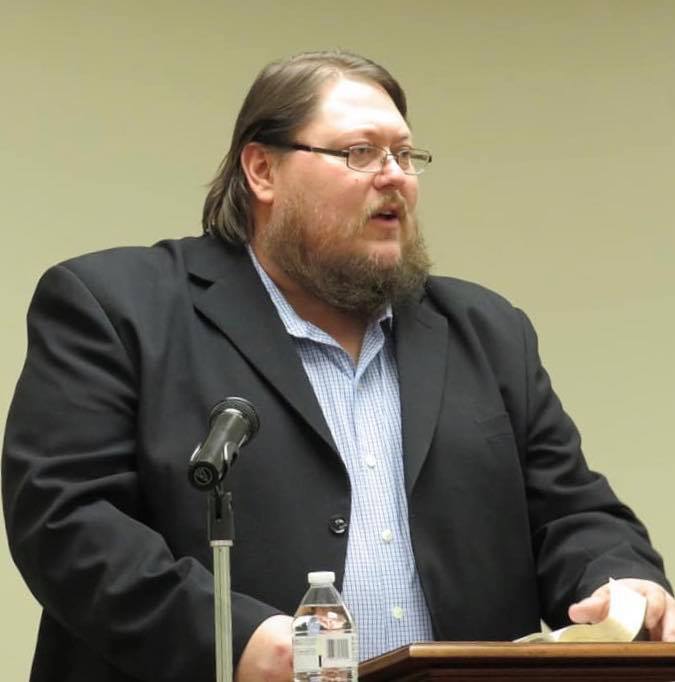
Mikal Smith

Officers of the Church Pt. 1

Mikal Smith October, 7 2019 Audio
0 Comments
The Study of the Church

Sermon Transcript

Auto-generated transcript • May contain errors

100%
chapter four coming back from
our break here we uh just finished up looking at the church's policy
or the church's government which we've seen was congregational
i think that flows through all of the uh all of the new testament
you can see that that the new testament church was the one
who christ had uh had left as the one in charge
of the kingdom as far as carrying out its service and ministry. And in that, especially here
at the last part of that, we began to talk about the ministers
and things like that, which kind of leads us into the next section
in our study on the church, which is the church's officers. Now, historically, And I believe,
biblically, the Bible teaches that there are only two offices
within the local church. There is the office of pastor,
teacher, and there's the office of deacon. A lot of churches
have a whole lot of different officers within the church, but
as far as those who are Holy Spirit offices, that the Holy Spirit
is involved for ourselves like a treasurer here, okay? And you might consider them an
officer of the church. Well, that's not an officer of
the church, okay? That's just a role within the
church of helping keep order and chaos in town. But that is
not a biblical officer of the church that is usually seen in
a Holy Spirit-ordaining, church-recognizing, voting, and laying hands upon
in the ministry part of the church, okay? So we believe and recognize
that the Bible teaches that there are only two offices within the
local church. And again, we do not appeal to
any kind of Synod or any kind of General Assembly or Elder
Board, and even within that, the officers of the church, the
pastor, teacher, and the deacons, They do not rule the church.
They do not lord over the church. And listen, I've seen a lot of
churches where the deacons, they think that they're in control
of everything and they wanna control everything. They tell
the pastor what to do and what not to do. And actually, it's
really, to be honest, just the opposite. The deacon is really
to be a servant, not only of the whole church, but specifically
the serving hand of the pastor to help carry out the things
as the overseer that he thinks needs to be done to help keep
order within the church. Now again, the pastor isn't the
ruler over the deacons either, and I'm not saying that. They
work in conjunction with each other, and really, it is a beautiful
thing when you see a church that has a pastor who follows the
scriptures and is a pastor that is a biblical pastor, that follows
the biblical way a pastor should be, and deacons who follow the
biblical pattern of what a deacon should be, and especially how
beautiful it is whenever you see the pastoral ship and the
deacon ship working in conjunction with each other, you see that
it is a very beautiful thing. But a lot of times what we see
in our concepts of these offices are usually skewed because of
our experiences that we've had in churches that we've been in,
where the pastor's either the overlord of the church or the
deacons are the ones who are controlling everything, or they
don't do anything. I mean, I've seen some churches
where there's been deacons. As a matter of fact, one of the
brothers, a preacher that I know, I won't say his name because
I don't want not only to break confidence on him, but also for
who he might have been talking about, but said that they had
a deacon at one time that literally didn't do anything. I mean, never
came, never came to the workdays, never helped with anything, never
did anything but was a deacon at the church, but would always
throw his deaconship around about how he was such a great deacon
and should be recognized in front of everybody as the deacon and
everything, but yet he never did do anything, you know? But
see, that's kind of what our mentality is on some of these
offices, is that if we say, if we recognize the office of pastor,
we think that someone wants to have preeminence. Well, that's
not true. I mean, you can't get around
the fact that the Bible teaches that there is the office of pastor.
But that does not make the man who is called to be the pastor
a man who desires to have the preeminence over everybody. Just
because you have an office of pastor doesn't mean that he wants
to be a pope or a lord over everybody, okay? And then we get that in
the mentality, especially people who tend to want to veer away
from the gathered assembly and want to just kind of be their
lone ranger Christians out there living in their own little world,
doing their own little thing, who doesn't see the beauty of
submitting one to another in the local assembly, of the edification
that comes in the local assembly, of the work within the local
assembly, of the ministry in the local assembly, who doesn't
see the church as the Bible presents itself, as the church is presented
in the Bible, I should say, They don't see that beauty because
probably for one, they've been hurt in other places. But mostly,
a lot of times what I find, and I'm not saying this is true of
everybody that's like this, but mostly it's one of two things.
Either they've been hurt by a church that wasn't really a church,
or they have a problem submitting to any kind of authority or accountability. And so they shelter themselves
away, or they don't go back to another church because they had
a bad experience in one or the other. And both of those things,
those extremes there, that's a shame that that ever happens,
but that still doesn't negate the fact that Christ has commanded
us to assemble together and that in this assembly there is particular
laws and there are particular roles in that church. And so
we don't wanna negate those things. And again, I'm not here, you
know me, I've been preaching here now for a long time, you
know that I'm not a preacher of law, I'm a preacher of grace,
and that the law has its place. Whenever I say the law is in
the New Testament church, I'm speaking of those things that
Christ said, teach them whatsoever I have commanded you, okay? Those commands of Christ, the
things that were commanded of Christ for us to teach. And one
of the things that was taught is the things that we're looking
at now, is how the church is to function. and to work, and
so to preach the whole counsel of God, we need to preach on
these things on occasions and everything, and still find Christ
in all of it, and what we've been finding in all of our study
on the ecclesia is that it is Christ, and the whole thing is
geared and designed to follow Him and to exhort Him and to
extol Him and to declare His work. That's why we're here,
and we want to do it the way He wants it done. We're appealing
to His headship And so whenever we have these studies on these
topics like this, that is not always quote-unquote gospel-centric,
it still is finding Christ at the center of all things. He's
the one that we are to preach. He's the one that we are to teach.
And so in teaching the whole counsel of God, we declare these
things such as what we've been talking about as well. Now, in
Ephesians chapter four, we find that Paul, again, Now, if you
remember, Paul is writing a letter to the church in Ephesus. Paul, an apostle of Jesus Christ,
by the will of God, to the saints which are at Ephesus and to the
faithful in Christ Jesus, grace be to you and peace from God
our Father and from the Lord Jesus Christ. Now, Paul is writing
this church, of course we know, that the Ephesus church was a
local church. We've seen that in Revelation
just a few minutes ago. It was one of the churches that
Christ sent a letter to. But anyway, Paul is addressing
this to the church at Ephesus, and so that is the context, okay? This is an epistle to the church
at Ephesus, okay? And so whenever he's writing
this, he's writing this as an epistle to that congregation. speaking to that congregation
as a congregation. And so he begins to use metaphors
and terms that appeal or point to what is to be of that congregation. Now, a lot of people have taken
these metaphors and tried to apply them in a universal aspect
but it wasn't intended in that way. It was intended to be a
local understanding because it's a local church, okay? But starting in chapter four,
verse one, Paul writes this about the Holy Spirit. I therefore,
the prisoner of the Lord, beseech you that you walk worthy of the
vocation wherewith ye are called. Now again, he's talking about
ye, the vocation, wherewith ye are, usually whenever we talk
about the vocation, we usually are referring to the pastor.
the vocation of pastor, right? But no, Paul is talking to the
church. It's the church's vocation to
minister the gospel, and the pastor is the ordained minister
by that church to convey that gospel, whether it's there within
that assembly or sent out from wherever, the preacher, the ordained
minister, is the one who is sent by the church to carry those
things out. And so the vocation is talking
about the vocation of the church, not the preacher individual,
or the person individual, because he used the word ye there. That
ye walk worthy of the vocation wherewith ye are called. Remember, the commission started
back with that first congregation. Ye, plural, okay? With all lowliness
and meekness, with longsuffering, forbearing one another in love.
Okay, so he's telling how things are to be within the local church,
right? That we are to walk worthy of
the vocation where we are called. We as a church are called into
this vocation and we should walk worthy of that vocation. Okay, we shouldn't bring a blight
or a black eye to the vocation of the church. There's a lot
of churches out there that are bringing a black eye to not only
the name of Christ, but the church itself. Matter of fact, I was,
where was I at yesterday? Was it yesterday? It's somewhere
this week, me and the guy that works with me, Paul, we were
eating lunch, and there was this guy in this place where we were
eating lunch, and he had this shirt on, and in the back of
his shirt, he said, The church where those who do not think
church is somewhere they want to go goes, or something to that
effect. Anyway, there was this slogan
there of, we're the church where those who don't think that they
like the regular church can come. Meaning that we don't like what
church is supposed to be, but we want to come to somewhere
where we think it ought to be. And so we get this mindset that
church is just whatever we make it to be. And what it's become
today is an entertainment place, is a social gathering. Even in
some places, it's even become a sexual grossness, you know,
among its members. We see that the church, quote
unquote church, that's out there, the church of the world, I should
say, that's out there, has become nothing but the church of the
world. It is not the church of Christ.
It is not what he instituted. It is not what he began. It is
not what he has commanded to be done within his churches.
And so whenever we come as the church, we have to walk worthy
of that vocation where ye are called. So there was a calling. There was a calling among the
many into the few. Okay, there was a calling out
of the elect to form a group or congregation. Okay, and so
we are to walk, we were called into this ministry by Christ. Okay, remember the term ecclesia
means the called out gathered assembly. Okay, we were called
out, what were we called out of? Well, we weren't called out
of the world, we were already out of the world because we were
already believers. we were called out of the mass
of the elect to gather together. He says, with all lowliness and
meekness, with long-suffering, forbearing one another in love,
endeavoring to keep the unity of the Spirit in the bond of
peace. So we are to, as a church, endeavor
to keep the unity of the Spirit in the bond of peace. Now here
he goes using some metaphors. and he's talking about the local
church still, okay? There is one body, one spirit,
even as ye are called in one hope of your calling. One Lord,
one faith, one baptism, one God and Father of all who is above
all and through all and in you all. Now I'm gonna preach more
on that later in the kind of the appendix of this. Remember
I said I'm gonna talk on some topics having to do with the
church and the contesting of this doctrine later, I would
preach on that. But whenever that says there
is one body, that's not talking about a universal, invisible
body of the elect all over the place. It's talking about one
kind of body, and that is the Lord's church. It is gathered
together by Christ. It is empowered by Christ. It
is given gifts by Christ. It functions under Christ's headship. It is empowered by Christ and
his presence is with them. There is one body, one spirit,
even as you're called in one hope of your calling, one Lord,
one faith, meaning one doctrine, one baptism, meaning water baptism,
immersion, one God and Father. Oh, by the way, that baptism
is not spirit baptism, and I'll teach that later on, but anyway. One God and Father of all who
is above all and through all and in you all. But unto every
one of us is given grace according to the measure of the gift of
Christ. Wherefore he saith, when he ascended
up on high, he led captivity captive and gave gifts unto men. Now what Paul is appealing to
here is in those days whenever a general or or a commander or
somebody in a war, whenever they would go in and conquer a place,
he would take all those who had been conquered, and he would
leave them captive, they would become part of their society,
and usually would be made slaves in certain situations, but they
would conquer a society, so those people would become captive to
them and everything, and then as he came back to his city,
he would give distribute the spoils of that and give those
gifts out to the citizenry of the gathered city, okay, of that
city, okay? So Paul's drawing on that illustration
here when he talks about what Jesus has done. He says, wherefore
he saith, when he ascended up on high, he led captivity captive
and gave gifts unto men. Now, who was the captivity? That
was us. He led captivity captive, and
gave gifts unto men. Now that he ascended, what is
it but that he also descended first into the lower parts of
the earth? He that descended is the same also that ascended
up far above all heavens, that he might fill all things. Now,
nine and 10 is a parentheses. Paul is describing who he's talking
about, right? Who the one who ascended up on
high is. He's describing that. But if
you look at the flow from eight into 11, Okay, take out that
parenthesis where he's making a description of something within
there. Look at verse 8 and 11, and I
did this with you last week, I believe, but look. Wherefore
he saith, when he ascended up on high, he left captivity captive,
and gave gifts unto men, and he gave some apostles, and some
prophets, some evangelists, and some pastors and teachers. Now
let's just stop right there. So you see here that these, These
men were given as gifts to the church, okay? They were given as gifts to the
church. Whenever Christ led Tim to captive and he sent it on
high, he left his authority and rule over the captive in the
hands of the church. Those who have been made captive,
he has left that authority to the church. The kingdom of God
is given to the church. The church rules over that kingdom.
And so we, by Christ as our head, under his laws, the things that
he has commanded, we exercise the service of the kingdom, just
as in the Old Testament. The Levites were called out from
among all of Israel and made a particular people in and of
themselves to carry out the functions of the service of God among the
people of Israel. That's what the church is. The
church is a called out gathered assembly who can gathers together
to conduct the affairs of the kingdom among the inhabitants
of the kingdom. That's what we are called to
do. OK, and he is given to that church gifts to help carry this
out. He gave some apostles and some
and you say, well, wait a minute, preacher, I thought you said
a minute ago that there are only two offices in the church, and that
is pastors and teachers. What about these prophets? And
what about these evangelists, or apostles and prophets? Okay,
what about them? Well, we're gonna talk about
those. We're gonna talk about evangelists. We're gonna talk
about pastors and teachers. We're gonna talk about deacons. We're
gonna get to all that. But let's move on, he says, Why
were those gifts given to the captive? For the perfecting of
the saints, for the work of the ministry, for the edifying of
the body of Christ. Okay? So there were gifts given
to the church for the perfecting of the saints or the maturing.
That word perfecting means maturing. It doesn't mean to make a sinless
without sin, right? Okay, we know that's not to be
true. That word perfecting is often
used to mean maturing, to bring from infancy to maturity, okay? When my children were small,
they were infants, they didn't know much. We've been teaching
them and we're bringing them to maturity so that they might
know and follow and practice things that a mature person is
to be and to do, okay? That's what we're talking about
here. Matter of fact, if you remember, go back to the commission
where he's teaching on the commission. Remember that we are to make
disciples, we are to baptize them, then we're to bring them
back to the assembly and teach them all things whatsoever Christ
commanded. Okay? Someone who is made a disciple
whenever they first learn a given understanding of the gospel and
belief of the gospel and stuff, They are a baby Christ. They
still have a lot to learn that they don't know yet. That's what
we come to church for and assemble for is for that very thing, is
to teach them all things whatsoever Christ has commanded. And so
there is in the teaching whatsoever Christ commanded, a maturing
or a perfecting of those who are listening. And all of us
haven't reached that mature spot yet. We still are learning, right? And so we come and we meet together
for that, but that is one of the things that Christ has given
to the church is the gift of these things. For the perfecting
of the saints or maturing of the saints, why is it important
for you to be in a local assembly underneath a man that God has
gifted and raised up and that the church has ordained to minister
that gospel? Why is it important for you to
be there? because he was given to the church, the gathered assembly,
for the perfecting of the saints, the maturing of the saints. Now, are we all taught of God
individually? Yes, we are. And God uses that
pastor teacher to do that very thing. He uses him to bring that
word, to divide the word of God so that we might hear. But yes,
the Holy Spirit is the only one that can give the understanding
of that. That's why we have people for years and years that sit
under the teacher that never learns, but all of a sudden one
day, oh yeah, I see that. I never did understand that.
Now I understand that. Well, was the teacher not teaching
them correctly? No, the teacher might've been teaching correctly,
it's just the Holy Spirit had not yet give that measure of
grace and understanding. For the perfecting of the saints,
for the work of the ministry, Those who are given as apostles,
prophets, evangelists, pastors and teachers, are given for the
work of the ministry. Now some think that this is all
one thing, but this is separated things. The perfecting of the
saints, the work of the ministry, and the edifying of the body
of Christ. So for the maturing of the saints,
we preach and minister the gospel, The work of the ministry, we
are given to do the work of the ministry. That's why we are sent
and called out and go and you guys have us go to do those things.
For the edifying or the building up of the body of Christ, okay? So we exhort you, we encourage
you, we help in all the things that come down the pipe in your
life. We are there to help you with
those things. How long are we to do that? How
long, and I say the office, okay? I'm not saying the particular
individual, because pastors rise and fall. They come and they
live and they die, okay? But I'm talking about the office,
the God-gifted office of pastors and teachers are given till we
all come in the unity of the faith and of the knowledge of
the Son of God unto a perfect man unto the measure of the stature
of the fullness of Christ. Okay, well that sounds like to
me that that's an ongoing thing, it's gonna be there until the
Lord comes again. Verse 14, that we henceforth. Now again, this
is talking about the ministry of the gift of pastor teacher,
okay? Christ has given the gift of
pastor teacher to a local assembly for these things that we henceforth
be no more children, tossed to and fro and carried about with
every wind of doctrine by the slight of men and cunning craftiness
whereby they lie and wait to deceive. Well, how does the pastor
teacher do that? By teaching the word of God,
the work of a ministry. by perfecting the saints through
the work of the ministry, that they might be built up in the
faith. Not built up in happiness, not
built up in joy, although that comes, but what are they to be
built up in? They are to be built up in the
most holy faith. Because see, there's only one
faith. There's only one body of doctrine,
and we are to be built up in that doctrine. That's why we
preach over and over and over, year after year, It isn't this,
well, okay, we've finished the course, now we don't have to
go through that anymore, okay? You know, in my line of work,
I've gone to certain schools for certain machines and products
that I work on, and I go through that, and I think, well, okay,
there I go, I've gone to school for that. But as technology changes,
as things progress, as I learn more and more, I find out, you
know, I have to be refreshed into the things that are new.
I have to go back and be taught the things again. Why? Because
there's more to learn and more to understand and more to know
about the stuff that I'm doing than what I know. And I just
can't say, well, OK, I've taken a course on that. I know everything
there is to know about that. No, I'm always continually learning.
Because even though I may read something in a book or a manual,
whenever I get out on the job, sometimes in the real life, things
don't always work exactly the way they go in a manual. And
so I have real life experiences that shows me Now, I'm not saying
to take experience over the Word of God. It's not what I'm saying.
My illustration is this, is there is continual learning. We don't
have it all down. We don't gather the knowledge
and then we're done. We continue to learn. And so
we, the preacher, the pastor teacher, they continue to do
the work of the ministry so that people, and in doing so, and
if a pastor's faithful in doing that, you'll find that in that
church, that those people are not tossed to and fro and carried
about by every winded doctrine. But you go into these churches
where they're not preaching the doctrine of Christ, where they're
not preaching doctrine on a regular basis, but all they're preaching
is emotionalism and sentimentality and entertainment type things
and socialite type things. All they're preaching is this
lovey-dovey gospel of hold hands and everybody cheer for Jesus
and all this kind of stuff. Whenever you preach all that
kind of stuff, you're finding those churches that people don't
know what they believe. They don't know doctrine. They're
tossed to and fro. That's why I can say, you know,
there are people that I know that goes to churches and that
isn't constantly preaching doctrine, but are preaching all these good-hearted,
feely things. And they have people that are
coming into their church that just, they all have come from
different doctrines. They got churches of Christ people
coming in and worshiping among them. They've got Church of God
people coming in among them. They've got Pentecostal people
coming in among them. And all of them can sit there
and they can worship God. Why? Because they don't have
any doctrine. They don't have any doctrine. And some people
will say, well, that's good. Doctrine divides. We ought to
be able to get together and all get around one thing, and that's
God. We ought to get around Jesus. As long as we love Jesus, let
all that other stuff not divide us. Paul said that you need to
watch your doctrine closely. He said that if anyone comes
and doesn't have the doctrine of Christ, that you're not to
receive them. So that means that doctrine is
important, that we are to preach and teach. He exhorted Timothy
to continue in preaching of doctrine, those things that are sound in
doctrine. Doctrine is important in churches and people have gotten
away from that. And Christ has given gifts to the church of
men who preach and take that doctrine and deliver that to
the people. Why? So that they will no more
be tossed to and fro with every wind of doctrine. Look at verse 15. But speaking
the truth in love may grow up into him in all things, which
is the head, even Christ. for whom the whole body fitly
joined together and compacted by that which every joint supplieth,
according to the effectual working and the measure of every part,
maketh increase of the body unto the edifying of itself in love. So you see that the pastor teacher
is given to the local body for the maturing, for the teaching
of God's word so that the doctrine will be solid And if the doctrine
is solid, if people are learning the doctrine, knowing the doctrine,
the teachings of Christ, if they are learning those things, they're
not gonna be tossed back and forth to and fro, and they're
also going to be exercising and doing the thing within the body
that they know to do. All of us know here, we've been
in school, and we've learned that the brain is the center
point of our body, right? and that the only reason that
my hands move, that I breathe in and out, that I blink to water
my eyes, that I move around, all that stuff, my body reacts
all together because my brain is sending out signals to every
part of my body to do this, to do that, to not do this, to not
do that, okay? It's delegating and it's working
how things ought to be done. Well, if that lifeblood, if that
impulse, those electric signals are cut off, then the body doesn't
know what to do. If we are cut off from our head
and the Word of God that He has given to us, then we don't know
what to do. We're going to flounder around
like a dead body. Okay? But the body, whenever
everything is alive, and now I work a lot with chiropractic
people in the line of work that I do in x-ray, and I'm around
a lot of chiropractors, and one thing that I've learned over
the years of working on chiropractors' x-ray systems is that one thing
that they do whenever they go in and adjust your spine and
your body is to get everything back in a line so that the flow
of your nerves and the impulses of the brain down through your
spinal cord through the nervous system reaches out to all parts
of the body because whenever one part of the body doesn't
get it, then it starts to malfunction. It doesn't work right, okay?
And so their job is to get that back in order where that life
is getting to every part so that the body works like it should.
Well, again, Paul is using that illustration here when he speaks
of a church. And whenever you have a pastor and a teacher that
is preaching faithfully the word of God, then that lifeblood of
what God has given to us to feed off of, his word, is getting
to every member. And then every member, whenever
that life gets in there, will do what it is caused to do. You
know what my hand's gonna do whenever it has all the life
that it needs to do and is exercised properly for it? It's gonna do
what God designed my hand to do. My feet are gonna do what
my feet are designed to do. Every part of my body, that's
why it says here, has every joint supplied. according to the effectual
working and the measure of every part. Now we'll see later in
our studies that in Corinthians, Paul teaches that the Holy Spirit
gives gifts to everyone that is a part of this body and everyone
has their part to work, okay? But we see here that the gift
that God has given to the church to help supply that knowledge
and understanding so that we know how to function as a proper
body is given to the pastor and to the teacher. So these ministerial gifts are
given by God. Look with me if you would in
Acts chapter 2. Acts chapter two. And let's look, beginning verse
29. Men and brethren, let me freely
speak unto you of the patriarch David, that he is both dead and
buried, and his sepulcher is with us unto this day. Therefore,
being a prophet, and knowing that God had warned with an oath
to him, that of the fruit of his loins, according to the flesh,
he would raise up Christ to sit on his throne. He's seen this
before, spake of the resurrection of Christ, that his soul was
not left in hell, neither his flesh did see corruption. This
Jesus hath God raised up, wherefore we all are witnesses. Therefore,
being by the right hand of God exalted and having received of
the Father the promise of the Holy Ghost, he has shed forth
this which he now see and here. And so we see that Peter was saying that we are
now made ministers of this thing that you see here going on. We
have been made ministers of this thing. And every person as they
have part is showing forth this witness here. And so those gifts
were given to men. The gifts of the Holy Spirit
was given. Now, with that being the case,
let's look at a few things, and let me see what time it is. I'll
tell you what, I may, I'll tell you what, that's kind of a good
introductory to this. Let's just stop there, because
it's already 12 o'clock. We'll just stop there. Lord willing,
next Lord's Day, we will start with looking at these apostles,
prophets, pastors, teachers, and we'll see where the apostle
prophets part works in, the evangelist part works in, pastor-teachers,
and what the Office of Deacon, but we'll continue on in that
over on the next Lord's Day. Does anybody have anything that
you'd like to mention, or anybody have anything? All right, let's bow and have
order.

Comments

0 / 2000 characters
Comments are moderated before appearing.

Be the first to comment!

Joshua

Joshua

Shall we play a game? Ask me about articles, sermons, or theology from our library. I can also help you navigate the site.