Psalms 37. We're going to look
at just a couple of verses. The last two verses actually,
but we will look at 38, 39, and 40. But this whole psalm as you get into it, is one of
contrasting, it's a contrasting theme. Dealings with the wicked
as compared to the righteous. He says in verse 1, fret not
thyself because of evildoers, neither be thou envious against
the workers of iniquity. He says, verse 7, rest in the
Lord and wait patiently for Him. Fret not thyself because of Him
who prospers in His way, because of the man who brings wicked
devices to pass. So he's just going back and forth,
back and forth. And then he says in verse 38,
but the transgressors shall be destroyed together. The end of
the wicked shall be cut off. But the salvation of the righteous
is of the Lord. He is their strength in the time
of trouble. And the Lord shall help them
and deliver them. He shall deliver them from the
wicked and save them because they trusted in Him." Remember, I wrote this quote
down from somebody I read, I can't remember who it was, but I want
us to remember this. The wicked shall not go unpunished. but neither shall the faithful
go unnoticed." I like that, unnoticed. But what got my attention is
the first word in verse 38 and 39, but, the transgressors, but
the salvation. It says, oh, the wicked seem
to have salvation as well, but the salvation of the righteous
But in the end, there is no salvation for the wicked. And who are the
wicked? All those who try to earn, merit,
or secure salvation by any acts or actions of self. Self. Because we think a lot
of ourselves. And we think a lot of ourselves,
even after salvation, when the self is probably the last thing
to be put in a grave, but there is no salvation. Matter of fact,
he says in verse 38, it's destruction, but shall be destroyed. So if
you're here this morning, and you're clinging to something
you've done, something your parents did for
you, if you've walked an aisle, if you've even got under the
water, if you think you've repented on
your own, if you think you have done something for God. And this happens all the time,
no matter if the Catholic religion is based on works. But there's
only two religions, and we've talked about this numerous times,
there's only two religions. Whatever denomination you want
to, however you want to slice it, dice it, or cut it up, Abel
and Cain. Cain went with the best his hands
could produce. And it was something, I'm sure.
It was something. But not in the eyes of God. Abel, what's that you said to me, Dad?
Take an innocent lamb and sacrifice it? The lamb is Christ? That's
how we come to God. But the wicked, they're just
going to keep, as the whole chapter says, they're just going to keep
doing what they do, and the end of the wicked shall be cut off.
They're going to be destroyed altogether. Now, I know that's
not politically correct, and I know that doesn't endear me
to the children or whatever. The Gospel has no place for political
correctness. None whatsoever. And at least
at this particular point, In this country, we gather together
freely and worship God in spirit and truth. But the other but,
verse 39, this is the best of the buts, or the best of the
opposites. Salvation is in its origin, but the salvation of
the righteous is of, of, that shows origin. It originates,
it operates, And it culminates in the Lord. From stem to stern,
as we like to say, from alpha to omega, start to finish. And
we all claim, we all own and we all confess, salvation is
from, is by and because of Jehovah, as he says in Jeremiah 23, Jehovah
Sidkidnu, which means the Lord, our righteousness. That's what
the believer confesses. When all else comes down to it,
he says, the Lord is my righteousness, not mine. Therefore, our safety,
security, hope, trust is in the blessed Son of God, who the scripture
says gave himself for us. Zechariah chapter 3 and verse
17, so much does our sovereign love and protect
His people, it is said that in this passage in Zechariah, you
don't need to turn there, that He rejoices over them, who's
the them? It's the righteous, with joy
and singing. Jehovah God, the Creator of the
whole universe, rejoices over His people with joy and singing.
But there's more. Let's look at verse 38. But the
salvation, the foundation of our Salvation is in the Lord. He is their strength. He is their strength. That is
our rock, as he says in Psalms 18, verse 2. He's our nail in
a sure place, Isaiah 22. He's the desire of the nations,
Haggai 2, 7. He's that balm in Gilead, Jeremiah
8, 22. He's our fortress, our high tower,
our city of refuge, Psalms 46. He is all this and more. He is our strength in due time. We were without
strength. That's such a difficult thing.
We think we can reach into our back pocket if we've got the
money, the resources, and take care of stuff. Or we think when
we're young that we have the physical ability to take care
of different things. Or perhaps we get a little older.
We have the mental capability. As I've often said at Nathan's
house, Joe and I wanted to work smarter, not harder. Because
we could do some things that we used to be able to do. Even
all this, He is our strength. He is our strength. We are not
our own. Oh, may we flee unto Him and
be safe. and not a little comforted. And
this strength comes when most need it. Look at this. But the
salvation of the righteousness of the Lord, He is their strength
in the time of trouble. In the time of trouble. And I
love that quote from Scott Richardson. The three phases of the believer's
life. We're either heading into trouble, we're in trouble, or
we just left trouble. That's us. It could be work,
it could be home, It could be jobs. It could be the county
we live in. It could be the state we live
in. But trouble. We don't have to go find trouble.
Trouble finds us. But that word trouble in Hebrew
is distress, anguish, or affliction. Distress, anguish, or affliction. He is our strength at all times. But that's when His strength
is most precious to us. When we're flat on our back in
the hospital bed, or flat on our back in our own bed, or flat
on our back if we're wrestling and that's not the place you
want to be, you need strength. That's when you start looking
up and you start thinking, Lord God, don't leave me alone. Don't
leave me alone. Yet there's more. There's more
benefits. Look at verse 40. And the Lord shall help. Look
at these promises. We are promised help, deliverance,
and salvation. Help, deliverance, and salvation.
We are promised help. That word means protection or
aid. And I just use these Hebrew words
because sometimes it may be one of those words like, I need aid.
I don't need protection, I'm doing fine, but I need aid. Then
he says, I will help them, I shall help them. And God's shalls,
they're not maybes. Purposeful promises. They are
purposeful events that will take place. And deliver them. This
word deliverance means escape. You ever been in a situation,
didn't know how to handle it, and you needed to get out? The
Lord has that for us. And then He says, He will deliver
them from the wicked and save them. That word save is to free.
It's to defend or preserve. I like all those. I like all
those. I need a defense. I need a strong
tower to run into and be safe. I need to be preserved. We talked
about that back there with the men. Those who endure to the
end and only those shall be saved. But the responsibility doesn't
lie on us. He's going to preserve us. He's
going to keep us. Unto Him that keeps us from falling,
says Jude. Oh my brethren, do we not possess
all we could ever need in the accomplishments and deeds for
us by our blessed Redeemer? We possess right now. And yes, it was before the foundation
of the world, but we didn't know that. We were just walking around
bumping in things in the dark because we had no sight. We hadn't
been illuminated, but now illuminated, we realize. All things are for
us. I was looking at somebody a couple
of weeks ago, and it's in Corinthians, and I just come off the top of
my head, it's in Corinthians, but he says, whether Cephas or
Paul or whatever, all things are yours. And then he lists
some stuff. I had missed this. I had skipped
over this. But now as I'm getting older,
it just hit me like somebody slapped me upside the head. He
said, death. Death? Look at it. If you want to know where the
Scripture is, I'll look it up. Death is yours. I'd never seen that. Life and
all these other things. I knew He does everything for
us. Death is ours. He said, Phil Potter or Spurgeon,
don't be afraid of death because it's ours. And I read further, because Christ
has conquered death. So, you talk about a comforting
thought. Everybody's afraid of death and
we should be. We're created to live. But to see some folks who are
outside of the Gospel, outside of Christ, dying and afraid,
that's a sobering thought. But not the believer. Death is for you. So I asked this question this
morning, as I asked myself when I was writing this up, why is
all this And more, why is all this so? Why is the fact that
salvation is in the righteousness of the Lord, He's our strength
in times of trouble, He's our help, He delivers them, from
the wicked He's going to save us. Why is this so? Well, yes, because He's elected
us in Christ Jesus, Ephesians 1.4. Yes, because He made choice
of us through the blood of the everlasting covenant. Yes, because
this was all according to God's will. But also, you have to say,
why is all this? The last phrase in the last verse. Because they trust in Him. They trust in Him. It was God's
will that we should trust Him. Faith is a gift. Trust is a gift. Believing is a gift. But we trust in Him. We trust in Him singularly, solely,
and on purpose. I remember years ago the big
debate was, oh, does God save us against our will and this
and that? All I know is He shall make us willing in the day of
His power. He will humble us. and we will
open our arms. He receives us, but we receive
Him." I was looking at Haggai, just two
chapters, looking at the history of it, and he says a very interesting
phrase I've never seen before. Turn, if you would, to Haggai. Chapter 2, and verse 19. I should have had my bookmark there. Hey guys! The story is the prophet Haggai
is trying to get the people to rebuild the temple. And they
had already been given the go-ahead by the king. They were in captivity.
And Haggai, he rebukes them in quite a bit of the first chapter
because they're not doing anything. We've got the okay. Do it. And
he says, verse 17 of chapter 2, I smote you, this is the Lord
speaking through Haggai, with a blast of mildew, with hail
on your labors or your hands, yet ye turned not to Me, saith
the Lord. Consider now this day upward.
from our four-twentieth day of the ninth month, even the day
that the foundation of the Lord's temple was laid." Consider this.
He only prophesied four or six months, and that's all we know
of Haggai, just four or six months. "'Is the seed yet in the barn?
Yet, as the vine and the fig tree and the pomegranate and
the olive tree hath not brought forth.'" I know that the rebuilding,
what he's saying, the rebuilding is going to be tough. But he
says, hey guy, I'm with you. And he says, the Lord is with
you. And the time that the Lord shows you and me our sin and
the Savior and the Gospel, though the work be tough, look at what
he says, from this day, God says, will I bless you. Not destruction. Not misery. But from this day, and really
you think about it, since the Lord revealed Himself to you,
you've had many ups and downs, many ups and downs, but can you
not look back and say, I have been blessed though. That thing's been tough. I always
had food on the table. The paycheck didn't last a whole
month. Yet, I have been blessed. Because all spiritual blessings
in heavenly places are in Christ Jesus. And the beautiful thing is, Haggai
says earlier in the chapter, that this temple is going to
be more glorious than the former temple. Because he's talking about the
Lord Jesus Christ when he comes back. But I just thought that was so
good. From that day, From the day that
we trust Him, from the day that He gives us grace to trust Him,
however you want to phrase it, we trust Him. Repentance is a
grace, but we repent. We believe it's a grace, it's
a belief. But we believe. From that time, that moment,
whenever it was, whenever it is, from this day, well I bless
you, You can walk out that door if you trust in Christ and say,
I am of all men, I am of all women, I am of all children,
blessed of God. I know there are a lot of things
that take our mind away and our thoughts away and take us away
from fellowship and this and that. There is nothing more important
than you could say that you are blessed of God. Yet perhaps the overriding theme
in all of our walking and all of our following our Savior...
I told Nathan I was going to throw this in. And you don't
have to turn there. It's found, and I wrote about
it in the bulletin, 1 Samuel 16. And verse 11, Behold, He keepeth
the sheep. This is Jesse. Speaking to Samuel
about the last one, and surely you've got more children. He
says, yeah, there's one, but he's the youngest and he's out.
But behold, listen, stop. Whatever you do, wherever you're
at, you're struggling. If you're not struggling, if
you're one of his, he keeps the sheep. I like that. I like that, and you know what?
He will never lose one of His lambs. He won't do it. He won't
do it. Salvation of the righteous is
of the Lord. He's got exceeding great and
precious promises. He's got His covenant. He is
who He is. I wish I could say more, but I
think that's enough. Bruce, would you close us?
About Drew Dietz
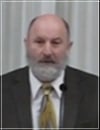
Drew Dietz is the pastor of Sovereign Grace Church in Jackson, Missouri.
Comments
Your comment has been submitted and is awaiting moderation. Once approved, it will appear on this page.
Be the first to comment!