Forty years ago, I had been enduring
some difficulties with health, going through chemotherapy and
Cobalt, and spent a year hugging a commode every day, sick, and
getting weary. I was just getting weary. And early one morning, reading
scripture, I came to this word from God. You can find it. You don't need to turn there.
You can cut it later. Psalm 41, verse 3. The Lord will strengthen
him upon the bed of languishing. Thou will make all his bed in
his sickness. And I took some time to study
the passage a good bit. The words translated making his
bed refer to the common practice of a nurse taking care of patients
who've been in the bed for a long time. They come in and turn you
on the bed. I've had that done a number of
times with me when I was considerably larger than I am now. It took
some nurses. But they turn you on your bed to keep you from
getting bed sores. And the Lord God graciously ministered
to my soul in that time of need, as he always does, and made the
bed of sickness a comfortable bed. And he will do that for
you. He'll do that for your pastor.
He makes his people comfortable in his providence as we need
it. And I thank God so much that
he's been pleased to bring Brother Nybert through this surgery again. Hope it'll be the last. Hope
it'll be the last. Above all people, I have reason
to live in constant thanksgiving to God for his marvelous free
grace. Never has there been a man more
vile than I who's been the object of such marvelous grace. Never
a man of such uselessness called and gifted of God to preach the
gospel of his grace, a man of utter, complete uselessness with
no capabilities at all in himself. And I've been privileged to preach
the gospel of God's grace for 49 years. Oh God, thank you for
your mercy. And never has there been a better
day for doing it. This is the day the Lord has
made for us. If I could choose to live in
any day, in any age, in any place, in any circumstances, I would
choose to live right now, right where God's put me. And I hope
that you understand God's providence for you in just that way. I know
we live in an apostate generation. We live in a nation and in a
generation under the judgment of God, deservedly so. But if I read this book correctly,
and I know that I do, or I wouldn't say this, in the midst of this
great apostasy, this anti-Christ, will-worship, Arminian age, God
has raised up and will continue to raise up his witnesses. He sends them reviving his people
and sends the gospel by his witnesses throughout the four corners of
the earth. I've never been more excited
about preaching, more excited about serving our God than I
am right now. Right now, I know of five congregations
looking for a pastor. I don't want any volunteers. If you volunteer, God won't have
you. I know it's common for folks, when I was a young man, you'd
go to church, you'd go to a youth camp, and if you made a profession
of faith, the first thing you want to do is commit to full-time
Christian service, and get you in the pulpit, and the meaner
you were, the quicker they wanted to do it. I don't read in this
book of any man ever volunteering to be a prophet, or an apostle,
or a preacher. They are all men sought out,
called, and gifted by God, and God puts them in the work of
the ministry. But we are bidden by the Lord
our God to call on the Lord of the harvest, that he may send
forth laborers into his venue. And that's my prayer. It's my
prayer that God will be pleased to raise up from this assembly
and from our assembly in Danville men whom he will call out, gift,
and send forth for the preaching of the gospel of his free grace. That they may proclaim the gospel
by the power of his spirit and go doing so with this blessed
assurance. Now listen carefully. God has
never sent a man to do anything at which he failed. I want that to sink in. God has
never sent a man to do anything at which he failed. If God raises
up a man and sends him forth on an errand of mercy in his
generation for his people, that man will accomplish the thing
for which God has called him, gifted him, and sent him. And
he may never know how God uses him. And that's usually best. But fail, he will not. Not if
he's sent of God. So I want you to open your Bibles
with me to Exodus chapter 3. And I have a message I'm very
confident God has given me for tonight. My subject is the making
of a prophet. I'm often asked by folks, I'm
asked at least once a week. I'll get a note or a letter or
a telephone call or I'll see someone when I'm away in a meeting.
How can I know whether or not God's called me to preach? What
is the call to the ministry? And we're never given in this
book a specific answer to those questions. We're never given
a specific answer. There's a good reason for that.
God deals with men as he deals with them personally, individually. And yet we're given numerous
examples of men called, gifted, and sent of God to preach the
gospel. The answers to the questions
then are given in numerous places. Let's look tonight at Exodus
chapter 3. Now I realize I'm not preaching
to a house full of preachers. I'm preaching this message to
you with good reason, with good reason. I hope God will call
some of you men and send you forth to preach the gospel. As
you know, I have just one grandson. Since he was old enough for me
to talk to him and hope he would understand something I said,
I'm talking about since he was a baby sitting on my knees. I
have told him, I'm praying for him, been praying for him since
before he came into this world that God might be pleased to
save him. And I pray that God might do him the high honor of
sending him forth as a gospel preacher. But you wouldn't want
that for your son. I wouldn't want anything else
for him. I wouldn't trade places with anybody in the world. This
is the blessed work God gives to few, few men. And I pray he
will give this work to some of you. But for you who are not
called and sent of God to be preachers, You need to know as
much as you can your pastor. You need to know that man who
labors in the word and in the doctrine of God for your souls,
that you may highly esteem him in love for his work's sake,
that you may be at peace among yourselves. I can't tell you
how it does my heart good to hear you speak as you do of your
pastor. God has blessed you with an exceptionally
gifted, faithful man. Know him. Know his labor as best
you can and seek to know what's involved in the work and the
burden in the care of the ministry. You need to know that man, and
you need to know all that you can know who preach the gospel
of God's grace, and care for them, and pray for them, and
seek to do what you can to assist them. The fact is, before you
know it, you're going to have to seek another pastor. I was
thinking about this this morning, getting ready to preach here
tonight. It's hard for me to think of your daddy having a
grown daughter. He was just a boy when I met
him, and I wasn't much more than a boy myself. But we're getting
to the age where we have fewer days ahead than we have behind
us. And the time will come when God
will take your pastor from you as he will take the pastor of
Grace Church in Danville from them. And you will be required
to seek another man to speak for you, to speak for God to
you in Christ's name, the gospel of his grace. So you need to
know all you can with regard to the work of the ministry.
I want us, you and me, this congregation and our congregation in Danville,
to utterly give ourselves to the cause of Christ. to utterly give ourselves to
the cause of Christ. Brian prayed just a little bit
ago that we might do just that. Let us do everything in our power
as God gives us ability and opportunity for the furtherance of the gospel
and the glory of our Redeemer. the saving of God's elect and
the good of his people, the building of his kingdom in this generation,
in the days we have left on this earth, so that we give ourselves
utterly to our Redeemer. Sometimes I've heard folks say
things, doing things around the church building, various things.
Well, that's good enough. That's good enough. Don't ever
let me hear you say that about the things of God. Whatever you
do, Whatever sacrifice you make, Fr. Sharon, whatever your family
does, whatever sacrifices you make, it's never good enough.
It's never good enough. Let us never be satisfied with
less than our utmost best in the cause of our Redeemer. I
say to this congregation, don't ever be satisfied with what you're
doing, but always seek means. other means by which you may
do more for the cause of Christ and the furtherance of the gospel.
Now let's read together Exodus chapter 3 verses 1 through 10. Now Moses kept the flock of Jethro
his father-in-law, the priest of Midian. And he led the flock
to the backside of the desert and came to the mountain of God
even to Horeb. And the angel of the Lord appeared
unto him in a flame of fire out of the midst of the bush. And
he looked, and behold, the bush burned with fire, and the bush
was not consumed. And Moses said, I will now turn
aside and see this great sight, why the bush is not burnt. And
when the Lord saw that he turned aside to see, God called unto
him out of the midst of the bush and said, Moses, Moses. And he
said, here am I. And he said, draw not nigh hither.
Put off thy shoes from off thy feet. For the place whereon thou
standest is holy ground. Moreover, he said, I am the God
of thy father, the God of Abraham, the God of Isaac, and the God
of Jacob. And Moses hid his face, for he
was afraid to look upon God. And the Lord said, I have surely
seen the affliction of my people which are in Egypt, and have
heard their cry by reason of their taskmasters, for I know
their sorrows. and have come down to deliver
them out of the hand of the Egyptians, and to bring them up out of that
land unto a good land and large, unto a land flowing with milk
and honey, unto the place of the Canaanites, and the Hittites,
and the Amorites, and the Perizzites, and the Hivites, and the Jebusites.
Now therefore behold the cry of the children of Israel is
coming to me. And I have also seen the oppression
wherewith the Egyptians oppressed them. Come now, therefore, and
I will send thee unto Pharaoh, that thou mayest bring forth
my people, the children of Israel, out of Egypt. Now in those ten
verses, we have Moses' description. of his own call to the work of
the ministry, his own call as God's prophet, and his description
of the privileges and the burden and responsibility that were
his as God's prophet. And he gives us this description
by divine inspiration. So he's not just writing a history.
He's writing a history of what he had experienced being called
the prophet of God, being made God's messenger in his day to
his generation. And he has this word given to
us by inspiration that we might receive the instruction of the
text. Now first let me state as clearly
as I can, the salvation of God's elect is sure. Now listen carefully,
listen carefully. Here are five facts we must never
forget. Five facts we must constantly
keep on our minds and on our hearts. The Lord God Almighty
has from eternity chosen a great multitude of sinners for the
glory of his name whom he will save to get glory to himself. And those sinners chosen of God
predestined unto everlasting life, adopted as the sons and
daughters of God Almighty from eternity, must and shall be saved. There's no possibility that one
sinner chosen of God will perish at last. Second, the Lord Jesus
Christ, God's darling Son, has redeemed that elect multitude
by the shedding of His blood. He has redeemed them and every
sinner redeemed by His precious blood shall be with Him in glory. Now this is, as your pastor has
told you numerous times, I have no question, I know he has because
we talked about it numerous times, this is the crucial issue of
the gospel. The absolute, efficacious, redemptive
work of our Lord Jesus Christ. Jesus Christ is not a failure. The cross of our Lord Jesus Christ
shall never be discovered a miscarriage. Now this is what that means.
Christ died for his elect. All his elect and only his elect. He redeemed his elect. All his
elect and only his elect. He did not die for folks who
perish in hell. Now you may wonder why we're
so insistent concerning that. Because to deny the particular
effectual redemption of the Son of God is to deny His very Godhood. Now I realize that's shocking
to a lot of folks. And I've been facing the wrath
of preachers who Preach limited atonement, preach particular
redemption, but they just can't see that. They say you just can't
say those things. I've been dealing with that since
I was 18 years old. It's no new thing to me. Let
me ask you something. If I were to stand here and say
that anyone who says what Nels F.S. Farré said back in the late
40s, he was lecturing, a guest lecturer up at Louisville Seminary,
and he made this statement with regard to our Lord's virgin birth. He said Jesus was probably the
bastard son of a German soldier stationed around Palestine at
the time of his birth, denying the virgin birth of the Son of
God. And I would say anybody who denies that Jesus Christ
is God incarnate is absolutely without the knowledge of God,
for they deny his very Godhood. To deny his virgin birth is to
deny that he's God and to deny everything this book teaches
about him. And equally so, to deny his efficacious work at
Calvary, to deny the efficacy of his blood atonement is to
deny that he's God and declare that he who died at Calvary is
a failure in the very thing for which he came into this world.
But the book of God says he shall not fail. The Lord Jesus did
not shed his blood in vain. Every sinner for whom he died
and redeemed, every sinner for whom he made atonement shall
be with him in glory. He shall see of the travail of
his soul and shall be satisfied. Third, God the Holy Ghost sovereignly,
irresistibly, sanctifies, regenerates, calls, and preserves every sinner
chosen by God the Father and redeemed by God the Son. At the
appointed time of love, The Spirit of God comes and convinces chosen
sinners, redeemed sinners throughout the world of sin, of righteousness,
and of judgment. Convinces you. He convinces you
of your sin because you believe not on Him. That conviction of
sin is not so much a conviction that adultery is wrong. You know
that, whether you acknowledge it or not. It's not so much a
conviction that fornication is wrong, that theft is wrong, that
drunkenness is wrong. Everybody knows that. Some folks
pretend it's not so. They suppress it. But you know
it. You know it. Those are horrible evils. But
that's not what this conviction is. It's convince you of sin
because you believe not on me, the Savior said. He convinces
you of the sinfulness and rebellion and atheism of your own unbelief. And when it does that, it convinces
you of righteousness. Oh, what a blessed consolation
to be convinced of righteousness because the Savior said, I go
to my Father. He came down here as Jehovah's
righteous servant to bring in everlasting righteousness. And
he could not go back to glory as the mediator and servant of
God except he had brought in everlasting righteousness. He
convinces sinners, looking to him, of perfect righteousness. Perfect righteousness that he
alone could perform and he alone can give. And he convinces sinners
of judgment. Not that there's going to be
a day of judgment, as with regard to various things of immoral
behavior. Men are born with that. You know
that. Everybody sitting here knows
that you're going to meet God in judgment. You're fully aware
of that. He convinces that judgment is done, that judgment is over,
because the prince of this world is judged. Our Savior, by the
merit of His blood, fully satisfied the wrath of God, and there is
no judgment, no condemnation for God's elect to face. Fourth,
every sinner, every sinner who comes to God by faith in Christ
is born of God at God's appointed time. He has everlasting life
and shall never perish. That means if you believe on
the Son of God, you're born again. You have life. Him that cometh
to me, our Savior said, I will in no wise cast out. Folks like
to debate and fuss and write books and theological papers
about how you must come to Christ. Let me repeat one more time.
Any way you can get to Him will be all right. Just come to the
Savior. And the fact is, coming to Him
is not really so much a decision to come to Him. Believing on
Him is not really so much a determination to believe on Him. You tried. You who are gods, bear me witness. Don, I've known you since you
were a little boy. You bear me witness. You tried, and tried,
and tried, and tried, and tried, and tried, and tried to believe,
and couldn't believe. And suddenly something happened.
One day, you found yourself believing. That's the way it is with God's
people. It's not that we decided to come to the Lord. He came
to us and caused us to come to Him and continually does so.
He came to us and gave us faith in Him and continually does so.
So that every sinner who believes on the Lord Jesus has everlasting
life. Folks say, well, what if I'm
not elect? If you believe, you are. What if I'm not elect? Or
what if I'm not redeemed? If you believe, you are. What
if God hasn't called me? If you believe, He has. And only
if he has chosen you, redeemed you, and called you, will you
or can you believe. But understand this too. No sinner
can or will be saved apart from the preaching of the gospel. No sinner can or will be saved
apart from the preaching of the gospel. Several years ago, I
was flying out of Louisville Airport. I probably told you
this, but it'll bear repetition. And one of the TSA agents, I
got pulled aside and was examined and they searched my bag and
all. He opened up my briefcase and there lay my Bible. He said,
are you a preacher? I said, yes, sir. He said, where are you from?
I said, Danville. He said, Danville, and he knew one of
the local preachers, one of those fellas. And at that time, he
looked like Ronald McDonald. He looked like he stuck his finger
in a light socket somewhere. But an Armenian Methodist preacher. And he said, you know, so and
so. I said, yeah, I know him. I know him. He said, you're not
one of those Calvinists, are you? I said, what do you mean?
He said, you don't believe in election and predestination,
do you? I said, of course I do. I believe that book you're looking
at. He said, well, if you believe those things, why are you going
to preach? I said, because I believe those things. Because I know
God has a people chosen and redeemed who must and shall be called.
And the only way he'll do it is by the sound of a preacher's
voice, either on paper or audibly, but only by the preaching of
the gospel. This is what the book says. Faith
cometh by hearing, and hearing by the word of God. But pastor,
that limits God's sovereignty. That takes away from God's sovereignty. Not hardly. If God chose to do
so, Aaron, he could save you by striking you on the head with
lightning and getting your attention. But he didn't choose to do so.
If he chose to do so, he could send an angel down here to tell
you about redemption. But he didn't choose to do so.
If he chose to do so, he could cause the dog to talk to you.
But he didn't choose to do so. He caused an ass to talk to Bella,
didn't he? He could choose that if that were his purpose. But
it pleased God by the foolishness of preaching to save them that
believe. It pleased God by the foolishness
of preaching to save them that believe. Now, here is where the
rubber hits the road. You and I who are born of God
are his witnesses, his missionaries. There's Belfast Grove, missionary,
missionary. Just as much so as Cody Groover,
just as much so. If you're born of God, his messenger
in this generation, to the folks that he puts you in contact with.
Oh, what a responsibility. What a privilege. Our mission
in this world is to preach the gospel of Christ to all men.
I'm calling on you and I'm calling upon myself. I'm calling upon
this congregation and ours utterly to give ourselves to this work
of making known the gospel of God's grace. Now turn, if you
will, to Psalm 68. Psalm 68. You're very familiar with the
passage in Ephesians chapter 4, in verse 11, where the Spirit
of God tells us that Christ's ascension gifts to his church
include apostles, pastors, teachers, evangelists, and prophets. That
passage in Ephesians 4 is a quotation from Psalm 68. The 68th Psalm
is describing our Lord's resurrection, having accomplished redemption
for us and His ascension into glory, having finished the work
the Father gave Him to do. After having put away our sins
by the sacrifice of Himself, our Lord was raised from the
dead and then publicly ascended up into heaven and sat down on
the right hand of the Majesty on high. That man who died for
us at Calvary, The very one who shed his blood for us at Calvary
sits yonder upon the throne of the universe and has the reins
of universal monarchy in the hands that were pierced for our
redemption. Look here, Psalm 68, verse 17.
The chariots of God are 20,000, even thousands of angels. The
Lord is among them as in Sinai. in the holy place. You remember
the mountain when Moses went up to receive the law, angels
of God flooded the place. Here the psalmist says, here
the angels of God, the chariots of God, thousands upon thousands
of them are here giving witness to this, the fulfilling of the
law given at Sinai. Thou hast ascended on high. Thou
hast led captivity captive. Thou hast received gifts for
men. And I'm sure Baddie put this next word in, yea for the
rebellious also. That the Lord God might dwell
among them. Blessed be the Lord who daily
loatheth us with benefits, even the God of our salvation. And
when you read that word Selah in the Psalms, it would be wise,
I don't say you shouldn't read it, but understand it's really
a punctuation mark. It's a poetic punctuation. It
means this. Pause now. Meditate on this with
satisfaction. Meditate on what you've just
read. Blessed be the Lord who daily loatheth us with benefits,
even the God of our salvation. He that is our God is the God
of salvation. And unto God the Lord belong
the issues of death. Now these ascension gifts of
Christ, as I said just a moment ago, are apostles, pastors, teachers,
evangelists, prophets. It's obvious, it's obvious to
anyone who knows this book, that there are no continuing apostolic
offices or prophetic offices in an official sense in this
day. The last apostle was the Apostle Paul. The last one with
apostolic gifts was the Apostle Paul. The last one with apostolic
gifts, those who pretend to be apostles today, and those who
pretend to have ability to look into the future, and they're
pretty good at it if it involves your pocketbook. But those who
pretend to do so, those who pretend to be able to heal the sick,
they can fake healing a stumped toe pretty good. They have trouble
with brain cancer. But those who pretend to do so
are fakes and charlatans. I don't care if I'm talking about
you or brother or you. They're fakes and charlatans.
And they know they're fakes and charlatans. They know they don't
have those abilities. There are no such things as apostles
and prophets in that official capacity in this day. The last
of the prophets, Brother Mitch read to us just a little bit
ago, was John the Baptist. He died before the Lord Jesus
was crucified. Evangelists, as they're described
in Ephesians 4, are not what we call evangelists today. Evangelists
today are looked at as itinerant preachers who just go from place
to place preaching and collecting offerings. Evangelists in the
scriptures refer to missionaries, men who give their lives to the
planting of gospel churches and training pastors to lead those
churches. Pastors, teachers, are those men called and gifted
of God for the work of the ministry, preaching the gospel in a local
church, teaching you the things of God. Really, the words pastors
and teachers would better be translated this way, pastors
slash teachers. Many of you men teach here, you
ladies teach the younger children, but there is one pastor teacher
in this congregation. He is the angel of the Lord to
this congregation, God's messenger to this congregation. The pastor,
called and gifted of God, is the man responsible to teach
the Word of God and the things of God to God's people in the
place where God's put him, in the church over the which God
has set him. And yet, this term prophet is
used, and we've spoken of, as prophets who are ascension gifts
of Christ to his church. What does that mean, then? if
the prophetic office is over and there's no prophets like
Isaiah or Elijah or John the Baptist. What's he talking about?
About prophets. These men who are gifted as prophets
in God's church. Certainly, they cannot be considered
ascension gifts of Christ if it's referring to the Old Testament
prophets. The last one died before the Lord Jesus did. This is talking
about men who are gifted of God. with extraordinary gifts for
the ministry. Men who have a remarkable God-given
understanding in the scriptures. Men who have an awareness, a
keen awareness, of the times in which they live and the message
required to meet the need of the hour. They're like the sons
of Issachar we read about in 1 Chronicles 12. Men who have
understanding of the times, who know what Israel ought to do. and their brethren are at their
commandment. A prophet may be an evangelist
or a pastor, teacher, but he is also distinctly a prophet,
a man distinctly gifted of God to lead his people in crucial
times with boldness, with authority that only God can give. Clearly,
there were such prophets described in Acts chapters 11 through 13.
There are six of them named specifically But there have never been many
prophets, at least not many who are true prophets. But oh, how
our times cry for such men. The prophet is a voice in the
wilderness, God's voice in this wilderness. He is the voice of
God to the people of his day. He's not just a parrot or a puppet
or a promoter. A prophet's never a team player.
He's not a religious politician. He's a lone, dogmatic, unrelenting
voice crying in the wilderness. Let me give you some examples
with which you're familiar. In the late 30s, 1938 or 39,
God raised up a man by the name of Arthur W. Pink. He pastored
for a while down in Wharton's Gap, Kentucky. He pastored for
a while in Australia, pastored for a while in England, and wound
up just writing, just writing. And God used Pink's writings
to reestablish in the Western world the gospel of his free
grace, literally around the world. In the late 40s, about 10 years
later, God raised up another man by the name of Rolf Barnett.
And Ralph Barnard was used of God as a preacher, going all
over this country, preaching the gospel of God's free grace,
reestablishing the gospel of God's grace. Now understand what
I'm telling you. We owe a huge debt to such men,
a huge debt. Every gospel preacher in the
world today owes a huge debt to those men God used. And every
believer owes a huge debt. God raised them up for our generation. Brother Mayhead, father of Brother
Ralph Barnard, and he has been such a tremendous influence in
our day. God raises up a voice. A voice
by which he speaks to our generation. God give us grace that we may
faithfully serve him, heeding the voice of his prophet. And
the prophet, that man like these is nothing but a prophet, just
a prophet. If he tries to do anything else,
he just messes up. He's an embarrassment to himself
and an embarrassment to others. Several years ago, I read an
obituary. It was of a preacher who had
been preaching, pastoring for 60 years. He's a well-known man. And at his funeral, his grandson,
a grown man, obviously, by now, he said, as he was giving a eulogy
for his grandfather, he said, my granddaddy was a preacher,
just a preacher. He wasn't anything else, just
a preacher. He said, I don't think he knew the difference
between a golf stick and a baseball bat. He was just a preacher.
But he was the best preacher there ever was. I have no desire to be the best
preacher in the world, but oh God, I want to be the best I
can be for God's glory. And if God puts you, my brother,
into this blessed work, give yourself utterly to it. Utterly to it. Brother Clay Curtis,
I was just up there this past week in a meeting with Clay up
in Princeton. I've known Clay since he was
a boy. His granddaddy and I were good friends. His granddaddy
was a preacher. And when Clay started preaching, I gave him
some stern instruction about study and discipline and separation
to the work. And his mother reminds me, when
Clay comes to visit, you've ruined him. He just studies. I said,
well, I'm thankful. Let me know if he quits. I'll
get on him. If God is pleased to put you in this world, Don't
ever, don't ever be turned aside to anything else. The prophet
is an odd number in a day of regimentation. He always sticks
out. He just never quite fits in. He has no axe to grind, but an
axe to wield. He lays the axe of Holy Scripture
to the root of every tree in the groves of the world's idolatrous. He doesn't know the meaning of
the word compromise or back up. And his subject never varies.
His message is relentless. Repent, for the kingdom of heaven
is at hand. All flesh is grass. Behold your
God. Behold the Lamb of God that taketh
away the sin of the world. Salvation is of the Lord. For
prophets, nothing ever changes. He does his work as God has been
pleased to give it to him, and he seeks to do it faithfully.
In this age of ear-rich religionists, most everyone calls God's prophets
troublers of Israel. And wherever a prophet's voice
is heard, trouble of one kind or another is sure to follow.
If John the Baptist or the Apostle Paul comes to down, you can bank
on it, either a riot or a revival breaks out. Nobody ignores a
prophet. But the prophet's never popular,
especially among Pharisees. And it doesn't want to be. The
prophet is never popular in the world and is never popular at
home. Our Lord said in three synoptic
gospels, a prophet is not without honor, save in his own country
and in his own house. There are not many candidates
for Elijah's mantle. The path is not easy. Like John
the Baptist, The prophet is out to pull down the high places
and build up the low places and make a way for the Lord. His business is not to impress,
but to pierce. He doesn't lecture about mustard.
He makes the poultice and lays it next to the sword. Others
comfort the afflicted. The prophet afflicts the comfortable.
Oh, may God be pleased to give us some prophets in our day.
Now let's look at Exodus chapter 3 and let me show you five things
about the making of a prophet. Number one, I'll be very, very
brief. A prophet is a man of God-given
faith. Of God-given faith in Christ. Exodus chapter 3, we read just
a little bit ago, does not describe Moses' conversion. We're told
very plainly in Hebrews chapter 11 that 40 years prior to this,
Moses left Egypt believing Christ, esteeming the reproach of Christ
greater treasure than the riches of Egypt. So Moses had been converted
40 years earlier. This is not talking about his
conversion. This is talking about God calling him and sending him
forth to be his prophet, this man Moses. was called and gifted
of God, sent forth of God to speak for God, not as an unbeliever,
but as a man of faith. Now stress that. It shouldn't
need be stressed, but it needs stressing. No man is called to
preach the gospel who does not know the gospel. Don't you think these Armenian
fellows are called? No. No, they're not. Not one
of them. Well, he's so sincere. The devil
is sincere about what he does. That doesn't make any difference.
No, sir. A man who doesn't know the gospel is not called of God
to preach the gospel. No man can follow Christ who
doesn't trust Christ. Here Moses tells us how God called
him as his prophet. So that brings us to the second
thing. Look at verse 1. When God called Moses to be his
prophet, Moses was doing a strange thing. He was faithfully doing
what God gave him the means, the opportunity, and the ability
to do as a man. He was tending his father-in-law's
flocks on the backside of the desert. Now Moses kept the flock
of Jethro, his father-in-law, the priest of Midian, and he
led the flock to the backside of the desert and came to the
mountain of God even to Horeb. Moses was being prepared by God
to be a shepherd in Israel. What better way than for him
to be a shepherd of sheep, tending sheep, tending sheep. Any of
you ever been around a sheep herd? I'm talking about where
they're kept up pretty close. They're the stinkiest, dirtiest
animals. And these sheep belonged to a
pagan priest, his father-in-law. And Moses was faithfully serving
God, tending the sheep of his pagan father-in-law. Doing what? Making a living as a man. When
you tend sheep on the back side of the desert, you have a lot
of time to yourself. And you can spend the time wondering
about in your thoughts from one thing to another, or you can
spend the time worshiping God and seeking him. I suspect Moses
spent a lot of time worshiping God. God, he was taught to know
on his mother's knee, even as he was raised in Pharaoh's house.
Worshiping God, seeking God's will, seeking to know what God
had for him. He was tending sheep. It was
his responsibility to feed and water sheep, guide sheep, to
seek out and rescue lost sheep, and protect sheep. It took a
man with unique qualities to be a shepherd. His heart had
to be both tough and tender, hard and compassionate, disciplined
and soft. In addition to that, that man
did his work alone. Now you young men, and old ones
as well, listen to me. We live in an age when folks
don't learn anything about a work ethic from anybody. Some of you
men hire folks, you know what I'm talking about. And folks
work to get the paycheck, and they watch the clock, and time
to go, they go, and they come in, last thing they do come in.
You who are gods don't work for a man. You don't work for a man. I don't care whether you're a
janitor or whether you're a doctor, you don't work for a man. If
you're God's, you work for Christ. See that you honor God in the
way you work. Practice discipline in what you
do. And I promise you, no man will
ever be used of God to preach the gospel who is not found faithful
before he preaches the gospel. It won't happen. I am often asked,
more often than not, what does it mean to be a preacher? Brother
Matt came from out there in California, where folks have been taught
by campaign to abandon the church, and everybody's on their own.
That's where you were when I met you, just on your own. And everybody
thought they were preachers, and they still do. And they had
no responsibility to any congregation, because they don't want to. And
they don't do anything in the cause of Christ because they
don't want to. And they expect everybody to look up to them
and respect them and treat them as great men because they desire
the esteem and praise of men. You listen to me. God raises
up men to preach the gospel who are found faithful in local churches,
serving God where they are, doing what they have the opportunity
and means to do as responsible men. That's where Moses was.
He was well prepared as a shepherd to feed the people of God with
knowledge and understanding. A pastor after God's own heart. Pastors must learn something
first about what it is to knock their heads against the wall
with the world like you men do. What it is to work hard, to make
a living, and to endure difficulties as a believer in this world.
Now, here's the third thing. A prophet is a man who has seen
the glory of God in the face of Christ, a man to whom and
in whom God has revealed the glory of his grace in the face
of Jesus Christ, our crucified Redeemer. The angel of the Lord,
verse 2, appeared unto him in a flame of fire. Whenever you
read that phrase, the angel of the Lord in the Old Testament,
it's talking about a pre-incarnate manifestation of Jesus Christ,
our God-man mediator. The Lord Jesus came to Moses
in a flame of fire out of the midst of the bush, and he looked,
and behold, the bush burned with fire, and the bush was not consumed. And Moses said, I will now turn
aside and see this great sight, why the bush is not burnt. When
a man is called of God to be his prophet, he causes that man
to be possessed with the goodwill of him that dwelt in the bush. Brother Brian again read to us
from Deuteronomy 33, just before you started reading, he speaks
of the goodwill of him that dwelt in the bush. What's that? It's
the only time the phrase is used, the goodwill of him that dwelt
in the bush. The goodwill of God our Savior,
the triune Jehovah, is the salvation of his people. That's why God
does everything. Oh, if you can get a hold of
this, it'll help you. It'll help you through troubled
waters. Everything God Almighty has ever done, everything He
is doing, and everything He shall do, He has done, is doing, and
shall do for me. for the everlasting salvation
of this wretched sinner. Everything. This is the goodwill
God revealed in the bush. Israel was just a picture of
what he was doing for us, bringing Israel out of Egypt. God's prophets
are men separated to the gospel. It pleased God who separated
me from my mother's womb and called me by his grace to reveal
his son in me, Paul said. God separates his messengers
from other men. Not the church, not mama, not
daddy, in my case, not even granddaddy. You're not going to make a preacher
out of anybody. You make puppets out of them, you can make religious
fools out of them, but not preachers. Only God does that. And that
man separated by God to this work, by the call of his grace,
by the revelation of Christ, is a man determined to separate
himself to the gospel continually. That man whose life is consumed
with the goodwill of him that dwelt in the bush seeks to make
the gospel of Christ, the glory of God, the things of God, that
which determines everything about his life. If I could get the ear of every
preacher in the world, I would say to the preachers, whatever you do, however you
speak, wherever you are, don't forget you're God's messenger.
And your behavior, your conduct, your dress, the way you maintain
your house, the way you maintain your automobile, everything reflects
on your attitude about what God has called you to do. God's servants
must be constantly moved and compelled in all things by this
determination separated under the gospel. Here's the fourth
thing. The prophet is a man who is called
of God to be his prophet personally and distinctly. Called and sent
of God for the deliverance of his people. First the Lord called Moses in
verses four and five. And when he called him in verse
six, the Lord Jesus identified himself with his people. He said,
I know their sorrows. I've redeemed them and I'm committing
to you these people I've chosen and I've redeemed. Oh, what an
honor. God has trusted to these hands that body of believers in Danville,
Kentucky to minister to them and to care for them. And Moses hid his face for he
was afraid. I understand that. Who's sufficient
for these things? Third, the Lord Jesus assured
Moses that he is ever tender and affectionate with regard
to his people. Look at verse 7. I have surely seen the affliction
of my people. I have heard their cry. God's elect are the apple of
his eye. That means if I'm God's messenger,
they must be the apple of my eye. God's servants Look upon
God's people as God's people, not theirs. As God's property,
not theirs. As God's sheep, not theirs. It is their privilege and responsibility
to do everything they can to care for God's sheep. Now, contrary
to popular opinion, that doesn't mean going around and sipping
tea with old ladies and going to parties and toasting stuff.
That means he spends his time in labor, in the word of God,
in study, and in prayer. Doesn't chase ambulances, he
seeks God's message for his people. And then in verse eight, the
Lord promised Moses that he would save his people just exactly
as he said he would in his covenant. He said, I'm the God of Abraham,
Isaac, and Jacob, and I'm gonna bring Israel out right now, because
400 years is over. And with that blessed word of
assurance, God sent Moses to deliver Israel. Oh, my soul,
Moses had a mandate from God. Moses had a mandate from God. You find a man who has a mandate,
even one who thinks he does, and I'll tell you the best thing
you can do, Either get on board with him or get out of his way
because he'll roll over you. He has a mandate from God. A
man sent of God. He has a mandate from God. That
means, Pharaoh, we're leaving here. Doesn't matter what you
say. We're leaving here. Doesn't matter what you do. We're
leaving here. And you're going to find out
sooner or later that God's doing it. We're leaving here. He has
a mandate from God that gives him a backbone of steel, the
hide of a rhinoceros. Years ago, Brother Milton Howard
was called to be pastor down in Ball, Louisiana. And I've
been familiar with that congregation for years. They've had a history
all of their lives for over 100 years of keeping a pastor for
a few years and running him off. And they called Milton to be
pastor. And that was 25, 26 years ago. Brother Jack Shanks said
to me, he said, I believe they've got a bull by the horns, they're
not going to run off now. A man sent of God has a mandate from
God and he gives himself to that work. Now listen to this privilege. God has given you and me, this
congregation and this preacher, that congregation in Danville,
their pastor, he's given us the blessed privilege are preaching
the gospel of his grace in this generation. Let's put our shoulders
to the work and do it. Our Lord Jesus was standing at
Lazarus' tomb one day and he was about to raise Lazarus from
the dead. And before he did, he did the
strangest thing. He said, take ye away the stone. That seems strange to me. If
he's fixing to call Lazarus from death to life, he wouldn't have
any trouble moving that stone. But those standing by couldn't
call Lazarus from death to life. They couldn't do that. But he
gave them a marvelous, great, great privilege. Man, if I had
been standing in that crowd back, I would have jumped at that chance. You roll away the stone. and watch me work. That's our business, yours and
mine, as God's witnesses in this day. We can't raise the dead,
but in preaching the gospel, we are used of God to roll away
the stones. I visited my family doctor. He's
in the hospital over at Charter, Cardinal Hill, whatever the thing's
called over there. and he lost one of his toes a couple weeks
ago. And he told me about going back to work, retiring, not retiring
for a while, and asked me about it. And I said, I don't have
any thoughts of retiring, never have thought about it. I said,
Dr. Henderson, I'll tell you what I'd like to do. I would
like to finish my race running wide open, running wide open. Until the ticker just pops running
wide open I'm more excited about this work than ever and I'm calling
on you as God gives you grace I'm calling on you to put your
shoulders to the work with your pastor and Continue in this blessed
work until you have no breath left in you Carry the gospel to the ends
of the earth Roll away the stones. Now watch the Savior work. Watch
Him work. Oh, what wonders He does. Roll
away the stones. Oh, may God now call out laborers
for His vineyard and make us prophets in this day and send
them forth with the word of His grace and the power of His Spirit. Oh, what a blessed thing to do
that for you. What a blessed thing if we do
that for you. Amen.
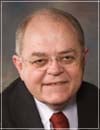
About Don Fortner
Don Fortner (1950-2020) served as teacher and pastor of Grace Baptist Church of Danville, Kentucky.
Comments
Your comment has been submitted and is awaiting moderation. Once approved, it will appear on this page.
Be the first to comment!