In the day of trouble we will be wise, like Hezekiah, to seek the Lord our God, believe his Word, and obey his will.
Sermon Transcript
Auto-generated transcript • May contain errors
100%
Sir. Yep. Turn with me, if you will, to
the Gospel of Isaiah. Isaiah chapter 36. Don't think that's going to work.
A little too low. Isaiah chapter 36. That song Ruth just sang when
I was 17 years old, Shelby and I were dating. It was one of
our favorite songs. We had a southern gospel quartet
who sang it in our congregation regularly, and it was one of
our favorite songs, I think mostly because I liked the sound of
it. It's one of my favorite now because I like the words of it.
Isaiah 36. Now it came to pass in the 14th
year of King Hezekiah that Sennacherib, king of Assyria, came up against
all the defense cities of Judah and took them. And the king of
Assyria sent Rabshakeh from Lachish to Jerusalem to King Hezekiah
with a message, a great army and a message. and he stood by
the conduit of the upper pool in the highway of the Fuller's
Field. Then came forth unto him Eliakim
Hilkiah's son, which was over the house, and Shebna the scribe,
and Joah, Asaph's son, the recorder, and Rabshica said to them," here's
the message, Say ye now to Hezekiah, thus saith the great king, the
king of Assyria. What confidence is this wherein
thou trustest? I say thou, but they are but
vain words. I have counsel and strength for
war. Now on whom dost thou trust that
thou rebellest against me? Lo, thou trustest in the staff
of this broken reed on Egypt, whereon if a man lean, it will
go into his hand and pierce it. So is Pharaoh king of Egypt to
all that trust in him. But if thou say to me, we trust
in the Lord our God, is not he whose high places and whose altars
Hezekiah hath taken away? and said to Judah and to Jerusalem,
ye shall worship before this altar. Now therefore give pledges, I
pray thee, to my master, the king of Assyria. And I will give
thee 2,000 horses, if thou be able on thy part to set riders
upon them. How then wilt thou turn away
the face of one captain of the least of my master's servants,
and put thy trust on Egypt for chariots and for horsemen? And
am I now come up without the Lord against this land to destroy
it? For the Lord said to me, go up
against this land and destroy it. Now remember, this is a pagan
base idolater. pagan idolater who sends word
to God's servant Hezekiah king of Judah and it says the Lord
Jehovah sent me to destroy you. Verse 11 Then said Eliakim and
Shebna and Joah unto Rabshakeh, speak I pray thee unto thy servants
in the Syrian language, for we understand it, and speak not
to us in the Jews language in the ears of the people that are
on the wall. But Rabshakeh said, hath my master
sent me to thy master and to thee to speak these words? "'Hath
he not sent me to the men that sit on the wall, "'that they
may eat their own dung "'and drink their own piss with you?'
"'Then Rabshakeh stood and cried with a loud voice "'in the Jews'
language and said, "'Hear ye the words of the great king,
"'the king of Assyria. "'Thus saith the king, "'Let
not Hezekiah deceive you, "'for he shall not be able to deliver
you. Neither let Hezekiah make you trust in the Lord, saying,
the Lord will surely deliver us. This city shall not be delivered
into the hand of the king of Assyria. Hearken not to Hezekiah,
for thus saith the king of Assyria, make an agreement with me by
a present, and come out to me, and eat every one of you his
vine, and every one his fig, and drink ye every one the waters
of his own sister. until I come and take you away
to a land like your own, a land of corn and wine, a land of bread
and vineyards. Beware, lest Hezekiah persuade
you, saying, the Lord will deliver us. Hath any of the gods of the
nations delivered his land out of the hand of the king of Assyria?
Where are the gods of Hamath and Arphan? Where are the gods
of Shefverim? And have they delivered Samaria
out of my hand? Who are they among all the gods
of these lands that had delivered their land out of my hand, that
the Lord should deliver Jerusalem out of my hand? But they held
their peace and answered him not a word, for the king's commandment
was saying, answer him not. Then came Eliakim, the son of
Hilkiah, that was over the household of Shebna, the scribe, and Joah,
the son of Asaph, the recorder, to Hezekiah with their clothes
rent, and told him the words of Rabshakeh. And it came to
pass when Hezekiah heard it, that he rent his clothes, and
covered himself with sackcloth, and went into the house of the
Lord, and sent Eliakim, who was over the household, and Shebna,
the scribe, and the elders of the priest covered with sackcloth
unto Isaiah the prophet, the son of Amos. And they said unto
Isaiah, thus saith Hezekiah, this day is a day of trouble. This day is a day of trouble
and of rebuke and of blasphemy. For the children are come to
birth and there is not strength to bring forth. It may be the
Lord thy God will hear the words of Rabshakeh, whom the king of
Assyria, his master, has sent to reproach the living God, and
will reprove the words which the Lord thy God hath heard.
Wherefore, lift up thy prayer for the remnant that is left.
So the servants of King Hezekiah came to Isaiah. And Isaiah said
to them, thus shall you say unto your master, Thus saith the Lord,
be not afraid of the words that thou hast heard, wherewith the
servants of the king of Assyria have blasphemed me. Behold, I
will send a blast upon him and he shall hear a rumor and shall
return to his own land and I will cause him to fall by the sword
in his own land. when Sennacherib invaded the
land of Israel, particularly Judah, when it surrounded Jerusalem. He sent his ambassador Rabshakeh
with a great army to Hezekiah. They besieged the city. They
cut off all the supplies. They demanded that Hezekiah and
the city of Jerusalem and Judah surrender to their king, this
babbling, blasphemous king of Assyria. The Assyrian army was
infamous for their barbarity. They were well known for their
cruelty. The people of Jerusalem who sat on the walls heard what
Rabshakeh had to say. Hezekiah sent his servants Eliakim,
Shebna, and Joah to receive his message. And when they received
the message, he refused to speak in his own native tongue, but
rather spoke in the language of the Jews so that all the people
might have the fear of the Assyrians in them. They demanded that Hezekiah
surrender and demanded that he surrender. Mocked the Lord God. Mocked Hezekiah for worshipping
God. Mocked these people for worshipping
God. They said, look at the other lands. What gods have been able
to deliver out of our hands? And you think your God can? Your
God is the one who sent me here to besiege this city and take
you in captivity. And these three loyal ambassadors
came back into the city. They rent their clothes. They
came to Hezekiah the king. And when Hezekiah heard the report,
he rent his clothes, covered himself with sackcloth and went
to the house of God. And then he sent his servants
to hear from God's prophet Isaiah, seeking a word of instruction
from Isaiah. A word of direction from God. We read in verse 3, Hezekiah
said to Isaiah, this day is a day of trouble. That's my subject. A day of trouble. This day is
a day of trouble. This day of darkness, idolatry,
and religious superstition. This day of will worship. calling
it the worship of God. It's a day of trouble for the
Church of God. It's a day of trouble for men
and women all over the world, not just in this country, all
over the world, in the name of God, set themselves up in opposition
to the Church of God and the truth of God. This is a day of
trouble for many of our brethren. We have friends in our own assembly
and around the world going through much difficulty. I spoke to Brother
Bruce Crabtree yesterday. His wife Jo's cancer's continually
working. Her having difficulty with memory,
with reasoning things out, and he's watching her die. He said
to Shelby, he said, I get a load and cry buckets of tears. He said, they're trouble. A day
of trouble brought by the hand of God's providence. A day of
trouble and pain, heartache and difficulty, much darkness brought
by the hand of God whose providence is always right and always good. Oh, how good he's proved himself
to be. Let us trust him when we can
see his goodness and trust him as well when we can't see his
goodness. Trust in God who is good in all
that he does. This is a day of trouble for
some of you and for your families. And I have sought a message from
God. How can I help you to find peace
and help and strength in the day of trouble? If this is not
the day of trouble for you, hang on, it's coming. I promise you,
it's coming. I often say to young pastors,
after they've been in a pastorate for a little while, and they
have some trouble come up, I'll get a call. Somebody's raised
their ugly head, spitting at them. And I say, hang on, buddy,
it'll get worse. It'll get worse. Life in this
world, rough by design. Life in this world is full of
trouble by divine design. Because of sin, yes, by divine
design. Life in this world is full of
pain by divine design. For the glory of God is for the
good of his people, for the sifting of wheat from the tares. This
is how God works, with trouble, trouble. Brother Scott Richardson
said one time in this pulpit, he said, life in this world,
not much. It begins with a slap on the bottom and ends with a
shovel full of dirt in your face and not much in between but bumps
and bruises all along. That's a pretty good description
of life in this world. Well, where can we find peace,
direction, comfort, help in the day of trouble? In this day of
trouble, we will be wise like Hezekiah to seek the Lord our
God Seek His Word, seek His will, and bow to Him. Our text, this
Isaiah 36 through chapter 37, verse 7, is really not a prophetic
text at all. It's really just a record of
history recorded by divine inspiration with perfect accuracy. The same
record that's given to us in 2 Kings 18, 19, and 20. Let's look at several things
in this record of history. First, here are some lessons
we need to learn from this portion of Holy Scripture. King Hezekiah was a godly man. He was a remarkably godly man,
a believer, a child of God. This king worked hard to correct
and reform the Church of God in his day. He tried to reestablish
the worship of God in sincerity and truth. This man tore down
with violence the altars in high places of idolatrous worship. He demanded that Judah worship
only at the altar of God, at the house of God. And yet he
suffered much from the Assyrians. What do we learn from this? Learn
this. Faithfulness to Christ does not
secure God's saints and God's servants from trouble, distress,
and sorrow in this world. Hezekiah was a godly man, and
he suffered much for it. Abraham is called the friend
of God. And Abraham was called by God
after he had one trial on top of another to take his son Isaac
up to Mount Moriah and offer him as a sacrifice to God. Moses,
what a man, what a man, what a leader, what a great leader.
But Moses, the people he led for 40 years, he led them from
one, Victory to another. Led them from one revelation
of goodness and grace to another for 40 years. And for 40 years,
he was the object of their murmuring, their griping, and their complaint.
Until he died, they hardly wanted him around. Moses, the servant
of God. David, a man after God's own
heart. His household, nothing but misery. The Apostle Paul, read what he
says about his life in 2 Corinthians chapter four. Went from imprisonment
to shipwreck, left for dead, beaten with forty stripes. He
was constantly, constantly troubled. And he said, our light affliction,
which is but for a moment, worketh for us a far more exceeding and
eternal weight of glory. Faithfulness in this world does
not prevent trouble. Faithfulness does not prevent
heartache. Faithfulness does not prevent
trials. Faithfulness does not prevent sickness. Job was a man
after God's heart. A perfect man, God said so. One that feared God and eschewed
evil, God said so. And no man was ever troubled
like Job. Learn this too. Wicked, ungodly
people, often prosper in their hellish pursuits against God's
people for a while. Don't you find it remarkable
that the ungodly opposing the godly, the ungodly opposing the
faithful, often prosper in their pursuits for a while. Sennacherib
had his way with Hezekiah for a while. The Pharisees had their
way against the Lord Jesus for a while. The Jews had their way
against the Apostle Paul for a while. But in all that, God
always has his way. God always has his way. We know, we know, we really do
know. We know that all things work
together for good to them that love God. to them who are the
call according to his purpose. In Acts chapter four, we read
an incident with the apostle Peter. You'll remember that Peter,
just a few days earlier, just maybe a couple of months earlier,
standing in Pilate's judgment hall, three times denied the
Lord Jesus. Three times, three times. The Lord graciously met Peter
at Galilee and restored him and said to Peter, everything's all
right, your sin's forgiven you. But that denial and that experience
produced something for Peter that he could not have gotten
any other way, I'm convinced. In the fourth chapter of Acts,
he and John are arrested. Arrested for preaching the gospel.
Arrested because they testified in the name of Christ. and they
performed a wondrous miracle. And the Sanhedrin, those very
same Jewish leaders who had put the Lord Jesus to death, had
Pilate put him to death, those very same ones who had him crucified,
now have Peter and James before them. They're in prison. And
they say to Peter, Peter and John, in whose name and by what
authority have you done this? Now, Peter could have said, We've
done this in the name of Jehovah. the only true and living God
by his authority. And those Sanhedrin Pharisees
would have patted him on the back and said, yes sir, buddy,
we thought so. They'd have got along just fine.
But instead, Peter looked at them face to face, eye to eye,
and he said, you do what you gotta do, and I'll do what I
gotta do. In the name of Jesus Christ of
Nazareth, whom you crucified, this man stands before you. Oh,
what courage he had. Because God in his providence
had brought him through a time of horrid weakness and shame. Now he made him as bold as a
lion. Learn this too. Those who oppose
God's church God's gospel, God's servants, God's people, often
do so in the name of the Lord. It's hard to imagine, but in
verse 10 of Isaiah 36, this pagan says to Hezekiah and to all his
friends and to the Jews under his rule, the Lord Jehovah sent
me to you to take you captive, to destroy you. Our Lord Jesus
experienced that. Men came in the name of God to
have him crucified, in the name of God. In the name of Jehovah,
they had the Son of God nailed to the tree, all the while pretending
to worship God so meticulous they didn't want Him hanging
on that tree over Sabbath day, lest the Sabbath be defiled.
Our Savior said, men will come to you thinking they're doing God's
service and imprison you and oppose you. thinking they're
doing God's service. And then learn this, those who
sow discord among the brethren, who seek to divide God's church. and turn the hearts of God's
people away from his appointed faithful servants, are sinister,
ungodly, wicked men, inspired by Satan with wicked designs. I want to repeat that and I want
you to hear me. Those who sow discord among the brethren, who
seek to divide the church of God, who try to turn the hearts
of God's people away from God's appointed faithful servants are
sinister men and women. They are inspired by Satan and
their designs are wicked. I don't care how sweet they may
appear to you. I don't care what excuse they
may give to you. Those who seek to divide brethren,
who seek to divide God's people from faithful gospel preachers,
from God's appointed servants, are godless, sinister, wicked
men. You will be advised to avoid
them. You see that clearly in this
36th chapter of Isaiah. Moses was met by the sons of
Korah, Dathan and Abiram. And they stood up before folks
and said, you know us, boys. We've always been good boys.
We have coffee together every Friday night. Our families get
together every Thursday night. We've been good friends for years,
but this Moses, he takes too much on himself. And you need
to quit listening to Moses. And they led a revolt against
Moses. And Moses said, hang on till tomorrow, we'll see who
God's servant is. Learn that those who seek to
divide God's people and to divide God's people from God's servants
are sinister, wicked men with wicked designs. God says, touch
not my anointed, do my prophets no harm. God says, obey them that have
the rule over you, whose faith follow, considering the end of
their conversation. You will be wise, you will be
wise, you will be wise. When this pastor is gone and
God gives you another to heed those words. You will be wise. You who hear this message around
the world to heed those words. Learn this too. Satan often tempts
us to unbelief and disobedience by promising better things. The king of Assyria sent Rabshakeh. He said, you come with me, and
in time, I'm gonna give you a land like this, a land just full of
corn, a land where you can have all that you want to eat, have
all that you want to lavish upon yourself. It'll be a good land. Just follow me. Oh, how Satan tempts to unbelief. and tempts to disobedience. Preacher,
hear yourself now. How Satan tempts to unbelief
and tempts to disobedience by the promise of better things,
by the allurement of better things, something bigger, something grander,
something more pleasing to the flesh. heed God's Word obey God's will and confer not with flesh and
blood in all things and I promise you you will never regret it
fail to heed God's Word fail to obey God's will in anything
and I promise you, you will hurt for it. Learn this too, verse
21. Wise men and women leave it to
God to stop the mouths of his enemies. They held their peace
and answered him not. They didn't say a word to Rapshica. For the kings, Hezekiah's commandment
was saying, answer him not. The wise man tells us, answer
not a fool according to his folly. God will take care of your enemies
and his. To answer railing with railing
is carnal and fleshly. It never serves any useful purpose. The way to answer railing accusations
is with quiet confidence in God. Quiet confidence in God. Leave him alone. Leave him alone. Now Mark, that's not my first
reaction. That's not my first reaction.
If I had a file drawer full of all the response letters I've
written to wicked accusations, you could fill this building
up with them. I'll tell you what my first reaction is. If Jerry
says something, my first reaction is, I won't deck it. That's just me. Sorry. And if
I get a nasty letter, my first reaction is sit down and answer
it. And I can shoot a straight arrow. I can respond good. And I've answered a bunch. But
I never mail them. Never met him. I'd lay on the
computer, I'd lay on the paper for a day or two, and then throw
him in a trash can. I just got it off my chest. The
best way to deal with railing accusations, with godless men
who lie, is ignore them. Ignore them. With quiet confidence
in God. This has been my attitude for
many years. I pray God give me grace to stick
to it till I die. If I'm God's servant, if I'm
God's servant and he wants my name protected, he can protect
it without my aid. And I'll leave it to him to do
that. If I'm God's servant, if he wants my reputation protected,
he can protect it without my assistance. And I leave it to
him to do that. Don't respond to godless people
with godliness, godlessness of your own. And learn this. Our trials, troubles, distresses,
and sorrows ought to always drive us to our knees. to our God,
to our Savior. Oh, my God, I thank you. I thank you for anything and
everything that drives me to my knees. for anything and everything
that shoves me on my face before the throne of grace, for anything
and everything that makes me look to you. That's good. That's good. The fact is most of us, go to
our knees only when we're driven to our knees. Most of us draw
near to God only when we can't do anything else. Most of us
run to the Savior's arms only when we've got nowhere else to
run. When pains are most strong, prayers are most lively. When we meet with the greatest
difficulties, then we take hold on God. Prayer
is the fruit of trouble. Faith is the fruit of trouble. Confidence in God is the fruit
of trouble. Now, here's a question that needs
to be answered. Look at verse 5, chapter 36. On whom dost thou trust? On whom dost thou trust? That's Rabshakeh's question to
Hezekiah and to Judah. It was a mocking question, but
oh, what a good question to hear. On whom dost thou trust? He uses that question to belittle
the faith of God's people, the faith of the Jews, who had recently
behaved as people who did not believe God, who trusted the
Ethiopians, who trusted in horses, who trusted in chariots. And
so this barbarian comes and says, on whom do you trust? Look at
the God you trusted. Look at the people you trusted.
Look at the strength you trusted. On whom does thou trust? Have a ready answer. I trust
the living God, Father, Son, and Holy Ghost. I trust God,
my heavenly Father. If God's my Father, all is well. If He's chosen me before the
foundation of the world, if He has loved me with an everlasting
love, I trust Him to care for me, provide for me, protect me,
to order my steps, correct me, clothe me, and feed me. I trust
Him to safely bring me home. I trust God the Son, the Lord
Jesus Christ, My divine savior, very God of very God. Man like myself, but God like
God. Man like me, but God like God. Fully God and fully man. God touched with the feeling
of my infirmities. God, who in order to be made
perfect as the captain of my salvation, was made to suffer
and to fear God, who in order to save me, must come and take
my nature, and now he has suffered the wrath of God in my stead,
and makes intercession for me. I trust him. The Lord is my shepherd. I shall not want. Because the
Lord is my shepherd, surely goodness and mercy shall follow me all
the days of my life, and I will dwell in the house of the Lord
forever. I trust God the Holy Ghost, my divine comforter. He takes the things of Christ,
Lindsay, and shows them, doesn't he? He takes the things of Christ
revealed in his word and opens them up and shows them to us.
He takes the things of Christ in his secret providence and
shows them to us. He takes the things of Christ
in our own minds and opens them up and shows them to us. He gives
us faith. He sustains us in faith. He increases
faith. He draws us to the Savior. On
whom does thou trust? I trust the Lord Jehovah. Trust
in the Lord with all thine heart, and lean not unto thine own understanding. In all thy ways acknowledge Him,
and He shall direct thy paths. Turn over to Revelation 19. I
want you to see this. Revelation 19, verse 6. I heard, as it were, the voice
of a great multitude, and as the voice of many waters, and
as the voice of mighty thunderings saying, Alleluia, for the Lord
God omnipotent reigneth. Alleluia, for the Lord God omnipotent
reigneth. Let us be glad and rejoice and
give honor to you. You might read it this way. Hallelujah,
for the Lord God omnipotent reigneth. Therefore we will rejoice, we
will be glad, we will give honor to him. Here's the third thing,
back here in Isaiah. There is a cause that must be
maintained in good times and in bad. Verse 7, Hezekiah demanded,
ye shall worship before this altar. Hezekiah understood that
the altar and the tabernacle and the mercy seat were all things
portraying Christ and redemption by him. He recognized that Christ
is our altar and the altar that God erected at Jerusalem was
the only altar at which men and women were to worship God. He
destroyed the other altars, threw them down, smashed them to pieces
and demanded that Israel worship only here. That's our business. David went out to fight with
Goliath and his brothers mocked him. The others around mocked
him and David said, is there not a cause? Is there not a cause? Is there not a cause to which
you should devote yourself? Is there not a cause More important
than you and me? Your pleasure and my pleasure?
Your comfort and my comfort? Indeed there is. It is the glory
of God revealed in His Son, Jesus Christ our Redeemer. Like David, Hezekiah's cause
was the glory of God. Oh God, make that my cause in
this world. Now look at verses one through
five. Here's an example we would be wise to follow in Day of Trouble. Chapter 37, verse one. It came
to pass when King Hezekiah heard it, that he rent his clothes, covered
himself with sackcloth, and went to the house of the Lord. And
his sinner Liacombe, who was over the household, and Shebna
the scribe, and the elders of the priest, covered with sackcloth
to Isaiah the son of Amos. And they said unto him, thus
saith Hezekiah, this day is a day of trouble, and of rebuke, and
of blasphemy. The children have come to birth,
and there's no strength to bring forth. He says, Isaiah, we're
in trouble, and we can't do anything about it. We're in trouble, and
we can't overcome this enemy. We're in trouble, and we can't
drive the Assyrians away. We're in trouble, and the Assyrians
surround us, and mock God, and mock us, and we have no strength
against them. "'It may be the Lord thy God
will hear the words of Rabshakeh, "'whom the king of Assyria, his
master, "'has sent to reproach the living God, "'and will reprove
the words "'which the Lord thy God hath heard. "'Wherefore lift
up thy prayer for the remnant that's left.'" So the servants
of King Hezekiah came to Isaiah. The king had many things that
concerned him, many troubles. for the thing that crushed his
soul, that grieved his heart, God's name was blasphemed. The
church and people of God whom he served were in great danger
and without strength to overcome their enemies. What did he do? Broken, humble, and needy, he
came to the house of God. I have found it amazing over
the years. I've been pastoring now for 50
years, and I found it amazing that when men and women have
difficulty, I'm talking about real trouble, real trouble, more
often than not, Merle, the first thing they neglect is what they
most desperately need, the worship of God. I just don't feel like
seeing anybody. I don't want to come to church.
I want to be by myself. You couldn't do anything worse. You need to
worship God. Go to God's house. Hear God's
word and learn what God has to say to you. He came to the house
of God. He called for God's prophet Isaiah
to seek the will of God and the word of God and tell him what
God says. Isaiah, I'm your king. Isaiah, this nation is under
my rule, but we're in trouble, and we're helpless. I need God's
help. Get God to give you a message
for me, and I'll hear his word. Oh, what wise example. He called
upon the Lord God in prayer. He went to the house of God,
took the king's letter, the Assyrian king's letter, and he spread
it before God. He just spread it before God.
He didn't tell him what to do. He didn't even tell him what
he wanted to do. He just spread his need before God. He offered
God praise, spread his case before God, and asked God to deliver
as he would. But he gave him a good argument.
He said, if you defeat this king, if you overthrow this besieging,
if you overcome our enemies, everybody's gonna know that you
did it and you are God alone. Lord, do this for your glory. Now here's a promise. Look at
verse six, chapter 37. Isaiah said to them, thus shall
you say unto your master, thus saith the Lord, be not afraid. I'll give you a good assignment.
Get your concordance down. You don't have to get paperback.
You can use the computer kind now and do it in a hurry. Look
up these words, be not afraid, fear not, be not fearful, fear
ye not. And see how many hundreds of
times they're used in this book. Hundreds of times. God says to
you, be not afraid of the words that thou hast heard. Verse seven,
behold, I will send a blast upon him. and he shall hear a rumor
and return to his own land. And I will cause him to fall
by the sword in his own land." And that night, the Lord slew
185,000 of those Assyrians and they fled in terrible fear. And the king of Assyria, Sennacherib,
was slain at Nineveh, as he went into the house of one of his
gods and two of his boys came in and killed him. Just as God
said, the Lord says to you, I've redeemed you, I've called you. Yes, you'll pass through the
waters, you'll pass through the rivers, you'll pass through the
fire, but I'll be with you. I am the Lord your God, the Holy
One of Israel. I will never leave thee nor forsake
thee. I am with thee. On whom dost
thou trust? Where is your trust? I trust the living God. I trust
God who rules everywhere all the time. Set your heart upon
him, his word, his worship, his glory. Worship God. Worship God. Come to his house,
enlist his aid, and rejoice. Hallelujah. The Lord God omnipotent
reigneth everywhere, all the time, in
all things. Let us be glad. and rejoice and give honor to
him. The Lord God omnipotent reigneth. That's good counsel for a day
of trouble. God give us grace to follow it.
Amen.
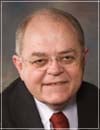
About Don Fortner
Don Fortner (1950-2020) served as teacher and pastor of Grace Baptist Church of Danville, Kentucky.
Comments
Your comment has been submitted and is awaiting moderation. Once approved, it will appear on this page.
Be the first to comment!