Turn with me to Luke 13, the
last paragraph of this chapter, verses 30-35. Our text begins with a very instructive
proverb by which our Lord describes the kingdom and work of our God. He says in verse 30, And behold,
there are last which shall be first, and there are first which
shall be last." What an instructive proverb this is. But we must
not fail to get it in its context. Our Master is urging us to strive
to enter in at the straight gate. And he urges us because he says,
the hour is coming when I'm going to shut the door and you will
not be able to enter in. though you would long to do so
in that day. An hour coming when God will
not be merciful and you're going to crave his
mercy. You beg for mercy and no mercy be given. And then he speaks of the day
of judgment and of eternity. Read back in verse 25. when once
the master of the house is risen up, and hath shut the door, and
ye begin to stand without, and to knock at the door, saying,
Lord, Lord, open unto us. And he shall answer and say unto
you, I know you not which you are. Then they shall begin to
cry, We have eaten and drunk in thy presence, and thou hast
taught in our streets. But he shall say, I tell you,
I know you not which you are. Depart from me, all ye workers
of iniquity. There shall be weeping and gnashing
of teeth, when you shall see Abraham and Isaac and Jacob and
all the prophets in the kingdom of God, and you yourselves thrust
out. And they shall come from the
east and from the west and from the north and from the south,
and sit down in the kingdom of God. And then it is in this context
our Lord gives us this proverb, And behold, there are last which
shall be first, and there are first which shall be last. Now, our Lord's doctrine in this
proverb has been manifestly fulfilled, beginning with the preaching
of the gospel to the Gentiles, that day when the gospel first
went into all the world after God had abandoned the nation
of Israel, shut them up in blindness and in darkness. It has continued
throughout the ages of time to this day, and it will continue
to be manifestly fulfilled until time is no more. This proverb
gives us a picture of God's method of grace. It shows us who are
the objects of his eternal mercy, love, and grace, who they are
whom he's chosen to save. Those who think they are, and
to all outward appearance appear to be, first in line for heaven
will be last in the day of judgment. And those who think themselves
To be, and to all outward appearance appear to be, last in line for
the grace of God will be first in that day. They will all be
first in that day. The Lord God first gave his word
and his ordinances, his gospel, his law, his prophets to the
Jews. They stood preeminently above
all people. and God cast them off and sent
his word to Gentile dogs like us. We look at folks and you
see a rich man. A rich man. You talking about
spiritual riches or one who is rich materially? Both. Both. Ah, that's a good candidate.
He'll make it. He's a morally upright man, rich
and increased in goods. He's got plenty of money. Oh,
he's surely the object of God's grace. Not normally. It's easier for a camel to go
through the eye of a needle than for a rich man to enter the kingdom
of heaven. When the disciples saw it, they said, Lord, who
can be saved? If this fellow can't be saved, who can? He said
with men it's impossible, but with God all things are possible.
See this poor fellow? Hadn't got two cents to rub together
of spiritual goodness or of material wealth. He's got nothing. He's
absolutely bankrupt. There he is. The object of God's
grace. We look at the learned and folks
who are well-educated and well-read and talented and gifted and we're
just naturally impressed. And we think God is. And he chooses
the unlearned. We look at the morally upright
and somehow we can't get it out of our minds. We just can't get
out of our minds our self-righteous notions of religion. We look
at someone who's morally upright and think he's got at least one
foot up toward the kingdom of God. Not so. Not so. The Lord God reaches into the
low pit of debauchery and calls out his own. The fact is God's
elect are rarely, rarely, rarely those whom we expect they will
be. Rarely. Which would you choose? The Pharisee or the Publican?
Take the Pharisee every time. Which would you call your own?
Esau or Jacob? I'd take Esau. Which would you
take to be an heir in the kingdom of God? That rich young ruler
who came to the Lord Jesus and said, Master, what good things
shall I do that I may inherit eternal life? Or that mad Gadarene? Turn to 1 Corinthians 1 one more
time and let me remind you that our hope before God has
nothing to do with who and what we are in ourselves. A man's reception of grace has
absolutely nothing to do with who and what he is in himself,
be it great or be it horrible, be it uprightness or be it ungodliness. What we are in ourselves has
nothing to do with our being accepted of our Look here in
1 Corinthians 1.26. For you see your calling, brethren,
how that not many wise men after the flesh, not many mighty, not
many noble are called. He didn't say not any, he said
not many. Not many. You go to any congregation of
God's saints anywhere in the world and count for yourself
those who are wise, mighty, and noble. Count them. Not many. But God hath chosen
the foolish things of the world to confound the wise. God hath
chosen the weak things of the world to confound the things
which are mighty, and base things of the world And things which
are despised hath God chosen, yea, and things which are not. Nothings and nobodies. I finally qualify for something. Nothings and nobodies. To bring
to naught the things that are. But why on earth would he do
that? Why would God choose such things as we are to be his sons
and daughters, and more than that, choose such things as we
are to be the instruments by which he would bring to nothing,
bring down from their high and lofty view of themselves, down
to nothing at the foot of his throne, at the footstool of his
throne of grace? Why would he use us that no flesh
should glory in his presence? so that we could not point to
anything and say, now you see what we did? See what great things
we have done. But of him are ye in Christ Jesus,
who of God has made unto us wisdom and righteousness and sanctification
and redemption, that according as it is written, he that glorieth,
let him glory in the Lord. in two unlikeliest hearts, it
is thy boast to come. The glory of thy light to find
in darkest spots of hope. Thy choice, O God of goodness,
then I lovingly adore. O give me grace to keep thy grace,
and grace to long for more. Now that's the first thing. What
an instructive proverb. Now look at verses 31 and 32.
Here our Savior sets before us a blessed fact that ought to
constantly quieten and calm our hearts in the face of trouble. I had no question at all when
the Pharisees heard our Lord Jesus state this proverb, that
the last shall be first and the first shall be last, when he
told them to strive to enter in straight gate, because times
coming they'd have the door shut in their face. They understood
exactly what he was saying. They understood he's talking
about us. I suspect he was looking them right square in the eye.
He's talking about us. And so they decided they would
try to get him to shut up. And the way they tried it this
time was to silence him by fear. Look at verse 31. The same day
there came certain Pharisees saying unto him, Get thee out
and depart hence, for Herod will kill thee. Herod's planning to kill you.
Now it's obvious our Lord was in Galilee here, the jurisdiction
of Herod. And it may be that Herod, the
ruler of Galilee, that vile wretch who had beheaded John the Baptist,
let it be known that he was going to, if he could, kill this prophet
as well. But I rather suspect, because
there's no indication anywhere in history and no indication
anywhere in the book that Herod had ever made such a decree,
I rather suspect the Pharisees just kindly hatched a lie. They
got together and said, we've got to shut him up somehow. Tell
you what, let's tell him that Herod's planning to kill him.
Herod has willed to kill you. You see, don't ever put anything
past self-righteous religious men who are determined to justify
themselves. These were such good religious
folks. When it's convenient, good religious folks become liars.
Somehow or another those folks hatched a plan of 1 John chapter
8 to catch a fellow in adultery in the very act and didn't say
a word about him but brought the woman. And they worked it
out. in the name of religion, in the
name of God. So they hatched this scheme.
Now, whether the report was true or false doesn't really matter.
Their intent was the same. These Pharisees attempted to
intimidate the master, but their scheme backfired. Look at verse
32. He said unto them, Go ye and
tell that fox. Now, wait a minute, this is the
governor of the land. And I'm not talking about a governor
like the one we got in I'm talking about a governor who had some
power. This fellow just point at you, turn thumbs down, and
you're gone. Go tell that fox, behold, I cast out devils, I
do cures today and tomorrow, and the third day I shall be
perfected. Our master wasn't frightened.
He wasn't intimidated by the Pharisees or by Herod. But there's
more to it than that. Our Master simply states this.
My time to leave this world has not yet come. My work is not
yet finished. Until that time, you're going
to have to live with me. Until that time, you've got me to deal
with. And for my part, you can tell
that fox from me that he has no power to harm me. I fear him
no more than I fear a yelping little fox that's scared of his
own shadow. This mighty governor? This fellow
who beheaded John the Baptist, and nobody called him to account
for it? That little fox. Little fox. If you catch one,
you've got to sneak up on him, because he's scared to death
of everything. This little fox. Now look at this. When our Lord
uses the words today, tomorrow, and the third day, he's not using
them as prophetic terms. But these words are simply a
declaration of the fact that our Savior was assured, confident,
that the time of his life on this earth, the time of his service
for the glory of God and the good of men, and the time of
his death were all appointed by his Father and ours. and could not be shortened by
anything or anyone. What a man of faith our Redeemer
is. Our Master, by using the word
perfected to describe his death, is saying this, I shall finish
what I came here to do. I will not leave this world,
I cannot leave this world, no one shall take me out of this
world until my purpose The purpose that my heavenly Father set for
me before the world began has been accomplished. Then my life
will be complete. The hymn might have put it this
way, mortals are immortal here until their work is done. That's
exactly true concerning you and me. Now it is no accident that
this word perfected, turn over to the book of Hebrews, it's
no accident that this word The exact word translated perfected
here and translated perfected in the book of Hebrews is applied
to our Savior twice in the book of Hebrews and it is applied
to you and I, his people, the people he came here to save three
times in that same book. Our Lord's perfection, now get
this, our Lord's perfection as the God-man, our mediator, our
Lord's perfection as our covenant surety, our Lord's perfection
as our Savior is totally wrapped up in the salvation, the perfection
of all for whom he came here to redeem and save. Look in Hebrews
2 verse 10. For it became him. for whom are
all things, and by whom are all things, in bringing many sons
to glory, to make the captain of their salvation perfect through
sufferings." Our Lord Jesus became a perfect Savior when he had
fulfilled all his work, when he had suffered all the wrath
of God, and satisfied all the justice of God on our behalf.
Look at chapter 5, verse 9. Being made perfect, being made
perfect, complete, entire, finished, if you will. Being made perfect,
he became the author of eternal salvation to all them that obey
him. In other words, he could not
be our Savior except he perfect his work on this earth as the
God-man, our substitute and surety. Then in chapter 10, We're told
in verse 1, the law could not make anybody perfect. The sacrifices
that were offered could never perfect anybody, could not put
away the guilt of conscience. But Christ did. And as he is
perfected, he is perfected because he has perfected his people by
the work he finished at Calvary as our mediator, substitute,
surety, and representative. Look at verse 9. Verse 10, rather. By the which will, he said, lo,
I come to do thy will, O my God. By the which will we are sanctified
through the offering of the body of Jesus Christ once for all. Verse 14. For by one offering,
by one offering, he hath already done, this is not something we're
going to do, by one offering he hath perfected forever them
that are sanctified. Now look at chapter 11. The apostle
tells us here about the Old Testament saints, those who believed God
in days gone by. He says, God having provided,
verse 40, some better thing for us, that they, without us, should
not be made perfect. You see, God's people are one. And we, with Abraham, Isaac,
and Jacob, have been perfected by Christ. We have been made
complete and entire before God, just as Christ is, as He is. So are we in this world. Look
in verse 23, chapter 12. The apostle tells us that we
come. I try to think about this when
we come together. We've come to the throne of God. We've come to the General Assembly.
and Church of the Firstborn, which are written in heaven,
and to God the Judge of all, and to the spirits of just men
made perfect." What our Lord says here in Luke 13 about himself
is true of every child of God. The Lord God has put us on this
earth for a specific time, to accomplish a specific purpose,
and nothing is going to prevent it. Now God fixed that in my heart.
God Almighty ordained this day for me, and for you, and for
you, this day. And he ordained us
for this day to do a specific thing, to fill a specific place,
to accomplish a specific purpose, and nothing will prevent it.
Our times are entirely in the hands of our God. Nothing can
shorten our days, and nothing can add to our days. Oh, may
God give me grace to live in that frame of mind which our
Lord displayed when he says to these Pharisees, you go tell
that old fox that I'm going to work today and tomorrow and the
third day. The third day is the day that
God commanded the earth to multiply and the seed to bring forth fruit
and the earth was covered with vegetation. He says on the third
day! The day of my appointed fruitfulness
I shall be perfected. If our hearts are indeed fixed,
trusting the Lord, that will brace our souls with calm confidence,
fearing nothing. You see, we ought to possess
a calm unshaken confidence in our Father's good purpose. Our
times are in his hands, and evil tidings are to roll off our backs
like water rolls off of an oil-slicked asphalt. Just nothing. Just nothing. Let me show you a couple of passages.
Turn to Psalm 112. Now, Pastor, don't you ever have trouble with
fear? I do. I do. And you know what? There's nothing
that makes me more ashamed. There's nothing that makes me
more ashamed. Don't you ever pace the floor and fret about
things? I do. I do. And there's nothing that
makes me more ashamed. Nothing. Absolutely nothing. Because it betrays a lack of
confidence in my God. Besides that, You don't need to raise your
hand, but did any of you ever know any time you ever prevented
anything or accomplished anything by fretting about it? Ever? Ever? Any time you ever
prevented somebody from doing something because you were afraid
of it? Any time? Ever? And more than
that, most of what you've read about never comes to pass. It
doesn't come to pass. Look here in Psalm 112. The psalmist
says concerning God's people, verse 4, unto the upright there
ariseth light in darkness. He is gracious and full of compassion
and righteous. A good man shows favor and lendeth. He will guide his affairs with
discretion. Now here's the discretion he's
talking about. Surely he shall not be moved forever. The righteous shall be in everlasting
remembrance. He shall not be afraid of evil
tidings. Someone recently, I think it
was up at Almonte, some young lady sang The Mighty Fortress
Is Our God, and I got up afterwards And Martin Luther, what a man he was, what a man of faith. And he suffered abuse. And every time he'd get a word
from one of his friends that the Pope had sent out another
decree, the Pope had made some other statement, someone had
made some accusation Luther's response was, come, let's sing
the 46th Psalm and spite the devil. A mighty fortress is our
God, a bulwark never failing. He shall not be afraid of evil
tidings. How come? His heart is fixed,
trusting the Lord. His heart is established. He shall not be afraid until
he sees desire upon his enemies. Here's a horn, we're told in
verse 9, shall be exalted with honor. Look in Psalm 31. Psalm 31. David was slandered by his own
son, slandered by Saul, slandered by the people he served. And
this is what it says, verse 13. I have heard the slander of many.
Fear was on every side. Somebody might believe it. While
they took counsel against me, they devised to take away my
life. But I trusted in thee, O Lord. I said, Thou art my God. Now watch this. My times are
in thy hand. And that's what he's talking
about, the slander, and the persecution, the accusations, the opposition
that men raised against him. He said, my times, all of them,
good and bad, prosperous and adverse, my times, delightful
times in the company of friends, my times, times when surrounded
by foes, my times, all my times are in the hands of my God. Now
let this be my attitude before every danger, before every foe,
before every trouble, before every slandering tongue, before
every deceitful spirit. I have, I know this is so, I
know it's so. It's been true for 53 years. I have and shall continue to
have Only that which is good for me. Now sometimes, it's a bitter
pill to swallow. I told you about having to put
medicine in Will's eyes the other day. He was with us a week or
two ago. When we got him, they said it
would take both of you to do it. He got sand all over his
eyes and scratched his eyes up. We got in the car and all of
a sudden Mommy has to sit on him, hold down his arms, and
Daddy holds his eyes open and puts it in him. I got him home
and I said, now son, you be a big boy with Papi. Lay back here
on Papi's chest. I'll take care of you. And he
laid back. He just sort of went for it a
little bit. I pulled down his eye lid, put
that in it. He's a big boy. Next time he
started to do it, He said, I'll do it poppy, he sat down and
pulled his eye lid down. That's exactly what I'm talking
about. You trust me, I'll take care of you. Now it may hurt,
but it's good for you. It's good for you. I have never
had, felt, or experienced anything that wasn't good for me. No matter
how bitter it was an experience. No matter how painful. I shall
live until my work is done, not one moment longer. And all the
powers of hell and earth combined can do nothing to harm me, to
hinder me, or to slow me down. It can't happen. I recall when
I was 18 years old, I was out in school out in Springfield,
Missouri. A bunch of Arminian heretics. I'm talking about religious Pharisees,
the head honchos. I've been out there a week. They
called me in and kicked me out of school because I was what
they called a hyper-Calvinist. And after being called in every
month for two or three months, I went in one day and talked
about what they were going to do. Let me tell you something.
I've not always had good sense, but I've always had a lot of
brass. I said, I don't have any idea why, but God Almighty sent
me out here. And until God Almighty tells
me to leave, you're stuck with me. Now you do what you want
to. That's when I got ready to leave, I went and told them,
I said, remember what I told you back in November? What do you mean? Nothing shall
hinder God's people in the walk God has ordained for them. Nothing. More than that, all the powers
of earth and hell combined cannot destroy my life until my Father
has ordained it. And all the physicians on earth
cannot preserve me one second beyond that time. I mean, also, a preacher, don't
you go to the doctor and get checked up? Yep, I do. Oh, don't
you read all these reports? No, I don't. I just don't. How come? I'm not
interested. I'm just not interested. I'm
just not interested. Oh, but people are fearing this,
people are fearing that, people are fearing that. I know, but
I'm God's. And there's a big difference.
I'm God's. Now, you get this fixed in your
heart, Bobby Estes. And nothing is beyond the reach
of a man who's confident his times are in God's hands. Nothing. Lord, what would you have me
to do? But I can't talk. I'm a baby.
I'll fix that. Lord, what would you have me
to do? I can't go there. Pharaoh will kill me. I'll fix
that. Lord, what would you have me to do? Go speak to David. Nathan? David? I'll take care
of that. And when you do, he'll hear you.
He'll hear you. You see, if we believe God, That
ought to be our attitude. Our Heavenly Father has numbered
the hairs of our heads from eternity. The steps of a righteous man,
a good man, a redeemed man, every step he takes in this world from
the womb to the tomb, his steps are ordered by God. All things
work together for his good. If Shammai comes out and cusses
me, the Lord will do me good by that wretch's foul tongue.
If afflictions befall me, they will only assist me in the work
God has for me. All things are mine, life, death,
things present, things to come, all things, for all things are
God's, all things are Christ's, and Christ is mine. Let me therefore
live and serve my God in utter abandonment of carnal care, knowing
that surely goodness and mercy shall follow me all the days
of my life. And when that's done, I'll dwell
in the house of the Lord forever. In God I will praise his word. In God I have put my trust. I will not fear what flesh shall
do to me. Alright, now let's look at the
last line of verse 33 here for just a minute. Our Lord says, for it cannot
be that a prophet perish out of Jerusalem. Now, I've been
looking at that for 12 weeks, trying to figure out what on
earth our Lord meant by that statement. It cannot be that
a prophet should perish out of Jerusalem? Now, wait a minute.
This word it cannot be, the word that's translated it cannot be,
is used only here in the entire Word of God, not used anywhere
else. It is as strong a word as could have been used by the
Holy Spirit in English language to say it's impossible for a
prophet to perish but in Jerusalem. What? It cannot be that a prophet
perished out of Jerusalem. John the Baptist did. Numerous
prophets were slaughtered outside Jerusalem. Now, it was the customary
thing that prophets were killed at Jerusalem. But many perished
outside Jerusalem. So what does our Lord mean by
this statement? Two things. First, it would be
a very unusual thing, the exception, not the rule, for a prophet to
die anywhere except at Jerusalem. Or, in other words, it would
be a very unusual thing. The exception, not the rule. For a prophet to die by the hands
of anyone except those who claim to be serving God. Read history and see if it's
not true. And our Lord here speaks prophetically of his own death.
Remember, he's addressing these Pharisees. And this is what he's
saying. When I, that great prophet of
whom Moses spoke, when I die, it will be at your hands at Jerusalem. But I'm not there yet, boys.
I've come here and I must die at Jerusalem, but I'll die at
my time, not yours. I'll die according to my purpose
and not yours. And it's against that backdrop
that we read verse 34. And oh, what a backdrop. He's
still talking to these Pharisees. These fellows who were determined
to put him out of business. These fellows who had slaughtered
the prophets. And these fellows who would slaughter
him. Oh, Jerusalem. Jerusalem. Which killeth the prophets. and
stonest them that are sent unto thee, how often would I have
gathered thy children together, as a hen doth gather her brood
under her wings, and ye would not." Now here's the third thing. What a tender, compassionate,
willing Savior our Lord Jesus Christ is. How willing he is
to save sinners. Sinners who have fully earned
and fully deserve his wrath forever. Oh, what a willing Savior. He
is God who delights in mercy. Aren't you thankful? I've read
this and studied it, and as I said, I've been studying it for a long
time now. That's the reason we are just now getting back to
this study in Luke. Multitudes, most of whom I've
read, I don't read many and farth. I only try to read that which
is good for me. But many just simply cannot understand
how our Lord Jesus could make this statement as God. And so
they will tell us, these fellows who are brilliant theologians,
this must be understood, of our Savior speaking as a man, and
of his compassion as a man, his human tenderness. Well, that
wouldn't be too bad, but there's a little problem. I haven't found
one of those great theologians who could tell me how to divide
the Redeemer into two persons. This man is God. And this God
is man. And though he is the God-man
with two natures, divine and human, the two can never be divided
by us. He is one God-man, one man-God. And he speaks here as the God-man,
our mediator. I stress that because we've got
to quit trying to put God in our little box. He just won't
fit. Let us never be or try to be
more theologically and doctrinally precise than the plain statements
of Holy Scripture. These blessed, blessed words
that fell from the lips of him into whose lips grace has been
poured, if these words choke you, you just need choking. If
you can't read them without having to explain them away, you need
a course in remedial reading. Salvation is in its entirety
the work of God Almighty. All who were chosen by God the
Father unto salvation shall be saved, all of them, none but
them. All who were redeemed by the
blood of Jesus Christ at Calvary shall be with Christ in glory,
all of them and none but them. All who have been called by God
the Holy Spirit shall be crowned with grace and glory in everlasting
life, all of them and none but them. Salvation is of the Lord. But the eternal ruin and damnation
And everlasting woe of men is altogether their own work. If you go to heaven, it'll be
all God's fault. If you go to hell, it'll be all
your fault. Now hear what the book of God
teaches. Don't miss a word. If you're saved, if you go to
heaven, enjoy eternal life and eternal glory and the bliss of
God's presence, it will be God's fault because of God's will and
it'll be God's work alone. If you're lost, if you perish
under the wrath of God and go to a dark, Christless, eternal
hell, it'll be all your fault, the result of your will. and
your work alone. And you'll have no one to blame
but yourself, and you will blame yourself forever." Forever. The Lord Jesus Christ, the Son
of God, is willing to save. What a willing Savior He is.
He says, All ye that labour and have it laden, I'll give you
rest. Look unto me, and be ye saved. All the ends of the earth
find God, and beside me there's none else. He says, Are ye thirsty? Come to me and drink, and I'll
give you water that will quench your thirst. Look and live. Look and live. O Jerusalem, Jerusalem,
which killest the prophets, and stonest them that are sent unto
thee, how oft would I have gathered your children together. as a
hen doth gather her brood under her wings, and ye would not. Our Lord Jesus knew these folks. He knew the wickedness of that
horrible city, He knew what crimes had been
committed there by the priest and their prophets and their
kings and the people. He knew all the prophets that
had been hated and slaughtered by their wicked hands. He knew
what they wanted to do to him. More than that, He knew what
they would do to him in just a little while. He knew it. Knew it fully. And yet, he says,
how often would I have gathered thy children as a hen gathers
her brood under her wings, and you would.
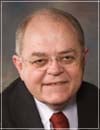
About Don Fortner
Don Fortner (1950-2020) served as teacher and pastor of Grace Baptist Church of Danville, Kentucky.
Comments
Your comment has been submitted and is awaiting moderation. Once approved, it will appear on this page.
Be the first to comment!