This whole chapter is a message from God to his people who are in the depths of utter extremity. When Judah had been made to drink the bitter drops of God's providential chastisement, in their great need, God arose! When worst had come to worst, he made bare his holy arm and brought deliverance to his people.
Sermon Transcript
Auto-generated transcript • May contain errors
100%
That was one of my favorite songs
when I was 17 years old. And it's more favorite now than
it was then. Thank you. In the 33rd chapter
of the Gospel of Isaiah, Jerusalem appeared to be on the brink of
destruction. When all hope of earthly help
was gone, in utter helplessness, King of Judah, Hezekiah, called
upon God to deliver his people. When he did, the Lord God arose,
stretched forth his mighty arm, destroyed the Assyrians, and
delivered his people. When Hezekiah prayed, God gave
him this word of promise found in Isaiah 33 and verse 24, a
word of promise concerning all his people. people especially in the depths
of anguish because of their own unbelief in sin. This is a word
that came to Hezekiah, came to Isaiah, came to the children
of Israel. They had been in terrible, terrible
shape, in terrible danger, in terrible trouble because of their
own unbelief in sin. And God delivered them and he
made this promise. Verse 24, the inhabitant shall
not say, I am sick. The people that dwell therein
shall be forgiven their iniquity. The great result of God's gracious
dealings with his afflicted people was that they glorified his name.
And in this chapter, the Lord God, the triune Jehovah, is spoken
of as being exalted, for he dwelleth on high. He is called the glorious
Lord. Truly, God never appears more
glorious than in the redemption of his people. and in the deliverance
of those redeemed people from both sin and Satan and the curse
of the law and their deliverance from themselves and from trouble
and heartache and trial in this world. Things brought upon us
by our own sin and unbelief. Throughout this chapter, I can
hear the echo of David's words in the 107th Psalm. Oh, that
men would praise the Lord for his goodness and for his wonderful
works unto the children of men. Obviously, the deliverance spoken
of here in Isaiah 33 is the deliverance of Judah and Jerusalem from Sennacherib
and Assyria. That deliverance was brought
to pass by the hand of God, specifically to be a type and picture of the
deliverance of God's elect from sin and Satan, from death and
hell. from condemnation and everlasting
damnation, brought about by the blood of the Lord Jesus Christ
and by the power of God's omnipotent grace. The deliverance of sinners
in salvation is deliverance decreed by God from eternity. Every sinner
saved in time was chosen in eternity. Every sinner redeemed at Calvary
was chosen in electing love before the world began. And at the appointed
time of love, precisely at the moment in time that God ordained
from eternity, each of his elect, each of his redeemed are delivered
from the sin and death and the ruins of the Adam fall by God's
amazing grace in what we call salvation. The whole chapter
is a message from God to us as people. People often in the depths
of extremity. When Judah had been made to drink
the bitter cup of God's providential chastisement in their great need,
God arose. When worse came to worse, He
may bear His holy arm and brought deliverance to His people. And
I say to you, my brothers and sisters in Christ, to you who
are in trouble, who are in distress, or you who are about to be in
great trouble or in distress, I recall back many years ago,
just before a great trial set in, as a matter of fact, Just
almost immediately afterwards, Brother John Mitchell sat at
the table with his wife, Verna, one morning and said, he said,
Verna, I don't know why. He said, but we need to pray
for grace today. He said, we're about to enter
some heavy, heavy trial. And about an hour later, he got
a phone call to find out how heavy the trial was. Some of
you are about to enter difficulties of heaviness, trial, and heartache,
perhaps such as you never imagined. But this is a word from God to
comfort you, by which God says to you, be of good cheer, fear
not. When all else is gone, when you
have no other hope and you have no other strength, God remains
the same. He doesn't change. God will appear. He remaineth faithful. He will
never leave you. He'll never forsake you. When
you have no strength, you will find it your strength to sit
still. When you can do nothing to help
yourself, nothing to relieve yourself, nothing to deliver
yourself, You will find your wisest course of action to stand
still and see the salvation of the Lord. Now I call your attention
to just one word in this instructive chapter. One word that is the
sweetest, perhaps the most blessed word in the English language,
forgiven. Forgiven. Forgiven. That's my subject. Forgiven. That's my message. Forgiven. That's the joy of my soul. Forgiven. That's my hope. Forgiven. That's what I want
for you. Forgiven. Oh, that you may go
home today with a sweet assurance from God you're forgiven. Forgiven. If forgiven, nothing
else matters. If unforgiven, nothing else is
a benefit. Oh, may God grant you his forgiveness
in Christ the Lord. Though the Lord our God graciously
chastens his own, he will yet be merciful and he will forgive
the iniquity of his people. Now, before I get to my subject
to the last part of this verse, let me direct your attention
to the first line of verse 24. The Lord God says with regard
to his elect, when they're gathered into heavenly glory with Christ. And the inhabitant shall not
say, I am sick. Now I've read that, read that,
read that, read that, read that. Tried to read everything I find
on that, but nobody said much about it. But what's the connection? What's the connection? Obviously,
in Jerusalem, Lord took away pestilence and he said the inhabitants
of Jerusalem, when I get done with Sennacherib and the Assyrians,
they won't be sick. But the portrayal is of heavenly
glory. And he says the inhabitant shall
not say, I am sick. Because when at last redemption's
work is done, and we're brought into the glorious liberty of
the sons of God in heaven, Sickness and sorrow and death shall be
no more. Sickness and sorrow and death
shall be no more. Oh, blessed, blessed prospect. Jehovah Raphael, the Lord Jesus
Christ, our great physician, took our infirmities and bear
our sicknesses. And when he has finished his
work of redemption and brought me home at last to heaven, I
will never again say I am sick. The physical sickness you see
that we endure in this world, all of it. The physical sickness we endure
in this world, all of it, is but a reminder of far worse sickness,
sickness of soul. sickness of heart, sickness of
mind, sickness of our depraved beings. I get dozens of church
bulletins and papers every week, and I try to take care to read
everything my brethren write. This last several weeks, several
of my friends have put an article in a bulletin by John Newton,
something he wrote to a friend many years ago. Let me read it
to you. I'm bound to speak well of my
physician. He treats me with great tenderness
and bids me in due time to expect perfect cure. I know too much
of him, though I know but little, to doubt either his skill or
his promise. It is true I've suffered sad
relapses since I've been under his care. Yet I confess the fault
has not been his but my own. I am a perverse and unruly patient. When I brought myself very low,
he has still helped me. Blessed be his name, I'm yet
kept alive only by means of his perfect care. Though his medicines are all
beneficial, they're not all pleasant. Now and then he gives me a pleasant
cordial, but I have many severe disorders in which there's a
needs be for my frequently taking his bitter and unpalatable medicines. I, John Newton, I, Don Fortner,
have long labored under a multitude of grievous disorders, a fever
of ungoverned passion. a cancer of pride, a wild frenzy
of imaginations, a severe lethargy, and a deadly stroke. In this
deplorable situation, I suffered many things from many physicians,
spent every penny I had, and yet only grew worse and worse.
In this condition, Jesus Christ, the physician of souls, found
me when I sought him not. He undertook my recovery freely,
without money and without price. These are his terms with all
his patients. My fever is now abated. My senses
are restored. My faculties are enlivened. In
a word, I'm a new man. And from his ability, his promise,
and the experience of what he has already done, I have the
fullest assurance that he will infallibly and perfectly heal
me. and that I shall live forever
as a monument of his power and his grace. In a word, in that bright land
to which I go, I will never again say I am sick. And here's the
reason, the promise continues. The people that dwell therein
shall be forgiven their iniquities. Now let me show you four things
in this text. First, understand this. Our Heavenly Father, God our
Father, wisely and graciously chastens His children as needed. Our Heavenly Father, our God,
wisely and graciously chastens his children as needed while
we live in this world. The picture here is of Jerusalem
in a mess. It was in a mess because when
Hezekiah was old, God forsook him, this great, great king. He was as great a king as you
find in the history of the Old Testament, a great king. until
God forsook him so that he might know all that was in his heart.
And Hezekiah opened up all his treasures and bragged about all
he had, and now Jerusalem is in a horrible mess. Sennacherib
is sitting outside waiting to destroy the city and the nation. The history of Israel reveals
much about God's providential judgments upon his people. Those
450 years of the judges, the judges came to deliver, but the
judges represented judgment. Because of their sin and rebellion,
God sent them into one nation and another, under bondage to
one nation and another, into difficulty after difficulty,
and then he raised up a deliverer to deliver them. But those judgments
were not judgments of wrath. They were judgments upon his
people. And judgments upon his people are judgments of mercy,
of love, and of grace. Be sure you understand this,
my brother. Be sure you understand it. God never punishes you who
are his for your sins, no matter what they are. He punished our
sins in his son. When his son was made to be sin,
He punished our sins in His Son to the full satisfaction of justice. God is never angry with you because
of your sin. Fury is not in Him toward you
because of your sin. Only mercy, love, and grace in
Christ. But God will not allow you to
get by with sin. He won't do it. He won't do it. He will not leave you to yourself. Why? Because he's a gracious,
wise, loving, heavenly father. And because he is, he chastens
his people for their sins. Hold your hands here in Isaiah
and turn to Hebrews 12. Hebrews chapter 12. And I know in this generation, we,
Don't expect such things from people. Most everybody lets kids
do whatever they want to, run wild and assassin' and pitch
fits and whine and cry and get their way by pitching fits. They
need to have the fanny blisters, that's what they need. I know that's just out of question
in this generation of people who think they're smarter than
God. But if you want your child to grow up to be a wild rebel,
let him be a wild rebel. You want them to grow up to be
responsible citizens, you tan their bottoms out whenever it
needs it. You make them hurt. You make them hurt. If it doesn't
hurt, it's not discipline. It's not discipline. I recall
Faith was just, she was such an easy child to raise. When
she was a little type, I mean just a little type, something
happened and she acted like I guess somewhere she'd seen somebody
else do. She could have been two years old. She acted like
she was fixing the picture fit. She laid down on the floor and
started to whine and kicked her feet. The second one came up,
I grabbed it. And I kicked something else. How come? Because you're
not going to live like this in this house. That's not going
to happen. I'm not tolerating it. I'm not tolerating it. Why? You mean old man, old dog. Oh no. Why? For you who know
her, that's the reason why. Because this is what I wanted.
Love her. Love her. That means she's gonna
do what I say. That means she's gonna obey me.
First time. I'm not gonna tell her twice
something to do. If I tell you twice, I'm gonna tell you with
a pattern. And she understood that growing up. Your children
need to understand it too. If you love them. If you care
for them. Now, if you're only interested
in your own feelings and your own ease and getting along, you
can do whatever you want to. But if you care for the child,
you make the child mine. Amen, Brother Fortner, that's
the way it ought to be. That's the way it ought to be. Let's
see, Hebrews chapter 12. Verse five. Ye have forgotten
the exhortation which speaketh unto you as unto children. My
son, despise not thou the chastening of the Lord, nor faint when they
are rebuked of him. For whom the Lord loveth, he
chasteneth, and scourgeth every son whom he receiveth. If ye
endure chastening, God dealeth with you as with sons. For what
son is he whom the Father chasteneth not? But if ye be without chastisement,
whereof all are partakers, then are ye bastards and not sons. Furthermore, we've had fathers
of our flesh, which corrected us and we gave them reverence,
shall we not much rather be in subjection unto the father of
spirits and live? For they, our fathers after the
flesh, verily, for a few days chastened us after their own
pleasure. That is, they beat the fool out of us because they
were mad at us. But he, for our profit, that we might be partakers
of his holiness. Now, no chastening for the present
seemeth to be joyous, but grievous. Nevertheless, afterward, it yieldeth
the peaceable fruit of righteousness, unto them their exercise thereby. John Trapp wisely said, bitter
pills bring sweet health, and sharp winter kills worms and
weeds, and mellows the earth for better bearing of fruits
and flowers. I do not suggest nor think that
every trial, every heartache, every burden comes upon you because
you have done something wrong and now God's chasing you for
it. We dare not think. as Job's miserable friends thought
concerning him. Self-righteousness is never uglier
than when it points its finger at the face of one of God's suffering
children and acts in judgment toward them. Don't do that. But understand this, God chastens
his children. God chastens his own. And when
you need chastisement, God's gonna make you hurt for it. Ask
David. Ask Hezekiah. That's just the
way it is, because he is a gracious, gracious God. When God chastens
his children, the chastisement is always painful. It's always painful. If it didn't hurt, it wouldn't
do any good. But when the Lord chastens us,
it is always profitable. Cowper put it this way, God in
Israel sows the seeds of affliction, pain, and toil. These spring
up and choke the weeds that would else or spread the soil. Trials
make the promise sweet. Trials give new life to prayer. Trials bring me to his feet,
lay me low and keep me there. Did I meet no trials here, no
chastisements by the way? Might I not with reason fear
I should prove a castaway? Bastards may escape the rod,
sunk in earthly vain delight, but the true born child of God
must not, would not, if he might. All right, here's the second
thing. Forgiveness is here promised to every penitent sinner. The people that dwell therein
shall be forgiven their iniquity. Forgiveness here is promised
to God's fallen, erring, sinful saints. What a promise. God promises
his children he'll forgive them. Blessed is the man to whom the
Lord will not impute sin. What a promise, what a promise. It's impossible for you to send
away his grace. It's impossible for you to break
the covenant of his blood. It's impossible for you to destroy
his mercy. God promises to forgive his people
all their sins and he always does. John said, my little children,
these things write I unto you that you sin not. Don't say it. Oh, Don Fortner, don't say it. Don't say it. Don't take it lightly
when you do. Don't excuse it when you do.
Don't say it. And if any man say it, we have
an advocate with the Father, Jesus Christ the righteous, and
he's the propitiation for our sins. Now the promise in our
text clearly is a promise to God's saints. Let me broaden
it a little bit. Turn over to Isaiah 55. Isaiah 55. This word of grace is not for
God's saints alone. God promises forgiveness to every
penitent sinner. That means if this day You believe
on the Son of God. That means if sitting right where
you are right now, you trust the Lord Jesus. That means if
this very second you repent of your sins, God forgives every
penitent sinner. Isaiah 55 verse six. Seek ye
the Lord while he may be found. Call ye upon him while he is
near. Let the wicked forsake his way and the unrighteous man
his thoughts. And let him return unto the Lord
and he will have mercy upon him. And to our God, listen to this,
for he will abundantly pardon. He will abundantly pardon. God forgives sin freely and abundantly
through the precious blood of his darling son. This is one
thing all of us have in common. We're all sinners. Sin is what
we are. Sin is what we do. Sin is the
breach of God's law. Sin is man's hatred of God. Every act of sin is but the display
of man saying God has no right to be God. Sin is man's attempt
to topple God's throne and set himself upon it. Sin is man's
attempt to rape God, to rob him of his character. Sin is man's
attempt to destroy God. We're sinners. We sin all the
time. We sin with every thought and
word and deed, inwardly and outwardly. David Peterson sins what we are.
That's what we are. That's what we are. Old and young,
man and woman, that's what we are, sin. All have sinned, that's
the plain statement of truth. But the Lord God here promises
forgiveness. Turn to the 130th Psalm, I want
you to see this, Psalm 130. I think I was talking to Brother
Lindsey about this a few weeks ago, maybe just the other night.
Time gets away. Brother Mahan came to preach
for me one time years ago. Oh, this has been 45 years or
more ago. And he preached from Psalm 130.
The title of the message was there is forgiveness with thee.
Look here, Psalm 130, verse one. Out of the depths have I cried
unto thee, O Lord. Lord, hear my voice. Let thine
eyes be attentive to the voice of my supplication. If thou,
Lord, shouldest mark iniquities, O Lord, who shall stand? If God marks iniquities, who's
gonna stand? He does. Who's gonna stand before
him? If God marks iniquities, who's
gonna stand? But, what a word. but there is
forgiveness with thee, that thou mayest be filled. And brother
Mahan proceeded to preach a message on how I know there is forgiveness
with him. He said, first, because God's
name is forgiveness. Moses asked him, said, Lord,
show me your glory. And he put him in a cleft of
rock and passed by and said, I'll proclaim my name. And he
said, this is my name. The Lord passed by before him
and proclaimed, the Lord, the Lord God, merciful and gracious,
long-suffering and abundant in goodness and truth, keeping mercy
for thousands, forgiving, iniquity, transgression, and sin. God forgives
sin. I know he forgives sin, because
his name is forgiveness. That's his name. He forgives
iniquity, transgression, and sin. Isn't it wonderful that
he uses all three words used in the Bible to describe our
evil, iniquity, transgression, and sin. our failure to attain
to what the law requires, our willful breach of the commandment
of the law, and our evil, corrupt nature, sin. He forgives iniquity,
transgression, and sin. That's his name, because he delighted
in mercy. Then Brother Mahan said, I'll
tell you another reason I know there's forgiveness from God.
All the prophets, of the Old Testament proclaim forgiveness. To him give all the prophets
witness, that through his name, whosoever believeth in him shall
receive remission of sins. All the sacrifices of the Old
Testament, all the ceremonies, all the priesthood, all those
garments of the priesthood, all those furnishings in the tabernacle
that the Lent has been teaching us about, all of those things
are God's declaration of his name. Forgiving iniquity, transgression
and sin. He says, when I see the blood,
I'll pass over you. The Lord Jesus, may He continue,
came into this world by the shedding of His blood to obtain the forgiveness
of sin. Jesus Christ, God's darling son,
came here and died at Calvary. He was made sin for sinners,
that sinners might be made the righteousness of God in him.
He came to purchase forgiveness. That's what he did at Calvary.
And then he said, I know there's forgiveness with God because
he sent me to tell you about it. I've experienced it. I am experiencing it. I shall
experience it. And I'm here to tell you there
is forgiveness with our God. God forgives sin freely, frankly,
fully through Jesus Christ our Lord. He forgives any sinner,
any sinner who calls on his name. May it go beyond that. He forgives
every sinner, every sinner who calls on his name. He forgives
the sinner who believes on his son right now. He forgives the
sinner forever, and he will never charge the forgiven sinner with
sin. Here's the third thing. When sin is forgiven, now hang
on to your seat. This is gonna be hard to believe,
but believe it, I hope you can. When sin is forgiven, all the
consequences of sin are gone. The inhabitant shall not say,
I am sick, because he's forgiven. He's forgiven. The people that
dwell therein shall be forgiven their iniquity. I bid you, I
urge you, I beg you, I plead with you, come to Christ. Believe
on the Son of God. Trust my Savior. He who obtained
forgiveness by His precious blood, trust Him. And as surely as you
trust Him, as surely as you trust Him, all the guilt of sin is
gone. The sin itself is gone, cast
into the depths of the sea. All the hell your sin deserves
All the wrath, all the condemnation, all gone, gone forever. And in heaven's glory, we will
look back over even the experience of forgiveness and recognize
that our God did all things well and there will be no weeping,
no sighing, no sorrow, not even for sin. Oh, What a heaven heaven must
be. No weeping, no sorrow, no sighing,
not even because of sin. Because when the sin's forgiven,
all the consequences are gone. Gone. The Lord God forgives sin. Children of God, as soon as your
father hears your confession, he will both forgive your sin
and take away the rod of correction. Turn over a couple of pages to
Isaiah 54. Let me apply this to you who are gods. Verse seven. For a small moment have I forsaken
thee. You've been there. For a small moment have I forsaken
thee. Just a little short moment. It
seemed like forever, but just a little short moment. But with
great mercies will I gather thee. In a little wrath, I hid my face
from thee for a moment. Wasn't really wrath, it looked
like it. It felt like it, a little wrath, little wrath, little wrath. I refer to my daughter again,
every time I paddled her, and I took it to be my responsibility,
not my wife's, so the paddling come, time come, she'll just
tell me she needed it, and she got it. I would say, Faith, go
get the paddle. She knew where it was kept, it
was in my desk drawer, and she'd have to go get the paddle. And
then we'd have a talk, and I'd bend her over my knee, and I'd
give her 10 firm licks on her behind, and then we'd sit down
and talk some more, and make sure she understood I wasn't
mad at her, because I knew she thought I was. I knew she thought
I was about to kill her. I knew she thought Daddy's mad.
No, no, no, no, honey. No, no, no, no, no, no. It just
appears that way. Now, you take the paddle and
put it up. All you got to do to avoid getting it again is
do what you're told to do. That's all you gotta do. But
in a little wrath, he says, I forsook you. A little wrath. I hid my
face from you. Just for a moment. But with everlasting
kindness, will I have mercy on thee, saith the Lord thy Redeemer. For this is as the waters of
Noah unto me. For as I have sworn that the
waters of Noah should no more go over the earth, so have I
sworn that I would not be wroth with thee, nor rebuke thee. For
the mountains shall depart. and the hills be removed, but
my kindness shall not depart from thee, neither shall the
covenant of my peace be removed, saith the Lord that hath mercy
on thee. The Lord may remove, he may not remove your trouble,
but he'll give you peace with his presence. He may not take
away your burden, but he'll give you something better. He'll give
you his strength. He may not take away your sorrow, but he'll
give you his grace sufficient. He may not even relieve you of
your present pain and heartache, but he will be for you a source
of good and thanksgiving, making even the present pain and heartache
a matter of thanksgiving. Well, when? When can I expect this forgiveness?
Look back at Isaiah 33 again. As soon as the rod of correction
has done its work, forgiveness is sought and forgiveness is
granted. As soon as Hezekiah was made
to see all that was in his heart, when he was humbled He sought
the Lord. And as soon as he sought the
Lord, he was forgiven. Look at verse two. Oh Lord, be
gracious unto me. Christ was exalted before him. Verse five, and God grants forgiveness
when his son's exalted in your heart. That's where it was with
Nebuchadnezzar. He exalted God, his only God,
God returned his reason to it. In verse seven, God grants pardon,
forgiveness, when you're stripped, emptied, broken, humbled before
it. Look at verse six. Wisdom and
knowledge shall be the stability of thy times and strength of
salvation. The fear of the Lord is his treasure. Behold, their valiant ones shall
cry without. The ambassadors of peace shall
weep bitterly. When a man is brought to bitterness
before God, broken before God, empty, and at last terrified
by reason of his guilt before God, then he cries out for mercy. And when he cries out for mercy,
God gives him the mercy he wants. Look at verse 22. The Lord is
our judge. The Lord is our lawgiver. The
Lord is our king. He will save us. Verse 22. He will save us. He will save us. As soon as you trust him, he'll
save you. As soon as you trust him, he'll
get your forgiveness. Who? Christ who was delivered
for our offenses and raised again for our justification. Therefore,
being justified by faith, we have peace with God. Faith in
Christ doesn't earn the forgiveness. Faith in Christ doesn't accomplish
the forgiveness. Faith in Christ doesn't contribute
to the forgiveness. Faith in Christ receives the
forgiveness. See here? You don't drink? We'd like to
have a drink of that. That's cold. Feel how cold that
is. Can you feel that? Oh, that's so cold. I'm so thirsty. I wonder if that's for me. I
wonder if that's really for me. Maybe Shelby poured that for
Lindsay today. Let's see. Nope, it was for me. How do you
know? Because I got it. I just took it. It's mine. God in Christ freely grants to sinners forgiveness. And if you don't have it, it's because you look at it. And I don't want it. I don't
need it. And I don't need God. And I don't
need Christ. I belong right on my own. And
you'll go to hell. And the rest of us will say amen
when you do. But if you need forgiveness,
if you would be clean before God, guiltless before God, white
as snow before God. If you would go home today forgiven,
believe on the Son of God. Believe on the Son of God and
forgiveness is yours. Amen.
About Don Fortner
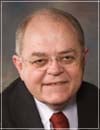
Don Fortner (1950-2020) served as teacher and pastor of Grace Baptist Church of Danville, Kentucky.
Comments
Your comment has been submitted and is awaiting moderation. Once approved, it will appear on this page.
Be the first to comment!