Bootstrap
Scott Richardson

Behold The Man

John 19:1-24
Scott Richardson • November, 12 2003 • Audio
0 Comments
What does the Bible say about Jesus' suffering?

The Bible reveals that Jesus suffered profoundly, taking upon Himself the sins of His people.

In John 19, we see the intense suffering of Jesus as He was scourged, mocked, and ultimately crucified. This suffering was not merely physical; it represented the full weight of the sins of His people being laid upon Him. The Son of God bore the penalty for sin, making Him a substitute for His people, ensuring that all who trust in Him have their sins removed, as promised in Isaiah 53:5, 'But He was wounded for our transgressions; He was bruised for our iniquities.' This act was the fulfillment of God's sovereign plan for salvation, emphasizing that Christ’s suffering was necessary for our redemption.

Isaiah 53:5, John 19:1-24

How do we know Christ's sacrifice was sufficient?

We know Christ's sacrifice was sufficient because He bore all the sins of His people and declared them forgiven.

The sufficiency of Christ's sacrifice is rooted in the theological understanding that He laid down His life for His sheep, as depicted in John 19. Jesus took upon Himself the totality of sin, so that no sin was left unatoned. The assurance of this truth is found in His words and actions, showcasing that the ultimate penalty for all sins has been paid. In Romans 8:1, it is affirmed, 'There is therefore now no condemnation for those who are in Christ Jesus.' This highlights the completeness of His work and the assurance believers have in their salvation, knowing that their sins are removed and remembered no more (Hebrews 8:12).

Romans 8:1, Hebrews 8:12, John 19:1-24

Why is the crucifixion of Jesus important for Christians?

The crucifixion is central to the Christian faith as it represents the ultimate act of love and redemption.

The crucifixion of Jesus is vital as it fulfills the divine plan of salvation and showcases God's love. As portrayed in John 19, Jesus' crucifixion serves not only as an act of sacrifice but also as a declaration of God’s justice and mercy. In shedding His blood, Jesus secured redemption for His people, a cornerstone of historic Reformed theology. The significance is also echoed in 1 Peter 2:24, where it states, 'He Himself bore our sins in His body on the tree.' This event marks the reconciliation between God and humanity, highlighting the transformational power of grace available to all who believe in Him.

1 Peter 2:24, John 19:1-24

What does John 19 teach us about God's sovereignty?

John 19 illustrates God's sovereignty through the fulfillment of prophecies and the control over events surrounding the crucifixion.

In John 19, the events leading to the crucifixion of Jesus exemplify God's sovereign plan at work. Despite the turmoil and the apparent chaos of the trial and crucifixion, we see that everything unfolded according to the Scriptures and God's predetermined plan. Jesus Himself acknowledges this sovereignty in His dialogue with Pilate, saying, 'Thou couldst have no power at all against me, except it were given thee from above.' This reinforces the understanding that even in the darkest moments, God is in control, orchestrating events for His glory and the salvation of His people, as evidenced in Acts 2:23.

Acts 2:23, John 19:1-24

Sermon Transcript

Auto-generated transcript • May contain errors

100%
Turn with me over here in the
book of John chapter 19. We'll read a few verses, and
then we'll remember our Lord in the supper. John chapter 19, and the first verse of the 19th
chapter. Pilate therefore took Jesus and
scourged him, that is, they whipped him. And the soldiers plaited a crown
of thorns and put it on his head, and they put on him a purple
robe. and said, Hail, King of the Jews. And they smote him with their
hands. Pilate therefore went forth again
and saith unto them, Behold, I bring him forth to you, that
ye may know that I find no fault in him. He says, I find no fault in him,
but I bring him forth to you. Then came Jesus forth, wearing
the crown of thorns and the purple robe. And Pilate said unto them,
Behold the man. When the chief priests, therefore,
and officers saw him, they cried out, saying, Crucify him, Pilate saith unto them, Take
ye him, and crucify him, for I find no fault in him." His convictions were not very
great, were they? Twice he said, I find no fault,
but crucify him. Jesus answered him and said,
We have a law. And the Jews answered him and
said, We have a law, and by our law he ought to die for this
reason, because he made himself the Son of God. And when Pilate
heard that saying, he was the more afraid, and went again into
the judgment hall, and saith unto Jesus, Whence art thou? But Jesus gave him no answer. Then said Pilate unto him, Speakest
thou not unto me? knowest thou not that I have
power to crucify thee, and have power to release thee? And Jesus responded, or answered,
and said, Thou couldst have no power at all against me, except
it were given thee from above. Therefore he that delivered me
unto thee hath the greater sin. And from henceforth Pilate sought
to release him, but the Jews cried out, saying, If thou let
this man go, thou art not Caesar's." When Pilate therefore heard that
saying, he brought Jesus forth and sat down in the judgment
seat in a place that is called the pavement, but in the Hebrew,
Gabbatha. And it was the preparation of
the Passover, and at about the sixth hour, he said to the Jews, Behold your king! And they cried
out, Away with him! Away with him! Crucify him! Pilate said unto them, Shall
I crucify your king?" The chief priests answered, We have no
king but Caesar. Then delivered he him, therefore
unto them to be crucified. And they took Jesus and led him
away. And he bearing his cross, went
forth into a place called the Place of the Skull, which is called in the Hebrew,
Golgotha. They crucified Him, two other
with Him on either side. and Jesus in the midst. Well,
he was in the midst of a crowd that was all bad. There was not
a soul in that crowd that had anything good to say about the
harmless Lord Jesus Christ. No one there. evil companions. He had one friend, and that was
that thief. And our Lord, which is remarkable,
by the way, our Lord chose that thief because we know that he
chose all of his people. before the foundation of the
world and called them here in time, but he knew all about the
people that he had chose. He knowed where they was. He knew where Paul was when they
was looking for him. They said, We know where he is. He's there on a street called
Straight. Our Lord knew exactly where it
was, and our Lord knew about that field. Before that thief
ever had being, our Lord knew about him, and our Lord chose
him to be his companion in that trying hour. He didn't choose
one of the apostles or any other religious person. He took a thief
and a murderer and chose him as his companion to enter into
glory with our Lord Jesus. He stood in the midst, the Bible
says. In the midst of what? Well, in
the midst of sins of all sorts and description, transgressions
of all kinds, imperfections, offenses, and iniquities, the
sins of his people. All the sins of his people at
this time were collected up. Sins of the heart, sins of intent,
sins of commission and omission. All the sins of his people was gathered up. and laid on
the Son of God. And he suffered the full penalty of what was our due. And every sin was laid on him
of all of his people. If there was one sin left out,
there would be no salvation for his people. as I've oft times said, that
the good news is that Christ died for our sins and put them
away, and promised that he'd cast them
as far from him in the depth of the ocean, and he said, I'll
remember them against you no more. All of the sins of his
people. were laid on him, and his companion
was a converted finger. He said, Lord, remember me when thou comest into thy kingdom.
And our Lord said, Today you'll be with me. That poor sinner
who knew he was a sinner, he'd already confessed to his companion
and to our Lord that all that he was accused of, he was guilty
of. He was like that poor publican
that went into the temple to pray. He smote his chest, which
was indicative of the fact that he had a bad heart. He knew he
had a bad heart. And that's the hardest thing,
one of the hardest things in the world for a man to find out
that he's got a bad heart. There's not a man living who's
an offspring of Adam will of himself admit that he's a sinner. One old writer said, A sinner
is a sacred thing, for God hath made him so. It's God in the
revelation of the Spirit to the heart of a man that convinces
that man that he's guilty as charged. He's a sinner by word,
by deed, and by practice. Every intent of his heart is
motivated by this monster sin. And our Lord stood in the midst
of the saints, and they crucified him and two
other with him on either side, and Jesus in the midst. And where two or three or more
meet together, our Lord said, There I am in the midst. He's in the midst here tonight.
We've met together, all of us. We've met to praise and to thank
Him and to worship Him and to learn of Him and to confess our
sins unto Him. He's here with us, lead us and
guide us and direct us. Why? I can say myself personally,
if God had not dictated my every step from the time I was born
until right now, before I take another step, God has directed
our steps. He has placed our feet in the
right spot every time. Everything about us, every movement,
God knows beforehand. He knows tonight how we stand. And the title, then read many
of the Jews, for the place where Jesus was crucified was Nihil
to the city, and it was written in Hebrew and Greek and Latin,
that all might know it. Then said the chief priest of the Jews to Pilate, Write
not the king of the Jews. Don't put that over his head. Don't write the king of the Jews. But that he said, I am king of
the Jews. Don't put it down there, King
of the Jews. Just put it down. He said he
was the king. We know he wasn't. Pilate answered,
What I have written, I have written. Then the soldiers, when they had crucified Jesus, and up to this point, he's never
said a word. He's never opened his mouth.
He's like a sheep led to the slaughter. Dumb. Despised and
rejected. Never said a word. Never tried
to defend himself. Yielded as the covenant head
of the sheep to stand in the sheep's place. and die the sheep's
death. Then the soldiers, when they
crucified Jesus, took his garments and made four parts to every
soldier a part, and also his coat. Now the coat was without
seam, woven from the top throughout. and the shamefulness of this,
that you would think reasonable, religious, ordinary people, and
that's what most of these people were, religious, ordinary people. You would not have thought that
they would expose him and his nakedness. through his own shame. They stripped him of his coat,
of his garment, and tore it up in four pieces. And the coat
was without seam, woven from the top throughout. They said, therefore, among themselves,
let us not rend it, but let us cast lots for it. whose it shall
be that the scriptures might be fulfilled, which saith, They
parted my raiment among them, and my vesture they did cast
lots. These things therefore the soldiers
did. And our Lord said, There when
he sat with his brethren, and they partook of that bread and
wine, He said, This do in remembrance of me what I did
for you. And that's the language that
best describes it. This do in remembrance of me
for what I did for you. Saved us by the grace of God. and called us, and brought us
home to himself, and promised that he'd bring us home to final
glory.
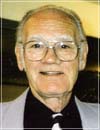
Scott Richardson
About Scott Richardson
Scott Richardson (1923-2010) served as pastor of Katy Baptist Church in Fairmont, West Virginia.
Broadcaster:

Comments

0 / 2000 characters
Comments are moderated before appearing.

Be the first to comment!

Joshua

Joshua

Shall we play a game? Ask me about articles, sermons, or theology from our library. I can also help you navigate the site.

0:00 0:00