Bootstrap
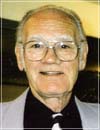
Scott Richardson

God's Care For His Elect

John 2:18
Scott Richardson December, 23 2001 Audio
0 Comments

Sermon Transcript

Auto-generated transcript • May contain errors

100%
Second chapter of the book of
John, and the eighteenth verse, Then answered the Jews and said
unto him, What sign showest thou unto us, seeing that thou doest
these things? Jesus answered and said unto
them, Destroy this temple, and in three days I will raise it
up. They thought he had reference
to the temple, Solomon's temple. Then said the Jews, Forty and
six years was this temple in building. and wilt thou rear
it up in three days?" So they were mistaken as to the
temple that he was talking about. He was talking about, as he explains
it here, but he spoke of the temple of his body. When therefore he was risen from
the dead, His disciples remembered that he had said this unto them,
and they believed the scripture and the word which Jesus had
said. Now, when he was in Jerusalem
at the Passover, in the feast day, many believed in his name. when they saw the miracles which
he did." Now, if he stopped there and
didn't say any more, we would come to the conclusion that many were born of the Spirit at the Passover. in that feast
day. Many believed in his name when
they saw the miracles which he did. But Jesus did not commit
himself unto them, because he knew all men, and needed not
that any should testify of man, for he knew what was in man.
He didn't commit himself unto them. Jesus did many miracles
and became, in the minds of most of them, a famous man because
of his miracles. But in speaking in the long count,
There wasn't many people saved on the account of His miracles.
They believed what they could see. And it's like that's typical
with unregenerate people. They're looking for a visible
God. They want a God that they can
see, a God that they can touch, a God that they can handle. A
God that they can set Him over here and after a while change
the scenery and put Him over here. But the God that they could
see, the visible God was among them, but they didn't know who
He was and didn't believe what He said concerning who He
was. I am the Father of one. They didn't believe. They believed
the miracles. And that's what folks do today.
They want a visible God. They want a God they can see.
A God they can touch. If they can get that, they're
all right. Well, our Lord said, He needed
not that any should testify of man, for He knew what was in
man. He knew what's in us. Sinners, black sinners to the
core. All right. Let's go to the 18th
chapter of the book of Luke. Luke chapter 18. I'll begin reading there at verse
1. He spake a parable unto them
to this end, that men ought always to pray
and not to faint. be in the habit of praying and
not to give up, not to quit, not to sit down, but continue
to pray. And he gives us the reason why
they should. In a parable, it said, There
was in a city a judge which feared not God, neither regarded man. And there was a witty in that
city, and she came unto him, saying, Avenge me of mine adversary,
her enemy. And he would not. That is, this
judge that feared not God, neither regarded man. He would not answer
or give her restitution for her complaint. She had a just complaint, an adversary. And he would not, for a while, he wouldn't answer her complaint
bring about justice on her behalf for a while. But afterwards,
he said within himself, he got to thinking about it, though
I fear not God, nor regard man. That is, I have no sympathy towards
man and I don't fear God. an awful condition to be in,
for one not to fear God and have no consideration of man. And
all are born with that attitude that stems from their nature.
All of us fear not God nor regard man and his consequences by nature. But it says, he would not for a while, but
afterwards he said within himself. He confided his remarks to himself. He said this over and over. Though I fear not God, nor regard
man. Yet because this widow troubles
me, she's interfering with interfering
with my business or my rest or my leisure time. She just keeps
coming back. I can't get rid of her. I don't
fear God and I don't regard man, but this woman causes me trouble. I want to get rid of her. I will
avenge her lest by her continual coming she weary me. She just
won't give up. She just keeps running to the
judge. This fella has, this, this, my
adversary has done me wrong, it's not right, and you're in
a position to help me, and I want some help. And she just continued
to do it. I don't know whether it was every
hour, or two hours, or every day. Whatever it was, it become,
A monkey on his back, he couldn't get rid of it, and it worried
him, and it troubled him. It troubles me, and I will avenge
her for this reason, to satisfy myself. I'm not concerned, really,
about her problem, her and her problems. I have no regard for
man anyhow, and I don't fear God. I don't have to do this. I don't have to listen to her,
but she's an annoyance, a continual annoyance to my rest and my peace,
and I'll avenge her just so I'll be satisfied. I won't be worried
anymore. I don't care about her. She just keeps coming. So the Lord said, hear what this unjust judge
said. This is a parable. But our Lord
said, hear what this unjust judge said. He said, she troubles me
and I'll avenge her because she worries me so. And if I avenge
her, then I'll have some peace and won't have to look at her
every every morning as I come to my chambers. She won't be
there, and I'll have that over with. You hear what the unjust
judge said. Verse 7, and it said, Shall not
God avenge his own elect, which cry day and night unto
them, though he bear long with them? I tell you that he will
avenge them speedily. Nevertheless, when the Son of
Man cometh, where shall he find faith? On this earth. And he spake this parable unto certain people. which trusted in themselves. Now, all of those at any given
time and any given place that are sons of Adam and are yet
far off from God, he describes them here. They trusted in themselves. We were once in that place, in
that condition, where we trusted in ourselves. We believed that
we were good enough in ourselves to be entitled to heaven, that
we had this vain imagination, that we actually believed that
everything would be all right in the sweet by and by, that
somehow, someway we'd be accepted, because we were pretty good people. We trusted in ourselves. Certain things we did that maybe
others wouldn't do. We felt like it, that God would
honor what we've done and our works would make up for what
we lacked. God would say, enter in. And we'd enter in. He spake this
parable unto certain which trusted in themselves. Primarily it was the scribes
and the Pharisees, very religious. But that's not what I want to
talk about this morning. I want to talk about unanswered
prayer. Prayer that is unanswered. How many of you have prayed unto
God for an answer to your prayers,
an answer to your request, be it big or little, be it an
important or unimportant request, an important or unimportant request? Either one. You've sought Him, but your prayer
remains unanswered. Maybe you've prayed for a better
job. Maybe you've prayed for a girl
that would come your way and make a good wife and a mother,
a lifelong companion. Your prayer was never answered.
Maybe you prayed for a better job, but that was never realized, or a
promotion on the job, but that was never realized. Maybe you
prayed for your children, that God would save them, and to this
point, prayer was not answered. I could just go on and on about
unanswered prayers because I know what I'm talking about.
I've experienced unanswered prayers, and I know a little bit about
unanswered prayers. Well, let me say at the outset
here that unanswered prayers is perhaps one of the most common
causes of complaint of the people of God. They see written in the Bible,
they've read it themselves, and they have heard it preached. by the preacher from the Bible,
that the Bible says that whatsoever you ask, whatsoever you desire, if you
ask for or desire something and you ask it in Jesus' name, you'd
receive it. Now, we have all experienced
that to some degree. All of us know that the Bible
teaches that whatsoever you ask in his name, you'll receive. Well, what you ask you have not
received. You've asked and asked and asked
and you have not received it. And so you begin to murmur and
complain and you wonder why this has not come to pass. Well, the
first thing that we need to know or to bear in mind is that though
God makes gracious and glorious promises to his people, to his
children, to his elect, though he does do this throughout the
Bible, yet he ever retains his right to act in a sovereign way. He has not give up his sovereignty
and he never will give up his sovereignty. He makes gracious and blessed
promises to his children and his children respond and seek
him to do thus and thus for them, and it does not come to pass,
their prayers are unanswered, so they murmur and complain. But if they understood, if they
could get this in their mind and in their hearts, that though
God makes these gracious promises to his children, he still retains
the right to act in a sovereign way. Sometimes he acts in a sovereign
way because he knows what we pray for wouldn't work out for
our good. So he withholds an answer because
he says that all things work together for good to them that
love God. We pray for those that are sick
and are sincere in our praying. I believe at least we're half-hearted
in it. You don't want to see them sick,
but they don't get any better and sometimes they die and we
wonder why. We have asked our Father in Heaven
to save our friend's life here or extend him or her more time
on this earth. It doesn't come to pass, and we wonder why God didn't
answer our prayers. If you'll remember that He ever
retains His rights. God has rights as God, and there's
no limit to His rights. His rights are not contained in one sentence. They go on and on and over and
above everything else. God's on the throne. He rules, He reigns, always as
it pleases Him. in a sovereign way. Well, secondly, we should always bear
in mind that we, and I hesitate to use that word we, but I will nevertheless, that
we should bear in mind that we, even the most spiritual among
us, that we're very ignorant and don't know how to pray. Listen
to this verse, if you will, over here in the book of Romans. chapter
8, and I think verse 26, maybe it is. Verse 26, the Apostle, here in this great eighth chapter
of the book of Romans. Here's what he says. See, I'm
saying here that even the most dedicated and faithful, loyal children of God, even they, in their great spirituality,
sometimes don't know how to pray or what to pray for, and they're
very ignorant. Likewise, the Spirit also helps
with our infirmities, our weaknesses. For we know not what we should
pray for as we ought. Sometimes we pray for things
that we ought not to pray for, and sometimes we pray for things
that we ought to pray for, but most of the time we don't know
what to pray for or how to pray. For we know not what we should
pray for as we ought. But thanks be unto God that the
Spirit itself maketh intercession for us with groanings which cannot
be uttered, which tells me that if we are continual in our groans
day and night, God will answer our prayers some way, somehow,
whether it's answered while we're alive or answered after we go,
God will answer our prayers. We need to understand that were it not for the Spirit, the Spirit of God working in
us, We do not even know what to ask for. It's the Spirit in us. Then we
need to remember that a life of prayer is a life of conflict
and struggles, a life of ups and downs, and a life of successes
and a life of disappointments. If that was not so, we would
need or would have no need whatsoever of faith. So may God teach us this morning
that we may pray and not to faint, relying upon His blessed Word,
to avenge His people who cry day and night unto Him. And I think that says that down
here in that seventh verse. And shall not God avenge His
own elect which cry day and night unto Him, though He puts up with
them for such a long time, over and over. Well, let me kind of
open up, they say, the text. You've heard preachers say, well,
I'm about to open up this text. Sometimes he knows what he's
talking about and sometimes He never gets it open, but will
attempt to. Let me talk to you here a little
bit about God's care for His own people, or God's care for
His elect. That's what He calls them here.
Sometimes when you mention the word elect, people get unhappy,
which ought to make you happy, but some people get unhappy when
the word elect is brought to their attention in a biblical
sense. But other places he talks about
his people. His people are God's elect. That's what he's talking about.
He's talking about his people, those that he gave the Son before
the world ever was, Those that the Son came to die for and live
for and stand for, they are God's elect. Over in, I think it's
in Matthew chapter 24, let me read this. In verse 22, listen
to what he says. He's concerning the latter part
of time when we come to a place where a time shall be no more,
there'll be eternity. He said there's going to be a
great tribulation, such as was not since the beginning of the
world. To this time, no, nor ever shall
be a time like this. Our Lord speaks of that. We have
great tribulation, trouble, trouble, such as was not since the beginning
of the world. There was a great time of tribulation
when the children of Israel was down in Egypt for those three
or four hundred years. And when they went through the
Red Sea, and God drowned all the Egyptians. That was a difficult
time. Well, he said, never was a time
like this, never shall be. Now, he said, except those days
should be shortened, there should no flesh be saved. If God doesn't
intervene in this time of trouble, tribulation like the world has
never experienced. We think of 6,000 people killed
there in the Twin Towers in New York City, almost in a split
second. It just happened that quick. They just was on the telephone,
some of them on the computer, and someone another having conversation
with someone, and all at once, out of the blue, this airplane hits the tower. And in a matter of seconds, there
are 6,000 people that have went out into eternity, and probably
most of them knowing not God. Bad time. But that's nothing
compared to what this is going to be like, because it's so bad
that if God didn't intervene, there would not be any flesh
saved. But, he says, for the elect's
sake, for his people's sake, these days shall be short. For
the elect, for His people. Who are His people? They are
the elect of God. That's what He calls them. I couldn't improve upon it, and
I wouldn't even try to improve upon it. This is what God says. He's got a people. He's got a
remnant. And if it wasn't for them, no
flesh would be saved. So he says here in verse 7, And
shall not God avenge his own elect? Shall he not take care
of his people? Why, he will. He'll avenge his
own people. Well, it's well for us that there
is an elect people, for if If there were none, if there were
none, all the human family would be
lost forever, if there wasn't an elect people. All Adam's race would perish. But thank God there is some out
of Adam's race who are the elect, and God has determined to save
them, and he calls them his elect. So if there wasn't no elect,
nobody would be saved, and that's the truth. But God has chosen
some whom he has set his love upon, and they are called the
elect. And he said this about her. He
said, I have sent, or I have loved thee with an everlasting
love. Therefore, with loving kindness,
I have drawn thee unto myself. Now, there's four things, spatial
things, I think, that God continually holds before the minds of His
elect people to convince them of His care for them. And the first thing is the suffering
of the Lord Jesus Christ and His death. That is to demonstrate unto us
that God cares He sent the darling of his foot, he sent the best
of heaven to come down here and be a man and suffer in our stead
and place in heaven. Now, that is one thing that God
keeps before us continually, that Christ suffers. And Christ
died for the poor sinner. And the second thing is Christ's
resurrection. And the third thing is that Christ
is on the throne. It says that there's no other
name given among men. except the name of the Lord Jesus
Christ. No other name whereby we must
be saved except the name of the Lord Jesus Christ. And it says
that he is our advocate, he is our go-between, that God raised him and give
him a place at his right hand, and there he intercedes unto
God on our behalf. That's God's care for his elect. He chose them when they had no
earthly reason in them to be chosen. He chose them in spite
of themselves and sent the Lord Jesus Christ
to suffer for them and to die for them and to ascend yonder
in heaven to intercede for them. showing you and I God's care
for His elect. So cared for, I read to you,
that if it was not for God's elect, they would all perish. Well, it is as if God were to
say, By my Son's obedience, my holy
law has been fulfilled, which my people have broken as well
as others. But my Son, the Lord Jesus whom
I sent, he has satisfied every demand
and requirement of my law. on behalf of my elect people,
by my Son, we see and know that the love of God is real
because Jesus Christ has proved it so by who He is and what He's
done. demands and the Lord Jesus Christ
fulfills and satisfies. If Jesus Christ had not fulfilled
the requirements of the holy law and if he had not satisfied
offended justice, then the Lord Jesus Christ would still be in
the grave. He'd be a captive of death, but
because he fulfilled all the requirements for God's people,
by his obedience, by his suffering, by his death and by his resurrection,
the grave could not hold him. The victorious conqueror of our
enemies, if he had not fulfilled all the demands and requirements,
he'd still be in the earth. Death could not hold him, and
he exercised power over himself and arose from the dead. And
he's ever there at God's right hand, pleading our case. Does God love his elect people? why there ought not to be a second
in our life that we would doubt the love of God for His people
in light of what the Lord Jesus Christ has done, His intercession for us. You
see, God cares for His people. He hath pledged Himself to care
for us. He knows us. their need of His
keeping them. They're so weak and frail that
they could not go a mile by themselves. Shall God not avenge His own
elect? What do they do? They cry day
and night. Now the main question is this. I've said all I have to say this.
And this is the main question. Are we one of God's elect? That's the main question. Are
we one of God's elect? Now, I've already said that there's
no reason for anyone to be alarmed by this word, elect. For though
no man can elect himself, It all depends upon God's sovereign
will. Even if we get upset by the word
elect, there's nothing we can do about it. We can't elect ourselves. You say, well, I'm not one of
the elect. Well, how do you know you're not one of the elect?
Well, I just know I don't love God. I don't love His people.
I don't love His Son. Well, you can't do anything about
it. You can't make yourself to be one of God. This is up to
the will of God. He's boss here. He's the one
does the choosing. He's the one sanctifies and sets
apart whomsoever pleases Him. You can't do anything about it. You can't elect yourself. When I say none but the elect
can possibly be saved, I mean no more than another man
who says none but believers can possibly be saved. Now, are we here this morning
among God's elect? Well, we are told in this text
that I read to you that I said that I would open up to you who
they are. Well, tell me who they are. They are they that cry day and
night unto God. That's who they are. Listen now.
It says, And shall not God avenge his own wretch? day and night unto him, though
he bear long with them." He doesn't answer their prayers when they
think they ought to be answered. He bears long with them. He will
answer them in his own time and in his own way when He desires to. But they don't
quit crying. They cry day and night. I have personally, and I say
this by my own experience, I have been praying the same prayer
about the same people for years and years and years and years
and years. And nothing has happened. But
I'm still crying. I'm not saying that that's going
to add something to my record. I'm just saying that God has
promised, gracious and glorious promises. He said, if you call
upon me, whatsoever you ask in my name, and I'll give it to
you." I haven't received it yet, but I'm still crying, aren't
you? Day and night. There's not a
person here that's saved by the grace of God that don't agree
with me. You say, yes, I prayed for my
dear mother and my grandmother, and I prayed for my father, and
I prayed for my children, and I pray for them every time I
pray. I say, Lord, remember these.
Oh, Lord, have mercy and cause the light of the gospel to shine
into their hearts that they might have hope. You don't see no change in them,
do you? You haven't seen no change? Sometimes maybe they'll say something
to you along the lines of spiritual things and your hope will be
revived and you'll say, well, I believe he's hearing. I believe
he's hearing. And the next day was just like
the last day, nothing happened. Unanswered prayer. Keep in mind,
keep in mind now, that God has always retained his sovereign
right to answer prayer when it pleases him. How are we among
the children? of the elect of God. Well, the text indicates that his people
in this life, in this experience, are often perplexed and harassed
and persecuted even by the world and the devil. And because of
these things, And because of things that are near and dear
to them, God lets these things happen that we might cry day
and night unto Him. Oh, listen. God doesn't always
see fit to grant their request all at once. So He bears long
with them, and one day He will. He bears long with my weakness
and your weakness, my murmurings and my impatience. He forbears
a long time, but in His own good time He will avenge His elect. He will hear them and relieve
them of their fears and worries and troubles and harassments
and all of that. He'll answer. So continue in
prayer day and night. You see, prayer is what delivered
Jacob from that murderous Esau. It was prayer that opened up
heaven for Elisha. It was prayer that delivered
Paul and Silas. It was prayer that delivered
the Hebrew children. It was prayer that delivered
Daniel from the lion's den. So God's people, they cry day
and night, day and night. Lastly, prayer magnifies God,
makes us to know of His attributes, His omniscience, His omnipotency. Prayer glorifies Christ because
we are dependent on Him. We're dependent not only on what
he's done, but we're dependent on what he's doing, that he's
interceding on our behalf. Shall not God avenge his own
elect? This woman, she came to this unjust judge. He said, I don't believe in God
and I don't regard man, This woman just keeps coming and she
troubles me and I want to get loose from this trouble and get
back at my own business. He said, I'll avenge her. I'll deal with her adversary. And the Lord says, we just keep
coming and coming. But he said, I reserve the right
to have my sovereign way, but you just keep coming, you just
keep coming. And then he goes on in the other part of this chapter down
through the 11th verse there and he talks about these two
men that went up to the temple to pray. One was a Pharisee and
the other was a publican. They're both terrible, terrible
sinners. The Pharisee was a self-righteous
sinner, and the publican was not a self-righteous sinner.
He was just an out-and-out sinner. And he came before God, and he
didn't try to remind God how good he was. He just smote his
chest, and he said, God, be merciful to me, a sinner. Pharisee, he
said, Lord, I pray all the time, and he said, I just do everything
that I can possibly do to maintain these good works. And I know
that I have a right to come because of who I am. And God said, well,
he said this, one of them men went down to his house justified. So if just one went justified,
there's another that wasn't justified. And you can guess who was justified.
It was that fellow who said I was just a poor sinner. I haven't
got anything, Father. I haven't got no good works that
I can claim. There's nothing in my hands. I come empty-handed
to you. I'm a poor, low-down, rotten,
no-account sinner. Filthy sinner. I have nothing
good. Lord, show mercy to me. He found
mercy. He went down to his house justified.
The fellow was doing all these things. He went to hell for his
trouble.
Scott Richardson
About Scott Richardson
Scott Richardson (1923-2010) served as pastor of Katy Baptist Church in Fairmont, West Virginia.
Broadcaster:

Comments

0 / 2000 characters
Comments are moderated before appearing.

Be the first to comment!

Joshua

Joshua

Shall we play a game? Ask me about articles, sermons, or theology from our library. I can also help you navigate the site.