Bootstrap
Scott Richardson

Whom Do Men Say That I Am

Mark 8:27
Scott Richardson November, 8 2001 Audio
0 Comments

Sermon Transcript

Auto-generated transcript • May contain errors

100%
Mark chapter 8. Verse 27. It said, And Jesus went out and his disciples into the towns
of Caesarea Philippi. And by the way, he asked his disciples, saying
unto them, Whom do men say that I am? And they answered, John the Baptist. But some say, Elias, and others,
and one of the prophets. And he said unto them, But whom
say ye that I am? And Peter answered and saith
unto him, Thou art the Christ. And he charged them that they
should tell no man of him. And he began to teach them that
the Son of Man must suffer many things and be rejected of the
elders and of the chief priests and of the scribes and be killed
And after three days, rise again. Now, the circumstances regarded
here are certainly of great value, value to us, and of great importance. This conversation our Lord had
with his disciples took place during a journey, a movement of he and
his disciples from place to place. They traveled together as a company,
he and these twelve disciples, walked down these dusty roads
and trails from place to place and probably was a far piece
between towns. There wasn't any convenient stations
along the road or rest stops and so forth like they are in
our day. So this conversation that they
had took place during a journey and arose from a conversation
that is expressed here by these words, by the way. In verse 27, he went out Jesus did and his disciples into
the towns of Caesarea Philippi. And by the way, while they were
on this journey, arose from this conversation the subject concerning
him. I don't know whether they talked as they walked or whether They found a place
to rest and sat down and conversed one with another, but the expression
is used, and by the way. As they moved along or as they
stopped, whatever was the most convenient, by the way, arose
this conversation concerning a variety of opinions that prevailed among the people
at that particular time concerning the Lord Jesus Christ. And he asked them this question. They being ordinary men, not
men of renown, but ordinary citizens, fishermen by occupation, had
access to where they sold their fish, the merchants and so forth. And they was around places where
they heard the general topic of this man called Jesus as to
who he was and what his purpose was and so forth. And there arose many opinions. Folks had their idea of who this
man was. They had heard of his fame as
healing the sick and performing certain miracles and they drew
their own conclusions, had their own opinions as to who he was. That most important person that
ever came to this earth. is the Lord Jesus Christ, and
he was in their midst, but gave evidence of his power and his
authority on many occasions, but yet they could not, for the
most part, the Jewish leaders and Jewish government and ordinary
citizens couldn't come to some common mean as to who this man
was and where he came from and what he was about to do and so
forth. So since this opinion of who
he was prevailed among the ordinary people, our Lord Jesus Christ
said, Whom do these men say that I am? And I want you to notice
up here where he says in this 27th verse,
Whom do men say that I am? And they immediately answered,
Why, John the Baptist. Some say that, John the Baptist. And others say, Well, you might
be one of the prophets. And others say, Well, you're
a liar. And so he then It got real personal
with him and he said unto them, But whom say ye that I am? What do you have to say about
it? And Peter answered, being the
spokesman, at least the interpreters, translators of
the Bible, indicate from time to time that Peter was a spokesman
for the eleven disciples. And Peter answered and said unto
him, he said, Thou art the Christ. And he charged them that they
should tell no man of him. And he began to teach them that
the Son of Man must suffer many things and be rejected of the
elders and of the chief priests and the scribes and be killed
and after three days he should rise again. Now, Peter being
the spokesman here of the friends of the Lord Jesus, the disciples,
which means learners. They were learners and followers
of Christ, and Peter spoke for all of them. He said, Thou art
the Christ. Now, I want you to notice that
Peter made this confession when the Lord Jesus Christ was poor
in condition, that is, without honor, without majesty, without
wealth and without power. When he came, he came and the Bible says he
was rich, but he became poor in order that you and I who are
poor might become rich. That is, in his consention, he
clothed his humanity with our nature, and he is a
poor man. So when Peter said, Thou art
the Christ, The Lord Jesus Christ was rejected
of men. He came unto his own and his
own received him not. So he was poor and rejected and
without honor and majesty, without riches and without authority
and without power. Even the heads of the nation
in religion, the chief priests and the scribes, they rejected
him and refused him and said, thumbs down, we'll have nothing to do with this
man. And they wouldn't receive him as Messiah. It was a pretty preposterous
thing on Peter's part when Peter said, in light of the reception
that the Lord Jesus Christ had when he came, in light of his
outward appearance, for him to say, Well, some say
that you're this and some say that you're that. And in answer
to the question, Whom do ye say that I am? It was a great and glorious thing
that Peter said, Thou art the Christ. Another place it's recorded. He said, Thou art the Christ,
the Son of the living God. So to receive the Lord Jesus
Christ as the Christ and as the Messiah, one who would come and rule and
reign, Peter made his proclamation without
hesitation said it quickly and loudly in
his proclamation of it. Thou art the Christ. It's not
every day. Not every day then or every day
now. It's not an ordinary thing. It's
not something that just crops up every hour of every day that
somebody says that the Lord Jesus Christ is the Christ, the Son
of the living God. Peter did it and declared it
bold, without hesitation, as to what he and his sojourners,
his fellow companions, believed in regard to the Messiah. There'll never be a time while
this world lasts. There'll never be a time while
this world stands that the Lord Jesus Christ and
his doctrine will be popular. Never, if this world lasts for
another million years, there'll never be a time when the Christ
of God and his doctrine will be popular on this earth. It was not popular then, And
it won't be popular now and in the days to come. So it was a
great thing when Peter said, without hesitation, in light
of the situation, in light of the time, when our Lord came
to his own but his own said no. When the chief priest said no. When the scribes said no, and
the elders said no, without hesitation, this poor, unlearned, ignorant
fisherman, when asked the question, said without hesitation, Thou
art the Christ, the Son of the Living God. There will be a time when he's
popular. So, you and I, just ordinary, common people,
we must be prepared to confess him with few on our side. The majority will always be on
the opposite side. It will only be the few, the
few, not the many, that will confess that Jesus is the Christ. Remember, those who confess him
before man, will one day hear him confess them before his Father. That ought to encourage you.
It encourages me. Even though you and I are one
of the few, one of the few who without hesitation,
confess that He's the Christ to encourage us and to comfort
us and to give us strength and boldness. Remember that one day
He will confess that we are His people. That will be a glad time. In verse 31, it says, He began
to teach. He began to teach them that the
Son of Man must suffer many things and be rejected by the elders
and of the chief priests and the scribes and be killed after
three days, rise again. He began to teach them that the Son of Man must suffer many things. Now, this must have sounded very
strange to the disciples. who had just almost in unity
proclaimed that he was the Messiah. To be told that this one that
they confessed to be the Messiah, they confessed him as their beloved
master, that after all the mighty works
that he had done in Galilee and in these various cities, all
these miracles that he performed, all the sick that he made better,
all the blind people that got their sight, after all this,
that he must him, the Messiah, that he must suffer, this good
man, this kind and gentle man, that he must suffer, he must
be killed, he must be rejected, and he must rise again? Why did
he say, must? Why did our Lord Jesus Christ
say here that he must suffer many things? Did he mean that he was unable
to escape suffering? Is that what he meant? That there was no way that he
as a man, could possibly get out from underneath this suffering
and rejection and finally be killed, that he was unable to
escape it. Did he mean by this word, must,
that he must die by a tremendous force of stronger power than
he had? Is that what he meant? That could
not be the meaning. That's impossible. For God the Father had said that he had all power over all flesh. He had all authority over everything
that moves and wiggles. It was all given to him. So it was impossible for him
to mean that he was unable in himself to escape this suffering. He did not mean that he's going
to have to die by a force of power that he did not have, that
he could not overcome it? Did he mean that he must die
to give a great example of self-sacrifice and self-denial, and this and
this alone made his death necessary? That's impossible. That's impossible. Why then did
this man, Jesus, say he must die? Well, there is a far deeper and
greater meaning in the words, must suffer and must die. He meant that his suffering and
his death and his passion were necessary in order to make atonement
for the sins of his people. That's what he meant. And I'm sure that Peter and them
was in the dark really as to what he meant. And he began to
teach them that the Son of Man must. There's no way around it. There's no escape from this suffering
if he's going to accomplish the will of God in the salvation
of his people, he's got to suffer in their stead and in their place
and in their room and make atonement for their sins. That's got to happen, or there is no way out, or there's no salvation for the
people of God, he must suffer. He must stand in our place and
suffer and shed his blood and establish a righteousness for
his people, or his people will never be saved. He must suffer
He must be rejected. He must be killed. And on the
third day, he must rise again. He was delivered for our offenses
and raised again for our justification. He must suffer. He must suffer
alone. Even God the Father must forsake
him because he is to be made sin. And God is angry with sin
and angry with the wicked every day. And he who was innocent
without fault, who had no blemish, or no stain, nor no wrinkle,
who was so pure that even God himself could not find a flaw
in him. He must suffer, and he must be
rejected, and he must be killed in order that his people might
live. So he must suffer no way out. He is shut up to this life of
suffering which began at the manger and continued unto the
cross and continued unto going into the grave and coming forth. Necessary. So let us understand
here this morning that his suffering and his Death was necessary in
order to make atonement for his people's sin. Remember that there
is no remission of sin without the shedding of blood. Without the sacrifice of his
body nailed to that tree, there could be no satisfaction made
to God's holy law. He must suffer, he must have
those nails driven through his hands, those spikes driven through
his feet, that gash in his side that the blood and water must
flow, that crown of thorns, that humility, that hanging on that
tree those three hours, he must experience that or there is no
reconciliation of his people unto God the Father. Now to Christ,
what Peter said, he's got to die because without
his death, There's no propitiation. There's no unblemished sacrifice
and unblemished offering. Sinners could never have life. He must suffer because without
his vicarious suffering are sins. could never be taken away. He must be delivered for our
offenses and raised again for our justification. He must. This must is the center of truth
in the whole of the Bible. All other truths in the Bible, the truth of the creation, the
truth of our coming into existence by the hand of God, and all the
wonderings of Israel, and all of the history of the Bible,
all these things compared. to the must of the Lord Jesus
Christ is of secondary importance to the truth of who Christ is
and what Christ must do. Everything else is secondary. This is the important cardinal
truth. of the whole Bible that the Lord
Jesus Christ, that he is God himself in the flesh, and God
himself in human flesh, must suffer, must die, and must be
rejected, and must rise again on the third day. That's the
central cardinal truth, and everything else is as nothing when compared
to these. To know who He is, to know the
importance of who He is and what He's done and why He has done
it. All of us need to be made free. And he must suffer, he must bleed,
he must die, he must rise again if we are to be free. Free from what? Free from sin. free from death, free from the
bondage of hell. He must die. Whom do men say that I am? You remember now, the majority of the world's inhabitants have
no answer to the question. Some say this and some say that. But our Lord makes this direct
question to the heart and to the mind of Peter and those,
whom do you say that I am? They said to Archpriest. I join with them. I join with
Peter. Their question is asked me, whom
do you say that he is? I say he's the Messiah. He's God's Christ. And in saying
that, I believe that God authorized him, God anointed him, God appointed
him, and God sent him to be the Center Satan to save him from
himself, to save him from sin, the dominion of sin. Save him
from the bondage of hell. Save his soul, friend, and give
him liberty. You know that the scriptures
say Our Lord Jesus said this. He said, if the Son makes you free, you shall be
free indeed. That's freedom. He doesn't ask that we might
be free, at liberty, free from the guilt of sin. and freed from
the consequence of sin, freed from the wrath of God, our sin being laid on Him. Legally it was laid on Him, and
legally before God we are free. from the defilement and the shame
of it, because he bore the vengeance and the wrath of God, fell on
Christ, and he suffered what justice demanded that sin should
suffer. So we're freed and made free
by the truth. He said, the truth shall make
you free, and if the Son makes you free, you shall be free indeed. So I say, free from the guilt
and the consequence of sin, how am I to be made free? By the
blood and the righteousness of the Lord Jesus Christ. And those
that have been made free by the blood righteousness of the Son
of God, who own this confession that Peter made, thou art the
Christ, the Son of the living God, they are free, justified,
pardoned, and forgiven and can look forward to the day of judgment
and cry out to all who will hear, who can lay anything to the charge
of God's elect. They can cry out. There is no
condemnation to them that are in Christ. Listen now, those that are in
Christ, and I've said this time and time again, I believe it
with all of my heart, and I hope you do. We were, we who are believers,
were put in Christ. He chose us in Christ. I know I've said that a thousand
times. chosen in Christ before the world
was. That is, given grace in Christ
before the world was. Which is to say, on his condescension,
he became a man and took upon himself our humanity, and we
became one with the substitute, one with Christ. So when, because He lives, we
live. When He suffered, we suffered. Not physically, because spiritually
we was in Him. Where He put us, He kept us.
We're still in Him. So when He lived, we lived in
Him. He never sinned. Never made no
mistakes. We are in Him. He's our Savior,
our substitute, our captain, our surety. He who guarantees
God that we'll fulfill the law and all these things. In Him
we do. In Him. Dead to the law because
we're in Him. Dead to sin because He made an
end of it. We're in Him. accepted by God
in the Lord Jesus Christ, clothed in his righteousness, in him. We are one with him. Now listen
to this. Those of us who are going to
heaven, we go to heaven in him. And those of us that are going
to heaven, are going to go to hell on the way to heaven. We go to hell in Him. We live
in Him. We die in Him. And when He went into the grave,
we went in there with Him. And when He suffered what sin
demanded, what justice demanded, When he suffered, we suffered
with him. In this mystical union, I and
the Father are one. And as I and the Father are one,
so we are one, one in him. So we're free. We're absolutely
free from the power of sin. by the grace of the Spirit of
the Lord Jesus Christ. That's the reason sin has no
more dominion over us. We have liberty, freedom. We're free men. It's real liberty. It's the believer's freedom and
liberty forevermore, throughout time and eternity. Even death
cannot stop this freedom. The grave cannot hold their bodies
more than just a short time. Those whom Christ makes free
are free to all eternity because Christ died. in their stead and
their place and their room, because he became their curse, because
he bled his own blood and suffered for them. And those whom Christ
makes free are free indeed. Much to say in our day about
free speech, free laws, political freedom, commercial
freedom, national freedom. All of these cannot smooth down
a dying pillar. or disarm death's sting, or fill our conscience with peace,
only the freedom of the Lord Jesus Christ, which he alone
gives and never takes back. He gives it truly, really. and He gives it freely. And we
ought not to rest until we have it. And that rest and freedom comes. You remember on another occasion
there, our Lord said to Peter and his companions. Who do men say that I am? Some say this and some say that. As I said, a variety of opinions. But who do you say that I am? Peter said, Thou art the Christ,
the Son of the living God. And our Lord Jesus said unto
him, He said that what you said, Peter,
my Father revealed that to you. And when our Father reveals unto
us who the Christ is, then our conscience will be satisfied. And we'll have rest. Not temporary
rest, but a rest that has no end. All because the Father hath
revealed who the Christ is to our souls. He's our sin bearer. He suffered for us and shed his
blood to cleanse us. And he provided a righteousness
that will stand us in good stead with God forever. Whom do men say that I am, Peter
said. He said, Thou art the Christ.
I stand with old Peter this morning. I stand with you. That's Christ!
Scott Richardson
About Scott Richardson
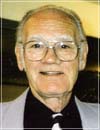
Scott Richardson (1923-2010) served as pastor of Katy Baptist Church in Fairmont, West Virginia.
Broadcaster:

Comments

0 / 2000 characters
Comments are moderated before appearing.

Be the first to comment!

Joshua

Joshua

Shall we play a game? Ask me about articles, sermons, or theology from our library. I can also help you navigate the site.