Bootstrap
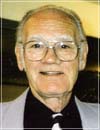
Scott Richardson

Justification

Romans 8:30
Scott Richardson July, 22 2001 Audio
0 Comments

Sermon Transcript

Auto-generated transcript • May contain errors

100%
chapter of the book of Romans, Romans chapter 8. The word justified
is used a couple of times here. in this 30th verse. It says, Moreover whom he did predestinate,
predetermine, chose out of Adam's fallen race,
he predestinated them, he also called them, holy calling, I
told you about that this morning, and whom he called them he also
justified, and whom he justified, them he also glorified. Then
down there in the thirty-third verse he says, Who can lay anything
to the charge of God's elect? It's God that justifies. And let's talk a little bit about
this this evening here, about God justifying his people. Justification is more than just
an acquittal. To be justified before God means
to be cleared absolutely of all charges of the devil and our
enemies of all sorts. Cleared of all charges. justified
us forever and forever. Now, it's not a justification
that's based on anything that we've done or can do. We're justified on the basis
of what God's only begotten Son, what He did, in our stead as
our substitute. It's based on what he did, not
on what we did. Now, let me begin by saying,
if there's nothing that we do in that which makes up our character
and that which makes up our conduct, if there is absolutely nothing
that we can do in that which makes up our character and conduct,
the cradle to the grave. Now that takes in a whole lifetime, every second of every minute
and every minute of every hour and every hour of every day and
every day of every month and every year from the cradle to
the grave. That takes in the entire span. lifespan of a man, woman, boy
or girl. Nothing we do, if there is nothing
we do in our character and our conduct, from the cradle to the
grave, before salvation and after salvation, that measures up to
the standard that God demands, measures up to the standard of
perfect righteousness, that measures up to the standard of sinless
perfection. Everything we do, from the cradle
to the grave, every minute, every hour, every day, every month,
that whole lifetime, I say of myself, from the time I was born to right
now, couldn't do anything or a series of things that could
meet the standard that God requires for justification. Stripped of
all of it, I can look and think, can't find nothing I can lay
my finger on. Not a single solitary thing.
Everything falls short of the standard. We, you and I, at no
time, even in our best time, now we've had some best times
that we've looked on when we looked on ourselves and thought,
well, I'm doing pretty good. I'm doing pretty good. I'm faithful
in my attendance to the worship services. I don't do anything
outwardly morally that I could be criticized for. I pray and I make an attempt
to spread the gospel and give my money and all these things.
Even at our best time, we can honestly say that we do not love
God perfectly. no time, not even a second in
the space of time can we say we love God perfectly and we
love our neighbor as ourselves. And if that's the case and we
have come to that place where we realize it, then we must cry
out aloud and silently from the depths of our heart, wretched
man that I am. That's what I am. Now, God, then,
He cannot justify you and I based on anything, now listen to me,
based on anything that falls short of what He demands, falls
short of His standard, which is what? perfect righteousness, sinless
perfection. And I'm afraid that the majority
of these people that talk about sinless perfection just don't
know what sinless perfection is. Or they wouldn't talk about
being free from sin. We have no sin no more. We have
been baptized in the Holy Ghost. We have no sin. We don't sin
no more. I'm sure that those folks mean well. but they are
ignorant of what God really requires in sinless perfection. Now, they
may have some good points, but good points don't save you. What
saves a man and justifies a man is sinless perfection, and you
can only find that in one person, and that's God's Lamb. So you've
got to receive him. You've got to put on Him. You've
got to be in Him by faith. Well, God cannot justify us based
on anything that falls short of sinless perfection. Yet, in
spite of that now, in God's salvation, He says that He justifies us. I read that to you. It is God
that justifies. I said up here, whom he called,
them he also justified, and whom he justified, them he also glorified. He looks at them as though they
are glorified legally and judicially before God. Yet in God's salvation. He says that He justified us. He says that He preserves us. He said He sanctifies us, that
is, considers us as holy. That's what sanctification means.
He takes an old copper bucket or an iron bucket or something
that the Israelites used and he tells the high priest, he
says, sanctify that. That means it's mine and therefore
we consider it holy, although it's a rusty bucket. He sanctified
us, set us apart and considered us as his and holy. He preserves us, he justifies
us, sanctifies us, qualifies us, entitles us to all of God's
heaven. I read to you there in Ephesians
chapter 1, all spiritual blessings in heavenly places. Now, since
he does this, Herein, justification, sanctification, righteousness,
forgiveness of sins, all in a substitute, in another person. Herein are
we made legally accounted the righteousness of God. Now, in
Him, in Christ Jesus, based on His doing and His dying, As our
substitute, his righteousness is freely imputed to our account
and it's received by faith. Received by faith. I believe what God said concerning
His Son in regard to me. He justified me based on his
righteousness. I receive that like a child. I receive it by faith. I believe
what God says. As a father speaks to his children,
tells his children, the children believe him. They trust him.
I trust God. I trust the Word of God. God
cannot lie. He's not in the business of a
fool in us. He's not playing tricks on us.
This is the living Word. This is the Word, the Word of
God that has lasted year after year, year after year, day after
day. Endured the attacks of the wisest
men of the world and they come up in Word of God and believe
God, believe Him. All right. Our good works, so-called. Now, we all think we have good
works, or at one time we did. I hope none of us thinks we have
any now. Our so-called good works, our sinful works, I call them,
have to be excluded from the basis of our salvation, from
the basis of our justification. and from our entitlement to God's
heaven. Now this, which is true, ought
to cause every sinner who knows he's a sinner to rejoice. You say, Why? Well, because there
is absolutely no reason for you, a sinner, to cling to your own
self-righteousness which falls short of salvation. It falls short
by clinging to it. Put it behind you, renounce it.
The righteousness that God requires is the righteousness wrought
and worked out by the substitute, the Lord Jesus Christ, and when
by faith you receive that, you receive it because it's imputed
to you. God writes your name in that
righteousness. You're in him, and when God considers
you, he considers him. You in him, without flaw and
without blemish, certainly. You ought to rejoice. And you
ought to rejoice if you're a believer because this is an encouragement
to motivate you and I to obey God in that he regards us. We're adopted into his family.
He regards us as children. A child loves his father and
his father loves his child. That's an encouragement. All
our sins are put away. He cast them away and doesn't
remember them and made an end of them, put them away. He looks
upon us now legally and judicially as we were in the Lord Jesus
Christ and had no sin. All gone, in Christ, he doesn't
consider our past or our present, it's all in him. See, if our
so-called good works are totally excluded, as the ground and the
basis for acceptance before God, and they are, then our salvation
is sure and certain based on the righteousness of another,
even the Lord Jesus Christ. Now, it was Adam who sinned. I didn't sin. Adam sinned. I wasn't around, but Adam sinned,
and his sin was imputed to me, and God regards me as He regards
Adam, a sinner. And I took on Adam's nature,
a sinful nature. Now, to get out of that mess, we get out of it by and through
our elder brother. the Lord Jesus Christ, who became
a man, and as a man satisfied all that that Adam lost. And our Lord Jesus Christ restored
that which Adam lost. And all that is freely given
unto us. So it's sure and certain based
on the righteousness of another, the Lord Jesus, the righteousness
of the Lord Jesus imputed to us who believe, who have been
quickened, who have been born again, whose desires have been
changed, whose outlook on life has been changed. He has become
a slave of another. He cries, Abba, Father. Now,
no wonder then, No wonder that God can say that nothing can
separate us from the love of God which is in Christ Jesus.
It's no wonder God can say there is no condemnation to them that
are in Christ Jesus, to them that are in Him. If you are still
in yourself, if you still believe that Your character and your
conduct have something to do with the salvation of God. You've
missed the whole point and you've missed salvation. It doesn't
depend upon what you do or what you don't do. They're not taken
into consideration. What's taken into consideration
is who the Lord Jesus Christ is and what the Lord Jesus Christ
accomplished on behalf of the poor, hopeless, helpless, doomed,
damned sinner. He paid for his sins, shed his
blood and paid for his sins, and clothed him with a perfect
righteousness, and now he stands in Christ altogether lovely. Now, that ought to cause a man
to rejoice. I look forward to it. I do. I actually, of course,
maybe it's just false. Maybe it's not so. But I think
that it's so. Dying ain't going to be as bad
as I used to think it was. Dying is going to sleep in Jesus
and waking up to see his face, and that ain't all bad. But if
a man continues in his rebellion against God and does not pay
homage to God's Son, Death will be a terrible thing
for him to be cast out there. The Bible says in the outer darkness.
I don't know what that means. Where the light don't shine,
where the sun don't shine, total eclipse of the sun, darkness. You can't see your hand in the
front. I don't want to go to bed. All right, let's stand.
Scott Richardson
About Scott Richardson
Scott Richardson (1923-2010) served as pastor of Katy Baptist Church in Fairmont, West Virginia.
Broadcaster:

Comments

0 / 2000 characters
Comments are moderated before appearing.

Be the first to comment!

Joshua

Joshua

Shall we play a game? Ask me about articles, sermons, or theology from our library. I can also help you navigate the site.