Bootstrap
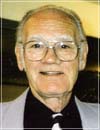
Scott Richardson

Comfort To God's People

Luke 12:24
Scott Richardson May, 13 2001 Audio
0 Comments

Sermon Transcript

Auto-generated transcript • May contain errors

100%
chapter of the book of Luke.
In that twenty-fifth verse it said, And behold, a certain lawyer
stood up, a man who was well versed in the law. He stood up and tempted him,
tempted the Lord Jesus. Who was tried and tempted? Tried and tempted. Tried and
tempted as a man. He is God. God can't be tempted. But the manhood of the Lord Jesus
condescended and took upon Himself our humanity as one of us. of the Lord Jesus was tempted
as a man. He stood up and tempted him. But bless me, God, he never yielded
to any temptation. He overcame every temptation of the world, of the devil, and
man. He tempted him, saying, Master,
what shall I do to inherit eternal life? And he said unto him, What
is written in the law? How readest thou? And he answered and said, Thou
shalt love the Lord thy God with all thy heart, and with all thy
soul, and with all thy strength, and with all thy mind, and thy
neighbor as thyself. That's a pretty big job, isn't
it? Love God with all your heart
and all your soul and all your strength and all your mind, and
that's not enough, but love your neighbor as yourself. That's
the demands of the holiness of God. That law of God in Exodus
22 that sets this forth shows forth the character of God, not
the full character of God, but the severity of His character
and the holiness of His character. There is no mercy in the law
at all. You can read that in the book of Exodus and you can't
find no mercy in that decalogue, no mercy there. It's this, do,
and live. If you can do it, you can live.
This, do, and live. He thought he could do something,
this lawyer. What shall I do to inherit eternal
life? He said unto him, What is written
in the law? How readest thou it? He told
him. So in verse 28 he said unto him,
Thou hast answered right. This do, and thou shalt live. This do. Do it all. Meet all
the demands of it. All the precepts of that law. willing to justify himself, said
unto Jesus, Well, who is my neighbor? As if he had fulfilled the first
part of that which he read, Thou shalt love the Lord thy God with
all your heart and soul and all thy strength and all your mind.
Well, he said, Who is my neighbor? And thy neighbor, as I said,
well, who is my neighbor? And Jesus answering said, A certain
man went down from Jericho, from Jerusalem to Jericho, and fell
among thieves, which stripped him of his raiment, and wounded
him, and departed, leaving him half dead. And by chance there came a certain
priest. And it really means by the providence
of God there is nothing by chance in regard to God. It is all on
purpose. It is according to His will.
It is foreordained. And by chance there came down
a certain priest that way, and when he saw him, he passed by
on the other side. He was a religious man, a priest,
one who was a master of the law, knew
the law. taught the law. But by chance
there came down a certain priest that way, and he just looked
to the other side. He saw him, and then he passed
by on the other side. No mercy with him. No help would
be given by this fellow. And likewise a Levite who was
of the same who was the same as the priest was. The priest
must be a Levite. All the Levites, the priests
were chosen out of the tribe of the Levites. And when he was
at the place, he came and looked on him and passed by on the other
side. Looking is of no help to this
poor dead sinner who was half dead laying in the ditch, wounded.
Just looking is of no help. He's got to have some real help,
real assistance. He's got to have someone come
down there where he is and do something for him. If you can't
do anything for him, take him to the hospital where they can
help him. He came where he was, but he was not moved with compassion. It didn't seem to bother him.
He didn't look at him with pity or compassion. And when he saw
him, He didn't have any compassion. A certain Samaritan, as he journeyed,
came where he was. And when he saw him, he had compassion
on him. And of course, in this parable,
we all say the good Samaritan is the Lord Jesus. And I don't
guess that that's wrong. A certain Samaritan, as he journeyed,
came where he was. Because when God saves us. He comes where we are and finds
us half dead, dead in trespasses and in sins. We can't help ourselves. And if He don't take the initiative
and come down where we are and pick us up and put us on a beast
of burden and take us to the physician, the great physician,
we'll remain in that condition. But he went to him and bound
up his wounds and done something for him. Pouring in oil and wine
must be some healing virtue to the oil and the wine, because
that's what they used. And set him on his own beast,
that is, the Samaritan's beast, whether it be a donkey or a horse
or a camel or whatever. and brought him to an end and
took care of him. Bound up his wounds, poured in
oil and wine, saved on his own beast, brought him to the end,
and took care of him. That's a type of picture of the
everlasting God in Christ. saving his people. And on the morrow, when he departed,
he stayed all night with him. And he took out two pence and
gave them to the host, the owner, and said unto him, he said, Take
care of him. Take care of him. I'll pay the
bill. Here's two pence to start with.
And if you spend any more than what I gave you, When I come
again, I will repay you. I'll pay everything that this
man owes, this poor, wounded, certain man. He doesn't give
no name, he's just a certain man. And when I come again, I'll
repay you. Which now of these three, our
Lord says in this parable, what do you think? What conclusion
do you draw to this lawyer who tempted our Lord? And he said,
Which now of these three thinkest thou was neighbor unto him that
fell among thieves? And the lawyer said, He that
showeth mercy on him. Then said Jesus unto him. go and do thou likewise." What
must I do? Well, show mercy. Show mercy. All right. Turn with me to the twelfth chapter
of the book of Luke. Luke chapter 12. Our Lord encouraging His people
here. a few, if compared to the multitude, it was just a
few of them, is speaking some comfort and help and hope to
his people. He said in verse 24, he said,
Consider the raven The ravens were the birds that
took the food to Elijah the prophet, you remember. Consider the ravens,
for they neither sow nor reap, which neither have storehouse
nor barn, but God feedeth them. How much more are ye better than
the fowl? to this little group of folks
that followed him. It was a small, insignificant
group. It wasn't thousands. It wasn't
in the hundreds. He came into his own receiving
now. Just a small handful. You could
count them on both hands, probably. And he said, these ravens, they don't toil
and work and sow and take care of the crop or anything. They
don't have no barns, no storehouses, make do for the winter. He said, and God feedeth them.
And he said, how much more are ye better than the fowls? If
he takes care of them fowls, you fuss. God considers you greater
and dearer unto Him than those fowls. He takes care of them,
provides for them, their necessities. And which of you which take in
thought, that is, just by concentration, can add to his stature one cubit? How can, when you fix your mind
on an object, by fixing your mind, can you cause yourself
to be any taller than what you are. If you then be not able to do
that which is least, why take ye thought for the rest? Consider the lilies, how they
grow. They toil not. They spin not. But I say unto
you that Solomon, all his glory, was not arrayed like one of these. If then God so clothed the grass,
which is today in the field, and tomorrow is cast into the
oven, how much more will he clothe you, O ye of little faith? Well, he'll clothe his people
with the garments of salvation. He'll dress them up in this righteousness
of his Son that he established here on this earth. He'll cover
them with his righteousness. He calls it a wedding garment.
How much more will he clothe you, O ye of little faith? He didn't say, Thanks be unto
God, O you of no faith. He said, A little faith, a little
faith. And seek not what ye shall eat,
or what ye shall drink, and neither be ye of a doubtful mind. For all these things do the nations
of the world seek after, And your Father knoweth that
ye have need of these things. So by way of help and hope and
comfort, if we be the children of the
Most High God, if we be brought into favor with God through Christ
His Son, dressed in His wedding garment, ready to sit at the
feast of the great marriage. That depicts us. The Father knows what things
we need. So he said in light of all this
and this comfort which is sure and certain. These things are
sure and certain for the believer. but rather seek ye the kingdom of
God, and all these things shall be
added unto you. Seek the Lord while he may be
found. Seek the Lord. Live for the Lord. Live a life that is a reflection
of the goodness and the mercy of God. Be kind and gentle, caring,
merciful, like this one was to that fellow that
fell in the ditch. Let that be your objective and
your attitude. But he says, fear not, little
flock. Don't fear. I'll take care of these things.
I'll take care of them. For it is your father's
good pleasure to give you the kingdom." Fear
not, little flock. The preacher said in response to the question,
he said, How is your church doing? He answers, it remains small
and weak. He said the flock is not very big. Small in number. Small in number
and very weak. Very weak. most preachers in the religion of
the 20th century who have a small congregation,
who are small and weak. If that be their case, they will
immediately look and do their best to build up that small and
weak congregation as quickly as they can. And the means which
they use, for the most part, to build up that small and weak
congregation is unbiblical, worldly church methods. I was reading
in this morning's paper, there this afternoon, where the headlines
said, big, a yard sale inside the church,
or something to that effect. And it was a big, large Methodist
church at Bridgeport. And they planned for days and
have People bring in anything and everything that's
of any value. Just bring it in and people will
come in and buy it. And the money will be used to
support the various activities. And so it is an unbiblical method. for a church to use. We're going
to sell something in order to... And hopefully some of these people
come in will not just leave and not come back. Well, if they don't do that,
they'll simply bid their time That is, the preacher, if he
comes to this small, weak flock, if he can't, through some practice,
build the church up real quick, then he'll just kind of sit back
and bid his time until something bigger comes along, looking for
a bigger building, looking for a bigger congregation. So while he sits there waiting,
out of embarrassment most of the time, they speak badly and
harshly to the people and speak harshly of the people rather than simply preach the
gospel of God's free grace and commend them unto the Lord. Well, I have found in my five-cent
ministry, that's how I evaluate my ministry, five cents. In my nickel and dime, five-cent
ministry, I found in preaching the gospel and traveling in far-off
places, I've found that the Lord's churches,
for the most part, are small and weak. Small and weak. They don't have many members, and they don't have much money.
They're hanging on about all they can do. However, I have
found that it's no fault of the message of the gospel. It's not
the fault of the message, neither is it the fault of the messenger. I found that out. At least most of the time it's
not the fault of the messenger. And all of the time it's not
the fault of the message. What is the fault? Look over
here in John chapter 9, if you will. John chapter 9, and I think
verse 41. And that 39th verse, Jesus says,
for judgment I am come into this world. that they which see not might see, and they which
see might be made blind. And some of the Pharisees which
were with him heard these words and said unto him, Are we blind
also? Jesus said unto them, If ye were
blind, ye should have no sin. But now ye say, We see. Therefore your sin remaineth. Now, part of the problem is that
in the Lord Jesus Christ, in Christ, His gospel is offensive to the
natural man. His gospel. How God saves sinners
through the substitutionary work of the Lord Jesus Christ and
all the ramifications of that is an out-and-out offense to
the natural man who are blind in their sin of self-righteousness. Now, it offends their dignity
as well as their self-righteousness. You say, well, how does it offend
their dignity? Because they do not see themselves
as lost and helpless, hopeless sinners, doomed and damned to
die and spend eternity separated from God. They don't see that.
It offends their high thoughts, their lofty thoughts of self,
because they would rather have the choice. They would rather
have the choice to be saved or not be saved. They want that
choice than for God in His sovereignty to choose whom He will. And that is one big reason why that the churches of our Lord
Jesus Christ are small and weak, because the gospel is offensive
to the natural man. We want to be able, they say,
to make our own choice. If we want to be saved, that's
our business. And if we don't want to be saved,
we won't be saved. We don't want you telling us
that it's God's sovereign choice and that he will have mercy on
whom he will have mercy. And whom he hardeneth, he hardeneth. We don't want that kind of business.
Well, they don't want for God in his sovereignty to choose
whom He will. It offends their sense of fairness
because they would rather have salvation to be an offer or to
be offered to them, and they had the power to accept the offer
or reject the offer, which they have neither. In their rebellion, It makes
them mad and they refuse the gift of God in the Lord Jesus
Christ. They don't like to be told that
there is a foreordination of God in His sovereignty to choose
whom He wills. It offends them in this sense
of fairness. Yet, in spite of all this, in the wisdom of God, it pleased
God to save some few in God's great and glorious unsearchable
wisdom. It has pleased God in time past. before time ever was, in eternity
it pleased God to save a few, a few, to save some few, and they may seem to men small and weak. But to God they seem like many. Is there few to be saved? I really
don't know. If they can be deciphered or
numbered, I don't know. But I know that he says here,
Fear not, little flock. Fear not, little flock. I'm going
to take care of you. Because it's the Father's good
pleasure to give you the kingdom. Over here in the book of Romans,
chapter 5, let me read this to you. Chapter
5 of the book of Romans. Listen to what it says. I said that it's a Little flock,
he said it himself, fear not, little flock, the kingdom of
God is yours. Man in his natural wisdom deems
the gospel of our Lord Jesus Christ to be foolishness unto
him. And they say, well, there are
just a few people, just a few of them, they don't amount to
anything, just a few, count them on your hand. There's about 40
of us here tonight, about 40 people. That's just a few, not
many. We're small, small church. Should be more here than what's
here. But, be that as it may, it's a small church. Small, small. Is there many that's going to
be saved? In the wisdom of God, He chose some to be saved, I
know that. And in the language of the world,
they may say it is few, but in the language of God, look here,
verse 19, For as by one man's disobedience many were made sinners,
so by the obedience of one shall many be made righteous. There
are going to be a bunch of them. There are going to be a bunch
of them. Small little flock. Don't look
like it amounts to much. Don't look like it can get anything
done. But it started way back there when our Lord said, Peter,
whom do men say that I am? Oh, some say this and some don't.
But whom do you say I am, Peter? Thou art the Christ, the Son
of the living God. Blessed be thou! Peter bar Jonah,
for flesh and blood hath not told thee this, but my Father
which is in heaven." From that time until now, there's a little
flock, little flock. Fear not, little flock, for yours
is the kingdom of God. Hope, there's your hope, right
there. Fear not, little flock, for the
kingdom of God for it is your Father's good pleasure to give
you the kingdom of God. I'm so glad, aren't you? Oh,
listen, how manifest must this little band of followers or disciples
or apostles, how insignificant must they have looked following
our Lord from place to place, about twelve of them, maybe a
few others wagging, coming up at the tail end of that little
group. Our Lord went from place to place and had twelve men with
Him. No fanfare before He came, no
forerunners apart from John the Baptist, yet He encouraged them
with His words. Fear not, little flock, you ain't
very big, but don't worry about it, for it's your father's good
pleasure to give you the kingdom." Now, these words were specifically,
well, not specifically, but especially, I think, directed to the apostles,
to the twelve apostles. Yet they are true in all ages
here in time, that it's a little flock. compared to a flock of
sheep, just a little flock, only twelve in his flock. Well, this flock of sheep that
God has separated from the rest of the world in divine and sovereign
election and effectual calling by the Spirit of God no matter
what the number is, there is no greater place in this world
or in the world to come for safety and comfort than to be in this
shepherd's fold. You can't find no more security
and safety and haven of rest than you can find in this haven
of rest in the Lord Jesus Christ and this little flock. this little
flock. I hope that when I die, though
we be few in number, someone, somehow, someway, if it's not
said by the preacher, say, well, he was a member of a little flock. He belonged to a little flock. And I'll say in heaven, if you're
not a little flock, For it's your father's good pleasure to
give you the kingdom. I'm glad for each one of you
who are in that little flock. Fear not. We're going to make
it through. We're going to make it through
to the end. We struggle, don't we? We have
our ups and downs, sorrows and bereavements. We're hurt. Sometimes we don't know which
way to turn, where to go, what to say, what to do. Fear not,
little flock. It's your father's good pleasure
to give you the kingdom. The kingdom's yours. The Lord bless us and help us.
Scott Richardson
About Scott Richardson
Scott Richardson (1923-2010) served as pastor of Katy Baptist Church in Fairmont, West Virginia.
Broadcaster:

Comments

0 / 2000 characters
Comments are moderated before appearing.

Be the first to comment!

Joshua

Joshua

Shall we play a game? Ask me about articles, sermons, or theology from our library. I can also help you navigate the site.