Bootstrap
Scott Richardson

A Rebellious People

Isaiah 65:1
Scott Richardson March, 4 2001 Audio
0 Comments

Sermon Transcript

Auto-generated transcript • May contain errors

100%
talk to you a little bit here
from the book of Isaiah chapter 65. I'll read two or three verses
here. 61st chapter of the book of Isaiah. Verse 1. The Word of God. I Am. That's the I Am of the book of Exodus. That's
when the children of Israel were in deep bondage in Egypt. They were there for 400 years,
but they were still nationally the people of God by covenant. They were the people of God.
They'd been there a long time and had forgotten their religion. They'd forgotten God, forsaken
Him. And finally when things got so hard
They began to cry out. It was working daylight till dark, trying to
make bricks without straw, which they thought was an impossible
task. Finally, as men do, they come
to the end of self and nowhere to look but up. They spend all
their time looking down, looking sideways, this way, that way. No help in sight. And they finally
begin to look up. And the Bible says God heard
their cry, the cry of their hearts, the cry of their souls, and raised
up Moses. to deliver them, to go to Pharaoh
and say, Pharaoh, let my people go. Well, Moses said, I've been
out there in the bush, in the wilderness for 40 years. I forgot
how to make conversation. I'm not a very good speaker. And maybe you ought to send someone
else. But eventually our Lord said, well, I asked Moses his response. Moses said, well, I
can't speak. I wouldn't know what to say.
He wouldn't believe me anyhow. He said, who would I say? Who would I tell these pharaohs
and this bunch? Who would I tell them that sent
me? What authority would I have?
He said, you tell them. that I am hath sent thee." I
am that I am. You tell them that. This is the
I am right here. I am. This is the true and the
living God. This is God the Father. This
is the maker and the creator, the sustainer, the controller. This is the God that does as
He pleases. Sovereign God. He doesn't need
any help from me or you. He doesn't need any information. He knows it all. He doesn't need
to be helped. He has all power. He has all
authority. You tell him, I am. Now, God
speaking, I am sought of them that ask, not from me. He's speaking here of the Gentiles,
of the Gentiles in prophecy. It's a prophecy, in a sense,
a prophecy regarding the Gentiles. The Gentiles were considered
by the Jews as dogs, Gentile dogs. Remember the woman that
went to the Lord Jesus? sought healing for her daughter. And our Lord said, I'm not sent
to the Gentiles. It's unto the Jews first. And he went on and said about
feeding the Jews and the crumbs of the table fell off for the
dogs. And she said, Lord, I'm a dog. I'm a dog. I'm your dog. I am sort of them that ask not
for me. It's a prophecy here that when
the Jews rejected as a nation, as a whole, the chief priests,
the scribes, the elders, and all they that passed by said,
We won't have it. We won't have him. You say he's
a Messiah, and you say you're God, and if you're the Son of
God, do this and do that. And he said, Well, I'm not going
to put on no show for you. And they rejected him. They wouldn't
have him. He came to his own, but his own
received him not. But as many as received him gave
him the authority to become the sons of God. They wouldn't put
no show on for him. They rejected him. Now the Lord
God says, I am sought of them that ask not for me. I am found
of them that sought me not. I said, Behold me! Behold me
unto a nation that was not called by my name. And I'm speaking to these Jews
here, their rejection. The nation up there in the first
verse, that's the Gentile people. They have nothing for them. I have spread out my hands all
the day unto a rebellious people, to the Jews, which walketh in
a way that was not good. The opposite of good is bad. So they walked in a bad way after
their own thoughts, that is, after the imagination of their
own hearts. All worship must be according
to the will of God. And they worship to anything
and everything, idolaters of the worst kind. And he said,
They walketh in a way that was not good after their own thoughts,
imagination of their own thinking. And he said, A people
that provoketh me to anger continually to my face. To my face. You remember I read to you over
there in Matthew 27. said these two thieves hanging on the tree. They looked him in the face and
jeered and mocked and scoffed. In the face! And people that
provoketh me to anger continually to my face. Over here in the
book of Job in chapter 1 it says this, verse 11, in a conversation that God had
with the devil. In that tenth verse, the devil
says, Hast thou not made a hedge about him, about Job, about his
house? He put a hedge around his house. And about all that he hath on
every side, all of his cattle, his sheep, his camels, his family,
Thou hast blessed the work of his hands, and his substance
is increased in the land. But the devil says to God, But put forth thine hand now,
and touch all that he hath. And he said the end result will
be he will curse thee to thy face. It's one thing to stand behind
a fellow's back and say something mean about him or slander him
to a neighbor or somebody else. But it is the baddest of the
bad when a man looks you in the face and slanders you. And that's what happened over
here. He said they looked him in the
face. I've spread out my hands all
the day unto a rebellious people, and they walked in a way that
was not good after their own thoughts. A people that provoked
me to anger continually to my face, that sacrificed in There's
only one place to sacrifice, and that was in the tabernacle,
the altar. The sacrifice must be killed
and placed on that holy altar. But, he said, they sacrifice in gardens. And I read where that meant on the paper. on the bricks.
They offered their sacrifices on the bricks, on the ground,
not on the altar. And they did so after their own
thoughts. They sacrificed in the gardens
and burned incense upon altars of brick, not upon the altar
that was made out of this one stone. Well, I am sort of an ass, not
for me. Well, let me begin by saying,
every display of the grace of God, better let me say, every
display of the sovereign grace of Almighty God is a jewel in
the crown of the King of Kings and the Lord of Lords. and the
only potentate, the Lord Jesus Christ. I am sought of them that ask
not for me. I am found of them that sought
me not. I said, Behold me! What hard hearts we have! Oh, that we would be more God-like,
Christ-like, that we would have or manifest some humbleness,
some humility before God and be more thankful to Him. Lord, help us tonight, Gentile
sinners. to look back and to look within
and to look up and to look forward, that that might excite humility
and thankfulness in our souls for who He is and for what He's
done for us and what He's doing for us and what He will do in
the future. Look back, I say, O my soul,
and view my state, what I was. Look at it. What was my state prior to God
in mercy coming where I was and quickening my dead soul? I was lying dead asleep in the
arms of the wicked one. But he came in sovereign grace
to where I was, in the arms of the enemy of God and the enemy
of man, in the arms of the wicked one himself, and pierced my conscience. that made me to know my guilt
and my shame. I was in love with the world
under the power and the dominion of that monster of sin, blind to the beauty of the Lord's
person as those two thieves, as the chief priests and the
scribes and the elders and that great crowd that had gathered
there, that spectacle. Nowhere else to go there wasn't
the theaters, wasn't the ballgames, the television, the entertainment.
They had to be entertained and so the whole of the area heard
about Pontius Pilate and they heard about this one called Jesus
and that they had found him guilty, charged him, insurrectionists. They heard about it. They all
gathered down there and they was all blind. The two thieves
along with them was blind to the beauty and the glory of that
person, that man called Jesus. That's where I was at one time.
I was blind to his beauty. If he would have walked physically
in my presence, I would have done the same thing they did.
I would have said, if thou be the Son of God, come down. blind to the beauty of the Lord's
person, and without a single desire after Him. That's it. Now, is this the language of
your heart? That's the language of my heart. You say, I look
to none but the Lord Jesus Christ. I expect salvation from Him and
Him only. Well, that's a mighty big change
in what you once were when you were viewed by nature, when you were lying in the arms
of the wicked one. Now you say, I expect salvation
from Him and Him only. What about this mighty change?
that come over a man. Well, let me ask you some questions
here. Did you seek the Lord Jesus Christ
first? In this business of seeking,
who made the initial charge? Did you seek Christ first, or
did Christ seek you first? Did your desires first go out
after him, or did his desires first go toward you? Which way
was it? He sought me first. I am sort of man that ask not
for me. He sought me first, and then
I sought him. You see the difference? He must
do the seeking. In your state, you lie in the
arms of the wicked one, satisfied to be there, a child of hell
and blacker than hell, and there is no seeking desire in you for
Christ. Christ must seek you first. I am sought of them that ask
not of me. If he had not sought me and made
himself manifest to me, I must, I should have gone to that place
of separation from God forever and forever, where there is no
end to the suffering and the torment. Stay there forever and
never have a single solitary desire after Him. If He had not
first sought me. Oh, it's Jesus Christ alone. He's
the seeker and He's the finder. I'm the object of the seeker. He does the seeking. and I do
the same. I furnish the sands. His grace
was first in my heart before there was any movement of mine
towards Him. It was this grace, saved by grace. What's that mean? three quarters,
ninety-five percent of the television celebrities and the preachers
and those that join in in this world that sings, Amazing Grace,
how sweet the sound that saved a wretch like me, do not know
what grace is. Grace is, like everything else
about God, it is sovereign It's his sovereign choice. He reached down and got this
one. Reached down and he got this
one. We sing the hymn sometimes, While on others thou art called,
Lord, don't pass me by. His grace was first work in my heart. It was matchless. it was sovereign grace that drew
me to him and caused him, his grace, to receive me as a
poor, helpless, hopeless sinner. Now, just a few more minutes. Go with me back to that twenty-seventh
chapter of the book of Matthew. You find it about the crucifixion. Then over here in Luke, Chapter 23. There is a change in this man. These
two thieves, one of them changed and one of them didn't. What
brought about that change? Verse 39 says, one of the malefactors
malefactors," that means one of the bad men, "...which were
hanged," that is, on the tree, crucified, "...railed on him,
saying, If thou be Christ, save thyself and us." Now, you remember
that over here in Matthew 27, it says, "...the thieves also,"
both of them, "...the thieves also, which were crucified with
him, cast the same in his teeth." And now it says over here, one
of the malefactors, which were hanged, railed on him, saying,
If thou be the Christ, save thyself and us. The other thief joined
in with him to his face. He was not to be excused. And the other answering rebuked
him, saying, Dost thou not fear God? He's changed. This one is
changed from the 27th chapter of the book of Matthew. He said, This man's done nothing
amiss. What we receive, we're hanging
here nailed to the tree. We're getting what was due us. This is the due reward for our
deed. But this man, this man hanging here in the middle, hanging
right, I can just look right in his face. This man here, that's
being crucified with us. He hasn't done anything wrong.
He's not a bad man. He hasn't done anything wrong.
We've done something wrong. The others wouldn't admit it,
but this one would admit it. He said, I've done something
wrong. I've been bad. I'm an awful sinner. And this
man here, he hasn't done nothing amiss. And he said unto Jesus,
This thief, Lord, remember me when thou comest
into thy kingdom. And our Lord Jesus said unto
him, Verily I say unto thee, Today shalt thou be with me in
paradise. You'll be with me before the
sun goes down. You're going to be with me in
the paradise of God. Now, this thief, He beheld the
Lord when he literally saw him dying the death of a felon. He looked upon him not before
he was crucified, but while he was being crucified. He'd already
been beaten with many stripes. He'd already had this crown of
thorns on his head. pierced his skin. He'd already been rejected. He
wasn't one of beauty here. He looked upon him and saw him
dying the death of a felon. At that time, and even now it
would be, a great personal shame for anybody to be crucified on
a tree. crucified, stretched out and
nailed to the tree, your legs and your hands and all the weight
of your body pulling against those nails until the torture
and the suffering becomes so unbearable that you just give
it up and die. He saw him that way. Great personal
shame, hanging on a tree. Well, we never realized what
it was to be crucified because we have never seen any crucifixions. That's something that has not
happened, as far as I know, in the good old U.S. of A. None of us can realize in our
own minds the actual death of the Lord Jesus Christ. We say
that it's terrible and leave it go at that. But it was more
than terrible. It was a shock to the nature
of man. It was a crime of crimes to hang
the Son of God like an everyday thief and robber and a bad man
and nail him to the tree. Well, this man saw it with his
own eyes. And for him to look upon him
who had this crown of thorns, nothing on his body, blood running
down, eyes back in his head, to look upon him and call him
Lord, which means master. It means God. He said, Lord. on this bloody man here. This
hopeless and helpless man pinned to a tree. He looked at him. He seen him. And he said, Lord,
remember me. Saw him with his own eyes. And for him to call him Lord
who was hanging on a tree was no small thing. That's what you
call great faith. and to ask him to remember him
when he came into his kingdom. Though he saw him bleeding here,
suffering his life away, and hounded to death, yet he said,
Lord, remember me when you come into your kingdom. Oh, he committed
this thief whose conscience was pierced by the Spirit of God. And he seen his shame and his
guilt, he committed his everlasting destiny, his everlasting soul
into one who from all appearance was unable to save his own life. And he said, Remember me when you come into
your kingdom. Now, something in it. He saw our Lord in extreme agony
and death, yet he beheld Him as a King, shortly to come into His kingdom. For he said, Lord, remember me
when You come into Your kingdom. For man does only One king and
one kingdom. And he saw that this was the
king of this kingdom that has no end. Well, he himself now was not
excluded from this torture. He was tortured too. The blood
was running from his hands and I don't know that they had pierced
him in the side like the Roman soldiers did, that is, this believing
sinner hanging on that tree. He was crucified and it was, in a sense, you remember
this, you don't remember nothing else, it was a crucified man
trusting a crucified Christ. two crucified people here. One
was just a man, and he trusted another crucified man. He trusted
the God-man. He committed the destiny of his
soul to this crucified man when his body was wracked with
pain and He said, yet, Lord, I believe you have a king. I
believe you're a king. Lord, remember me. Oh, listen. He forgot the present
and began to think about the future. And I know it was difficult for
him to forget about the present because his body was wracked
with pain. But he began to look to the future. Oh, what did this thief see?
His eyes was open. He wasn't very far. He wasn't
wide-eyed like I am here tonight. His eyes wasn't wide open. He
was hanging on a tree and the blood was gushing out of his
body. His strength was about gone.
He probably couldn't hardly talk, just a gasp. Wrath, wrath. Oh, his eyes were open. He saw
a future world. And he didn't believe that a
man dies like a dog, like a horse, like a calf. He believed there
was a future. He believed there was a kingdom. He believed that he saw the King
in all of his glory. And he confessed that the Lord
was righteous. He said, this man's done nothing
amiss. He said, we're just getting what we got coming. There's a change. There's a change. Did the thief... Who done the
seeking? Was it the thief or the Lord
Jesus? It was first the Lord Jesus seeking. The Lord Jesus deposited some
grace, some unmerited favor. That's what grace is. You don't
deserve nothing. I don't deserve nothing. We,
if we got our just reward, all of us here, every one of us,
when we took our first breath before the doctor slammed it
on our rears and made us cry, We should have went to hell.
We deserve to go to hell. We ought to have went to hell
because of our sinful nature. But we didn't go. It was unmerited favor of God
that he was determined to have a people of his own. So in his long suffering, he
could have sent all of those that are reclamates, he could
have sent them to hell years and years ago, any time he wanted
to. But it's his grace that prohibits
him and when he saved you and I and
gave us grace, put grace in our hearts, it was sovereign grace. There was lots of other people that was far better than we were,
but better has nothing to do with it. It was according to
his good pleasure that he deposited the grace of God in our hearts. And so it was with this dying
thief. And he said, Remember me. Change. Change from this chapter to the
other chapter. He joined in with that other
thief and looked right into the face of the Lord. Jesus had to
turn his face an inch or two. He looked right into him and
railed upon him, railed upon him. But there is a change. He
finally turned to this other thief, and he said, oh, this
man's done nothing to me. He said, you and I is wrong.
He said, we just get our just recompense and reward for what
we are and what we've done. But this man's done nothing.
Oh, Lord, remember me. Oh, verily, verily, I say unto
you, this day shall thou be in my kingdom. That's salvation,
isn't it?
Scott Richardson
About Scott Richardson
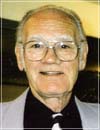
Scott Richardson (1923-2010) served as pastor of Katy Baptist Church in Fairmont, West Virginia.
Broadcaster:

Comments

0 / 2000 characters
Comments are moderated before appearing.

Be the first to comment!

Joshua

Joshua

Shall we play a game? Ask me about articles, sermons, or theology from our library. I can also help you navigate the site.