Bootstrap
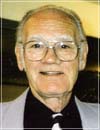
Scott Richardson

He Appeared Once To Put Away Sin

Acts 3:12
Scott Richardson October, 8 2000 Audio
0 Comments

Sermon Transcript

Auto-generated transcript • May contain errors

100%
We'll look at the 9th chapter
there of the book of Hebrews. Chapter 9. And the 26th verse of chapter 9 of
the book of Hebrews. Verse 26. Well, I come this morning in
his name. There would be no need of coming
in my name, but I come in his name to proclaim, to tell out
an old truth, a blessed truth, to which you have listened to
many times before. You've heard it before, time
and time again. And I'm sure it will be of great
joy and delight in your soul, to most of you, to hear of one
who can put away sin. Here I suspect that you have some idea concocted
in your own mind that you're not guilty. You're not what you're
charged with. The preacher from the Word of
God has charged me with sin. many times and concluded that
I was vile and had broken His law over and over and over. Well, I've got this to say in
light of that. He could not put sin away if
you didn't have any sin. If you don't have any sin, he couldn't put it away. Let
me read this to you, verse 26. just one time, but now, once
in the end of the world, hath he appeared to put away sin by
the sacrifice of himself." And I'll read the other two verses,
but the truth that I want to proclaim to you is, He to put away sin by the sacrifice
of himself. And as it is appointed unto man
once to die." I was talking to someone here
just recently, and that was brought up. The fellow I was talking
to told me about his brother. He said his brother died up in
Ohio. near the Michigan border and
he said it was a sudden death and he said I just visited him
and hadn't seen him for a long time his older brother and he
said I just visited him shortly after I left and come back home
He got sick and they took him to the hospital and he died. And it's a long story. But we
got to talking about people dying. And I told him, and I think I'm
right on this, that's the only thing that's certain in this
life. Everything else is uncertain. We're going to die. Every one
of us. It's certain that we're going to die. When? I don't know. And where? I don't know. And
how? I don't know. But I know that
this man that you look at this morning is going to die. Maybe sooner than he thinks.
Maybe later than he thinks. But he is going to die. It's appointed by God, the time
and the place, the how and the whens of his death. And as it is appointed unto men
once to die, but after this, the judgment,
after he dies, So Christ was once offered Himself
to bear the sins of many. It doesn't say that He bore the
sins of all. It said He bore the sins of many. And unto them, unto the many,
unto them that look for him shall he appear the second time
without sin unto salvation." All right. I've said that it would be a
joy to some of us here to hear that This man appeared to put
away sin. And others, it won't affect them
because they've got this idea in their head that they have
no sin. They define their sin as a blemish. They define their sin as maybe
a mistake, maybe something they couldn't help, but they don't
believe that their rebellion is equivalent to being cast. The punishment for their rebellion
would be equivalent to a bottomless pit. But there's one thing here in
this text that ought to get our attention. It's this, that the
Lord Jesus Christ didn't come into this world to deny the fact
of sin. or to propagate or promote a
philosophy which might make sin appear to be harmless and define
it as a mere mistake. He did not appear or come into
this world to help you and I forget sin. He came into this world to put
sin away. He did not come to furnish you
or me with a cloak to cover it. He has not appeared that he may
so strengthen your mind and my mind that we may learn to laugh
at it and joke about it and deny the consequences of it. He has not come to lull us
into a false peace, but he has come to give a full, absolute
deliverance from sin by putting it away. That's wonderful, isn't
it? By putting sin away. Now, I'm going to be honest with
you, honest that I know I am. The monster sin is in me and
throughout me. And if I was liable to judgment,
I would spend eternity in hell
paying for the sins that I have committed. But He came in my
place, He who became a man. He took upon himself the robe
of human flesh. And as a man, God's man, he said,
I'll be responsible for you. I'll take upon myself your liabilities,
your debts. And I'll give you a full deliverance
from judgment. He said in the book of Romans,
chapter 8, verse 1, There is therefore now no condemnation
to them that are in Christ. No judgment. What will I be judged
for? My sins have been put away. So there's no sin on my record. He stood responsible and liable
for me. So nothing can be charged to
me. They've been charged to him.
And he came to make full deliverance. and make a complete and full
atonement to take care of my sins. He came to give somebody a real
cure for all their ills. And I want you to consider here
this morning for a little bit That it's a very hard thing to
do, that which he did. It's a very hard and difficult
thing to do, that which he did on behalf of poor sinners. If you think of this, of how
hard it is to put away sin, if you'll just give that some thought,
It'll help you to magnify the power and the wisdom and the
grace of the Lord Jesus Christ who has put it away. You'll bless the name of the
Lord Jesus in your heart and your soul. And you'll understand
why God calls him his beloved son. You'll understand a little
bit why God said, I'm always pleased. This is my beloved Son
in whom I am well pleased. Yes, you will magnify the wisdom
and the power and the grace of the Lord Jesus who has put it
away. See, it is a hard thing to do
to put away sin. It is so hard that God had to
become a man in order to put sin away. God just couldn't put
sin away by saying, I annihilate it, I look over it, I pity and
love you in spite of it. He can't do that because God's
holy. You see, God's just. and he cannot compromise his
holiness or his justice. His justice must be satisfied
and only sinless perfection will satisfy. And I haven't got sinless perfection. There were times when I sinned and didn't know.
which was chargeable to my account. No excuse. I have no excuse. The Bible says that all may become
guilty before God. Every man must be stopped. All excuses laid aside. All pity muffled. up in your soul not to be asked
for. Babies. When I was a baby, I
cried when I shouldn't have cried, which was evidence of my sinful
nature. A mass of sin from then until
now. It's going to take a great work
just to put away my sin, let alone put away the sin of a number
of people from every tribe and tongue and nation. If you consider how difficult
it is to put away sin, oh, you will come to appreciate the grace
of God in the Lord Jesus Christ that he put away sin. I mentioned this a little bit
prior to our preaching service, and I emphasized, or tried to,
that all the Jewish sacrifices couldn't put away sin. I read
that in the Bible in the twelfth chapter, or maybe the tenth chapter,
I believe it was. For it is not possible that the
blood of bulls and of goats should take away sin. Not possible. It's a difficult thing to do.
Oh, I know that there's people alive today, maybe one or two
or three or four here. You think that you can take away
your sin. I'm telling you, it's a difficult
thing and I don't believe that you're up to the task. If there's
only one in the heavens that could do it, what makes you think
you can do it? I'm telling you, it's a difficult
thing. All the Jewish sacrifices could
not do it. I told you it was a very costly
and expensive thing to do, because sometimes there were thousands
of bullocks, thousands of sheep, thousands of goats, and flock
after flock of turtledoves slaughtered, and they were ordained by God
himself. they could not take away sin. In the tabernacle of old, when
God raised up Moses to be the leader of the people, their representative
and their shepherd, he was told to build a tabernacle. And in the tabernacle, everything
was done. according to the plan and pattern
seen in the Holy Mount by Moses. God gave Moses certain directions
about the building of that temporary abiding place of Jehovah God. And everything was done exactly
in the building of that temple according to God. and it was
ordained by God that they do. Now in the temple, no sacrifice
was ever presented but according to the command of God. The whole
ritual was very impressive. The priests in their holy vestures,
their holy robes, their pure white linen garments, the gusts
and clouds of smoke, the perfume of the incense filled the place. But for all of the magnificent
and costly service divinely arranged and appointed by God, yet It
could not put away sin. I am telling you, it is a difficult
thing to do. Now, if sin had been put away,
there would have been an end of the sin offering. I read that
to you. There is an end of pain when
the debt is discharged. I don't have to pay on my house or my car or whatever
when I've made the last payment. The debt has been discharged. I have to pay for it no more. The end of punishment when the
penalty is fulfilled. The end of propitiation when
God is satisfied. Now, after all this, sin is still there. All the Jewish
sacrifices, all the slaughtered animals, all the burnt offerings
and the sin, sin is still there. It was not washed away. Their garments were still defiled. Sin cannot be put away by ceremonies. Ceremonies. Aye, so. This religious world is full
of ceremonies. In most churches, that you would go to in our day
in this twentieth century. There will be certain little
ceremonies that will take place before the preacher preaches.
And when he preaches, he won't have anything to say. Sin cannot be put away by ceremonies. Glenn gave me a piece of mail
that came from Charleston, wanting the churches to contribute money
to the buying of computers and put computers in the churches
and arrange a time for one who was an instructor with the computer
to teach children how to use the computer. What's
that got to do with the taking away of sin? Ceremonies, additives. Sin can't be put away by ceremonies. There was those in our Lord's
day who, not content with doing what God commanded, implemented
or invented rites and ceremonies of their own. They practiced
washings of all kinds. They paid tithes of their mint
and anise. They broadened the borders of
their garments. And all of this that they had
done was a complete failure. There
were two men that went up in the temple to pray. One was our
poor public. hated by everybody, guilty. He knew he was guilty. He taxed
Jewish people, him being under the authority of the Roman government. He taxed them and overtaxed them. He was a sinner and an awful
sinner, and he knew he was. But there was another man with
him who was a Pharisee. The publicans stood over there
and the Pharisees stood over there. And the Pharisees said,
God, I fast twice a day. I do this and I do that. I pray
so many times a day. his role, brilliant colors. And he went
out on the street corners at three in the afternoon, went
out there and prayed in front of everybody. I was at a place
last Sunday. We had our breakfast at dinnertime. And I noticed as I was paying
the bill that there was two boys, the mother and the
father at the table. And I know the people. I know
them. And that doesn't mean anything
because I know them. But there they were, bowed in
deep prayer. Thank God for the food. You say,
well, that can't be wrong. No, it's never wrong to thank
God for food and everything else. But there is an element of self-righteousness
in it. I fear most people in restaurants
that pray over their food in this vast crowd, do it to show
forth their religion. That's the way that Pharisee
was. Out on the street corner at three
o'clock in the afternoon, I make great prayers. Well, this fellow over here in
the corner, this publican, He knew his guilt. He admitted his
guilt. He couldn't pray anything that
would give forth some understanding of what he had done. He hadn't
done anything. He said, God be merciful to me,
a sinner. God the Father said, which of
these two men went down to his house justified? He said that public, he went
down to his house justified. And this religious man, with
all of his ceremonies, all of his outward dress, all of his
phylacteries, all of his broadening of his garments, in all of his
words, he went down to his house unjustified. I'm telling you,
I'm telling you, you can pay your tithes, your mints and your
anise, and broaden the border of your garments, but all of
that is a complete failure in the removal of your sins. They made the outside of the
cup and the platter clean. But on the inside it was full
of dead men's bones. So no outward form can make you
clean. Why? Because sin is like leprosy. It goes so deep. that your works
and forms and ceremonies can't reach it. Do you remember we sang that song
about the blood of the Lord Jesus? And we said that His blood reaches
deeper than sin can. The leprosy of sin lies deep
within. Rites and ceremonies. Not even the rites and ceremonies
that God has given can avail. It matters not how sincere you
are when you perform. Baptism never saved a soul. The soul is already saved. Baptism
doesn't help you get saved. The preacher doesn't help you
get saved. It's only God that can save you
or me, and that's through the Lord Jesus Christ. Repentance. We hear a lot about
repentance. You need to repent. You need
to change your life. You need to quit this and quit
that. Straighten up and fly right.
Repentance itself cannot purge a man from sin. Let me not be
mistaken here this morning. Wherever God gives real repentance
of sin, then their sin is forgiven. For repentance and forgiveness,
or remission of sin, come together. They come hand in hand. But no man, to the exclusion
of none, or exclusion of none, no man is pardoned because there
is any merit in his repentance. is a gift of God and repentance
is a gift to us at the time of forgiveness of sins. They come
together. But it is not the cause. Repentance
is not the cause of forgiveness. Repentance comes with forgiveness. Psalm 51, and I haven't got time
to read it this morning. Maybe tonight I'll read it. David in Psalm 51. Nowhere does
David claim forgiveness because of his sorrow for his sin. committed some terrible, terrible
sins. He stole the affections of another
man's wife and had a child by her. And after
this was all over with, he went and got her and took her into
his house and married her and had other children by her. He was sorry for what he had
done. Sorrow for his sins was not the reason why he was saved. Nowhere does David claim forgiveness
because of his sins. He does not say he was forgiven
because he repented or that his tears could wash his soul white. Nowhere is that to be found.
His prayer was this. purge me with hyssop, and I shall
be clean." That's what he said. And when he was talking about
being purged with hyssop, he's speaking of the sacrificial blood
of the Lamb of God which was sprinkled by a piece of hyssop
on the side of Jesus. and I shall be whiter than snow. If God washes me in the blood
of the divinely appointed one, then I shall be whiter than snow.
I shall be purged. David did not say in that 51st
Psalm, I have washed myself with my tears. and I'm whiter than
snow." Oh, no. His remorse and his sorrow for
his sins was genuine, no doubt, but he never rested on his remorse
or his sorrow. There's part of the hymn that
we sang sometimes. Could your tears forever flow? Could your grief know respite? No. All for sin could not atone. Christ must save and Christ alone. No form of suffering in this
world can put away sin. Some have been mistaken on their
interpretation of the parable of Lazarus and the rich They
feel like Lazarus who suffered at the gate,
suffered in the street, was poor, didn't have anything. This beggar
was so sore and poor that he couldn't afford to go,
didn't have any HMO. It wasn't too poor to go to the
doctor, they had no money to pay. So the dogs licked his soles
at the gate of the rich man's house. The rich man who had plenty,
he died. And so many interpret this parable
that all rich men go to hell and all poor people go to heaven
when they die. Well, that's not what our Lord
was teaching. that the rich will be sent to hell and the poor. Well, the rich will be sent to
hell just because they are rich. No, that's not what it's teaching.
And the poor will go to heaven just because they're poor. No.
You and I here this morning might be as poor as old Lazarus was. You might even lie in the dust,
as he did, or on the dunghill with dogs to lick your souls. But your suffering here by no
means makes an atonement for your sins. There's only one who
can make atonement for your sins, and that's the man that God sent. The God-man in his name shall
be called Jesus, for he shall save his people from sin. And that's the way it is. Job, who suffered more in body
than probably any other man that ever walked the face of the earth.
He lost his family. I forget, what was it, nine of
them? They all died the same day. Daughters and sons, they died. Can you imagine? the anguish
and the grief of nine funerals in one day. If we have one of
our loved ones while we're mourning and in grief for several days
when it happens, and then we are in mourning and grief after
we leave the graveyard, and some people never get over their grief
and mourning. They mourn and grieve all their
lives. old Joe lost his family. And to top that off, he lost
everything that he owned. All of his sheep and all of his
camels, all of his cattle, everything he had was taken away from him. And finally, he found himself
covered with a horrible disease. Scabs all over him. bone, didn't have a stick or
anything, an old bone, and scraped the scabs off of his body. And his wife looked upon him
with contempt and said, Job, why don't you just curse God
and die? You know what old Job said? Job said, Naked I came into this
world, and naked I shall go forth. Job said, I know that my Redeemer
lives. Job's suffering did not guarantee
him a place in heaven. In the latter part of that book
of Job, Job came before God, and he said
to God, he said, I have heard of thee by the hearing of the
ear. But he said, now mine eye seeth
thee. That's when Job comes to the
end when he's seen God, when the love of God was shared abroad
in his heart. because of his suffering. He
didn't say, Lord, I've suffered all this. I suspect now because
of my suffering, I've paid whatever debt I owe, and I'm clear. No, I didn't say that. He said,
I abhor myself. I hate myself. And I repent and
dust and ashes. He said, I know my Redeemer living. You see, no form of suffering
entitles a man to go to heaven when he dies because I believe
that form of suffering takes away his sin. And no form of
self-denial can put away sin. Death does not put away sin when
a man dies and death puts away some things, that is, if he has property or
if he has an estate, then those that are alive can contest his
property and his estate. If they're relatives of his,
they can contest that. But I'll tell you this, death
never kills. Death does not take away our
sins. Sin is immortal until the immortal
Christ comes to deal with it. Because my text said, But now, once, in the end of
the world, hath He appeared put away sin. Sin stands like the everlasting
hills of our state, and they will not move from their place
until he that made heaven and earth into the sea of his atonement. What I'm saying is, only he who
made the mountains can cast our sins into the sea of forgetfulness
and remember them against us no more. He came once to put
away sin. The rich man died and was buried. but none of his sins was buried
because the Bible says that after he died and went out into that
bottomless pit, he lifted up his eyes in hell and he said,
Lord, there's that Lazarus over there. I can see him over there. Tell him to come and put a drop
of water on my tongue, for I thirst in these flames." He said, send
somebody back and tell my brothers back there what I'm going through
and see if they can't avoid coming here in this place. So the rich
man died and was buried, but not one of his sins was buried
with him. He's paying for him. Think of
those lost ones, lost men and women, whose spirits have been
in hell, some since the time of Noah's flood. The whole world went off into hell. There was a symbol and type of
the taking away of sin. in that great ark of Noah's.
Get on the ark. Noah preached righteousness and
judgment to that population, to that generation, and they
laughed and made fun of Noah. They refused to come into the
ark, and the whole world drowned. And they've been there, their
spirits, have been in hell since the time of Noah's flood. And
they are still sinners and they are still paying for their sins. Horrible sins, damnable sins,
monster sins, foul sins that makes us toss on our bed at night
when we remember. and go to sleep. Sins, horrible,
terrible sins, come to our kitchen and plague us. And we roll to
this side and roll to the other side. We're like dogs that return to
its box. Oh, what good news it is when
it falls upon your ears that Christ has put away the sin and
sins of all of his people. The Lord God hath laid on him
the iniquity of us all. And God regarded him as if he
committed all those sins, unmentionable sins, little sins, lip sins,
heart sins. God the Father, in order to satisfy
His justice and the Lord Jesus Christ being in perfect agreement,
said, I'll be responsible for it. I'll take their punishment. and their liabilities on my soul. Oh, my soul. Our sins, our awful
sins. Terrible, terrible sins that
you wouldn't want to whisper them to somebody. You wouldn't
want to get in their ear and say, I done that, I done that,
I thought this, I thought that. You wouldn't want no one to know
about it. Oh, no. And all them as laid on Him. On Him, God said, I have laid
the iniquity of us all in you. And He was regarded as if He
committed them all. And on the tree, He endured the
penalty due to all His people. He endured
the death. which God had stipulated should
stand as an equivalent to the sufferings of all the guilty
ones for whom he died. God, have mercy on my soul. Thank God for the Lord Jesus. Thank God that he sent him. Thank
God that he was willing and he was glad to come. knowing who
we were and bearing our shame and our guilt
and our punishment by himself alone and no one to help him. None eye pitied him. He said
as these that pass by, he said there was none eye that pitied
him. Oh, my soul, what a wonderful
thing that our Lord Jesus Christ done for sinners like you and
I. Stood in our place for the responsibility
of our sin and our personal liabilities. All sins will be what they may. The Bible says, He came to put
them away. And in another place it says,
He made an end of them. There is no more. And not a word can you find in
the Scriptures concerning anyone helping the Lord Jesus to put
away our sins. He came to put them away. And
it is not said anywhere or suggested in the Bible that others joined
him in his work. Now, our Lord either put your
sins away or he did not. If he did not, you will live
the rest of your days appointed You'll live them in unbelief and terrible consequence
of it. If he did not, you'll live and
die in unbelief. And if he did, if he did die
for you, your conscious of who he is and what he done. And in
your heart you say, I believe. Lord, I believe. Help my unbelief. And if he did die for you, then
listen, nothing of yours is needed to make the atonement perfect. Only Christ. add nothing to him. The only test as to whether he
put away your sin is this. Have you done with all idea or
ideas of putting the sin away yourself? Have you given up on
them ideas? You will have to. Well, are you willing that the
Lord Jesus Christ have the whole and the entire glory of putting
your sins away. Is that all right with you? That's
a pretty good sign. That's a pretty good sign that
God's looking in your direction. Let's stand and we'll go from
this place.
Scott Richardson
About Scott Richardson
Scott Richardson (1923-2010) served as pastor of Katy Baptist Church in Fairmont, West Virginia.
Broadcaster:

Comments

0 / 2000 characters
Comments are moderated before appearing.

Be the first to comment!

7
Joshua

Joshua

Shall we play a game? Ask me about articles, sermons, or theology from our library. I can also help you navigate the site.