Bootstrap
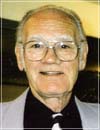
Scott Richardson

Charity

1 Corinthians 13:1-8
Scott Richardson May, 11 1997 Audio
0 Comments

Sermon Transcript

Auto-generated transcript • May contain errors

100%
This morning to the 13th chapter
of the book of 1 Corinthians. Now, I want to talk to you about
charity. Charity. I think all of you know that the word charity is best
defined in the word love. When he talks about charity here,
he's talking about love. Love. L-O-V-E. Real love. He's not talking about the love
that arises from the heart of a human being. He's not talking
about that kind of love. He's talking about real love,
what real love is, genuine 100 percent, honest to goodness love,
what real love is. A lot of talk about charity in
this present day, a lot of talk about it. Most of the professors of religion
are talking about charity, talking about love. I want to talk a little bit about
it this morning, and I think I got the right angle on this. I think I'm right here. Let me read a few verses. Follow after charity. You can't much follow after it
if you haven't got it, or if you don't know what it is. You
can't follow after it. You can't come back from where
you've never been, can you? Can you come back from where
you've never been? No, you can't come back from
where you've never been. You can't follow after what you
don't know. what you haven't got. So he's talking to some here
that know something about what he's talking about when he talks
about follow-after charity. He said, "...and desire spiritual
gifts, but rather that ye may prophesy,"
or you may preach, not being prophetic here. That is, predicting
the future. There's one fellow on the television,
and I was talking to some people here the other day about, I was
trying to talk to them about their soul. I was trying to tell
them what God has to say about their true condition. But I never
could get to that because they wouldn't let me. They threw up roadblocks. screens,
bars that would hinder me. I'd have to hurdle them. I'd
have to jump over them and all that to get where I wanted to
go. And I never did get where I wanted
to go because they got to talking about religion. They got to talking about a religious
personality on the television that they watched. They said,
every evening. We watched him together, my wife
and I. And they told me who it was, and I said, well, I'm familiar
with him. I don't watch him regularly or
anything like that. I know who you're talking about.
And they said, well, he really tells it like it is. He talks
about predictions, prophecy. He talks about what will be,
and we're concerned about what will be. Anyhow, here when he
says prophecy, he's not talking about predictions, where he says
that rather that ye may prophesy, but rather ye may be a spokesman,
a representative of God and speak the message of God concerning
God's Son. That's what he means when he
talks about prophecy. For he that speaketh in an unknown
tongue speaketh not unto man, but unto God. Now, that's in
the fourteenth chapter. And I want you to turn now to
the thirteenth chapter and the first verse where he says, Though
I speak with the tongues of men and of angels, and have not charity. Now listen, though I speak with
the tongues of men and of angels and have not charity, I am become
as sounding brass or a tinkling cymbal. And though I have the
gift of prophecy and understand all mysteries and all knowledge,
And though I have all faith, so that I could remove mountains,
and have not charity, that's important now, and have not charity,
I am nothing. Now, do you know what nothing
is? Nothing is nothing. You have all this, but if you
have not charity, you have nothing. When God created the world, He
created the world out of nothing. When He created the world, there
was nothing for Him to create it out of. So he created it out of nothing. And all that we see is that which
came from nothing. Now he says, if you speak with
tongues of men and angels and have not charity, and you have
all understanding of the mysteries, all knowledge, and have all faith,
and you could remove mountains, but if you have not charity,
I am nothing, nothing. All right, I said a lot of people
talk about charity in this present day, and most of the professors
of religion are talking about charity, talking about love,
but it appears to me that the charity in the verse that I read
to you is not that charity which natural men speak of, which natural
men speak of. Everybody's talking about charity,
talking about love, love your children, love your families,
love the president, love the king, love the queen, love this,
love that. Everybody's talking about love,
but it appears to me that the charity here in the verse that
I've read to you is not that charity which men speak of. The charity that they speak of
arises from their own doings. For I believe now the apostle
here, the apostle Paul, who is the writer of this book, the
apostle completely cuts off any idea as to that. He says, though
I speak with the tongues of men and angels, that is, a man may
have all words and tongues, all gifts and all abilities and everything
that is possible to have, But if he have not charity, he doesn't
have anything. He's nothing. He's a sounding
brass and a tinkling cymbal. Now listen to me real close.
Charity does not consist in flowery speeches or tender words that
may come from a man's tongue. Though I have the gift of prophecy,
understanding all the mysteries and all knowledge and have all
faith so that I could remove mountains and have not charity,
I am nothing. What he says here is that a man
may have a number of gifts and understand the mysteries of all
truth, and have all faith." Now, notice, he may have all faith. He doesn't
say that he may have little faith, but it says he may have all faith. And yet, that man would be eternally
lost. If I speak with the tongues of
men and angels and have not charity, what am I? Just sounding brass,
a tinkling cymbal? I might have the gift of prophecy,
understand all mysteries of truth, all knowledge, have all faith,
so that I could remove mountains, and if I have not charity, I'm
nothing. I'm nothing. Well, there's a great number of people
in this world today, right now, a great number. As a matter of fact, the majority
of the peoples in this world, whatever nation, tribe, or tongue,
wherever they dwell, live, most of them talk about charity, talk
about love, talk about their gifts and their abilities, and
they don't have a grain of religion in their hearts, and they are
living and they are dying without charity and will be everlasting
lost in the end, most of them. It says, Though I bestow all
my goods to feed the poor and give my
body to be burned and have not charity, it profits me nothing. There's a man, he says, if he
gives all his goods, everything that he's got to relieve the
poor, to help the poor, to exercise himself in acts of sympathy,
to poor and needy people, and even then give his body to be
burned, if he have not charity, what does it profit him? Now,
by what is said here thus far in the Word of God by the Apostle
Paul being inspired of God, by this I know that Charity cannot
consist in the performances of men. I know that. I am convinced
of that by what Paul has said. It cannot be that which arises
from nature with all of its trappings and adornment. It cannot be the
product of flesh and blood. cannot be. The charity that is
on the lips and the tongues of the majority of the peoples and
the professors of religion, that love fails. That love fails. How many people
are there in our land today that love one another at one time
and then just a few short years, a few short weeks or a few short
months renounce that love and are divided, unjoined, divorced. One go this way and one go that
way and they have no semblance of love or charity in their hearts
that they once had. The reason I know that this charity
that he's talking about, this love that he's talking about,
is not that love which men talk about, which arises from their
words, from their doings, is because their love fails. It fails. There's no durability
about it. There's no longevity to it. We think it's a wonderful thing
and an amazing thing if a man is married to one woman for 50
years. We celebrate that, don't we?
Every time someone has been married for 50 years, we think it's such
a great thing, we have a little party for them. We have a little
party and we recognize them and bring them gifts and praise them
and thank them and all that for what role models they are that
they've loved one another for 50 years. But even that love
fails. Death will sever that love, won't
it? Death will take care of that
love. We can lose our wife or lose
our husband. even after 50 years and don't
get married again, can't we? Give that love to someone else.
Well, I know, brethren, that this charity cannot consist in
the performance of men. It cannot be that which arises
from nature. It can't be that. And I'll tell
you what it is right now. I'm going to tell you flat out
what this love, this charity is that he's talking about here
this morning. It is nothing more or less than
the sovereign, discriminating love and choice of the Holy Trinity
fixed upon the elect of God. That's what he's talking about,
Bob. That's what he's talking about. That love of God that's
fixed upon his people, that he chose in himself before time
ever was. That's the charity that he's
talking about. That's the charity that endures. That's the charity that never
faileth. That charity. Sovereign, discriminating
love. that made the choice, the Holy
Trinity, God the Father, God the Son, and God the Holy Spirit. They made a choice, God made
a choice. Listen, Ephesians chapter 1, according
as He hath chosen us, before the foundation of the world,
that we might be holy and blameless before Him in love." That's charity,
God's sovereign, discriminating choice. He didn't choose everybody. He chose some from Adam's fallen
race, and they're called His people. And He's calling out
a people for His name here in time. Oh, listen, this charity
that I'm talking about is a charity which few men speak well of. Few men speak well of this charity
that the Bible speaks of when people find out what I'm saying,
find out that I believe and preach the electing grace of Almighty
God. When they find out that I'm preaching
and saying that God does not love everybody of Adam's fallen
race, they begin to hate me. In my little town, the place
I live, I bet there's not ten people will speak well of me.
Not that I've ever done any. I've never been an outlaw. I've
never misguided their children. I've never stole their money.
But why is it that they don't speak well of me? It's not me. They speak against God. They can't get to God, but they
can get to Me. Because I say that God doesn't
love everybody. That's what I say. I say, Jacob
have I loved, and Esau have I hated. That's what God says. God said
He's angry with the wicked every day. I say, that this charity,
this love, is God's discriminating choice that He made unto Himself
before time ever was. And I say few men speak well
of it. Church up here one time up the
road somewhere, Mannington area. A fellow came down here and listened
to me. And he went away from here saying,
well, I wouldn't go back there. The guy's a hard shell. He's
a hard shell. A hard shell is those that believe
what will be shall be without any means. I believe what shall
be will be. I believe that. But I believe
that God uses means. I believe that He uses the gospel,
the preaching of the gospel, to bring about the end results. Hardshells don't believe in preaching
the gospel. They say what will be shall be
without any means. Whatever God's appointed will
come to pass. I believe that too. but it'll
be through a means. No man will ever go to heaven
until he's been confronted by Jesus Christ. No man will ever
go to heaven until he believes and trusts in the Lord Jesus
Christ. Faith cometh by hearing, and
hearing by the Word of God. It's got to be that. But men, because I say that it's nothing
more or less than the sovereign, discriminating love and choice
of the Holy Trinity of God fixed upon the elect. I say unto you
this morning, it's a charity which few men speak well of. And I'm glad for this family
that we speak well of that charity, of that love. Most people have a charity for
themselves, a charity for their fellow mortals, a charity for
infidels, a charity for everything under the sun. But they have
no charity for God's discriminating love or mercy. They have no love
for that. And this is a great mercy, brethren,
great and glorious mercy, that you and I are not among them.
That's a mercy, isn't it, that we're not among them? He called
us out from them, and we're not among them. I once was. I once was among them, and I
would have been until this day. Had it not been for charity,
had it not been for God's discriminating love and free choice that revealed
His Son to my soul, I'd have still been among them, and you
would have too. Now, just for a minute, will
you? Look with me at this sovereign,
discriminating love and compassion and tenderness of God Almighty
in the gift of His Son. In the gift of His Son. His only Son. And His beloved
Son. His equal. He thought it not
to be equal with God. His beloved Son is equal, a sovereign
free gift, including now all the treasures that ever a God
could provide for the salvation of a sinner, the justification
of a sinner, the glorification of a sinner, and the deliverance,
and bringing him home to his blessed family to immortal glory. Think about that for a little
bit. This is an act of charity in God the Father that beggars
language to describe. You can't describe this. It's
beyond description that God so loved that He gave. Who did He love? Did He love
every member of Adam's race? If He did, then Christ died for
all of them, and then every one of them is going to go to heaven,
if He did. But He didn't love. He loved
whomsoever believed on Him. He's the one that hath everlasting
life. He that believes on Him. That's God's love. Language can't describe it. I
certainly can't. It's not within the power of
my heart to enter into its depths, its spreads, its lengths, or
its heights. It's like an ocean. It's like
an ocean that overflows, which overwhelms and makes you to wonder
what a marvelous thing it is. Listen to me closely now. The
Apostle here, the Apostle Paul, he could only wonder at it and
love it. And he says, thanks, listen now,
He said, thanks be unto God for His unspeakable gift. That's what He said. Thanks be
unto God for His unspeakable gift. What is His gift of charity? He loved us and we knew Him. Brought us to an understanding
of ourselves. We finally heard, come unto me
all ye that labor heavily. I'll give you rest, rest for
your soul. Thanks be unto God for His unspeakable
gift, the gift of charity. None of us, nobody here, none
of us have ever merited such a gift as this. What I'm saying is this. I'm
saying there's none of us here this morning that deserves such
a gift as this. We had no merit. Nothing about us and in us pertaining
to us would cause God Almighty to send
His Son, to give His Son, to die in our stead and place in
ruin. No merit in us. No merit. None of us have ever merited
such a gift as this. What have we merited? What do
we deserve? We deserve the bitter torments
and the everlasting damnation of God forever. That's what we
deserve. That's what do us. My God, we're not getting what's
due us. They're getting His free gift,
His love, His charity, loved us. Ah, listen. But this blessed
gift of God the Father to us is an act of God's sovereignty. He didn't have to do it. He had
no need of us. What were there about us that
could add to His pleasure? God has everything He needs.
He said, If I had need of anything, I wouldn't ask you. Gold and
silver are mine, cattle on a thousand hills are mine. I didn't need
them or anything, I wouldn't ask you. He doesn't need anything.
It is a sovereign gift. No merit in us. Ah, listen. This same apostle
said there in, was it the ninth or tenth chapter of the book
of Romans? He says, if He, that's God, if God spared not His own
Son, but giving Him up for us all, how shall He not freely
give us all things through Him? God gave Him up, the pure, blameless, Son of God, without blemish,
without spot, without wrinkle, without sin, without sin, He
gave up the darling of His bosom. Who was equal with God? Who was
God? He gave Him up to be smitten
by holy justice. and to be the propitiation for
our sins. And in this, John says, John
said, and in this is manifested the love of God towards us. Ah, charity, love has nothing
to do with merit. It has nothing to do with any
merit. It has nothing to do with anything that we have ever done
or ever could do. Oh, no. Herein is love, said
John. How's that? In that we love God. Not that
we love God, but that God loved us and sent His Son. to be the propitiation for our
sins. See what I'm talking about? He
sent His Son to bear our sins, to agonize on the tree for our
sins. Is not this an act of charity? If it's not an act of charity,
what is it? You know and I know That's the best thing we've ever
done by nature. The very best deed we've ever
done is no more in the sight of God
than filthy rags. We're destitute, we're beggars,
we're poor, poverty-stricken, and we've spent all and haven't
got nothing to pay. We're hopeless and helpless,
and unless God comes where we are, He sends His Spirit to lead
us into the truth that I'm talking about here this morning. We'll
die in our sins. He sent His Son to be our sin bearer, to bear our guilt and our shame, our blasphemies, our ungodly thoughts, our sins,
our transgressions. He sent His Son to bear these,
to bear the penalty, do these sins that we willfully committed. And we justly deserve to be condemned. Oh, is not this an act of charity?
Oh, what a blessed gift this is, the gift of His Son. is our substitute, our Savior,
to save His people from their sins, to save His people and
to bring His people into immortal glory. Nothing could be greater
than that. It's an act of charity. It's
a blessed gift. And listen, it's a gift that cannot be overthrown.
You can't overthrow this gift. Nothing internal, nothing external,
and nothing infernal. All the blasphemous thoughts
that ever arose in your heart and my heart and all your wretched
unbelief can't overthrow this love of God, this charity of
God. toward the recipient of that
charity. Nothing can overthrow it. Nothing within or nothing without.
Now, if the Holy Spirit of God, if He's pleased, if He's pleased
to give us a sight of this charity, an understanding of this charity,
to see Him completing and perfecting every job and every title of
the law to give us a sight, to see Him bear in His own body
what justice required on our behalf, to see Him doing it on
our behalf. Holy justice! Be satisfied. Holy Justice said the soul that
sinneth shall surely die. We're all sinners. Maybe there's somebody here this
morning, you don't know you're a sinner. Well, you're a sinner
whether you know it or not. But if you ever find it out,
and you'll never find it out until God makes it known to you. And if He makes it known to you,
then He'll lead you in. to this truth that I'm talking
about here this morning. And you'll understand what justice
requires out of you that our Lord Jesus Christ, standing in
our stead and place and room as our representative and our
substitute, bore in His own person what justice demanded of us. the Son of God Himself performing
all of this. For us, if we ever see that,
it will break our hearts. Now, this charity that I'm talking
about is worth talking about, isn't it? That's worth talking
about. The charity that you... What is it? This is Jerry Lewis
on the television. And I'm not saying that I'm not
saying that that's all wrong. I'm not saying anything like
that. But he talks about charity. And he gets up there and tells
funny jokes and does little dances and has celebrities on there
in order to get the people that hear him to manifest what he
calls charity towards those who have muscular dystrophy. But this charity that I'm talking
about, beggars, that charity, that charity, that which is a
human product which flesh and blood produces, but the charity
that I'm talking about is that that comes from God. It's an act of charity. Was it
not an act of charity on God's part? to come and to take our
nature into union with His blessed self. Wasn't that charity? God left the heavens. When I'm
talking about the deity of the Lord Jesus Christ, I'm saying
that Jesus Christ is none other than God Himself! He's God! He's the Second Person
of the Trinity! and the first person of the Trinity
are equal. And God become a man. God left
off the riches of gold, became poor. He who was rich became
poor for our sakes. Is that not an act of charity?
that God become a man, and as a man made atonement for our
sins, established righteousness, magnified and honored the holy
law of God, every jot and every tittle of it, become our sin bearer for our
penalties, suffered our shame and our guilt, came despised
and rejected among men, even under death, isn't that an act
of charity? That's what charity is. That's
God's charity. That He should come as a man,
be made under the law, and having all of its demands, place to
His account, and carry it on to the tree, and stand as our
head and surety, and bondsman, and have all the wrath, that
his people deserved, all the wrath that his people merited
poured on his beloved self. Is that not an act of charity? I say it is. This, my friends,
is charity. It's charity. This is the charity,
listen to me now, this is the charity that covers a multitude
of sin. There's no other charity that
can cover a multitude of sins like this charity covers it. God said, I forgive
you freely on the condition of my son, on the basis of who my
son is and what my son done. You're freely forgiven of all
your sins yesterday, today, and sins to come. And I'll not remember
them against you no more. that covers a multitude of sins. That's the charity he's talking
about here. He's not talking about that fleshly charity that
comes from words of men's tongues. If you have not this charity,
if you have not the love of God in your soul, then you're nothing. Prophets are nothing. Don't care
what you've done. Give your body to be burned.
Understand all mysteries. Go to the ends of the earth to
feed the poor. It won't get you nowhere if you
don't have this charity. Huh? Oh, my soul. The longer I live. Yeah. A fellow called me there
this morning and said, when are you going to come and preach
for us? When are you coming down? Oh, they said the door is open.
Come any time you can come. You don't even have to call.
Just come. Come stay a month. I said, well, I'm not getting
any younger. He said, I know it. That's the
reason I want you to come. I said, I'm not getting any younger.
I said, I can't be around all the country like I used to. Got to stay at home. I ain't
able to. Oh, listen. The longer I live, the more I feel. that if there
was one thing left undone in regard to my salvation, I
wouldn't have a ray of hope. If the devil wasn't conquered,
if justice wasn't satisfied, if the law was not honored and
magnified, if death was not overcome, If ever burden was not carried
by the Lord Jesus Christ Himself, if my ever sin was not paid for,
I would have not a ray of hope. I'd be undone forever. If there's anything left for
me to do to merit heaven, I'd be lost forever. But He undertook He undertook
the cause of His people whom He foreknew, whom He predestinated. He undertook their cause. And
there's not a jot and tittle that He left undone. And so we
really and truly from our hearts can sing, Jesus paid it off. and all to Him I owe." The durability? The durability
of this charity? Verse 8 says charity never fails. His love never fails. If He set
His love upon us, His affections upon us before time ever was
and chose us and sent Christ to die for us, that love will
never fail. Never fail. How long will it abide? Well,
it says, and now abide of faith, hope, and charity. Faith, hope,
and love. Grace to these is charity. Grace
to these three gifts is charity. It's the love of God. Not that
we love God, but that He He first loved us in eternity past and
made a covenant. And the Lord Jesus Christ is
the master of the covenant. He comes to fulfill the stipulations
of the covenant. In our stead and place and rule,
bear our sins, clothe us for His righteousness. He's all that. Listen, now by the faith, hope,
and charity, these three, but the greatest of these is charity.
That's love. towards the sinner, towards the poor beggar. Remember
that poor woman? She came to Him. And she began to cry unto Him.
She followed Jesus and began to cry unto Him. And the apostles
jumped in. They said, Send her away. Send
her away. She cried unto us. And she jumped in and she said,
Lord, help me have mercy on them. And the Lord said to her, He
said, I'm come. I'm come for the children of
Israel. She said, Help me, Lord. And He went on and said, He said,
It's not right for the children's bread to be taken by you. And she said, crumbs from the
table. That's all I'm asking for. She said, does not the dogs get
the crumbs that's under the table? And she crawled under the table.
Said, I take my place as a dog. A dog! Didn't offend her. She wasn't
mad because She's called a Gentile dog. She said, I'll crawl under
the table, and I'll eat at the crumbs that falls from the children. I'll not sit there. I'll not
sit at the table with the other respectable people. I'm just
a poor sir. I'm a helpless and hopeless lord. God save me. You know what he
said to her? He said, So great faith is that,
he said, I've never seen. He said, your faith has saved
you. You've taken your proper place
before me as a dog, as a sinner. The durability of it, who's it
for? It's for beggars. He didn't come
to save righteous people. He came to save sinners, poor
people that couldn't save themselves. You can save yourself, I've got
nothing to say to you. You can save yourself. You don't
need to save yourself. But if you're hopeless and helpless
like I am, and can't save yourself, oh, you ought to bless God that
this day it fell upon your ears that God saved sinners on the
basis and the accomplishment of what His Son did. Let's stand
and we'll be listening.
Scott Richardson
About Scott Richardson
Scott Richardson (1923-2010) served as pastor of Katy Baptist Church in Fairmont, West Virginia.
Broadcaster:

Comments

0 / 2000 characters
Comments are moderated before appearing.

Be the first to comment!

Joshua

Joshua

Shall we play a game? Ask me about articles, sermons, or theology from our library. I can also help you navigate the site.