Bootstrap
Scott Richardson

A Word Of Comfort

Mark 6:45-52
Scott Richardson August, 14 1994 Audio
0 Comments
What does the Bible say about God's presence during trials?

God promises to be with us in our troubles, offering comfort and assurance even when we face difficulties.

In Mark 6:45-52, we see the disciples in a storm, doing what Jesus commanded them, yet facing great trouble. This story illustrates that being where God wants you does not exempt you from challenges. God does not promise a life without storms; instead, He promises His presence. Just as Jesus walked on water to reach the disciples, He is present with us in our difficulties, encouraging us to not be afraid. The assurance of His presence is a source of comfort, as we remember that He is the Lord of both the waves and our challenges.

Mark 6:45-52

How do we know God is with us during difficulties?

We know God is with us through His promises in Scripture and His past faithfulness.

God’s promises throughout Scripture assure us of His presence in times of trouble. In Mark 6:45-52, the disciples were in a storm, yet where Jesus had commanded them to be. They were not abandoned; rather, He saw their struggle from the land and came to them. This narrative reflects God's ongoing involvement in our lives, especially when we are diligently obeying Him yet still face hardships. Remembering past miracles and His faithfulness, as demonstrated when Jesus fed the 5,000, helps us trust that He is with us even amidst the storms of life.

Mark 6:45-52, John 14:16-18

Why is faith important during trials?

Faith helps us trust in God's plan and presence, even when circumstances seem dire.

In moments of trial, our faith is essential for navigating difficulties. The disciples faced a fierce storm while they were where Jesus had instructed them to be, and their initial fear stemmed from forgetting His past miracles, including the feeding of the 5,000. Faith allows us to remember that God’s presence does not eliminate storms but provides strength to endure them. It reassures us that our efforts, even if they seem futile, are not in vain. When we trust in God's divine plan and presence, we find comfort and determination to persevere through life’s challenges.

Mark 6:45-52, Hebrews 11:1

What does it mean to say God takes the will for the deed?

It means that God values our intentions and desires to honor Him, even if we don't see visible progress.

The idea that God takes the will for the deed signifies that He recognizes and values the intentions behind our efforts. In the sermon, it's noted that even during trials, as long as our heart's desire is to follow His will, He regards this desire as a form of faithfulness. The disciples rowed hard through the storm, yet they made no progress, but their effort did not go unnoticed by God. In our spiritual journeys, it is crucial to focus not just on results but on our commitment to serve God faithfully, trusting that He assesses our hearts rather than just our outcomes.

Mark 6:45-52, Philippians 2:13

How should Christians respond to fear during challenges?

Christians should respond to fear by remembering God's promises and focusing on His presence.

When faced with fear during challenges, Christians are encouraged to respond by anchoring themselves in God's promises. In the passage from Mark 6:45-52, the disciples were frightened by what they perceived to be a ghost but failed to recognize Jesus walking toward them. The Lord reassured them with 'Be of good cheer; it is I.' This response illustrates that when we encounter fear, we must shift our focus from our anxieties to the assurances God has given us through His Word. Remembering His past faithfulness and recognizing His active presence in our lives can dissolve fear and allow us to face trials with courage.

Mark 6:45-52, Isaiah 41:10
Sermon Transcript

Auto-generated transcript • May contain errors

100%
verse 45 of Mark chapter 6, and straightway
he constrained his disciples to get in the ship. That means that they were unwilling they
were unwilling to go to sea. So he must command them. It's
an express command of the Lord Jesus to these disciples to get
into the ship. Probably unwilling to go because
they didn't want to leave him. He's going to stay there, but
he tells them to get on this ship. They're unwilling to go,
but he says, constrains them, he commands them to get into
the ship and go to the other side before, onto Bethsaida,
while he sent away the people for them to go ahead and go.
And when he had sent them away, he departed into a mountain to
pray. And when the evening was come,
The ship was in the midst of the sea, and he was alone on
the land. They were out there in the midst
of the sea, and he was back there on the land. Now, you remember
that it indicates that they were unwilling to get on the ship,
but he commanded them to get on the ship. They were unwilling,
but they got on. All right? The ship was in the
midst of the sea. I don't think he's talking about
the ocean here. Mediterranean Ocean or the Atlantic Ocean or
Pacific Ocean. It was some sort of a lake, some
sort of a big vast lake. Lots of lakes, you know. There's
lakes here and lakes in Michigan and Ohio there, the lakes that
you can't see across. Comes big storms up and they
act like the ocean, you know. Anyhow, there's out in the middle
of this. When I say in the midst of the sea, what I'm trying to
indicate, they wasn't like between San Francisco and Japan. They
wasn't out in the middle there. And he was alone on the land,
and he saw them toiling and rowing. He saw them working hard. The
wind was contrary to them. About the fourth watch of the
night, he cometh unto them walking upon the sea. and would have
passed by them. But when they saw him walking
upon the sea, they supposed it had been a spirit and they cried
out. It was afraid. And they all saw him and were
troubled, afraid. And immediately he talked with
them and said unto them, Be of good cheer, it is I. Be not afraid. And he went up unto them into
the ship, and the wind ceased. And they were so amazed in themselves
beyond measure and wondered, for they considered not the miracle
of the loaves, for their hearts were hardened." Let me talk about
that for a little bit for your comfort and my comfort and encouragement
here this evening. We have here in these several
verses a word of comfort given to a shipload of believers who
are where their Lord had sent them. Does that ring a bell? Who are where their Lord had
sent them. They're where He directed them
to go, but yet they're in trouble. That's the point I'm trying to
make. They were doing the will of God,
but yet they're in trouble. He constrained them to go. Straightway
He constrained His disciples to get in the ship. Hesitant
about getting on board, He said, Get on board. I'm going to send
these fellows away. You get on board and go on. So
I'm saying that this narrative here, this story here, sets forth
a word of comfort, a word of encouragement given to a shipload
of men, believers in Christ Jesus, who were where their Lord had
sent them or placed them, unwilling to put to sea, Probably the sea
was calm at the time when he first bid them to go. There wasn't
a storm then. The sea was calm. It was probably
like a glass, you know. I've seen the sea that way, way
over there when you cross the equator. Here in Australia, the sea looked
red looking even. It just looked like you could
step right out in it, everything quiet and dead. The sea looked
like glass. They got in, reluctant to go,
didn't wish to leave the Lord Jesus Christ. They were in their
right place, yet they met a terrible storm. Sometimes we are in the
place where He puts us, and yet we have trouble. Yet we have
trouble. We say, well, what am I doing
wrong? What have I done? What have I done? Have I made
some mistake in the way? Am I on the wrong road or what?
I'm trying to do my dead-level best. I'm trying to hearken to
the voice of the Lord. I'm trying to be obedient, but
yet I have these troubles. I have these trials and difficulties. In the right place. They was
in the right place, yet they met a storm, Bob, a big storm. Now, the whole sea was stirred
up to a boiling point. It wasn't flat. It wasn't like
glass. It wasn't like the long waves
that they'd seen, but now there's a storm come. Not only the sea
was getting boiled up, but there was a wind contrary to them. Well, they were where Jesus told
them to go. still is in danger. You must
not think, listen to me now, you must not think that you are
in the wrong position because you're in trouble. That's not
always the case. But most of the time we think
that we're in the wrong place or doing the wrong thing or not
doing the right thing because we're in trouble. And we try
to look beyond the providence of God, or don't even look at
all at the providence of God. We focus most of our attention
upon ourselves, of what we're doing and what we're not doing,
and think that we can correct the situation by correcting ourselves. And sometimes it's not ourselves.
Sometimes it's the place that God's put us, yet there's trouble
come. We're doing the best we can,
lots of times, in situations, in faithfulness and obedience,
but yet the trouble comes, doesn't it? Believers have trouble. God
did not promise us a glassy sea. What did He promise us? He promised
to be with us. Isn't that right? How many believers
do I know got trouble, lots of trouble? They've had trouble
for years and years and years, not because they're doing wrong.
They're where God wants them for the most part. doing what
God wants them to do, but yet they're in trouble. They're like
these sailors. They're like this shipload of
people. God told them to get on the ship
and go on out there. The Lord of the waves, the Lord
of the storm, He whom they loved and trusted, He told them to
get on the ship. So don't consider that adverse circumstances or
a proof that you have missed the road somewhere. The path
of the believer is seldom without trial. Well, it was well for
these fellows to go out to sea. It was the right thing for God
told them to go out to sea, to leave the dry land. Now, he himself
had insured the ship And he had guaranteed that ship a safe haven
on the other side. He's not promised us, as I said
before, a sea of glass, but he's promised to be with us. Well,
here they are in this storm, rowing as hard as they can row.
And it wasn't for just a few minutes, but they rowed all night.
There there was about 11 or 12 of them in that boat And all
of them was on the oars, and they was going as hard as they
could row, but they wasn't making no progress. They wasn't getting
nowhere, because the wind was against them. The wind was against
them. They couldn't move. I've been in them kind of storms,
out to sea, when you got the engines at full throttle, and
you're just not making no headway. You're standing in the middle
of the thing. You're like these fellas, you long for the day,
making no progress, just holding their own. Now, I know that you've
heard this, I've heard this in days gone by about Christian
people, about believers. They say if a Christian's not
going forward, he's going backwards. That's not always the case. That
wasn't the case here. They wasn't going forward and
they wasn't going backwards. They're holding their own. You
see, it's not always true because sometimes in our spiritual trials
and troubles and difficulties that we have, when a man does
not go backward, he's really going forward, see? These fellas,
they weren't going backward. They were really going forward
in the spiritual experience of it. Well, it says, And he had
sent them away. He departed into a mountain to
pray. And when even was come, the ship
was in the midst of the sea, and he was alone on the land.
So they rowed as hard as they could. And through no fault of
their own, now, through no fault of their own, they was there
where God sent them and placed them. And they was rowing as
hard as they could go. No progress was made, for the
wind was contrary to them. The Christian man, the believing
individual, that man who has passed from death unto life,
who has found in Jesus Christ his all and in all, sometimes
he makes a little headway, yet it's no fault of his own. And
maybe I'm falling back on this, but I think of myself. I've been
in this thing for over 40 years, and I've made a little headway.
And I like to think that I'm where he put me. I like to think
that I'm preaching the gospel, but I'm making a little headway. I don't seem to be making any
progress. Is it my fault? Well, it might
be. It probably is in my case. It
probably is in my case. But in most cases in a believer's
life, when they're making no headway, and doing what God's
told them to do, and hanging in there, holding their own,
and rowing as hard as they can, it's no fault of their own, see? No fault of their own. Listen
to me now. Our Lord will take, in many cases,
in the case of the believer anyhow, our Lord will take the will for
the deed. If you desire to, if you're wanting
to do this, if your aim, your object in life is to glorify
God, that's your delight and that's your desire, but you don't
see too much headway in your accomplishing that. Well, listen,
the Lord takes for the desire, He takes for the will, It's the will, it's the desire. He looks at it as an accomplishment. In the case of the believer,
he will take the will for the deed and reckon our progress,
not by an apparent advance, but by the intent with which we serve,
if we have the will. if it's our delight, if it's
our desire. It's the desire of all of us
here, I believe, for the most part, anyhow. It's our desire
that men and women might be saved by the grace of God. We would
win men over to the side of the Lord Jesus Christ. We would do
our best to see not only our children and grandchildren, But
our neighbors and our friends won to the side of the Lord Jesus
Christ that they might raise their hand to heaven and say,
He's mine and I'm His. I want to follow Him in baptism.
Oh, we have this zeal. Sometimes our zeal is as acceptable
unto God as if we had won a whole nation of people. Let's not lose
our zeal. Let's not lose our will, see,
if we're doing what God wants us to do. He wants us to be faithful. He wants us to uphold His name. He wants us to gather from time
to time, appointed times. He wants us to gather. He wants
us to give of our substance. He wants us to love one another.
He wants us to be a witness for Him He wants us to help the missionaries
that's gone in these waste-housing wilderness of heathenism to carry
the gospel, and we agree and concur to all of it, and join
in with our substance and our gifts to help out, and we pray
that the Lord might bless them and bless these men that carry
the gospel, bless the hearers, God would be honored and glorified,
and men might give up their heathen practices and crown the Lord
Jesus Christ as their King, and we pray to that end, give our
money to that end, and do these things, but yet the building's
not full. Yet the building is not full. Our folks don't give us no recognition,
and no one seems to care and enter into our difficulties and
our trials and all those things. And when we think we're doing
what God would have us to do, and we're rowing as hard as we
can, and there's no one pays any attention. Huh? Oh, listen. It'd be different
if these fellas here just throwed the oars overboard. Maybe they
had about five sets of oars. What if they just raised them
oars up and just chucked them overboard and went with the wind?
That's something else, isn't it? But they didn't do that.
They rowed as hard as they could all night. Remember now, they
was in the place. They was in the place and position
that God placed them in, and they rode hard, but they made
no progress. Listen, here's the word of comfort. He appeared walking on the waves. I could imagine they wasn't moving,
they were just holding their own. And they seen a strange
thing off to the left or the right or the stern or someplace
of where they were set, and they seen this strange light, strange
figure, and they were scared. They didn't know what's going
on. They seen somebody look like a man, walking, taking step after
step, right on top of them waves, coming in their direction. And
they're scared. They're scared. What made them
scared? Why was they scared? That's what
I want to know. Why was they scared? Well, I
think the reason they were scared was that they thought he was
a ghost. They cried. They said, well,
where's that at? Listen to what they said on this
next page. And when they saw him walking
up on the sea, They supposed it had been a spirit. And they cried out, and they
were troubled. They thought it was a ghost.
They believed in ghosts. I don't believe in ghosts. I
don't believe in ghosts. I don't think there is such a
thing as a ghost. But there's something about the supernatural
that scares people to death. who live under this superstition
of the supernatural that sees God and hears God and devils
and demons and frogs and dogs and cats and crickets and all
that. They're crazy. They're crazy
people. And there's a lot of them like
that today. They see God in these It's like a fella, I used to
know him, he used to be my neighbor. And he could always tell me a
tale about going to the graveyard and seeing his dead aunts and
all that. Going to the graveyard. And he
buried his sister, I remember, one time in the graveyard. And he went to the graveyard,
the cemetery, and he told me, he said, oh, he said, when we
was there, he said, we had this eerie feeling, awful feeling.
We seen something moving in the sky. He's trying to be religious. Trying to be religious is what
he's trying to be. You get into that and underneath
the loaves of this superstition and ghost-like things, it's hard
to tell where it'll lead you. Well, that's what they're afraid.
They're afraid. Our Lord's seen them rowing there
and they're toiling, going hard at it, And he didn't, Willie
Sr. wasn't making no progress. So
he comes to him, he comes to him, walking on the water. But
listen, he doesn't say a word against them. They cried they're
afraid. What are they afraid of? They're
not afraid of the sea. These are brave men. They've
been to sea all their lives. That's all they ever did was
fish. They knew about the sea. And they wasn't afraid of the
sea. They was afraid of something. They was afraid of this figure
that they seen walking on the water. They thought because he's
walking on the water, he was a spirit, he was a ghost. That
scared them to death. And he came near them and didn't
say a word against them, but bid them to what? He said, Be
of good cheer. Be of good cheer! Oh! I can't understand that, why
they was afraid, unless it's what I said it was.
They thought it was a ghost and they was under some superstitious
feeling about ghosts. Well, I know why they was afraid.
He goes on down in the 52nd verse, you see, For they considered
not the miracle of the loaves. Well, they considered not the
miracle of the loaves, and their hearts were hardened. They had
forgotten. You see, at less than 24 hours
before our Lord constrained and commanded them to get on that
little ship and go out to sea, He took what? Was it five loaves,
Bob? Five loaves and a couple of fishes.
And He multiplied them. into enough food to feed 5,000
men, not counting women and children. Now, you see, that was a miracle. That was a miracle. That was
an act of creation. You don't create enough food
out of five loaves of bread and two fishes without it being a
miracle. He created them, like He created
the world out of nothing. That was a miracle. They forgot about that. And the
reason why they were scared to death and thought He was a ghost
and didn't think that He was the Lord Jesus Christ is because
they had forgot about the miracle of the loaves and the fishes.
You see, I started reading unto you in verse 45. All right, look at what it says
in verse 42, 43, and 44. And they did all eat, and were
filled. And they took up twelve baskets
full of fragments of the fishes. And they that did eat of the
loaves were five thousand men." See? Less than twenty-four hours
before he told them to get on the ship. Ah, listen. Here he is, saying, Be of good
cheer. Be of good cheer. It is I. It is I. I'm not a ghost. It's
I. I'm not a disembodied spirit. But it is I. It is the Lord Jesus
Christ whom you trust, your best friend. I've come to your rescue. That's what he's saying. It's
I. It's I. He said, I come to calm
this storm for you. I come to tell the waves to be
quiet. Yet there's freight of him. There's
freight of him. Ah, here before their eyes he
displayed himself to them. He displayed himself as the Lord
of all. He is the master of the wind.
He is the master of the wave. Ah, it would have been a great
and glorious blessing if they could have understood this truth.
They didn't because they didn't consider the miracle of the loaves
and the result was that they was afraid. They seen this man
step from wave to wave and it scared them to death. He's coming
near, they didn't know what to do. They thought he was a ghost,
thought he was a phantom or something like that. That's the way we are though.
You see if a man, if there's someone out there that's walking
on the water, if I see somebody walking on the water out there,
I'm not going to think that he's a ghost. I'm going to think that
he's a man who has suspended the law, the law of the universe. The law is that you can't walk
on water. You're heavier than water and
you're going to sink. If I see a man walking on it,
I'm going to say it's somebody else besides a ghost. Well, they
should have said that if they'd have considered it a miracle.
But they didn't consider the miracle of the loaves and the
fishes. If they'd have considered that,
they'd have said, well, look here. Our Lord, He took these little loaves and
these little fishes and multiplied them and made a great feast.
Five thousand men, not counting women and children, and still
had twelve basketfuls left over. That's Him walking on the water. He's not going to send us out
here to drown. That's Him! That's where He comes!
But they're troubled and afraid, and they didn't realize. And
most people don't. Most people, I think, they think
that the Lord Jesus Christ is some sort of a phantom spirit.
Yeah, they do. Here's what you and I need to
consider Him as. Not as a spirit, but as a real
man. See, Jesus Christ is a real man! He's a real man. He has needs
as a real man. He did hunger and thirst. He
ate with these fellas. He slept with them. He talked to them. They heard
him. He is a real loving Savior, a
real man. He is God Almighty in human flesh. Let's regard him as a man. Where's he at? He's on God's
right hand right now. Who? A real, living, loving man
is on God's right hand, and he's our Savior and our Lord. And he reigns on high as a man,
not as a spirit, not as a ghost, a man, the man Christ Jesus. supreme God clothed in human
flesh. Anyhow, they all saw him in trouble,
and immediately he talked with them, not against them, didn't
criticize them, didn't say, You fellas, didn't you remember what
I just done 24 hours before this? He didn't say that. He said,
Be of good cheer, it is I! Now, you know what he's saying
there? When he says, It's I, it's I,
it's Immanuel, God with us. It's Immanuel, it's I. When he
appeared to Paul on the road to Damascus, Paul said, Who is it? He said, I'm Jesus whom thou
crucified. I'm Jesus whom thou persecuted.
I'm Jesus, that's who it is. He said to John there on the
Isle of Patmos, he said, I am the first, but I'm the last.
It's I, it's I, it's the Savior, it's the Lord Jesus, that's who
it is. Be of good cheer, be of good
cheer, be not afraid. And he went up unto them into
the ship, and the wind seized, call them the winds, They were
so amazed in themselves beyond measure, and they still wondered
why, for they considered not the miracle of the loaves, for
their hearts were hardened. Well, the Lord blessed this to
our understanding, and may it be a word of comfort to us that
Scott Richardson
About Scott Richardson
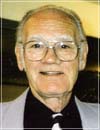
Scott Richardson (1923-2010) served as pastor of Katy Baptist Church in Fairmont, West Virginia.
Broadcaster:

Comments

0 / 2000 characters
Comments are moderated before appearing.

Be the first to comment!

0:00 0:00
