Bootstrap
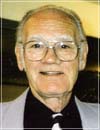
Scott Richardson

Do We Love Him

John 2:7
Scott Richardson November, 4 1990 Audio
0 Comments

Sermon Transcript

Auto-generated transcript • May contain errors

100%
The book of 1st John. 1st John chapter 4. Let us pray. Thank you again Father for this
chapter. In verse 5, 4th chapter, 1 John,
it says, They are of the world, therefore speak they of the world,
and the world heareth them. That's kind of the mark of unregenerate
people. Be ambitious. Make a name for
themselves. Strive after that tangible thing
that gives indication of success and things of that nature. Go
along with the customs and the principles of this world. They are of the world, therefore
speak they of the world, and the world hears them. We are
of God, believers, those that love His Son. We are of God,
and he that knoweth God heareth us. My sheep here are my boys,
and they follow me. We are of God, and he that knoweth
God heareth us. He that is not of God heareth
not us. Hereby know we the spirit of
truth and the spirit of error. The spirit of truth dwells in
those that hear. The truth, they know the truth,
the truth shall make you free. The difference is in those, the
spirit of truth and the spirit of error, seen in the receiving
of the truth and the rejection of the truth. Beloved, let us
love one another. Let us love one another, for
love is of God. Everyone that loveth is born
of God and knoweth God. And he that loveth not knoweth
not God, for God is love." Now, what is said in reference
to God here, loving God, means equally loving the Lord Jesus
Christ. This is God the Father He has
reference to, but we equally love God the Son. and God the
Holy Spirit. In this was manifest the love
of God toward us, because that God sent his only begotten Son
into the world that we might live through him. He died that we might live. He
gave us life instead of death. Herein is love. Herein is love. Not that we love God, but that
he loved us, and sent his Son to be the propitiation
for our sins. Beloved, if God so loved us,
we ought also to love one another. If a man loves God, the consequence
of that love results in you and I loving one another. No man
has seen God at any time. If we love one another, God dwelleth
in us, and his love is perfected in us. Hereby know we that we
dwell in him, and he in us, because he hath given us of his Spirit. And we have seen and do testify
that the Father sent the Son to be the Savior of the world, the world of believers. the Savior
of the world, if that is taken out of the context of the whole
of the doctrine of the Bible and made to mean the Savior of
the world, that is, the world of all men,
all flesh, all Adam's race, a universal salvation. Then why is he talking
about, Whosoever shall confess that Jesus Christ is the Son
of God, God dwelleth in him, and he in God? See, the majority
of the world at any given time, they don't confess that Jesus
is the Son of God. They don't believe that Jesus
is the Son of God. They don't believe in Jesus as
Jesus says, revealed Himself in the Scriptures. They don't
believe that. So he's talking about the world
of those that God, well, down here in this one verse
it says, Not that we love God, but that He loved us. We love Him because He first
loved us. He loved us in eternity past.
He loved us before we were sinners. We had a Savior before we ever
sinned. He loved us before time. He loved
us before the devil. He loved us before the flesh
or the world or anything had its being. He loved us. And we have known and believed
the love that God hath to us. God is love, and he that dwelleth
in love dwelleth in God, and God in him. Herein is our love
made perfect, that we may have boldness in the day of judgment.
Because as He is, the Lord Jesus, so are we in this world now. You don't have to wait until
judgment day to find out whose side you're on. Because as He is, as the Lord
Jesus Christ is right now, so are we. We're like Him. union, vital union, this connection
with Him. We're the branch of the vine. He's the vine. I'm the true vine,
and you're the branches. We're union with Him, connection
with Him. We're in Him, and He's in us.
And as He is, so are we. Whatever He is now, in all His
kingly glory, that's what we are. He died, we died. He was buried, we were buried.
He rose again, we rose with Him, been blessed by God in all heavenly
places, spiritual blessings in heavenly places, in Christ. Sin's
all gone, we're with Him. There can be no sin where the
Lord Jesus Christ is, and that's where we're at, in Him. He's
our death, and He's our judgment, and we're in Him, there before
God, because as He is, so are we. There is no fear in love,
but perfect love casteth out fear, because fear hath torment. He that feareth is not made perfect
in love. We love him because he first
loved us. This morning we talked about
that question that our Lord asked Peter when he said, Lovest thou
me? Lovest thou me? Peter said, Lord,
thou knowest that I love thee. Now, he might have asked a question
like this. He might have, but he didn't.
The question that he asked was, Lovest thou me? He might have
said, Believest thou me? He might have said that. He might
have said, Art thou converted, Peter? He might have said, Art
thou now, Peter, ready to confess me? He might have said, Wilt
thou obey me, Peter? But he used none of these expressions.
He said, Lovest thou me? That's vital. Love us, thou meet
us. Simple as the question sounded,
it certainly was most searching in that it was directed to Peter
as well as to us, but Peter primarily in that Peter had most recently
denied his Lord, Bob. He denied his Lord and said,
I never knew him. You're one of them." And he let
out a note and said, I never knew him. I never knew him. I mean, he said something that
we would shrink from and probably say in our hearts, I'd never
say anything like that. But we got the potential. We
got the potential. So it was a searching question,
a very revealing question. You know what you said back then,
Peter? How you acted and all that. And
he said this very gently and tenderly to Peter. You can come
right out and say, well, you denied me once over there. You
die with me and this and that, but when the fire fell and the
time to stand, you didn't stand. He didn't criticize Peter. He said to him, he said, Peter,
love us, thou me. He said, will you obey me now?
Will you confess me now? Will you do this? He said, love
us, thou me. Peter said, Lord, thou knowest. Well, simple as the question
sounded, he would have Peter to know, and he would have you
and I to know, on which a man's Christianity hinges. What is this ground of a man's
Christianity? What is the ground of it? What
is that which is vital and important over and above everything else?
Well, if a man loves Jesus Christ, all is right with him if he loves
Jesus Christ. Now, don't misunderstand me. If he loves Jesus Christ, as
he's revealed in this book, there's many Jesuses in the minds of
many people. They have formed many conceptions
of who Jesus is. But I'm talking about, I'm talking
just like the Bible does. I'm talking about if a man loves
the Christ of the Bible. If he loves the Christ of the
Bible, all is right. And if he doesn't love the Christ
of the Bible, all is wrong. Now, if it's the Jesus of the
twentieth century that we hear so much about, this Jesus that
they say, well, God sent him, he came from God, we believe
that he comes from God, but do you believe that he accomplished
the purpose that God sent him to fulfill? Do you believe that? He didn't come to pay the penalty. for every man in Adam's race.
That was not the purpose of the Lord Jesus. He came to accomplish
redemption for the people that God gave Him before time ever
was. Well, did He accomplish their
redemption? Well, a man's salvation depends
upon his free will. He has no free will. How can
he depend upon his free will when he doesn't have a free will?
He forfeited every right and claim that he had in God in the
Garden of Eden. His will is not going upward,
but his will is bent going downward, according to his nature. He's not free. He has no free
will. What Jesus do you believe in?
I'm talking about the Jesus of the Bible, the Jesus that God
commissioned and appointed, the Jesus who God sent and the Jesus
who suffered rejection from the time of His birth till the time
He died, and when He said, right before He died, He said, the
last thing that He said, He said, It's finished! It's finished! All the Father has given me to
do, it's finished! I've completed it! Redemption
is accomplished, and everyone for whom I die, they'll be there
at the table! The question of sin is settled
for those that I come to redeem. I redeemed them. I lived for
them and I died for them and redeemed them through my blood
and with my blood and by my blood. I've afforded them a ground of
righteousness to stand upon. I've made them accepted in the
beloved. They're mine. They're my jewels.
I did it all. Now, that's the kind of Jesus
I'm talking about when I say that if a man truly loves Jesus,
all is right. But it's got to be the Jesus
of the Bible, not the Jesus of the twentieth century that we
hear so much about, who's trying to do something, but he can't
do it. He wishes and hopes and desires that all men would love
him, but he can't make men love him. That's not the kind of Jesus
I'm talking about. I'm talking about the Jesus of
the Bible. So if a man truly loves Christ,
all is right. If not, then all is wrong. Now, knowledge and faith and
hope and reverence and obedience are all marked and distinguished
features and principles in a man who is a true Christian, man
or woman, boy or girl. But the picture would be incomplete
if his love was omitted from the picture. Hear what I say now. Faith, hope, reverence, obedience
are all marked features in a true Christian character. But the
picture would be incomplete if you left out His love. For our
Lord said, Peter, lovest thou Me. Everything hinges on that. That's what I'm saying. Lovest
thou Me. I'm the way, the truth, and the
life. No man cometh unto the Father except by me. Come unto
me, all ye that are heavy laden, and I'll give you rest." Me,
the Christ of the Bible. Give you rest because I am rest.
I'll give you rest of conscience. I'll give you peace. I'll give
you righteousness. I'll give you hope. Come to me.
Come to me. Well, great is the danger. of the individual
that believeth not that Jesus is Christ. Great is his danger. The danger of him that loveth
not the Lord Jesus Christ is as equally great. Man, Jesus
said, he that believeth not shall not see the Son of God. He that
believeth not hath no hope. He also says, He that loveth
not, the Lord Jesus Christ. Well, over there in 1 Corinthians,
I read that verse to you this morning, I believe. 1 Corinthians
16, 22, it says, If any man love not the Lord Jesus, let him be
accursed. If any man loves not the Lord
Jesus Christ, let him be damned. be cursed by God and let him
live in eternity, separated from the God of all mercy and the
God of all grace. Now, in this particular verse
here, the Apostle Paul, inspired of God, to write these words,
he allowed no way of escape to the man who does not love Christ.
No way! No way! I don't care how much
knowledge he has, how much doctrine he believes. He said, if he loves
not the Lord Jesus Christ, there's no way out. Let him be cursed. Poor guy. Let him live in hell
forever. That's what he's saying. He allows
no way of escape to the man who does not love the Lord Jesus
Christ. He leaves no loophole. He makes
no excuse. A man may lack clear-head knowledge
and yet be saved. He may fail in courage, and he
may be overcome by fear like Peter did, but he may fall tremendously
like David fell. But if a man loves not the Lord
Jesus Christ, he's not in the way of life. David fell. He fell and was restored. Peter, he failed, denied his
Lord. Lovest thou me, Peter? You know, Lord, I love you. I love you. Now, if a man does not love
Jesus Christ, he is not in the way of life, but he is on the
broad way. Broad is the way that leads us
to destruction. Here the apostle here in the
book of Ephesians the book of Ephesians, the last chapter,
I believe, the last chapter of the book of Ephesians, the last
verse of the book of Ephesians. This is what Paul says here. He says in this last verse, our Lord Jesus Christ, in sincerity. And in my Bible it says, there's
a little number there, in sincerity. Right before in sincerity is
the number seven, and it refers you over to the center column
of your Bible, and it says, or, without, or with incorruption,
sincerity, with with all his heart, all his inner love. Grace be with all them that love
our Lord Jesus Christ in sincerity. Here in this book of Ephesians,
the Apostle Paul is declaring his goodwill and his wishes to
all true Christians here at Ephesus. Many of these that lived in Ephesus
that was in this body of Christ in this church, many of them
Paul had never seen. And probably many of them were
weak believers, weak in the faith. They were weak in the faith back
in these early churches. That's understandable, isn't
it? How a man could be weak in the faith, weak in knowledge,
weak in doctrine, and some of them, in all probability, were
weak in knowledge, weak in faith. In other areas, how then shall Paul describe
them in sending this letter of goodwill and encouragement? What words will he use here that will not discourage these
weak believers? Well, he uses a word here that's
sincerity, love and sincerity. He uses one that exactly describes
all true Christians with one common name. He says, Grace be
with all them that love our Lord Jesus Christ insincerely. Love Him in truth. Love Him for
who He is. Love Him for what He does. Love
Him, truly love Him. You can... That's one thing that... There's a lot of so-called Calvinists
that believe the five points of Calvinism, that have no love for the person
of Christ. They believe the doctrines, total
depravity, on down, unconditional election, limited atonement,
irresistible grace, and all those things. They believe the doctrines,
but they have no sincere love for the person of the Lord Jesus
Christ. They left that out. They have a form of godliness. No power. They lack something. Well, over here, turn with me
to another verse of scripture in John chapter 8. John chapter
8 verse 32, I believe. Listen to what he says here. You've got to remember who he
was talking to now. Jesus said unto them, If God
were your Father, ye would love me, for I proceeded forth and
came from God, neither came I of myself." He was sent of God, God Himself
sent the Lord Jesus Christ. And He says now, if God were
your Father, you would love Me, if God were your Father. Well,
he's talking to these misguided enemies, enemies of the Lord
Jesus Christ. There's enemies. He says in verse
25 or verse 24, I said therefore unto you, that
ye shall die in your sins. If ye believe not that I am he,
ye shall die in your sins. Then said they unto him, Who
art thou? Our Lord said unto them, Even
the same that I said unto you from the beginning, Christ God,
God sent me. He goes on down. Jesus said unto
them, Whom ye have lifted When ye have lifted up the Son of
Man, then shall ye know that I am He, and that I do nothing
of myself, but as my Father hath taught me, I speak these things."
And he goes on, and up there in the 36th verse, he said, "...if
the Son therefore shall make you free, ye shall be free indeed."
Now these misguided enemies of the Lord Jesus Christ, they said,
or he said, I know that ye are Abraham's seed. I know that. Literally, they were the descendants
of Abraham. I know that ye are Abraham's
seed, but ye seek to kill me, because my word hath no place
in you." So he saw these misguided enemies perfectly satisfied with
their spiritual condition. Now, what satisfied them was
that they stood on the single ground that they were children
of Abraham. They stood on that ground. They
said, we be God's children, we be God's people, we are of Abraham's
seed. Well, they claimed to be God's
children. for no better reason than that
they were circumcised when they were babies. That's what they
claim. We're circumcised. We got the
circumcision of Moses. Abraham's our father. God's our
father. Well, listen. He lays down the
broad principle that no man is a child of God who does not love
God's only begotten Son. If ye were of God, that's what
he said, if ye were of God, ye would love
me, ye would love me. For I proceeded forth and came
from God, neither came I of myself, but he sent me. If God were your
Father, you'd love Me. In other words, then, no man has
the right to call God his Father who does not love the Lord Jesus
Christ. See how important this is? Lovest
thou Me? I understand the doctrines. I believe in election. I believe
that. I believe in the unlimited atonement.
I believe that. And so what I'm asking you, he
said, lovest thou me in sincerity? Do you really love me? If you don't love me, you've
got no right to call God your Father. That's exactly what he
said. He can't make it any plainer
than this, Bob. If God were your Father, you'd love me. But instead
of loving me, you have set your heart on killing me. God is not your father. They answered and said unto him,
Abraham. Well, he said, I know that you
are Abraham's seed, but you seek to kill me. My word hath no place
in you. I speak that which I have seen
with my father, our Lord speaking, and ye do that which ye have
seen with your father, the devil. They answered and said unto him,
Abraham is our father, Jesus saith unto them, If ye are Abraham's
children, ye do the works of Abraham, because Abraham seen
Christ's day, and rejoiced." They didn't do no rejoicing.
He said, You do the deeds. You seek to kill me. You seek
to kill me, a man that hath told you the truth, which I have heard
of God. This did not Abraham. You do
the deeds of your father. They said unto him, We be not
born of fornication, we have one Father, even God. Jesus said,
If God were your Father, you'd love me. You'd love me. No man has a right to call God
Father who does not love God's Christ. No love to Christ, then
no sonship to God. That's the principle. laid down
here by none other than the Lord Jesus Christ Himself. Over there in 1 John, I read
to you, chapter 4, verse 19 says, We love Him because He first
loved us. We love Him, why? Because He
first loved us. What do you mean by that? He
loved us in eternity. Paul said, according as He hath
chosen us in Him. We love Him because He set His
seal upon us in eternity past. We love Him. We love Him because
before time ever was, before the world ever was, before sin
ever was, before the world ever was, before the devil ever was,
He loved us. The true believer who loves Him
with sincerity, loves Him for all He's done for Him. What's
He done for us? He suffered in our place. He
suffered in our place as a man, like we're men. He suffered as
a man in our stead, in our room, in our place. Suffered in our
place. He died for us. Who were His
enemies? He redeemed us from the guilt
and the power and the consequence of sin by and through His blood. We love Him because of what He's
done for us. We love Him because He has called
us by Spirit to self-knowledge of ourselves. He's revealed unto
us who we are, sinners. We love Him. Remember I told
you here the other night, I told you the more that you can prove
to me that I am a sinner, the more you entitle me to the love
of God. Because He came to save sinners. Self-knowledge. We love Him because
He's given us self-knowledge of ourselves. He's given us repentance. He's given us faith. He's given
us hope. He's given us holiness. He has
forgiven us of all of our sins, every one of them from start
to finish. He has forgiven us. He has blotted
them out. He's wiped the slate clean. They're gone, gone forever. There's no condemnation. There's
no judgment. We love Him because He first
loved us and stood in our place and died for us, suffered for
us. He gave us all these things. We love Him in sincerity and
truth. He's freed us from captivity
of the world, the flesh, and the devil. He's taken us from
the brink of hell and placed us in the narrow way. He has
set our faces towards heaven. He has given us light instead
of darkness. He has given us peace of conscience
instead of uneasiness and weariness and doubt. He hath given us hope
instead of uncertainty. He hath given us life instead
of death. Can you wonder why this evening
that people like you and I, for whom He died, sinners, loving
like we did. Huh? Can you wonder why? Oh, there's no wonder to me. Loving. Loving because He clothed
me in His righteousness. Clothed me from the top of my
head to the bottom of my feet in His perfect righteousness. Took me by the hand. Made me
presented me before God in all of His acceptability, in His
righteousness. My hope is built on nothing less
than Jesus' blood and righteousness. That's what He's done for us.
That's the reason we love Him. We love Him because He first
loved us. Well, I hope you can see that
is vital, that we love Him. Love Him. If we love Him, we
love to hear about Him, don't we? If we love Him, we love to
talk about Him. If we love Him, we love to be
in the society of those that love Him and talk about Him. We love to read about Him. We
love His gospel. We love everything about Him.
We can't find anything about Him that we don't love. The beauty
and the glory of our Lord Jesus Christ, who in all of His glory
and riches left it all to become a man, stood in our place as
our sin bearer, established a righteousness for us. rendered obedience unto
God in our stead and our place, made us accepted in the Beloved.
Beloved, what matter of love hath the Father bestowed upon
us that we should be called as sons of God, sons and daughters
of God? No wonder why we love Him. We
love Him. I said this morning, we love
the sermon that is full of the Christ of God. We love to talk
about Him, exalt Him. Can't exalt Him enough. Can't
praise Him enough. He's worthy of far more than
you and I give Him. We could give Him what is His
due. Lord bless us.
Scott Richardson
About Scott Richardson
Scott Richardson (1923-2010) served as pastor of Katy Baptist Church in Fairmont, West Virginia.
Broadcaster:

Comments

0 / 2000 characters
Comments are moderated before appearing.

Be the first to comment!

Joshua

Joshua

Shall we play a game? Ask me about articles, sermons, or theology from our library. I can also help you navigate the site.