Bootstrap
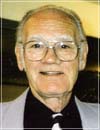
Scott Richardson

Stand Still And See God's Salvation

Scott Richardson January, 29 1989 Audio
0 Comments

Sermon Transcript

Auto-generated transcript • May contain errors

100%
The 107th Psalm is an admonition to the people
of God, an exhortation for them not to forget to praise Him who is worthy of their praise. First he says, Give thanks unto
the Lord, for he is good, none good save God. Any goodness that is displayed in human flesh
is derived from God who is good. The Apostle said, For I know
in this body of flesh dwelleth no good thing. There's not any
good in us. As I told you Wednesday night,
He is the vine and we're the branches. The branches cannot
survive apart from the vine. The branches draw all their strength,
all their beauty, from the stem, from the vine.
If the vine is cut off or the branches are cut off, the branches
die. Without me, our Lord said, you
can do nothing. So give thanks unto the Lord,
for He is good. He is good. He was good to us
before we were born. Good to us in the sense that
He chose us in Christ Jesus before time ever was. There was a Lamb,
the Bible says, slain from the foundation of the world. And
that Lamb was Jesus Christ. In the mind of God, He was always
slain. And in the mind of God, we were
always His people. So God was good to us in that
He chose us in Him. for the foundation of the world.
God was good to us in that he hath called us here
in time. God is good to us in that he
sustains us and preserves us even unto this hour. So God is good. God is good. There is none good save God. For he is good and his mercy
endures forever. not a temporary thing, is the
mercy of God, endures forever. It says, Let the redeemed of
the Lord say so, whom he hath redeemed from the hand of the
enemy. Not only are we great enemies
to ourselves, but we do have a chief enemy, which is the devil. And not only have we been redeemed
from the hand of ourselves, we were bent on committing suicide
of our souls. And our Lord redeemed us of our
will and purpose to destroy ourselves. But yet he also redeemed us from
the hand of the enemy. We were in bondage to the enemy. He had complete power over us. That's the reason we were bent
on the suicide of our souls. And had not the Lord redeemed
us from his hand, we'd still be under the domineering power
and influence of the devil. Our Lord said, Ye are of your
father, the devil. He said, He is a liar from the
beginning. He said, You are just like him.
He said, You are just like him. That is the way we are. We are
redeemed. We were redeemed by the precious
blood of the Lord Jesus Christ from the hand of the enemy. And
when he says to praise the Lord and to give thanks unto the Lord,
for he is good and his mercy endures forever, This has involved
what he's done for us. He's given us a hope, given us
a new song, given us new purpose, new meaning. He's made us understand
what life's all about. Life is not just being happy. You can be happy in life without
purpose, without meaning. But to be happy in life with
purpose, something. Blessed are the poor in spirit,
for they shall see God. Not poor, naturally poor, as
we interpret the meaning of the word poor, destitute and hungry
and without any sustenance for our body and without clothes
for our body or a place to live. That's not what he's talking
about. The poor in spirit, they shall see God. God's good to
us, redeemed us from all of that. We've got purpose now in life. We know where we come from. We
know what we were. We know what we are apart from
the grace of God. We know where we're going. We're looking for a city, a permanent city, a city whose
builder and maker and founder is God Himself. purpose. He has redeemed us. This world
is not my home, I am just passing through. "...redeemed from the hand of
the enemy, and gathered them out of the lands." There is an
innumerable multitude of people called the redeemed. They are
called the people of God. And they come from every and
every kindred and every tribe and every tongue. And He gathers
them out. God gathers them out in mysterious
ways His wonders to perform. He brings them. He brings them
in His good providence. He brings them to hear the gospel
and sends His Spirit to quicken their dead souls and give them
life and righteousness and peace. makes them accepted in His beloved
Son. He gathers them. He goes where they are at. He
finds them. He knows them by name. And they
hear His voice and they follow Him. He grants unto them repentance
and faith, sustains them and keeps them. The Lord is good. We'd do well if we'd thank him
and praise him. He gathers them out of the lands,
from Africa, from China and Japan and South America and the United
States and Borneo, from the east and from the west and from the
north and from the south. They're all over. He told his
church, he said, you go therefore into all the world, all nations,
That's the reason we have a small park down in Mexico with Brother
Gruber, Brother Milton Howard, as they preach the gospel down
there. And the brother over in the islands
there around Jamaica, Brother Danny Parks, preaching the gospel
over there. He's got a school set up. Milton Howard and Walters got
a school in Mexico to teach the preachers, teach them the gospel
and the grace of God. Brother Bill Clark and Brother
Ken over in Africa, they've got a school. They're sending out
correspondence courses. They've had over 300 requests
for their literature, and they're going to meet with them over
in Africa. Native preachers. They're going
to come together. The old man's going to meet with
them. God calls us out. He calls us
out through the Gospel unto Himself from the East and the West and
the North and the South. And this is their condition.
They wandered in the wilderness. They're wandering now. I wandered
myself. Wandered for twenty-some years.
No purpose in life. Eat, drink, and be merry. That
was my purpose. My purpose was, let's do it now. No thought of tomorrow. No thought
of eternity. Wandering in the wilderness in
a solitary way. They found no city to dwell in.
Nothing permanent. Nothing permanent. No purpose.
Hungry and thirsty and their soul fainted in them. Then they
cried unto the Lord in their trouble. And if they cried, it
was because he made them to cry. He made them weep. Weep for their
sins. And he delivered them out of
their distresses. And he led them forth by the
right way. You don't want your way. You
want his way, which is the right way. I am the way, the truth
and the life. I want his way. want His will,
not mine. But this is the experience of
these that are called, that they might go to a city of habitation,
the city that is builder and maker and founder is God Himself,
that city foursquare. Oh, that men would praise the
Lord for His goodness and for His wonderful works to the children
of men. For he satisfied the longing
soul and filled the hungry soul with goodness. And it goes on, and I've got
time to read it all, but you can read it all. Over here in
the 23rd and 24th verse is the verses that I particularly want
you to see here this morning. It says, They that go down to
the sea in ships, that do business in great water, These see the
works of the Lord and his wonders in the deep. Those that do business
in the deep waters, they're the ones that see the works of the
Lord, and they're the ones that see the wonders in the deep,
the wonders and the glories of God Almighty. And let me now
turn to Exodus chapter 14. Exodus chapter 14. In this 14th chapter, we have
some historical facts of the experience of the people of God by way of
type or representation of God's dealing with his people. It not only displays the power
and the grace and the glory of God, but it also displays our
wandering hearts and our discontentment, our activity in the flesh, our
refusal to simply bow to difficulties and circumstances that we don't
understand and say, It is well, and it shall be well, for God
is with me. Now, in this fourteenth chapter,
and I already read my text to you from the Psalms there, they
that do business in deep waters see the wonders and the glory
of God. Now this is true, this is so
true. Yet our coward hearts, we have
coward hearts, we have unbelieving hearts. And when difficulties
come like are described here, great waters, great waves, it's
not smooth sailing. When difficulties come upon most
of us, our coward hearts shrink from these great waves of difficulties. We prefer, the biggest part of
us, to do our business in the shallow water. That's where we
want to do business. We want to do business on the
lake. We want to do business where
there's no waves. We want to do business and spend
our time and activity and our promotions in the shallow water
where there's not any danger. And because of this, the result
is we fail to see the works and the wonders of God Almighty. Now, the Lord nowhere holds out
to us the prospect of exemption from trial and tribulation. As a matter of fact, he says,
they that live godly in Christ Jesus shall suffer persecution. No biblical character that I
know of in the Bible had smooth sailing. He was not promised
smooth sailing, but he was promised hard times and difficulties. People would misunderstand him.
People would rage against him for what he did and for what
he said and what he believed. The Apostle Paul, the greatest
of all biblical characters, in my opinion, had nothing but trouble. Trouble from start to finish.
He never knew what trouble was until he met the Lord Jesus Christ
on the road to Damascus. And from then on, until the day
he departed, from this world, he knew nothing but heartache,
anxiety, anguish, persecution, difficulty, and trouble upon
trouble. As a matter of fact, the Bible
itself says that man that is born of woman is born full of
trouble as the spark flies upwards. That is, if he is not in trouble
now, the prospects of tomorrow is that he's going to be in trouble.
And if he's not in trouble now, it's because he's just been delivered
from trouble. He's got all kinds of troubles.
Things now to the sensitive heart and the redeemed soul that did
not appear to him to be trouble back under is big trouble for
him now. I can say without fear of being
refuted that the Lord does not hold out to us the prospect of
exemption from trial and tribulation and difficulties. And I can say
this too, knowing my own heart, at least the measure of my own
heart, we want always to be sailing on smooth waters. not promise us that we'll be
sailing on smooth water, but that's what we want. But he does
promise to be with us in both situations. He promises to be
with us when there's smooth sailing, and he also promises to be with
us when the water is rough. So he's there, he said, be not
discouraged, or be not dismayed, for I am with you. I am with
you unto the end. It also says, As the Father hath
loved me, so I love you. In the same manner and method
that the Father loves the Son, the Son said, Even so have I
loved you. I love you the same way. I'll
never leave you nor let you go. I'll be with you when the going's
good and when the going's bad. I'm still with you. I don't change. I'm the same yesterday, today
and forever. I don't change. I loved you then,
I love you now. There'll never be a time when
God does not love His people. God's not mad at His people.
God's not angry with His people. God doesn't hate His people.
He loves His people. And He loves them righteously
because of the Lord Jesus Christ. His love is a righteous love.
It's a righteous grace. It's a righteous justification
because all of it's based upon the doing and dying of our blessed
sons. He's not angry with anybody here
this morning who's in Christ Jesus. He's not angry with you.
He's angry with the wicked every day, but you're not wicked. You're righteous in His eyes
through the substitutionary work of the Lord Jesus and through
the righteousness that He has imputed to you freely without
cause on your part. Well, listen. He has not told
us that we would be exempt from these things. But he has said,
I'll be with you in smooth sailing and in rough waters. I'll be
with you. Now, the Lord's presence was with his faithful servants
over there in the book of Daniel. There was three Hebrew boys and
they refused to bow. and acknowledge the king of that
particular nation. Well, they acknowledged him as
king, but they wouldn't bow to his idol. They said, at the sound
of the gong, everybody's going to bow, going to fall on their
knees and bow. And they said, well, we have
one God, Jehovah, and we don't bow or worship any false god. And it made the king mad. He said, build this fire furnace. Build it. Make it 70 times hotter
than what it is right now. And he got these boys and he
said, boys, now listen to me. He said, the rumor has come to
me that you fellas will not bow. And they said, you heard right.
We're not going to bow. And it made him mad. And he said,
throw them in there. throw him in that fiery furnace.
Now, after he threw him in the fiery furnace, the Lord was present
with him. This fellow said, How many did
you put in that furnace? Was it three or four? They said,
Well, just three. He said, I see another one in
there with those three, and he looks like the Son of God Himself.
And now what happened? Smooth sailing, or a hot furnace
makes no matter to our God. He'll be with his people to sustain
them. So I can say, then, that the
Lord's presence was with his faithful servants. Meshach, what's
the other two? Shadrach and Abednego. The Lord was with these three
boys in the furnace of fire. And while passing through the
furnace of fire, it was better for them to be with him as they
passed through than it would have been for him to display
his power and keep them from going through. When they came
out, their clothes didn't even smell like smoke. Not a hair on their head, Well, I'll tell you here this
morning, we most of the time, though, we desire to be allowed
to go on in this life without trial. But the point I'm trying
to make is, there ought not to be, when difficulties come and
trials come, and they will come, they will come. There'll be heartaches
and disappointments and weeping and tears and all of that. It'll
come, but when it comes, rather than question God about it, all
we've got to do is to bow meekly and humbly before God and say,
it is well. It is well. It is of the Lord. Let him do as he pleases. And
it shall be well. That's the victory there. Faith
is the victory. Not unbelief. Unbelief scurries around and
sees how to get out of that trouble. What can I do to relieve the
situation? Well, anyhow, I said all that
to say that this is the case of Israel here in chapter 14
of the book of Exodus. They've been brought now by God
through His servant Moses They are brought to a place of overwhelming
difficulty. They are called, I believe, to
do business in deep water. They are now at wit's end. You
see, the Lord said in verse 1, He spoke unto Moses, He said,
Moses, tell this, speak what I am telling you unto the children
of Israel, that they turn leading them now, it says that they turn,
they make a turn, they make a turn and encamp at this particular
place between Migdal and the sea, over against Baal-Zephah,
before it shall be encamped by the sea. So, he's brought them
to a very difficult place. He's brought them to a place
that the Red Sea's before them. The mountains have shut them
in. They can't go this way or they
can't go that way because of the mountains. They can't go
ahead because of the sea. They can't turn around and go
back because Pharaoh and his army is right behind them. He has brought them to a place
that they can actually do nothing to escape. They are at wit's
end. Listen, it says in verse 3, it
says, For Pharaoh will say of the children of Israel, They
are entangled in the land. The wilderness hath shut them
in. This is what Pharaoh says. You see, old Pharaoh, he repented
of letting them go. And he had second thoughts about
finally letting them go after all the plagues fell upon him.
And so he says, now, he says, I'm going to make one more desperate
attempt to get those people and to bring them back. These people,
they were what? At least three quarters to a
million of them that were slaves of his, doing his work for nothing.
And all they got for their trouble was the stick, the rod, and some
cloves of garlic, and some onions, and some leeks, and a wet place
to sleep. That's about all they got. And
he profited by the free labor of the Israelites. And after
he got to thinking about it, he said, well, I'm sorry I let
them go. I'm going to make one more attempt to get them back.
I think I can get them. So he thought. Pharaoh will say
of, about the children of Israel, why they are entangled in the
land down there. The land is too much for them. They have
been down here slaves all these years. They do not know anything
about traveling. The wilderness has shut them
in. That is what he will say. God will make him say that and
make him think that. In verse 4, God says, I will
harden Pharaoh's heart. I will. circumstances won't do
it, I'll harden his heart. God said, I'll harden his heart.
I'll harden his heart and he shall follow after them. And
I will be honored among Pharaoh and upon all his hosts. And the
Egyptians, before I get through with them, may know that I am
the Lord. And they did, the Egyptians,
as God providentially hardened the heart Pharaoh and made him
a means to God's end. And he did exactly as God told
him. And it was told of the king of
Egypt that the people fled, and the heart of Pharaoh and his
servants were turned away against the people. And they said, Why
have we done this, that we have left Israel? Go from serving
us. Why did I do that? I let them
go. They were my slaves. Now I've
let them go. Why did I do that? So he made ready his chariot
and took his people with him, and he took six hundred chosen
chariots, and all the chariots of Egypt, and captains over every
one of them. And the Lord hardened the heart
of Pharaoh, king of Egypt, and he pursued after the children
of Israel. And the children of Israel went
out with a high hand. The Egyptians pursued them, all
the horses and chariots of Pharaoh and his horsemen and his army,
and he overtook them in camp by the sea. Beside this great
mountain, these two great mountains, he had them hemmed in, locked
up. They couldn't go nowhere else.
And when Pharaoh drew nigh the children of Israel, helpless
and hopeless, lifted up their eyes and they seemed They seemed
they couldn't go this way, they couldn't go this way, and they
couldn't go through that sea. And here was Pharaoh and his
army behind them, and they lifted up their eyes, and behold, the
Egyptians marched after them, and they were sore afraid, and
had ever a right to be afraid. And the children of Israel cried
out unto the Lord, and they said unto Moses, Moses, they began
to complain now. They said, that is, They're brought
to this particular place. It's all been arranged by God
and ordered and ordained by God for them to be here at this particular
place at this particular time. It was God who told Moses in
verse 2 that they turn and encamp before this mountain, before
this mountain, and right here in front of the sea. God could
have told them to go someplace else, but He told them to go
there. And they went there, and they're hemmed up. They're hemmed
up now. And there's no one to turn to
except God, but what do they do? They start complaining about
the difficulties, these overwhelming difficulties that they're confronted
with. And they said, because there's
no graves in Egypt, you've taken us away to die in the wilderness,
wherefore hast thou dealt with us to carry us forth out of Egypt? Is not this the word that we
told you in Egypt, Moses, saying, Let us alone, leave us be, we
are all right, that we may serve the Egyptians? For it had been
better for us to serve the Egyptians than that we should die in the
wilderness. And Moses said unto the people,
Fear ye not, stand still, and see the salvation of the Lord. So you see then what the situation
and what Israel's case is at this particular time, brought
into this overwhelming difficulty, and are called to do business
in the great water of the Red Sea. And they're at wit's end. And O Pharaoh, repentant of letting
them go, and he's determined now to make one more effort to
get them back. And these people, when they look
back and they see him, it says that they were sore afraid, that
they was in a hard situation, and they was in a situation where
human effort could avail them nothing. Human effort on their
part could not do anything about this overwhelming, difficult
situation that they was in. The sea was before them, Pharaoh's
army was behind them, and the mountains was around them. What
could they do? And I said before, all this was
permitted by God. God had marked out their position. Who marked it? Why are they where
they're at? Answer me that question. Why
are they there between the two mountains? facing the Red Sea and Pharaoh's
army behind him because God marked out their position. He told them,
he said, Moses, tell them to turn up there and go down between
the two mountains in front of the Red Sea. Get right there.
God marked out their position. God marked out our position too.
How come you was born of the parents of so-and-so? Because
God marked out your position. How come you spent all your years
in the coal mines? Because God marked out your position.
How come God saved you when He saved you? Because God marked
out your position. That's the reason. No other reason. No other reason. He marked out
their position and He permitted Pharaoh to come unto them. Why did He do this? just to display
himself in their salvation and the total overthrow of their
enemy. They couldn't have seen it otherwise. How often do we feel disposed
to question as to the whys and the wherefores of our being placed
in such and such circumstances. We generally say, Why me? Why
me? going to church and I've been
reading my Bible and I give them my money and my life is kind
of straightened up, why is it that I'm having so much trouble?
How come the other fellow doesn't have a little of it? Why me? Why? We question, we question. We question the divine providence
of God who has fixed our position. We need not question it if God
has fixed our position. Oh no, it's better, brethren
and sisters, it's better this morning to bow our poor hearts
in meek subjection and say, it is well and it shall be well. Do you remember that blind man? The Lord saw that poor pitiful
blind man there and it says he was born blind. and probably
a 40 or 50 years old had never seen the ray of sunlight in his
life, was a beggar and depended upon people to give him alms
as he begged every day. And the Lord seen him and the
disciples said, Lord, who is seeing, this man or his parents
that he is born blind? And the Lord said, neither one.
said it wasn't because of his sin and it wasn't because of
his parents' sin, he is born blind, that I might display the
power and the glory of God in healing his blind eyes and give
him sight. Fixed position. See what I'm
talking about? We ought not to moan or groan
or complain or whimper or whine. We ought not. We ought not. Oh,
no. says, well, it shall be well. I can't see the sunshine. I don't
know what's ahead of me. I don't know anything about tomorrow,
but thank God I know who holds tomorrow. Even, brethren, when God fixes
our position, for us, ought to bow. We can be assured that the
fixing of that position was a wise decision of God Himself. And He's not out to do us hurt. He's not out to hurt us or to
harm us. God loves us. Whatever He does will work for
our good and for His glory, whatever it is. It doesn't make any difference
if the tribe's house burned down not so long ago, And I talked
to them about it, and they said, well, it was God. He burned it down, and He can
build it up again. And first thing you know, God's
got a house, a far nicer house than what He had before. Isn't
that right? Far nicer house. Yeah. God's glory, if you're
good, whatever it is. If you're good, you're good.
He loves you. He loves you too much. He rules
and overrules. When He fixes our position, rest
assured, it's a wise decision. Now listen to this. Even when
we, in our folly and our foolishness, willfully choose a position for
ourself, He graciously overrules our foolishness and makes it
to come out for our good and for His glory. Doesn't He? He
does it every time. There's old Daryl, laying down
there and couldn't move his toe. Young man, young man! There looked
like there was much hope for Daryl. You'd have never thought
then that Daryl would be driving a great big wrecker that would
take a healthy man to drive. And have these filling stations
and all of that. You wouldn't think so, would
you? It's for your good and for the
glory of God. It didn't look so then. But God
overrules, you see. He has the right to rule, and
there is no limit to His right. And He has the right to overrule,
and there is no limit to that right. And He overrules. Listen, God could have, had it
pleased Him, He could have led Israel through the Red Sea far
beyond the reach Pharaoh and his army, but if he had it, that
would not have fully glorified his name in taking care of Israel's
enemy and his enemy. He said that all of this was
in his design that he might get honor from doing in the enemies
of Israel. He said, I'm going to get me
some honor out of this. I'm going to get me some glory. He's asking, why did he harden
Pharaoh's heart? He said, that I might be exalted,
that men might know, they'll know that I'm God. That's right. Listen, the right attitude, which a believer ought to take
in the matter of faith, in the presence of these difficulties,
whatever they are. Our right attitude is that we
just need to, as Moses has admonished the people here in verse 13,
he said, Fear ye not. You haven't got anything to be
afraid of. If God is before us, who can
be against us? Who can stay in the arm of God?
Listen, if God spared not His own Son, how shall He not through
Him freely give us all thanks? Fear not. Fear not. Don't be
afraid. Fear not, Paul. I have much people
in that city that do no harm to you. Fear not. Fear not. Fear ye not. And stand still. Just stand still. Why? you'll
see the salvation of the Lord. Well, to stand still is impossible
for the flesh. The flesh cannot stand still. Anybody that knows anything about
the restlessness and the depravity of the human heart under trial
and difficulties knows that the human heart will not stand still. It won't do it. We've got to
be doing something. You see, it's hard to understand
what's involved in standing still in light of who we are, in light
of the restlessness of our nature, because we're inclined to be
doing something to relieve the situation all the time. Man,
by nature, is that way. He's active, and he's always
active. He must be active. He must have
his hand in the pot. He must do a little of the cooking.
He must do the stirring, or he must put some salt and put some
pepper in it. All of these, which manifest
that he's trying to do something, and he's trying to do something
in his activity, It just shuts out God, that's all it does.
It removes God from the scene. If you can do it, God doesn't
get any glory out of it. If you could save yourself, God
wouldn't have no glory there. The glory would all be up to
you. The apostles said, Well, Lord, what are we going to do
here? Here's a rich man, he said, This
rich man said, I've kept all these things from my youth up. Our Lord said, well, give what
you've got to sell what you own and take all your money and give
to the poor and come follow me. And the fellow shook his head
and said, it can't be. And he departed and went down
the road. And the disciple said, well, Lord, in light of that,
who then can be saved? The Lord said, it's impossible
with men. It's impossible for a man to
save himself. But all things are possible with
God. He's got to have the glory. See
what I'm talking about? All this hustling and bustling
and striving and all these fruitless activities of the flesh, they
don't do a single solitary thing but raise a dust They raise a
cloud of dust around us which prevents us from seeing the salvation
of God. They just make that cloud of
dust and we can't see God's salvation. The Bible says just stand still. Seize your activity. Seize your
striving, your hustling and bustling. Just stand still. If you're going
to do business in great waters, stand still and see the works
and the wonders of God Almighty. Just stand still. We gain nothing
by our restless and anxious efforts. We can't make one hair black,
or we can't make one hair white, or we can't add one cubit to
our stature. Can't do it. If we do, It's not
natural. It's false. What could Israel do at the Red
Sea? What could they do? Could they
dry the Red Sea up? No. Could they level the mountains? No. Could they do away with Pharaoh's
army? No. They were enclosed with a wall
of insurmountable difficulty. Mountains on both sides of the
sea ahead of them and Pharaoh's army behind them. They were helpless
and they were hopeless and they were shut up to some relief outside
of themselves. Their only hope was something
outside of themselves. So Moses said, Stand still. Stand still. You see, when unbelief
is driven out, and God can enter in order for us to get a view
or to get a look at His doings. We must stand still. Now, it's true in every stage
of our life. It's true of us as sinners. When under the sense of sin on
our conscience, when our conscience, which is by the Spirit of God and our
conscience is made uneasy in regard to our discrepancies and
our sins. We are tempted to resort to our
own doings in order to obtain some relief from our conscience.
That's the reason why if this particular denomination says,
come forward, you'll do anything to get a little relief from an
uneasy conscience. They say, come forward. If you
come forward, they leave that in your mind that there may be
some help if you'll come forward. You want some relief. They tell
you to be baptized. You are baptized because you
think there may be some relief there for your conscience. You say, well, I'll change. I know that my conscience condemns
me and I know that I'm not treating my wife right. I'm not treating
my children right. I'll do better. I'll quit doing
what I did do. And that will give me some relief.
But it doesn't give you any relief, see, because it doesn't atone. It doesn't pay for your misspent
life and your sins. It won't do it. Only the Spirit
of God, through that divine sacrifice, the blood shed, can purge your
conscience and make your conscience right with God. Only that. You see, as a sinner, when we're
under the sense of sin on our conscience, we're tempted. We're tempted by the devil. to
resort to our doings in order to obtain relief. We must stand
still and see the salvation of God. What could we do in the
matter of making atonement for our sin? What could you do about
it? You say, well, I'll quit sinning.
Well, what about your past sin? Of course, you ain't even going
to quit sinning, but just take it by way of argument that you
just quit some of the things you've been doing. Well, what
about the past? What about that? Who's going
to make an atonement for your sin? Can you make an atonement
for your sin? Can you crawl up there on the
cross with the Lord Jesus Christ and die with Him? Certainly not. Can you go with Him into that
horrible pit, that miry clay? Can you do that? No! God is alone in redemption. And as for us, all we can do
is stand still and see that God has done it all. That's all you
can do. Look! He done it all. He done it all. That's the reason
the hymn writer said, All to Him I owe. Why do I owe it all
to Him? Because He done it all. God didn't
do anything. He didn't do anything. He didn't
do a single solitary thing. Just stood still. And God opened
my eyes and I see that salvation is all of God from first to last. Whenever I point to the clean
justice and judgment, to the dust of the grave, it is all
of you. Stand still. See that salvation
is of God. It is not of you. What could
you do? How can you atone for your sin?
What could the Israelites do? What could they do? They couldn't
mow the mountains down. They couldn't dry up the water.
They couldn't prohibit barrels from bearing down on them. Oh, listen. Are we not to do something? What can we do? Nothing. Better
stand still. That's all. He said to Moses,
he said, why do you, why cryest thou unto me? It's only when
we have learned to stand still that we're able to go forward.
He told them here. He said, Now, the Lord will fight for you,
and ye shall hold your peace. And the Lord said unto Moses,
Wherefore criest thou unto me? Speak unto the children of Israel,
that they go forward. But you can't go forward until
you first learn to stand still. You've got to stand still and
see God's salvation, and then you can go forward. These people
had to stand still and see God's salvation, and then He told them
to do what? Go forward. And they went forward. The Red Sea was right there.
They stepped There was the Red Sea when Moses said, Go forward.
They had learned to stand still. And now they put one step out
there and it was dry land. They took another step and it
was dry land. And they took another step and
it was dry land. And it just kept rolling up and
rolling back as they went. See what I'm talking about? No such thing as No such thing
as going forward until you learn to stand still and wait on God. We're called to see God's salvation. God's salvation. That's the reason
it's called God's salvation. See God's salvation, he said.
It's not your salvation, it's God's salvation. And because
he uses that phrase there, stand still and seek God's salvation,
that proves that the salvation is a complete salvation, because
it's God's salvation. If it was your salvation, it
wouldn't be a complete salvation. If it was my salvation, I wouldn't
have made it through the first night after I made a profession
of faith. If it was my salvation, it would
depend on me. If it depended on my doing, it
would depend on my dying, it would depend on my prayers, my
Bible study, my letting my light shine, how far would I go? It's
God's salvation. It entirely rests and depends
upon Him. We sink or swim with the Lord
Jesus Christ. And when we find out who He is,
we know He ain't going to sink. We know He shall not fail. And
so we're not discouraged. And we'll go forward, step by
step. Listen, I'll quit in just a second
here. the only possible effect of human effort in the realm
of salvation, human effort, that is, pray through or hold out
faithful or do the best you can and trust in that and somehow
God will show mercy on you. That's human effort, human effort. Repent and believe and be circumcised,
that's human effort. The only possible effect of human
effort is to raise a dust, a cloud of dust, which blinds our view
of seeing God's salvation. As long as you're looking at
your efforts yourself, your reforming, your conduct in here and all
of that, you're just blinded from seeing God's salvation. that it's a complete salvation,
that He atoned for every sin and has given you freely His
righteousness which stands you in good stead with God throughout
the eternities to come. He said, Go forward. Where? The Red Sea? Yeah. Go through
the sea. How am I going to go Listen,
God never gives a command without, at the same time, giving the
power to obey the command. Because when the soul that is
disposed by the grace of God to obey, he receives power to
do what is said. Take the man that our Lord talks
about that had the withered arm. Our Lord come up to him, and
his arm was withered and paralyzed, and no telling how many years
it had been since he stretched that arm forth, and our Lord
commanded him to stretch forth his dead, lifeless arm. Now reason and human effort would
have said, naturally, how can I reach forth this dead arm that
hangs to my... how can I do it? He did what He couldn't do. And I'm telling you here this
morning, you're dead in trespasses and in sins if you be out of
the Lord Jesus Christ, but He commands you to repent and trust
in His Son. I'm telling you that that's something
that you can't do, but if God gives the power with the command,
you'll comply to it and repent and trust in the Lord Jesus.
That's what I'm saying. Israel, by faith, passed through
the Red Sea, and the Bible says, as dry land, step by step. That is, it wasn't divided all
at one time, like the pictures tell us. No, because we walked
by faith, not by sight. If it was divided all at one
time, we'd have crossed it by sight. But they didn't cross
it by sight, they crossed it by faith, one step at a time. And that water rolled back right
in front of their feet. Listen, it does not require faith
to begin a journey. If I can see all the way to the
end of the journey, what do I need faith for? See what I'm talking about? Stand
still. see the salvation of God. And
in standing still and seeing God's salvation, you see a complete,
perfect salvation. And you will see the enemies
of God being put to defeat, and you will see God being glorified
in all of His attributes. And you will understand how God
can be just and justifier of him that believeth in Jesus.
Scott Richardson
About Scott Richardson
Scott Richardson (1923-2010) served as pastor of Katy Baptist Church in Fairmont, West Virginia.
Broadcaster:

Comments

0 / 2000 characters
Comments are moderated before appearing.

Be the first to comment!

Joshua

Joshua

Shall we play a game? Ask me about articles, sermons, or theology from our library. I can also help you navigate the site.