Bootstrap
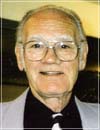
Scott Richardson

A Picture Of Substitution

Hebrews 11:17-19
Scott Richardson March, 28 1982 Audio
0 Comments

Sermon Transcript

Auto-generated transcript • May contain errors

100%
chapter of the book of Hebrews,
Hebrews chapter 11. Let us look at this seventeenth
verse of Hebrews 11. Abraham, when he was tried, offered
up Isaac, and he that received the promises offered up his only
begotten son, of whom it was said that in Isaac shall thy
seed be called. Accounting that God was able
to raise him up, even from the dead, from whence also he received
him in a figure. By faith, when Abraham was tried, offered
up Isaac. Now, this expression, offered
up, is the same that's used in other places in the scripture
for slaying or killing and offering up sacrifices. And that creates
a problem here. Let's try to untie the knot and
solve the problem before we continue. By faith, Abraham, when he was
tried, offered up Isaac. He offered him up. Let me point
out that he offered him up here. That is, he offered him up as
a sacrifice. We know literally he didn't do
it because God intervened. But in his own heart, in his
own heart, Abraham slew, killed, offered up his beloved and dear
son, Isaac. By faith, Abraham, when he was
tried, offered up Isaac. Now the problem is this. How
could Abraham offer up his son by faith. Of course, if it was
not by faith, it would have to be murder. But he offered his
son up by faith. Now, how could this take place,
seeing that it was against the law of nature and the law of
God? It tells us over here, and we'll
read it in just a minute, that God had commanded prior
to Genesis 21 that whosoever shedeth man's blood, man's blood
shall be shed. So here though, God has commanded
and ordered Abraham to offer up his son, to kill his son Offer
him up as a sacrifice. Well, the only sure foundation
that Abraham had to rest upon was the fact that God himself
told him to do it. Let me read this to you over
and turn with me to the book of Genesis again here. And chapter
22, the book of Genesis. And let's try to solve this problem
here. He offered his son up by faith. And it was against the law of
nature. It was against the law of God for a man to slay his
own son. That was strictly prohibited
by God Himself. But the only sure foundation
that Abraham had to rest upon was the Lord Himself commanded
Abraham to do it. Look at verse number 2 now of
Genesis chapter 22. Remember I read from Hebrews
11. And verse 17, "...by faith Abraham,
when he was tried, offered up Isaac." Why did he offer him
up? Why would he offer up his own beloved son when the Scriptures
in the 9th chapter of the book of Genesis here says that if
a man kills another man or takes his blood, then his blood shall
be shed because man was created in the image of God. But God
tells Abraham to do that which he prohibits other men from doing. And I say this is the only thing
that Abraham has to rest upon. This is the only foundation for
him doing this because God said it. God said it and that's enough. It takes more than just an ordinary
faith here. It's got to be more than an ordinary
faith. of Abraham has got to come from
a man who, as we said this morning, whose life is filled with God,
whose entire view is filled with God in Christ, or he could not
have done that. But he says here, verse 2, and
he said, that's God, and he said, Take now thy son, Thine only
Son, Isaac, whom thou lovest. Take him, and get thee unto the
land of Moriah, and offer him there for a burnt offering upon
one of the mountains, which I will tell thee of." So the only sure
foundation that Abraham had to rest upon in offering up his
son, being obedient to the command of God, was that God said it. You see, God had said, and I want to read
this to you because I mentioned it to you here. In Genesis chapter
9, I want to read it. I must read it. Genesis chapter
9, and I think maybe verse number
6. Verse 6, Whoso sheddeth man's
blood, by man shall his blood be shed, for in the image of
God made he man. Whoever sheddeth man's blood,
whoever kills a man, by man shall his blood be shed. Another man
will take his life, will shed his blood. So you see the problem
here, the dilemma here. what's taking place here. God's
called Abraham now to offer up his son, to kill his son. And
of course, Abraham, this is no rank amateur that he's talking
to here when he talks to Abraham. This man is a friend of God.
He knows some things. He's been some places. He's had
some experiences. But every creature, every human
being, is bound by the laws that God has prescribed. Everybody
is bound by these laws. But God himself is not bound.
Now, there is the key to this, to understanding why God would
command Abraham to do this. You and I who are creatures of
the dust, the offspring of God himself, We are bound by the
laws that he hath set forth. But God himself is not bound. God is under no law. God is an
absolute sovereign. He is the Lord of life. He is both giver and preserver
of life. And therefore, because he is
an absolute sovereign, because he He is the preserver of life,
the giver of life, then he has the indisputable right to take
away life when he pleases, how he pleases, and by what instruments
he means to use to take away that life. He possesses supreme
authority over life. He is a law unto himself. He
is not bound by the law. He is over and beyond the law.
He is not bound by it. You remember one time that God
gave a command and He said, Thou shalt not make any graven images
or any likenesses. Thou shalt not do that. It is
a sin worthy of death for any man to make a graven image. Yet,
God ordered Moses to make a brazen serpent and hang it on a pole. You see, what I am saying is
this. God is not bound by law being above all law. We need
to learn that. We need to learn that God is
not bound by law. You and I are bound by law, but
not God. God is an absolute sovereign.
He is the giver of life, the taker of life. He has the indisputable
right to do as he pleases. I want you to notice here in
Genesis chapter 22. Turn over there again with me.
Genesis chapter 22. I want you to notice the time
when Abraham was tested. God tested Abraham. God tried Abraham. Verse number 1. It says, And
it came to pass after these things that God did tempt Abraham, or
God did try Abraham, or God did test Abraham. It came to pass
after these things. Well, what does he mean when
he says, after these things? Well, there are some other things
that have already happened to Abraham that would try his very
faith. As a matter of fact, the first
time we ever hear of Abraham, it says that God spake to him
down in a far foreign country and came
to Abraham like a bolt of lightning out of the sky. and said unto
Abraham, he said, Abraham, get thee out of this country. Leave
your possessions. Leave your home. Leave father
and mother and kinsmen and friends and acquaintances. Leave them
all and come and follow me. He commanded Abraham to leave
his possessions, his homeland, and go to a place where he knew
not. He tried him, and Abraham did. Abraham got up early in the morning,
just like he did here, and did exactly what God told him to
do. Well, it wasn't long until he
and Lot had problems. And he was tried there. Lot said,
Well, your herdsmen and my herdsmen are having trials and troubles
here. And so Abraham said, well, it's
no good for you and I to fall out on account of our servants. We'd be brethren. And so there
was a choice to be made. And Abraham gave Lot the first
choice. And Lot chose the well-watered
plains of Haran. And Abraham accepted that which
was left. And Abraham wandered from place
to place. He had no continuing city. He
just pitched his tent here for a while and there for a while
and wondered and wondered for years and years and years. It
was trial. He had no children. He was 99
years old and he had no children. No heir in this house. No son
in this house. He was trying. After these things,
you'd think all that would be enough, wouldn't you? All the
problems that Abraham had up to this time, looks like, would
fill a lifetime with the ordinary man. But God says, after these
things, that God did tempt Abraham. Well, deeper waters are called
upon As far as man is concerned, God's
valued servant to pass through. He must go through the deep waters.
You see, this man here, as I said before Abraham, he's not a raw
recruit. He's a battle-scarred veteran. It's the battle-scarred veteran
that God places in the front ranks. So you need not think
it strange if God appoints to you right now a severe test than
he did twenty years ago. This is the most severe test
that ever falls upon the father of the faithful, Abraham. He had been tested prior to this,
but this is the test of all tests. Never has a man A human being,
a creature of the dust, ever been faced with such a test before
or since that Abraham was faced with? So don't think it's strange that you and I, after we've been
in the way for 25 or 30 or 40 years, that some great test or
some great trial fall upon us. Even though we would consider
ourselves not amateurs, not novices in the way, but battle-scarred
veterans that have been tried and tried many times, yet it
is those that are tried and have been tried that God tries the
most. It's been said that we need to
hold everything here in this life with a loose hand. Someone
said, build not thy nest upon any earthly tree, for the whole
forest is doomed to be cut down. We need not set our affections
upon things of this earth, but set our affections on things
above, and we won't be disappointed. And we may be able, when we're
trying, We may be able to come out of it like Abraham did. We may be able to believe God
and take God at His word and trust in God, though we cannot
see, though we cannot understand. We could fall back on Romans
8 and 28, that all things work together for good to them that
love God, to them who are the called according to His purpose. That's the time. This is the
time that Abraham was tested. After he'd been tested for some
85 or 90 years. Been tested and tested and tested. Now this severe test. Look at
the severity. That's the thing that impresses
me, is the severity of the test. Not an ordinary test. He didn't say, Abraham, take
all your bullocks and all your herds and offer them up as a
sacrifice. But He said, Abraham, take a
human being. Not your cows, not your sheep,
not your camel. He didn't even say, take one
of your faithful servants and offer him up as a sacrifice.
But He said, take your beloved son, the son of your old age,
the son of promise. Take him. Take Isaac, the darling
of your bosom. Your beloved son. He didn't say,
now Abraham, take that boy and run him out of the house. Put
him out. Send him yonder to Canaan somewhere.
He didn't say that. But he said, you take your son,
your darling son, your only child now, the only child that you
have. This child was born when Abraham
was 99 years old and his wife was 90. And he was a pride. He esteemed him. He loved him. He said, take him and cut him
off from the land of the living. Cut him off. Kill him. Slay him. Offer him up as a sacrifice.
He was commanded, now listen to me, he was commanded to do
a thing which no reason could be given except The authority
of Him who commanded Him to do it. No earthly reason why. We've got to have a reason most
of the time for that which we do. Give me a reason. What's
your purpose? Tell me why. Tell me why and
I'll do it. If I'm agreeable with it. But
there's no earthly reason here. No reasons given. God just said,
God did tempt Abraham, and He said unto him, Abraham. And Abraham
said, Behold, here I am, living in the very light of the presence
of God. And He said, Take now thy son,
thine only son, Isaac, whom thou lovest, and get thee out to the
land of Moriah, and offer him there for a burden. Kill him!
Kill him! Cut his throat! And build you
an altar! And lift up blood! spill down
over the rocks of that altar, and lay him on that altar, and
put the wood under the altar, and put the match to it. Do it! And he gave him no reason for
doing it, except he said it. He said, Do this! No wonder Abraham
is called a friend of God, the father of the faithful. He didn't
question God. He didn't question Him at all.
No, sir. He was told to do that which
was certainly contrary, abhorrent to natural feelings. He must
not only consent unto the death of this boy whom the Spirit of
God has specifically emphasized here in verse 2, whom thou lovest,
he is not only called upon, to consent to his death, but he's
called upon to be his executioner. He called upon to kill his own
son. The severity of the testing,
that's what I'm talking about, Bob. The place, the time, when
it took place after these things. The severity of it. No reason
for it. Logically, humanly speaking,
no reason given. Called upon to kill him. Called
upon to consent unto his death. He also must be the executioner. He must do the killing. Not going
to leave it up to some stranger. Not going to leave it up to the
hangman or some executioner that comes along the first of the
month. Oh no, he was to slay Isaac who was guilty of no crime. He wasn't guilty of any crime,
or at least the Bible doesn't say that he was. As a matter
of fact, according to the record of the Bible here, this young
man Isaac, he was probably 18, 19 years old, he was an unusual,
dutiful, gentle, kind, loving, obedient son. I say, was there
ever such a demand made upon a human creature before or since
as was made upon the man Abraham? No, sir. No, sir. Not upon a
human creature. Now, just for a little bit, let's
consider who it was that was to be offered. We found the time it came to
pass. He'd been tried and tested many
times. We found out the severity of
the trial and the test. He was to kill his son. He was
to do the killing. No reason given. He had committed
no crime. Now consider who it was to be
offered. Let's consider Isaac a little
bit. In Genesis chapter 17 and verse number 9, turn there with
me if you will. And God made a covenant with
Abraham. He made an agreement with Abraham.
God said unto Abraham, Thou shalt keep my covenant therefore, thou
and thy seed after thee in their generation. And this is my covenant
which ye shall keep between me and you and thy seed after thee. He made a covenant here, and
the covenant, listen, and the covenant here has to do with
the seed of Abraham. And the seed of Abraham was not
Ishmael, but the seed of Abraham was Isaac. Isaac was the child
of promise. Isaac was the result of the intervention
of God in the old age of Sarah and Abraham when they were beyond
the remotest possibility of conceiving a child. She was ninety-some
years old, and he was ninety-nine. And God has declared unto Abraham
that he would establish an everlasting covenant with Isaac, and with
Isaac's seed after him. Now, Isaac was the seed. There
is no doubt about that. Isaac was that seed and none
other. Now, it was, I want you to get
this, it was through him, it was through Isaac, it was through
this seed that he's talking about, that all nations on the face
of the earth from then until now are to be blessed. It was
through Isaac's seed. He makes a covenant agreement
with Abraham and he says, All nations shall be blessed through
this seed. But he has told Abraham to kill
this seed, this child of promise. Kill him! How are all nations
going to be blessed if I kill the seed? Isaac was the seed. Through him
all nations are to be blessed. It was through him. that Jesus
Christ, according to the flesh, must come upon the earth. It
was through the seed of Isaac, and no other. Now, these promises
Abraham had received, and he firmly believed the promises. He believed them. He received
them, and the accomplishments of these promises depended upon
the preservation of the seed, the preservation of Isaac's life,
or the promises would not be accomplished or fulfilled, at least until Isaac had a son.
But if he is to kill him, no son, no Savior, no Redeemer. The Redeemer is to come out of
this This Isaac, the seed, the child of promise, according to
the flesh, that's where the Lord Jesus Christ is to come from. But if we kill him off, Abraham
says, these are things that went through Abraham's mind. Abraham,
he understood, he believed these promises. Let me read this, my
text over here again in Hebrews. We talked about the promises,
this is what Abraham believed. Let me read this. 11, By faith Abraham, when he was
tried, offered up Isaac, and he that had received the promises,
he received these promises, firmly rested upon the promise of the
promised seed, that through the seed of Isaac all the nations
of the world would be blessed. I'm going to give you I'm going
to give you one ten million times greater than Ishmael. I'm going
to give you one in whom the whole world will be blessed through
his seed, Isaac. And he received the promises.
He embraced the promises. He rested upon it. But he said,
all these promises of a Redeemer now rest upon the preservation
of the life of the seed. Kill him now. If I kill him now,
that would render Narl and Boyd and make their fulfillment absolutely
impossible. What's he going to do? What's
he going to do? Well, I told you at the outset
that Abraham was a man who believed God. Abraham was a man that had
faith in the living God. And faith in the living God solves
all problems. When a man's in a dilemma and
don't know whether he ought to turn to the right or turn to
the left, he will solve these problems and believe God and
take God at His word. You see, back over there again,
listen to what he said in that eleventh chapter. He believed that God was able
to raise him from the dead. He believed God. By faith, Abraham,
when he was tried, offered up Isaac. He did it in his heart.
He killed Isaac in his heart. And verse 18, look at that. Of
whom it was said that he and Isaac shall by seed be called.
Alright? Verse 19. Accounting. Accounting. He believed God. Accounting that God was able
to raise him up. He said, even if I kill him.
Even if I kill him, I believe God will raise him back up. And
in his heart, he killed him, accounting that God was able
to raise him up even from the dead. Abraham believed God. Now, a man can only act in a situation like that if he has God to fill his whole
scene. If God will fill his whole life,
he'll be able to act like that. But if this business of Christianity
is just a passing fancy with him, if Jesus Christ is just
an insurance policy or a fire escape policy to keep you out
of hell, if that's all Christ means to a man, If it's the health
and wealth gospel that God wants to make you rich and God doesn't
want no poor people and God doesn't want no sick people, and if it's
that kind of an approach or attitude that a man's got to the gospel
of the Lord Jesus Christ, I'll guarantee you, when he's tried
as Abraham was tried, when he's tried, he'll disobey. He won't
believe God. The man that believes God in
a situation like this must have this whole vacuum of the future
filled with God Himself. He's got to be a man who's committed.
Committed. Every drop of blood that runs
through his veins has got to be committed to God's Christ. He has received the Lord Jesus
Christ as Lord. And he's his master. And what
his master says, that he'll do without question. And that's
what happened to Abraham. Oh, what will I do? Shall I offer
Isaac and bring to nothing God's promises? Shall I do that? Or
must I disobey? You remember what Abraham said when Ishmael was
to be kicked out, Abraham had another son who was older than
Ishmael. His name was Ishmael. He wasn't
the child of promise. I told you about that this morning. His mother was an Egyptian handmaid
who was a servant of Sarah, Abraham's wife. Abraham's wife, well, she believed that God had
failed her. And so she told Abraham, she said, I've put Hagar over
there in the tent, my maid, and I want you to go in and you can
have her. And it may be by you and her
coming together that I'll realize my life's expectation of having
a child. And it will be my child, but
it will be by you. It won't come from my Lord, it
will come from you. And so Abraham, in this spirit of unbelief, went
in. And you know the story. The going
in with Hagar produced Ishmael. And Abraham loved Ishmael. He loved this boy. And over here
in Genesis 21, if you'll turn with me to Genesis 21, verse
number 11. He loved this boy. It says that Sarah, in verse 9,
saw the son of Hagar the Egyptian, which she had borne unto Abraham
mocking. She is mocking her son. Wherefore,
she said unto Abraham, Cast out this bondwoman and her son. That is, kick them out of the
house. Cast them out. Send them off somewhere. They
can't live here. Cast out this bondwoman and her son, for the
son of this bondwoman, that's Ishmael, shall not be heir with
my son. even with Isaac. He will not
be co-equal with my son Isaac, the child of promise. He will
not. Cast him out. And the thing,
now listen, I want you to see this, and the thing was very
grievous in Abraham's sight because of his son. Very grievous. His heart was broken. It wasn't
an easy thing for him to do. This boy was blood of his blood,
bone of his bone, and flesh of his flesh. This was his only child for years. He'd never had any children until
he was ninety-some years old. And here's this boy, he's the
apple of Abraham's eye, the son of his old age. And now God through
Sarah tells Abraham to cast this son out because he will not be
co-equal or he will not share with the true heir, with the
true seed, Isaac. Cast him out. And this thing
was very grievous in Abraham's sight because of his son. Now,
to console this poor, stricken heart of Abraham, God says in
the twelfth verse, God said to his friend Abraham, He said,
Let it not be grievous in thy sight because of the lad, and
because of thy bondwoman. In all that Sarah hath said unto
thee, hearken unto her voice, for in Isaiah shall thy seed
be called." What's he saying? He's saying this. He said, Don't
grieve over Hagar's son. Don't grieve Abraham over Hagar's
son. He said, I'll give you one who is better than a million
Ishmaelites. I'll give you one who is 10,000 times 10,000 better
than Ishmael. I'll give you a son from whom
descend none other than the promised Redeemer, the Lord Jesus Christ. I'm going to give you a son.
He said, your seed is through you, the seed of your son, Isaac. that the Lord Jesus Christ according
to the flesh is going to come. Huh? Oh, no ordinary faith, you
see, was called for here. He is called, He called upon
Abraham to slay him who was marked out before time ever was to be
the means, to be the means of the coming of the promised Redeemer. the Lord Jesus Christ, one whom
the Savior was to come. And Abraham, it says that Abraham,
I think in the fourth chapter of the book of Romans, it says
that Abraham staggered not at the promises of God, but believed! He believed God! It didn't stagger
him, it didn't shake him, he believed God. Well, let's look
at it then. All right, look at it now in
that 22nd chapter of the book of Genesis. It says that they
rose up early in the morning. "...rose up early in the morning,"
the third verse, "...and saddled his ass, and took two of his
young men with him, and Isaac his son, and claimed the wood
for the burnt offering, and rose up and went unto the place of
which God had told him. And on the third day," they had
been traveling for three days, Three days and probably three
nights they've been traveling to get to the mountain where
God was going to show him the place to kill his son, offer
up his son. Three days on the road. Three
days in company with this 18, 19-year-old boy. Don't you think that a lot of
things went through Abraham's mind? Where are we going, Father Abraham? Well, we're going out here to
a mountain. God has appointed a particular
place out here that we're going to, and we've got to go. Well,
what are we going to do out there? I notice we've got the mules
or the donkeys loaded up with some wood and stuff here, and
we've got some things. What are we going to do? Are
we going on a camping trip? What are we going to do? What
are we going to do out there? A lot of things went through
Abraham's mind. On the third day, Abraham lifted
up his eyes and he saw the place afar off. He had plenty of time
to think about it and he didn't change his mind. No reluctancy,
no hesitancy whatsoever in Abraham. And Abraham said unto the young
man, he said, Abide ye here with the ass. Stay right here. I and
the lad will go yonder and worship. Now listen to this. I and the
lad will go yonder and worship and come again to you. He offered
him up. He is determined to kill him. He didn't know anything about
the intervention of God here. He was determined to kill his
son Isaac, the promised seed. But he believed that God would
do something for him, raise him from the dead. He said, I and
the lad will go yonder and worship, and we'll come again to you.
You wait here, we'll be back. That's what he's saying. And
Abraham took the wood of the burnt offering, and laid it upon
Isaac his son. And he took the fire in his hand
and a knife, and they went both of them together, the fire, the
wood, and the knife." All that Abraham needed was the
fire and the wood and the knife. And Isaac spake unto Abraham
his father, and he said, And Abraham said, Well, here I am,
my son. And he said, Behold the fire
and the wood and the knife, but where is the lamb? Where is the
lamb for the burnt offering? What are we going to do? Here is what Abraham said. He
believed God. God filled and occupied every
the nook and cranny of this man's heart. He believed God, and Abraham
said, My son, God will provide himself a lamb for a burnt offering. God will provide a lamb. And
they came to the place which God had told him of, and Abraham
built an altar there and laid the wood in the altar and bound
Isaac, his son, and laid him upon the altar upon the wood.
It doesn't indicate that there was any kicking yelling, scratching,
clawing, fighting on Isaac's part. He was submissive into
the hands of his father. He laid him upon the altar, upon
the wood. And Abraham stretched forth his
hand and took the knife and cut his throat. And the angel of
the Lord called unto him out of heaven. And he said, Abraham,
Abraham. And he said, Here I am. And he
said, Lay not thine hand upon the land, neither do thou anything
unto him, for now I know that thou fearest God, seeing that
thou hast not withheld thy son, thine only Son, from me.' And
Abraham lifted up his eyes and looked, and behold, behind him
a ram caught in the thicket by his horns. And Abraham went and
took the ram and offered him for a burnt offering in the stead
of his son." A lot of people don't believe
in the substitutionary work of the Lord Jesus Christ. You talk
to them about the gospel. How are you saved? Well, I think
I'll be saved by being good. I think I'll be saved by being
sincere. I think I'll be saved by being
religious. I think if you do the best you
can, you'll be all right. You ask Isaac here if he believed
in the substitute. If you could have access to have
a conversation with the promised child here, with this seed according
to the flesh for which Christ Jesus was to come into the world.
If you could talk to him and ask him, how do you believe that
you are saved? How do you believe that you are
delivered? He would say, through substitution. Ask him if he believes
in substitution. I will tell you this. It was
that ram caught in the thicket by his horns that was his substitute. God had provided himself a lamb,
and God provides a lamb. He has provided the Lord Jesus
Christ. As a matter of fact, John the
Baptist said, Behold the Lamb of God that taketh away the sin
of the world. That lamb is none other than the Lord Jesus. a suffering lamb, a slain sacrifice,
one whose blood was shed, one whom God poured out His wrath
upon against sin, one who knew no sin but became sin, that you
and I, if we be believers in the Lord Jesus Christ, might
be made the righteousness of God. Oh, my soul, it is not in
Ishmael. It's in Isaac. It's in Isaac. It's not in Hagar. It's in Sarah. Listen to me and I'll quit. It
can't be half grace and half law. In the book of Galatians
it says, I do not frustrate or mix up the grace of God For if righteousness cometh by
the law, then Christ is dead in vain." That is, it cannot
be half grace and half law. It has got to be either all law
or all grace. It cannot be the mixture of the
two. You see, if man has anything
to do with it, God is shut out. And if God is shut out, there
can be no salvation. Now, if it be Hagar, if it be
Hagar, God had nothing to do with it. You see, there's an
allegory there in Galatians chapter 5 about Sarah and Hagar. If it be Hagar, God had nothing
to do with it. God didn't have anything to do
with that. That was not, Ishmael wasn't the promised child. Abraham's
failure was that he didn't wait patiently upon the fulfillment
of the promise. God promised him a seed. But
he believed what his wife said, and she said, I'll help you out
in this matter. Go in there into the tent with
my Egyptian maid, and take her, and maybe we'll have a child.
God didn't have anything to do with it, see? That represents
the law. All that human nature can do. And if man has anything to do
with it, God is shut out. And if God is shut out, there
is no salvation. If it be in Hagar, God has nothing
to do with it. If it be in Sarah, if it be in
Sarah, man has nothing to do with it. Do you see that? If
it be in Sarah, Man don't have anything to do
with it. You see, Abraham was almost 100 years old. She is
past 90. And they had a child. If it had
been Sarah, if it had been Sarah, man didn't have anything to do
with it. You see, salvation is all of the grace of God. It's
God doing what? Providing Himself a lamb. God must do something for Himself. You see that, Clyde? God's got
to do something for Himself. He's got to satisfy His justice. The justice of God says, "...the
soul that sinneth shall surely die." That justice must be satisfied
before God can dispense mercy. God cannot dispense mercy at
the expense of His justice. That justice must... How's it
going to be satisfied? I cannot satisfy that I have
already been condemned. I am a sinner by nature, a sinner
by choice, and a sinner by practice. I cannot satisfy the justice
of God. If the justice of God is satisfied,
God must satisfy it. How is God going to satisfy it?
He is going to do something for Himself. Do you see that? He
is going to provide Himself a land. He is going to provide Himself
a substitute in order that He can satisfy His justice and at
the same time dispense mercy to the poor sinner. And where
is that? In the Lamb. Where did the Lamb
come from? From Isaac's seed. Where did
Isaac come from? The child of promise. Man didn't
have anything to do with it. If it is in Hagar, Man had something
to do with it and there couldn't be no salvation. If it's in satan,
then it's all of God. Man didn't have a single solitary
thing to do with it. When Abraham was tried, he had
tried. He believed God and didn't kill
him. Well, all right. A whole lot
more could be said, but we'll not.
Scott Richardson
About Scott Richardson
Scott Richardson (1923-2010) served as pastor of Katy Baptist Church in Fairmont, West Virginia.
Broadcaster:

Comments

0 / 2000 characters
Comments are moderated before appearing.

Be the first to comment!

Joshua

Joshua

Shall we play a game? Ask me about articles, sermons, or theology from our library. I can also help you navigate the site.