Bootstrap
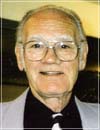
Scott Richardson

Oh Lord, Who Shall Stand

Psalm 130
Scott Richardson February, 7 1982 Audio
0 Comments

Sermon Transcript

Auto-generated transcript • May contain errors

100%
130th Psalm. The psalmist says,
Out of the depths, that is way down in my innermost being. Out of the depths have I cried
unto thee, O Lord. The success of prayer most of the time depends
upon where it comes from. Prayer succeeds with God. when it comes out of our need,
out of our need, our real dire need. So it was that this psalm
was to be recited. Out of the depths, way down there,
have I cried unto thee, O Lord. Lord, hear my voice. Let thine
ears be attentive to the voice of my supplication. Oh, I need some help. He said,
I need some help. I'm in trouble. I got trouble.
I'm down here in the belly of the whale, Bob. I'm down in the
belly of this great fish and I need some help. I need some
help. No one else can help me. You're
my only help. I'm shut up. I have a great need
and I'm in trouble. I'm in trouble. Oh, Lord, let
Thine ears be attentive to the voice of my supplications. Verse 3, If thou, Lord, shouldst
mark iniquities, O Lord, who shall stand? But there is forgiveness with
thee, that thou mayest be feared. I wait for the Lord, my soul
doth wait, And in his word do I hope. My soul waited for the
Lord more than they that watch for the morning. I say more than
they that watch for the morning. Let Israel hope in the Lord,
for with the Lord there is mercy, and with him is plenteous redemption. and he shall redeem Israel from
all his iniquities. Now the psalmist in his confession
here in verses 3 and 4, If thou, Lord, shouldest mark iniquities,
O Lord, who shall stand? But there is forgiveness with
thee, that thou mayest be feared. Now, I say the psalmist here
in his confession felt if a human witness had been appointed to
mark his sin, he might be able to stand. I get that out of this. In this confession, he indicates
that if a human witness had been appointed by someone to record
his wrongdoings or to mark his sins, he might be able to stand. That is, let's try to put it
this way, if my fellow creature or if my fellow man, and I'm
not saying this about myself because I don't feel that way. and talk about the psalmist and
the way I think that he feels here by what he said in his confession.
If my fellow man would watch me honestly and speak of me honestly,
it may be that he would not see any flaws in my life. I don't say that about myself
because I know that if one were appointed to watch me as a policeman
would watch an individual. He would come up with not one
flaw, but a thousand flaws in my life. But he seems to say
if my fellow man would watch me and do it honestly and report
what he's seen honestly and speak of me honestly, it may be that
he might not find a flaw in my life. Now some men may be able
to say that by the grace of God, and I'm not one of them. I don't
know whether you are or not, but I'm not one of them. That is, they may behave themselves
in all integrity and uprightness before men, that no one could
justly accuse them of any outward flaw or outward violation of some particular command. If someone was given, in other
words, the authority to spy on you day and night, a policeman,
or if your wife, or if your son, or if your daughter, or your
husband, that jurisdiction over your whole life in a way that
they might watch you day and night, on your job, in the home,
when you eat, when you go to bed, when you get up, when you
retire, all these things. They might be able to say, well,
I couldn't find anything in his character. And you might be able
to say, well, if that was the case, I think maybe I could pass
that test. Well, I don't think I could pass
that test. As a matter of fact, I know I couldn't pass that test.
I know I couldn't. I couldn't live more than three
or four minutes. And you could tell by the look
on my face that there's some problems. Or you'd hear me say
something or see me do something. See? I couldn't pass that test. But the psalmist, he didn't say
that. He didn't say that. The psalmist
said, if thou, if God. Now, it may be that if some man,
see, some man might be appointed by somebody to observe my down
settings, my uprisings, my comings and my goings. And if he would
speak honestly about me, Maybe he wouldn't find any flaw in
me. But in his confession here in
verse number 3, look at it. If thou, Lord, shouldest mark
iniquities, O Lord, who shall stand? Well, he knew here when
he said, If thou shouldest mark iniquities. If thou, Lord. He knew that the Lord sees what
no one else can see. You see? Our Lord God Almighty
can see behind the action. He can see the motive. He can see the design of the
action, whether it's absolutely right or not. He can see this
secret, hidden design of the heart. He knew. The psalmist knew that God can
see what no one else can see. That's the reason he says, if
thou shouldest mark iniquity, O Lord, who shall stand? Well,
and then another thing here, I think that he also speaks of
a spatial form of guilt, of sin. He says, if thou Or he does not
say, he does not say, if thou shouldest mark, or shouldest
record, or remember, or set down some particular open transgression,
outward transgression, or public transgression. He doesn't say
that. He said, if thou shouldest mark iniquities. Now, if you
pull that word to pieces, If you kind of stretch that word
out, you'll find something there that will surprise you in regard
to inequities. You pull that word to pieces
and it becomes inequities. Inequities. Now, in light of
God and in light of judgment and in light of requirement,
I'll tell you what that means. It means whatsoever is not right
in God's sight, inequitas. That is, if he were to mark inequitas,
as the psalmist says, who shall stand? That is, if you might
keep the first commandment, but break the second. You might keep
the second commandment, and break the eighth commandment. You see
what I'm talking about? You might have spatial favor
to your neighbor, but deny that spatial favor to your husband,
or to your wife, or your son, or your daughter. You might love
your neighbor as yourself in a sense, but yet at the same
time, deny that love to your aged mother and father. In equites,
if thou shouldest mark Inequities or iniquities, who? Who is it
then shall stand if you do this? That's what he's saying. You
understand that no life can be right with God unless it's holy. And let me put that word holy
another way. No life can be right with God
Unless that life is whole. W-H-O-L-E. Unless the circle
is complete. Unless it's full and sufficient. Unless it's whole. That's where
we get the word holy. Well, what he requires is this. That a man be absolutely whole
in his sight. that he be absolutely holy in
his sight. That's the requirements of God. Now, who among us, if this is
what God requires, who among us shall be able to stand if
God should mark inequities against us? Who? Could anybody raise
their hand? None? None? He also says in this particular
confession, he says, Who shall stand if thou, Lord, who sees
all, knows all? If thou, Lord, shouldest mark
iniquities, O Lord, who shall stand? Well, if there was Or
if there were a way to get to heaven by the back
door, or if there was a way to come into God's presence by us
hiding our sins, we might have some reason for hope. Or we might
have some basis or some ground for hope. If we could go in the
back door where God couldn't see us, or if we could some way
hide our sins from the sight of God, we might have some reason
for hope. But he says, Who shall stand? Well, there's no back door to
God's presence, to God's heaven, and there's no way whereby in
ourselves that we can hide our sins from the all-piercing eye
of God Almighty who knows all, sees all, who knows what we think,
why we think it, when we think it, what we say and what we do.
Rule that out? No. But there will come a day
when every son of Adam and every daughter of Adam, there will
come a day when we shall stand before God Like prisoners standing
before the bar of justice. Everybody. From the smallest
to the greatest. Black and white, brown or yellow. Doesn't make any difference what
the color, what the background. Everybody, every member of the
human race. We'll have to stand before God
like prisoners at the bar of justice. And all of us are going
to find a place there. There's going to be room for
everybody. We'll all have a place there, and there'll be no place
to hide. And the rocks and the mountains will not fulfill our
wishes when we cry, rocks and mountains, fall on me and hide
me from the face of the Lamb. They will not fulfill our wishes.
Now, unless I have some better righteousness than my own, when
God begins to mark iniquities, we, or myself, and you along
with me, we will be driven before the blast of God's holy justice
into the fire that is never quenched. Nobody here better dare appear
before Him except through the Lord Jesus Christ. Who shall
stand? He felt he couldn't. He felt
he couldn't. He thought he might be able to
stand if there was some man appointed to mark his iniquities. Maybe
he could pass the test. Maybe you could pass the test.
Maybe you could. I'm sure that there's some that
could. I have to tell you, I don't think I could. But when he gets
down to this, if thou shouldest mark iniquities, O Lord, who
shall stand? He didn't feel that he could
stand. Who among us here tonight can stand in his sight upon the
footing of our good works? Who would? Who would rise up
and say, well, I believe, I believe I could. I believe I could stand
before God on the foundation. What foundation, my friend? On
the foundation of my good works. I believe I could stand there
before God. You think you can? Huh? Well,
I believe I can. I'm a regular church goer. I
go to church all the time. I've been baptized. I've been
confirmed. I give my money. I don't swear.
I don't drink. I don't go to picture shows.
I believe I could stand. Oh, I think I can. Well, don't
attempt it because you're standing on a rotten board. You're standing
on a rotten plank. You're standing on sinking sand.
Don't attempt it. Don't attempt it. Don't you attempt
to go through this life and go out into eternity to face God
Almighty and attempt to stand before God on the plank of your
good works. It's like a rotten board. It's
like sinking sand. You need something far more substantial
than for the basis or for the putting of yourself other than
your good works. No sir, it won't support you.
It won't support you. Listen to me tonight. Listen
to me. Don't you, don't you attempt,
don't you, you, don't you entertain a thought in your mind even tonight. Well maybe, maybe I could stand. You can't stand. Your good works
will be weighed in the balance. You'll be found wanting. You'll
sink. You'll sink. You'll fall before
the blast of God's fire of justice, and you'll go into the fire. Well, I think I can stand in
the consistency of my own character. I believe I can, because there's
a whole lot of people who regard and reckon me as to be a godly
person. My mother thinks I'm godly. My father thinks I'm godly.
My children, they think I'm godly. People that I work with, they
think I'm godly. I believe I can stand on the
consistency of my character. Don't you try. Don't you try
to put you on the scale. You'll be found warning. You
must be, and I must be trusting in God's Son and God's Son alone
in the perfect obedience and atoning sacrifice of the Lord
Jesus Christ. I must be trusting in Him, not
on the plank of my intentions or works. I must be trusting
in Him alone, alone, alone. He'll have all the glory, or
He'll not have any. He'll have it all. He will not
share His glory with you. He'll not share His glory with
me. I'll not be able to say, I'm here because I've been baptized. Oh no, God will not share that
glory. These people that say, well,
I believe that salvation is by grace, but I believe you've got
to be baptized. Oh, you see what they're doing?
They're hanging on to a little bit of it. They won't let it
all go. There's something I've got to
do. There's something I've got to do. What is it you've got
to do? I've been baptized! Oh, how come? Well, here's a
fellow that's never been baptized. Well, you see? Well, you see? I've been baptized. He wasn't
baptized. I was! God will not share His
glory. with another. Oh, listen to me. Mercy is for the guilty. Mercy is for the guilty. Are
you guilty? If you're guilty, then you're
subject to God's mercy. If you're guilty, you're qualified. That qualifies you. Your guilt,
your sins, your rebellion qualifies you for mercy. If you're not
guilty, you're not qualified. See what I'm talking about? If
you're not a sinner, you can't be saved. You don't need to be
saved if you're not a sinner. If you're not lost, you don't
need to be found. If you're righteous, you don't
need the imputed righteousness of the Lord Jesus Christ. Well,
the text also says, but, look at that, verse 4, if thou, O
Lord, If thou, Lord, shouldest mark a nick with this, O Lord,
who shall stand? Look at this next verse. But. Boy, that's good, isn't it? But. But! That connects the two
together. But! There is! Boy, I like that authority. I
like to preach with authority. I have authority to be in my
voice. I like to stand up here and just Piddle, paddle, pussyfoot around.
If I've got something to say, I'm going to say it. If I'm enthused
about something, it gets a hold of me. But there is forgiveness
with Thee. Bless God, He said there is forgiveness. Forgiveness with Thee, with God. But where is that forgiveness
and how do we know There is forgiveness with God. Well, we've been informed
by a revelation concerning the character of God that there is
forgiveness for the guilty, for the sinner. For the sinner who
cries unto God out of the depths of his heart, who acknowledges
it, who knows that it is guilty and desires mercy, there is forgiveness. because the Bible reveals it
in the character of God. Over in the first part of the
Bible, in the book of Genesis, the first history recorded of
the human race, God made man. It says that Adam rebelled against
his maker, and when he had seen himself naked He made an apron
of fig leaves and clothed himself and went out and hid in the trees. But God came down. God knew what
He done. But God came down. And what did
He do? What is indicative of the salvation
of God in God coming down? God came down to seek Him. God
come down to seek Him. He wasn't seeking God, he hid
from God. He was hiding over there. He
knew that God came down at a certain time, and he didn't want to see
God. He didn't want to see God anymore.
He lost everything. He went over there and was hiding.
And God came down. And in spite of his out and out
rebellion against God, God said, Adam, where art thou? Seeking God. Seeking that poor
sinner, Bob. Seeking that poor sinner. You
see, how do we know that there's forgiveness with God? The Bible
tells us there's forgiveness even from the outset. It's revealed
in the character of God, a loving, just, a loving, kind, forgiving
God who would come down here and forgive us of our iniquities
and our sins. Boy, that's something, isn't
it? Well, this forgiveness, of sin is a stand-out, prominent
feature in the character of God. Did you know, brethren, that
it gives Him the greatest possible pleasure that He can have when
He can righteously forgive sin? Let me read something to you
here. I just read this a little bit ago. I thought it was Psalm
86. Yes, Psalm 86, verse number 5. If you care, look at this. Look at this with me. Verse number 5. Listen to what
the psalmist says. He says, For thou, Lord, art
good and ready to forgive. Listen to this. and plenteous
in mercy unto all them that call upon Thee." Thou art good and
ready to forgive, and you have lots of mercy to those that call
upon Thee. You see what I'm saying when
I say that it gives Him the greatest possible pleasure when He can
righteously forgive sins? Why? Did Jesus Christ come into
this world to be a Savior if God does not delight in forgiving
poor, hopeless, helpless, lost, doomed, damned sinners? He delights
in doing it righteously. Why did He offer Himself? Why did He strip Himself of all
of His regal glory? take upon himself the robe of
human flesh, and offer himself body, soul, and spirit as a sacrifice
and an atonement, if there is no forgiveness of sin. The psalmist
says, but there is. That's what he says. But there
is forgiveness with thee. Forgiveness. Oh, listen, does
not the Scripture say in the book of Isaiah, And let us reason
together, though your sins be as scarlet, they shall be as
white as snow." I noticed coming back across the mountains there
in Maryland, the snow just glistened. Oh, you looked out on those fields
and there was kind of a glaze of ice on that snow. It had melted a little bit the
day before, the night before, and then it froze. And there
was a glaze, a glaze on the snow. It looked like someone took a
brush and just painted that glaze on that snow. It was white, a
brilliant white. If you would have taken a white
linen handkerchief, looked at it and said, now that's
a white handkerchief, and laid it down on that snow, I'll guarantee
you that that handkerchief would have took on a color of yellow. It had kind of a yellow color
to it. That snow is white! That's what old Isaiah said.
Come, let us reason together, Bob. Though your sins be as scarlet,
they shall be as white. There's forgiveness. That's what
I'm saying tonight. If you should mark iniquities,
who shall stand? Nobody. But there is forgiveness. There is. There's a covering. There's a putting away. There
is forgiveness with thee. Though your sins be scarlet,
they shall be as white as snow. Though they be red like crimson,
they shall be like wool, he said. Now, something else is It is
said and indicated here, and also throughout the Bible, is
this. We are also told that His forgiveness,
forgiveness with thee, there is. Now His forgiveness is complete. The forgiveness of God is full. It is complete. It is the full
circle. Everything is there. He does
not half forgive. as some men do. It's full. Now
some men, most of us, do this. We say, I can forgive, but I
can't forget. He forgets as well as forgives. You see, his forgiveness is full. He said, I'll not remember their
inequities against them no more. I'll cast their sins behind my
back, as far as the East is from the West. And I will remember
them against them no more." That's what he said. His forgiveness
is full. Man's forgiveness is only verbal. It just comes from the lips. You see, the poison of anger lingers in a man's heart. while
the profession of His forgiveness to another is on His lips, but
not so with God. He can forgive and He can forget. Isn't that good? He can forgive
and He can forget! That's good. That's good. That makes my heart
leap within me for joy when I realize that. Well, not only is his forgiveness
full, but it is as free as it is full. What do you mean by
that? I mean that you can't buy it
with your tears, you can't buy it with your works. It doesn't
make any difference how good you are or think you are. It
doesn't make any difference how much you weep or don't weep.
You cannot buy God's forgiveness with your works or with your
tears. Did you know this? That our God is more willing
to forgive than you are to be forgiven. More willing. He waits. He waits to be merciful. He waits, the prodigal son's
father, waited to be merciful. He's out there looking. Out there
looking. Every night. He went out on the porch and
he looked. I wonder if he's coming back. I wonder if my boy, my
son who's lost, that rebel who deserved by the law to be stung
to death in a son under the law who was a rebel against his father,
his mother, was to be brought to the elders and they were to
take him to the edge of town and stone him to death. And that's
what he deserved. The law of the Lord had its way.
It has stoned him to death, but the father, every evening went
out there to look down the road. Wondered if he was coming. Wondered
if he was coming. One day looked out and he saw
that, he saw that big, that beragged individual, that lost wayward
child. Looked out and there he come,
limping. There he come. What did he do? He ran. He ran
down there! And he grabbed that boy. He grabbed
him. The boy started to say, So a
father, I've sinned against you and I've sinned against heaven.
And he said, I'm not worthy to be in your house. He started to say that, but he
never got it out of his mouth. He started to say that, but the
Lord, who is depicted in this dear father here, smothered his
mouth with kisses. Don't talk about that. You're
in your Father's arms now. You're in your Father's arms.
What I'm saying is this, forgiveness is free as it is full. And God is more willing to forgive
than you are to be forgiven. And it's easier for God to blot
your sins out than it was for you to commit your sins. There's
provision, you see, for the putting away of sin. If not, Bob, what
would we do? But there is a Savior, the Lord
Jesus Christ. And another thing that the Scriptures
say about this, it says that forgiveness is not only full
and complete and free, but it's also right now. Forgiveness is
right now. That is, it is immediate. It's yours as soon as you repent
and believe. It's yours. Immediate forgiveness. My soul leaped within the framework
of my person when I first understood that God had forgiven me immediately,
right now, of all my sins. I said, is that so? I said, is
that right? Can that be right? Can it be
right, preacher? Can the Bible be right when it
says that my sins are under the blood and they're forgiven right
now, forever? They said, that's right. And
when I understood it, and the more I understand it, the more
my soul leaps within me. Your coming to God may take a
little time, but God will forgive your sins in a moment. Does not the Bible talk about
the dying thief? The dying thief who acknowledged
that he was a sinner, he acknowledged that he was guilty. And the only
difference between you and I and that dying thief is that he was
hanging on a cross and we are not. It's the only difference.
That dying thief acknowledged his sin before God. He said,
we're getting what we've got coming to us. And he looked to
the Lord. He just turned to the Lord, hanging
beside him. And he said, Lord, I know You're
a King. I know that You're going to rule
one day in a kingdom. I know that they can't kill You.
I know that you are more than a man. You are God. He said, Lord, remember me when
thou comest into thy kingdom. And he said, Today shalt thou
be with me in paradise. You see, the forgiveness of sins
is not only full and complete and free, but it is immediate.
It is right now. It is right now. Well, another
thing about forgiveness of sins that the Bible teaches, now quit.
It's also once received, that is. Once received, once received,
the Lord Jesus, once He's received as your Lord and your Master
and your Savior, then the forgiveness of sins is irreversible. Did that make you happy when
you first understood that, Bob? Irreversible! You see, it's not
God's way to pardon you one day, to forgive you one day, and then
condemn you or damn you the next day. If He says, I forgive thee
freely, then it's done. There's nothing more that needs
to be said. It's done. It's over with. The
Bible says, He that believeth on Him is not condemned. He's not condemned. Listen. Their sins are all gone. All
of them. He came to cure that, take care
of that. The question of sin has been
settled long, long ago. Our Savior, the Lord Jesus Christ,
didn't come here to cure some little old headache or a finger
ache. He came here. He came here to do something
greater than cure a headache. He came here to put away sin.
The Bible says, He that believeth on Him is not condemned. It's irreversible. Once received,
you've got it for time and eternity. A few words now about the result
of this forgiveness. I know that most people who don't
understand, they're religious, but if they would hear me preach
like I've been preaching tonight about the forgiveness of sins,
they'd say, that fellow's a born liar. He's a born liar. Where could he find such things
like that, principles like that in the Bible? And they'd start
finding scriptures and turning over the pages of the Bible to
contradict what I've said. and say, you know that man cannot
have all of his sins forgiven. He only has sins forgiven from
the time he believed, or from the time he was born up until
the point that he believed. After he believes, then his sins
are not forgiven then. His present sins and his future
sins. Now that's something else they'll
say. Why, they'll say, if that was so, Why, if a man's sins
were all forgiven, full and free and complete, and it was irreversible,
they say, well, you know how men are. They just go out and
live like devils, knowing that their sins were under the blood
and they would never have to answer for them. Well, men who would take that approach,
and would go out and live like devils and will not behave themselves
are men who don't understand what I'm talking about. They're
men who have never experienced the grace of God in their life.
There's no denying that some men do. Some men do go out and
they take their fill of iniquities and sins in this life. and do
so under the cloak of the grace of God, but that don't make it
right. And because they do that, it does not destroy what the
Bible says. Of course, they never knew the
grace of God. They never knew it. They heard something and
misunderstood what they heard, and the devil misconstrued some
things. Oh, no. The result of the forgiveness
of sins, you find it You read the Bible from cover to cover
and you'll find that the result of the forgiveness of sin is
that a man who has been forgiven and knows that he's forgiven
and his forgiveness is full, it's final, it's complete, it's
irreversible, becomes a bond slave to Him who has forgiven
him. You can mark that down. You can
mark that down. He said, I'm yours. He'll say
to God, I'm yours. by that soul and spirit, every
drop of blood that runs through the course of my body is yours,
I'm yours, I'm yours, I'm yours. A man who's been forgiven. I
know it to be so. Like the woman whose boy was
saved. He came home and she seen that he was different. She said,
what happened to my boy? What happened to that boy? Such
a change in that boy. Oh, listen, will he go to bed
tonight without praying? No, sir, not that boy. Nobody's
going to have to tell that boy he has to pray tonight. He's
going to cry out of the depths of his heart and praise and worship
God that God hath revealed His Son to his heart and his sins
are under the blood. And he's going to say, Lord,
what wilt Thou have me to do? How, Lord, can I serve You? How
can I serve You now? I've been delivered. My sins
are forgiven. Ah, will that boy behave himself?
He'll behave himself. Will he go to church? He'll go
to church. Will he do it regularly? He'll do it regularly. Will he
give up what he's got to the church and to God? He'll do it.
Will he have to beg Him? No, sir, you won't have to. Will
he be gentle? Will he be kind? Will he be loving?
Will he be honest? He'll do it every time. Will
he talk about it on the job? Will he talk about it to others?
He'll certainly do it. That's the theme of his life.
That's the result of it. Listen to what it says, but there
is forgiveness with thee that thou mayest be feared. Feared not in a slavish fear,
but in a respect, in a reverence, in a reverence. He's to be reverenced.
Reverend and holy is his name. That's the reason I've always
tried to discourage people from calling me reverend. Call me
anything, but don't call me reverend. Reverend is only mentioned once
in the Bible and has reference to God. It says, Reverend and
Holy is His name. Reverend and Holy. He is to be
feared. He is to be respected. Reverend
is His name. God help us. You see what I'm
talking about? There is forgiveness. There is
forgiveness. Seek the Lord while He may be
found. Trust Him. Trust Him. Can you trust Him?
Tonight in Him whom God has sent and appointed and commissioned
and came and stood in the stead of poor sinners and paid their
due. Can you bow to Him? Can you say,
Lord, I believe what the preacher said. I believe it. The Spirit
of God has made it real in my heart and I believe it. Lord,
help my unbelief. Help me, help me. Can you say
that? Can you come to God in Christ? Just like you are with
all your sins, all your guilt, all your shame. Can you do that?
Can you come to God? Do it, do it, do it. Don't, don't
say, I think that I can stand on the platform or the plank
of my own good works and merit and righteousness before the
bar of God. I think I can maintain the consistency
of my... Don't say that. You're standing
on sinking sand. free to him, free to Jesus, free
to Jesus, come to him, come to him.
Scott Richardson
About Scott Richardson
Scott Richardson (1923-2010) served as pastor of Katy Baptist Church in Fairmont, West Virginia.
Broadcaster:

Comments

0 / 2000 characters
Comments are moderated before appearing.

Be the first to comment!

Joshua

Joshua

Shall we play a game? Ask me about articles, sermons, or theology from our library. I can also help you navigate the site.