Bootstrap
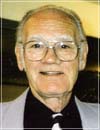
Scott Richardson

The True Foundation Of Peace

Exodus 12:1
Scott Richardson January, 10 1982 Audio
0 Comments

Sermon Transcript

Auto-generated transcript • May contain errors

100%
May again here this evening to
the 12th chapter of the book of Exodus. I think this morning
we were in the 16th chapter. Let's go back to the 12th chapter
of the book of Exodus. Or the 11th chapter. Let's start there. The 11th chapter. I want to talk
about just a little bit this evening about the The true foundation of our peace. Peace of God. Peace with God. A settled peace. What's the basis
of this peace? What's the foundation of this
peace? I think we can find out here in the 11th and 12th chapter
of the book of Exodus. In Exodus 11 and 1. It says that the Lord said unto
Moses, Yet will I bring one more flag upon Pharaoh and upon Egypt. One more flag. And afterwards,
he will let you go hence. When he shall let you go, he
shall surely thrust you out hence altogether. There's been flag after flag.
that has fallen upon Pharaoh, and he still wouldn't let the
people of God go. So, one more heavy blow. One more heavy blow. The heavy
hand of God must fall upon this hard-hearted God-hater. He hated God. He despised God. So I think it would be correct
to call him a God-hater. So one more blow from the hand
of God has got to fall upon this fellow. Over in the book of Daniel,
chapter 4, verse 37, there's a verse of scripture that has
to do with Nebuchadnezzar. And the latter part of that verse
says this, says, Those who walk in pride He is able to abase
those that walk in pride. God is able to abase. This fellow here, he certainly
was full of pride. Now, men may think themselves
to be something, but it's vain to harden your heart and exalt
yourself against God. That's vain. It's a losing battle. You see, God will grind this
man to powder, like He will any other man who exalts himself
against God. You cannot win the battle, much
less win the war. No man is his own master. He's either governed by God or
he's governed by Satan. There's no middle ground. He's
either against God or he's for God. If he's for God, he's submissive
to God's government and discipline. If he's against God, he's a rebel. He's a God-hater. If he's not
for me, he's scattereth against me, our Lord said. Either he's
for me or against me. This fellow was against God.
And so, well, I think that the indication is here that he argued
with God. Pharaoh, he argued with God. Now, any fool can argue with
God, and only a fool will. This man was a fool. The fool
has said in his heart, no God for me. That's what the fool
said. There is no God, and if there
was, there's no God for me. So it's vain. You see that. You
know that. I know that. We've been taught
that by the Spirit of God through the Word, that we're mere mortals
of the dust. We're worms of the dust. We're
powerless in God's hand, and He's able to crush us. This man
insisted on resisting God, fighting against God. And God tells Moses,
says, One flag more. Just one more flag and that'll
do the job. Yet I will bring one flag more
upon Pharaoh and upon Egypt. That'll fix him. I'll crush him. So this flag, what did it do? It signed the death warrant of
all the firstborn in Egypt. This flag. This is a terrible
flag. It's gonna kill all the firstborn. in the whole land of Egypt. And
I want you to see that. It's going to kill all the firstborn
in the land of Egypt. That's this plan. God said, I'm
going to drive you to your knees. I'm going to fix you once and
for all. You're going to let these people go. And in doing
so, and in doing so, we've got a perfect picture here of the
substitutionary work of the Lord Jesus Christ. This is the type
of Christ dying in the state of sin. This is the type of Jesus
Christ offering himself as a sufficient atonement by chariots for our
sins, for the sins of his people. Well, let me read a few verses
here. Go down to the fourth verse.
The Lord said, about midnight, will I go into the midst of Egypt? About midnight. I'll go. We many
times talk about the death angel. That was God. God said in the
middle of the night, about midnight, He said, I'll go down. I'll go
into the midst of Egypt. Listen to what He says. And all
the firstborn in the land of Egypt shall die. I'll go down
there and I'm going to kill them all. all the firstborn of Egypt."
Well, he said, "...the firstborn of Pharaoh that sits upon a throne,
even unto the firstborn of the maid servant that is behind the
mill, and all the firstborn of the beast. And there shall be
a great cry throughout all the land of Egypt, such as there
was none like it, nor shall be like it any more." Notice this,
"...but against any of the children of Israel, shall not a dog move
its tongue against man or beast, that ye may know how the Lord
doth put a difference between the Egyptians and Israel." God's
going to show that there's a difference. He makes a difference between
these two people, between these two nations. They are essentially
alike as far as sin and the practice of sin goes. God makes a difference,
and the difference is the outflow of the grace of God. Anyhow,
there's every reason why these dogs should bark and these dogs
should howl. There's a lot of movement that's
going to go on this night, but not a single dog moved its tongue. That impressed me. Not a single
dog moved its tongue. In the whole land of Egypt, the
length and breadth of that country, not a Not a dog. Not one dog. Not a puppy dog. Not a middle-sized
dog or a big dog. Not any kind of a dog. Not a
single dog moved its tongue. I'll tell you why. There was
an invisible hand that locked her jaw. This is who Pharaoh
was dealing with, see. He's not just necessarily dealing
with Moses and Abraham. He's dealing with God. One more
plan. One more flag. He said, when
I come down at midnight, I'll kill the firstborn of everybody
there in Egypt. Firstborn. Pharaoh down to the
maidservant behind the mill and everybody else. I'm going to
kill them all. When I come down, he said, not a dog shall move
its tongue against man or beast. It reminds me of the lines of
Babylon that were rendered harmless and helpless when they cast Daniel
in the lion's den. And I can say this in light of
that and know that this is the truth. Not a fly, not a little
old fly can as much settle or light up on you without God's
consent. That's God's sovereignty, isn't
it? That's saying that God deals in little things as well as great. Without God's consent, there's
nothing that can happen that does happen here in this life. Everything that happens, everything,
whatever it is, is only the manifestation of God's ultimate purpose and
decree, which He purposed and decreed in Himself. for the foundation
of the world. This is who Pharaoh's fooling
with. Well, I say it in respect of
sin now. Israel and these Egyptians are
alike. All sinned. That's what the Book
of Romans says in Chapter 3. All sinned. All have sinned and
come short of the glory of God. And so, in respect of sin here,
Israel and Egypt are alive, both in nature and in practice. And
anybody that knows anything of the nature and the character
of God knows that holiness can never ignore sin. It doesn't
make any difference where it's found. God's holiness will not
ignore or pass over sin. angels sinned against God, He
cast them out of heaven. The Bible says even His elect
people were by the children of wrath
by nature, even as others. As a matter of fact, God Himself
made no exception of His own blessed and beloved Son who was
made sin for us. He was made sin by imputation,
made sin by transfer. Yet God made no exception of
the Lord Jesus Christ. In the book of Romans chapter
8 it says, And God spared not his own son. God spared not his own son. What I'm saying is, holiness
can never ignore sin. What I'm saying is, there's two
people involved here, two nations. There is the nation of Egypt
and there is the nation of Israel. And by nature they are both the
same. By nature they are both the same and by practice they
are both the same. But God is going to make a difference
between these two nations. He is going to show mercy to
one and He is going to pour out His wrath upon the other. Now
how can God do this? How can God do this? who is so
holy that he cannot ignore sin. And that's seen in what I've
said about the angels, about the elect of God, and even about
his own son. How can he spare these people?
Only by way of substitution is the only way he can spare them.
Well, anyhow, let's go on with it. Look over in the twelfth
chapter here now. It says that The Lord spoke unto
Moses and Aaron in the first verse there, in the land of Egypt,
saying this, This month shall be unto you
the beginnings of the month. It shall be the first month of
the year to you. And speak ye unto all the congregation
of Israel, saying, In the tenth day of this month they shall
take to them every man of land, according to the house of their
fathers. Lamb for house, and if the household be too little
for the lamb, let him and his neighbor next unto his house
take it according to the number of the souls. Every man according
to his eating shall make your count for the lamb. And this
lamb shall be without blemish. A male of the first year, he
shall take it out of the sheep or from the goat. Here we have
the picture of redemption that is founded on the blood. This
lamb certainly is a type of the Lord Jesus Christ. I want to
read a verse here in the book of 1 Corinthians before I go
any farther. In the book of 1 Corinthians
chapter 5 and verse number 7, I believe it is, listen to this. Purge out therefore the old leaven,
that ye may be a new lump, as ye are unleavened. For even Christ, our Passover,
is sacrificed for us." This is the Paschal Lamb that he is talking
about in chapter 12 of the book of Exodus. The Paschal Lamb,
the Passover, the Passover Lamb. The Lord Jesus Christ is the
Passover Lamb. He is the fulfillment of the
time. He is the fulfillment of the shadow. All the lines of
the picture are finally drawn and completed and finished in
the person of the Lord Jesus Christ. So we see thus far then,
we have redemption founded upon the blood, and this is the groundwork
of our peace. Now, turn over the page there
into verse 13 or verse 12. Verse 12 of chapter 12. He says, Now for I will pass
through the land of Egypt this night. That is, I'll go down
about the middle of the night, about midnight, and will smite
all the firstborn. Now notice that little Word end. I'll smite all the firstborn
in the land of Egypt. That's exactly what he says in
verse number 5 of the 11th chapter. And all the firstborn in the
land of Egypt shall die. You say, well, there must be
a contradiction there. There must be a contradiction
because I know all the firstborn in the land of Egypt didn't die. Only the Egyptians, only the
firstborn of the Egyptians died. Well, that's not what he said
here. That's not what he said. He said, I'll pass through the
land of Egypt this night and I will smite all the firstborn
in the land of Egypt. I'm going to smite every one
of the firstborn in the land of Egypt. I'm going to kill them
all, that's what he said. Well, then he goes on. Both man and beast, against all
the gods of Egypt, I will execute judgment. I am the Lord. And
the blood shall be to you for a token upon the houses where
ye are. And when I see the blood, I will
pass over you." Now, they was to take this lamb, this Passover
lamb, the Paschal lamb. They was to get a lamb that was
without blemish. They was to keep him up so many
days and to see if there was any blemish that showed up in
that lamb. And if there was, they couldn't
use it. They had to get another one. Well, this is setting forth
the perfection of the Lord Jesus, the spotless purity of the Lamb
of God that John the Baptist said, Behold, the Lamb of God
that taketh away the sin of the world. This Lamb has got to be
in type, the picture of the Lord Jesus Christ. There has got to
be a Lamb without blemish. Well, all right. He says you
are going to take that Lamb on the 14th day of the month. And
the whole assembly of the congregation of Israel shall kill it in the
evening. They'll bring that lamb out,
everyone that's got lamb before the whole congregation of the
assembly of Israel, and they'll kill that lamb. That lamb must
be killed. Now keep in mind, this lamb is
an innocent, harmless victim. This lamb has harmed nobody. But this lamb must be killed. He must be slain. They cut his
throat. That's the way they did it. They'd
take a hammer and knock him in the head. They just coaxed that
lamb up there, that high priest did, and he grabbed him and just
cut his throat. And while he was still kicking
and squealing, he held a basin under there and caught the blood
that ran out of the neck of that lamb. And he says, you take that
blood. And thou shalt take of the blood,
verse number 7, and strike it upon the two side posts, this
side and this side. Take some hyssop, branch, dip
down in there and strike it on there, paint it on there, on
both sides, on the two side posts and on the upper door post of
the house, overhead, on the side and overhead. And then down in
verse 13 again now, And the blood shall be to you for a token upon
the houses where ye are. And when I see, now this is the
key to all of it right here, when I see the blood, I'll pass
over you. When I see the blood, I'll pass
over you. What I'm saying this evening
is this. This is what I want us to learn.
I want us to learn that the foundation of our peace is the blood of
the Lamb and nothing else. The blood of the Lord Jesus Christ
is the foundation of our peace. This, what I told you this morning,
this is what quiets a screaming conscience, this perfect sacrifice. is what gives us peace of mind
and peace of heart. This is what gives us hope. This
is what puts purpose in our life. This is what makes life worth
living. This is the foundation of our
peace. Well, let me help you to see
what I'm saying. By being negative here a little
bit, most people who get involved in Christianity, in what is known
as Fundamentalism, that is, Evangelical Christianity. Most people that
get involved in this Evangelical Christianity are prone to regard
the fruit of the Spirit within them as the foundation of their
faith. Now, Fred read in the twelfth
chapter of the book of Romans, and it had to do with the fruit
of the Spirit. Let me look at that again, Fred. Romans chapter 12. This is the
evidence of our salvation here. fruit of the Spirit of God, that
He works inwardly, which is manifest outwardly in our lives. And we
refer to it as personal godliness, or personal goodness, or holiness
is what we refer to it. Now listen, he says here, let
your love be without dissimulation or deceit. hate that which is
evil and cleave to that which is good. Now, you see what I'm
saying? I'm saying that most people who
become involved in evangelical Christianity, they are prone
to regard the fruit of the Spirit within us as the foundation of
their faith. And when they come across scriptures
like this or listen to preachers, who do not know what the true
foundation of peace is, they are made to look within in order
to find something that will give them some peace. They say, well,
am I hating that which is evil? Well, I've been watching the
television, and I know the television, the television is evil. It shouldn't
even have it in our house. evangelical Christians talk about,
you can talk to a fellow a little bit and he'll tell you, say,
well, well some of them, I've talked to them, they say, well,
well I said, did you, you see so and so on the, I don't watch
the television. Well I said, you watch the news,
they say, no we don't have television. You can tell real quick, that
fellow's holy. That fellow's holy. And I'll guarantee if you
talk to him very long, you'll find out that the foundation
of his peace is whether there's any fruit of the Spirit in his
life or not. Now, I'm not saying that there's
not to be fruit or the fruit of the Spirit in our lives. There
is and there will be. But that's not the foundation
of our faith. Whether I watch the television
or not is not the foundation of my faith. That's no evidence
of whether I'm saved or not, is whether I watch the television
or not. or whether I smoke a pipe or not, or whether I do this
or whether I do that. That's not the foundation of
my faith. I hope you can see what I'm saying. Hate that which
is evil, cleave to that which is good. Are we doing that? Well,
we're doing that in this sin. That's the bent of our lives. We're going in that direction.
We haven't succeeded in hating everything that's evil. We have
not succeeded in sticking to everything that's absolutely
good and genuine, but we're going in that direction. That's our
desire. We haven't arrived. Be kindly
affectionate one to another with brotherly love in honor of preferring
one another. Well, we can look at that and
we can say, well, I'll tell you, I just haven't submitted to that
like I ought to. I'm just not kindly and affectionate
one to another with brotherly love, and I haven't preferred
and esteemed my brother or my sister over and above myself
all the time like I ought to. I know I ought to do it, and
there's times I have done it, but there's times I haven't done
it. So where's my peace then? If this is the foundation of
my peace, if I'm looking If I'm regarding the fruit of the Spirit
within us as the foundation of my peace, well, then I've got
no peace here if this is not perfect, see. If I haven't done
this. I'm not saying we're not to do
it, we are to do it. But let's not look to that as
the foundation of our peace. Well, not slothful in business,
fervent in spirit, serving the Lord, rejoicing in hope, patient
in tribulation, continuing instant in prayer, distributing to the
necessity of the saint, given to hospitality, bless them which
persecute you, bless and curse not, rejoice with." You see what
I'm talking about? Well, let me tell you now, the
place, in order that, I'll tell you this, in order that we might
see what the foundation of our peace is. There is a place that
the Holy Spirit occupies in the life of the believer and in the
scheme of redemption. He has a noted, principled place
in that. Well, but I want you to know
that the Holy Spirit never did make peace. It is Christ that
makes peace, not the Holy Spirit. You see, the blood of the Lord
Jesus Christ is the foundation of our peace. The Holy Spirit
never did make peace. He said, when I see the blood,
that's the foundation of our peace, not the work of the Holy
Spirit. The Holy Spirit reveals the Lord
Jesus Christ in us and to us. He bears witness of the Lord
Jesus Christ. And without the Holy Spirit,
we can neither hear, see, know, feel, experience or enjoy the
presence of the Lord Jesus Christ. That's the work of the Spirit.
It's not the work of the Spirit to produce peace in our hearts. He's not the foundation of our
peace. The Holy Spirit could never say, I have finished the
work that thou hast given me to do." The Holy Spirit's work
is not finished until we are presented holy and blameless
and spotless before the Lord. That's when His work is finished.
Only the Lord Jesus Christ could say, I have finished the work
that thou hast given me to do. Only the Lord Jesus Christ could
cry out with a loud voice and say, it is finished, the Holy
Spirit could. But you see, the mistake, the
mistake that the majority of churchgoers make, and I've run
this route, I know I've been this way, I've come up in this,
this is my background, is that if you don't do this and if you
don't do that, you haven't got any peace. You haven't got any
peace. You're looking the wrong place. Preachers are telling you to
look. If there's any fruit of the Spirit in your life, then
you've got some consolation. Well, if there's no fruit of
the Spirit in your life, you haven't got any consolation.
You haven't got any hope. We're looking at the wrong place.
It's not the Holy Spirit that makes a foundation of our peace. Now listen, here we have two Nations here. One, I don't know
how many Egyptians. I told you this morning about
200 or about 2 billion Israelites. And here they are in their houses.
They're in their houses. All in their houses. It's midnight and God comes down and He looks at these houses. And if there's blood, this blood
will be a token. If there's any blood on the door
post and the mantel post of that house, he passes over. But if there's no blood, he kills
the firstborn of that house. You see, he says, when I see
the blood. God's eye was not upon the house. Where was his eye? What if it
was a large ranch type house? What if it was a $175,000 home?
Who was it just told me? He said, you ought to have seen
that fella's home. Patton again. Patton's got a
friend somewhere around Elkins. And he stopped to see his home.
He told me, he said, I wish you could see that home. Oh, he said,
it's got this in it and that in it. It's got marble and it's
got wormy chestnut and it's got this and it's built up and it's
got all this kind of a bathroom. Oh, it just went on and on and on and on. What if a fella
had a big house like that? God came down at midnight. Would
it have made any difference to God? No, sir. Wouldn't make any
difference. He wasn't looking at the house.
He wasn't looking at the house. What if a fella just lived in
a shanty? Just a little old tar paper shack. And the signs of
decay and rot had set in that looked like it was going to fall
down. This old house. This old house. About to fall
down. That didn't make any difference
whether it was an old house, whether it was a new house, whether
it was a four-story house, whether it was a ranch type, whether
it was a brick house. Well, it was a frame, it didn't
make any difference. God wasn't looking at the house. What was
He looking at? What was His eye resting on?
He said, when I see the blood, when I see the blood, I'll pass over when I see the
blood. God's eye was not upon the house,
but God's eye was upon the blood. You see, Every person inside the house
that had the blood on the side of the door post and overhead,
every person inside was safe. What made him safe? Because he
could see the blood and also he was inside and the blood was
outside. He couldn't see the blood. Well,
when he, when he, placed his estimate of value upon that blood? No, sir. No, sir. He had an interest
and certainly he considered the value of that blood, but that
wasn't it. It's when God seen the blood. Now, the foundation
of our peace is the blood of the Lord Jesus Christ. He hath
made an atonement for our sins. The blood was shed. The Lamb
of God died in our stead, in our place, in our womb. And that's
the foundation of our peace right there. Not whether I do this
or whether I do something else. That's not the foundation of
our peace. The foundation of peace is the blood. It's the
blood. Can you see that gland? The foundation
of our peace is the blood. It's the atonement. The atonement's
been made. Who made it? Jesus Christ made
it. When did He make it? 2,000 years
ago on Calvary Street. That's when I saved me. That's when God saved me back
there 2,000 years ago when an atonement was made for my sin. A man made an atonement for my
sin. He shed His blood. A spotless,
pure, perfect Lamb. A man. Christ Jesus. offered Himself in my place,
in my room, my stead, bore my sins away and gave to me His
righteousness. He bore my sins. And God said, when I see the
blood, not when you see it, not when you see it, but when I see
it, I will pass over you. That's the foundation of my peace. That's the foundation of my hope,
is the blood of the Lord Jesus Christ. Not whether I come to
church on Sunday morning or not. Not whether I preach or I don't
preach. Not whether I pray or don't pray. The foundation of my peace is
on the blood of the Lamb. That's where it's at. And I'm
not trying to minimize the fruit of the Spirit. I'm not trying
to say I'm not trying to say, well, we just be indifferent
and unconcerned and neglectful of our responsibilities under
God in our Christian life. I'm not saying that at all. This
adds to our responsibility. And once our eyes have been opened
to who we are and who He is, the Lamb of God, and He's our
Atonement, He made the Atonement, once we see this, There's no
keeping us from doing good. There's no keeping us from hating
that which is evil and cleaving to that which is good and esteeming
our brother. We'll be going in that direction.
We may not be perfect, but we'll be going in that direction. We'll
come to church. We'll tell others about Jesus
when the opportunity presents itself. We'll quit cussing. We won't slip around and do vile
and hateful things when we're out of the sight of the church
or out of sight of the brethren. We'll not go off on vacation
someplace and get drunk and chase women and gamble and shoot... We'll not do that. The love of
God that shed abroad in our hearts will not permit us to do that.
We don't want to do that. We hate that which is evil. You
see what I'm saying? See what I'm saying? The foundation
of my peace is not because I don't drink Budweiser beer. That's
not the foundation. Well, I don't drink. I don't
do this, I don't do that. You must be a pretty good fella. You see what I'm saying? That's
not the foundation of my peace or not the foundation of any
Christian's peace. And I would to God that men who
are in Christ could see that. I wish that people in our area,
right here, right here in this area, that goes to these churches,
if they could ever see that. You know where they'd be next
Sunday morning? They'd be right here listening to preaching.
Wouldn't they? They'd be right here. They'd be right here knocking
on the door wondering when the preacher's coming. Looks like
he's in there. Preacher, would you let us in?
The reason they're not coming is either they don't know it
or they don't know I'm preaching. See? Oh, pity the man who believes
the foundation of his peace is built upon water and baptism.
Or the foundation of his peace is built upon him being faithful
to church. Or the foundation of his peace
is built upon the fact that he quit cussing. He doesn't cuss
no more. He reads his Bible and I quit
cussing. That's the foundation of his peace. He looks within.
If all is well within, he's all right. But just the moment that
things don't work out so good within, he's lost. Bless God,
the foundation of the peace of the Christian is when the Lord
Jesus Christ says, when I see the blood. God says, when I see
the blood. When I see the blood. He said, my eye is fixed upon
the blood. My eye rests upon the blood.
That's it. That's it. He made the atonement
for my sin. And that's a fact. Well, that's
a help to me. That's a help to me. You see,
I'll say this quick. when the executioner of God's
judgment saw the blood upon the houses of Israel. He did not
enter. He didn't enter. Why? I told
you, I told you that here in the twelfth verse of the twelfth
chapter, that he said, I'll pass through the land of Egypt this
night and will smite all, A-L-L, absolutely. all the firstborn
in, i.e., the land of Egypt. He said it twice. God said it.
It's not a contradiction. Now, did He do it or didn't He
do it? When the executioner, when God
came down at midnight and saw the blood upon the houses of
the Israelites, He didn't enter into that house and kill the
firstborn. Why? Because death! had already done its work in
that house. The innocent, the Lamb of God,
had died in the place of the guilty. You see, the innocent
Lamb, whose blood was on the side and overhead, had already
died in the place of the guilty inside. So God was true to His
Word, wasn't He? He killed the firstborn of every
family. Oh, my soul, that's substitution,
isn't it? That's substitution. That's how
God saves us, through the substitutionary work of His Son. His Son, the
lovely, lovely, blessed Son, the Lord Jesus Christ, who willingly,
lovingly, cheerfully, gladly desires to do so, give Himself,
He who knew no sin, give Himself for a sinner. And God poured
out His wrath upon him, the innocent, that the guilty like me might
go free. Well, listen. Listen to me now. I'm saying that the innocent
died in the place of the guilty. Do you agree with that? Well,
if you agree with that, then you've got to agree that the
justice of God was satisfied. God's justice was satisfied not
in me, but in my substitute, and I was in Him. So therefore,
the justice of God was satisfied both in me and in Him, He who
took my place. Now, the exact payment, twice
for the same debt, is unlawful. Now, God cannot punish the firstborn
or the occupants of that house. He cannot punish them anymore
because he's already punished them in a substitute. Now he
cannot exact payment for the same hit because that's unlawful
and contrary to the character of God. You see, it's not merely
God's mercy but it's his righteousness, which is now on the side of his
people. Because justice, the justice
of God, demands the acquittal of every believer in the Lord
Jesus Christ. Justice and righteousness demands,
let him go, let him go. You've got nothing against him.
His substitute paid all that he owed. The innocent died in his stead. Justice said you must let him
go now. You've got no, you've got no,
you've got no, you can't hold on to him. You've got to let
him go. Let him go. See what I'm talking
about? The blood. When I see the blood. When I see the blood. The Passover
lamb. Instead, in the place of, in
the room for the guilty. And God said, when I come down
at night and I look at that little house, it may not be much. It may be just a hovel. It may
be ready to fall down. But when I look at it and I see
the blood there, I know that death has already done its work.
And those inside are free because the innocent died for the guilty.
But when I go to the next house, and it be a mansion, or it be
a shack, and there's no blood, then the holiness of God must
demand satisfaction and kill the first one. Well, I hope you see what I'm
talking about.
Scott Richardson
About Scott Richardson
Scott Richardson (1923-2010) served as pastor of Katy Baptist Church in Fairmont, West Virginia.
Broadcaster:

Comments

0 / 2000 characters
Comments are moderated before appearing.

Be the first to comment!

Joshua

Joshua

Shall we play a game? Ask me about articles, sermons, or theology from our library. I can also help you navigate the site.