Bootstrap
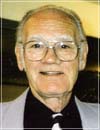
Scott Richardson

He Frankly Forgave Them Both

Luke 7:41-42
Scott Richardson October, 25 1981 Audio
0 Comments

Sermon Transcript

Auto-generated transcript • May contain errors

100%
Turn with me to the seventh chapter
of the book of Luke. Luke chapter seven. Luke chapter seven. Verses 41 and 42. Let's look
at them. 41 and 42. There was a certain
creditor which had two debtors. One owed 500 pence and the other
50. And when they had nothing to
pay, He frankly forgave them both. Now, there's two things that's
said here which is of the utmost importance. You and I have seen
them. Number one, their bankruptcy. Well, there's three things. There's
first the credit, a certain credit. Secondly, the two debtors, they were bankrupt. And thirdly,
their free discharge from their debts. I think you know the story or
get the picture. These fellows owed money. They
owed money to a creditor. is to be understood as God himself. The debtors are you and I. And the condition of the debtors
are that they're bankrupt. They have nothing to pay. And
when they had nothing to pay, he frankly forgave them both. Now that's the story that I want
to try to relate to you here this evening. As God's creatures, that's what
we are, we from the very first owed to Him, that is, God Almighty,
a debt of obedience. We were bound by the fact that
we were made by God, we were bound to obey God, every one
of us. God is our maker. We did not
make ourselves. God made us. He made us and we're
bound to pay Him what is honorably and righteously His due. That's all there are to it. There's
no ifs and ands or buts about it. There's no way out from underneath
it. That due has got to be paid by you and I or Someone else has to pay it for
us who is qualified to do so. Well, I said that we are bound
to reverently recognize our Maker who is God. We are bound to reverently
worship Him, honor Him, love Him, and serve Him. Now, this
is an obligation. that is so natural and so reasonable
that nobody can dispute it. We are creatures of God Almighty
and it is right, absolutely right, that we should pay Him His due. Now, if I would appeal to the natural
gratitude that we owe to Him, which should come from the fact
that He daily supplies the very breath to our nostrils. He supplies the food that we
eat. As a matter of fact, God has
made everything. And to this point in time right
now, He has sustained us by His bounty. He has made us and He
has sustained us unto right now. And it's right, absolutely right,
that we pay Him What we owe Him. But the sad fact is, we haven't paid Him. We haven't
done His will. It's the will of God that every
one of His creatures render unto Him perfect obedience. That's the will of God. I can't
change it. That's God's will, and no one
can dispute that. No one who says the Bible is
the Word of God would even attempt to dispute that statement, that
every creature of God owes to God perfect obedience. It is His rightful due. we have not rendered unto him
his rightful due. We have left undone the things
that we ought to have done and done the things which we ought
not to have done. Now, because of that, we stand
liable unto God for the penalty of not doing the things that
we ought to do and doing the things that we ought not to do.
We stand liable for penalty. And the penalty is suffering
and punishment and death and banishment from the presence
and the glory of God forever. Now, that's the simple story
right there of our history. condensed in just a paragraph
or so, but that's the story. God made us, and we owe to God absolute, perfect
obedience. We owe it to Him. He demands
it of us, but we haven't done it. So we stand liable then for
punishment. You see, because of this, because
of our And you know that I often say, we are rebels and have rebelled
against God. Well, that's right. He demanded
this of us. We rebelled against Him and would
not give Him His due. Would not do it. Said no to Him
on every corner. Every time that we were confronted
with it, we said no. We rose up against Him. stiff-necked and uncircumcised
at heart, and rebelled against the God who made us. So there is due to us from God
penalty of suffering and death. Did not our Lord Jesus Christ
say, fear Him? Fear Him who is able. Now listen. Fear Him. who is able to destroy both body
and soul in hell. Now, the penalty that is due
us is hell, separation from God. We owe God a debt. Every one of us here tonight
owes God a debt. Every man born of woman owes
God a debt. All of us owe God a debt. Now,
is there somebody here, man or woman, partner, is there someone
here this evening who owes God that debt? You know
you owe God a debt. Now, in light of the fact that
you know that you owe God, you owe God, and He's not going to
let you go. He's going to exact what is his due. You owe God a debt. Now, I ask
you this. You owe God a debt. How can you
rest in that condition? The only way that you can find
any rest is to cloud the issue and constantly dismiss this from
your conscience. Because if you dwell upon this,
if you think about the debt that you owe, and you know that God's
eyes is fixed upon you, and that there is a day of retribution,
there is a day which God has appointed which He will call
all men into reckoning, and they will give account. You see, you
know that. You know that. And the only way
you can get away from that is to dislodge it somehow from your
conscience. But if it's not disallowed from
your conscience, and you're thinking about it, you can't have no rest.
You can't rest. There'll be no rest for you.
No rest. You just try to keep a step ahead
of it all the time. Can a man rest, what I'm saying,
while he's in this condition? Now, I don't want you to think
hard of me. I don't want you to think that
I'm mean because I bring this to your attention. I'm interested
in your well-being or I wouldn't bring this to your attention.
I'm interested in your soul. Because I know, I know just as
sure as this book is green, that there is a day when God will
call in his accounts. He will call them in. And a man will have to give accounts. He'll have to, he'll have to
somehow come up with that which he owes. And if he can't come
up with that which he owes, he's doomed, because the punishment,
the penalty, the penalty for this rebellion and disobedience
is suffering, punishment, eternal death. Now, can a man rest while he's
in this condition? Now, we cannot excuse ourselves
And we cannot by any possibility render unto him that which is
his due. We can't excuse ourselves. You
remember the fellow that had the wedding supper? And the fellow
came into the supper without the proper attire, without the
proper dress. He didn't have the wedding garment
on. When the king came in and everyone
was gathered around the table, here was the fellow without a
wedding garment that stuck out like a sore thumb. And the king
said, Friend, where have you come from? What are you doing
in here without a wedding garment? And the friend said, Nothing. The Bible said he was speechless. And the king said, bind him,
grab him, and cast him out of here. You
see, we cannot excuse ourselves and we can't by any possibility
render to him his righteous due. Because to cancel the debt that's
against us, it must be paid in full. We must pay it all. this debt. All right? Let me go farther then and say
this. A perfect obedience to a perfect
law is that which is required of the justice of the Most High
God. That's what's required. Perfect
obedience to a perfect law and none of us, now listen to me,
none of us, man, woman, boy or girl, can render that under God,
we can't do it. Our inability to obey God perfectly,
that is, the law requires this, that we love God with all of
our strength, we love God with all of our heart,
and we love our neighbors as ourselves, and that's the fulfillment
of the law. That's what God requires of us.
a perfect obedience to a perfect law, that which is required by
the justice of God, and there is none of us that can render
that unto God. Now, I say our inability, our
inability to render this unto God, our inability to obey God
perfectly, comes of our own fault and is part of our own crime.
against God. We cannot blame nobody but ourselves. See, we're to blame. May none of us here tonight,
may there not be a soul here tonight, young or old, who will
have to bear in finality the penalty that's due this death. May nobody ever have to bear
this. My soul, I hope nobody here, I hope nobody that I preach
to ever has to bear the penalty that's due the justice of God,
which is banishment from the presence of God forever and ever.
May nobody have to bear that. I appeal to you in the name of
the Lord Jesus Christ, in the name of decency, in the name
of honesty, in the name of logic, in the name of reasoning, come
to your senses. Reason! Come to your senses and
your reasons about this matter. Think about it a little bit.
And flee to Him before it's too late. Oh, listen. You say, well, what I'll do then
is I'll I'll write right now from this point what I'll do. I don't have to tell anybody
about it. I'm determined this is what I'm
going to do. I'm going to love God with all of my heart and all
my soul and all my strength, and I'm going to love my neighbors
and myself, and I'm going to do this for the rest of my life.
Well, this is already due. How are you going to cleanse
yourself from that which is already due? This is already due, God! Perfect obedience is do God. And here you are, you've spent
10, 15, 20 years of your life, or 30 years of your life. You
say, I'm going to do it. Well, you can't do it. I know
that. But you can appease your conscience a little bit and say,
I'm going to do it. I'm going to start right now.
The rest of my life, that's what I'm going to do. But you see,
this is already do God. What are you going to do about
that? It's already do Him. What is that verse in one of the hymns? An old hymn
here, say, listen to me. Could my tears forever flow? Could my zeal no longer know? These, for sin, could not atone. Thou must say, and thou alone. Huh? Oh, I'll pay. I'll pay one
day. I'll pay one day. No, don't kid
yourself. You're fooling yourself. You're
deluding yourself, deceiving yourself. You'll never pay. You'll
never pay. Well, what can I do? Tell me,
what can I do? You're talking to me tonight.
I'm a debtor. I'm God's creature. I breathe,
I live, I move by feelings of emotion And I'm physical. I'm here. I'm here. I can't just
snap my fingers and everything disappear. I'm here. I'm living. I'm real and I need
help. I'm God's creature. He made me. He made me. What
am I going to do? What am I going to do? Oh, I
can tell you the only thing you can do. This is the only thing
you can do. You listen to me close. Now,
this is the only thing that you can do. It's the only thing that
I can do. It's the only thing that any
man can do in order that he might have some rest for his soul.
This is what he does. Listen. Plead absolute poverty. That's what these fellas did.
There's a certain creditor, one old A certain creditor had two
debtors, one owed 200 pence, the other owed 50, and when they
had nothing to pay, they didn't have anything to pay. They didn't
have anything. God demanded and has righteously,
it's not unrighteous requirements of God on His part to us, but
His righteous requirements demanded perfect obedience. Who wouldn't have anything to
pay? I can't render unto imperfect obedience. I don't have anything.
I say now, if a man's interested, what can he do? Plead absolute
bankruptcy. Can you understand that, everybody,
by making myself clear? Plead absolute bankruptcy. I haven't got anything. Don't
tell me, tell God. I haven't got anything. I have
nothing to pay. Lord, I know what You require.
I know it. And I know where I'm going. I
know I'm going to hell. I know that. Lord, I don't want
to go to hell. I don't want to go to hell. I don't want to be
banished from Your presence forever. I want to worship You. I want
to join the angels in song and anthems and hymns. And I want
to join the people of God here on this earth. Worshipping and
I want to serve you and love you. I won't do that, Lord, but
I haven't got the heart to do it. You're going to have to do
something for me. I haven't got anything to give you. Nothing
in my hand I bring. I haven't got anything. Absolutely
bankrupt. Can you do that? Can you plead
that? You'll have to. Plead absolute bankruptcy and
cry unto God for mercy. Say, Lord, I have nothing. Show
mercy. Show mercy. Oh, Lord, show mercy
to my heart. Give me some understanding. Lord,
I don't understand. Give me some understanding. Give
me some understanding. Show mercy to me. Lord, give
me a heart to love You. Give me repentance. Give me faith. Give me the attitude whereby
I can submit myself and say, I believe. Lord, help my unbelief. I plead absolute bankruptcy because
I haven't gotten nothing, Lord. Say this to God and cry for mercy
and say, Lord, I have nothing, I am nothing, and I can do nothing. I believe God will save me. I believe God will save me. That's what I did. I didn't have anything. I cried
for mercy. And I said, Lord, I am nothing.
I am nothing. I am nothing. I can do nothing,
and I have nothing. And I am nothing. Lord, have
mercy. Lord, have mercy. Can you do
that tonight? That's where God's got to bring
a man when he saves. That's what happened here. And
it says, and when they had nothing to pay. See, you can't bargain
with God. You can't say, well, Lord, I'm
going to do better, when you know you're not going to do better.
Even if you made an attempt to do better, that wouldn't clear
you because the debt's already due. And in order to cancel a
death, the whole thing must be paid. See? PASSED! Sins. They must be paid for. They didn't
have nothing to pay. What did He do? When they had
nothing to pay, when they was bankrupt and said, I haven't
got anything Lord, have mercy. He frankly forgave them both. Now God forgives for individuals
like you and I on the basis of what the Lord Jesus Christ did.
You see, the Lord Jesus Christ rendered unto God what I should
have rendered unto Him. He loved Him with all of His
heart, and He loved His neighbor as Himself. And He rendered unto
God's perfect justice, perfect obedience. Our Lord Jesus Christ
did that. He didn't do that for Himself.
He did that for somebody else. And I believe that He did it
for me. I believe that the Lord Jesus
rendered perfect obedience to God Himself for me. And then righteously, gladly,
willingly, cheerfully, offered his soul as a sacrifice for my
sin, and paid the penalty. See, he couldn't escape the penalty.
He gave me his righteousness, but he couldn't escape the penalty,
and he paid that which justice demanded. He paid that which
God demanded. Perfect obedience. And then he
died, and he was subject to the suffering to the wrath of God. He was made sin. He took upon Himself the penalty
of suffering and anguish and death for me. See, and I believe
that. I believe that. I believe that
He did that for me. So He's my Lord and He's my Savior. So I can rest now. I can rest. You say, well, aren't you afraid
to die? No, I'm not afraid to die. I'm
not afraid to die because the only reason why a man is afraid
to die is because of his sins. You see? That's the reason people
are afraid to die. It's because they don't want
to face their sins. I can't die, I can't die. Oh,
I don't want to die. Well, I could die. And they'd
be honest with you. They'd say, well, I'd face my
wrongs. face all of my wrongs, all of
my disobedience, all of my sin, I don't want to do that. But
if a man has submitted himself at the court of mercy, and he
says, Lord, I've got nothing to pay you. Lord, show mercy. And the Lord makes Himself known
to him and says, well, my son died for you. Trust him. Trust
my son. He paid your due. And you cast
yourself on him. Well, then your sins are gone,
see. Are you sure of that? Oh, I'd believe that tonight,
preacher. I'd believe if you could assure me that my sins
was gone. Well, I can assure you that.
I can assure you as sure as there is a God in heaven. I can guarantee
you. I can guarantee you by the Word
of God that every man that has, as I've described, who's come
before God bankrupt and said, I've got nothing, can do nothing,
and am nothing, have mercy! I can tell you that fella, the
fella is brought there by the Spirit of God, and God's created
an interest in him now, in his heart, and he's submitted. I
can tell you his sins are gone. Absolutely gone 100%. And he
can go through this life, He can go through this life with
a smile on His face, praise on His lips, happiness in His heart,
and say, Come what may, hell or high water is well with my
soul. My sins are gone. They are all
gone. They are taken from me. Oh, you
can assure me of that. You could assure me that I'd
be so happy. Well, I can. You turn with me
for just a few minutes now to Hebrews chapter 10. Hebrews chapter
10. And I can assure you that the sins
of every believer are gone. They're all gone. They're taken
away. You have to worry about them
no more. I wish that every one of us would learn, every Christian
here, every believer, I wish you'd learn here tonight that
they're not your sins, they're His. He took them. He took them. You see, in forgiveness, there is a forgetting of sin. He frankly forgave them both. In forgiveness, there's forgetting,
Bob. See what that verse says? 17,
10, 17? There's forgetting. He says, and by our sins and
iniquities. Who's he talking about? He's
talking about the fellow that had nothing to pay. He didn't
have anything to pay. And he comes to God empty-handed
and says, I haven't got anything to pay. I give you what I've
got. I haven't got anything. I'm nothing.
So I can't offer you nothing. I'm just bankrupt. I'm bankrupt.
So if you send me to hell or you cripple me or you cut my
leg, whatever you do, I'll have it coming to me because I owe
you. I owe you. I can't pay you. I'm at your mercy. I can't pay
you. And there are sins and iniquities
Will I remember no more? Isn't that sweet? I told you
I can guarantee it tonight. Where there is forgiveness of
sin, there is the forgetting of sin. That's what I'm saying.
Listen now. Is this a wonder to you? That
God should say that He will do what in some sense He cannot
do? Huh? His pardon of sin is so absolute
and is so complete that He Himself, God Himself, describes it as
not remembering our sins anymore. That's how complete it is. That's
how complete. I don't remember them no more.
I've pardoned them. I've blotted them out. I've blotted
them out. You mean that God has blotted
out every wrong I ever committed? Absolutely. You mean every snide
remark I ever made? You mean every vicious thought
I ever had? You mean every secret thing that
I wouldn't want anybody to know I thought about? Everything? You mean God has blotted them
out and God will never remember them against me? That's right. Well, that's good news, isn't
it? You remember a fellow way back
there in the early forties used to come on the air and said,
there's good news tonight! Do you remember that, Darris?
Good news tonight! His name was Gabriel Heater.
There's good news tonight. There's good news tonight, brethren.
Good news in Christ. Ah, he said, in their sins and
iniquities will I remember no more. You know and I know that
the Lord cannot, in the strictest sense, according to the accuracy
of language and speech, forget anything. He can't do it. In
the strictest sense of speech, He can't do it. We're dealing
with God now, not with Pat McGinnis or myself. You see, forgetfulness
is an infirmity of old age. Regent Glenn can't remember sometimes
when we have the Lord's Supper, I have to call him up. It's old
age. Old age. Forgetfulness is a product
of old age. Infirmities. God has no infirmities. Is that right? God has no infirmities. He does not exercise memory as
you and I do. We recall the past, but God has
no past. All things are present with Him. He sees everything at once. Past, present, and the future
are but before Him in a glance. Oh my soul, they are sins. They are sins! And He frankly
frankly forgave them. Robin, not one of them. Not one. Not one. Not a secret thought.
Not any, any thing that you've ever done. Not one of them. Oh,
my soul, you mean that thing is clean and God will not jerk
from His memory something that I've done or all that I've done
and call that to my attention and expose me before the Lord? No. No, He won't do that. He
won't do it. Why? Because he's honor-bound
not to. He said, there are sins and iniquities. Will I remember? No more! He'll do what he says
he can't do. Can't forget. God can't forget,
but yet he said, I won't remember your sins against you. Boy, that makes me happy. That makes me happy. I don't
know about you, but it sure does me. You see this text here in
Hebrews 10 and 17 teaches us that He, God Himself, He wants
us to know that His pardon is so true that it amounts to an
absolute, total forgetting of all the wrong of those that He
has forgiven. Total. Boy, that's the good news
of the gospel if I ever heard it. You see, when sin is forgiven,
it's not laid up in God's mind. I don't understand that, but
that's what it amounts to. When sin is forgiven, it's forgotten. It's not laid here in a man's
mind. or in God's mind like it would
be laid in our mind. You see, a certain thing happens
to us and we remember it. We store it away in our memory.
It lays right there. And the Bible says in one place
there that Mary kept all these things and pondered them in her
heart. She stored them up and she remembered
them in days to come. She remembered what she had pondered
up in her heart. Well, we make a kind of a storeroom
of our memory and things that we put in our memory are preserved
there, like we preserve vegetables and fruit and things of that
nature in the summertime. We preserve them there, hold
them there. We kind of make a house there
for our memory and put things there. We say that man is a He
is very fortunate that he has a good memory. He lays things
back upon his brain and then at a certain time he can reach
back and drag these things out and use them for his own benefit
or use them even for the glory of God. But the Lord will not
do this with our sins. He will not give them house room,
God wants. Listen to what Job said. Job
said, My transgression, that is, my sins, is sealed up in
a bag. And that's where mine is, and
that's where every believer's is. They're sealed up in a bag.
And God said, I won't remember them against him anymore. But as for the ungodly, for the
ungodly. Now, for the man who says, Well,
you can have that preacher. I'll take my chances. I think
I'll make out. I'll be all right. Don't worry
about me. Don't cry for me. Don't pray for me. Everything's
okay. I'll somehow worm my way out
of it, weasel my way out of it. I always have. As for the ungodly,
their sins are written with an iron pen and at judgment their
sins will cry out and vengeance will be needed. Well, of course now, we know
the Lord remembering everything. In that sense, He cannot forget
anything. You know that. He remembers everything. But judicially, as a judge, He
forgets the sins of those that He pardons. He forgets them. They're put away. Well, can I
say more? Can I say more? You remember I told you some
time ago here about the Pope? I said purgatory has always paid
the Pope well. But how can God's people go to
purgatory? Can God's people go to purgatory?
If you go to purgatory, the Pope says, and the Roman Catholics,
then you've got to pay so much money to the priest in order
to get out of purgatory. And you pay for a lifetime. trying
to get out of purgatory. And when you die, you go to purgatory. And someone else takes up where
you left off. And it is an unendless payment
to the Pope. And the Pope's coffers have become
full with gold and silver coming from poor people trying to get
out of purgatory, go to purgatory for their sins. But listen, how
can God's people go to purgatory Can they go there for sins that
God hath forgiven and forgotten? There's no reason for sending
God's people there because He says, and their sins and iniquities
will I remember no more. No reason to send them there.
You see, does God forgive and forget and yet punish? Does He
do that? What kind of a God do we have?
Who forgives, who forgets, and yet punishes in the end? Not
so, not so, not so. Oh, listen, if God forgives our
sins, certainly it goes without saying that He will never punish
us for them, and He will never be laid to our charge. And if
there's anything that I can say to you tonight that would be
of any earthly and heavenly help to you, it's this. If you're
bankrupt and you have nothing, and you come at the court of
mercy and say, Lord, have mercy on me, I can tell you, I can
tell you if God freely forgives your sins as He did those two
who had nothing, and I have no reason to believe that He'll
not do that for any soul that comes, listen, I can tell you
that He forgives and He forgives. and your sins are forgiven you
for Christ's sake, and they are forgotten by God, and they'll
never be brought up or remembered against you anymore. And you
can go through this life living in total, complete happiness
to the will of God, a blessed God with this blessed privilege. of ever being able to do the
least little thing for them. Oh, what a joy it is to know
my sins are all gone. Your sins gone? Are they gone? Are they gone? You want to go
on with your sins? You love them? You love your
sins so that you say, I won't part with them. I won't part
with them. Well, you keep them. You keep them, you'll bear the
penalty. You'll bear the penalty. I told you what the penalty is.
I told you what God requires, huh?
Scott Richardson
About Scott Richardson
Scott Richardson (1923-2010) served as pastor of Katy Baptist Church in Fairmont, West Virginia.
Broadcaster:

Comments

0 / 2000 characters
Comments are moderated before appearing.

Be the first to comment!

11
Joshua

Joshua

Shall we play a game? Ask me about articles, sermons, or theology from our library. I can also help you navigate the site.