Bootstrap
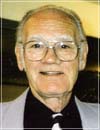
Scott Richardson

Christian Liberty

1 Corinthians 6:12-20
Scott Richardson October, 18 1981 Audio
0 Comments

Sermon Transcript

Auto-generated transcript • May contain errors

100%
and enforces this principle in
other places. The principle of Christian liberty,
or all things are lawful, that's the doctrine. All things are
lawful, he says in verse 12, but all things are not expedient,
or all things are not profitable for me to do at a particular
time under a given circumstance. The principle of Christian liberty,
or the doctrine of all things are lawful, is to be limited
in its application to things which are indifferent. I hope
you'll see that this morning. They are limited to the things
which are indifferent, indifferent. By that I mean electric light. That's an indifferent object. Paul says, Meats are indifferent. Now, this principle of expediency is enforced here in
the 14th chapter of the Book of Romans. Let me read something
to you of the 14th chapter of the Book of Romans that has to
do with the principle of Christian liberty. Now, this principle
has been abused. Now, here the apostle says in
Romans 14 and verses 15, he says, well, verse 14, let me read that.
But I know and am persuaded by the Lord Jesus, that is, I'm
convinced by the Lord Jesus, what I'm about to say is true,
that there is nothing unclean of itself, nothing common of
itself, but to him that esteemeth anything to be unclean, to him
it is unclean." Paul said, I'm persuaded though by the Lord
Jesus that there is nothing unclean of itself. I'm persuaded of him
that this is true. Look at the verse Verse 22, now,
hast thou faith? Have it thyself, have it to thyself
before God. Happy is he that condemneth not
himself in the thing which he alloweth. That is, if his conscience condemns
him in that which he allows him, God who is greater than his conscience
condemns him. Verse 23, And he that doubteth is damned
if he eat, because he eateth not of faith. For whatsoever
is not of faith is sin. Now, back to verse 14. There
is nothing unclean of itself, Paul says. But to him that esteemeth,
thinks, believes anything to be unclean, then to him it is
unclean, because whatsoever is not of faith is sin. Now, verse
15, here is the doctrine of Christian liberty, or the doctrine of all
things are lawful or expedient, enforced by the apostle. But
if thy brother be grieved with thy meat, Now walkest thou not
charitably, destroy not him with thy meat for whom Christ died."
That is, even in the application of the doctrine of Christian
liberty, which is to be limited to indifferent things, there
is, in a sense, a limit applied even on them. that we are to
use sound judgment, sound reasoning based upon the leadership of
the Spirit of God in regard to our using various indifferent
things. Even though all things are lawful
for me, and all things is expedient, but sometimes not profitable
that I become a participator or a recipient of these things,
he says here that the kingdom of God is not meat and drink,
but righteousness and peace and joy in the Holy Ghost. Let us,
therefore, follow after the things which make for peace and things
wherewith one may edify one another. For meat destroy not the work
of God, all things indeed are pure. It is evil for that man
who eateth with offence. It is good neither to eat flesh,"
now this is indifferent things, it is good neither to eat flesh
nor to drink wine. Now Paul said, all things are
lawful for me and there is such a thing as Christian liberty. I have, all things are are clean
within themselves, and I have the right to these things. But
he says there are seasons or times that's not profitable for
me to exercise my God-given liberty, my God-given rights that I'm
convinced that I have because Jesus Christ has convinced me
of them. So he says here, it's neither
good to eat flesh or to drink wine, nor anything whereby thy
brother stumbleth or is offended or is made weak. That is, if
my eating of meat or my drinking of a glass of wine will offend
my brother for whom Christ died, he says in 1 Corinthians here,
if I eat a certain type of meat or drink a drink of wine, And
my brother for whom Christ died esteems this to be wrong for
himself, and my doing so would be a stumbling block to him,
would be a means of his maybe falling. Then Paul says, I ought
not to do it. I ought not to do it. So there's
a limitation there. You see, people abuse. the doctrine of expediency or
Christian liberty. All things are lawful. Now, it's
lawful for me to drink wine if I want to drink wine. It's lawful
for me to take a drink of wine every day if I want to take a
drink of wine every day. That's lawful for me. But, as
Paul says here, all things are lawful unto me, but all things
are not expedient All things are lawful to me, but I will
not be brought under the power of any of them. I won't be brought
under, I won't be made a slave to any of these indifferent things,
but it's my God-given right to do so. I know I used to be along
this line thinking that, you know, this alcoholic beverage,
if we took a drink of that, why, it would Damien send you to hell. It's not that. It's not that
alcohol will Damien send you to hell. It's your and my abuse
of this liberty that we have. I'm not advocating you take a
drink. That's not what I'm advocating.
I'm not advocating that I take a drink. But I'm just trying
to give this as an example of the the doctrine of Christian
liberty or the doctrine of all things are lawful. All things
are lawful. But we're not to abuse that. Listen, let me read again where this is enforced. And there's
other places that this is enforced. And I don't want to take all
my time on this this morning. I want to talk to you about you're
bought with a price. over here in the book of the
fifth chapter, I think it is, of the book of Galatians. Listen
to this. Now, he's talking about Christian
liberty. He's talking about all things
are lawful. In the first verse of the fifth
chapter, Paul admonishes the people of God in this Galatian
church to stand fast, therefore, in the liberty wherewith Christ
hath made us free. Stand fast. Now he comes on down
here to the 11th verse and he says, I brethren, if I yet preach
circumcision, why do I yet suffer persecution? Then the offense
of the cross is seized. I would that they were even cut
off which trouble you, that is these these Judaizers or these
Legalists that were trying to destroy the freedom and the liberty
that the Christians of Galatia had in Christ by making them
observe parts of the law in order for their acceptance before God. That is to be circumcised. except you be circumcised after
the manner of Moses. That's what they wanted these
Gentile people to do, to be circumcised. Paul said if you be circumcised,
or if you do anything in order to gain acceptance with God,
then you have been brought under bondage of the law which you
said you've been delivered, and Jesus Christ profits you nothing."
That's exactly what he's saying. Now listen, he said, I wish they
were cut off from you. For brethren, ye have been called
unto liberty. That's glorious there. But that's
not all of it. ye have been called unto liberty,
only use not liberty for an occasion or for an outlet of the flesh. Don't use your liberty to gratify
or satisfy the flesh. Don't do that. That's wrong.
That's wrong. This is what we're talking about
here in 1 Corinthians chapter 6, where Paul says, all things are
lawful unto me, but all things are not expedient, all things
are lawful for me, but I won't be brought, I won't be made a
slave to any of them. Well, let's go on with it now.
I said at the outset here that Paul is speaking to the church
at Corinth in regard to the abuse which some has made of the principle
of Christian liberty. I've said that the principle
of Christian liberty is to be limited in its application to
things indifferent, and then only in light of sound and reasonable
judgment, taking into consideration your brother, your brother for
whom Christ died. You see, here he talks about,
in verse 13, meats for the belly. Now, food, or whether it be vegetable
or meat or whatever, if it comes under the category of food, it
is a thing indifferent. And every Christian has the right
to eat all kinds of food which are adapted to the stomach. He has that right, Pat. If it's
a grasshopper, he has the right to eat a grasshopper if he wants
to. But I've been mixing up a concoction
here lately that I don't think that you'd want to eat. Someone,
Ida Jean, told me this. I don't know whether this speaks
too well of Ida Jean's cooking or not. But Ida Jean told me
if you wanted to kill some rats, she said, take you some cornmeal
and mix it with cement and set it out for the rats to eat. Well,
I've already mixed three 89-cent boxes of cornmeal with I don't
know how much cement. And the rats have taken to it
like a hog takes to slop. I mean they have ate it up. I
haven't seen a dead rat yet. But I'll tell you this, there's
bound to be some heavy rats around someplace. There's bound to be
some around someplace. Will that work, Jack? It says
what? All right. All right. It's our
right. It's our right, see, to eat all
kinds of food which are adapted to the stomach. Now, the people... You've got to understand now,
this is early New Testament Christianity. This thing's just getting off
of the ground. They don't have the Bible like we've got it. I don't even believe that the
brethren had the measure of the Spirit that we have in our day. It was kind of in a shadow. That's the reason why the early
New Testament church had the gift of languages. They had the
gift of languages, that the preacher could stand up and he could preach
in another language and never have been to school to learn
that language. Of course, it's been misinterpreted
and abused in our day, and they speak now what they call a heavenly
tongue, which is an unknown tongue, and nobody can understand it
but God. They can't understand it themselves.
But you see, the church in her infancy, when she was a baby
and didn't have the Bible, she needed certain things. When I
was a child, I spake as a child. When I was a child, I played
with childish things. But when I become mature, when
I grew up, I don't play with doll babies anymore. I don't
take doll babies to bed with anymore. I don't need to take
doll babies now. I'm mature, I'm grown up. But
when I was an infant, I needed those things. So you've got to
understand that the church was in its infancy here. And these
people didn't understand. And so these people, this is
the way they reasoned. This is the way a lot of people
reasoned in our day, too. You see, I said that Paul's teaching
here that all foods or meats which are adapted to the stomach,
we have a lawful right to eat. Their reasoning was this, that
if this is right, if all foods is lawful for us to eat, then
it's right for us to gratify, to satisfy our other natural
propensities or desires. See what I'm talking about? If
that's right, that it's my lawful right, all things are lawful
for me, I can eat what I want to, meat's for the belly, I have
some other desires. In light of that, these other
desires, then they can be satisfied. Well, some of them got involved
in adultery and fornication. Adultery and fornication. And
Paul said that won't work here. That don't go. That's not what
we're talking about. He said that's a sin. This sin
of fornication is something entirely different than what you fellas
understand here, see? He said, Meats is for the belly,
and the belly is for the meats. Now the body, and God's going
to destroy both of them, see? Verse 13, But God shall destroy
both it and them. Now the body is not for fornication. The body is not for fornication. That's a sin which is directly
against the body, which is the temple of God's Holy Ghost. And
I don't understand this in its fullness, but there is in a sense
which this sin of fornication and adultery is more terrible
than other sins. Well, the body is for the Lord,
and the Lord for the body. In other words, the body is designed
to be a member of the Lord Jesus Christ and the dwelling place
of His Holy Spirit. Now, with this design of the
body, the sin in question here, fornication, is absolutely incompatible
and destructive of the relationship which the body has with its maker
or with its God. The relation between our organs
of digestion in regard to food and meat is just a temporary
relation, but our relation between Christ Jesus and the body is
a permanent relationship. Now, I've said all that to say
this, and I think this is interpreting the scripture keeping it in its context. Now,
verse number 20, that says you're bought with a price. Now, Paul
goes on and tries to straighten these people up that have abused
the doctrine of Christian liberty, and the motive now that he gives
for an incentive for righteous, holy, and Christian living is
this. The object of Paul's teaching
here is that men and women might be sold out to him who bought
them, that they might be zealous unto every good work. The apostle
Paul later tells us, he said, See to it that thou maintain
good works. The Bible teaches that we are
created in Christ Jesus unto holy living, good works. Good works and holy living is
the same thing. They go hand in hand. Salvation
by grace, created in Christ Jesus unto holy living, holy living. Now that's what Paul's talking
about, and here he gives the incentive or the motive or the
reason why or the means that would constrain us to this particular
object, to this goal. Why, Paul said, I no longer look
back. I don't look back. I was talking
to a fellow here yesterday and he was telling me, He said that
their preacher was an alcoholic, and he said that he constantly
told them of his past life, his past sins, that he'd been an
alcoholic prior to his conversion, and he had to have two-fifths
of whiskey every day in order to keep him functioning right. And so he talked about that a
little bit, And I said, well, I'm glad that God saved him and
delivered him from this awful habit of alcoholism. But I said, I don't think that
a preacher ought to constantly talk about it. I said, it sounds
to me like he's almost bragging about his sins, like he's bragging
about how evil he's been. He rather ought to just kind
of keep quiet and shut up and don't talk about it and try to
forget it. Paul said, I forget those things which are behind. I don't want to be reminded constantly. I'm certainly not going to remind
myself. I don't even like other people to remind me of my past,
do you? I'm always running into somebody
saying, well, I know you when. Yeah, what about when? Here I've
been a Christian for 30 some years, no one's ever said anything
about that, but I know you when. Well, Paul uses a motive to entice
men to holy living and Christian living based upon what's said
in verses 19 and 20. What? He says, Know ye not that
your body He's not talking about the church. He's talking about
your body and my body. Our physical body is the temple
of the Holy Ghost which is in you. Now, you know the Scriptures
say that we are to be in Christ. We are in God in Christ. Over and over, Paul says to be
found in Christ. Not having a righteousness which
cometh from the law, but the righteousness which cometh of
faith be found in Christ. But you've got to have Christ
in you. Christ in you, the hope of glory. All right? Your body is the temple of the
Holy Ghost which is in you, which ye have of God. And ye are not
your own. You don't belong to yourself.
If you belong to God, you belong to Him. You don't belong to yourself
no more. New management, new government, new boss, new president. For ye are bought with a price. Let's talk about that for a little
bit. And then, senative for righteous living, for right living, being conformed to the Lord Jesus
Christ. Well, you know that we can remember
when we were delivered from the power and the condemnation of
sin. You understand that if you're
a Christian. You know that something took place in your life one time.
somewhere along the way, God intervened and made Jesus Christ
known to your soul and to your heart, and you're able to rest
in Him, rest in His person, and rest in what is done. Well, this
20th verse then tells us here, that I read to you, bought with
a price, it tells us of the deliverance that you and I have from the
power and condemnation of sin, and it tells us that it was not
brought about by power or by truth. Now, when you were saved
and I was saved, it was not brought about by power or truth. It was brought about by a price
that was paid. Our ransom, see, was paid by
the Lord Jesus Christ. We are justly or were justly
held in bondage by the law, under the penalty of the law, and until
that penalty was satisfied, we could not be delivered from the
bondage of that law. And that penalty was paid by
the ransom that someone made. And it says here, for you are
bought with a prize, a ransom prize. Well, let's see now. I might, lest I forget to say
this, in light of all this, that the Apostle Paul, who is the
author of this book, Under Inspiration, speaks above all others more
positively about salvation by grace and makes it clear that
salvation is not by works, could never be by works, but at the
same time, He most earnestly and vehemently teaches us that
holiness, or right living, is the fruit of our salvation, or
the fruit of regeneration. Oh, listen now, you're not your
own. You're not your own. You're bought with a price. Ye
are bought with a price, he says. For ye are, ye are. Let's talk
about the fact of being bought with a price. That is an absolute
fact. Number one, let's talk about
the fact. Ye are, not maybe. Ye are bought. The price has
been paid. Ye are bought with a price. Well,
he might have said that you're not your own, you did not make
yourself, And he could have used creation as a motive to bring
about a certain compliance with certain standards of morals and
so forth. But he didn't say that. He didn't
say, you do not keep yourself or you do not preserve yourself. Well, you know and I know that
if it was not for the power of God, we'd die within the next
second. He keeps us. He preserves us,
you see. Well, He says you were bought. That's what He says. You were
bought. Remember when you were born slaves to your sins under
the sentence of divine justice and when the Lord Jesus Christ
became my substitute and your substitute and buried His back
to the lash that should have fallen on you and should have
fallen on me. You remember that? Listen, you are bought. You're
bought with a price. This is a fact. F-A-C-T. F-A-C-T. There was a man. There was a
man upon the face of this earth who lived under the born of the
law, lived under the law. A man who was born of a woman
who paid a ransom for somebody in this. That's a fact. That's
a fact. Paul says, for ye are bought
with a price. You're bought, that's a fact.
Let's talk about the price now. The purchase was expensive, was
it not? Listen, 1 Peter chapter 1, I
believe it is. 1 Peter chapter 1 says this. I'll read it to you. If I can
find it, I think I can. It says this, for as much, for
as much as ye know. I wish everybody knew that. I
wish everybody knew it, don't you? I wish everybody knew that. They'd quit trying to steal the
glory that rightfully belongs to God if they knew this. It's
like these prayer cloths and stuff that people use to heal
other people. Now, I'm not opposed to prayer
cloths if people want to use them, but after they use them
and something takes place or something doesn't take place,
let's quit trying to steal the glory that belongs to God and
give it to the prayer cloth. That's what bothers me. They
take a prayer cloth and pin it on somebody and if something
happens to them, they make a big thing about the prayer cloth.
They say, well, if we didn't have that prayer cloth, or if
we didn't do this, we didn't do that. What we're doing, you
see, is robbing God of His rightful due. That's what we're doing.
That's what it amounts to. Robbing God of His... But if
people knew this, if people knew this, for as much as ye know,
do you know that this morning? For as much as ye know, ye were
not redeemed with corruptible things. You weren't redeemed
with your free will. Your free will didn't redeem
you. Your free will didn't die for you. The Holy Spirit didn't
die for you. Your orthodoxy didn't die for
you. Your church didn't die for you.
Your mother and father didn't die for you. Your religion didn't
die for you. You ought to know this, for as much
as you know that you were not redeemed with corruptible things
as silver and gold from your vain conversation received by
tradition from your fathers, but with precious blood of Christ,
but with the precious blood of Christ as of a lamb without blemish
and without spot. Brethren, I just can't sit still,
hardly, when I hear people robbing God of His rightful due. I can't do it. I don't care what
it is, whether it's... People say, well, I'm saved because
I believe. Is that right? Well, the Bible
says that you're saved because God revealed Christ in you! That's what the Bible says. I know you believe, but why did
you believe? Why did you believe? I know you love Him, why did
you love Him? You see, that sheds a whole lot of light on this
thing, doesn't it? Well, we read words like you're
not redeemed with corruptible things, silver and gold and so
forth, but with the precious blood of the Lord Jesus Christ.
And I'll tell you, these words just slide over our tongue. Just
slide over our tongue. Just slip right over our tongue
and fall out there. And we can talk and speak of
the redemption which is in Jesus Christ and never shed a tear.
My, how that speaks of our barrenness, our coldness, when we can talk
of being bought with a price and being the talk of our redemption,
the blood of the Lord Jesus Christ flowing to the ground, and we
do so with pride and no emotion whatsoever involved in it. Oh, His blood was shed to buy
our souls from death and hell. And this is a wonder of compassion
which fills the angels with amazement. And it ought to overwhelm us
whenever it is brought to our attention and comes to our mind
that we were bought with a price. And the price is the precious
blood of the Lord Jesus Christ. What is meant this buying us? with blood, what is meant by
it? Number one, it signifies pain. It says, for you are bought with
the price. What is the price? The blood
of the Lord Jesus Christ. That's the price. What's meant
by the blood of Jesus Christ? What's meant by the blood? It
means pain. How many of you have suffered
here lately? You've suffered a little bit
lately. How many of you have had some hard days? Hard days and
hard, I mean, I'm not talking about a headache. I'm talking
about suffering. I'm talking about being in the
hospital like Katie and some of them here has been. Talking
about Chuck's dad. Some that's had some pain, excruciating,
endless pain that runs from the soles of their feet to the top
of their head. I'm talking about, has anybody
suffered like that lately? Have you had any pain lately,
hard pain? Well, if you have, then you know
to some measure what the price was with which the Lord Jesus
Christ paid. What's meant, this buying us
with blood, signifies pain. That's what it signifies. Now,
his body pains were great, no doubt about that. Our Lord suffered. He suffered in the body. His
hands and His feet were nailed to wood. Did you ever hear a
tale of that? Did you ever hear a tale of anybody in this life
having their hands and feet nailed to wood? Now those nails went
through the tender nerves of His hands and His feet, and those
thorns penetrated his head and entered into that nervous system
and penetrated those tender nerves. If you ever had any problem with
your body that has to do with your nerves, anybody ever have
the shingles, the shingles? Anybody ever have a nerve problem,
a pinched nerve or something to that effect? Then you understand
a little bit about what price our Lord Jesus Christ paid when
it says that you are bought with a price, a price of pain. And I'm saying, brethren, and
not trying to minimize a bit, the awful agony and suffering
of the Lord Jesus Christ when He suffered on that cross. He
actually, literally suffered and had pain in His pure body. hung there, just thinking that
he stretched out like that. I don't know how big a man he
was, but he was a man. He was a man. And he was stretched
out there and the full force of his weight pulled against
those nails that hung him there. He wasn't fastened there with
ropes. He wasn't propped up there with a stick. He had nails through
his hands into the wood and fastened there. and they hit his nerves,
and every vital organ in his body was affected by that awful
weight. And he hung there, and he hung
there, and he hung there. And he said, I thirst. I thirst! He suffered. I'm telling you
he suffered. But I'm telling you, brethren,
his soul pains were far more than his physical pains or his
body pains. His heart was melted like wax. It's very heavy, the Scriptures
say. The Scriptures say that his heart was broken with reproach. And to sum it all up, it says
that he was deserted by God. We talked to you about that last
Sunday night. My God, my God, why hast thou
deserted me? Why hast thou forsaken me? You
see, it was pain that bought you. That's what I'm trying to
say. You see that? You see what I'm
talking about? It says here that you are bought
with a price. Now, what means this blood? It means, brethren, that pain,
P-A-I-N, pain bought you. Now, if pain bought me, how in
the name of God can I be indifferent to the cause and claims of Him
who bought me? Huh? I ask you. How can you be
indifferent? How can I be indifferent? How
can I say, take it or leave it? How can I say there's part of
me that's not given over to Him? How can I say, well, I reserve
this for myself? When the Bible says you're not
your own. You're not your own. You have nothing reserved to
yourself because there's nothing of yourself that belongs to yourself,
belongs to God. Belongs to God, belongs to the
Lord Jesus Christ. You're bought, that's a fact,
you're bought with a price. And the price is blood. What
signifies blood? Pain. P-A-I-N. Pain. And the pain of body and
pain of soul could not be taken away with a drink of water and
three aspirins. He suffered. He suffered. It was pain that bought you and
pain that bought me. But pain alone, now listen, that's
bad enough, isn't it? Pain. You, Sally, some of you fellas,
sisters, Sylvia, all of you, you've been in the hospital.
Pain. Daryl stayed there for a long
time. Pain, you know what it is. Oh, I'm glad to get out. I'm glad I'm feeling better.
Why are you so glad? Well, I don't hurt like I did
yesterday. Oh, I hurt yesterday. I hurt yesterday. Oh, I hurt
yesterday. I hurt so bad that if I had died,
it would have felt better. You know what pain is? Pain bought
you. Pain bought you on that cross. But pain alone could not have
redeemed you or it could not have redeemed me. Not just pain,
it was by His death that the Savior paid the ransom price.
Not pain alone, but He took a step farther there. He died! He actually, literally died! God! He was denied the very presence
of God. He died. You see, brethren, Death
is a word that scares the ungodly. Those that are outside of the
Lord Jesus Christ, and if there's some of you here this morning,
you're outside of Christ, the word death, you don't want to
come to grips with that. I guarantee you won't make that,
the soul, a subject of your reflection and meditation today, tonight,
or tomorrow, unless God intervenes and makes it so. Left to yourself,
death scares you. You don't want anybody to come
up and talk to you about dying. I was talking to a fellow here
the other day, and he said, well, he said, he acted like he resented
someone talking to him about his soul. He acted like he resented
that. I don't know that he actually
meant that, but that's the way it came across. I kind of resent
this fellow taking so much interest in my soul. I said, well, listen to me. I
said, did your dad ever talk to you about God and eternity
and heaven and hell and misery and pain and where he was going?
No, he never did. I said, did your mother, your
mother love you? Yeah, yeah. Nursed me, fed me,
clothed me, healed me when I was hurt, took care of me. I said,
well, she saw I said, did she ever get you aside and say, listen,
son, I love you. I love you more than life itself.
I love you. I love your soul. I want to talk
to you this morning about your desperate condition outside of
the Lord Jesus Christ. The wrath of God abides over
you, and if God so permits and comes and erases you from this
scene of life, you'll wind up in the dead. Did your mother
ever talk to you? No. Well, I said, here's a fellow that has talked
to you. He is concerned about you. He wants to know if you'll
come to church and hear the gospel. And you resent Him. You resent
Him. Your mother and father didn't
love you that much. Your aunts and uncles didn't
love you. But here's a fellow that hardly knows you. And he's
concerned about your soul. Oh, my soul. People don't want
to talk about death, do they? Death is a word that scares men
outside of the Lord Jesus Christ. It scares them. And I'll tell
you this, the righteous, and I say righteous, I'm talking
about those that have the righteousness of Christ. The righteousness
have hope in this word death. We have hope in death. Christ died for the ungodly. He died. You're not your own, you're bought
with a price. The price of that ransom was
pain. Not pain alone, but death. You've
got to walk that lonesome path. You've got to go there by yourself. Nobody can go there with you. You've got to go there by yourself. Death, death, that's what we're
talking about. Christ hath redeemed us. by His blood. He has made a curse for us. Cursed
is every one that hangeth upon a tree. I said that the presence
of God was denied Him. His death was attended with unusual
darkness. He cried, My God, My God, why
art Thou forsaken? The ever-living died to redeem
us. The only begotten Son of God
bowed His head in agony. was laid in the grave that you
and I might be saved. Bought with a price. Bought with
a price. An infinite price. And brethren,
this is the plea that the Apostle urges upon the people of Corinth
to entice them to holy living. Am I telling you the truth? I
certainly am. For you're bought with a price.
Therefore, glorify God in your body, in your body, in your body. Glorify God in your body. Holy,
righteous living, that's what he's talking about. Fornication
and adultery, that's what he's talking about in this chapter
right here. That's the two primary malfunctions, sins, this abusement
of Christian liberty. Well, let me go on now. I said
an infinite price. Oh, I couldn't tell you. I couldn't
tell you. I haven't got enough smart about
me. I haven't got enough spiritual
discernment or intelligence to tell you what we ought to hear
in regard to what's involved in that ransom price. But this is a fact. And this
fact is the most important one in all your history. Now, I don't
think that I'm overstating the case or overkilling this if I
would say that this fact, this fact, that Christ died and by
his death paid the ransom and that we, by and through his death,
no longer belong to ourself, but belong to Him. That's a fact
if we're believers. Now this fact, I say, is the
most important fact in my history and in your history, and I don't
think that I'm overstating it when I say that it's the greatest
event in your or my biography. That's the greatest event. I
know that there's some important steps in your life, some great
events that's taken place that made an impression upon you,
and you remember them. I know that. You remember when
you left your father's home. Some of you girls remember that.
You left your mother's home, and you joined up with your husband,
and twain you become one flesh, and you moved to the house that
he made for you, and you had children. You reared your children,
And you remember good days and bad days. They were great events
in your life. And you have pleasurable memories
of these past events. Some of you even crossed the
seas and crossed the oceans and went on foreign lands and did
this and did that. And they were great events and
memorable occasions with you. Some of you went off to college.
and learn some things. And some of you got good jobs
and so forth. And you have these events that
you have with you. But I ought to tell you, brethren,
the greatest event in your biography is not when you got married or
when you had your first son or your first daughter. The events
that should impress my memory and your memory But the event
that I ought not to forget, this great change that comes in my
life, brethren, is the event that the Lord Jesus Christ, the
Son of God Himself, paid my ransom with His own life. Everything
else shrivels off into insignificance and is less than nothing. cannot
be compared with the fact that I, that you, was bought. Bought with a price. Bought with a price. Bought with
a price. It cost God something to redeem
you. He just didn't say, well, I think
I'll redeem that fellow. I think I'll redeem him. He's
no account, I know that. May never amount to anything,
but I just think I'll just put my seal on him and I'll just
take him and say he's mine and that's all there is to it. And
when this thing's all over with, he'll be on my side and there'll
be some others. No, sir, that was not that way. For everyone that finally winds
up in God's glory and God's heaven, There was an infinite price that
was paid for that soul. The ransom, the ransom was not
just pain, the ransom was death. Death, death, death, death. Being
deserted by the God Himself. That's what's involved in it.
Well, all right, lastly, I want you to remember that you're being
bought with a price. not only is the most important
fact in your life, but I believe is the most important fact in
all your future existence. Don't you? You know, what do
they say in heaven when they sing? Do you ever think of that? I know you have. Well, what do
they say there? What do they sing? What's the
subject? What's the subject? I'm sure
that they'll select the greatest theme or the greatest subject
which most possesses or takes over their minds and their hearts
when they're there in glory. What will they talk about? What
do they sing about? What do they sing about? That
which is the most important to them. That's what they sing about.
That which fills their minds, fills their hearts, that's what
they sing about. Listen, Revelation chapter 5,
verse number 9. And they sang a new song. This
is the saints and the angels, the saints singing in heaven. This is what they sing about.
And they sung a new song. Thou art worthy to take the book,
and open the seals thereof, for thou wast slain." They fought
with a price. For you die, for you're killed.
For thou wast slain and hast redeemed us to God by thy blood,
out of every tongue, out of every kindred and people and nation.
That's what they sing about. That's what they sing about in
heaven. That's the reason I'm saying, brethren, that this will
be the most important fact in my and your future existence,
that which takes over our minds. Listen, when you get there, when
you die, and you get there where these are in Revelation chapter
5, well, I'll tell you what will be the most prominent and prevalent
thing in your memory at that particular time. It will not
be whether you're rich or poor in this life. That's what bothers
most people now. Oh, ambition. Oh, if I could
have this, if I could just get that. If I had $50,000, if I
had $100,000, if I had this, if I had that. Worrying about
whether you're rich. Well, listen, if you ever get
to glory, That will not be the thing that's predominant in your
thinking and in your memory, whether you was rich or whether
you was poor or even how you died. You'll not talk about,
well, I had cancer and I lived for 20 years after I had cancer
and there wasn't a day in that 20 years that I didn't suffer. I suffered physically and I had
mental anguish. Oh no, that'll not be it. Listen,
it will not be the fact that you got sick or you died or whether
you was rich or whether you was poor, but it will be that you
was bought with a price. That's what it'll be. Bought
with a price. You'll never forget it. You'll
never forget it. Bought with a price. I want you
to know this morning All of you here that are saved by the grace
of God, I want you to know, if I could take an iron pen and
write it on your heart and my heart, burnt with a price, burnt
with a price, I don't want you to forget it. I don't want you
to forget it now, because I know that it's the greatest thing
that ever happened to you. It will be the greatest thing
that ever happened to you, and it will be the theme of your
praise throughout the ages. Bought with a price. Bought with
a price. I've been bought. Ah, brethren,
let this saturate your heart. Fill your mind and heart. Let
it take the reign of all your powers. Let this be the scepter
that rules your spirit. Today, right now, and world without
end. May this motivate you and motivate
me to a complete dedication and commitment of our lives, body,
soul, and spirit to the cause, to the claims of the Lord Jesus
Christ, who alone worthy, worthy of praise. Paul said, and I'll
close, God forbid, that I should glory save in the cross of the
Lord Jesus Christ. Oh, let me glory! Let me brag
a little bit, he said. But only in the cross of Christ.
Why? Why? Why, Paul, do you say that? I'll tell you. Because it was
at the cross. That's where God dealt with Paul's
sin. At the cross. He didn't deal
with Paul's sin in the garden of Gethsemane. He didn't deal
with Paul's sin at Bethlehem's manger. He didn't deal with Paul's
sin at the temple. But he dealt with Paul's sin
at the cross when Jesus Christ paid the price, bought us, and
the ransom price was His own blood. I take you this morning
by the hand take you by the hand here to the cross. I want you
to see that Roman whip, that cruel, cruel Roman whip that
tears at His flesh, the flesh of the Son of God. I want you
to see the blood gushing forth in stream from His side, from
His hands, from His feet, and from His I want you to hear that
agonizing, piercing voice in that unusual darkness. My God,
my God, why have you deserted me? I want you to hear Him say,
Child, it's here and thus that I bought you. I bought you. I bought you. I paid the ransom
price. I paid it. I paid it all. God, help us to love him like
he deserves to be loved. Help us to serve him like he
deserves to be served. Help us to commit ourselves,
commit ourselves unto him, unto his cause, unto his claims, for
Jesus' sake and the glory of God. Pat, do you have a
Scott Richardson
About Scott Richardson
Scott Richardson (1923-2010) served as pastor of Katy Baptist Church in Fairmont, West Virginia.
Broadcaster:

Comments

0 / 2000 characters
Comments are moderated before appearing.

Be the first to comment!

Joshua

Joshua

Shall we play a game? Ask me about articles, sermons, or theology from our library. I can also help you navigate the site.