Bootstrap
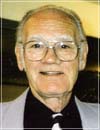
Scott Richardson

My God, My God, Why Hast Thou

Matthew 27:25-46
Scott Richardson October, 11 1981 Audio
0 Comments

Sermon Transcript

Auto-generated transcript • May contain errors

100%
Chapter, the book of Matthew,
Matthew chapter 27. And the last statement of the
46th verse. But we'll read a few verses prior
to that. Our text will be, My God, my
God, why hast thou forsaken me? Certainly, I make no pretense
here this evening as being able to fathom the depth of that statement. We may enter into the fringe
area and find a few sweet morsels of blessed truth that will give
a great encouragement to us, but as to be able to understand
in fullness, much less explain, is beyond our ability to do so. It says that here in the twenty-fifth
verse it says, Then answered all the people, and they said,
His blood be upon us and on our children. Then released he Barabbas
unto them, and when he had scurred Jesus, he delivered him to be
crucified. Then the soldiers of the governor
took Jesus into the common hall and gathered unto him the whole
band of soldiers. And they stripped him and put
on him a scarlet robe. And when they had plaited a crown
of thorns, they put it upon his head, and a reed in his right
hand and they bowed the knee before him, mocked him, saying,
Hail, King of the Jews. I told you many times that men
will crown him as long as they can make the crown. And they
spit upon him and took the reed and smote him on the head. And after that they had mocked
him, they took the robe off from him and put his own raiment on
him and led him away to crucify him. And they found, as they
came out, they found a man of Cyrene, Simon by name, him they
compelled to bear his cross. And when they were come unto
a place called Golgotha, that is to say a place of a skull,
They gave him vinegar to drink, mingled with gall, and when he
had tasted thereof he would not drink. And they crucified him
and parted his garments, casting lots, that it might be fulfilled
which was spoken by the prophets. They parted my garments among
them, and upon my vesture did they cast lots. And sitting down
they watched him there. and set up over his head his
accusation written, This is Jesus, the King of the Jews. Then were
there two thieves crucified with him, one on the right hand and
another on the left. And they that passed by reviled
him, wagging their heads. saying, Thou that destroyest
the temple, and builded it in three days, save Thyself, if
Thou be the Son of God, come down from the cross. Likewise,
all the chief priests, mocking Him with the scribes and the
elders, said, He saved others, Himself He cannot save. If he
be the King of Israel, let him now come down from the cross,
and we will believe him. He trusted in God, let him deliver
him now, if he will have him, for he said, I am the Son of
God. The thieves also which were crucified
with him cast the same in his teeth." Then our text here, now
from the sixth hour, There was darkness all over the land unto
the ninth hour. And our text says, My God, My
God, why hast thou forsaken me? Well, there in verse 45 it says,
And from the sixth hour there was darkness all over the land
unto the ninth hour. This cry in verse 46 comes out
of that darkness, He had trodden the winepress now for several
hours, and his work was almost finished, and this cry came from
the lowest point of his misery, My God, my God, why hast thou
forsaken me? Now, I think that we need to
establish, first off, as we look into this verse, the fact of
his suffering. He did suffer. That is a fact. God had forsaken him. God had
forsaken his only begotten Son. Someone said that grief of mind
is harder to bear than pain of the body. You see, sometimes
when we are afflicted with pain in the
body, of the body, we can muster up enough courage to endure the
hurt of this sickness and in this pain if God be with us. But that would be a different
case altogether if God was not with us. We sang that hymn, Does
Jesus Care? I know He cares. I know He cares. When my poor heart is about to
break, does He care? I know He cares. Well, He does. What would it be if we didn't
have that understanding in our hearts that the Lord Jesus Christ,
if He did not care? If God is withdrawn from us,
certainly we'll be cast down and full of despair. Well, I
want you to know here, what I'm trying to emphasize is when he
made this statement, my God, my God, why'st thou forsaken
me, that his suffering here is absolutely real. It's genuine. It's no myth. It's a reality. It's nothing panem-like. But its actual suffering, the
desertion of God the Father from the Lord Jesus Christ, was absolutely
real. It wasn't a delirium of mind. Glenn was telling me of Chuck's
dad here, who was very sick in the hospital. and doesn't know
anybody, doesn't know anybody, doesn't know his wife, doesn't
know his children, doesn't know his friends. He's in a state
of delirium. His mind is confused and his
mind wanders and he doesn't know where he's at, doesn't know what's
going on. Now, that was not the case with the Lord Jesus Christ.
This desertion, being abandoned by God the Father was real and
genuine. It was not a delirium of mind
caused by the weakness of his body or the high fever that he
endured or depression or something like that. Oh no. His heart burst
out with a cry here in the depths of his misery and he said, My
God, my God, Why hast thou forsaken me? Why me? Why hast thou deserted
me? Why? My God! My God! Oh, I'll tell you, that
was a crime. All the tortures of his body
up to this particular time, he endured in silence. It says here,
They stripped him and put on him a scarlet robe. It says that they released Barabbas unto them,
and when he had scourged Jesus and delivered Him to be crucified,
they stripped him. And when they had plaited the
crown of thorns and put it upon his head, and a reed in his right
hand, and when they bowed before Him and mocked Him, and when
they spit upon Him, and they took the reed and smote Him upon
the head, and when they hung Him upon the cross, He endured
this bodily punishment, this bodily affliction, this torture,
He endured it in silence and never said a word. Up to this
point, up to the point of verse 46, when He said, My God, My
God, why hast Thou forsaken Me? He has never uttered one word
of dissatisfaction or a word of complaint or a word of despair
up to this point. He endured everything that came
upon Him by the way of bodily affliction up to this point. You see, it was a real, genuine
absence of the presence of God the Father that caused him to
mourn so, that caused him to say, My God, my God, why hast
thou forsaken me? What's the reason for this? That's
what I want to know. Are you interested in that this
evening? I believe you are. I believe
you're interested in finding out. I believe you're interested
in knowing why God deserted, abandoned, forsook His only begotten
Beloved Son who in all things pleased Him from the cradle to
the grave. Why is it that here on the cross
our Heavenly Father looked upon Him and abandoned Him and left Him
alone by Himself? Well, I say to you this morning,
or to this evening here, dear brethren, that it was a real
absence that caused him to mourn so. Number one, the Father had
never left him before. From throughout his preexistence,
ever how far back that goes. goes back beyond the eons of
eternity. The Father had always been with them.
I read a verse here just recently. I'll read it to you. In John
chapter 17, it says this, in the seventeenth chapter of
the book of John in the high priestly prayer of the Lord Jesus
Christ. I'm looking for that verse, may
you brethren can help me. I'm looking for that verse in
the seventeenth chapter here where he says, I know that thou
hearest me always. Isn't that in this chapter? Maybe not. Anyhow, I was thinking
it was in the 17th chapter as I lead through this. Maybe it's
at the grave of Lazarus, when he prayed for Lazarus, who was
dead, and Mary and Martha was there, and the whole group had
come out. And there, Lazarus was in the
grave. And Mary and Martha said, he's
been in there three days. And our Lord said, Our Lord said,
I know, I know that thou hearest me always, always, always with
me. But here, here, and that was
true up to this point, up to this point, God had always been
present in a, in a month. There was a, there was an undivided
union between God the Father and God the Son. And now, now,
he who had endured all this bodily sickness, pain, and suffering,
now he mourns and says, My God, my God, why hast thou forsaken
me? Oh, I'll tell you, his father
had never left him before, but now he's left him. What's the
reason for all this? Why? Why? That's what I want
to know. I'm interested in... Find it
out. All right, I'll tell you the answer. There's only one
answer that can be found. You can look and search throughout
the length and breadth of the Scriptures. You can read every
book that's ever been written. You can read every religious
commentary that's ever been written. And you'll only find one satisfactory
answer, and the answer is this. He stood in our stead, in our
place, and in our room. There is no reason under heaven
why the Father should forsake the Lord Jesus Christ. No reason
whatsoever. He was perfect. The Lord Jesus
Christ was perfect in every respect. And I've often said to emphasize
the perfection of the Lord Jesus Christ, that even when the Lord
Jesus Christ was a baby, even when He was a baby and was snuggled
to His mother's breast, He only cried when He should have cried. There was not one minute of deception
in the person of the Lord Jesus Christ. He was absolutely perfect
and pure in every respect, And there was no reason, no justifiable
reason under heaven for God to forsake him on that cross. None whatsoever. He was perfect,
and the Bible says that he was without spot and without blemish. Why then did our God, our Heavenly
Father, abandon and forsake and desert the Lord Jesus Christ? Well, it was because He stood
in our stead, our place, and bore in His own body that which
was our due. I say there was no reason whatsoever
for God to abandon Him, and I know that God never acts without a
reason. He never does anything without
purpose, without reason. And since there is no reason,
now listen to me, and since there is no reason in the character
or in the person of the Lord Jesus Christ, why the Father
should forsake Him, we've got to look someplace else for a
reason. There was no reason in the Lord
Jesus. He was perfect. He was perfect,
absolutely perfect. I'll tell you why now. I'll tell
you why. I said because He stood in the
center stage. What does that mean? What does
that mean? That means He bore. The sinner's sin. He had to be
treated as though he were a sinner, and a sinner he could never be.
But he must be treated as if he were one, because he stood
in the sinner's stead, in the sinner's place, in the sinner's
room, and bore in his own person that which was owed to every
sinner. You see, our sin and His taking
of our sin upon Himself is the answer to the question, why? Why? Because He bore the sinner's
sin. That's why God hath deserted
the Lord Jesus Christ, abandoned Him, left Him alone. Listen,
it would not have sufficed for the Lord merely to have suffered
pain in the body. That would not have been enough.
Thousands of men before Him suffered pain in the body, and yet they
were no vicarious sacrifice. It was not enough to have merely
suffered sickness and pain of the body. soul, even for the Lord Jesus
Christ to have been grieved with heaviness and despair in His
own mind, that would have been not enough. No, sir. No, sir. He must suffer this particular
way. He must suffer this way. Why
must He suffer this way? Let me tell you. Let me tell
you why He must suffer like He suffered In this 4th to 6th verse,
when He said, My God, My God, why hast Thou forsaken Me? He
is suffering. Why must He suffer like this?
Why was not just the plaiting of the crown of thorns upon His
head, the spear upon His side, the lacerations of His back,
why would not that suffice? the justice of God Almighty and
make satisfaction for our sins. Why could not that be the full
atonement for our sins? Why? I'll tell you why. Because being forsaken of God
is the necessary consequence of sin. That's the reason. Well, listen, for a man to be
forsaken by God, abandoned by God, deserted by God, is the
penalty that falls and falleth upon every man because of his
broken relationship with God. That's the penalty. That's the
penalty that falls upon every one of us, unless it falls upon
a substitute. The penalty of sin is what? What
is the wages of sin? I know what the gift of God is.
That's eternal life. What is the wages of sin? The
wages of sin is death. What is death? Death is being
forsaken by God. That's what death is. Death is
the ultimate penalty for our broken relationship with God
Almighty. When we willfully and deliberately
chose by our own volition to go our own way and do our own
thing and be the determiner of our own destiny, God has abandoned
us and left us to ourselves. For man to be forsaken of God
is the penalty then that falls upon every man for breaking his
relation What's death? Is death annihilation? Is that
what death is? A fellow told me one time, he
said, I know where a man goes when he dies. I said, where does
he go? He said, he goes into the dust, and that's all there
is to it. I said, there's no difference? He said, there was
a horse around, and the man told me, he said, there's no difference
in the death of a man than the death of this horse. He said,
when this horse dies, that's all she wrote. And he said, when
I die, that's all she wrote. What he was saying, that death
was annihilation. But that's not so. That's not
so. Listen. What was the death that
was threatened to Adam? God threatened Adam with a death.
God told Adam when He put Adam in the Garden of Eden, there
Adam and Eve. He said, it's all yours. Everything is at your
disposal. It's for you. It's for you. Be
happy. Dress the garden. Be the dresser. It's all for you. He said, there's
a tree in the midst of the garden that's got some fruit on it.
He said, that fruit's forbidden. Don't you eat of that fruit.
He said, if you eat of that fruit, if you eat of that fruit, here's
what's going to happen. The day you eat of that fruit,
you're going to die. That was the death that God threatened
Adam with. If you eat of that fruit that
day, you'll die. Was he annihilated? No, sir. He lived many a day, many a week,
many a month, and many a year after that. He did not die physically,
but he was separated from God. And that's the death. It was
a spiritual death. That's what it was. You see,
He died and He was separated from God. And the separation
of the soul from God is spiritual death, just as the separation
of the soul from the body is natural death. And so when our
Lord Jesus Christ died on that cross, or when He made this statement,
My God, My God, why hast Thou forsaken Me? Why? Because he
was standing in that poor, helpless, hopeless sinner's stead, and
because he bore that which was due me and you as a sinner. He bore that. It was not his
grief. His agony was not in the scourging. We ought to dwell on it, I'm
sure, on the scourging of the Lord Jesus, the plaiting of the
crowns, and the bodily suffering. That's all true. But brethren,
that's not where it's at. That's not where it's at. It's
right here. Why hast thou forsaken me? Why have you abandoned me? Why? Because you stand there as a
sinner. Because as a sinner, you're getting
what you deserve. Although he never deserved. a
lick from God the Father. But as a sinner, you see that?
As a sinner! As a sinner! Our sins were laid
upon Him! And because our sins were laid
upon Him, the penalty due to our sins was separation from
God forever. Most people don't believe that.
They'll have to experience that. They'll have to experience the
fact that when they die and go out into eternity, they'll be
separated from God throughout the forevers and forevers. You
see, you and I, and I say that reservedly, you and I who are
believers and who are resting in Him alone, for the salvation
of our soul, I plead with you tonight to lean on Him, to lean
on Him hard, to bear the weight of your soul on the Lord Jesus
Christ. I know that I deserve the deepest
hell of God's vengeance. I deserve that. That's what I
deserve. I've always deserved that. There
was never a time in my life that I didn't deserve the deepest
hell of the hell of hells. I deserve that. I know that. I know it. You don't have to
argue with me and say, well, you've been a good boy. You've
done this and you've done that. You don't deserve that. You're
too hard on yourself. My mother says that sometimes
to me. She says, you're too hard on yourself. You're a good boy.
I said, well, you don't know me. You don't know my heart.
You don't know how black my heart is. I don't understand what you're
talking about, she says. You're a good boy. I'm not a
good boy. I'm a sinner. I've got a black
heart. And I forgot what was coming
to me. If I got exactly what was coming to me, I'd be in the
deepest hell of God's vengeance. That's where I'd be tonight,
if I got what was coming to me. I know what I deserve, but I'm
not afraid. That's a paradox there. I'm not
afraid. I know what I deserve. I know
what I ought to be or where I ought to be, but I'm not afraid. Actually,
I'm not afraid. And I'll tell you why I'm not
afraid. Because He'll never forsake me. He'll never forsake me. He forsook the Lord Jesus Christ,
but He won't forsake me. Isn't that wonderful? And that's
beyond our human understanding. Only the Spirit of God can give
us any comfort here. He'll never forsake me. You say,
well, you deserve the deepest of the deepest of hell. You deserve
that, but yet you say you're not afraid. You're not afraid. But you already read Jewish and
said that God, the Father, abandoned, forsook, deserted the Lord Jesus
Christ, and in His person and in His character, God had no
justifiable reason to do so. You've already said that. That's
right, I have. And I say again, I say again,
I'm not afraid that He will never forsake me because He forsook
His Son in my place. I'm not afraid. I'm not afraid.
Why? Why hast Thou forsaken me? Why? Why? Because He stood in
my stead, in my place. And I'm not afraid. I'm not afraid.
He won't forsake me because He forsook His Son in my stead,
in my place. You see, I know that I ought
to suffer for my sins. I know that there's not enough
paper in this building if we took all of the Bibles and all
of the hymn books and completely blotted out all of the words
and made the pages white. And if it could be possible to
have a recorder, a secretary to write down everything that
I've ever committed There's not enough paper in this building
to hold it. You say you must be an awful
sinner. I am. I am an awful sinner. Have been
an awful sinner. A sinner. A sinner. Nothing about
me. Not one thing. Every breath. Every breath that I take is contaminated
with sin. As a matter of fact, almost every
thought that goes through my mind has traces of self, and
pride, and ignorance, and self-esteem, and self-importance, and self-righteousness. Just a little of it rubbed off.
Oh, I tell you, fill all these books. I know, I know that I
shall not suffer, though, for these sins. Why? Because He forsook His Son in
my stead, in my place, in my room. That's why I won't. You say, well, aren't you assuming
too much? It's never assumption to believe what the Bible says.
That's not assuming anything. That's not assuming too much
or it's not presumption to believe what the Word of God says. And
the Word of God says that Christ offered Himself in my place for
my sin. And God poured out His wrath
upon the Lord Jesus Christ And he had no reason to do so except
as he stood as my substitute and my redeemer. You see, I shall
not suffer for my sin, for he has suffered the full brunt in
my place. He has made a full atonement,
a full satisfaction, full covering for my sin. So much, so far,
as to cry out, my God, my God, why hast thou left me alone? Why? Never did this before. Why? Oh, listen to me. Behind this
wall of substitution, there is a place where the poor sinner
is safe. He's safe. in the arms of the
Lord Jesus Christ. You see, He's made full atonement
for the sinner. So you and I who believe on the
Lord Jesus Christ and who lean hard on Him alone for our redemption,
rest in peace. Be at peace. Rest in the Lord
Jesus Christ. But oh, I'll tell you, One more
thing, and I'll quit. How we ought to hate the sin
which brought such agony to our dear Lord. Sin brought this agony,
this desertion of God the Father. Sin brought that on. Oh, we ought
to hate it with a holy vengeance. Oh, do you laugh at sin? Do you
laugh at sin? Most people make a joke of sin,
laugh at it. If we see it depicted on the
television, or we read about it in the newspaper, instead
of a heaviness coming over us, we smirk, we laugh, we put our
hand over our lips, and we chuckle about sin! And we ought not to
do so, brethren. What a cursed thing is sin, which
crucified the Lord Jesus Christ, and it was Sin that murdered
the Lord Jesus Christ. Sin murdered Him. He was made
sin. Listen to me. He was made sin
in our behalf that we might become the righteousness of God in Him. Oh, we ought not to laugh at
sin. You cannot worship Him when sin is lodged in your breast. You can't do it. Listen, worship
Him with sin loved and sin pampered in your life and my life. Worship
Him. It's an absurdity. It's an impossibility. Can you make friends? Can you
make friends? Can I make friends with the murderer
who murdered my wife? Can I make friends with him?
Can I say I'll receive you into my bosom? I've seen you plunge
that knife into my beloved. And I heard her gasp that last
breath, and she's gone, and gone forever. My, can I make friends
with you? Certainly I cannot make friends
with you. Sin has murdered and plunged
the night into the heart of the blessed Son of God, to the extent
He suffered, to the extent that He said, My God, my God, why
hast Thou left me alone? Huh? That's the reason he cried
out. Because he was made sin. Because
that's where I should have been. That's where every believer,
that's where he should have been. Because he must die this particular
way. Because death is the abandonment. of the soul, because God, one
day, He hasn't abandoned us completely, but one day, when the man, woman,
boy, or girl, who refuses to hear Him, who comes from above,
who is above all, and refuses to hear Him, and when the last
song is sung, the last preacher preached, when it's all over
with, He's put on his clothes for the last time. Kissed his
wife for the last time. The child said goodbye to mother
for the last time. Went on down the road to school
or to work. When he's took his clothes off
for the last time. Laid his head down on the pillow
for the last time. When he's had his last conversation. When everything is over with. And this whole shootin' match
is wound up and the death angel comes and knocks at your door! I'll tell you, you go out into
eternity, God will abandon you. And He'll abandon me too. If
I'm not in His Son, the Lord Jesus Christ, because that's
our only hope. That's our only hope. That's
the reason. He says, My God, my God, why
hast thou forsaken me? Why hast thou forsaken me? May the Lord
be pleased to answer the question satisfactory
in the heart of everyone that hears me here tonight. Only God
can do it. I can't do it. I can talk to
you about this until I'm blue in the face. But unless what
I've preached is clothed with the power of the Spirit of God,
to make it real to your heart and to my heart, then not much
has been accomplished. But if God is pleased to make
it real, we can rejoice. I believe He's made it real to
my heart. I'm just not talking and filling
in space when I say I'm not afraid. I believe God has made His Son
real to my heart. I believe that. I know I'll have
to face what I'm saying. I know that. But I'm still not afraid. Because
God made him to be sin. And if he made him to be sin,
and he suffered in my stead that which was due me, I'll never
suffer for that penalty. The Lord bless these remarks.
Scott Richardson
About Scott Richardson
Scott Richardson (1923-2010) served as pastor of Katy Baptist Church in Fairmont, West Virginia.
Broadcaster:

Comments

0 / 2000 characters
Comments are moderated before appearing.

Be the first to comment!

Joshua

Joshua

Shall we play a game? Ask me about articles, sermons, or theology from our library. I can also help you navigate the site.