Bootstrap
Scott Richardson

David's Sin

2 Samuel 12:1-13
Scott Richardson September, 13 1981 Audio
0 Comments

Sermon Transcript

Auto-generated transcript • May contain errors

100%
The book of 2 Samuel chapter
12. 2 Samuel chapter 12. Let us pray. Our Father we bow
again Thy presence, and we feel a sense of helplessness, certainly
a sense of unworthiness. Certainly, Father, in ourselves
we could never dream of approaching the holiness of Thy throne. But
we come, Father, in the name of another. even our Lord Jesus
Christ. We come in His name knowing that
we've been made accepted in the Beloved. And we bless you and
praise you and thank you, Father, that we're in Him. He who is
our blessed substitute, our sin bearer, is also our intercessor. And Father, we are in Him as He is seated in the heavenlies
this evening. Father, we come in His name.
We have no righteousness. He is our righteousness. We have
nothing to offer, Father. O Lord, help us this evening
that we might learn to bless Your name and to praise You and
to thank You and to live for You. once read from thy word
this evening, might it redound to your honor and to your glory
and to the edification of these who gather here. For it is in
his precious name, his blessed name, that name which is above
every name, we pray, even the Lord Jesus. Amen. I want to talk to you here a
little bit this evening about this twelfth chapter of the book
of 2 Samuel, talk to you about David's sin, the nature of David's
sin, the fruit or the effect of David's sin, the conviction
of David's sin, the confession of David's sin, and the forgiveness
of David's sin. Let me read a few verses here.
Verse number 1, chapter 12 says, "...and the Lord sent Nathan
unto David." Well, that's highly significant there. He didn't
come on his own. He wasn't a freelance prophet.
He was a prophet that was directed by God unto a particular person. He just didn't say, Looks like
it's a good town over there. I think we'll have a revival
meeting over there. I think we'll just set a tent
up. There's a goodly population in that area. It's highly congested
and new homes and so forth. We'll just go over there. No,
it didn't spring up. This mission that the prophet
Nathan was on didn't spring up within his own will. It says
that the Lord sent Nathan unto David. The Lord sent him. And he came unto him. He wasn't
disobedient to that heavenly vision, but he did what the Lord
told him. And he came unto him, and he
said unto him, There were two rich men in one city, or there
were two men in one city, one rich and the other poor. Well,
I think that in the story or the parable that Nathan is about
to tell David the King, the two men are
represented in Uriah the Hittite and David the King. Uriah the
Hittite was a poor man. He was a serpent and a soldier
in David's army. He didn't have anything. All
he had was one little ewe lamb. He had one little sweet wife. He just had one. But the rich
man, as represented by King David, he had many wives. He had six
that I know of, plus he had a lot of concubines. He had all of his master's wives. When God gave him the kingdom,
took the rest of the kingdom from Saul, he gave David all
of Saul's wives. He had plenty of them. So I want you to see that at
the outset here that you might understand this story. There
were two men in one city, one rich and the other poor. And
the rich man had exceeding many flocks and herds. He had a lot. He had a lot of wives. But the
poor man had nothing. He didn't have anything save
one little ewe lamb. That was Bathsheba. Evidently
Bathsheba was considerably younger than Uriah. Uriah probably had been married
before and had children. And maybe he bought Bathsheba
as they did in those days. It's of no value to know how
he come to have her, but he had her. And it says that that when
he had bought and nourished up, which he had bought and nourished
up, bought this little lamb, bought this little lamb Bathsheba,
and nourished up, and it grew up together with him and with
his children. She is young and probably just
grew up along with his own children. And it did eat of his own meat,
and drank of his own cup, and lay in his bosom, and was unto
him as a daughter. And there came a traveler unto
the rich man, and now he's talking about the rich man in the next
sentence here. And the rich man, he spared to take of his own
flock and of his own herd to dress for the wayfaring man.
That is, the wayfaring man, the traveler, came to the rich man.
He came to him, but the rich man did not want to take of his
own flock. He had many. He had a lot of
sheep. Probably had a lot of bullocks,
goats, but he didn't want to take a van to dress for the wayfaring
man to make a supper for him. That was come unto him, but he
took the poor man's lamb, the little ewe lamb. He took Bathsheba
and dressed it for the man that was come to him. And when David
heard this, He presented this in such a way, he came to King
David and presented this in such a fashion and way that David
thought that he had a justifiable, legitimate complaint to bring
before him and he needed his answer. He needed a solution
to this problem. And it hadn't dawned on him yet
what he was talking about. And David's anger was greatly
kindled. He got real mad about this. He
kindled against this man, this rich man, and he said to Nathan,
The law as the Lord liveth, the man that hath done this thing
shall surely die. And he shall restore the lamb
fourfold because he did this thing and because he had no pity. There was no genuine compassion
in this man's heart. He had no pity. And Nathan said
to David, the king, he said, Thou art the man. Put the finger
right on him. Put the finger right on his forehead.
Put the finger right under his nose. And he said to David, the
king, Thou art the man. You're the man I'm talking about.
Thus saith the Lord God of Israel. The other man, the God of Israel,
said, I anointed thee king over Israel, and I delivered thee
out of the hand of Saul. I did this. It was not his free
will. I anointed thee king over Israel. I delivered thee out of the hand
of Saul. I gave thee thy master's house
and thy master's wives into thy bosom. and gave thee the house
of Israel and of Judah, and if that had been too little, if
what I have done for you, if that had not been enough, I would
moreover have given unto thee such and such things. Therefore
hast thou despised the commandment of the Lord, He despised the
sixth and seventh commandment of the Lord, which says, Thou
shalt not murder, and thou shalt not commit adultery. Why hast
thou despised the word of God? to do evil in his sight. Thou
hast killed Uriah the Hittite with the sword. Actually, he
didn't do it. He didn't take the sword and
run it through Uriah the Hittite, but he contrived, plotted, and
planned his very death and was as guilty of it as if he had
taken the gun and pulled the trigger and blowed his brains
out. And you have taken his wife to
be thy wife, and hast slain him with the sword of the children
of Ammon. Now therefore the sword shall
never depart from thine house, because thou hast despised me,
and hast taken the wife of Uriah
the Hittite to be thy wife. Thus saith the Lord, Behold,
I will raise up evil against thee out of thine own house,
and I will take thy wives before thine eyes, and give them unto
thy neighbor, and he shall lie with thy wives in the sight of
this Son." He said, You've done this thing secretly, but I'll
do this thing before all Israel and before the Son. You did it
in secrecy. You covered this thing up. You
don't want anybody to know about it. You plotted and conceived
this plan, but it said, it won't be so with me. I'll do it before
everybody. I'll take your wives and I'll
give your wives to your neighbors, and your neighbors shall lie
with your wives. And that's exactly what he'd
done. I looked that up over in the 16th chapter and the 22nd
verse. Look at this with me, if you
will. Verse 22 of the 16th chapter,
listen to this, and guess who was one of the first men to take
his wives? It was his son Absalom. And they
spread Absalom a tent upon the top of the house. And Absalom
went in unto his father's concubines in the sight of all Israel. Well, you did it secretly, verse
12, but I will do this thing before all Israel and before
the Son. And David said unto Nathan, I
have sinned against the Lord. And Nathan said unto David, The
Lord hath put away thy sin, thou shalt not die. Howbeit, because by this deed
thou hast given great occasion to the enemies of the Lord to
blaspheme." That is, you've provided circumstances and occasions here
that the enemies of the Lord might laugh at the Lord Himself,
blaspheme the Lord. He said, The child that is born
unto thee shall surely die. Born out of this illegitimate
union between the wife of Uriah and King David here. This child is born already. It is already born. It is going
to live for seven or eight days. The child also that is born unto
thee shall surely die. And Nathod departed unto his
house. And the Lord struck the child
that Uriah's wife bare unto David, and it was birth sick. It was
just a baby, and God struck that baby with a disease of some sort. And it was a killing disease.
And David therefore besought God for the child. And David
fasted and went in and lay all night upon the earth, laid down. And the elders of his house arose
and went to him to raise him up from the earth. But he would
not, neither did he eat bread with them. He always ate bread
with the princes of his court. But he wouldn't do it now. He laid all night out on the
ground, laid barren flailed his arms and was weeping and crying
and praying and beseeching heaven that God might change his mind
in this matter. Perchance, maybe God will change
his mind. He might do it. Who knows? And
he kept at it and he kept at it. But it came to pass on the
seventh day that the child died. That is, And I don't think that
it means here that David fasted for seven days. I believe that
it means on the seventh day of the life of that child, that
the child died. And the servants of David feared
to tell him that the child was dead, for they said, Behold,
while the child was yet alive, we spake unto him, but he would
not hearken unto our voice. How will he then He may hurt
himself if we tell him that the child is dead. When David saw
that his servants whispered, David perceived that the child
was dead. Therefore David said unto his
servants, Is the child dead? And they said, He is dead. And David arose from the earth,
and washed, and anointed himself, changed his apparel, came into
the house of the Lord, and worshipped. He worshipped. That is, when
he came into the house of God, he agreed with God in regard
to the justice of this situation. He agreed that God was right
in punishing him through this child. He agreed with God. And he worshipped God. And he
thanked God for bringing him to a sense of this awful, dastardly
sin that he'd committed against God. He thanked God. He worshipped
God. David worshipped God. Remember
I told you that this man David, that God said, His heart beats
with my heart. There's something in this man's
heart. Something that I don't understand
thoroughly. Never will understand it. But
there's something, there's a union between the God of glory and
David himself. His heart beats with my heart
in spite of what He's done. Yet there's a union here, there's
a vital living union between God and David in their hearts. Though you cannot see it outwardly,
it's there. He worshipped and He came to
His own house and when He required or requested, they set bread
before Him and He did eat. Then said his servants unto him,
What thing is that that thou hast done? Thou didst fast and
weep for the child while he was alive, but when the child was
dead, thou didst rise up and eat bread. And he said, While
the child was yet alive, I fasted and wept. For I said, Who can
tell whether God will be gracious to me that the child may live?
Who knows? Only God knows. God is the author
of life. He is the author of death. He
gives. He takes away. Who knows? Who knows? God may be gracious
to me, but now He is dead. Now the child is dead. Wherefore
should I fast? No need to fast now. I can't
bring Him back. He is dead. God has taken that
child. And I can't bring him back. Why
should I fast now? Why should I lay out on the ground
now and flail and foam at the mouth and kick and tear my clothes
and throw dust upon my head? Why should I do it now? Why should
I fast? Can I bring him back again? I
shall go to him, but he shall not return to me. Clyde is not
here tonight, and he asked me about this verse of Scripture.
Well, I told him about this one time. He said, I didn't know
that was in the Bible. We were talking about children. We were
talking about children. He said, I didn't know that was
in the Bible. Well, it's in the Bible. It's in the Bible. A little baby
died. It was seven days old. And the
baby died. And David said, I can't... By my fasting, by my... I tear
my clothes, and repenting, and sackcloth, and ashes, that will
not do anything for that child. The child's dead. I can't bring
that child back. But I shall go to the child. I don't think that he meant,
I'll go out there to the graveyard where they buried the child.
I don't believe that he means that. I believe that he means
that he'll see that child in the resurrection. That's what
he means. He'll see that child, that baby, that child that died
in its infancy. I believe that he'll see that
baby. He said, I'll go. I shall go to Him, but He shall
not return to me on this earth. I like that. I like that. My wife and I have a child, six
months old, that died. My four boys have a sister, died
when she was six months old. I can't bring her back. I can't
bring her back. There's nothing that I could
do to bring that baby back. She's thirty-some years old.
Thirty-four years old, I guess. I can't bring her back, but I
got some comfort out of this. I shall go where she is. I shall
see her. And that's what David's talking
about. Well, I'm not going to read any more. That's 23 verses. Let's talk here just a little
bit. I'll hurry on here and not keep you long this evening. I
want you to see the nature of this sin. The sin of this nature
never begins with an instant act of guilt, but it begins in
the secret thought of the heart. It's not just something that's
done spontaneous, instantaneous, just at a split second or a moment
of time. It doesn't happen that way. It
happens in the secret parts of a man's heart. Well, the difference,
there's a difference here. The difference between the fall
of Saul and that of David, or between the denial of Peter and
that of Judas, there's a difference in the nature of the sin. The nature of it. David was guilty
of adultery and murder. That's what I read to you here
in this twelfth chapter of the book of 2 Samuel. David was guilty, guilty of adultery
and guilty of murder. The killing of Uriah was by subtle,
it was a subtle device. to cover up the shame of his
sin with Bathsheba. He had already committed adultery
with Bathsheba and found out that Bathsheba was going to have
a child. And so now, you see, he is going
to kill Uriah to cover up the shame of this sin. I want you to notice here the
faithfulness of the Bible, the faithfulness of God in exposing
the faults and the failures of the heroes of the Bible. David
is not the only holy man that has been dragged down into the
mire of sin by his lust. He has not been the only one. and he'll not be the only one.
There'll be more to follow. The Bible says that Eve, our
mother, the mother of all living, our first mother, old mother
Eve, saw before she took the fruit. She looked before she
took. Lots of trouble started when
he looked towards Sodom. We're human. and we're sinful
and we're depraved. That's the nature of David's
sin. The effect of David's sin is
found here in verse 14. He said, Because by this deed,
because of what you've done, thou hast given occasion to the
enemies of the Lord to blaspheme. And the child is going to die. Well, the child shall surely
die. You see, marrying Bathsheba before
the child was born does not cover the guilt of his sin in the sight
of God. Men think because of the secretiveness
of their sins that though men might feel that By outward appearance,
they're pretty good people. But yet, these sins, the sin,
our rebellion against God, our rebellion against God, our determination,
our determination in our own souls to row our own canoe, to
be the captain of our own ship, to determine our own destiny,
this willful rebellion against God, though it not be seen by
men, is seen by God. And whatever we do by way of
covering does not cover it from God. Then there is the conviction
of it. He said, Thou art the man! Thou art the man! Why, I said,
David's anger was greatly kindled against this man who took from
this poor man his little ewe lamb and killed it. gave it to this wayfaring stranger
or to this traveler? Why, he said, as the Lord God
Almighty lives, as God lives, this man that hath done this
thing, he shall surely die. He'll die, no doubt about that. And immediately, immediately,
David said, Thou art the man. You're the man, David! You're
the man. I'll tell you, the arrow that
came from the bow of Nathan was not shot at random. It was aimed. It was aimed at the very heart
of David, and it found its mark. You see, a mere hint. A mere
hint won't get the job done. In a situation like this, there's
no need to hint about this thing. But you've got to confront it.
And you've got to confront the individual. And Nathan was faithful
to the commission that he'd been commissioned of by the Lord God
Himself. You see, our Lord had sent him
on a mission. And his secret sin was naked
before God, just like the sin of Achan and the sin of Cain. No human device can cover this
type of sin or any other sin, as a matter of fact. Ah, David must be made to see
his sin in its true light before it is ever forgiven. Before any
man. Before any man is ever forgiven
of his sin. and made accepted in the Beloved. Before he is a recipient of the
grace of Almighty God, he must be, he will be made to see the
awfulness, the greatness, the enormity of his sin against God. You can mark that down. You see,
Nathan did not go to him and say, well now, David, You've
committed a greater wrong here than you have supposed. You have
disgraced your character. You've brought dishonor upon
God, but all is well. You have been forgiven. No, sir. Nathan uttered this parable.
which sets David's own character before him as being the meanest
of the meanest. You see, David, when he spoke
this parable to him, and then after Nathan said, Thou art the
man, then, you see, all of this came to light, and David seen
himself as that man. taking that little ewe lamb,
taking Bathsheba, and he realized then he was the basest. He was the meanest of the mean,
David was. Every man must see himself in
the light of the glory of God. He must see and feel the guilt,
the enormous guilt and burden and weight of his sin against
God. David did. And old Nathan told
him of this traveler. He kind of set a trap for David.
And he caught him. You see, he said, you're the
man. You've got to realize, David, the greatness of your sin. This
business of of shaking hands with the preacher in this 20th
century evangelism that we see so much of here on the radio,
on the television and all. That's not it, brethren. Here comes people, you know,
the invitation, they preach about the battle of Armageddon or something
like that, and they give the invitation, or they preach about
abortion, or they preach about some moral sin, And they give
the invitation and the people flock up to the preacher and
the preacher tells them, well, do you believe in Jesus? Oh,
yes, I believe in Jesus. I don't want to go to hell. I
believe in Jesus. And, well, you're fixed up. Everything's okay. I'll give
you a little literature here. Go your way and read this literature
and join some church and start serving the Lord. Brethren, that
is not what it's all about. A man has got, before he becomes
the recipient of the pardoning, forgiving grace of Almighty God,
he's got to come to the place that he sees the enormity of
his sin and his guilt before God. If that's not so, then I'll
quit. That's so, brethren. That's so.
You've got to see it. David did. A man's got to be made to condemn
himself. Condemn himself. Condemn himself
for what? For his waywardness, for his
rebellion against God, for his despising God. That's what man
does in his natural state. When man would chart his own
course, when he charts his own course and says, I'll be the
determiner of my own destiny, I'll sail my own little old boat,
I'll ride my own little old canoe, I'll do what I want to, then
he despises God Himself. He despises the Word of God,
and he despises God. He has got to be brought to the
place where he sees that in his rebellion, he has despised the
goodness of God, and he's got to be brought to be made to condemn
himself. Condemn himself. Agree with God
as to who he is. David condemned himself. You
see, before Nathan the prophet said to him, Thou shalt not die,
David the king had already pronounced sentence upon himself. For he
said concerning the man in the story that gave or took of the
ewe lamb and gave it to this traveler, David said, Now the
fellow that did that, Who was that? The fellow that did that! The fellow, that mean, no-account,
low-down rascal! That fellow that had no mercy,
no compassion, no pity! That had all of these sheep!
He goes and takes this little ewe lamb! The fellow that did
that! As sure as there's a God in heaven,
he said, that man's going to die! David! David pronounced
his own death sentence. David signed his own death warrant. And if you and I are ever saved,
brethren and sisters, if we are ever saved, if we ever become
the recipients of the grace of God, we will sign our own death
warrant. We will agree with the justice
of God Almighty. We will agree with God and condemn
ourselves. And then, and only then, Will
we receive what it says over here in verse 13? What does it
say in verse 13? The Lord hath put away thy sin. Not until David was made to condemn
himself, you see. His confession, his confession.
You see, he said, I've sinned against the Lord. He didn't say,
I've sinned against Uriah. He didn't say, I've sinned against
Bathsheba. He didn't say, I've sinned against
my six other wives. He didn't say, I've sinned against
Israel. He didn't say, I've sinned against the government. Listen
to me now. He said, I've sinned against
the Lord. And when you sin and I sin, it's
not against one another. When we sin and violate, Brethren,
it's against God Himself. That's who it's against. We really
don't know what sin is. We don't know who sin is against.
That's the reason we just kind of make light of it, just kind
of laugh. We'll see something on television,
some terrible act, and we'll get a laugh out of it. We'll
get a laugh. We'll look at it in a light manner. Why? Because we don't know what
sin is. We can hear men tell jokes about
hell, jokes about sin, and we make light of it. Because we
don't know what sin is, and we don't know who sin is against. If we knew what sin was, and
who sin is against, then we'd realize the awfulness of the
punishment that awaits for those that go out into eternity without
no covering. You see, the penalty for sin
is not taking a little switch and switching your hand. The
penalty for sin is not to come before the teacher, hold your
hands out like that, and she takes the ruler and cracks your
knuckles. The penalty for sin is what? Eternal death. What's eternal death? Hell's
fire. That's what eternal death is,
hellfire. The wages of sin is what? The reward of sin is what?
The payday of sin is what? It's death! It's death! What's
death? Death is separation from God!
What's separation from God? That's hell. That's hell. He said, I have sinned against
the Lord. He didn't make any excuses. He mentions no extenuating
circumstances. He doesn't blame anyone for betraying
his secret to the prophet Nathan. He is too deeply wounded to offer
any resistance. He does not say, I have sinned
against Uriah. No, he said, I have sinned against
God. My sin is against God. I killed a man. I took his wife. I consumed. My passion and my lust was consumed
in another man's wife. And he said, in doing so, I sinned
against God Almighty. I sinned against God. That is
his confession. Oh, my soulless evening. Brethren,
when a man discovers that he sinned against heaven, he'll
cease to justify himself. He'll quit saying, well, it's
because of my environment. It's because of my background.
It's because of my association. It's because of my companion.
It's because of my job. It's this and it's that. When
a man discovers, when a man discovers like the prodigal son did in
the 15th chapter of the book of Luke, when he came to himself,
he said, I will arise and go to my Father and I'll say what?
I'll say I have sinned against heaven! I've sinned against God. And when you discover and I discover
who we've sinned against, we'll quit making excuses for our sins. And we'll agree with God. We'll
agree with God's justice. And we'll fall at His feet and
we'll beg and cry unto Him for mercy. He doesn't have to give
us any. He doesn't have to show mercy
to us. He can send us on to hell with a stroke of His hand. There's
no merit in us that would deserve it. Oh, my soul, a dead conscience. A man who has a dead conscience? That makes a man as arrogant
as the bad devil himself. We need to have a sensitive conscience. You remember there in the New
Testament where it says that that publican came before God
and he couldn't lift up his eyes to heaven. He just smote on his
chest and he said, Almighty, be merciful to me, O sir." Let
me tell you what that is. That statement there is the incense. That is the sweet Savior that
rises from the loud colds of a burning convicted heart. I've sinned against thee. Have
mercy, have mercy on me. And then, brethren, you have
the forgiveness of this sin. And verse 13, look at what it
says. Verse 13, David said unto Nathan,
I have sinned against the Lord. And Nathan said unto David, The
Lord also hath put away thy sin. Thou shalt not die. What did
he mean by that, thou shalt not die? Well, the law demands that
a man who is an adulterer and a murderer die. That is the Jewish
law. They demanded that a man die
and be stoned to death. An adulterer and an adulteress
are murderers or murderers. Kill them. Kill them with stones.
Hang them on a tree. So he said, The Lord hath put
away thy sin, thou shalt not die. That is, thou shalt not
eternally die. The Lord's put away your sin.
You see, the forgiveness of David's sin was what? Number one, it
was immediate. Right now. Right now. Didn't say, well, go sell your
beads. Go sell your beads now. So many
Hail Marys. There's a possibility I might
get you through this thing. No, sir. It was immediate. And secondly, it was complete. It was complete. The Lord hath
put away thy sin. In light of that, let me make
this statement. The Lord hath put away thy sin.
He has put away thy sin. Now, who among us shall ever
find the sin that the Lord hath put away? If the Lord hath put
away David's sin, who is going to find it? There is a verse of Scripture
that is a companion verse to this. It is found in the first
or second chapter of the book of John that says this, John
the Baptist said, Behold the Lamb of God. That what? That taketh away the sin of the
world. Where is your sin at? Where's
your sins at? You carrying your sins? Your
rebellion? You carrying that? Well, the
Lamb of God, if He ever comes and intervenes, your sins will
be put away. And then it was accompanied with
this promise. Thou shalt not die. Thou shalt
not die. All of his sins had been put
away. God put them away. And when God
buries our sins, He casts them as far as the east is from the
west. And He will not, the book of
Hebrews says, remember them against us no more. They're gone. They're gone. Our sins, the shame
and the guilt and the penalty of our sin is gone. It's all
gone. It's all gone. I hear folks say,
I feel so guilty before God. Well, maybe that's the right
attitude, but really we're not guilty before God if we're Christians.
If we've experienced the new birth, if we've become the recipients
of the grace of God, if He's our Lord and He's our Savior,
He bore our guilt. He bore our guilt. He bore our
sins. He bore all of our sins. He put them away! He put them
away! He put them on the head of the
scapegoat! And they led that scapegoat out into that waste-housing
wilderness, that land of no return. And our sins was transferred
on that scapegoat. And our sins are upon the Lord
Jesus Christ. He who knew no sin, He knew no
sin, became sin in our behalf that we might become the what? the righteousness of God in him. My sins are gone. My guilt is gone. My judgment
is gone. It's all gone. It's all put away. It's all taken away. It's all gone. Oh, that's the
glorious gospel, and I rejoice in it. May the Lord be pleased
to help us together to appreciate the twelfth chapter of the book
of 2 Samuel. May it be for his glory and his
honor and for your edification and for the help of some poor
soul who is struggling under the burden and the weight of
his guilt. Fly away to Jesus. Come to him. Come to me, all ye that labor
and are heavy laden. I will give you rest. Church won't do it. Baptism won't
do it. Lord's Supper won't do it. Your
good works won't do it. Your good intentions won't do
it. Your resolves won't do it. Your determination won't do it.
He said, come to me. Get to me. Get to me. I'll give
it to you. You won't have to buy it. You're
bankrupt. You haven't got anything. But
come to me. I will give you rest." Rest for your soul. How does
He do that? By revealing in our hearts the
Lord Jesus Christ as the substitute for poor sinners. Bearing in
His own body what was their due. Their shame, their guilt, their
penalty. And giving them His righteousness. And David got so happy about
that that he said, Blessed is the man to whom the Lord will
not impute sin. Blessed is the fellow that the
Lord will not charge sin with. Blessed is that fellow. He has
the righteousness of God.
Scott Richardson
About Scott Richardson
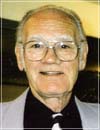
Scott Richardson (1923-2010) served as pastor of Katy Baptist Church in Fairmont, West Virginia.
Broadcaster:

Comments

0 / 2000 characters
Comments are moderated before appearing.

Be the first to comment!

Joshua

Joshua

Shall we play a game? Ask me about articles, sermons, or theology from our library. I can also help you navigate the site.