Bootstrap
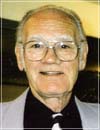
Scott Richardson

Jesus Betrayed By Judas

Matthew 26:14
Scott Richardson March, 8 1981 Audio
0 Comments

Sermon Transcript

Auto-generated transcript • May contain errors

100%
Turn with me this evening to
the twenty-sixth chapter of the book of Matthew. Matthew chapter
twenty-six. Let's begin reading there at
verse fourteen. Then one of the twelve, called
Judas Iscariot, went unto the chief priests, and said unto them, What will
you give me, and I will deliver him unto you? What will you give
me, and I will deliver him unto you? And they coveted with him
for thirty pieces of silver. That is, they made an agreement
with him for thirty pieces of silver. He took the initiative,
but he knew that they was kind of in a dilemma and they was
looking for a way out. What will you give me? I'll deliver
him unto you. Thirty pieces of silver was the
agreed price. And from that time he sought
opportunity to betray him. Now the first day of the the
Feast of Unleavened Bread, the Passover, the disciples came
to Jesus, saying unto him, Where wilt thou that we prepare for
thee to eat the Passover? And he said, Go into the city
to such a man, and say unto him, The Master saith, My time is
at hand. I will keep the Passover at thy
house with my disciples. And the disciples did as Jesus
had appointed them, and they made ready the Passover. And
when the evening was come, he sat down with the twelve, and
as they did eat, he said, Verily I say unto you, that one of you
shall betray me. And they were exceeding sorrowful,
and began every one of them to say unto him, Lord, is it I? And he answered and said, He
that dippeth his hand with me in the dish, the same shall betray
me. The Son of Man goeth as it is
written of him, but woe unto the man by whom the Son of Man
is betrayed. It had been good for that man
if he had not been born. In these particular passages
here that I read to you from 14 throughout verse 24 and verse
25, we could read verse 25 along with it. Then Judas, which betrayed
him, answered and said, Master, is it I? He saith unto him, Thou
hast said. Now in these verses here, 11
verses, we read how our Lord was betrayed into the hands of
his deadly enemies. Now, over here in the first part
of the chapter, it tells us how, or it speaks to us in regard
to this dilemma that they were in, the chief priests and the
scribes and the elders of the people. It wasn't necessarily
the people as a whole that was out to do our Lord in. It was the appointed religious
leaders of that day. Of course, I'm sure that the
people were, most of them were in agreement with them, but these
were their leaders, their religious leaders, and they wanted to do
away with the Lord Jesus Christ, but they didn't know how they
could do it without creating an uproar in the whole city. They wanted to get the job done.
They wanted to shut this man up, to get him off of their streets,
and the only way that they knew how to do it was to kill him.
And of course they began their plotting and their scheming long
before this. It says here in the third verse,
Then assembled together the chief priests, the scribes, and the
elders of the people, unto the palace of the high priest, which
is called Caiaphas, and consulted," that is, consulted together.
They talked about this thing. They began to make plans that
they might take Jesus by subtlety, by deceit, and kill him. But they said,
but not on a feast day, lest there be an uproar among the
people. So the scribes and the priests
were anxious to put to death, very anxious, to put to death
our Lord Jesus Christ. And they were at loss as to how
to do it for fear of the uproar among the people. They said,
how are we going to do this? We don't want to disturb the
people and set them against us. Now, just when they seemed to have
a problem, there appeared unto them a way out. One Judas Iscariot. They couldn't ask for anything
better. He fell right into their hands. This is exactly what they
want. He was the fulfillment of their
hopes, and they believed that Their design could be fulfilled
through Judas Iscariot. And you remember up here in this
14th verse, look at that again. Then one of the twelve, called
Judas Iscariot, went unto the chief priest and he asked him
this question. What will you give me that I
will deliver him unto you? So this solved their problems
right here. See, their problems was that
they consulted Together, the chief priests, the scribes, and
the elders of the people in the palace of Caiaphas, they consulted
that they might take Jesus by deceit and kill him. How are
we going to do it? We can't do it on the feast day,
lest there be an uproar among the people. Now as our Lord was
getting ready to set down at the feast of the Passover, Judas
Iscariot, he came unto them and he said, What do you give me?
What do you give me? I guess there are fewer and blacker pages in all history
than the conduct and character of Judas. No one ever names their
babies Judas, do they? Nobody ever names their children
Judas. Did you ever hear of a fellow
named Judas? I never did. It's because of his black, deceitful
character. Someone said, sharper than a
serpent's tooth is a thankless child. I believe that's in one
of the Proverbs. Now, what shall we say of a disciple
who shall betray his master? What could we say about such
a fellow? A fellow who had traveled with him for three years or more
and was in on all of the preaching, miracles, all of that, and yet
consults with the enemies of the Lord Jesus and sells him. agrees to sell him
for thirty pieces of silver. What can be said about a fellow
like this? What could be said about an apostle
who would sell Jesus Christ for money? Well, there are three
things that I want you to learn from these eleven verses of Scripture
here this evening. We have seen here thus far the
chief priests, scribes, and the elders They had it in their minds. It was their scheme. It was their
design to do away with Jesus Christ, but they couldn't do
it and counted the people. And it just so happened by the
providence of God that God delivered Judas Iscariot right into their
hands, and Judas certainly had a desire for riches, agreed with
him. He said, I'll deliver him. into
your hand for thirty pieces of silver. So this is what I want
you to learn first, that a man may enjoy great privileges and
make a great religious profession, and yet his heart at this time,
while he's making this great profession and while he's enjoying
these great privileges, At this particular time, his heart may
not be right before God. I want you to learn that. A fellow
might be religious and enjoy great religious privileges and
make a great profession, and yet, at the same time, his heart
might not be right with God. Now, I want you to notice some
things about this fellow. He had the highest possible religious
privileges. He was a chosen apostle. He was a companion of the Lord
Jesus Christ. He was an eyewitness to all of
our Lord's miracles. He was a hearer of His sermons. Now think of it. Here's a fellow
who enjoyed these privileges. of being a witness, an eyewitness
to the raising of the dead. He was an eyewitness when our
Lord, when Mary and Martha came to our Lord, and they said, He
whom thou lovest is dead. And of course, they finally went
to Bethany, and our Lord spoke with a loud voice, and He said,
Lazarus, come forth! And here came Lazarus out of
the grave. and Lazarus made a supper. Martha
and Mary and Lazarus made a supper for the Lord Jesus Christ, and
Jesus ate supper with this man who was dead, but now is alive. And he was an eyewitness to that.
He was an eyewitness to the Lord Jesus Christ taking a few fish
and a few loaves and multiplying them into enough food to feed
5,000 people, not counting the women and children. And when
it was all over with, had several baskets full. His eyewitness
to all these things and all the miracles, he was right on the
scene. He enjoyed great privileges. And when our Lord Jesus Christ
preached time and time and time again, this man Judas sat there
in the crowd and was a hearer of the sermons of Jesus Christ. I want to tell you that this
man Judas, he saw what Abraham and Moses never saw. He heard
what Isaiah and what David and Jeremiah and Micah and Amos and
all the prophets never heard. He heard the words of life from
the very lips of God Himself, the Son of God. He lived in the society of the
eleven apostles, and he was a fellow laborer with Peter and John and
James and Nathaniel and Andrew and all of the rest. He had made
a reputable profession of religion. Everything was right and proper
and becoming in regard to his outward conduct. And like the
rest of them, like the rest of the Twelve, he appeared to believe
It looked like he believed. He appeared to believe, but this
he did. Now it's proven later by what
he did that he really didn't believe. His heart was never
right with God. But this he did like the rest
of the apostles. He appeared to believe like the
rest of them. And he also gave up everything
for Christ's sake. Judas did. Everything outwardly in regard
to his behavior and his conduct appeared to be proper and moral. He gave up all. I don't know
what he left. Peter and James and John and
Andrew and some of them left their boats. They left their
fishing business, left their wives at home. and followed Jesus. Judas gave up all for Christ's
sake. And I'll tell you this, he went
forth, just like the rest of them, to preach and to perform
miracles, just like the rest of them. Well, what I'm saying
is this, we need to learn from this that it's possible for a
man to enjoy great privileges and make a great profession,
and yet, at the same time, his heart may not be right with God. This fellow appeared to believe. He appeared to believe. He gave
up all for Jesus' sake. He said, I give up everything.
I turn my back upon this world, and I become a follower of the
lowly and lonely Nazarene. I said he was sent forth like
the rest of them to preach and to work miracles. And here's
the thing that I think that is significant about all of this.
None of the eleven appeared to suspect him of the least kind
of hypocrisy. They weren't suspicious of this
fellow. That goes to say that he didn't do anything wrong.
He didn't do anything outwardly that would give evidence that
his heart was not right towards God. Everything that he did seemed
to be proper, seemed to be in order. When our Lord said here
in this, from the 18th verse on, He said to tell this guy,
My time is at hand, I will keep the Passover at thy house with
My disciples. And the disciples did as Jesus
had appointed them. They made ready the Passover,
and when the evening was come, He sat down with the twelve,
and as they did eat, He said, Verily I say unto you, that one
of you shall betray Me. And all of them now, and they
were exceeding sorrowful, and begin every one of them to say
unto him, say unto the Lord Jesus, Lord is it I? Now, what I'm saying
is, if this man had give off some suspicious traits as to
his character, outwardly, the apostles would have immediately
said, is it Judas? Is it Judas? That's the reason
I'm saying, you see, we need to learn from this. That a man
can enjoy a whole lot of privileges. Religious privileges. And yet,
make a great profession of faith, and yet his heart is not right
with God. These disciples didn't seem to
be suspicious of it. And they didn't say, it's Judas. They didn't say that at all.
You see, They was amazed. He's like Lot's wife. Remember
Lot's wife? She lived with Lot. Lot was a
worshipper of God. All of the kinds on that was
going on down there in Sodom and Gomorrah vexed his righteous
soul. And yet, she lived with him.
She enjoyed the privileges. of being in a house where there
was a man who believed in God, and stood four square on what
he believed, who obeyed God. She made a great profession,
I'm sure, but her heart was never right with God. He told him to
get out of the city, told him not to even look back. Old Lot
began to head towards the mountain, and Lot's wife behind him. And
she finally turned around and looked back at Sodom and Gomorrah.
And I'll tell you why. Because her heart was still back
there. That's the reason she looked back. Her heart was still
back there. Her heart wasn't right with God.
She was moving with her feet, but her heart wasn't right with
God. And our Lord said, I want you to remember Lot's wife. That's
kind of a beacon, that's kind of a warning to the church of
the Lord Jesus. That's a warning to the family
of God. Remember Lot's wife. You can
enjoy great religious privileges, make a great profession of faith.
You can be outwardly proper in your conduct. And yet your heart
might not be right with God. That's a warning. And this is
a warning right here. Judas Iscariot is a warning to
every one of us. What we need to say is, Lord,
search me and try my heart and to see if there be any wicked
way there. Search me and try me. I don't
want to go through this life and be deceived? Trusting in
some 25 cent profation or confession that I made in my heart yet be
a mile from God? I don't want to do that. I don't want to be content with
anything short of a sound, thorough heart confession that I am a
sinner and Jesus Christ is my only hope and my only refuge. And I trust in Him. I trust in
what He done. I'm trusting in Him. What He
done is a benefit of who He is. I'm trusting in Him. That's the
reason Paul said, I know whom. I know whom I have believed. I'm trusting in a person. That's
what Paul was talking about. I'm trusting in a person. I'm
believing in a person. I'm not believing in the benefits
of that person, but I'm believing in a person. So we need to say,
we need to say, Lord, help me not to be content with anything
short of a sound, thorough heart conversion being converted by
God the Holy Spirit. Well, here's another thing we
need to learn from what's said here. We need to learn that the
love of money is one of the chief enemies, if not the greatest
enemies or snares to a man's soul. The love of money, not
money. Paul said in writing to Timothy
over there, it is the love of money, the desire for money that's
the greatest snare for our soul. Love of money. You see, Judas had given up much for Christ's
sake. He had given up all for Christ's
sake. He was like the rest of them. Our Lord said, you who
have given up all to follow Me, He said, you will not want for
your denial and your sacrifice. It will be made up to you a thousand
times or a thousand fold. and houses and lands and what
have you. He fell in that lot. He'd given
up much for Christ's sake, but I'll tell you this, he had not
given up his covetousness. He hadn't given that up. His
heart wasn't right with God. He was like that rich young ruler.
The rich young ruler said, Lord, good master, what must I do to
inherit eternal life? What must I do? Good master.
Why callest thou me good? There's only one good, and that's
the Father which is in heaven. He said, have you kept the commandments?
You know the commandments. He said, I've kept them all.
I've kept the commandments from my youth up. I've kept the commandments.
And the Lord put His finger on his disease, knowing that he
was a rich young ruler. And He said, sell what you have
and give to the poor, and then come follow Me. Maybe he had kept the commandments,
I don't know, but there's one he didn't keep. There was a disease
in the sore spot right there. He loved money. He loved money.
Cubbage-ness. He loved money. And the love
of money, the love of money was inanimate to his soul. It was
a snare to his soul. Well, you know, the Scriptures
say, What will a man give in exchange for his soul? That shows
you how important his soul is, and how unimportant riches are,
or anything that would fall in that category of material wealth. Well, listen to this now. You
remember Joseph in the Old Testament? He was sold to some Egyptian
slave runners for money. Sold old Joseph, his brothers
did, for money. Samson was betrayed to the Philistines
for money. For money, Naaman's servant lied to Elisha and lied to Naaman. You remember that? It was money
that did it. For money, Annias and Sapphira
lied to God, the Holy Ghost. Sold their farm, their house
and everything, and they kept part of it back. But when they
brought it to Peter, they said, well, we sold our property, here's
the money for it. And Peter said, well, you've
not only lied to me, but you've lied to the Holy Ghost. And he
killed them both right there on the spot. You see what I'm
talking about? The love of money. The love of
money is a snare, an enemy of our souls. We need to be content
with what we've got. It was for money. that the Son
of God was delivered into the hands of wicked men for money. What will you give me? But Judas
said, What will you give me? And I'll deliver him up to you.
What will you give me? It didn't make any difference
how good a man our Lord Jesus Christ was in regard to his relationship
to Judas. That didn't make any difference. It didn't make any difference
how he sheltered him, protected him, cared for him, comforted
him. That didn't make any difference.
It was the love of money. It was the love of money. He
said, what will you give me? What does it take? What does
it take? I'll meet your demands. You give
me so much and I'll meet it. I'll deliver this. I'll get it. I'm with him every day. I'll
find opportunity and as soon as I get this thing set up, I'll
come and let you know about it. And we'll have it. Money, love
of money, for money the Son of God was delivered into the hands
of wicked men. Listen, let's not be infected
with that disease of the love of money and love for it. If it overthrew an apostle of
the Lord Jesus Christ, it can overthrow one of us. Can it? If it overthrew him, who enjoyed
all these privileges, who was the hearer of his sermons, who
worked miracles, who was an eyewitness and an observer of all that he
did. Huh? Overthrew him. Watch out then,
watch out. Take heed how you stand. Take
heed how I stand, lest I also fall. The love of money. You see, I told you this morning,
Paul said what? He said, for me to live is Christ! For me to live is money! For
me to live is ambition! For me to live is power! For
me to live is wealth! For me to live is recognition!
That's all we live for. For me to live is Christ. Watch
and pray. Be careful. Be careful. Don't lead me into temptation.
Help me that I might not be tempted. I might yield to temptation. I'm weak. My legs, my feet, we're
weak as water. I might fall. Doesn't the Bible say that we
brought nothing into this world and it's certain we're not going
to take anything out of it? I think that's in the Bible,
don't you? I know it's in the Bible. I know that's in the Bible. It says that we brought nothing
into this world. We came into this world as helpless,
naked infants that we had to be smacked by the doctor before
we'd even cry. That's how helpless we were.
Naked, no covering for our bodies, subject to our Parents love and
care and comfort. That's how we came into it. We
came into this world without nothing. Every one of us came
in the same way. And I'm going to tell you this,
every one of us is going out the same way. So let's be content with what
we have. Be content. Let me read something
to you over here in the book of Proverbs, if I can find it. Proverbs chapter 30 verse 8 remove far from me vanity and
lies give me neither Poverty, no riches. Feed me with food
convenient for thee. That ought to be our prayer right
there. Give me neither poverty nor riches. Feed me food convenient
with thee. Or give my allowance, what I
need, what's necessary for me to live. Just give that to me
and help me to be content with it. Well, the third thing I want
you to notice here is this. The first thing I said was that
a man, we can learn from these scripts, that a man can enjoy
great religious privileges, make a great profession of faith,
and yet be alienated from God at the same time. His heart's
not right from God. The second thing I said we can
learn is that riches, the love of money, is a deadly enemy of
our souls. and watch so we won't be infected
with that terrible disease of covetousness and not being content
with the place and situation that God's placed us. And the
third thing I want you to notice is this. I want you to see the
hopeless, and I mean hopeless, and when I say hopeless, I mean
hopeless. I want you to see the hopeless,
condition of all who die unconverted. He says of Judas. Look what he says of Judas here. Twenty-fourth verse. Put your
finger on it. The Son of Man goeth as it is
written of Him, that is, It's written in the Old Testament
that this is the way I'm supposed to go. This is the way it was
predetermined by God before time ever was. And I'm going just
exactly as God predetermined it. Because I've told you many
times, Judas didn't know anything about the predeterminate counsel
of Almighty God. He didn't know anything about
it. He was acting on his own. By acting on his own, fulfilling
the wishes and desires of his covetous heart, He also, at the
same time, was fulfilling a decree of God that God purposed in Himself
before time ever was. And a lot of people say, well,
God has fixed programs and all that, and we can't change it,
therefore, I don't think that we'll be responsible. Well, I'll
tell you this, Judas Iscariot was responsible. He was responsible. And yet at the same time, this
was the fulfillment of that which God predetermined. And yet Judas
was not excused, but he was responsible. And this is what our Lord says
about this fellow. He said, The Son of Man goeth
as it is written of Him. That is, everything that's been
said and prophesied by God beforehand will come to pass, Just exactly
like God said it would. All right? But whoa! Whoa! That's an expression there of
just utter, utter, utter hopelessness. But whoa! Unto that man by whom
the Son of Man is betrayed. Listen to this now. This is what
he says about him. It had been good for that man if he had not
been born. So if a man dies, if a man is
determined, if he is determined in his heart that he is going
to buck God on every corner, And any time there's anything
thrown in his path or crosses his trail, he's going to go around
it or jump over it, and he's not going to give any thought
for God whatsoever in his life, except a thought of rebellion
against him. It'd be better that that fellow
hadn't ever been born. It'd be better that a neighbor
hadn't come along or the doctor hadn't come along. and said,
Mr., you got a son or daughter born
here. It'd been better if they'd never
said that. It'd been better that the child died in the mother's
womb. It'd been better that the child
died when it was an infant. It'd been better if the child
had never been conceived, never had any being. It'd been better. That's what our Lord's saying
here. He's saying if a man dies unconverted. Well, you say, well,
He's talking about Judas. He's talking about everybody
outside of the Lord Jesus Christ. And most of us have sold Him
for a whole lot less than 30 pieces of silver, many a time.
And I'll tell you this about Judas Iscariot. I'll tell you
something else he did. He brought the 30 pieces of silver
back. He tried to make restitution
as far as he could. He brought those 30 pieces of
silver back, and he threw them down at the feet of the chief
priests and scribes and the elders, and he said this, he said, I
have betrayed innocent blood. But his heart wasn't right towards
God even then. There was no repentance, no true
repentance in his heart. It was in his head. He was depressed
and sorry for what he did. But that's as far as it went.
His repentance, though, is a whole lot more genuine than a lot of
repentance that you see nowadays. What did he say about this fellow?
Woe unto that man by whom the Son of Man is betrayed! It had
been good! It would have been good for him!
if he never had no beads. It would have been good for him
if he'd never been born. It's better not to live than
to die without a Savior. Just think of, I was reading
that article in this morning's paper, oh, the brashness and
the ignorance of that boy out there in Indiana. Your heart
aches for that fellow, in a sense. I know he deserves to be punished.
I deserve to be punished. I know that. And you know it. You know you deserve punishment. He deserves to die. I know that.
I did too. Here he's killed that woman and
drowned her three children. And now he tells everybody, he
said, no. They said, well aren't you sorry? He said, no. No remorse
in my heart for it. No remorse. He said, I don't
know why I did it. If I knew why, well, maybe I
wouldn't have done it. I don't know why I did it. But
he said, I, he said, I welcome, I welcome the electric chair.
He said, they're not going to have to drag me. He said, they
won't have to drag me up that electric chair. He said, I'll
outrun the guards. I'll be there and sat down waiting
for them when they get there. Why he said, he said, I, why
he said, this is, who wants to spend a lifetime in hell here
on earth. He said, this is hell to be locked
up and caged up like an animal. Who wants that? Our Lord said, if a man dies
unconverted, if a man dies as he lives, without no thought
of God in Christ, submitting to the claims of Christ Jesus,
if he dies He said there's a worm that never dies. Know what he
said? He said if he dies unconverted,
it'd be better that he was never born. He said it'd be good that
he wasn't born. Because he's gone to a place
where the worm never dies. He won't die and that worm won't
die. And what else does he say? Where
the fire Never quenched. Oh, the worm that never dies. The helplessness and hopelessness
of that awful state. I don't want men to go there.
But I think it's terrible. Oh, well, that's just an understatement. Just think of a man enjoying
the privileges that this man enjoyed, and yet die and go to
hell. Yet there are thousands upon thousands upon thousands
upon thousands of people who are doing the same thing. Think
about people who have come to church twenty-five, thirty, thirty-five,
forty years, or even ten years, and come to church and listened,
and listened, and listened, and listened to the gospel. Listened
to the gospel. The gospel that Christ Jesus
died for poor sinners. that the law of God says, I demand
an absolute perfection. I demand that. And you've heard on your ears
that you haven't got any perfection. But that Christ Jesus died, the
perfect, perfect, immaculate Son of God died in the room,
in the place, in the stead of hopeless, helpless sinners And
he said, I'll take care of the sin question for every sinner
that will come to me. And he says, come to me, come
to me, all that labor and are heavy laden, and I will give
rest for your souls. How many times have I said that
here in the last 20 some years? How many times have I said that
over and over and over and over? I sure wouldn't want to die and
go to hell and go to church every Sunday for 10 years, 15 years,
20 years, 25 years, hearing what I've preached here all these
years with you. Just think, what about preachers
that make statements like this, enjoy great privileges, and they
die unconverted? I don't want to say and preach
what I've preached these many years and die myself and go unconverted. No, I believe. I believed back
thirty years ago. I've believed every day since
and I'm believing right now. I'm believing right now. I'm
believing. I'm trusting. I'm dependent, not on myself,
on Him who I first depended on. thirty years ago. Oh, privileges! Well, just for instance, and
I don't know too much about these folks next door. I live next
door here. Well, I can go right out here and hit the side of
the house with a rock and not even halfway try to throw it. What about people who live within
a stone's throw of where the gospel is preached, where Christ
is exalted? where the proclamation is made
Sunday after Sunday, Wednesday after Wednesday. Why will you
die? Why will you die when Jesus Christ
is so nearby? Oh, what kind of a hell is that
going to be? Our Lord said, if you die, if
you die in that state, unconverted, it would be good. It would be
good that you are never born. About time you and I begin to
weep in our hearts, isn't it, for poor, poor sinners that will
not give heed to the gospel, who listen Sunday after Sunday,
Sunday after Sunday, and listen and go out of here dry-eyed,
talking about the weather, talking about a movie they've seen last
night, or talking about anything except God. It's about time,
brethren, that we As the old preacher said, build a mourner's
bench in our heart and begin to pray that God would one more
time come in our midst and walk our aisles and speak the word
of life to some poor soul that is going to hell as fast as its
legs will carry. Oh, may God help us to be concerned
and to be compassionate, and to care, and to care. Care about
people. Our Lord cared about them. Our
Lord wept for them. He looked over a city one time,
and He said, You would not come to me. He said, I would have
gathered you as a hen gathers her chicks, but He said you wouldn't
come. He says He wept, and He wept. He wept over that city. We have a hard time just weeping
over one sinner. And our Lord wept over a city
full of nations, a world full of sinners. Learn, brethren, those three
things, but learn that last one most of all, the hopeless and
helpless condition and state that a man's in if he finally
goes off into eternity not knowing the Christ of God, not knowing
who he is and what he done and where he is right now. I'll ask you this question and
then I'll quit. Have made self-blame. Have made
self-blame. Christ receiveth sinful men. And that means boys and girls
and adults That means it's all. Christ received a sin for me. I don't want to bring a profession
out of anybody, a false profession. I don't want a false profession.
I want to be genuine. Now, I made it plain. Has God, in His mercy, visited
you by His Spirit and quickened you and give you an interest
in Him who I preach? the Lord Jesus Christ. Do you
have that interest? If you're told today, tonight,
tomorrow, you're going to die, that would be a shock and a blow,
if you're told. It would be to me. The doctor
told me, sir, you're going to die, preacher. And here I've
been all these many years, trying to prepare my heart for that
day, which I know will come. Yet, I'll be honest to you, I'd
be shocked. I'd hang my head. I'd probably,
if nobody was looking, I'd probably weep. But yet I'd know down deep
in my heart, I'd know everything's alright. I wouldn't be afraid. I wouldn't be afraid. I wouldn't
want to leave my friend. I don't want to give up preaching.
I don't do that. But if they told me I was going
to die tomorrow, I'd just know it. By the grace of God, I know
it. I can't give you no proof. I can't give you no proof on
paper. of what's in my heart but I know that I know that I
know that I know I know that I know that everything will be
alright because God is my refuge He's my refuge He's my sacrifice
He's my savior He's my hiding place He's my righteousness He's
my savior and I wouldn't be afraid God help me tonight
Scott Richardson
About Scott Richardson
Scott Richardson (1923-2010) served as pastor of Katy Baptist Church in Fairmont, West Virginia.
Broadcaster:

Comments

0 / 2000 characters
Comments are moderated before appearing.

Be the first to comment!

4
Joshua

Joshua

Shall we play a game? Ask me about articles, sermons, or theology from our library. I can also help you navigate the site.