Bootstrap
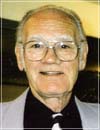
Scott Richardson

Some Thoughts About The Law And Grace

Matthew 5:18
Scott Richardson February, 4 1979 Audio
0 Comments

Sermon Transcript

Auto-generated transcript • May contain errors

100%
I've been talking to you for
some time about the grace of God, the grace of God, and trying
to tell you what I know about it, what I've experienced. But
I think I've been misunderstood by some, not by all, but by some
have misunderstood my intent and purpose in the proclamation
of this glorious and grand and great eternal So I want to kind
of clear this up this morning and hope that you'll see what I'm
talking about. Now, I never have intended to belittle or decry or minimize
the law of God. Now, the law is holy and the
law is good. The law is a reflection and personifies
God Almighty. So that's never been my intent
to set the law aside. Now, seemingly from some of the
things that I hear, is the misunderstanding that
I've tried to set the law aside. Now, that's not my intent. I
may have left that impression, but that wasn't the impression
that I intended to leave, because there's not a thing of matter
with the law. The law is good and the law is holy. But my intention
was this, that I might be as clear as I can be clear under
God to show forth the truth that the law, the keeping of the law,
has nothing to do with the justification of a sinner before God, in order
that we might destroy the works of the flesh, that a man might
see his hopelessness and helplessness before God and cast himself at
the mercy of God. There are many things that we
can do. There are many outward acts that we can perform religiously
and yet at the same time not be saved. Now, as I have insisted
many times, it is the grace of God that inwardly works an outward
righteousness. It is not the law of God that
does that. I think that that's some folks'
problem. They believe that the law of
God will work an outward righteousness in a man which it will not do.
It's the grace of God that will work inwardly an outward righteousness
of God. Now, listen to this. Well, first
off, let me say, that there are many things that we can do outwardly
in observance to the commands of the Bible, and yet be without
Christ. So my intent and purpose is that
men might have the right start, that their feet might be upon
the rock. They might start off right, because
if you don't start off right, everything that you do is going
to wind up and perish. Now, in this, one
of the brethren reminded me of some middle ground from the 19th
chapter of the book of Matthew through that he was interested
in the middle ground. Well, really there's no middle
ground. There's not this extreme and that extreme and we get on
the middle ground. There's only one ground. There's
only one way. Now, here I read just recently
where our Lord concludes some of these commands and instructions
in regard to his kingdom by saying that, Not every one that saith unto
me, Lord, Lord, shall enter into the kingdom of heaven. That's
what I'm saying, that we can perform a lot of outward religious
works and be obedient to a lot of things that's said in the
Bible, but if we haven't started right, we'll wind up like these,
that the Lord says, Not every one that saith unto me, Lord,
Lord, will enter into the kingdom of heaven. So we need to start
right. If we can get our feet upon the
rock and we can start right, then these other things will
fall into place. For instance, like begats like. That's a law
of God. That's a law of nature. Like
begats like. Human beings begat human beings. Cows begat cows. Horses begat
horses. Like begats like. Now, is that
right? Now listen to this. Righteousness
begats righteousness. How does the outward righteousness
in a man's life, how does it come about? It comes about through
an inward righteousness and an imputed righteousness. The imputed
righteousness of the Lord Jesus Christ begats an outward righteousness. If we ever have any what is known
by some as holiness or righteousness, it will be because of the imputed
righteousness of the Lord Jesus Christ. And that's the reason
why it is imperative and necessary that we understand the gospel,
that we learn the gospel. If we can learn the gospel, these
other things will come into being. If we can understand what makes
us accepted before God. It's the righteousness of the
Lord Jesus Christ imputed to us that renders us acceptable
before God. Now, when that's rightly understood
and when that's shed abroad in our heart, we will give a lively
obedience to the teaching of the Word of God. And then it
will count for something. But we've got to first understand
that. Well, all right, let's turn with
me to the fifth chapter of the book of Matthew. Now, it's not
safe to assume anything, and I have been known to say that
I'm not assuming that this group believes that or this group believes
something else, but evidently I have assumed too much. from
some of the things that I have heard here recently. I assume
that people understood, that is, those that I believe are
Christians understood these, what I would consider, elementary
truths of the Bible in regard to a righteous and holy life. Now, in this 18th verse of the
5th chapter of the book of Matthew, He says, �For verily I say unto
you, till heaven and earth pass, one jot or one tittle shall in
no wise pass from the law till all be fulfilled.� He is talking
about the fulfillment of the types, the fulfillment of the
prophecies, and the fulfillment of the commands. �All of them
shall be fulfilled, even to the smallest of the letters, he said,
to the crossing of the T and the jotting of the I. Every one
of the laws of God shall be fulfilled." Well, we could stop right here
and say, every law of God has been fulfilled as far as the
believer is concerned. It has been fulfilled in Christ.
You can't fulfill the law. I can't obey the law perfectly. I must have someone to... Now
that's not to say that I'm not striving to fulfill the law. I'm not striving to keep the
law. I am striving to keep the law. How many times in the past twenty-some
years in my preaching have I not made this statement, that we
are daily being conformed to the image of the Lord Jesus Christ.
Now we're being conformed to the image of Christ through means,
through prayer, through Bible study, through witnessing by
and through the grace of God. We're being conformed. That's
what holiness and righteousness is, is being conformed to the
image of the Lord Jesus Christ. How many times have I made this
statement? That God will have a people. God has a people that He purposed
in Himself before eternity ever was, before time ever was. Back
in eternity, God purposed into Himself a people. And that people
will be called in time, and that people will be, shall be, according
to God's eternal decree, shall be conformed to the living image
of the Lord Jesus Christ. That's what holiness is. That's
what righteousness is. Being conformed to the image
of the Lord Jesus Christ through the means of grace. Through the
means of grace. Through Bible study. through
coming to church, through private and public prayer, through telling
of that old story to one another and to all who listen. These
are the means of grace. Now, the law has been fulfilled,
but the law has not been done away with as far as you and I
are concerned. There's nothing the matter with
the law. I've said this a hundred times, I know, in the course
of twenty-some years of preaching. What's wrong with loving God
with all your heart and all your strength and all your soul? I've
said that time and time and time again. What's wrong with that?
Not a thing wrong with it. I'm all for it. I shoot for that
mark. I don't make it. And in all probability,
I'll never make it in this life, but I still strive to love God. The law has not been done away
with. The law has been fulfilled in
Christ for the sinner. He fulfilled the law for me.
But the law has not been set aside. In fact, the law will
outlast the creation of God. The Word of God will endure forever. The heavens and the earth will
pass away, but the Word of God will endure. It's the only thing
that will endure. So I hope that I can clear up
some misconception on my intent and purpose of preaching the
grace of God. I haven't been preaching the
grace of God in order that I might set the Law of God aside. Certainly
not. The Law is good. The Law is holy.
Not anything to do with the law. The law has been fulfilled in
Christ, but the law has not been done away with. And these things
which are written in the 5th, 6th, 7th chapter of the book
of Matthew are as much binding upon us today as they were when
he wrote them. The same as the same in the book
of Romans, chapter 1, chapter 2, chapter 3, chapter 4, chapter
5, chapter 6, chapter 7, chapter 8, and on through the book of
Galatians, the book of Ephesians, 1st and 2nd Thessalonians, and
Titus, and Jude, and all the rest of the books of the Bible.
They have not been done away with. The law has been fulfilled
in Christ for the poor sinner in order that the poor sinner
might have a righteousness that would render him acceptable before
God. But now when we see that amazing
grace that God saved a poor wretch like us, a poor wretch like us,
why we're so overwhelmed and so amazed and our hearts are
so full of love and thanksgiving unto God that we'll do anything
under God in order that His name might be glorified because of
what He's done for us. And if it's the keeping of these
things, we'll make an earnest attempt to do so. The law has
not been done away with. The law is just as much in effect
right now as it was back when it was recorded in the book of
Exodus on the tables of stone through our servant Moses. All right, for barely I say unto you, now
notice the authority there in that 18th verse, barely I say,
that's the Lord Jesus, no greater authority than the Lord Jesus,
barely I say, It is not some conglomeration of human wisdom
or human counsel that says this, but it is none other than the
Lord Himself. I say unto you, Till heaven and
earth pass, one jot or one tittle shall in no wise pass from the
law till all be fulfilled. Now, 19th verse, Whosoever therefore
shall break one of these commandments, and shall teach men so, he shall
be called the least in the kingdom of heaven. But whosoever shall
do and teach them, the same shall be called great in the kingdom
of heaven." That is, if a man breaks one of these commandments
and then teaches other men to do so, He shall lose rank and
subside into the lost place in the kingdom of God. Now, it doesn't
say here that He is eternally lost. Now, it doesn't say that.
But it says He will subside into the lost place in the kingdom
of God if He breaks one and teaches men to break the commandments
of God. You can say that birth or knowledge
or success will not make a man great. Some people think education
is what makes a man great. Some people won't have anything
to do with anybody else unless they have a college education.
They must have a degree in order to cope, in order to grasp. the things of this world and
particularly the things of the Bible. Most people think that
if a man's got a college degree or a woman's got a college degree,
that they're more capable of understanding the eternal Word
of God than someone with a high school education or a junior
high school education. There's no truth to that. There's
no truth to that. These things are spiritual and
they must be learned spiritually. So it's not birth, it's not knowledge
or success that makes a man great. He says that which makes a man
great here is the man who shall do and teach them. A man who
shall keep the commandments and who shall teach others to do
so, that man will be great. regardless of his rank or station
in this life, regardless of whether he's been to college or hasn't
been to college. Well, help us then. May our prayer
be this morning. Lord, help me to be a loyal subject
in thy kingdom and teach and do according to your Word. All right. The 20th verse. For I say unto you that except
your righteousness shall exceed the righteousness of the scribes
and Pharisees, ye shall in no case enter into the kingdom of
heaven. Well, my righteousness does exceed the righteousness
of the scribes and Pharisees. My righteousness does. I'm not
bragging on my righteousness, but I'm bragging on the righteousness
of Him who fulfilled the law for me, the Lord Jesus Christ. My righteousness absolutely,
unreservedly, 100% exceeds the righteousness of the most religious
Pharisee that ever lived. Because I have the righteousness
of the Lord Jesus Christ imputed to my account. That's not saying,
brethren, that's not saying that we are not to be superior to
the law writer which is described. We are to be superior to the
law writer. We are to be superior to the
law boaster. The kingdom of God is not for
rebels, but it's for loyal subjects. Is that right? Loyal subjects. And our righteousness, in a sense,
ought to exceed the personal righteousness of those law boasters
and those law writers. That's what a scribe was. He
was a law writer. He interpreted the law. And the Pharisee was that religious
person that went out on the street certain hours every day. And
he prayed so long, so long, Like the heathen, the Lord said, don't
pray like that fellow. He said, he uses vain and repetitious
sentences and words. And he said, apparently he has
his reward. We don't pray like he does. We
don't go out in the street here in order to promote and to show
our religion. For vainglory, for a particular
reward? Jesus said he has his reward.
He got what he started out to get. Recognition from the world.
People say, well, certainly he's religious. He's religious. And
that's exactly what he wanted. Jesus said, barely he gets his
reward. But we're saying, our righteousness,
if we be true Christians and have learned anything of the
Word of God, our righteousness ought to be superior and ought
to excel the righteousness of him who stands out there on the
street corner and desires the uppermost place in the synagogue.
Our righteousness ought to be clothed with a humility. Superior. I say again now that
it's not the keeping of these laws. Now get me, I want you
to see this. It's not the keeping of these
things that works in us, this attitude. And that's exactly
what this is all about. It's an attitude. What is our
attitude? What's your attitude towards
me if I go slap you in the face? What are you supposed to do?
Well, you say, well, it's wrote down there in the Bible. It's
wrote down there in the Bible, but it's evidenced in your heart
by way of attitude. If I slap you on the face, what's
your attitude? What are you going to do about
that scripture in the Bible? What are you going to do? Well,
I'll tell you whether you're going to be loyal to the king
or not. It's what your attitude will
be and what your response will be if I slap you on the face.
You see? If you've got the Spirit of Christ,
and how can you say you're a servant of Christ if you haven't got
the Spirit of Christ? What are you going to do? Are you going
to turn your cheek? The Bible says that's what you ought to
do. The Bible says turn your cheek and let Him slap you on
the other side. See, so what's taking place here is attitude.
It's attitude. It's not so much activity or
doing with your hands. It's attitude. What's your attitude?
See? What's your attitude? Well, I say it's not the law
now. It's not by my study and it's
not by my obeying this and obeying that and saying this and saying
that and wearing a hair shirt and eating humble pie and going
around with my head between my legs and all that. That is not
what causes the right attitude. I'll tell you what causes the
right attitude. It's the grace of God that causes the right
attitude. That's it! It's the grace of
God that causes that. And that's one reason why I continuously
labor and labor on the grace of God. Because I know that by
obeying these laws, we'll not produce this attitude. It's the
grace of God that produces it. And if like begets like, and
righteousness begets righteousness, then when I'm saved by the grace
of God, the first thing I'll do is I'll pray, I'll thank God. You don't have to teach me to
do that. You don't have to come by after I've made a profession
of faith or I'm quickened by the Spirit of God and able to
call Jesus Lord. You don't have to get me to the
arm and say, well, now listen, let's get over here. I want to
study a little bit with you. I want to teach you. You've got
to first pray. You don't have to teach me that.
I already know that. That's in my heart. That's fused
in my heart by the grace of God that I try out whatever follows. You don't have to teach me to
pray. That comes automatically. That's
the reason I've said over and over and over and over, a prayerless
Christian is a Christless Christian. The first thing Paul did, they
didn't teach Paul anything. Paul knew the law of God 10,000
times better than you and I will ever know it. But Paul said,
the law slew me, it slayed me. And the identification mark as
to whether Paul was a Christian or not, he said, well, I want
you to go to Saul. of Tarsus, and he said, go down
that street called Straight and go to a certain place, and he
said, you'll find him. He said, he's down there praying.
He said, behold, he's praying! All right. I say unto you, except
your righteousness exceed the righteousness of the scribes
and Pharisees, ye shall in no case enter into the kingdom of
heaven. if we're really dependent upon how humble we are. And I'm not saying we're not
to be humble. Don't misunderstand me. I believe in humility. I believe we ought to be humble
and Christ-like and God-like. In fact, if a man's a Christian,
he's Christ-like. And sometimes I even wonder whether
it's right for us to call ourselves Christians and not be Christ-like. They called them Christians.
They called them Christians. The enemies of the people of
God used this word in a derogatory sense to make light of and to
make fun of these people. Why? They said, look at them.
They said, look at them. They act like Christ. And they were
first called Christians at Antioch. And if a man doesn't act like
a Christian, if he doesn't act like Christ, Well, it's probably
spurious then for him to say that he is a Christian. And,
well, that's right. That's right. But, get back to
this. Now, it's the grace of God. It's
the grace of God that works holiness and reverence and integrity and
purity in our lives. The grace of God. Now, what a
king. What a King we have in Jesus!
And in light of this, what manner of persons ought we to be? What
manner of persons ought we to be? Now, there in verse 21, He says, Ye have heard that it
was said by them of old time. Ye have heard. Now, antiquity
is often pleaded as an authority. But the Lord makes short work
of that theory right here. You have heard that it was said
by them of old time. You have heard that. But ancient,
traditional theories is not authority. But I say, you have heard of
what is said by them of old time, thou shalt not kill. and whosoever
shall kill shall be in danger of judgment." Now, now listen,
my conscience is at ease in this 21st verse. Now my conscience
is at ease. Is yours? Thou shalt not kill.
Have you killed anybody? You haven't killed anybody. Are
you planning on killing anybody? I don't think you've killed anybody.
I don't think you plan on killing anybody. Now listen, your conscience
can be at ease. This can't convict you. You haven't
killed anybody. You're not planning on killing
anybody. But now let's see if the 22nd verse will not kind
of prick our conscience a little bit. Verse 22, But I say unto
you, now here's authority, the Lord Jesus Christ. He says, I
say unto you, that whosoever is angry with his brother without
a cause, You ever get angry at a man? Now I'm not saying that you're
not to get angry. The Bible says that don't let
the sun go down on your wrath. That is to don't dwell on it
all day. You might get mad, you might get angry, but don't stay
in that state. Don't have that attitude about
you. Don't let the sun go down on
it. That's what the Lord's talking about here. And He says, if you
come to the altar, if you come to the altar and you have ought
against your brother, your brother has ought against you, don't
leave your gift at the altar. Go and be reconciled with your
brother. Don't let the sun go down in
your wrath. Don't foster this thing in your
heart. Don't get it in there and the
first thing you know, you're going to be mad at him And every
little detail that he does, or she, or whatever might be a system,
everything will be wrong. You'll never find a good thing
about it. All right. But I say unto you,
Whosoever is angry with his brother without cause, notice that, without
cause. A man is angry at his brother
without cause. That man shall be in danger of
judgment. If a man is angry with his brother
without good and sufficient reason, that fellow is in danger of the
judgment. Whosoever shall say to his brother,
Raka, shall be in danger of the council, that is, the Jewish
police court. But whosoever shall say, Thou
fool, shall be in danger of hell's fire. I said the king makes short work
of this antiquity that's often pleaded as authority. And he
begins with one of their alterations of his father's law, and he tells
them that murder lies within anger. That's where he says murder
is. He says murder is in the heart.
It lies within an attitude. And as long as we have this attitude
of lust and greed and hate, he said, watch out. Watch out, you're
going to get in trouble. See, the Jews of old, now they
could go to sleep at night, and they could be at ease with their
conscience as far as thou shalt not kill. If they hadn't killed
anybody and had no intention to kill anybody, that didn't
mean too much to them. See? Thou shalt not kill. But
the Lord Jesus come along and he said, now if you hate your
brother without a cause, you're a murderer. See? Murder lies within anger. When we even wish harm, now you
follow this close, when we even wish harm to the object of our
wrath, that's murder. or even wish that that man didn't
exist. This is to kill him in our attitude. See? That's to kill him in our
desire. Thou shalt not kill. That doesn't
bother you, does it? But if you wish he was dead,
if down in your heart, in your attitude, you desire that that
fellow or that woman or that boy or that girl was completely
annihilated and out of your way and out of your hair, you're
a murderer. He said, but I say unto you,
you're a murderer. Now, I know that we're not to
have these thoughts. If we don't entertain these attitudes
in our mind and in our heart, there'll not be evidence out
here. We've got to keep the mind pure. The Word of God is a light unto
my path and a lamp unto my feet. See? If we dwell, if we dwell
on the Word, if we eat the Lord Jesus Christ, that's what made
the Jews mad to preach too much Jesus. That's what makes a lot
of people mad. Preach too much Jesus. Getting
tired of hearing the preacher talk about Jesus all the time.
Can he talk about something else? Let's talk about not going to
the picture show. Let's talk about mixed bathing. Let's talk
about drinking whiskey or smoking cigarettes. Let's talk about
this. Let's talk about that. I get
tired of hearing about Jesus. The Jews got tired of hearing
about Him too. Let me tell you what happened there. The Jews
said, Jesus said to them, except you eat my body. Eat my flesh. except ye eat my
flesh and drink my blood, ye have no life in you." Now, you
know what he was saying? He's saying that the Lord Jesus
Christ is the meat and drink of every believer. It's Christ! That's what Paul was talking
about when he said, I'm determined to know nothing among you save
Christ and Him crucified. For me to live is Christ! I never
get tired of hearing the old story that Christ died for sinners. That's what Paul was saying.
Well, to feed, to feed is to feed upon Christ Jesus the Lord. And if we feed upon Christ Jesus
the Lord, we're going to get our heads together. We're going
to get our minds right. And we're not going to get involved
too much in this hating people without a cause. But if an outward conformity
to outward laws is all we're interested in, it'll never bother
our conscience. But we ain't going to kill nobody.
I don't have any intentions. I'm not saying that I won't.
By the grace of God, I won't. I have no intentions of killing
anybody, but I have killed a lot of people in my day. I'll tell
you that. I've killed a lot of them. I've killed more people
than this building will hold. And I suspect that what's true
to my experience has been true to yours. All right. Unjust anger, then, is killing
in intent. And a man shall be judged for
what he says to his brother. Call him racker. That word racker
means a worthless fellow. And if you call a man a worthless
fellow, then you kill him in his reputation. That is, if you
call him a worthless fellow without a justifiable reason for doing
so. I think that you could call a
fellow worthless if he had a family and he refused to support them. Say he had three or four children,
and he just refused to work, and he made his wife get out
and be the breadwinner of that family. And that just didn't
happen for six months, but that happened all of his life. I think
that you could point your finger at him and say, that fella is
a worthless fella, and I think you'd have a justifiable reason
for saying so, because his whole life proved that in. But to say that a man is a worthless
fellow without a justifiable reason is to kill him and his
reputation. And I've killed a lot of them.
I've stacked a lot of them up. And I'm not bragging about it.
I'm sorry about it. I'm ashamed of it. But I have. I hope I know better. I hope
I'm learning a little bit, don't you? I don't want to be a dummy
all my life. want to make a little progress
in spiritual growth, well, call him a worthless fellow, then
it is to kill him in his reputation. Now to say to him, fool, without
a justifiable reason, is to kill him in his noblest characteristic
of a man. So, thus far we have found out
that our Lord, our King, the King, The Lord Jesus Christ,
He's the King. And if we've been born again,
we're in the kingdom. And these are the rules. If a man has a kingdom, then
he's got some subjects. And if he's got some subjects,
he's got some rules whereby the subjects live by. So our Lord,
or our King, restores the Law of God to its true force here,
not only in the act of killing, but every thought and feeling
and word which would tend to injure a brother or annihilate
him by contempt. Any word that is used hastily
and unjustly towards anybody without a justifiable reason
Brother, you kill him. You annihilate him by contempt. We're to love all men. That's
right. We're to love all men. We're
to love everybody. Everybody. Why? If you just love
people who love you, you ain't got no hope. You're worse than
a hypocrite. If you just love people that
come around and say, you're a fine fella, I like you, you're a fine
fella. If that is the only person in
the world that you love, you've got no hope. What I say to you, I say to my
own heart. If that's the only fella that I love is the fella
that agrees with me and pats me on the back, and gives me
gifts and visits with me and loves me, if that's the only
one I love, I'm a hypocrite, hell's my home. That's right. Oh, let's not annihilate people
by contempt, by word, by thought, by feeling. Let's not do that.
Now, if anger If anger without cause be murder, how shall I
answer for it? Only one way, that's by an atonement.
You've got to have an atonement. Because all of us have stacked
up a whole lot of bodies that we've killed. Well, what does
it mean? Over there in the book of John
it says, if we confess our sins, it means He'll forgive us. That's
what it means. It means we've stacked up some
bodies We've killed some people by intent. We've annihilated
them by contempt. We've destroyed their character.
We've destroyed their reputation by what we've said. How are we
going to answer for this? If we confess our sins, He's
faithful and just to forgive us of our sins and cleanse us
from all iniquity. We repent. When you confess,
you repent. If you confess your sins and
you're not sorry of it, you've never repented. And I'll tell
you this, no sin will ever be forgiven that you do not repent
of. You say, well, all of my sins
are forgiven in Christ. That's right, but there is a
sense. There is a sense that your sin will not be forgiven
unless you repent of it. And you've got to repent of it.
You've got to repent. And your repentance takes form
of expression in your confession unto God. Lord, I confess my
sins. Most of us, when we pray, we
pray in a general direction. Lord, forgive me of my sins.
And that's about it. We don't name them off because
we don't want to hear them. We don't want to be reminded
of them. We don't want to be reminded of our disillusion. We don't want to be reminded
of our acts of disobedience, our omission, and our commission,
so therefore we just say, Lord, forgive me of my sins. But we
ought to name them off. We ought to say, Lord, I shouldn't
have spoke hastily about so-and-so today. I should have kept my
mouth shut. Lord, I shouldn't have tried to take that splinter
out of my brother's eye when I got a great big log in my own
eye. Lord, I should have took the
log out of my own eye, and so I could see to take the splinter
out of his eye. Most people, though, try and
take a splinter out of somebody else's eye, but they can't see
the splinter for the log in their own eye. Always want to set in
on, always want to be judging people. Why so-and-so's doing
this, so-and-so's doing that. Better take care of your own
self. Listen, if I can harness and bridle my emotions and my
lusts and keep them under, boy, I'll be doing a big job, won't
I? Well, the same applies to you if you can do that. See?
You can do it and I can do it. Be a better church, won't it?
We'll be better Christians. I say, our King restores the
Law of God to its true force, doesn't he? I hear in verse 23
and 24, Therefore if thou bring thy gift to the altar, and then
you remember that your brother hath ought against you, leave
there thy gift before the altar, and go thy way and first be reconciled
to thy brother, and then come and offer thy gift." I'll tell
you what that means. It means that forgiveness to
a brother or sister is first before worship can be accepted. A man cannot worship God until
there has been a reconciliation with his brother or his sister.
You've got to go to Him. That's what Jesus said. Jesus
said, if you're bringing your gift to the altar, that is, if
you're... I'm not talking about bringing a piece of money up
here to this place up here. That's not what I'm talking about.
I'm talking about the altar of your heart. I'm talking about worship.
I'm saying if you're going to worship God, and you're offering
a sacrifice of praise, a gift of praise unto God, and you remember
that your brother hath ought against you, well, stop right
there, because you're not going to worship God until you first
are reconciled with your brother. Go to your brother. Leave it
there. Get up and go to your brother. Go to your brother. Someone, who was it, wrote a
statement here the other day, Gene or some of them, Raymond
or somebody, I've seen it there, about the relationship of a brother
and a sister in the matter of forgiveness. What should we do? Why, we should forgive our brethren. That's simple. If a man asks,
comes to you and says, I've wronged you, I've wronged you, forgive
me. Your attitude and my attitude
is to be a one of forgiveness. How often am I to do that? As
oft as he asked, Jesus said. Peter said 70 times or 7 times? He said 75. He said there's no
definite time. As oft as he asked. Well, if
thy brother hath ought against thee, or you have ought against
him, why, I said, go to him. Go to him and talk to him. He
said if he'll hear you, you've gained yourself a brother. But
he said if he won't hear you, if he's rebellious, And he says,
no, no, I'm not going to hear you. I don't want to discuss
this. Just get out of here. He won't hear. Watch this. Go
get two or three brethren that every word might be established
in the mouth of two or more witnesses. And then go to him and talk to
him and say, listen, brother, I want to be reconciled. I want
to be a brother. We're brethren. We're brethren.
Let's get along. Let's get along. Let's forego. Let's overlook all these things.
vain things that's been said, that we've said, and someone
else has said, let's start afresh. Forgive me, brother. If he doesn't
accept that, the Bible says, tell it to the church. And how
do you treat him? Treat him as a heathen man and
a publican. All right, forgiveness to a brother
first. Well, if we've wronged another
then, we're to stop or to cease from worship and hasten to seek
reconciliation. Only when we have remembered
our wrongdoing and made them right can we hope for acceptance
with God Almighty. The rule, then, is this. This
is the general rule. Peace with man and then peace
with God. Peace with man. Well, verses
25 and 26. Agree with thine adversary quickly,
Agree with him quickly, whilst thou art in the way with him,
lest at any time the adversary deliver thee to the judge, and
the judge deliver thee to the officer, and thou be cast into
prison." That is, don't try to take him to court now, because
if you do, in all probability he's going to fleece you, because
justice, you can't, you know, In particular, in the time that
this was written, let's put it that way, in the era of time
in which the fifth chapter of the book of Matthew was recorded,
you couldn't get justice. You just couldn't get justice.
And it's rare that you could get justice now. It's rare that
a man gets justice, isn't it? You see every day where men are Exonerated from various crimes
and justice does not prevail. Well, he says here, agree with
your adversary while you're in the way with him, while you're
talking to him. Agree with him, lest at any time he deliver you
to the judge and you will not get justice there. You'll not
get justice at that judge. You'll get fleece. You won't
get what you think is your right. Now see, what he's saying here,
it's better to lose your right. than to get into the hands of
those who will fleece you in the name of justice. Better do
away with your rights. You haven't got any rights. The
Christian hasn't got any rights. All of us, I know, all of us
say, but listen, I've got rights. Yeah, you can't do that to me.
Jack was talking about that last night. Jack said that he told
this fellow. The fellow said, well, I may set a trap up there
on the hill. Jack said, you better not catch
my dog. He said, if you catch my dog, you better not tell me
about it. Jack thought he had some rights, but Jack didn't
have no rights. He just thought he had some. He just thought
he had some. You ain't got no rights, Jack.
You ain't got no rights. You're a Christian. You're a
Christian. He's got the rights. He's got the rights. You haven't
got any. You haven't got any. You are a vessel of mercy saved
by the grace of God and you owe everything to God and you're
to forego your rights. Don't you take that man to court.
Don't take him to court. Agree with him right now. Maybe
he'll make a settlement out here while you're talking to him.
But if you take him to court where justice cannot be obtained,
he'll fleece you. So, Jesus says, but I say. Alright, I'm going to quit here
in just a minute. Verily I say unto you, listen, verily I say
unto you, thou shalt by no means come out fenced until you have
paid the utmost for thee. So don't go and take it before
the judge, because in all probability, you'll get the worst end of it.
You'll not come out until you have paid the last cent. He'll
take everything you got. Brown knows that. Brown went
to court. He went to court. He didn't get anything. He didn't
get anything, but they beat him. They beat him. Some fella run
into him. Charlie and Darris both run in.
Went across the road and run into him. Left him in the hospital.
I went up there and Darris is almost dead. Couldn't talk. Didn't
know where I was at or nothing else. Thought he ought to get
the hospital expenses and a few things out of it. So they went
to court. Shouldn't have went to court. Shouldn't have went
to court. Didn't get anything. Cost him. But out there in the
room, they said it was nobody's fault. Nobody's fault. Didn't
get a thing. Had to pay his expenses and all
that. Oh, you haven't got no rights. What rights have you
got? Only right you've got, only right you've got is to die. Go
to hell. That's the only right you've
got. That's the only right I've got. I haven't got any rights. Boys, you say,
well, I'm a citizen. Yeah, but you've got something
that comes before that. You're a citizen of the kingdom
of God. That's whose kingdom you're living in now. You're
in God's kingdom and this is the rules for God's kingdom right
here. Yeah, no but. Well, no buts to
it. These are the rules right here
that you go by. This is how you play according
to these rules. I know we'd rather play by the
rules of the world. I know. I know how it is. But I say unto you, see. All
right, now listen to this. I say unto you that whosoever
looketh on a woman," well, 27th verse, "...you have heard that
it was said by them," you've heard what they said, what they
said of old times, "...thou shalt not commit adultery." That doesn't
bother me, it doesn't bother you. I'm not going to commit
adultery, by the grace of God. I haven't committed adultery.
Have you committed adultery? You're going to commit, you're
planning on committing adultery? Then your conscience can be at
ease. in light of this commandment
right here, thou shalt not commit adultery. And their conscience
were at ease. But, listen to Jesus, but Jesus
said, but I say unto you, but I say unto you. Boy, this ought
to convict a sinner too. A man says, well, are you a Christian? Have you ever been reconciled
to God in Christ? No. Well, then if you haven't,
what you're telling me is you don't have any need to be. I'm
not a sinner. That's what you're saying. A
man does not reconcile to God and Christ. He says he's not
a sinner. He's not a sinner. Well, if he looks at this, he'll
find out that he is a sinner because there's not a man that
ever lived, there's not a man that ever had eyes in his head,
that never looked upon a woman with lust in his heart. God said,
if you have ever done that, you are an adulterer and an adulteress.
And He says, I want you to know that no adulterer or no adulteress
or fornicator or thief or murderer or drunkard shall inherit the
kingdom of God. Now, but I say unto you, whosoever
looketh on a woman to lust after her, he has ravished her already
in his heart. Oh boy, if sin is not allowed
in the mind, it might be that it will never manifest itself
in our body. Boy, see men, you watch men,
watch men. They go to the A&P store, wherever
they go, watch men when a woman walks by. Watch them. A woman
walks by, they look at her. You know what they're doing?
They're lusting in their heart. That's right. Well, you say,
preacher, maybe you oughtn't talk that way. Well, maybe it'll
help you. Maybe it'll help me. Maybe you'll kind of keep that
out of your mind. Don't be lusting after that woman.
Don't be lusting after her. Well, I'll close with this then.
If your right eye offends you and your right hand offends you,
pluck your right eye out and cut your right arm off. Let me
ask you this question. What about your left hand? What
about your left eye? What if your left eye offends
you? What if your left hand offends you? What are you going to do
about that? Now, common sense is used in what we've said. It's got to be common sense.
For instance, Jesus said, if a man asks of you, give it to
him. Now you've got to use common sense there. He's not talking
to a bunch of fools. See? He's not talking to a bunch
of fools when he tells us these things. And when he tells you,
if your eye causes you to take something and pluck your eye
out, don't take that literally. Don't take that literally. Don't
mutilate or maniacally Don't do that. That's not what he's
talking about. Use some common sense in this matter. For instance,
he said, if a man asks of you, you give it to him. If a man
comes along and says, give me a quarter, you give him the quarter.
If a man comes along and says, well, I need $20, and you've
got $20 in your pocket, and God knows you've got $20 in your
pocket, and you know what this verse of Scripture teaches, are
you going to take $20 out of your pocket Alright, give it to him. Alright,
tomorrow he comes along and he says, now I need ten dollars
today and you've got ten dollars in your pocketbook. You've got
ten dollars there and God knows you've got it. And you know what
this scripture teaches. You take ten dollars out and
give it to you. And the next day he comes along and he knows
you've got five dollars in your pocket. And it just goes on and
on and on. And you make a beggar out of
that fellow. Now that's not what God is. That's not the intent
of what is teaching here. And neither is the intention
of you to literally take a saw and cut your right arm off. Or
take something and pluck your right arm.
Scott Richardson
About Scott Richardson
Scott Richardson (1923-2010) served as pastor of Katy Baptist Church in Fairmont, West Virginia.
Broadcaster:

Comments

0 / 2000 characters
Comments are moderated before appearing.

Be the first to comment!

Joshua

Joshua

Shall we play a game? Ask me about articles, sermons, or theology from our library. I can also help you navigate the site.