Bootstrap
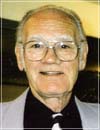
Scott Richardson

Declaring The Gospel

1 Corinthians 15:1-4
Scott Richardson January, 14 1979 Audio
0 Comments

Sermon Transcript

Auto-generated transcript • May contain errors

100%
Turn with me to 1 Corinthians
chapter 15 this morning, verses 1 through 4. I want to speak to you a little bit here this morning
in regard to the context in which the gospel faith
must be preached. Moreover, brethren, I declare
unto you the gospel which I preached unto you, which also ye have
received, and wherein ye stand, by which also ye are saved, if
ye keep in memory what I preached unto you. unless ye have believed
in vain. For I delivered unto you, first
of all, that which I also received, how that Christ died for our
sins according to the Scriptures, and that he was buried, and that
he arose again the third day, according to the scriptures. Let me begin by raising a couple
of questions here in regard to the doctrinal context in which
the gospel of faith must be preached. First off, we ask this question
to ourselves, what is the gospel? The gospel is good news. In fact,
that's what the word gospel means, good news. It's the good news
concerning God's Son, that God's Son came here upon
this earth, robed in human flesh, born under
the law, lived under the law, and died under the law, satisfying
the law. That's what the gospel is, the
gospel is good news concerning God's dear Son, the Lord Jesus
Christ. Now, this salvation, which certainly
is connected with and involved in The gospel of the Lord Jesus
Christ is a spiritual salvation. It's not a political salvation
of a Jewish nation, but it's a spiritual salvation and it
certainly refers to the deliverance of man from spiritual problems. I know that As I listen to various
individuals and read articles, they seem to say that since Christ
came into their lives, their marriages have taken on different
perspectives, which certainly it ought to. But they seem to
think that the big reason for, or the The main and primary purpose
of the gospel of the Lord Jesus is to straighten their lives
out, that is, bring their families together. And if there's any
hindrances in conduct or in the way of life
between their wives or mother, father, father-in-law, mother-in-law,
and so forth, all those things will be straightened out. certainly
has a place, I'm sure, in the life of a Christian. But the
good news is about salvation. It's deliverance
from spiritual problems. It's deliverance from sin. It's
deliverance from guilt. It's deliverance from death.
and its deliverance from eternal ruin. That's what the gospel
does. The gospel is good news, that
it delivers us from eternal death. It delivers us from the penalty
and the power of sin. It delivers us from guilt and
ruin, degradation. And this salvation now, that
Paul is talking about here is found in a person, and this person
is the Lord Jesus Christ. Now, this salvation is in this
person because in this person, the Lord Jesus, God became man,
the Lord Jesus Christ, God becoming man. I know that that's hard for us
to lay hold of, God becoming man, but we, through simple faith,
believe and accept. I remember reading one time where
Daniel Webster and a friend of his had attended a church service
where the preacher used as his subject the Trinity. God the
Father and God the Son and God the Holy Ghost. And as they left the service
and were making their way towards their home, the friend turned
to Daniel Webster and he said, Mr. Webster, he said, according
to the mathematics of man, that which he preached is Logically
impossible. And Daniel Webster said, yes,
he said, I believe it is according to the mathematics of men, but
he said, I know nothing of the mathematics of heaven. Now, we
don't know anything about the mathematics of heaven either.
We believe it. We believe it. We can't understand
fully the whole concept of the Trinity, God the Father, God
the Son, and God the Holy Spirit. Who can? Nobody can. No mortal man can enter into
the fullness of what's involved in the blessed Trinity. But nevertheless,
this salvation is in a person, and this person is the Lord Jesus
Christ, And He is God manifest in the flesh. And when God became
man, now listen to me, when God became man, He did not cease
to be God. He never ceases to be God in His offices as the Son. He's always God. God over all
and above all, and besides Him there is none other. Now, this
salvation is in one person, one undivided personality with two
distinct natures which are not confounded or confused. Salvation is found in this person
because he died for our sins, the Scriptures say, according
to the Scriptures. Now, let's talk just a little
bit here about the purpose of the death of the Lord Jesus Christ. Now, what was the purpose of
the death of Christ? Now, I know immediately everybody
says that the reason Christ died was for sinners. That's a reason, and that's involved
in this. But that's not the first and
foremost reason why Jesus Christ died upon the cross. Now I'll
tell you here this morning, and you remember this, I'll tell
you why the Lord Jesus Christ died, or I'll tell you the purpose
of the death of the Lord Jesus Christ. The purpose of the death
of Christ, now according to the Scriptures, was to satisfy God. That's why he died, to satisfy
God. Now, notice in the 53rd chapter
of the book of Isaiah, in the 11th verse, there's a verse that
sounds like this. It says, He, that's the Lord
Jesus, shall see the travail of his soul and shall be satisfied,
and by his knowledge shall my righteous servant, justify many,
for he shall bear their iniquities." Now, the Lord Jesus Christ did
not die to satisfy some sadistic spirit of God Almighty. Let's not confuse the issue or
cloud the issue in regard to the purpose of God in the death
of the Lord Jesus Christ satisfying God and His justice. God does
not have a sadistic, domineering spirit within him that must somehow,
through pain, be relieved. Now that's not the reason why
the Lord Jesus Christ died. He did not die to satisfy the
need for a martyrdom. He did not place himself in a
way which would actually lead to his death. that in his death
he might enshrine in the hearts of his followers his principles. Christ died to satisfy the justice
of God. That's the reason Christ died,
to satisfy the justice of God. Even the salvation of the sinners
for the glory of God. Everything that takes place here
in time. I don't care what it is, every
ripple, the ripple of every motion in every body of water, every
bird that flies, every bird that sings, every twig that moves,
is all designed for the honor and the glory of God. All things
are for the honor and for the glory of God. Christ died to
satisfy the justice of God that He might be just," that is, that
God might be just, and justifier of him that believeth in Jesus,
Romans chapter 3 and verse 26. Now, in Romans chapter 5 and
verse number 11, the word atonement is mentioned there, and that
word atonement is properly understood as at-one-ment. which has to do with reconciliation. God is reconciled unto sinful
man as he is reconciled unto his own holy nature in the death
of the Lord Jesus Christ. Now, these verses that I read
to you says that the gospel is that Christ was buried. Moreover,
brethren, I declare unto you the gospel which I preached,"
and down here it says, "...and that he was buried," fourth verse. Now, when a man is buried, he's
dead indeed. He's not merely in a faint or
stupor, but he's dead. When you put a man down into
the ground and walk off and leave him, to the care of the gravediggers
and the undertaker, that man is dead. There's no life there. And he's gone to his long home. He's dead. He's finished. Now,
the gospel says that Christ Jesus was buried, not merely in a faint,
not merely in a coma, or in a suspended animation. He did. The Lord Jesus Christ actually
died. The Son of God, who is the source
of life and the prince of life and the king of life, actually,
literally died on that cross. And the Bible tells us here that
the gospel is the resurrection. of Jesus Christ according to
the Scriptures, and he was buried and rose again the third day
according to the Scriptures. So, not only does the Gospel
tell us that he was buried, but it tells us that he was resurrected. This Jesus, who is the Lord of
life, the Prince of life, and the King of kings, and the Lord
of lords, who died, actually died, and was buried, rose again. He rose again the third day according
to the Scriptures. Now, the Apostle Peter, in his
preaching on the day of Pentecost, set forth the, I believe, scriptural
or biblical meaning of the death of the Lord Jesus Christ as he
used for his text the 16th Psalm and preached to this assembled
multitude there that Christ was raised from the dead. Now listen,
that Christ was raised from the dead to ascend to the right hand
of God. Now, the Apostle Paul preached
that the Lord Jesus Christ was settled or fixed to be the Son
of God with power and enthroned on the throne of God as Lord
of Lords and King of Kings forever and forever. Now, we're going to get around to
it in just a minute as to how the simple gospel is to be
preached in the doctrinal context, and that's the only way it can
be preached. Well, what we've said thus far has just kind of
answered some questions there in regard to what is the gospel.
Now, what then is the simple faith wherein the gospel is received? Now, the gospel itself is not
simple. It's not simple. It's not easy. Nothing can be
simple or easy that involves the incarnation. That is God
becoming man. That cannot be a simple, easy
thing to understand and to deal with. That's a great mystery. The incarnation, the atoning
death of the Lord Jesus Christ. His resurrection, His throne
of power is not simple. It's a mystery too involved for
our small puny minds to grasp, but yet we believe it. The gospel,
however, must be received in simple faith. Now, what is this
simple faith? It's this. It's simply that we
have indeed received this message and him who is the gospel. I read to you where it says,
Moreover, I declare unto you the gospel which I preached unto
you, which also ye have received. We have indeed received this
simple message of the Lord Jesus Christ, and we have fixed our
hearts and our souls in the man and the message, by faith, by
faith. Now, those who have received
in truth, or have in truth received this gospel, have received no
other, only one gospel, just one gospel. And as you think
about the gospel of Christ, In light of all that is going on
today in this religious world, you can understand, I believe,
I think I can understand, what our Lord meant when he said,
Narrow is the way, and few be therein that find it. Narrow
is that way. Now, if everything that If everything
that's being preached today is the gospel, then it's not a narrow
way, is it? It's not a narrow way. Because
every television preacher that I know of, that I listen to every
once in a while, every time they go anywhere, they have 40,000
or 50,000 people saved. That's right. I just listened
to... Well, I listened yesterday morning to Jerry Falwell there
in Virginia, I'm not criticizing him to be criticized. In fact,
I'm not even criticizing him. I'm just going to tell you what
he said. He said that every year through his television program,
he gets 30,000 replies to his broadcasts saying that they were
saved through his ministry. Every year, 30,000 people make
professions of faith. If that be so, just in one man,
and then you have them on Sunday here, you have them from the
time the television comes on until noon. And I heard another fellow say
that he went over to either Taiwan or the Philippines or one of
those places and had some sort of a meeting there in a big outdoor
theater, and there was 70,000 people saved. If all this that we hear, if
this is the gospel, if this is the gospel and these people are
being saved, well then, how do you interpret that in light of
what Jesus said when he said, there is the way? And few be
therein that find that way. And what is that way? That's
what I'm telling you. That way is a person. That way
is a person. That way is the gospel, that
way is the message. Jesus Christ is the way, Jesus
Christ is the message, and Jesus Christ is the person. Now, if
you have received the gospel as revealed in the scriptures,
not the gospel that's been revealed to you through humanism or some
form of humanism, but through the scriptures, Those who have
in truth," now, I'm talking about truth. I am the way, the life,
and the truth. Those who have in truth received
this gospel have received no other, but have received this
gospel and this gospel alone in simple faith. Now, I'm a Baptist. I'm a Baptist through and through,
warp and woop. There's not any part of me that's
not Baptist. I'm a Baptist. Convinced and
convicted, taught and instructed by the Word of God, I'm a Baptist.
But my being a Baptist is not my gospel. Being a Baptist is
not my gospel. I'm a Calvinist. I believe in
the five points of Calvinism. and total depravity, and irresistible
grace, unlimited, or the limited atonement, all of these things,
I believe in them, warp and woof. I'm a Calvinist, but this is
not my gospel. I'm a minister of the gospel
of the Lord Jesus Christ, but this is not my gospel. And I've
had an experience, but this is not my gospel. In simple faith,
I receive the gospel of the person and the work of the Lord Jesus
Christ, and that's my gospel, Christ and his work. That's the
gospel as revealed here. Well, the simple faith of the
gospel is that we have taken our stand in the gospel. That's
where you take your stand, in the gospel. That is, if you have
received the gospel in truth, and that's what he says here.
Moreover, brethren, I declare unto you the gospel which I preached
unto you, which also ye have received, now listen, wherein
ye stand in the gospel. Well, let me go on with this
then. the Armenians, and most of you
know what I'm talking about when I say the Armenians. Now, the
Armenian, he believes that we are preserved because we persevere,
or we're kept by the power of God because we hold out faithful. That's how we're kept. That's
what the majority of this religious world says right now. They believe
that you are rewarded for your works. That is, that you're going
to be entitled to go to heaven when you die because of your
good works here in this life. Now, they say that we persevere,
we're preserved because we persevere. Let me say it again. We are preserved. We are preserved. because we
keep on keeping on. We're preserved because we persevere. Now, those that know the truth
of the gospel and stand in the gospel say this. They say that
they persevere because they're preserved. That's the reason
they hold out. That's the reason that they continue
on and on, that's the reason that they serve the Lord in good
days and bad days, against good times and times of adversity.
Why? Because they are preserved in
Christ. They persevere. They do not persevere
to be preserved, just the opposite. But all of us, I think, agree
that perseverance in the gospel is necessary unto salvation. Now, I said all of that to say
this. All of that to say this. What
then is that doctrinal context in which the gospel must be preached? This is the most important part
of our study here this morning, and I want you to listen to it. is that doctrinal context in
which the gospel must be preached? Well, I'll give you a four-fold
answer to this question. Number one, unless—now, this
is the doctrinal concept in which the gospel is to be preached,
and if this doctrinal concept is not there, then the gospel
cannot be preached. Number one, unless God be perceived
as God indeed, the gospel cannot be preached. Now, you think about
it. Unless God be perceived as God
Almighty indeed, the gospel can't be preached. What am I saying? I'm saying this, is God merely
trying to be God, but man won't let him? Is God
simply wishing he were God, if it would please man to grant
God this wish? Is God merely hoping someday
to be God, should it please man to permit him to be God? If the gospel is preached in
that context, it's not the gospel. We must let God be God. And the gospel must be the context,
the gospel must be preached in this doctrinal context that God
is God. This business of these people
on the television and on the radio and these writers talking
about God needs you to cooperate in order that He might... They
can't preach the gospel. The gospel can't be preached
in that flavor, in that context. It can't be preached. People
can't be saved that way. You say, well, people's lives
are changed. Their lives are changed, but
it's humanism, it's religion that's changed and it's not been
the gospel because the gospel can't be preached. unless God
be God. He must be God. He must be God
Almighty. If He's not God Almighty, the
gospel can't be preached. I don't care. I know that sometimes
we get sentimentally involved with churches and people and
try to give them the benefit of the doubt and say, well, surely
they must be Christians because they don't do this and they don't
do that. Well, there's a lot of people
that's lives are a whole lot better than those that are blood-bonded.
It may not ought to be that way, but it's that way nevertheless. All right. Where this humanistic
doctrine prevails, that is the doctrine that God's trying, but
He can't do it. God's hoping to be God, but God
won't But man just won't let him be God. He wants to be. He'd like to be God, if he could.
And someday he hopes that man will permit him to be so. Now,
I said where this element of false doctrine prevails, humanistic
doctrine, the gospel of blood redemption and sovereign grace
is utterly without meaning. The true gospel cannot be preached,
nor can it be received in this doctrinal context. Can't do it.
It's an impossibility. The Apostle Paul, everywhere
in his writings. I don't care if you go to the
book of Ephesians or the book of Romans or the book of 1 Corinthians
or 2 Corinthians, you'll find that Paul placed God Almighty
on the throne. He put him on the throne. That's
where He is. He's Lord. I would, brethren,
I would, my desire, and maybe this sounds foolish or childish,
I don't know, but I would. I would that God in His infinite
wisdom would stand up before this generation and let this
darkened age see Him in His sovereign authority, and then and then
alone would the gospel of the Apostle Paul be received and
be heard, and not tell. Men won't come to hear a prophet
who thunders on the things that I'm preaching on this morning.
The church will not be filled up. by this type of preaching. It
just won't do it. Men don't want that. Men have,
what, itching ears. Their ears like to be tickled
and so forth. They will not hear the Lord God,
His sovereign authority. How can we live in an atmosphere
of the sovereignty of God knowing that the Almighty is not an if-so
and maybe-so and what-have-you. All right. Secondly, the gospel
of the Lord Jesus Christ must be preached in the context of
the utter sinfulness of man. I talked to John Mitchell last
night on the phone, and John said, Well, I'm going to give
you my text for tomorrow. And he said, Got this pretty
well down, and he said, I'll tell you what it is. And I said,
well, tell me so I can look at it and read it. He said, it'll
be in Isaiah chapter 42, verses 1 through 5. And then he said, it may be that
I'll preach on the 16th verse of that same chapter tomorrow
night. And we talked a little bit, and
in closing, He said, well, have you got a good word for me? I
said, yes. I said, just keep on keeping
on, and always preach the gospel in the doctrinal context of the
utter inability and lostness and nothingness of man. And I said, sooner or later,
the smile of God will be on your ministry, and I believe it. The gospel of Christ must be
preached in the doctrinal context of the utter ruin of man in sin. That's all they are to. Now listen,
when man sinned and fell short of the glory of God, how far
did he fall short? How far down did he fall? That's
the question right there. How far was he? preacher has
some inkling of the fall of man. They say that man fell, but they
don't really understand how far he fell. Now, how far did he
fall? Well, I'll tell you where he
was at. He was on the ladder of loftiness. He was high and
lifted up. That's how high up he was, on
the ladder of loftiness. And when he sinned against God
and fell from that place of loftiness, he fell all the way to the bottom. He didn't fall just one rung
or two, like I did not too long ago. He fell all the way. He fell clean to the ground.
He fell clean to the bottom. And when he did so, he was utterly
ruined. Not only he, but all that he
represented, which was you and I. Well, when the Apostle Paul preached
this doctrine, he reached, or, well, he didn't preach that doctrine.
He set forth that doctrine. He preached that doctrine, certainly,
but he set forth that doctrine in the third chapter of the book
of Romans there. But he reached that conclusion. that man hath sinned and come
short to the glory of God." That's the conclusion that he reached.
Paul set forth man utterly without understanding, without righteousness,
without wisdom, and whatever man needs and necessary in order
that he might bring him to God, he's utterly ruined. So the gospel
then cannot be preached. Now listen, the gospel cannot
be preached. unless in the context of the utter helplessness of
man. See? Can't be preached. Can't be preached.
I don't care what that fellow... You listen to that guy on the
television or on the radio and sounds real good, sounds real
good. He's talking about Jesus. He's talking about Jesus. But
he can't tell you the Jesus of the Bible unless, unless he knows
the Jesus of the Bible. And if he has not heard of the
Jesus of this Bible, he never can know it. He can't know it. Listen, when you receive the
Lord Jesus Christ, if you received it in the atmosphere and flavor
of humanism that so prevails in our generation, that God's
trying to do something and He can't do it, and you never heard
anything about the utter ruin of man, Well, then, I doubt it,
sincerely, if you ever received the Lord Jesus Christ. I doubt
it, seriously, if you ever received Him. I'm not saying there's anyone
here like that. I'm just saying that if that's
the case, boy, this has got to be preached. It's got to be preached
if the gospel is going to be preached. You can't be preached
without it. I don't care how smart a man he is. I don't care
what a big crowd they've got. It does not make a bit of difference.
This has got to be preached. This is essential. ruined of
man." Isn't he ungodly and helpless and hopeless? And brethren, when
men see themselves as utterly ruined in sin, they can see the
cross and the throne of Jesus Christ, and they can see that
person who died there and that person who sits upon that throne.
But they've got to see themselves lost and ruined first. That's
all they are to us. The gospel of sovereign free
grace and blood redemption simply cannot be preached with meaning
and acceptance except in an atmosphere of truth wherein things are seen
as they are. God as God indeed, and man in
the utter lostness of his fallen condition. The gospel's got to
be preached in that doctrinal concept and context, or the gospel
won't be preached. And that rules out just easy
believism, doesn't it? Accept Jesus. Won't you accept
Jesus? Won't you try Jesus? Aren't you giving Jesus a bad
deal? There's no gospel there, brethren. No gospel there. And
then thirdly, the immutability of the law of God. That is, brethren,
the law of God has changed in its letter, but the law of God
cannot change in its basic intent. It can't change. Why? I'll tell you why it can't change.
Because the law of God is as immutable as God himself is immutable,
because the law of God is the reflection of the divine image
and righteousness of God himself. The Ten Commandments is the divine
reflection of the holiness of God Almighty, and that can't
change. That is as immutable as God is
immutable. So if the gospel is to be preached,
it must be preached in this context, the immutability of the law of
God, that the law of God can't change. That is, the law says, Thou shalt love
the Lord thy God with all thy heart and all thy strength, and
thou shalt have no other gods before me. And the transgression
of that law or the breaking of that law carries with it a penalty
of eternal separation. And every one of us is under
that law and has broken that law and will be penalized unless
the intervention of the grace of God comes where we are and
delivers us from our grief and our ruin and our guilt. We're
going to die in our sins. But we've got to be confronted
with the law of Almighty God that doesn't
change. I'll tell you why, brethren,
it doesn't change. I'll give you two or three reasons
why the law of God doesn't change. If the law of God is not in full
force and full effect today, there can be no such thing as
sin. Listen to this now. In 1 John
chapter 3 and verse number 4 says that sin is the transgression
of the law. That's what it says. You remember
reading that? Sin is the transgression of the
law. If there's the law and you cross over, you've transgressed.
If you haven't loved God with all your heart, all your soul,
and all your mind, if you've had another God before Him, you've
transgressed God's law. Now, 1 John 3, verse 4 says that
sin is the transgression of the law. Now, if the law of God is
not in full force and effect today, it cannot be transgressed. There can be no missing of the
mark except the mark be defined by the law of God. You can't
miss the mark if there's no mark to be defined. But the law of
God is in full force and effect today, just as it was 2,000 years
ago, 3,000 years ago, and what have you. If the law of God is
not in full force today, then we have no repturbates. This man that killed these 32
young men and buried them up there, he's not a sinner. He's not a sinner. He's just
a misguided sick person. That's all he is. If the law
of God is not in full force and effect today, we have no drunkards.
We just have some who are chronically ill. who are alcoholics. We have no drunkards. See what
I'm talking about? If the law of God is not in full force and
effect today. Well, if the law of God is not
in full force and full effect today, then we have no guilty
people. There's nobody guilty. Why? Now listen, because Romans chapter
5 and verse number 11 says this. It says that where there is no
law, sin is not imputed. If there's no law, sin is not
charged to you. Why there's no law? Well, that
leads me to the next reason why we must believe in the immutability
of the holy law of God. Listen, if the law of God is
not in full force and effect today, there cannot be any true
preaching of the gospel of the Lord Jesus Christ. Why? For this
reason. Because the gospel of Christ
is of no meaning only to sinners. See? The only people on the topside
of God's green earth that has any interest in the gospel of
the Lord Jesus Christ is sinner people, lost sinners. And if
there's no such thing, if the law of God's not in effect, well,
then there's no guilty people, there's no sinners. And the gospel,
it's foolish to preach it. It doesn't have any meaning.
It doesn't have any understanding. Don't preach it. Close the doors
and let's go home and forget about it. You see what I'm talking
about? All right. I can close by saying, how could
the cross of the Lord Jesus Christ be preached when men have no
explanation for it? It can't be, can it? It is being
preached. That is, there is a gospel that
is being preached in our day, and men don't have no explanation
for it. They can't tell you why they're
preaching it. Oh, they can tell you this. They can say, well,
if you'll believe this, why, then you'll be saved. And that's
about all they can tell you. They can't tell you that Jesus
Christ came into this world. to satisfy the justice of God
and die for the glory of God. And they have no concept of what's
involved in the Lord Jesus Christ satisfying the justice of God.
And they won't let God be God indeed. And so, therefore, the
gospel of the Lord Jesus Christ can't be preached. And therefore,
men have no explanation for the gospel. They don't know why Christ
died. They don't know why He died.
You ask them why He died. Ask most men why Christ died,
and they'll tell you, well, an unruly mob got out of hand, a
bloodthirsty mob that thirsted for blood, cried for blood, and
they would not be satisfied until they tasted the blood of the
Son of God. And so that unruly mob grabbed
him and hung him, and that's the only reason they can give
you after the death of the Lord Jesus Christ. And brethren, you
better have better reason than that if you've ever heard the
gospel. Well, lastly, if we attend to
the preaching of the gospel that Paul preached and the gospel
that Paul sets forth in 1 Corinthians 15, 1 through 5, then there will
be a necessity of holy living, a holy life, a holy life. Now, holiness is not sinless
perfection. I want you to understand that.
You know that, most of you. Holiness is not sinless perfection. If it is, then none of us have
it. Certainly in our legal standing
before God, we have a holiness, we have a perfection. In our
justification before God, in our standing in Christ, we have
a holiness, a perfection. We have that. But without that,
here in this life, every day, we're guilty and we're sinners.
We have an experimental sanctification or holiness and we progress,
we grow. We grow in the grace of God.
Sanctification means growth. It's a setting apart. We're set
apart, and we're growing towards one end, and to that end is to
the divine image of the Lord Jesus Christ. We're being daily
confirmed to the image of the Lord Jesus. We grow in the grace
of God. That's right. Our tempers, we're
able to control them just a little bit better, and our attitudes,
we're able to control them just a little bit better. We understand
a little bit more about living for the glory of God in Christ
Jesus. We're more liberal and charitable
and generous, and there's a sign or a stroke of humility about
us, and there's a difference. There's a progressive growth
here, brethren. We're striving against sin. That is, we're trying to resist
sin. We're striving against it. We're
striving against sin, the flesh, and the devil, day in and day
out, day in and day out. You're striving against it. I'm
not saying that you always conquer it. I'm not saying that. But
you strive against it. You withstand it. You can't be perfect. You can't
be perfect. I know that, but you strive towards
perfection, don't you? You can't be perfect, but you
strive towards that end. What would you think of the football
coach if he came out on the field and told the boys, gathered them
in, and said, now, I know you fellas can't be perfect, so we'll
just forget about practice today? He doesn't say that. He'd be
a fool, wouldn't he? He doesn't say that. He doesn't say that. He
knows they can't be perfect, but he knows that they ought
to strive towards that end. And the preacher that comes out
and tells people, well, you can't be perfect, just forget about
it. Do the best you can. Well, then he's a fool, too.
Because we can't be perfect, We haven't apprehended yet, but
we're striving, we're pressing on towards the mark. Well, sanctification unto God is essential. That person who has received
the gospel of the Lord Jesus Christ keeps the gospel in memory,
that's what he says, keeps the gospel in memory. He has come
to God, and he knows of the time when he was without God. And
he knows when he has come to God, and he knows when he has
received God, and he knows that there has been a time when he
gave himself up to God. And I can tell you why I did
that, because the gospel of the Lord Jesus is a person, and that
person is God as well as man, and he's given himself up to
God, to the God-man. Well, I hope that this has been
of some help to you. You remember now, the gospel
cannot be preached unless it's preached in the doctrinal context
of the things that I've mentioned, the utter helplessness of man,
the immutability of the law of God and so forth, it can't be
preached unless he who preaches it lets God be God. God must
be God, or the gospel can't be preached in that context. There's
no meaning. There's no meaning whatsoever
to the existence of God or to our existence or to anything
else unless God is God. Now, God is either God or He's
not God at all. God is either a God over all
or He is no God at all. He's not half and half, He's
got to be over all. All right, we'll meet again this
evening, Lord willing.
Scott Richardson
About Scott Richardson
Scott Richardson (1923-2010) served as pastor of Katy Baptist Church in Fairmont, West Virginia.
Broadcaster:

Comments

0 / 2000 characters
Comments are moderated before appearing.

Be the first to comment!

Joshua

Joshua

Shall we play a game? Ask me about articles, sermons, or theology from our library. I can also help you navigate the site.