Bootstrap
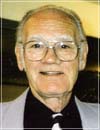
Scott Richardson

In Every Thing, Give Thanks

1 Thessalonians 5:18
Scott Richardson December, 6 1978 Audio
0 Comments

Sermon Transcript

Auto-generated transcript • May contain errors

100%
real quick here this evening
to the book of 1 Thessalonians chapter 5 and verse 18 and I
just want to mention a few things to you here in regard to this
verse. Now this verse is very profound, there is so much depth to it
that certainly I couldn't do it justice, but I can mention
a few things here. And I think that this verse is
the language of a humble soul. You know, we talk about humility
and read about humility, but we don't see much humility. Talk about it, read about it,
but you don't see much humility. Verse 18 says, In everything
give thanks, for this is the will of God in
Christ Jesus concerning you. Now, if I understand anything
about what that means, it means that The will of God concerning us
is that we give thanks in everything. We give thanks unto God in everything. That is what it says. In everything
give thanks, for this is the will of God in Christ Jesus concerning
you. I said it is the language of
a humble soul. Now listen to me. If it be the
will of God that I should be in darkness, I ought to bless
him. If it be the will of God that
I be in darkness, I ought to bless him. If it be the will
of God that I should be again in light, I ought to bless him. If God would comfort me, I ought
to bless him. If God would afflict me, I ought
to bless him. If God would make me poor, I
ought to bless him. If God would make me rich, I
ought to bless him. If God would grant me the least
of his mercies, I ought to bless him. If God would withhold all
his mercy from me and grant me no mercy, I ought to bless him. That's what that verse means.
In everything give thanks unto God. in everything give thanks. This is the will of God concerning
you. All, you know, most of us always
complain. We complain about situations,
circumstances, things happen to us, our plans and programs
are thwarted. We are disappointed because we
wanted to do this and something took place. We couldn't do it.
It rained or it snowed or it didn't rain or it didn't snow.
We couldn't go. We wanted to go. We moan and
complain. It's not the weather, it's something
else. It's not the rain, it's the snow. Right now everybody's
complaining, oh, I don't hope it doesn't snow. Oh, I don't
want the winter to get bad. Oh, this and that. Whatever comes
will be of God. We ought to give thanks. If it's
20 below zero, we ought to give thanks unto God. If it's so bad
that we can't get out and come to church, we ought to thank
God. He sends the weather. He controls the weather. No need
for us to complain against what He does. Our jobs. I don't like my job. I'm despondent. I'm depressed. Well, I can't
do this, I can't do that. I wanted to do something else
and I can't do it. Oh, I just don't know what to
do. I'm just so depressed. I don't feel like talking. I
don't want to talk to anybody and this and that.
You just kind of measure yourself in light of this. Just measure
yourself in light of this. In everything give thanks. Give
thanks unto God forever. Well, the Bible says this is
the will of God in Christ concerning you. All right? Well, I was confronted with that
verse. Just confronted with it, just face to face, thinking about
it. I think that's what it means.
Now if you'll turn with me to the 20th chapter of the book of Genesis. 22nd chapter of the book of Genesis. Something I read here was humorous,
I thought. It may not be to you, but it
was to me. I was thinking of a brother who
Names all of his children after biblical characters. He's got
six, seven children, more or less. They're all named after
biblical men and women of the Bible. John and Mark and Stephen
and all that. I come across a couple of names
here that if any of you girls have twins sometime and you want
to name your children, well, you just look at that 21st verse. You can call them Huz and Buzz. I seen that and I thought, well,
what do you know? It says Huz is firstborn and
Buzz is brother. Call them Huz and Buzz. That'd
be scriptural, wouldn't it? A lot of folks would think, well,
now you just got some silly names there, but that'd be scriptural.
Huzz and Buzz. I remember some, I was a boy,
a fella had some, a yoke of oxen, and he called them Buck and Barry.
That reminds me of Huzz and Buzz. All right, that 22nd chapter,
there are some things that I want to say to you in regard to that
22nd chapter. I'll read part of it here. It
says, It came to pass after these things, that God did tempt Abraham,
and I think the better translation of that is that God did try Abraham. God tempts no man. He tries men,
but He does not tempt them. That is, He does not hold something
out before Him and tempts the men. And there's a difference
between being tried and tempted. Now, God did tempt Abraham, and
He said unto him, Abraham, and Abraham always in earshot of
the voice of the Lord Jesus Christ. And Abraham said, Behold, here
I am. He wasn't too far away. He couldn't
hear, see. He wasn't out of fellowship. When a man's out of fellowship,
he doesn't hear the Lord. There's such a thing as being
out of fellowship with God. Did you know that? You can be
out of fellowship. The union cannot be dissolved,
but the fellowship can. For instance, I have children, you have children,
most of you here, and there is a relationship there that cannot
be dissolved. They are your offspring. They're
the offspring of your flesh. They're bone of your bone, flesh
of your flesh, and blood of your blood. There's no way that you
could ever deny that. You might deny it, but it'd be
a lie. They always belong to you. By birth, they're yours. You
can't change that. If they turn out to be upstanding
men, well, you can brag about it. And fine women, you can brag
about it. But if they turn out the opposite
of that and become horse thieves and what have you, why, maybe
you won't want to brag about it, but you can't deny them.
They're still yours by blood. They belong to you. No way. But
if there's disobedience on their part or, you know, just something
that has come up and they have blackened the name of that you
carry and bear and so forth. There might be a broken fellowship,
but there cannot be no broken relationship, blood relationship,
ties that are strong that way. But there is sin-mars fellowship,
sin-mars fellowship. When we openly, deliberately,
premeditate in sin against God, there is a broken fellowship
there unless there is a There is a confession of that sin.
That's what it means in 1 John. In 1 John, he's not talking to
an out-and-out alien sinner. When it says, If we confess our
sins, he's not talking to an alien sinner out here that has
never been reconciled unto God through the Lord Jesus, but he's
talking to his people, my little children. These things write
I unto you, that if any man sin, we have an advocate with the
Father, If we confess our sins, He's faithful and just to forgive
us of our sins, and the relationship is restored. But there's that
confession. There's got to be a confession
of sin. Remember when Peter said, Lord, how many times must I forgive
my brother? How oft do I do this? And the
Lord said, why, 70 times, 70. As oft as he confesses, as oft
as he asks forgiveness, That's how many times we're to forgive
him. So that has to do, too, with that. But anyhow, you can
see here that Abraham lived in a nearness to God the Father. He said, Behold, here I am. And
he said, Take now thine only son Isaac, whom thou lovest.
I'll not get into who Isaac was. The son of promise? We understand
that. The son of promise. He was born out of the old age
of Sarah and Abraham. When Abraham was 900 years old
and Sarah was 90-some, beyond the point of natural childbearing. God promised them a son, so he's
the son of promise. And of course you remember Sarah and Abraham tried to hurry
things on, you know, And they had a child by, or Abraham had
a child by Hagar, wasn't it? Hagar, and his name was Ishmael,
and he was a wild man, the thorn in the flesh and so forth, product
of nature. But nevertheless, take thine
only son Isaac, the son of promise, whom thou lovest. That tells
you something there. God says, you love this fellow.
Oh, you love him. You love him. Take him now. He
whom thou lovest. and get thee into the land of
Moriah, and offer him there for a burnt offering upon one of
the mountains, which I will tell thee of." Take him and I want
you to offer him up as a sacrifice unto me, as an offering. Abraham
rose up early in the morning and saddled his ass, and took
two of his young men with him, and Isaac his son, and claimed
the wood for the burnt offering, and rose up and went unto the
place of which God had told him. Then on the third day, Abraham
lifted up his eyes and saw the place afar off. And Abraham said
unto the young man, Abide ye here with the ass, and I and
the lad will go yonder. And he said, That's what we're
going to do. We're going to worship. That's amazing. They're a lot
involved in that little word right there. I and the lad, we'll
go yonder and we're going to worship. I thought they was going
to go kill his son. Well, that was part of worship,
wasn't it? We'll go and worship and come
back again to you. I guess he believed it. Well, anyhow, 6th verse. Abraham
took the wood of the burnt offer, and he laid it upon Isaac his
son. And he took the fire in his hand, and the knife, and
they went both of them together. And Isaac spake unto Abraham
his father, and said, My father, And he said, Here I am, my son.
And he said, Behold the fire and the wood, but where is the
lamb for a burnt offering? And Abraham said, My son, God
will provide himself a lamb for a burnt offering. So they went,
both of them, together. And they came to the place which
God had told him. And Abraham built an altar there,
and laid the wood in order, and bound Isaac his son, and laid
him upon the altar of this wood, And Abraham stretched forth his
hand, and took the knife to slay a son. And the angel of the Lord
called unto him out of heaven, and said, Abraham, Abraham. And
he said, Here I am. And he said, Lay not thine hand
upon the lad, neither do thou anything unto him. For now I know that thou fearest
God, seeing that thou hast not withheld thy son, thine only
son, from me. lifted up his eyes and looked,
and behold, and behind him a ram caught in a thicket by his horns.
And Abraham went and took the ram and offered him up for a
burnt offering in the stead of his son." That's the story. Well,
I've said all that to say this. The mountain where Abraham was
to offer up his son Isaac was three days' journey from Abraham's
home. Three days. Now, his determination
to sacrifice Isaac in obedience to God's command, as I understand
it from reading this narrative that I've read to you, was not
a hasty decision. He didn't make it just real quick.
Now, the scriptures here say that he walked beside the lad
three days. And he sat by the fire two nights,
and he watched Isaac sleep. Three days he walked beside him,
looking at that son. God said unto him, he said, Now
take now thy son, thine only son Isaac, whom thou lovest. He looked at him three days,
he sat beside him by the fire two nights, and watched Isaac
sleep. Now, he had done all this considering
the words of God Almighty, his love for his son, and the consequences
of such an act that he was about to perform. I think that this
ought to be a lesson for you and I, for preachers, for modern-day
soul winners who pressure and persuade people into making an
eternal commitment with the living God, too hastily. Abraham thought about this three
days. and beheld Isaac two nights while he slept. Oh, I'll tell you, these people,
I'm afraid of these folks. I heard a fellow say the other
day, I didn't hear him say it, Martha heard him say it, she
told me. A fellow we listen to on the television sometimes on
Sunday morning. E.J. McDaniel, I believe it is,
from down there in Florida. old Southern Baptist evangelist.
He said he went to Japan or China or one of those places. I think
he said there's 28,000 people saved in one meeting he had over
there. Just over there for a short time and urged people to make
a decision for the Lord Jesus. Ah boy, these people who persuade
people to make eternal commitments to the living God Commitments
of the heart, commitments of the soul, commitments of life
in this prepared religious atmosphere in our day. Prepared religion. Let's get the atmosphere right.
I heard a fellow say the other day, listening to the radio broadcast,
a fellow said, I said, boy, I'd like to be able to lead the singing
of a choir like Billy Graham has. voices, maybe four or five,
I'd like to be able to do that. Prepared religious atmosphere,
have a choir of four or five thousand people. You're preparing
things, see? You're creating an atmosphere
there in order that men might make a decision without considering
the latter end, without considering what all is involved in making
this commitment of heart, commitment of life, commitment of soul.
They want them to do it immediately. Do it now without thought or
consideration. Do it now. Do it now. I wonder how many of these people
would make the same decision or commitment after three days
journey in the wilderness with Abraham with plenty of time to
count the cost and what is involved in receiving and bowing to the
claims of the Lord Jesus Christ. I don't figure they'd be so quick,
do you? It says in the fourth verse,
on the third day, Abraham lifted up his eyes He walked three days
with old Isaac. He took the wood of the burnt
offering, in that sixth verse, and laid it upon Isaac, his son.
He took fire in his hand and a knife, and both of them went
together. Boy, he thought about this thing,
see. I mean, there was no hasty commitment here. He'd thought
about it. He'd considered it. His obedience to God and the
consequence of his act. He thought about it. He thought
about it. Three days, two nights watching
him sleep. Thine only Son, whom thou lovest. He's all you've got. He's all
you've got. He's the Son of promise. He came
from you and Sarah. You was a hundred years old and
Sarah was in her nineties. Past the age of natural childbirth. He's all you've got. Three days
he looked at him on the road, two nights he looked at him as
he slept. Now he's got the knife in his
hand, they got the fire and they got the wood. Isaac spake unto
his daddy, and he said, My father, and again he said, Here I am,
my son. He said, Behold the fire and
the wood, and where's the lamb from the burnt offering? I want
you to see this, I've mentioned it to you many times, let me
do it again. The 8th verse says, My son, God will provide himself
a lamb. Boy, that's the gospel right
there. Now you can underscore that. God will provide himself a lamb. You see, most of you know this,
I'm sure. But God must do something for
himself before he can do anything for you. That's right. Before God can do anything for
me, before God can save me, a poor, lost, helpless, hopeless sinner,
the God who needs nothing, who knows everything, who has all
things at his hand, must do something for himself before he can do
anything for me. God must satisfy his justice. And the only way that God can
satisfy his justice is become the sufferer in our stead. God must provide himself a lamb. God must provide himself a substitute. God cannot forgive sin. generally speaking and saying,
well, your sins are forgiven. Because
that would be a violation of his attribute of perfect holiness. So God cannot save a sinner at
the expense of his justice being unsatisfied. So God must provide
himself a lamb. And the only way that God can
exercise mercy towards me is to have his justice satisfied.
And the only way that his justice can be satisfied is by him leaving
heaven and being born of a woman, taking upon himself a body of
flesh, being born under this law that has me and has you,
being born under this law and living under this law and satisfying
this law in every detail, and then going to the cross and satisfying
God's justice for my sins. That's the reason we say that
salvation is by grace. Salvation is all of God. Salvation
is all of God in its scheme, in its plan, in ages gone by
and before the foundation of the world. God planned it. God
executed it. God continues it. It's all of
God. God chose it. God came himself. Died in our stead. God himself
came in the person of Christ. He died in our stead and satisfied
the justice of God. God is the Lamb of God. God provided
himself. That is why Abraham understood
that. Abraham said, God will provide himself a lamb to satisfy
his justice. And he did provide himself a
lamb there too, didn't he? Abraham lifted up his eyes and
looked, and behold, behind him was a ram caught in a thicket
by his horns. And Abraham went and took that
ram, that innocent ram. That ram was not guilty. He took
the innocent ram and shed his blood in the place of Isaac. Oh, lots to be said about this
twenty-second chapter. temptation of the trying of Abraham
and the blessing of Abraham here, the consideration that Abraham
gave of his son, his obedience to God, and the consequence of
the act that he was about to perform. No hasty decision in
this commitment of heart and soul and life with Abraham. He
thought about it. He considered it. He considered
it. Would to God that we'd consider it. Would to God that we'd consider
it. If men would ever face up to
it, ever face up and consider what's involved in the destiny
of their soul, there'd be some moaning and some groaning and
some crying out unto God for mercy. But men don't consider. They won't let themselves consider.
Men will not let themselves consider the reality of the eternal destiny
of their soul. They won't face up to it. They
believe, most people believe, that only those that are in open
revolt against God and those who swear allegiance to the enemies
of God and to the enemies of Christ are those who are going
to wind up in hell. Well, let me tell you something.
There's going to be men and women and boys and girls who wind up
in hell who carry their Bible and have Christ on their lips.
That's right. Who carry their Bible. They're
hastening. They're going as fast as they
can to hell with the Bible in their hands and Christ on their
lips. Judas Iscariot, I mean Peter,
turned to the rest and said, Is it I, Lord? Is it I? They didn't know. Jesus announced
and said, One of you here is going to betray me. He said,
One of you is a betrayer. You're going to sell me for 30 pieces
of silver. And the disciples turned one to another and they
said, Is it I, Lord? Is it I? Is it me? Is it me? No, Judas Iscariot, he didn't
say a word. went out into the night, and
he went to hell with the Bible in his hand and Christ on his
lips. Now, he is religious. He is a
church member. As a matter of fact, he is a
treasurer. No reflection on Glenn, but he is a treasurer. Carried the money. Carried the
bag. Let's consider this. We'll meet
again
Scott Richardson
About Scott Richardson
Scott Richardson (1923-2010) served as pastor of Katy Baptist Church in Fairmont, West Virginia.
Broadcaster:

Comments

0 / 2000 characters
Comments are moderated before appearing.

Be the first to comment!

Joshua

Joshua

Shall we play a game? Ask me about articles, sermons, or theology from our library. I can also help you navigate the site.