Bootstrap
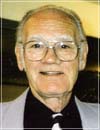
Scott Richardson

Four Things God Will Teach A Man

John 6:45
Scott Richardson August, 6 1978 Audio
0 Comments

Sermon Transcript

Auto-generated transcript • May contain errors

100%
Turn with me to John chapter
6. Let me read one verse and we'll
kind of use it as the basis of our lesson here this evening. Verse 45. It is written in the prophets, he has written it four times
written in the Old Testament the prophets God in days gone by spake unto us by
the prophets so it's written in the prophets
now we want to know what it is that is written in the prophets
well he tells us here it says and they That's His people. "...and they shall be all taught
of God." His people shall be taught of Him. It is written in the Prophets,
"...and they shall be all taught of God. Every man, therefore,
that hath heard and hath learned of the Father cometh unto me." There's three things. Well, there's
more than three things. There's three things I'm going
to try to talk about here this evening. But there's three things
that a man must be taught. In order to be taught some things,
he's going to have to unlearn some other things. There's a
lot of things he's got to unlearn in order to see the truth of
the scriptures. All of us have been down that
road. We've got to unlearn a whole
lot of things. Things that we've been taught by tradition. Things we've been taught by nominal
Christian professors. Things that even our parents
have taught us. Things sometimes that our Sunday
schools and churches and church school superintendents and deacons
and preachers have taught us must be unlearned. But be that
as it may, there is some things, I believe, that those, the they here that he's
referring to, will be taught on this side of eternity. That
is, before a man winds up and goes to his long home, he shall
be taught some things. first off he's going to be taught
who Jesus is now he's going to know who Jesus is he's going
to know the truth in regard to Jesus Christ God's going to teach
him that there's no one that'll ever wind up in his long home
in glory that doesn't know who Jesus is everybody's going to
know not many know today really and if you were to take out you
know, from the world's population. Those that actually know who
he is, you'd draw a blank, really. You'd draw a blank because there's
not many who know who he is. There's some that think they
know, and there's some that know a Jesus, but there's very few
who know who Jesus is as revealed here in the scriptures. a sovereign Jesus. Three things
a man must be taught. He's going to have to know who
Jesus is, and he's going to have to know what he done, and he's
going to have to know why he did it. There's three things
right there that a man's going to be taught. But there's another
thing, four things, that a man's going to be taught. Number one,
he's going to be taught who he is. you're going to wind up knowing
yourself. And it's a happy time and a blessed
privilege when the man comes to the end of his own wit and
knowledge and winds up knowing who he is. Knowing who he is. Not who men think he is or not
who he thinks he is or not who he appears to be, but who he
really is. if we ever find that out we ever
find out who we are it'll be a happy day we'll be
able to sing oh happy day oh happy day when Jesus washed my
sins away well that's my text there it's written in the prophets
and they shall be all taught of God now that's settled isn't
it They'll be taught of God. They'll be taught some things,
and I've mentioned just four things here that I believe they'll
be taught. There may be taught a whole lot more than that, but
there's four things, basically, that they're going to be taught.
They shall all be taught of God. Every man, therefore, that hath
heard and hath learned shall finally wind up at the feet of
the Lord Jesus. He shall come to me. Every man
that hath heard and hath learned these things that God taught
him will wind up. at the feet of the Lord Jesus.
The psalmist put it like this, he said, kiss the son lest he
be angry and you be consumed in his wrath. They'll wind up
at the feet of Jesus, they'll kiss his feet, that is, they'll
pay homage to him, they'll know who he is. But first off, we'll
find out, here in this fifth chapter, turn with me to the
fifth chapter here, and I think We'll find out in this fifth
chapter who we are, because it's laid off here. The picture is
drawn by one who knows us. In John chapter 5 and verse number
1, we'll find here in four or five verses a general summing
up of our true state, and we'll find out that we are like this
one described here, were impotent. Notice it says that there was
a feast of the Jews and Jesus went up to Jerusalem. Now there
is at Jerusalem by the sheep market a pool which is called
in the Hebrew tongue Bethesda, having five porches. In these five porches now lay
a great multitude of impotent folk. A blind halt, withered,
waiting for the moving of the water. Now, in these three descriptive
terms here, sums up our true state of who we really are. We're alive. We know that. We're here. We're
somebody with a soul and a personality, We're going someplace. There's
no rest for the soul of man's foot. We're traveling. We understand
that. We're alive and moving and acting
and we exist. We cannot move back into non-existence
because we do exist. We face that reality. ABCs of who we are, we're here,
we exist, we live, we move, we talk, we think, we act, we have
appetites, and so forth. There's three descriptive terms
here that tells us exactly who we are, that we're imposed. That
is, in the sight of God, we're imposed. We're like this, we're
like these, that filled the five porches there. We're blind, We're
wretched, we're haught, and we're withered. That's the way we are.
Blind, every man's without strength and he's blind in his understanding.
Remember this morning I read to you and told you that one
of the first things that the Bible attributes or ascribes
to man's refusal to bow to the terms of
the gospel is his ignorance. He's ignorant of the truth. He
goes around trying to establish a righteousness of his own, being
ignorant to the righteousness of God. He's blind. And the Scriptures
say that these men were blind here, these men and these women
and these children, I suppose. They were blind. So we're blind
in our understanding. And we're blind to our own wretchedness. We really can't see how wretched
we are. We're like the church in the
book of the Revelation that thought that they were rich and had need
of nothing. They said, We'd be rich. We have
need of nothing. And the Lord Jesus goes on and
says that they don't know. They believe that they're rich
and have need of nothing, but he said they're poor and they're
wretched and they're blind and they're naked. They don't have
anything. So these people depict and describe to us our impotency. We're blind in our understanding,
blind to our own wretchedness. We don't understand that we've
violated the holy character of God. We don't, we can't grasp
that. When we're confronted with it
by, we immediately, our souls, our minds, our understanding
takes flight and we fly away from the reality of it. We don't
want to face it. I heard a fellow say today, if
you want to be the first in the barbershop, he said, if you go
to the barbershop and there's four or five men there and you're
in a hurry and you want to be first, he said, just start talking
about Jesus or start talking about death. He said, start talking
about death and the first thing you know is that everyone else
will leave and you'll be number one. Now, try that sometime. I don't know whether it'll work
or not. Maybe they'll throw you out. But you see, men, when they're
confronted with the reality of themselves and the fact that
they're going someplace and the fact that their hearts are steeled
in rebellion against God, and that they're sinners by nature
and by choice, when that is brought to focus on their being, their
souls and understandings take flight and they get away. They escape. They escape and
find a refuge to hide in so they will not be brought out into
light. They're wretched and they're
blind. You see, they're blind in their understanding, they're
blind to their wretchedness, and they're blind to their desperate
need. They need a Savior. They need
someone to forgive them of their past sins, their present sins,
and their future sins. They need someone to satisfy
the justice of God against their sins. They need someone, but
they're blind to that need. They can't see that. They can't
see it. They're happy. They're happy
and they'll just be satisfied in working, in eating, in putting
on their clothes, taking off their clothes, playing, going
to work, anticipating vacations, growing old and having a good
time and fulfilling their pleasures. They'll be satisfied throughout
this lifetime because they are blind and impotent to their desperate
need of the forgiveness of their sins. They don't believe their
sinners. Neil, I believe it was, was telling
me here just a little bit ago prior to the service about hearing
kind of a debate on the television. And one professing Christian
woman, I believe it was a woman, stood up and she said that she
was talking about, you know, spiritual end and need of man
and all, and she said, well, she believed somehow God had
worked this thing out for everybody. And that was just about the sum
and substance, the scope of her understanding. Somehow God's
going to work it out, and that's what most people believe. If
I am a sinner, they say, well, the preacher said I was a sinner.
And I'm sure that he doesn't lie. The Bible indicates that. They've been preaching that for
2,000 years, 6,000 years. It must be so. But if it is so,
if it's really so, somehow God's going to work it out. Don't fret about it. Don't get
excited about it. Just don't take on about this.
That's man's reasoning. You see, he's blind. to his desperateness
as a need of a covering. He believes that when he dies
he can fly off with angels' wings and flap his way into the very
presence of the Trident God. But he can't do that. He can't
do that because he's a sinner by nature and by choice, and
he must have a covering that will make him accepted with God. And there's only one covering,
and that's the Lord Jesus Christ. But men will not be confronted
with that if they can any way possible escape it and find refuge
in their own imaginations, in their own thinking, or anything
else. Blind to their understanding,
blind in their wretchedness, blind to their desperate need.
And they're humble, that's what it says. They lay a great multitude
of impotent folk, impotent. Impotent means not able, incapable,
incapable, unable, poor, helpless. Impotent people. Blind, haunt,
and withered. Haunt means crippled. They're crippled. Men are crippled. Every man born a woman is not
perfect. He's crippled. His soul is crippled. He's like Mephibosheth. He's
crippled in his feet and unable to walk. Withered in their hands. crippled in his feet, withered
in his hands, blind in his eyes, blind in his understanding. It
all sums up, brethren, to the fact that he's impotent. He's
impotent. It's a picture of what we are
by nature. Now, this is one thing that we've
got to learn. Happy is the man that learns
it. Because a man ever learns this, he's going to learn what
the cure is. If he learns what he is, I'll
guarantee you, by the authority of the Word of God, if he ever
learns his desperateness outside of the Lord Jesus Christ, he'll
learn what the remedy or the cure is because he'll find himself
lost. And if he ever finds himself
lost, I'll guarantee you God will find him. God will find
him wherever he is. God's going to save every lost
man. I've said that before. God's going to save every lost
sinner that ever lived, every one of them. that's lost. Jesus
Christ came into this world to save them. To save who? He came
to seek and to save that which was lost. He'll save everyone
of them. But everyone that he's going
to save is going to be taught this. They're going to find out
who they are. They're going to find out that
they're lost. You've got to find that out. You'll never be found
unless you be lost. You've got to find it out. God's
got to teach it to you. It's written in the prophets,
they shall all be taught of God. that they're lost, that they're
wretched, that they're miserable, that they're halt, that they're
withered, that they're blind. This is a picture of what we
are by nature, and certainly the picture is not flattering,
and I'm not proud of it. I'm not proud of what I really
am. Not proud of it. The picture
is not flattering, but listen, but it is drawn by one who knows
it. It's drawn by the hand of God,
and he knows all about us. He knows us exactly as we are,
and he drew the picture. Impotent, that describes us perfectly. Altogether helpless, unable to
do a thing for ourselves, to alter our condition. Can't change
it. Unable. These people here were unable,
and of course, of all of these people, you read that and you'll
see that there was one, a certain man there, a certain man. A certain
man, that's what the 5th verse says, and there's a certain man
there. And he'd been this way for 38 years, a certain man.
God had his eye on him. God had his eye on that man from
all eternity. God had his eye on that one fellow
there, one fellow. A certain man. But you'll notice
that that certain man was impotent. And the Lord saw him lie there,
had his eye on him, singled him out. He saw him. He saw him. And he knew that he had been
now a long time in that way, thirty-eight years. He said unto
that man, the Lord Jesus said unto that man now, thirty-eight
years of impotency, helpless and hopeless, wretched and blind
and halt and withered. There he was laying at the pool.
The Lord said unto him, Wilt thou be made whole? Will you
be made whole? The impotent man answered and
he said, Sir, I have no man. I have nobody to help me. I can't
help myself. Does this not describe us? That
we are altogether helpless and hopeless, unable to do anything
for ourselves? That would alter the situation
or condition. See? Oh, we've got to learn that. We've got to learn, bless God,
our impotency, that we're helpless and hopeless before God. Not
anything good about it. Oh, there's a good, something
good about every man who was one of the sisters tell me this
morning. Someone said, well, there's something good about
it. She was telling somebody about their depravity, their
hopelessness. She said, well, that's not hardly
true because there is something good about it. She said, well,
what's that? I said, well, we love. She said,
we love. I said, that's good. Oh, that's
nice. Our love's not a perfect love,
see? It's a selfish love. It's a selfish love. You love
your wife. You love your wife. You love
your wife because of a selfish motive, self-interest. It's not
for the glory of God. You love your children because
they're a bone of your bone, because they're part of yourself.
That's the reason you love them. Huh? That's right. That's right. It's not a perfect love. If it
was a perfect love, you know what would happen? If it was
a perfect love, you'd love God with all your strength, all your
body, all your soul, and all your mind if you loved Him. If
it was a perfect love? Perfect love casteth out all
fear, the Scriptures say. It's not a perfect love. The Scriptures say, I know in
this body of flesh dwelleth no good thing. No good thing in
this body of flesh. Nothing good. Everything's been
tainted. Everything's been tainted by
sin. Every good work that we ever performed prior to our conversion
was motivated by self-interest. It was not done for the pure
and unselfish, adulterated glory of Almighty God. We got to learn this. We got
to learn it. If we ever learn it, brethren, we'll find out
who the Lord Jesus is. That's another thing we've got
to learn, who Jesus is. Who is he? Well, I'll tell you.
John the Baptist said this about him. John the Baptist said, Behold
the Lamb of God. That's what he called him. He
said, He's a lamb. John the Evangelist. John, one of the disciples. He
said he was a lamb slain before the foundation of the world.
That's what he said he was. John the Baptist said, Behold
the Lamb of God that taketh away the sin of the world. The Lamb
of God. Without spot, without wrinkle, without sin, he's the
Lamb of God, purer than the driven snow. Behold the Lamb of God. Old Peter, he said, he is the
Christ. They said, Peter, who do you
say that he is? Some say that he's Elijah, some
say he's Jeremiah, some say he's John the Baptist, some say he's
somebody else reincarnated. But who do you say? He said,
thou art the Christ, the Son of the living God. Thou art the Christ, the Son
of the living God. That's who you are. The apostles,
there in the book of Acts, chapter 17, verse number 7, said he was
a king. Said he's a king, that's who
he is. God himself said this about him. He said, this is my
beloved son, hear ye him. You mean this baby? This little
baby here? What, 12 inches, 14 inches long,
born in a stable of a Jewish maiden, no room for him at the
inn? You mean this little insignificant
boy-baby, born of an insignificant Jewish maiden in an insignificant
place that most people have never heard tell of? That's the Christ, the Son of
the Living God. Ah, brethren, listen. God insists. God insists that this little
baby born over there in that insignificant nation, God insists
that this is my son. This is my beloved son here you
can give. Now listen, only a fool, only
a fool or one who's a Christian would believe what I say. Only
a fool or a Christian would believe that little baby. That little
baby, born of that insignificant Jewish baby, there in that stable
2,000 years ago, was none other than God Almighty Himself. Only a fool or a Christian would
believe that. That's who Jesus is. He's God
manifest in the flesh. John chapter 10 says, I am the
Father of one. It says we're one. Well, it's so important. It's so important that we know
who He is. That the Apostle Paul said this,
and I'll read it to you. I want you to see this. Most
of you know this. I've said this lots of times,
but let me read it again. In 1 Corinthians 16, verse 22,
just to show you how important it is that we come to grips with
the truth as to who Jesus is and believe with all of our hearts. submit ourselves to him. Listen
to what Paul says. He concludes this. He wrote sixteen
chapters in 1 Corinthians, and in the last chapter, and next
to the last verse, he said, Now listen to this. If any man love
not the Lord Jesus Christ, Let him be anathema maranatha, which
means let him be cursed when Jesus comes. If any man loves
not the Lord Jesus Christ, if any man lives with a dishonest
heart all of his life and dies in a state of rebellion against
God, Let that man be accursed when
Jesus comes. Let him be damned. Let him be
condemned. Let God curse him with the plagues
of Pharaoh when Jesus comes. Oh, how important it is to know
who Jesus is. Not who you think he is, but
who he is. Jesus Christ, the Son of God,
is the Savior of them who believe. He's God manifest in the flesh. to what the angel had to say
about him. I think in the second chapter
of the book of Luke, let me read that to you. Luke chapter 2 and
verse number 10. Listen to this. You don't have
to turn. I'll read it for you. It says,
And the angel said unto them, Behold, I bring you good tidings
of great joy, which shall beat all people. For unto you is born
this day in the city of David a Savior, which is Christ the
Lord." That's who the angel said he was. What did he do? What did he do? Well, I'll tell you what he did.
He lived in the stead of a sinner. He lived in the sinner's stead.
he lived the life that I couldn't live and he died the death that
I couldn't die Lord Jesus Christ what did he
do? who was he? who was he? and what did he do?
he lived in my stead in my place in my room and finally suffered
on the cross for the penalty for my sins What did he do? He paid all that I owed. He paid my every debt. He counseled
them out with his own blood. His own blood was blotted to
the list of my sins. He blotted them out, blotted
them, counseled them. I told you before, the God who
can't remember or the God who can't forget, God who is with
all knowledge, He says, I'll never remember them against you
no more. Lauded a man. That's what he did. He satisfied
the Lord Jesus Christ. What did he do? He came into
this world as God himself, born of a woman, under the law, lived
under the law, satisfied the law, died as a result of the
curse of the law. For sinners. For sinners. For
those that are wretched, blind, nasty, and vile. those that have
cursed him, those that have defiled their own temples, defiled his
temple, those that have trod underneath their feet his blood,
those that have blasphemed his name, those that have profaned
him. He died in their stead, in their
place, and they're satisfied, satisfied all that the law demanded. He suffered in their stead, paid
their due, perfect life. The perfect life of the Lord
Jesus Christ was given to all of those for whom Christ died.
He took our guilt head on, all of our guilt, every bit of it. The guilt that I have now, the
guilt that I'll have tomorrow, the guilt that I had in the past,
he took it on. He took my sins, he took my guilt,
took my condemnation, he took it all, bore it in his own person,
the Scriptures say, who bore our sins in his own body on the
tree. He bore them, He bore them, our
guilt, the load of our guilt. What did He do? He actually so
identified with us. So identified with us, He became
our guilt. And because He was so identified
with us and became our guilt, our sin must be punished. So
He was punished. God poured out his wrath, and
the Lord Jesus Christ must drink this cup of unmitigated wrath. He must drink all of it. He must
drink it, even the very drinks of that cup. He took our sins. He paid for them. He put them
away. And brethren, if that's not so,
he could not be where he is. If one sin remained unpaid for,
he could not be baptized. God would have never raised him
from the dead if he had not paid for every sin of his people. He paid the debt. He canceled
it. It's over with. The good news is that Christ
died. Yea, rather, he's risen again,
even at the right hand of God. What's he doing there? He ever
lives to make intercession for me. If he didn't pay for all
of our sins in his own body, he'd still been in the grave.
We'd have had no Savior. God raised him from the dead.
Why did he do it? Why did he do it? I'll tell you
why. Because there's only one way
that we could be accepted by God, and that is through a blessed,
holy, and righteous vicarious Only one way that God could take
us to heaven is through the substitutionary work of another. The only way
he could do it, not one of many ways, but there's only one way
he could do it, and that's through the Lord Jesus Christ, who was
perfect in every respect, from the cradle all through his life,
perfect, perfect, never violated, never deviated from single, solitary
purpose of the will of the Father, always in perfect harmony, perfect
tune with the Father. I do all things that are pleasing. This is my beloved Son. I'm always
pleased with Him, never angry with Him. He's always right. He's always doing my will. You see, perfect, perfect sacrifice. That's the only thing God will
accept. It's a perfect sacrifice. You ain't got it, and there ain't
no way in this world that you can get it. It ain't no way in
this world that you can make God come across with it, either.
You haven't got it, and you can't get it. But it's free in Christ. It's there in Christ. It's there
in Christ for those that seek Him. It's there for those that
seek Him. The pardon of all of their sins,
the blotting out of all of their sins, These are some things that
a man must be taught, just a few of them. I could cite more, but
these three or four things that I mentioned here this evening,
God must teach us. And if we ever learn them, we'll
wind up at the feet of the Lord Jesus Christ. Now, I don't plead
with people as though my Lord Jesus Christ were on equal terms
with those that I plead with. He bids a man surrender. That's
what he bids you to do. Bids me to surrender. Put your
arms down. Lay your guns down. Put your
guns back in the corner. Take the weapons out of your
pocket. Lay your weapons down. He bids you to surrender. Receive
his mercy. See, he's not afraid of your
opposition or my opposition. He doesn't need your friendship
and he doesn't need my friendship. Kiss the sun. or you be consumed by his anger,
by his wrath, and you perish in the way. All God has to give,
you see, is Jesus Christ. That's all He
has. He doesn't have anything more than that. He has Christ. He has Him to give. You give
Him. You give Him. You give Him for who? Poor sinners. Poor sinners who understand their
desperate need of Him. poor wretched sinners who are
blind in their understanding, blind in the sense of their need,
he'd give the Lord Jesus for them. Impotent people, unable
to help themselves. As long as you can help yourself,
I've got nothing for you. As long as you can do it yourself,
as long as you can come up with an idea that Somehow that you've
loved God with all your heart and all your soul and all your
strength and all your body and all that, as long as you believe
that, I've got no help for you. I've got no help for you, no
help for you in the Bible. The help in the Bible is offered
to sinners who can't help themselves, just can't help themselves. Who
is he? Who is Jesus? To make Jesus Christ
any less than what he said he was, what he is. is to make him
nothing at all. To make Christ anything less
than what the Bible says he is, is to make him nothing at all.
He's the Lamb of God to the poor sinner. He's the Lamb of God
that taketh away the sin of the world. Kiss the Son of
Man. The Lord bless these thoughts
to our hearts this evening. Pat, lead us in again, if you
will. you
Scott Richardson
About Scott Richardson
Scott Richardson (1923-2010) served as pastor of Katy Baptist Church in Fairmont, West Virginia.
Broadcaster:

Comments

0 / 2000 characters
Comments are moderated before appearing.

Be the first to comment!

Joshua

Joshua

Shall we play a game? Ask me about articles, sermons, or theology from our library. I can also help you navigate the site.