Bootstrap
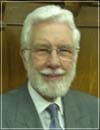
Stephen Hyde

To obey is better than sacrifice

1 Samuel 15:22
Stephen Hyde August, 4 2024 Video & Audio
0 Comments
Stephen Hyde
Stephen Hyde August, 4 2024

The sermon titled "To Obey is Better than Sacrifice" by Stephen Hyde addresses the theological topic of divine obedience versus ritualistic sacrifice, as illustrated through the narrative of King Saul in 1 Samuel 15:22. Hyde emphasizes that Saul's failure to obey God's command ultimately led to his rejection as king, highlighting the seriousness of disobedience against God's Word. He draws on the Scripture by contrasting Saul's actions with God's delight in obedience rather than sacrifices, reinforcing this theme through references to Jesus' atoning sacrifice as the ultimate fulfillment of the Old Testament sacrificial system. The practical significance of the sermon lies in its call for believers to prioritize obedience and a heartfelt relationship with God over mere outward religious observance, cultivating a humbleness that recognizes one's need for grace.

Key Quotes

“Hath the Lord as great delight in burnt offerings and sacrifices as in obeying the voice of the Lord? Behold, to obey is better than sacrifice...”

“We may have walked contrary to God. We may have disobeyed him, and yet to realize that our sin has been laid upon the Savior.”

“If the Son, therefore, has made you free, you shall be free indeed.”

“Take my yoke upon you and learn of me... for my yoke is easy and my burden is light.”

Sermon Transcript

Auto-generated transcript • May contain errors

100%
May it please Almighty God to
bless us together as we meditate in His Holy Word. Let's turn
to the first book of Samuel, chapter 15, and we'll read verse
22. The first book of Samuel, chapter
15, and reading verse 22. And Samuel said, hath the Lord
as great delight in burnt offerings and sacrifices as in obeying
the voice of the Lord. Behold, to obey is better than
sacrifice and to hearken than the fat of rams. as we read down this chapter
together I hope you noticed how Saul had been commanded what
to do with regard to Amalekites and that was to utterly destroy
them from the king downwards to leave nothing no humans, no
animals, everything to be destroyed and what we find is that Saul
did not obey the word of Samuel. In fact, therefore, he did not
obey the word of the Lord. He did that which seemed sensible
and seemed reasonable. And then when Samuel came to
him and challenged him, he then made excuses and said that, well,
he'd kept the best of the animals, because the people had decided
they might be sacrificed and also of course he'd spared the
life of the king and no doubt he felt that this was fair and
reasonable but the bottom line was that he had not obeyed the
voice of the Lord. And that's why Samuel comes and
asks him this question, Hath the Lord as great delight in
burnt offerings and sacrifices as in obeying the voice of the
Lord? Behold, to obey It is better
than sacrifice and to hearken than the fat of lamb. He went on to say for rebellion
is as the sin of witchcraft and stubbornness is as iniquity and
idolatry because thou hast rejected the word of the Lord He hath
also rejected thee from being king. It's a very solemn character
really, Saul. If you follow it through how
he was selected from his family and the Lord anointed him as
king and he was a very able person, a very tall person, and to begin
with he appeared to be following the right pattern. Then we see
how he departed. And it would appear as we read
on through the scriptures that in the end he fell upon his sword
and took his own life. A very tragic end to the king. Well, we may think, what are
we to think of such a subject today in the day and age in which
we live? Well, of course, we live in a
very different age. we don't have to offer up sacrifices
burnt offerings as such we don't have to do that and you may say
well why do we not have to do that and perhaps you young people
may wonder why we don't have to offer up sacrifices today
well I wonder if you know what the answer is I hope you might
do the reason is that Jesus Christ came as that one sacrifice for
sin. And he offered up his own body
once for all. What a wonderful sacrifice that
was. There was no need then for any
more sacrifices. The physical sacrifices were
done away with. And we today, by the grace of
God, can rejoice in the wonderful truth that the Lord Jesus Christ
came and was offered up in our place to take away our sin. What a great and glorious mercy
and favour that is. as I was thinking about these
words there's one or two verses in the Old Testament which help
us and direct us and perhaps in the prophecy of Micah which
is not read very often and yet it's a very gracious and glorious
little book and in the sixth chapter in the sixth verse this
is what we read Shall I come before the Lord and bow myself
before the high God? Shall I come before him with
burnt offerings, with calves of a year old? Will the Lord
be pleased with thousands of rams or with ten thousands of
rivers of oil? Shall I give my firstborn for
my transgressions, the fruit of my body for the sin of my
soul? He hath showed me, O man, what
is good, and what God doth the Lord require of thee, but to
do justly, and to love mercy, and to walk humbly before thy
God. Well, how gracious are such words! Surely what a wonderful privilege
it is for us today to realise there is such a statement to
encourage us as you and I journey on and to be directed to the
saviour of sinners, the one who has paid the price to redeem
our soul. Well, we see that Saul failed
to realise the glory of those sacrifices and the importance
in those days of following the word of the Lord. But today we
have a glorious saviour who has gone before us. He's taken our
sins and he's paid for our sins with his own life, with his own
shed blood. What a mercy then to realise
that we have Such a wonderful Saviour and such a glorious Saviour. And in the New Testament, on
numerous occasions, we have references to these great and glorious truths. In the ninth chapter, when Jesus
was on the earth and he called Matthew to follow him, and he
tells us further on in the chapter, but go ye and learn What that
meaneth, I will have mercy and not sacrifice, for I am not come
to call the righteous, but sinners to repentance. That should be good news for
us today. I realise the plan of the gospel
is to call sinners, those who've disobeyed God, perhaps like Saul,
what contrary to the commands of God and if you and I are honest
and look into our hearts we will find that in essence we're no
better than Saul of old and therefore what a great and wonderful favour
to realise that God has called us as sinners to repentance to
come to our God, praying for mercy. I will have mercy and
not sacrifice. What a blessing it is then in
our day and age to realise this is the wonderful favour of almighty
God. Just to run through a few encouraging
verses in the word of God to strengthen us, to encourage us
Again, the Lord says in the 23rd chapter of Matthew, in the 23rd
verse, Weren't you scribes and Pharisees, hypocrites? For ye
pay tithe of mint and anise and cumin, that means they tithe
the very smallest herbs, and yet have omitted the weightier
matters of the law judgment, mercy and faith. These ought
you to have done and not to leave the other undone. We need to
get by the grace of God our priorities right and therefore to come to
God and plead for mercy and plead for faith that God will enable
us to do those things which are right and are in accordance with
his gracious word. And above all things, to look
out of ourselves to realise that great truth in me, as the Apostle
says, that is in my flesh dwelleth no good thing. may be quite hard
to learn that lesson may be quite hard to come to that conclusion
that as we look at ourselves we may have a high opinion of
ourselves to realize that in our flesh that's our own nature
there's nothing good and that means we have to come and we
have to plead for mercy. And what does that really mean?
It means we have to flee to the Saviour, the Lord Jesus Christ,
to plead for His grace, to plead for His mercy. And what a blessing
it is then when our God gives us mercy and faith to believe
the great and wonderful truths of the Gospel. You see God is
very kind and God is very gracious and when you ponder we have the
truths contained in the New Testament to encourage us in the day and
age in which we live we should be very thankful. Well says the Lord Jesus when
he was on the earth he spoke about the great commands. Thou shalt love the Lord thy
God with all thy heart and with all thy soul and with all thy
mind and with all thy strength. This is the first commandment
and the second is like namely this. Thou shalt love thy neighbour
as thyself you think how we love ourselves and here we are to
love our neighbour and of course you may remember the lawyer Pharisees
asked who their neighbour was trying to justify themselves
and God spoke to them that parable of the Good Samaritan the religious people, the priests
and the Pharisee when there was that man who fell among thieves
and was left half dead they passed by on the other side they didn't
want to be involved and yet we're told along came a Samaritan Samaritans
were despised in those days And he came to that man. He came
where he was. He didn't pass him by. He bound
up his wounds, put him on his own ass, took him to the inn,
paid what was necessary, and told the innkeeper he would pay
anything else that was owed in the future. Well, we see the
mercy of that person, and really it relates to our great and glorious
Good Samaritan, the Lord Jesus Christ. To think that he comes
where we are, in all our need. We may have fallen among thieves. We may have fallen among religious
thieves. And when I say that, I mean this.
People that perhaps believe half the truth and try and convince
us that we're following a false God and we're not following the
true God and therefore we may find ourselves among thieves
and we may find ourselves almost half dead that means with an
unbelieving half and then think there are those who come and
pass by and are not interested in our case but to think that
Jesus knows where we are And to think that he comes to us
in our distress and binds up our wounds, yes, and pays all
that's necessary and agrees to pay anything which is due in
the future. Well, what a gracious God we
have to think that, as some think, and it may very well be true,
That man was going down from Jerusalem to Jericho. He was
going away from the house of God, from the temple. Sometimes
we may be found wandering away, going away from God. And yet the Lord is merciful
to us, and the Lord is gracious to us. He deals with us, therefore,
in love to our souls. how wonderful it is and therefore
as we think of these words that Samuel spoke to Saul how very
solemn they were and the Lord says hath the Lord as great delight
in burnt offerings and sacrifices as in obeying the voice of the
Lord I think perhaps sometimes that we've disobeyed the voice
of the Lord we walk contrary to his words In truth, what we've
said is this. We will not have this man to
reign over us. We're not going to be hedged
in. We're not going to be put in a straight jacket. We're not
going to not be allowed to do this and do that. We're going
to please ourselves. Well, just like really Saul decided
to please himself. and we see how solemn the end
was. What a great blessing it is for us in a Gospel day. What a mercy it is to have such
a wonderful Saviour who doesn't deal with us as our sins deserve,
but indeed looks upon the Saviour, that One who has taken our sin
upon Himself. and paid the price to deliver
us from it. Oh, it's a wonderful and great
blessing. It's a wonderful and great mercy
to have the Word of God to encourage us and to strengthen us in the
day and age in which we live. We should be very thankful that
the Apostle Paul was wonderfully blessed by God when he was young,
to sit at the feet of Germania and to learn the truth of God
and the law of God very well. But it was, of course, only with
a pharisaical knowledge, really just like Saul. But Almighty
God came to Saul, called him by his grace, gave him that desire,
gave him that prayer, what would thou have me to do? And Saul
then was led away into the wilderness and there he was in the desert
for some time and the Lord instructed him and taught him so much, glorious
truth of the gospel. Hence he was able to so adequately
write the epistle of Paul to the Hebrews and how thankful
we should be and that's why we have this 10th chapter for instance
where the Apostle tells us for the law having a shadow of good
things to come those sacrifices in the Old Testament were just
a shadow the bloodshed of the animals was just a shadow that
blood that had to be shed and taken into the most holy place
was just a shadow but in the Hebrews we have the great and
glorious truth revealed and how wonderful it is if today we can
rejoice in it and so he says the law having a shadow of good
things to come and not the very image and the things can never
with those sacrifices which they offered year by year continually,
making the comers thereunto perfect. And he says, but in those sacrifices
there is remembrance again made of sins every year. For it is
not possible that the blood of bulls and of goats should take
away sins. Wherefore, when he cometh into
the world, he saith, Sacrifice and offering thou wouldest not,
but a body hast thou prepared me. In burnt offerings and sacrifices
for sin thou hast no pleasure. Then said I, Lo, I come. Blessed words of the Saviour,
I come. in the volume of the book it
is written of me to do thy will O God I think that Lord Jesus
Christ the Son of God the second person in the Trinity was so
willing to come into this world to suffer to give himself as
a sacrifice to do the will of his Father. And so we are told,
he taketh away the first, that he may establish the second,
by the which will we are sanctified through the offering of the body
of Jesus Christ once for all. The Lord Jesus Christ offered
not a sacrifice of bulls and of goats, but he offered his
own body. It's a wonderful, great and glorious
truth. And every priest standeth daily,
ministering and offering oftentimes the same sacrifice, which can
never take away sin. But this man, the Lord Jesus
Christ, after he had offered one sacrifice himself, four sins
forever sat down on the right hand of God on the throne and
there he sits today from henceforth expecting to his enemies be made
his footstool. Well, there's a glorious picture
spelled out, isn't it? In quite simple terms in this
10th chapter and how we should indeed rejoice in it and praise
God for it. And it is a wonder of wonders
to think that God himself was willing to come and give himself
for such unworthy sinners. I wonder tonight if you and I
feel to be an utterly unworthy sinner to receive such a blessing especially
as you and I may realize that we're no better than King Saul
in disobeying the Word of God disobeying His gracious and loving
commands, turned our back, perhaps many times, upon the truth of
God's Word. And yet God, the Lord Jesus Christ,
in love to our souls, has paid the price to atone for all our
sins. It is truly humbling, it is truly
glorious, it is truly wonderful, and may we indeed thank God for the Gospel, thank
God for His great plan, thank God that the Apostle Paul was
directed to have that education and to be able therefore to understand
the perfect sacrifice of the Lord Jesus Christ and to give
us such a clear account in this epistle to the Hebrews. Well,
it is indeed a wonderful and gracious and glorious statement
as we come to the last chapter in the epistle to the Hebrews
Again we can read of God's wonderful favour and wonderful mercy when
he tells us, For the bodies of those beasts,
whose blood is brought into the sanctuary by the high priest
for sin, are burned without the camp. Wherefore Jesus also that
he might sanctify the people with his own blood suffered without
the gate remember Calvary without the gate outside the city wall
and there was the Saviour shed his own blood suffered without
the gate and therefore we have these encouraging and instructive
words to us today let us born again believers. Let us go forth therefore unto
him without the camp bearing his reproach. For here we have no continuing
city but we seek one to come. By him therefore let us offer
the sacrifice of praise to God continually that is the fruit
of our lips giving thanks to his name is therefore a sacrifice
the sacrifice of praise to God continually which is the fruit
of our lips what that means is this in old testament times it
was costly to bring a lamb or a bullock or whatever the sacrifice
was to be, it cost the individual something personally, something
from their own holdings, their own flock or whatever it was.
We don't have to do that today, but there may be those things
which are costly, and as the Apostle tells us here the fruit
of our lips is being given thanks to his name that may indeed be
costly costly to ourselves because in doing that we have to thank
God and that means speaking of what he's done for our souls
and it may be costly because people will understand
perhaps how bad we've been will understand how gracious God is
and to understand that our hope is built on nothing less than
Jesus' blood and righteousness and the Apostle says, but to
do good and to communicate, forget not for with such sacrifices
God is well pleased. Well what a mercy it is then
to have these wonderful truths set before us, poor ignorant
sinners, to have us directed to the blessed work of the Saviour
and be able truly to thank Him that in the day and age in which
we live we have this example of Saul, how he transgressed,
how he walked contrary to God, and how God dealt with him very
solemnly. And in our day and age, we may
have walked contrary to God. We may have disobeyed him, and
yet to realize that our sin has been laid upon the Savior. He's borne, he's carried our
sin. He freed us from the condemnation of the law of God. What a great
and wonderful Saviour we have and how much and how many encouraging
words we have before us. The Lord Jesus Christ, when he
was on the earth, he tells us when he was speaking to his disciples,
he says, this great and wonderful statement come unto me who all
ye that labour and are heavy laden I often think it's interesting
how the Holy Spirit writes the sequence He doesn't say come
all ye that labour and are heavy laden unto me He says first come
unto me all ye that labour and are heavy laden What a blessing
it is if you and I, therefore, are laden, perhaps, with our
failures, laden with our sin, laboring
under it. And then the Lord graciously
tells us to come unto Him. For what purpose? And I will
give you rest. give you rest. And that's a rest
in knowing that this glorious Saviour has taken upon Himself
your sin and my sin. We're freed from it. It's a blessed
deliverance. I love those words in the Gospel
of John. If the Son, therefore, has made you free, you shall be free indeed. See
the devil is not able to undo the blessed and glorious work
of the Saviour. Why? Because on Calvary's cross
the Saviour said with his dying words, it is finished. He concluded the work that the
Lord had given him to do that God his Father had laid upon
him. He hadn't failed. He finished that work and the
Lord goes on to encourage the Church of God in the day and
age in which we live. Take my yoke upon you and learn
of me. That means to be joined to the
Lord Jesus Christ. What a blessing path that is. Because if you and I join to
the Saviour, we'll hear his voice, we'll hear his corrective words,
We'll hear his encouraging words. We'll know the way he's walking.
We'll be directed in it. Take my yoke upon you and learn
of me. Do you and I desire to learn
of him? Well, I hope we do because we have a wonderful example. For I am meek and lowly in heart. It's not high-minded. He's meek
and lowly in heart. and ye shall find rest unto your
souls for my yoke is easy and my burden is light. Well what
a blessing and those of us who've been favoured to walk this path
we can echo the truth of those words and rejoice in them. May each of us come to that personal
knowledge and bless our God for it. And we have in Peter's Gospel
he gives us encouraging words to come to him and in the first
epistle and the fifth chapter of this little epistle of the
Apostle Peter we read casting all your care upon Him, for He
careth for you. Now then, before that, He says
this, Likewise ye younger, submit yourselves unto the elder, yea,
all of you be subject one to another, and be clothed with
humility. For God resisteth the proud,
and giveth grace to the humble, the grace of God humbles us to
realise that God has had mercy on us. How humbling that is. Humble yourselves therefore under
the mighty hand of God that he may exhort you in due time casting
all your care upon Him, not just the most difficult things, but
everything, everything, day by day. We get up in the morning
to pray to God, casting all our care upon Him, for He careth
for us. Be sober, be vigilant, because
your adversary the devil, as a roaring lion, walketh about,
seeking whom he may devour. Don't forget that. The devil's
always on the prowl. He's always trying to come and
attack us. And you see if we're walking
contrary to God, we're easy prey for the devil, whom resists steadfast
in the faith, knowing that the same afflictions are accomplished
in your brethren that are in the world. But the God of all
grace hath called us unto his eternal glory, by Christ Jesus,
after you have suffered a while, make you perfect, establish,
strengthen, settle you, to Him be glory and dominion for ever
and ever. Amen. What a great blessing then
to have such a God. And then not to forget that wonderful
verse in the 22nd chapter of Isaiah. Look unto me, Be ye saved
for the ends of the earth for I am God and there is none else. So as we consider a word like
this addressed to Saul for his sinfulness, for his rebellion
against God, for his pride and everything else and how you see
he was really cast out to think in this gospel age God has looked
upon us we can't claim to be any better I'm sure perhaps we
have to admit we're worse and yet to have the
blessed realisation that the love of God constrains us the
love of God draws us The love of God is a great and glorious
antidote to all the attacks of the devil. He cannot resist. He cannot fight against God's
truth. Oh, my friends, lay hold of it.
Tell the devil what the word of God says, that God has loved
us with an everlasting love, and therefore the devil can't
destroy it. He can't take it away. But once in Him, in Him
forever. So, this evening, as we've thought
upon this word, perhaps in a different way, as people may have thought,
but yet it directs us, I believe, in the opposite direction, away
from self, to look to the Saviour. And may we often be found there
looking unto Jesus, the author and the finisher of our faith,
who, for the joy set before Him, despised the shame, endured the
cross, and is set down on the right hand of the Father in heaven. Blessed be his name. Amen.
Broadcaster:

Comments

0 / 2000 characters
Comments are moderated before appearing.

Be the first to comment!

35
Joshua

Joshua

Shall we play a game? Ask me about articles, sermons, or theology from our library. I can also help you navigate the site.